
Choosing a CRM for outreach, explained in plain language — and the right one for your team
A CRM for outreach is the system of record behind every cold email, call and LinkedIn message: it holds the contacts, tracks the pipeline, logs every touch and tells you which deals are actually moving. This CRM for outreach guide compares HubSpot Sales Hub, Close CRM, Pipedrive, Salesforce Sales Cloud and Apollo on price, sequencer sync, dialers, AI and ease of setup, so you can pick the CRM your outreach stack needs instead of guessing.
Visit HubSpot →Explore Close →See Apollo →Prices checked 16 November 2026 on the official sites of HubSpot, Close, Pipedrive, Salesforce and Apollo. Features and pricing can change, so please check the provider’s site before you buy.
Quick Answer
HubSpot Sales Hub is the best all-round CRM for outreach, because its free CRM covers two users, its sequences and forecasting start on Professional at $90 a seat a month, and nothing else in this CRM for outreach guide matches its ease of setup. Close CRM is the best choice for teams that sell by phone, with a built-in power dialer, SMS and workflows from $99 a user a month on Growth. For example, Pipedrive is the best value visual pipeline, with clear deal stages and nurturing sequences from $39 a seat a month on Growth.
Salesforce Sales Cloud is the best choice for large and complex sales organisations, although meaningful outreach features start at the Pro Suite at $100 a user a month and the old Enterprise and Unlimited editions were replaced by Core, Advanced and Max in September 2026. Apollo works as a CRM-lite for small teams, with 240M+ contacts, sequences and a dialer from $49 a seat a month, although its deal tracking is lighter than a full CRM. In sum, a CRM is not a sequencer, so most teams still pair one of these five with a sending tool such as Instantly, Smartlead or Lemlist.
Contents
- What a CRM does in an outreach stack — and what it does not do
- When you need a CRM, a spreadsheet, or just a sequencer
- The five CRMs at a glance in this CRM for outreach guide
- Pricing head-to-head: five CRMs, one honest table
- CRM and sequencer sync: how the two-way connection works
- Sequences and dialers: inside the CRM or inside the sequencer?
- Pipelines, reporting and forecasting in this CRM for outreach guide
- AI features: Breeze, Chloe, Einstein, Nova and Apollo AI
- Ease of setup and migration in this CRM for outreach guide
- Feature matrix: all five CRMs side by side
- Pros and cons: the honest case for each CRM
- A decision framework: team size, budget, CRM and channels
- Frequently asked questions in this CRM for outreach guide
- The verdict in this CRM for outreach guide
Why this CRM for outreach guide starts with the job, not the logo
Firstly, a CRM is the most misunderstood purchase in the whole outreach stack. In fact, teams buy one expecting it to send cold emails, warm up inboxes and find leads, and then wonder why their pipeline still lives in a spreadsheet. A CRM does none of those three jobs well on its own. In fact, it does one job brilliantly: it remembers everything about every prospect, every deal and every conversation, and it shows the team what to do next.
Secondly, the five CRMs in this CRM for outreach guide cover the whole range of that job. For example, HubSpot is the friendly all-rounder that grows with the team. In contrast, Close is the phone-first CRM for reps who live on calls. Moreover, Pipedrive is the visual pipeline that a small team can learn in an afternoon. Finally, Salesforce is the heavyweight that runs the largest sales organisations on earth. In sum, Apollo is the data-first platform that doubles as a light CRM for teams that cannot justify a second bill.
Finally, every price and feature in this CRM for outreach guide was checked on the official sites on 16 November 2026. Where a vendor publishes no price, or where a price has changed since our earlier reviews, the guide says so plainly. Salesforce, for example, replaced its Enterprise and Unlimited editions with Core, Advanced and Max for new customers in September 2026, so older price lists showing $165 or $175 for Enterprise are now out of date. Start with the pricing section when budget is the constraint, and jump to the decision framework when the shortlist is already set.
What a CRM does in an outreach stack — and what it does not do
In fact, a CRM for outreach is the memory of your sales team. It stores every contact and company, tracks every deal through its stages, logs every email, call and meeting, and reminds each rep who to follow up with and when. When a prospect replies to a cold email, the CRM already knows who they are, what they were sent, which sequence they are in and how close they are to a deal. That shared memory is the whole point.
Moreover, a good CRM also turns that memory into management. In fact, a sales manager opens the pipeline and sees, in one screen, how many deals are open, how much they are worth, which ones have gone quiet and which reps need help. Moreover, a founder opens the same screen and sees whether the outreach is producing meetings, or just activity. In fact, without a CRM, that picture lives in five inboxes, three spreadsheets and one rep’s head, and it leaves the building when the rep does.
Video: HubSpot CRM Tutorial for Beginners (2026) – Full Free Setup by Biz Stack School on YouTube. This video is the creator’s property, embedded via YouTube for education. OutreachCompare is not affiliated with Biz Stack School and does not claim ownership of this video.
What a CRM is not: three jobs it cannot do alone
Firstly, a CRM is not a sequencer. For example, a sequencer sends multi-step cold email campaigns, rotates inboxes, protects deliverability and manages replies at volume. Most CRMs in this CRM for outreach guide can send one-to-one emails and simple sequences, yet none of them matches a dedicated sequencer such as Instantly, Smartlead or Lemlist for volume sending, warmup or inbox rotation. For example, teams that try to run high-volume cold email from inside a CRM usually hit sending limits, deliverability problems or both.
Secondly, a CRM is not a warmup tool. In fact, warmup builds sender reputation by exchanging realistic emails between real inboxes over weeks, and it is a specialist job. Moreover, no CRM in this CRM for outreach guide offers warmup. Teams buy warmup from their sequencer, from a dedicated tool such as Warmforge, or from an infrastructure provider, and the CRM simply records the results.
Thirdly, a CRM is not a data provider. Moreover, a CRM stores the contacts you already have. For example, it does not find new ones, verify their emails or enrich them with job titles and company details, except through add-ons and integrations. In contrast, Apollo is the partial exception in this CRM for outreach guide, because its 240M+ contact database sits inside the same login as its CRM-lite deal tracking, which is exactly why small teams love it. In sum, for the other four CRMs, lead data comes from a provider such as Apollo, ZoomInfo, Hunter or Snov.io, and flows into the CRM through a sync or an import.
What a CRM does brilliantly in this CRM for outreach guide
Moreover, the CRM earns its keep in four places. It keeps one record per contact, company and deal, so nobody emails the same prospect twice with two different pitches. Moreover, it logs activity automatically when the sync works, so reps stop typing notes after every call. The CRM also enforces a process, because a deal cannot move to the next stage until the rep records the next step. Finally, it reports honestly, because the pipeline is built from real records rather than a rep’s memory of the week.
In sum, buy the CRM for memory, process and reporting, and buy the sequencer for sending, the warmup tool for deliverability and the data provider for leads. The teams that get this split right spend less, because each tool does the job it was built for. In contrast, the teams that get it wrong buy Salesforce expecting it to send cold email, or buy a sequencer expecting it to forecast the quarter.
The seven jobs, side by side in this CRM for outreach guide
| Job in the outreach stack | Who does it | What the CRM does |
|---|---|---|
| Remember contacts and deals | The CRM | One record per contact, company and deal |
| Send cold email at volume | The sequencer | One-to-one email only, or light sequences |
| Warm up inboxes | Warmup tool or sequencer | Nothing — no CRM here offers warmup |
| Find and verify leads | Data provider | Stores contacts; Apollo also finds them |
| Call and text prospects | CRM dialer or sequencer | Close and HubSpot dial natively; others integrate |
| Forecast the pipeline | The CRM | Forecasting on paid tiers, strongest in HubSpot and Salesforce |
| Log activity automatically | The CRM plus sync | Two-way sync writes emails, calls and meetings back |
Last checked: 16 November 2026. The roles named here come from the official product pages of HubSpot Sales Hub, Close, Pipedrive, Salesforce Sales Cloud and Apollo. Features and pricing can change, so please check the provider’s site before you buy.
When you need a CRM, a spreadsheet, or just a sequencer
Secondly, the honest answer is that not every outreach team needs a CRM yet. A solo founder sending fifty cold emails a week to a list of two hundred prospects can run the whole operation from a spreadsheet and a sequencer, and a CRM would only add admin. For example, a team of three that closes five deals a month can do the same. In fact, the CRM starts paying when the volume, the team or the deal size crosses a line, and this CRM for outreach guide draws that line plainly.
A spreadsheet and a sequencer are enough when the team is tiny
Firstly, stay on a spreadsheet when one person runs the whole outreach motion, the prospect list fits on one screen, and every deal is a simple yes or no. In fact, a spreadsheet is free, instant to change and impossible to misconfigure. Pair it with a sequencer such as Instantly or Smartlead for the sending, and with a data provider such as Apollo or Hunter for the leads, and a solo operator has everything they need. Add a CRM later, when the list outgrows the sheet.
For example, a freelancer booking discovery calls, or a founder testing a new offer with a hundred prospects, should spend the CRM money on more data and better sending instead. In sum, the spreadsheet will not scale, and that is fine, because the goal at this stage is learning what sells, not building a system for a team that does not exist yet.
You need a CRM when five signs all show up
In contrast, buy a CRM when your team passes roughly three sellers and nobody can say, without asking around, which prospects have been contacted, what they said and who owns the follow-up. Buy one when deals start slipping because a follow-up was forgotten, or when two reps email the same prospect with different offers. Secondly, buy one when a manager wants a pipeline number they can defend, rather than a guess. Thirdly, buy one when replies arrive and nobody knows which sequence or campaign produced them. Finally, buy one when the business depends on the pipeline surviving a rep leaving, because a spreadsheet in one person’s drive does not.
In sum, when three or more of those signs show up together, the CRM pays for itself in saved deals alone. For example, one recovered deal a quarter covers a year of Pipedrive Growth or Apollo Basic for a small team, and one avoided double-email covers the embarrassment that no spreadsheet can undo.
A sequencer alone is enough when sending is the whole job
Moreover, some teams genuinely do not need a CRM at all, even at scale. An agency that books meetings for clients and hands the meetings over does not need to manage a pipeline, because the client owns the deal. For example, a team that sells a low-price product with a one-call close does not need forecasting, deal stages or custom objects. For those teams, a sequencer with a built-in pipeline view, such as Apollo or Instantly, plus a shared inbox, is the honest answer, and the money saved buys more sending capacity.
In sum, the rule is simple. If the outreach produces deals that need tracking, buy a CRM. When the outreach produces meetings that someone else closes, a sequencer alone will do. And when neither is true yet, a spreadsheet and a sequencer are the cheapest way to learn.
The five CRMs at a glance in this CRM for outreach guide
In fact, the five CRMs split into three groups, and the split makes the choice much easier. For example, HubSpot and Pipedrive are the friendly all-rounders, built for teams that want to be productive this week. Moreover, Close is the specialist, built for teams that sell by phone. In contrast, Salesforce is the heavyweight, built for organisations with complex processes and the budget to run them. Finally, Apollo is the hybrid, a data platform with enough CRM inside it to replace a separate system for a small team.
HubSpot, Close and Pipedrive at a glance
| CRM | What it is | Best for | Price | Visit |
|---|---|---|---|---|
| HubSpot Sales HubBest all-rounder for outreach | Sales software on the free HubSpot CRM Sequences, forecasting, Prospecting Agent | Teams that want one system for CRM and outreach | From $20 a seat a month Free CRM for 2 users | Visit Site → |
| Close CRMBest for call-heavy outbound | Phone-first CRM with a built-in dialer Power Dialer, SMS, workflows, Chloe AI | Teams that dial all day and sell by phone | From $9 a user a month No free plan, 14-day trial | Visit Close → |
| PipedriveBest value visual pipeline | Visual, pipeline-first CRM Sequences, automations, Nova meeting AI | Small teams that want a clear deal board | From $14 a seat a month No free plan, 14-day trial | Visit Pipedrive → |
Salesforce and Apollo at a glance
| CRM | What it is | Best for | Price | Visit |
|---|---|---|---|---|
| Salesforce Sales CloudBest for large, complex orgs | The largest CRM platform Forecasting, Agentforce AI, AppExchange | Enterprises with complex sales processes | From $25 a user a month Free Suite for 2 users | Visit Salesforce → |
| ApolloBest CRM-lite for small teams | Data plus engagement, one login 240M+ contacts, sequences, dialer, deal tracking | Small teams that want data and CRM together | From $49 a seat a month Free plan included | Visit Apollo → |
Last checked: 16 November 2026 on HubSpot’s pricing page, Close’s pricing page, Pipedrive’s pricing page, Salesforce’s pricing page and Apollo’s pricing page. Features and pricing can change, so please check the provider’s site before you buy.
Reading the at-a-glance table
Secondly, one pattern stands out from that table immediately. In fact, the two CRMs with a genuinely free starting point, HubSpot and Apollo, are also the two a small team can try without a card or a sales call. Close and Pipedrive publish every price and offer a 14-day trial, so a buyer can budget them exactly. Salesforce publishes its prices too, yet the meaningful outreach tiers start at $100 a user a month, and the platform expects implementation help. That split is not an accident. Published prices serve buyers who decide alone, while enterprise platforms serve buyers who decide by committee.
For example, a three-person team choosing between these five should start with the free plans. HubSpot’s free CRM and Apollo’s free plan both work on real prospects, so a team can test the workflow before spending anything. Moreover, a team that dials all day should trial Close Growth, because the Power Dialer is the feature that decides that purchase. Finally, a team that wants the clearest pipeline should trial Pipedrive Growth, because its sequences and automations are the point.
Pricing head-to-head: five CRMs, one honest table
However, pricing is where this CRM for outreach guide earns its keep, because the five CRMs charge in five different ways. For example, HubSpot charges per seat plus onboarding and credits. Moreover, Close charges per user plus calling minutes. In contrast, Pipedrive charges per seat with paid add-ons. Finally, Salesforce charges per user on annual contracts, with AI billed in Flex Credits. In sum, Apollo charges per seat plus a credit meter for data. The honest comparison shows the seat price, the extras and the year-one total together.
Firstly, each figure below comes from the official pricing pages as read on 16 November 2026. All prices are in US dollars, per seat or per user, per month, unless the note says otherwise. Where a figure comes from an independent check of the same official page rather than a direct read, the note says so.
HubSpot pricing in this CRM for outreach guide
| Plan | Price* | What you get | Best for | Visit |
|---|---|---|---|---|
| HubSpot — Free CRMBest for the cheapest start | $0 Up to 2 users, 1,000 contacts | Free CRM Basic email, meetings and deal tools | Trying HubSpot before paying | Visit Site → |
| HubSpot — Starter | $20 a seat a month $10 on a new-customer offer | Core Seats, 500 credits a month 500 calling minutes, 50 workflows | Small teams starting on HubSpot | Visit Site → |
| HubSpot — ProfessionalBest for sequences and forecasting | $90 a seat a month $100 billed monthly, plus $1,500 onboarding | Sales Seats, 3,000 credits a month Sequences, forecasting, 300 workflows | Growing teams that need sequences | Visit Site → |
| HubSpot — Enterprise | $150 a seat a month Annual only, plus $3,500 onboarding | 5,000 credits a month 1,000 workflows, hierarchy forecasting | Large HubSpot organisations | Visit Site → |
Close pricing in this CRM for outreach guide
| Plan | Price* | What you get | Best for | Visit |
|---|---|---|---|---|
| Close — Solo | $9 a user a month $19 billed monthly, 1 user only | 10,000 leads, 500 AI credits Calling, SMS, two-way email sync | A solo seller who lives on the phone | Visit Close → |
| Close — Essentials | $35 a user a month $49 billed monthly | Unlimited leads, 1,000 AI credits Team CRM, forms, shared inbox | Small teams working leads by hand | Visit Close → |
| Close — GrowthBest for outbound teams | $99 a user a month $109 billed monthly | 1,500 AI credits, Power Dialer Workflows, bulk email, voicemail drop | Teams automating follow-up and dialling | Visit Close → |
| Close — Scale | $139 a user a month $149 billed monthly | 2,000 AI credits, Predictive Dialer Live coaching, custom roles and objects | High-volume outbound floors | Visit Close → |
* Last checked: 16 November 2026. HubSpot figures are from HubSpot’s pricing page, whose own structured data lists a $10.00 Starter offer today; the $20 figure is the standing list price and the offer has moved between $7 and $10 in recent independent checks. Close figures are from Close’s pricing page, corroborated by several independent November 2026 checks of the same page. Close calling and SMS are billed on top of the seat price, and Close offers a 14-day trial plus a 30-day money-back guarantee. Features and pricing can change, so please check the provider’s site before you buy.
Reading the HubSpot and Close table
In contrast, HubSpot and Close tell two very different stories about what a seat buys. HubSpot Starter at $20 a seat a month looks cheap, yet sequences and forecasting only arrive on Professional at $90, plus a $1,500 onboarding fee that is mandatory and non-refundable. The real HubSpot choice is therefore the jump from Starter to Professional, which multiplies the seat rate by four and a half. Close, by comparison, puts its calling and SMS on every plan, yet the features most outbound teams want, workflows and the Power Dialer, only start on Growth at $99. For example, a team that budgets Close on the $35 Essentials price will find its dialler locked behind a tier it did not buy.
Pipedrive pricing in this CRM for outreach guide
| Plan | Price* | What you get | Best for | Visit |
|---|---|---|---|---|
| Pipedrive — Lite | $14 a seat a month $24 billed monthly | Pipeline, leads, calendar AI report creation, 500+ integrations | A first CRM for a tiny team | Visit Pipedrive → |
| Pipedrive — GrowthBest for outreach teams | $39 a seat a month $49 billed monthly | Email sync, automations, sequences Forecast reports, meeting scheduler | Small teams automating follow-up | Visit Pipedrive → |
| Pipedrive — Premium | $59 a seat a month $79 billed monthly | LeadBooster, custom scoring AI email tools, contracts and e-signatures | Teams that need lead routing and scoring | Visit Pipedrive → |
| Pipedrive — Ultimate | $79 a seat a month $99 billed monthly | Phone and email enrichment Security rules, sandbox, extended support | Larger teams with compliance needs | Visit Pipedrive → |
Salesforce pricing in this CRM for outreach guide
| Plan | Price* | What you get | Best for | Visit |
|---|---|---|---|---|
| Salesforce — Free Suite | $0 Up to 2 users | Basic CRM Leads, accounts, contacts, opportunities | Trying Salesforce before a contract | Visit Salesforce → |
| Salesforce — Starter Suite | $25 a user a month Monthly or annual billing | Basic CRM plus AI email sync Sales flows and lead routing | Small teams starting on Salesforce | Visit Salesforce → |
| Salesforce — Pro SuiteBest for real Salesforce outreach | $100 a user a month Billed annually | Forecasting, quoting, automation Custom reporting, AgentExchange access | Growing teams that need forecasting | Visit Salesforce → |
| Salesforce — Core | $195 a user a month Billed annually | Built-in AI, Slack, Tableau Next Premier Success, 500K Flex Credits | Teams that want AI inside the CRM | Visit Salesforce → |
| Salesforce — Advanced | $395 a user a month Billed annually | Enhanced security, more AI Sales Programs, 1M Flex Credits | Regulated and security-conscious teams | Visit Salesforce → |
| Salesforce — Max | $550 a user a month Billed annually | Agentforce for Sales included Spiff, Maps, 2.75M Flex Credits | The full Salesforce platform | Visit Salesforce → |
Apollo pricing in this CRM for outreach guide
| Plan | Price* | What you get | Best for | Visit |
|---|---|---|---|---|
| Apollo — Free | $0 Free plan, never expires | 75 credits a month, 2 sequences Basic filters and CRM sync | Testing Apollo on real prospects | Visit Apollo → |
| Apollo — BasicBest for paid prospecting | $49 a seat a month $65 billed monthly | 30,000 credits a year Sequences, dialer, warm-up | A solo seller or small team | Visit Apollo → |
| Apollo — Professional | $79 a seat a month $99 billed monthly | 48,000 credits a year Call recording, AI features, advanced CRM | A rep who dials and sequences daily | Visit Apollo → |
| Apollo — Organization | $119 a seat a month Annual only, 3-seat minimum | 72,000 credits a year Admin controls, higher limits | Teams of three or more scaling up | Visit Apollo → |
* Last checked: 16 November 2026 on Pipedrive’s pricing page, Salesforce’s pricing page and Apollo’s pricing page. Pipedrive’s annual figures were read directly on its official page today; its monthly figures come from independent November 2026 checks of the same page. Salesforce’s old Enterprise and Unlimited editions were replaced by Core, Advanced and Max for new customers on 3 September 2026, so older lists showing Enterprise at $165 or $175 and Unlimited at $330 or $350 are now out of date. Apollo’s annual figures are $49, $79 and $119, with monthly billing at $65, $99 and $149. Features and pricing can change, so please check the provider’s site before you buy.
Reading the Pipedrive, Salesforce and Apollo table
Moreover, the three vendors in this table show how differently a CRM can be priced. Pipedrive is the most transparent of the three: four plans, published prices, a 14-day trial with no card, and no onboarding fee. Apollo is nearly as open, although its credit meter means the seat price is only half the bill, because every verified email and phone number spends credits that expire each cycle. Salesforce is the most expensive and the most complex, because the seat price buys the platform while AI, implementation and support arrive as separate lines.
For example, a team of ten on Pipedrive Growth pays $4,680 a year, with no onboarding fee and no separate data contract. The same team on Apollo Professional pays $9,480 a year, with data included. The same team on Salesforce Pro Suite pays $12,000 a year, before implementation, and on Salesforce Core pays $23,400 a year. Those are the numbers that decide the shortlist, and every one of them comes from the official pricing pages read today.
What a team of ten pays in year one in this CRM for outreach guide
| Team of ten, year one | Seat cost | Extras | Year-one total |
|---|---|---|---|
| Pipedrive Growth | $4,680 $39 x 10 x 12, annual billing | None published No onboarding fee listed | $4,680 |
| Apollo Professional | $9,480 $79 x 10 x 12, annual billing | Credits included 48,000 per seat a year | $9,480 |
| Close Growth | $11,880 $99 x 10 x 12, annual billing | Calling minutes extra Billed per minute on top | $11,880 plus calls |
| Salesforce Pro Suite | $12,000 $100 x 10 x 12, annual billing | Implementation extra Usually needs paid help | $12,000 plus setup |
| HubSpot Professional | $10,800 $90 x 10 x 12, annual billing | $1,500 onboarding Mandatory, one-time | $12,300 |
Last checked: 16 November 2026. These totals are our arithmetic from the published per-seat prices on Pipedrive’s pricing page, Apollo’s pricing page, Close’s pricing page, Salesforce’s pricing page and HubSpot’s pricing page. Each row uses the tier a real outreach team would buy: the first tier with sequences, a dialer or forecasting. Features and pricing can change, so please check the provider’s site before you buy.
Reading the ten-seat table
In sum, the ten-seat table is the most useful page in this CRM for outreach guide for a budget holder. For example, Pipedrive Growth is the cheapest honest starting point at $4,680 a year. Moreover, Apollo Professional follows at $9,480 with data included. Close Growth, Salesforce Pro Suite and HubSpot Professional all land between $11,880 and $12,300 before their extras, which means the choice between them is about the workflow, not the price. Ask every vendor for the all-in year-one figure, including add-ons, onboarding and uplift clauses, before you compare.
CRM and sequencer sync: how the two-way connection works
Secondly, the sync between a CRM and a sequencer is the single most important integration in the outreach stack, because it decides whether the CRM stays true. A good two-way sync sends contacts from the CRM into the sequencer, logs every email, call and reply back into the CRM, updates deal stages from replies, and stops the sequencer emailing anyone who has already become a customer. A bad sync, or no sync at all, leaves the team with two truths that disagree, and reps stop trusting both tools.

What two-way sync means in this CRM for outreach guide
Firstly, two-way sync means data flows in both directions without anyone exporting a spreadsheet. Contacts and deal stages flow from the CRM into the sequencer, so campaigns always use the freshest list. Opens, clicks, replies, bounces, calls and meetings flow back into the CRM, so the contact timeline tells the whole story. When a prospect replies with interest, the CRM can move the deal, create a task and stop the sequence, all automatically. When a prospect becomes a customer, the sequencer stops emailing them, because the CRM told it to.
One-way sync, by contrast, only moves data in one direction, usually from the sequencer into the CRM, or from the CRM into the sequencer, but not both. The result is stale lists, duplicate records and replies that nobody sees, because the tool that sent the email never hears about the deal that closed. Our Reply.io review and our Klenty review both cover this difference in depth, because it decides which sequencer suits a team that already runs a CRM.
Which sequencers sync with which CRM in this CRM for outreach guide
| Sequencer | HubSpot | Salesforce | Pipedrive | Close |
|---|---|---|---|---|
| Instantly | ✓ native | ✓ native | — | — |
| Smartlead | ✓ native | ✓ native | ✓ native | Zapier / API |
| Lemlist | ✓ native | ✓ native | ✓ native | Zapier / API |
| Reply.io | ✓ two-way native | ✓ two-way native | ✓ two-way native | ✓ native |
| Klenty | ✓ two-way native | ✓ two-way native | ✓ native | Zapier / API |
| Woodpecker | ✓ native | — | ✓ native | — |
| Apollo | ✓ two-way native | ✓ two-way native | — | — |
Last checked: 16 November 2026. Instantly’s HubSpot and Salesforce integrations are covered in our Instantly review. Smartlead lists HubSpot, Salesforce and Pipedrive in its own FAQ. Lemlist lists HubSpot, Salesforce and Pipedrive, and its profile lists HubSpot and Salesforce with Zapier. Reply.io states two-way native sync with HubSpot, Salesforce and Pipedrive on its own site, plus a native Close integration. Klenty states two-way sync with Salesforce, HubSpot and Pipedrive among five CRMs on its own site. Woodpecker lists HubSpot and Pipedrive in its profile. Apollo lists two-way HubSpot and Salesforce sync in its profile. A dash means no native integration was confirmed, not that a connection is impossible through Zapier or an API. Features and pricing can change, so please check the provider’s site before you buy.
How to test a sync before you trust it
Moreover, a sync should be tested on real records before the team depends on it. Connect the sequencer and the CRM on a trial, send a test campaign to five colleagues, reply to one email, book one meeting and move one deal, then check that every event appears in both tools with the right contact attached. Check that unsubscribes flow back, that bounced addresses are suppressed, and that a deal marked closed-won stops all further sequences. If any of those checks fail, fix the mapping before the first real campaign, because a broken sync at volume creates hundreds of wrong records in an afternoon.
Finally, watch for duplicates. HubSpot and Salesforce sync natively with each other as well, and HubSpot’s own knowledge base warns that running its Smart Transfer migration tool and the live Salesforce integration at the same time creates duplicate records, because the two use different identifiers. The same warning applies to any team that connects two sync tools at once: pick one path for each record type, and let the other tools read from it.
Sequences and dialers: inside the CRM or inside the sequencer?
In fact, every CRM in this CRM for outreach guide can send email, yet only some can run a real sequence, and the difference matters. A sequence is a timed, multi-step cadence of emails, calls, LinkedIn tasks and follow-ups, with branching logic when a prospect replies, opens or goes quiet. A CRM that only sends one-to-one emails is not running sequences, even if its marketing page uses the word.
Sequences inside the CRM in this CRM for outreach guide
Firstly, HubSpot runs the strongest sequences of any CRM here, yet only on Professional and Enterprise. Professional allows 5,000 sequences per account and up to 500 email sends per user per day, while Enterprise raises the limit to 1,000 sends per user per day and adds workflow-triggered sequences. LinkedIn steps inside a HubSpot sequence need a Sales Navigator subscription. In fact, Starter has no sequences at all, which is the main reason small teams outgrow it.
Secondly, Pipedrive runs nurturing sequences on Growth and above, as part of its automations, alongside bulk email and full email sync with open and click tracking. Close runs automated workflows and bulk email on Growth, which is its version of sequences, tied closely to its dialer and SMS. Apollo runs sequences on every paid plan, with unlimited daily sends on Professional, plus LinkedIn task queues and a cloud dialer in the same login.
Thirdly, Salesforce is the odd one out. In contrast, Sales Cloud includes mass email, email templates and campaign management, yet multi-step sequences with calls and tasks are not a core feature of the CRM itself. For example, Salesforce teams usually add Salesloft or Outreach for the cadence, or buy Salesforce’s own Sales Engagement add-on. That is a fair trade for a large organisation, and a poor one for a small team that just wants to send a five-step sequence this week.
Dialers inside the CRM in this CRM for outreach guide
Moreover, calling splits the five CRMs just as clearly. Close is the only CRM here built around the phone: its Power Dialer sits on Growth, its Predictive Dialer on Scale, and calling minutes are billed on top of the seat at roughly $0.02 a minute according to independent checks, with voicemail drop and live call coaching on the higher tiers. HubSpot includes calling minutes in the seat, 500 on Starter, 3,000 on Professional and 12,000 on Enterprise, with transcription and coaching hours on the higher plans.
Apollo includes a cloud dialer on its paid plans, with call recording on Professional, which is generous at its price. Pipedrive has no native dialer on its pricing page, and teams add calling through integrations such as CloudTalk, with a discount listed on the official page. Salesforce has no native dialer either, and teams add one through AppExchange or through Salesloft and Outreach. In sum, a team that dials all day should therefore shortlist Close first, then HubSpot, then Apollo, and should not expect Pipedrive or Salesforce to dial out of the box.
The honest split: CRM sequences for warm follow-up, sequencer for cold volume
In sum, the practical rule is simple. Run warm follow-up sequences inside the CRM, where the deal context lives and the reply can move the deal automatically. Run cold volume inside a dedicated sequencer, where inbox rotation, warmup, deliverability controls and reply handling are built for scale. HubSpot Professional and Apollo Professional blur the line more than the others, because both send sequences and track deals in one login, yet even they sit beside a sequencer in most serious outbound stacks, because the sequencer sends more, rotates more inboxes and protects deliverability better.
Pipelines, reporting and forecasting in this CRM for outreach guide
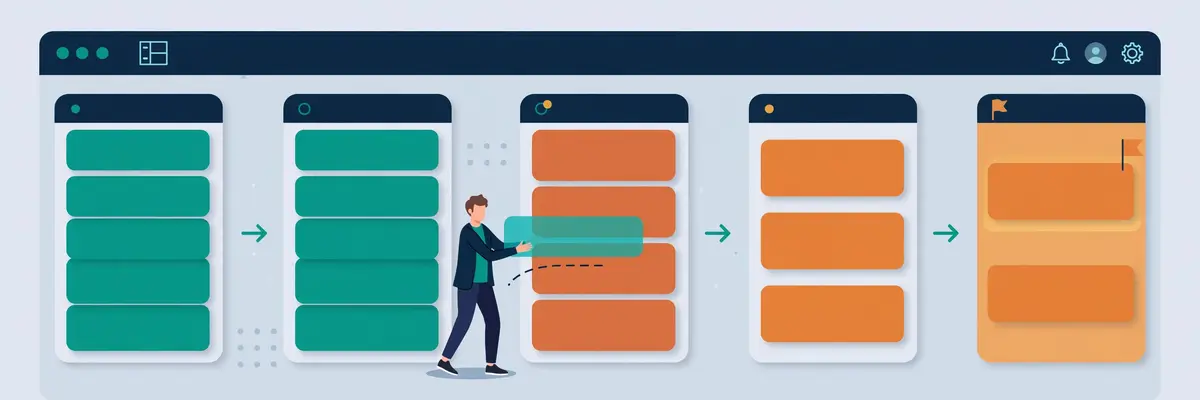
Secondly, a pipeline is only useful if a manager can read it, and reporting is where the five CRMs diverge most. Every CRM here shows a deal board. Only two, HubSpot and Salesforce, offer forecasting a CFO would sign off on. Only one, Pipedrive, makes the board so clear that a new rep understands it in minutes. Apollo tracks deals well enough for a small team, and Close reports on activity and pipeline without pretending to be a forecasting suite.
HubSpot reporting and forecasting in this CRM for outreach guide
Firstly, HubSpot puts forecasting on Professional and Enterprise, with no separate add-on to buy. Professional adds default and custom forecasting and reporting, plus up to 100 custom reports, while Enterprise adds forecasting across team hierarchies and up to 500 custom reports. That simplicity is HubSpot’s understated advantage: forecasting comes with the seat, not as a second negotiation. A team that already runs HubSpot gets forecasting, sequences and the CRM in one contract, which is why HubSpot wins so many mid-market deals.
HubSpot’s reporting dashboards run from 10 dashboards on the free plan to 100 on Enterprise, with 50 reports per dashboard throughout, and its deal journey analytics on Enterprise track up to 10 stages and 10 steps per report. Our HubSpot Sales Hub review covers the limits, the seat types and the onboarding fees in full depth.
Video: How to Build a Sales Pipeline in HubSpot Step by Step (2026 Tutorial) by Tutorial Made Easy on YouTube. This video is the creator’s property, embedded via YouTube for education. OutreachCompare is not affiliated with Tutorial Made Easy and does not claim ownership of this video.
Salesforce reporting and forecasting in this CRM for outreach guide
Secondly, Salesforce offers the deepest reporting of any CRM here, and the steepest learning curve to match. Pro Suite adds sales quoting and forecasting with custom reporting, while Core adds Tableau Next for agentic analytics, and the higher tiers add predictive forecasting, opportunity scoring and consumption forecasting. Salesforce’s AppExchange then adds thousands of reporting extensions, which is both the platform’s greatest strength and its greatest cost, because each one needs configuration and often a consultant.
A Salesforce forecast is genuinely board-ready when it is set up well, with territory management, opportunity splits and embedded forecast charts. The catch is the setup: a small team without a Salesforce admin will take weeks to reach the same view that HubSpot shows on day one. Large organisations accept that trade, because they need the customisation. Small teams should not.
Pipedrive, Close and Apollo reporting in this CRM for outreach guide
Finally, Pipedrive, Close and Apollo cover the everyday reporting a small team needs, and stop there. Pipedrive adds forecast reports on Growth, with Insights dashboards, deal rotting alerts that flag deals going quiet, and up to 500 reports per user on Ultimate. Close covers pipeline and activity reporting, with call outcomes, SMS logs and workflow results, yet it does not aim to be a forecasting suite. Apollo covers reporting and A/B testing on its sequences, with deal tracking that suits a small team, yet its forecasting is lighter than HubSpot’s or Salesforce’s, and a growing team will feel that gap first.
In sum, choose the reporting you need, not the reporting that impresses in a demo. For example, a five-person team needs a clear board and a weekly number. Moreover, a fifty-person team needs hierarchy forecasting and custom reports. HubSpot and Salesforce serve the second team, Pipedrive and Apollo serve the first, and Close serves the team that measures calls before it measures forecasts.
AI features: Breeze, Chloe, Einstein, Nova and Apollo AI
Secondly, AI is now the main battleground in this CRM for outreach guide, and every vendor sells it differently. HubSpot sells AI as agents that spend credits. Close sells AI as an assistant with a monthly credit allowance. Pipedrive sells AI as meeting intelligence and writing help inside the plan. Salesforce sells AI as Agentforce agents on a Flex Credit meter. Apollo bundles its AI writing help and research into the plan you already pay for. The right AI is the one your reps will trust enough to use every day, and the one whose meter you can afford.
HubSpot Breeze and the Prospecting Agent in this CRM for outreach guide
Firstly, HubSpot’s Breeze platform runs on HubSpot Credits, and the pricing page lists an Agent Hub, an Agent Builder, a Data Agent, a Prospecting Agent and a Customer Agent. The Prospecting Agent watches buying signals such as funding rounds and topic research, finds the buying committee, and drafts personalised outreach from the plays you define. HubSpot’s own Knowledge Base puts the cost at 100 credits for each lead the agent recommends outreach for, while third-party coverage of its launch reported roughly $1 per recommended lead, so model the credit burn before leaning on it.
HubSpot includes 500 credits a month on Starter, 3,000 on Professional and 5,000 on Enterprise, at $0.010 per extra credit, with no rollover. A team that leans on the Prospecting Agent will want to model its monthly credit burn before it signs, because the credits run out long before the seats do. Our HubSpot Sales Hub review goes deeper on the agent, the credits and the seat types.
Close Chloe AI in this CRM for outreach guide
In contrast, Close’s AI assistant is called Chloe, and it works inside the workflows and calling that Close is built for. Every plan includes a monthly AI credit allowance, 500 on Solo, 1,000 on Essentials, 1,500 on Growth and 2,000 on Scale, which pays for AI features such as drafting, summaries and workflow help. Growth adds Chloe inside workflows, so the assistant can act on deal changes automatically, and Scale adds live call coaching. Some AI extras, such as the Call Assistant, number rental and additional organisations, are billed separately, so check the add-on list before budgeting.
Chloe’s strength is focus. It does not try to be a general agent for the whole business. It helps a rep who is already on the phone to write a better follow-up, summarise a call and move a deal, which is exactly the work a Close team does all day.
Pipedrive Nova and AI email tools in this CRM for outreach guide
Moreover, Pipedrive’s AI is the most practical of the five for a small team, because it is bundled into the plan rather than metered. Its Nova meeting intelligence tool, listed on the official pricing page, gives a brief before every meeting, a transcript of every call and ready-to-approve CRM updates afterwards. AI-powered report creation sits on Lite, so even the cheapest plan can build a report from a text prompt, and AI email writing, summarising and replying arrive on Premium. There is no separate AI add-on to buy, and no credit meter to watch.
Salesforce Einstein and Agentforce in this CRM for outreach guide
Finally, Salesforce sells the most ambitious AI of the five, and the most metered. Agentforce agents handle lead nurture, pipeline management, prospecting, sales emails and account research, with Agentforce for Sales included on Max and available to buy on Core and Advanced. The platform runs on Flex Credits, with 500,000 credits per organisation per year on Core, 1,000,000 on Advanced and 2,750,000 on Max. Einstein features such as lead scoring, opportunity scoring and predictive forecasting sit on the higher tiers or as add-ons, so a team that wants the full AI story should ask for the Flex Credit cost of a typical week in its demo, because the meter decides the real price.
Apollo AI writing and research in this CRM for outreach guide
In sum, Apollo’s AI is the simplest to budget, because it is included in the plan. Apollo’s AI drafts sequences and emails, researches accounts, builds lists and books meetings, while buying signals such as intent data, job changes and website visits order those lists automatically. Professional unlocks the deeper AI features, AI lead scoring and call recording. There is no separate AI meter to watch beyond the credit allowance that already pays for data, which suits a team that wants AI help without a second bill. Our Apollo review covers the AI features, the credits and the dialer in full depth.
Ease of setup and migration in this CRM for outreach guide
In fact, setup time is the hidden half of the CRM price, and it is where most buyers get surprised. A published seat price tells you nothing about the weeks of setup, the data migration, the pipeline rebuild and the training that come before the first rep logs a call. This CRM for outreach guide sets out the honest timeline, because a CRM that takes a quarter to deploy costs a quarter of pipeline.
The fastest setups in this CRM for outreach guide
Firstly, Pipedrive and Apollo are the fastest to set up. Pipedrive imports data from a spreadsheet or another CRM, integrates with 500+ apps including Zapier, Zoom and Lemlist, and offers free implementation on any plan over $400 a year, according to its own pricing FAQ. A small team can build its pipeline, import its contacts and send its first sequence on the same afternoon. Apollo is faster still for a team starting from scratch, because the data is already inside it, and the free plan needs no card at all.
Secondly, Close is nearly as fast, because it is designed for a team that wants to dial today. Its 14-day trial needs no card, its import tools cover spreadsheets and other CRMs, and its 30-day money-back guarantee lowers the risk of trying it. For example, a solo seller can be calling from Close within hours, although the workflows and dialer that justify the Growth price take a few days to configure properly.
HubSpot setup and migration in this CRM for outreach guide
Moreover, HubSpot sits in the middle on setup. The free CRM is self-serve and live in minutes, and HubSpot Academy and its knowledge base cover the rest. The paid plans add structure: Professional carries a $1,500 onboarding fee and Enterprise $3,500, both mandatory and non-refundable, which buy a guided start rather than a do-it-yourself one. HubSpot’s Smart Transfer tool migrates data from Salesforce in one move, although its own knowledge base warns against running Smart Transfer and the live Salesforce integration at the same time, because the two use different identifiers and create duplicates.
Salesforce setup and migration in this CRM for outreach guide
Finally, Salesforce is the slowest to set up and the hardest to migrate, and buyers should plan for it honestly. A small deployment with standard objects can take weeks, while a large deployment with custom objects, territories and approval processes can take a quarter or more, usually with a consultant or a Salesforce admin on staff. Migration runs through Data Loader or a partner tool, and every custom field, workflow and report needs rebuilding by hand. Moreover, the platform rewards that effort with unmatched depth, yet a team without the time or the budget for it should choose HubSpot or Pipedrive instead, and revisit Salesforce when the complexity genuinely arrives.
In sum, ask every vendor the same three questions before you sign. How long until the first rep is productive? What does migration cost, in money and in weeks? How do we leave, and what format does our data arrive in? A vendor that answers clearly is a vendor worth trusting. If a vendor will not answer that question plainly, treat the evasion as the answer.
Feature matrix: all five CRMs side by side
Secondly, the feature matrix below puts the five CRMs on the same page, so the trade-offs are visible at a glance. A tick means the feature is stated on the provider’s official site. A dash means it was not confirmed or is confirmed absent. Plan gating is noted in the cell, because a feature that only exists on the top tier is not really a feature of the CRM a small team buys.
Core CRM features in this CRM for outreach guide
| Feature | HubSpot | Close | Pipedrive | Salesforce | Apollo |
|---|---|---|---|---|---|
| Free plan | ✓ 2 users, 1,000 contacts | — 14-day trial only | — 14-day trial only | ✓ Free Suite, 2 users | ✓ Free plan, never expires |
| Visual deal pipeline | ✓ | ✓ | ✓ | ✓ | ✓ Lighter than a full CRM |
| Sequences | ✓ Pro and Enterprise only | ✓ Workflows and bulk email, Growth | ✓ Nurturing sequences, Growth | — Needs Salesloft, Outreach or add-on | ✓ All paid plans |
| Built-in dialer | ✓ Minutes included per plan | ✓ Power Dialer Growth, Predictive Scale | — Via integrations such as CloudTalk | — Via AppExchange or engagement tools | ✓ Cloud dialer, paid plans |
| SMS | — Not a core Sales Hub feature | ✓ Built in, billed per message | — Via integrations | — Via integrations | — Not a core feature |
| Built-in lead database | — Via integrations and enrichment | — Via integrations | — Enrichment on Ultimate only | — Via Data.com partners and AppExchange | ✓ 240M+ contacts, 30M+ accounts |
Reporting, AI and integrations in this CRM for outreach guide
| Feature | HubSpot | Close | Pipedrive | Salesforce | Apollo |
|---|---|---|---|---|---|
| Forecasting | ✓ Pro and Enterprise | — Pipeline reporting only | ✓ Forecast reports, Growth | ✓ Pro Suite and above | — Deal tracking only |
| Custom reports | ✓ 100 Pro, 500 Enterprise | ✓ Activity and pipeline reports | ✓ Up to 500 per user, Ultimate | ✓ Deep custom reporting | ✓ Reporting and A/B testing |
| AI assistant | ✓ Breeze, Prospecting Agent | ✓ Chloe, AI credits per plan | ✓ Nova meeting AI, AI email tools | ✓ Einstein, Agentforce, Flex Credits | ✓ AI writing, lead scoring, agents |
| Two-way HubSpot sync | n/a It is HubSpot | — Via Zapier or API | — Via Zapier or API | ✓ Native HubSpot-Salesforce sync | ✓ Two-way native sync |
| Two-way Salesforce sync | ✓ Native HubSpot-Salesforce sync | — Via Zapier or API | — Via Zapier or API | n/a It is Salesforce | ✓ Two-way native sync |
| Integrations | 2,000+ | API, Zapier, native apps | 500+ | AppExchange, thousands | HubSpot, Salesforce, Outreach |
| Free trial | Free CRM, no trial needed | ✓ 14 days, no card | ✓ 14 days, no card | ✓ Try for free buttons | Free plan, no trial needed |
| Onboarding fee | $1,500 Pro, $3,500 Ent | None listed | None listed | Not published | None listed |
Last checked: 16 November 2026 on HubSpot’s pricing page, Close’s pricing page, Pipedrive’s pricing page, Salesforce’s pricing page and Apollo’s pricing page, plus our published HubSpot review, Close review and Apollo review. A dash means the feature was not confirmed on the official site, not that it is impossible through an integration. Features and pricing can change, so please check the provider’s site before you buy.
Reading the feature matrix
In sum, the matrix shows that no CRM wins everywhere. HubSpot wins on sequences, forecasting and ease of setup. Close wins on calling and SMS. Pipedrive wins on clarity and price. Salesforce wins on depth and customisation. Apollo wins on data and all-in-one value. The right choice is the CRM whose strengths match the team’s daily work, not the one with the longest feature list.
Pros and cons: the honest case for each CRM
Secondly, every CRM in this CRM for outreach guide has a real weakness, and a buyer who only reads the strengths will be disappointed. The honest case for each one names both sides, so the decision is made with eyes open.
HubSpot pros and cons in this CRM for outreach guide
HubSpot’s strengths are its free CRM, its ease of setup, its sequences and forecasting on Professional, and its 2,000+ integrations. It is the only CRM here that a team can start on for free and grow into an enterprise platform without migrating, and its Prospecting Agent works from the CRM records themselves rather than a separate data silo. Our HubSpot Sales Hub review examines the whole platform in detail.
HubSpot’s weaknesses are its price jumps, its credit meter and its seat types. Sequences and forecasting only arrive on Professional at $90 a seat a month plus a $1,500 onboarding fee, the Prospecting Agent spends credits that run out, and the split between Core Seats and Sales Seats confuses buyers who mix plans. In fact, a team that stays on Starter will never see the features that justify HubSpot at all.
Close pros and cons in this CRM for outreach guide
Close’s strengths are its built-in dialer, its SMS, its workflows and its focus on selling by phone. It is the only CRM here where calling is the centre of the product rather than an add-on, and its Power Dialer on Growth genuinely changes how many conversations a rep has in a day. Our Close review examines the whole platform in detail.
Close’s weaknesses are its price gates, its calling costs and its lighter forecasting. Workflows and the Power Dialer only start on Growth at $99 a user a month, calling minutes are billed on top of the seat, and the reporting covers activity and pipeline without a board-ready forecast. In contrast, a team that emails more than it calls will pay for a dialer it rarely uses.
Pipedrive pros and cons in this CRM for outreach guide
Pipedrive’s strengths are its price, its clarity and its speed. Four published plans from $14 a seat a month, a 14-day trial with no card, a pipeline a new rep understands in minutes, and sequences and automations from Growth at $39. Its Nova meeting intelligence and AI report creation are bundled into the plan, not metered, which keeps the bill predictable.
Pipedrive’s weaknesses are its missing dialer, its missing SMS and its lighter reporting. Calling needs an integration, SMS needs an integration, and forecasting is a report rather than a suite. Moreover, a team that dials all day or reports to a board will outgrow Pipedrive sooner than it outgrows HubSpot or Salesforce.
Salesforce pros and cons in this CRM for outreach guide
Salesforce’s strengths are its depth, its customisation and its ecosystem. No other CRM here matches its reporting, its forecasting, its Agentforce AI or its AppExchange, and no other platform scales as far, from a two-user Free Suite to a global sales organisation on Max at $550 a user a month. A team with complex processes, territories and approvals will find everything it needs in one platform.
Salesforce’s weaknesses are its price, its complexity and its missing sequences. Meaningful outreach features start at the Pro Suite at $100 a user a month, implementation usually needs paid help, the platform expects a dedicated admin, and multi-step sequences need Salesloft, Outreach or a paid add-on. A small team that buys Salesforce for cold outreach is buying a race car to drive to the shops.
Apollo pros and cons in this CRM for outreach guide
Apollo’s strengths are its published prices, its free plan, its 240M+ contact database and its all-in-one login. In fact, no other platform here finds the prospect, sends the sequence, dials the number and tracks the deal on a single bill starting at $49 a seat a month. Our Apollo review examines the whole platform in detail.
Apollo’s weaknesses are its credit system, its single plan level per account and its lighter CRM. Apollo credits expire at the end of each cycle without rollover, so allowance paid for in a quiet month is simply lost. Every seat in an Apollo account must sit on the same plan, so Basic and Professional cannot be mixed across one team. Its deal tracking is useful, yet it is not a board-ready forecasting suite, and a growing team will eventually pair it with a full CRM such as HubSpot or Salesforce.
A decision framework: team size, budget, CRM and channels
In fact, a decision framework beats a feature list, because it forces the buyer to answer four questions in order. Team size decides the category. Budget decides the tier. The existing CRM decides the shortlist. Channels decide the add-ons. Answer them in that order, and the right CRM in this CRM for outreach guide usually picks itself.

Step one in this CRM for outreach guide: count the team
Firstly, count the sellers who will use the CRM every day. One to three sellers should buy Apollo or HubSpot’s free CRM, not a paid platform. Three to ten sellers should compare Pipedrive Growth, Apollo Professional, Close Growth and HubSpot Professional, and should favour the published prices unless the calling or forecasting features are genuinely needed. Ten to fifty sellers should shortlist HubSpot Professional and Close Growth seriously, and ask Salesforce for a Pro Suite quote. Fifty or more sellers should run a formal evaluation with Salesforce and HubSpot Enterprise, because the contract will run into five figures a year.
Step two in this CRM for outreach guide: set the real budget
Secondly, set the real budget, not the seat price. Add the onboarding fee, the calling minutes, the credit top-ups, the add-ons and the implementation to the seat cost, and ask for the year-two and year-three prices in writing. A ten-seat team on HubSpot Professional pays $12,300 in year one once the onboarding fee is counted. A $99 Close seat becomes $11,880 plus calls. A $100 Salesforce seat becomes $12,000 plus setup. The CRM that looks cheapest on the seat price is rarely the cheapest all-in.
Step three in this CRM for outreach guide: name the CRM you already run
Thirdly, name the CRM the team already runs, because switching CRMs is the most expensive move in this CRM for outreach guide. A HubSpot team should shortlist HubSpot Sales Hub first, because nothing beats sharing the same database. A Salesforce team should shortlist Salesforce Sales Cloud and its engagement partners, because the data already lives there. A team with no CRM should shortlist Pipedrive and Apollo, because both are easy to start and easy to leave. A team that dials all day should shortlist Close whatever it runs today, because the dialer is worth the migration.
Step four in this CRM for outreach guide: list the channels
Finally, list the channels the team actually uses. Email is table stakes everywhere. Phone matters most for Close, HubSpot and Apollo, which dial natively, and matters least for Pipedrive and Salesforce, which need integrations. LinkedIn steps matter for teams that sell to executives, and HubSpot sequences support them with a Sales Navigator subscription. SMS matters for a few industries, and only Close covers it natively. A team that dials all day should check the dialer first, because the wrong CRM means a second tool, a second bill and a second sync to maintain.
Frequently asked questions in this CRM for outreach guide
Do I need a CRM for cold outreach, or is a sequencer enough?
A sequencer is enough when sending is the whole job, for example an agency that books meetings and hands them to a client, or a solo seller with a short list. A CRM becomes necessary when deals need tracking, follow-ups get forgotten, two reps email the same prospect, or a manager needs a pipeline number they can defend. Most teams outgrow the sequencer-only setup once they pass three sellers.
Which CRM is cheapest for a small outreach team?
Pipedrive Growth is the cheapest honest starting point in this CRM for outreach guide, at $39 a seat a month on annual billing, or $4,680 a year for ten seats, with sequences and automations included. Apollo Basic follows at $49 a seat a month, with data included. HubSpot’s free CRM costs nothing for two users, although sequences and forecasting need Professional at $90 a seat a month. All three were checked on 16 November 2026.
Can I run outreach from inside HubSpot instead of buying a sequencer?
Yes, for warm follow-up, and partly for cold outreach. HubSpot Professional and Enterprise run sequences with up to 500 or 1,000 sends per user per day, plus calling and forecasting in the same login. For high-volume cold email, a dedicated sequencer such as Instantly or Smartlead still sends more, rotates more inboxes and protects deliverability better, and it syncs back to HubSpot. Most serious outbound teams run both.
Does Salesforce work for cold outreach?
Salesforce works for cold outreach as the system of record, not as the sender. Sales Cloud tracks the pipeline, forecasts the quarter and runs Agentforce AI, yet multi-step sequences need Salesloft, Outreach or a paid add-on. A Salesforce team should budget for the engagement tool on top of the CRM, starting at the Pro Suite at $100 a user a month, and should remember that Enterprise and Unlimited were replaced by Core, Advanced and Max in September 2026.
How do I sync a sequencer with my CRM without duplicates?
Pick one sync path per record type and test it on five test contacts before the first real campaign. Connect the sequencer to the CRM, send a test campaign, reply to one email, book one meeting and move one deal, then check that every event appears in both tools with the right contact attached. Never run two sync tools on the same records at once, because HubSpot’s own knowledge base warns that its Smart Transfer tool and its live Salesforce integration use different identifiers and create duplicates.
Is Apollo a real CRM or just a data tool?
Apollo is both, and the honest label is CRM-lite. Its 240M+ contact database, sequences, dialer and two-way HubSpot and Salesforce sync cover the daily work of a small sales team, and its deal tracking is real. Its forecasting is lighter than HubSpot’s or Salesforce’s, its credits expire every cycle, and all seats sit on the same plan. A small team can run on Apollo alone. A growing team will eventually pair it with a full CRM.
The verdict in this CRM for outreach guide
Our verdict
HubSpot Sales Hub is the best all-round CRM for outreach. Its free CRM covers two users, its sequences and forecasting start on Professional at $90 a seat a month, and no other CRM in this CRM for outreach guide is as easy to set up or as well integrated. Close CRM is the best choice for teams that sell by phone, with a built-in power dialer, SMS and workflows from $99 a user a month on Growth. Pipedrive is the best choice for a small team on a budget, with the clearest pipeline and sequences from $39 a seat a month on Growth.
Salesforce Sales Cloud is the best choice for large and complex sales organisations, with the deepest reporting, forecasting and AI, although meaningful outreach starts at the Pro Suite at $100 a user a month and sequences need an engagement tool beside it. Apollo is the best CRM-lite for small teams, with data, sequences and a dialer from $49 a seat a month, although its deal tracking is lighter than a full CRM. No numeric score is given here, because OutreachCompare has not tested these CRMs hands-on yet, and a score without testing would be guesswork. Start on the free plan or the 14-day trial, test the sync on real records, and ask every vendor for the all-in year-one price in writing before you sign.
One last word on choosing a CRM for outreach
In sum, the CRM market in 2026 is really two markets. One market publishes its prices, offers a free plan or a trial, and lets a team start this week: HubSpot, Pipedrive, Close and Apollo. The other market sells depth and scale through annual contracts and implementation: Salesforce. Both markets are honest, and both serve real teams. The mistake is buying from the wrong market for your team’s size, budget and channels, and this CRM for outreach guide exists so that mistake is easy to avoid.
Keep reading
- HubSpot Sales Hub Review 2026 — the full HubSpot review, with sequences, forecasting and the Prospecting Agent.
- Close CRM Review 2026 — the full Close review, with the Power Dialer, workflows and Chloe AI.
- Apollo Review 2026 — the full Apollo review, with pricing, credits and the dialer.
- Enterprise Engagement Guide 2026 — the full guide to Outreach, Salesloft, HubSpot, Apollo and ZoomInfo for large revenue teams.
- Best Cold Email Software 2026 — the wider software guide, for teams that need sending tools rather than a CRM.
- Best Cold Email Tools for Beginners 2026 — the beginner shortlist, for teams choosing their first sending tool.
- Cold Email for Beginners: The Complete 2026 Guide — the starting guide, for teams that are new to outbound altogether.
- Best B2B Data Providers 2026 — the data guide, for teams that need contacts before they need a CRM.
- Instantly vs Smartlead vs Lemlist 2026 — the three-way sequencer comparison, with CRM sync and pricing head to head.
- Klenty Review 2026 — the full Klenty review, with its five-CRM sync and its dialer.
- Reply.io Review 2026 — the full Reply.io review, with two-way native CRM sync.
Leave a Reply