
Best for data + outreach in one seat: Apollo
A 240M+ contact database, sequences, a dialer and AI writing in one subscription, from a free plan. This Apollo review covers its strengths, its limits, and how it compares with ZoomInfo, Cognism and Lemlist.
Visit Apollo → Jump to the comparison tableMost sales tools make you choose: buy the data somewhere, then buy the sending tool somewhere else. Apollo refuses that trade-off. It puts a huge B2B contact database and a full sales engagement platform under one login. The list you build in the morning is the sequence you send in the afternoon. Replies land in the same place where your deals are tracked. That one-roof idea is the whole appeal of Apollo, and it is why more than 600,000 companies use it, according to Apollo’s own site.
This Apollo review looks at the platform the way a buyer would. It covers what Apollo is, who it fits best, what it costs in 2026, how each feature works, and where its honest limits sit. You will also see how Apollo compares with ZoomInfo and Cognism on data, and with Lemlist on outreach. That way you can tell in one read whether Apollo is your all-in-one pick, or whether a specialist would serve you better. If you are new to cold email, start with our Cold Email for Beginners guide first. It explains domains, warmup and sending limits, and it will make everything below much easier to follow.
One thing to know before we start: Apollo is a big platform, and this review does not pretend otherwise. It is strong on data and sequencing, yet more complex than a simple email sender. By the end, you will know which plan fits your team, what the credit system really costs, and when a rival is the better buy.
Quick Answer
Apollo is a B2B contact intelligence database and multichannel sales engagement platform in one subscription. Its database holds 240M+ contacts and 30M+ company accounts. You can filter them by firmographics, technographics and buying intent, enrich them with waterfall enrichment, then contact them through automated email sequences, a built-in cloud dialer and manual LinkedIn task queues. It is best for sales teams, founders and small businesses that want their prospect data and their outreach in one tool. That way you avoid paying enterprise prices for a separate database and a separate sequencer. Plans start with a free plan. Paid plans start at $49 per user a month for Basic and $99 per user a month for Professional on monthly billing. Annual billing is cheaper. If you only need data, or you only send email at high volume, a specialist rival may fit you better.
In short, this Apollo review’s finding is simple: Apollo is the all-in-one pick. It is the easiest way for a small team to go from an idea of an ideal customer to a verified list, a live sequence and a tracked deal. You do it all without buying three tools. It is not the deepest database for enterprise, and its per-seat pricing and credit system add up for larger teams. See current Apollo pricing before you decide, because prices change.
Table of Contents
- Quick Answer
- Apollo review: what it is and who it is for
- Apollo review: pricing and plans in 2026
- Key features, one by one
- Setting up your first Apollo campaign
- Apollo pros and cons
- Apollo vs ZoomInfo vs Cognism vs Lemlist
- Our verdict
- Frequently asked questions
- Your next step
Apollo review: what it is and who it is for
Apollo is two products that share one login. The first is a sales intelligence database. It holds 240M+ contacts and 30M+ company accounts, according to Apollo’s own homepage, checked on 15 November 2026. You can search it by job title, company size, industry, location, the technology a company already uses, and buying-intent signals such as hiring, funding or website activity. The second is a sales engagement platform: email sequences, a cloud dialer, LinkedIn task queues, an AI writing assistant, warmup, inbox rotation, verification, reporting, A/B testing and deal tracking. Most tools do one of those two jobs well. Apollo’s bet is that doing both in one place saves a team more time than either job done separately.
In practice, the workflow runs in a loop. First, you build a list with the database filters, narrowing millions of contacts down to the few hundred people who match your ideal customer. Next, you enrich the list. Waterfall enrichment fills in missing emails and phone numbers by checking several data sources in turn until it finds a match. Each email is verified before you send. Then you build a sequence: a short opening email, a follow-up, a LinkedIn task, a call through the dialer, and another email, with delays and conditions between the steps. Finally, replies and call outcomes feed back into the same platform, where deals are tracked and reports show which steps actually earn meetings. That loop is the product, and it is genuinely useful when it runs well.
What Apollo is not
Actually, it is worth saying clearly what Apollo is not. It is not a general email marketing tool for newsletters or promotions to people who signed up. Cold email means writing to businesses that have not heard from you yet, with a short, relevant, personal message and a clear way to opt out. That is normal B2B practice when it is done carefully, and it is the only kind of sending Apollo is designed for. It is also not a full CRM. It tracks deals and syncs two-way with HubSpot and Salesforce. Your pipeline, forecasts and customer records still live in the CRM itself. Apollo works best alongside a CRM rather than instead of one.
Nor is Apollo a bulk email blaster. Its sequences are built for targeted outreach to named people at named companies, with personalisation, limits and deliverability tooling around every send. If your plan is to send the same generic email to a hundred thousand strangers, Apollo is the wrong tool, and the comparison table below will point you to the volume-first alternatives. And Apollo is not a LinkedIn automation tool. Its LinkedIn steps are manual task queues: Apollo reminds you to visit a profile or send a connection request, and you do it yourself in LinkedIn. That keeps you inside LinkedIn’s rules, yet it is slower than the fully automated LinkedIn steps some rivals offer.
Who Apollo is best for
Apollo fits best when one person or a small team does the whole outbound job. For example, a founder selling to fifty ideal accounts can find those accounts in the database and enrich the decision makers. The AI assistant helps write the sequence. Calls go out from the dialer, and replies land in the same place, all without leaving Apollo. That is a lot of jobs for one subscription, and for a team of one to five people it is often the difference between outbound happening and outbound never starting.
In addition, Apollo suits sales teams that need data and sending to stay in sync. When the database, the sequence and the deal tracker share one record, nothing gets lost between tools. A reply pauses the follow-ups automatically. A bounced email is flagged before the next step. A booked meeting shows up against the same contact you prospected last week. Teams that have felt the pain of exporting lists from one tool and importing them into another will recognise the relief immediately.
Finally, Apollo suits budget-conscious teams that want enterprise-style data without enterprise prices. A published rate card, a free plan, and per-seat pricing from $49 a month make Apollo a tool a small business can actually buy. ZoomInfo and Cognism both start with a sales call and a five-figure annual contract instead. If your budget is measured in hundreds a month rather than thousands, Apollo is often the only serious database-plus-sequencer on your shortlist.
Who should not use Apollo
On the other hand, Apollo is more platform, and more learning, than some senders need. If you already own a great database, or you only send email and never touch the data side, you are paying for half a product you will never open. A simpler sequencer would cost less and take an afternoon to learn instead of a week. Compare the tier you would actually use before you commit.
Similarly, if you sell mainly into Europe and need phone-verified mobile numbers with deep GDPR compliance screening, Cognism’s Diamond Data is built for exactly that job. Apollo’s broader database is not a like-for-like replacement. And if you are a large enterprise that needs the deepest possible US data, org charts and intent signals, ZoomInfo’s depth is hard to beat. That holds even at its price, with a dedicated data team behind the product. Apollo is the all-rounder, not the deepest specialist in any single corner.
Finally, Apollo is not a shortcut around the basics. You still need a separate sending domain, proper SPF, DKIM and DMARC records, a warmed-up mailbox, and a verified list. You also need to understand the credit system: finding emails and phone numbers spends credits, and credits do not roll over. Our guide to getting your first email addresses shows the safest ways to build that list. Our sending domain guide covers the setup to finish first.
Video: (Apollo.io 2026) B2B Lead Generation Tutorial For Beginners by Charlie Barber. This video is the creator’s property, embedded via YouTube for education. OutreachCompare is not affiliated with Charlie Barber and does not claim ownership of the video. It walks through Apollo’s lead generation workflow step by step, from signing up for a free account to building a list and pulling high-quality leads.
Apollo review: pricing and plans in 2026
Apollo keeps its pricing public, which already sets it apart from its enterprise data rivals. There are four plans, and you pay per seat, with every seat on the same plan. That is a friendly model for a small team, because the price scales with headcount rather than with a negotiated contract. The detail sits in the credits, though, so here is the simple version this Apollo review checked on the official pricing page today.
The four plans: Free, Basic, Professional and Enterprise
Apollo review: Free and Basic plans
Free costs nothing and never expires. It is the honest starting point for a founder exploring Apollo or running very light outreach: basic access to the database and the sequencing tools, with a small monthly credit allowance. One limit to know is that free plans can connect Gmail accounts only for sending, while paid plans can connect Microsoft Outlook or any other email provider. That is a fair trade for a free plan, and it is enough to learn the platform properly.
Basic, at $49 per user a month on monthly billing, is where most individual sellers start. It adds email sequencing and the core integrations, a much larger credit allowance, and the full database filters. Apollo’s own pricing page describes Basic as the plan for individual sellers doing regular outbound. That description fits. It is the first plan where Apollo feels like a daily tool rather than a trial. Annual billing lowers the monthly rate, so check the pricing page for the exact annual figure before you buy.
Apollo review: Professional and Enterprise plans
Professional, at $99 per user a month on monthly billing, is where Apollo becomes a full sales platform. It adds higher credit limits, AI features, the built-in cloud dialer with call recording, A/B testing, and the advanced CRM integrations. Apollo describes Professional as the plan for full-time reps who need higher limits and AI. That is the right way to read it. If you call prospects every day, or you want the AI to research and write for you, this is the real starting point, not Basic.
Enterprise is custom-priced for larger teams. It adds custom credit volumes, single sign-on, advanced security, API access and dedicated support. It is the plan Apollo points Fortune 500 customers towards, including Intel, AT&T, Adobe, SAP and Shopify. If you need SSO, governance or a custom data volume, talk to Apollo’s sales team rather than guessing from the self-serve plans.
Apollo review: pricing at a glance
| Plan | Monthly billing | Annual billing | What you get |
|---|---|---|---|
| Free ★ Best for: Trying Apollo | $0 | $0 | Basic database and sequencing access, small monthly credit allowance, Gmail sending only, free with no time limit |
| Basic ★ Best for: Individual sellers | $49 / user / month | Lower — check the site | Email sequencing, full database filters, core CRM integrations, larger credit allowance, Outlook and any email provider |
| Professional ★ Best for: Full-time reps | $99 / user / month | Lower — check the site | Everything in Basic, plus higher credit limits, AI features, built-in cloud dialer with call recording, A/B testing, advanced CRM integrations |
| Enterprise ★ Best for: Larger teams | Custom | Custom | Everything in Professional, plus custom credit volumes, SSO, advanced security, API access, dedicated support |
Last checked: 15 November 2026 on Apollo’s official pricing page. Monthly-billing prices are Apollo’s own published figures; annual billing is cheaper per month, and the exact annual rate is shown on the pricing page when you switch to annual billing. Features and pricing can change, so please check the provider’s site before you buy. We do not guess at features, prices or trials.
The credit system, explained honestly
Credits are Apollo’s currency, and they decide the real cost more than the seat price does. Depending on your plan, credits pay for revealing emails and phone numbers, exporting records, warmup, and AI-researched data. Credits are pooled across your whole team and granted upfront at the start of each billing cycle, so your full allowance is available from day one. That pooling is genuinely helpful: a rep who finds a lot of numbers one month can draw on the team pool rather than hitting a personal wall.
Two rules matter most. First, credits reset at the start of each new billing cycle and do not roll over if unused, so a quiet month does not bank credits for a busy one. Second, all seats on an account sit on the same plan. You cannot put one power user on Professional and the rest on Basic. You buy for your heaviest user. Pricing guides that checked Apollo’s page in October 2026 reported annual credit pools of around 30,000 credits a seat a year on Basic and 48,000 on Professional. Enterprise pools run higher. The exact allowance is shown on the pricing page, so check the site before you commit. If you run out mid-cycle, you can buy add-on credits from the subscription settings, and those are charged immediately and renew each cycle until you remove them.
Apollo review: is it good value?
For a small team that needs both data and sending, the value is clear. A separate database subscription and a separate sequencer would cost far more than $49 or $99 a seat, and Apollo removes the export-import work between them as well. For a team that only needs one half of Apollo, the picture is mixed. A data-only buyer pays for sequencing they never open. An email-only sender pays for a database they never search. Price the half you will actually use, and compare that against the specialist in the comparison table below.
As for a trial, Apollo offers a free trial with access to most features of the plan you select. When the trial ends, you can upgrade or move to the free plan. That plan stays free with no time limit. That is genuinely helpful: you can build a real list and run a real sequence before paying anything. Check Apollo’s current pricing and trial — it takes a minute, and it is the only way to be sure.
Key features, one by one
Apollo packs a lot into one platform, so it helps to look at each feature on its own. Below are the five features this Apollo review looks at first, in the order you will actually use them.
Apollo review: the 240M+ database and smart filters
Data is where Apollo starts, and it is unusually deep for a tool that also sends email. The database holds 240M+ contacts and 30M+ company accounts, according to Apollo’s own homepage, checked on 15 November 2026, and it is refreshed on an ongoing basis. You can filter it by firmographics such as company size, industry and location. Technographics cover the software a company already uses. Buying-intent signals cover hiring, funding and website visits. That means you can go from an idea of your ideal customer to a real list inside the same tool that will send the campaign.
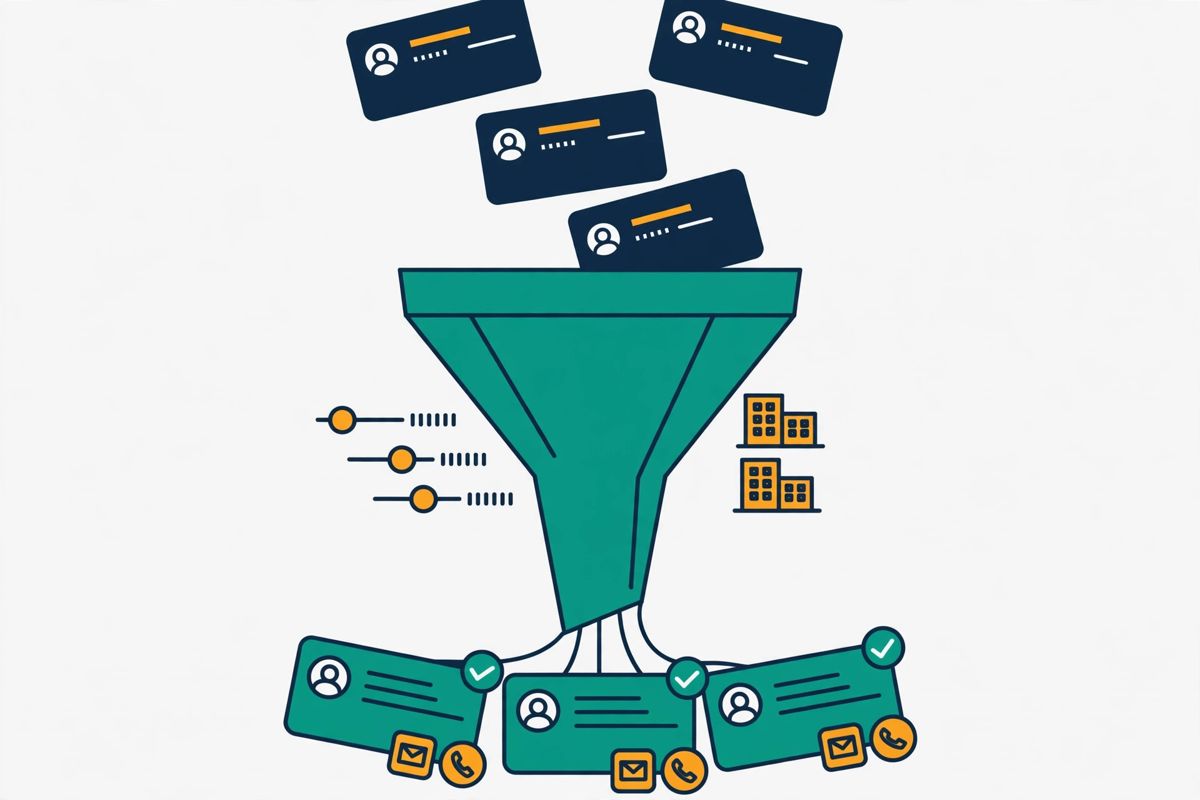
The filters are the difference between a database and a useful database. A list of ten thousand marketing managers is not helpful. A list of forty marketing managers is a campaign. Pick software companies with fifty to two hundred staff, in Ireland and the UK, using a competing tool. Apollo’s filters get you to that second list quickly, and the AI search can help when you are not sure which filters to pick. If you want to compare dedicated data tools side by side, our Best B2B Data Providers 2026 guide ranks them in full.
Apollo review: waterfall enrichment and the Chrome extension
Finding the contact is only half the job, though. Apollo’s waterfall enrichment fills in the gaps. It checks several data sources in turn for a missing email or phone number. A lead that one provider cannot find may still be completed by the next. Built-in email verification then checks each address before you send, which protects your sender reputation and keeps your bounce rate down. You pay for enrichment in credits, and a mobile number costs more credits than an email, so heavy phone prospecting spends the pool faster than email-only work.
The Chrome extension extends the same workflow onto the web. When you find a prospect on LinkedIn or a company website, the extension can pull their contact details into Apollo without you copying and pasting between tabs. That small convenience matters when you build lists by hand, because it turns a slow afternoon of tab-switching into a single flow. One honest caution belongs here: no database is perfectly accurate, and Apollo’s own knowledge base notes an email accuracy rate of around 91%, while its product page claims higher. Always verify a list before a big send, and treat a bounced address as a signal to clean the list, not to keep sending.
Apollo review: email sequences, dialer and LinkedIn tasks
Sequences are where Apollo turns data into conversations. You build a campaign by chaining steps. Send an opening email on day one and a follow-up on day three. Add a LinkedIn task on day four, a call through the cloud dialer on day five, and another email after that. Each step can react to what the prospect did before. A prospect who replies stops receiving follow-ups automatically. A prospect who opened your email three times can get a different next step from one who never saw it. A/B testing on Professional lets you test two versions of a step and keep the one that earns more replies.
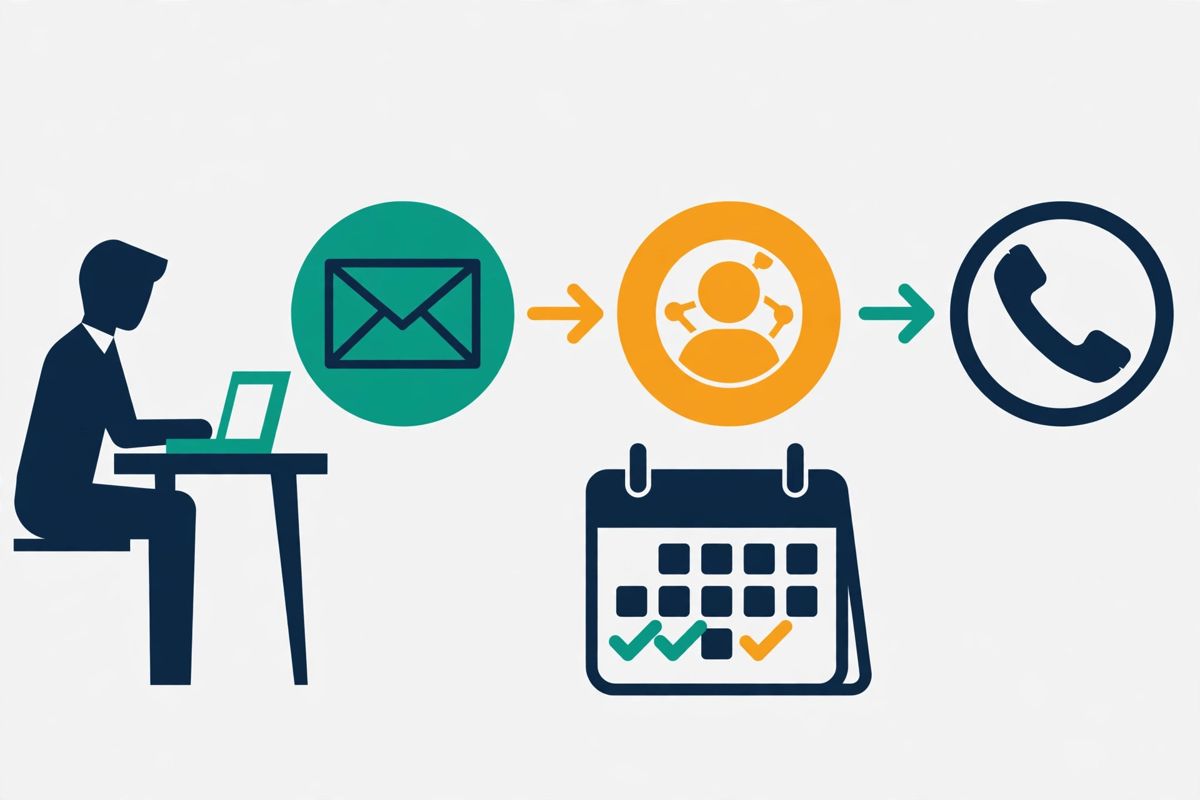
The built-in cloud dialer, on Professional and above, lets you call prospects from inside the sequence and log the outcome, with call recording included so you can review what worked. LinkedIn steps, by contrast, are manual task queues: Apollo reminds you to visit a profile or send a connection request, and you do it yourself in LinkedIn. That is slower than fully automated LinkedIn, yet it keeps you inside LinkedIn’s own rules, and it is the safer choice for an account you care about. If automated LinkedIn is the heart of your outbound, our Lemlist review covers a rival that automates those steps.
Apollo review: AI writing, warmup and deliverability
Apollo’s AI assistant helps in two places: researching a prospect and writing the message. It can pull together what Apollo knows about a person and a company, then draft an opening line or a whole email that references something real about them. That is genuinely useful for a rep writing fifty emails a day. A personal first line is the difference between an email that gets read and one that gets deleted. As always with AI writing, review the draft before you send it: the AI is a starting point, not a substitute for knowing your prospect.
Deliverability gets serious attention too. Apollo offers automated email warmup, inbox rotation and reputation monitoring. New mailboxes build a sending history before real prospects ever see an email. Each campaign spreads across your connected mailboxes rather than hammering one address. Warmup and rotation are included rather than sold as extras, which is the right call. None of this replaces good practice, though. Warmup helps a healthy setup, yet it cannot save a purchased list, a misleading subject line, or a domain with no authentication. If you want the full picture, our Best Email Deliverability Tools 2026 guide compares the dedicated deliverability tools, and our Best Warmup Tools 2026 guide covers warmup in depth.
Apollo review: reporting, deal tracking and CRM sync
Finally, Apollo closes the loop with reporting and deal tracking. Customisable reports show open rates, reply rates, meetings booked and step-by-step conversion, so you can see which email in a sequence earns replies and which one should be rewritten. Deal tracking keeps the pipeline in the same place as the outreach, so a booked meeting does not vanish into a spreadsheet. For teams that already live in a CRM, Apollo’s native two-way sync with HubSpot and Salesforce keeps the sending data in sync with the rest of the sales stack. Integrations with Outreach, Salesloft and Marketo add more options. API access is available on Enterprise plans for custom workflows.

That reporting-first design is also why Apollo works well for managers, not just for individual reps. A sales leader can see the whole team’s activity, compare sequences, and coach the rep whose reply rate is lagging, all from the same dashboard the reps use every day. Apollo’s own pricing page reports a 4.7 out of 5 rating across more than 9,600 reviews, and ease of use is one of the things reviewers praise most often. The trade-off is depth: Apollo’s reporting is strong for outreach, yet it is not a replacement for the forecasting and pipeline analytics of a dedicated CRM.
Setting up your first Apollo campaign
Getting started with Apollo is straightforward once you know the order. Most people go from signup to a live campaign in an afternoon, as long as they do not skip the setup steps.
First, set up a separate sending domain and add SPF, DKIM and DMARC records. Never send cold email from your main company domain. Second, connect your mailboxes and let the automated warmup run for two to four weeks before any real volume. Third, build a small list of 50 to 200 verified prospects, filtered tightly to your ideal customer, using the database and the email finder. Fourth, write a short sequence. Start with one opening email under 100 words, with an AI-assisted personal first line. Add two or three follow-ups that add value instead of repeating the ask. Put one LinkedIn task in the middle, and one call step if you are on Professional.
Next, test everything on a small batch. Send to 25 people, then watch the replies, check your credit usage, and fix what looks wrong before you scale. Finally, grow slowly. Add mailboxes, raise daily limits a little at a time, and let warmup and inbox rotation do their quiet work in the background. Patience here pays off in deliverability later. If you want to see the whole workflow on screen before you commit, the video below walks through Apollo for cold outreach in a few minutes.
Video: Apollo.io Tutorial (2026) | How To Use Apollo.io For Cold Outreach by Software Scope. This video is the creator’s property, embedded via YouTube for education. OutreachCompare is not affiliated with Software Scope and does not claim ownership of the video. It walks through Apollo step by step, from setting up an account and finding prospects to sequences, the dialer and automations.
Apollo review: pros and cons
However, every tool has trade-offs, and an honest Apollo review should name them plainly. Here is the balanced picture after checking the official site and the verified feature profiles.
Apollo review: what we like
- Data and outreach in one subscription. A 240M+ contact database and a full sequencer share one login, so no list ever has to be exported and imported between tools.
- Published pricing with a free plan. A free plan that never expires, paid plans from $49 a user a month, and a trial that unlocks most features before you pay.
- Waterfall enrichment with built-in verification. Several data sources are checked in turn, and each email is verified before you send.
- Warmup, inbox rotation and reputation monitoring included. Deliverability tooling is part of the platform, not an extra you have to buy.
- AI writing and research assistant. The AI drafts personal opening lines and whole emails from real prospect data.
- Built-in dialer and deal tracking. Calls and pipeline live in the same place as the emails, with two-way HubSpot and Salesforce sync.
- Chrome extension for prospecting on the web. Pull contact details into Apollo from LinkedIn or a company site without copying and pasting.
Apollo review: what could be better
- Per-seat pricing adds up fast. A team of five on Professional pays $495 a month on monthly billing, before any add-on credits.
- Credits expire every cycle. Unused credits do not roll over, and mobile numbers cost far more credits than emails, so heavy calling spends the pool quickly.
- All seats share one plan. You cannot put one power user on Professional and the rest on Basic, so you buy for your heaviest user.
- LinkedIn steps are manual tasks. Apollo reminds you to act on LinkedIn rather than automating the steps, which is slower than rivals with full LinkedIn automation.
- Learning curve for beginners. Apollo assumes you already know domains, warmup and sequences, and its many options can feel overwhelming on day one.
- Not the deepest database for enterprise. ZoomInfo and Cognism go deeper on US enterprise data and European phone-verified mobiles respectively.
None of these downsides is a deal-breaker on its own, because each one only matters for some senders. Together, though, they draw a clear line. Apollo is excellent for small teams that want data and outreach in one place at a published price. It is less complete if you want the deepest specialist data or fully automated LinkedIn at any price.
Apollo vs ZoomInfo vs Cognism vs Lemlist
Apollo does not exist in a vacuum, so this Apollo review would be incomplete without its closest rivals. ZoomInfo is the enterprise data benchmark, with the deepest US contact and intent data. Cognism is the European specialist, with phone-verified mobile numbers and GDPR-first compliance. Lemlist is the multichannel outreach specialist, with automated LinkedIn and AI personalisation. Overall, all four send or support cold outreach well; they differ in what they add around it, and in what they charge for it.
The four tools at a glance
| # | Tool | Key strengths | Starting point | |
|---|---|---|---|---|
| 1 | Apollo ★ Best for: Data + outreach in one Best for data and outreach in one subscription at a published price. | ✓ 240M+ contact database, waterfall enrichment ✓ Email sequences, cloud dialer, LinkedIn tasks ✓ Free plan, warmup and AI writing included | From $49 / user / month (Basic, monthly billing) | Visit Site →Check the site for current pricing & trial |
| 2 | ZoomInfo ★ Best for: US enterprise data Best for the deepest US enterprise contact, intent and org-chart data. | ✓ 500M+ contacts, intent signals, org charts ✓ Website visitor identification ✓ Deep Salesforce and HubSpot integration | Custom quote only — check the site | Visit Site →Check the site for current pricing & trial |
| 3 | Cognism ★ Best for: EU / GDPR data Best for phone-verified European mobiles with GDPR-first compliance. | ✓ 400M+ B2B profiles, Diamond Data mobiles ✓ Do-not-call screening in 15+ countries ✓ Bombora-powered intent data | Custom quote only — check the site | Visit Site →Check the site for current pricing & trial |
| 4 | Lemlist ★ Best for: Multichannel outreach Best for automated multichannel outreach with LinkedIn, calls and WhatsApp. | ✓ 650M+ lead database, email and phone finder ✓ Automated LinkedIn, calling, SMS and WhatsApp ✓ lemwarm warmup and AI icebreakers | From $55 / month (Email plan, annual billing) | Visit Site →Check the site for current pricing & trial |
Last checked: 15 November 2026 on the official pricing pages of Apollo, ZoomInfo, Cognism and Lemlist. ZoomInfo and Cognism do not publish list prices; independent pricing trackers report their entry contracts at around $15,000 a year and up. Features and pricing can change, so please check the provider’s site before you buy. We do not guess at features, prices or trials.
What the prices mean
The price gap tells part of the story. Apollo starts at $49 a user a month on monthly billing. Lemlist starts at $55 a month on annual billing for its Email plan. ZoomInfo and Cognism both start with a sales call and a contract that independent trackers put at around $15,000 a year and up. But the cheapest starting price is not the same as the cheapest tool at your volume. Compare the tier you would actually use, not just the first number on the page. A team of five on Apollo Professional, for example, pays $495 a month on monthly billing before add-on credits. A five-person team on Lemlist Multichannel pays $545 a month on monthly billing. The two are closer than the headlines suggest, and the right choice is the one whose strengths match your outreach, not the one with the lowest first number.
Quick comparison at a glance
This feature matrix uses only claims we verified on each provider’s official site or in our verified tool profiles. A tick means the feature is stated on the provider’s site. A dash means it is not confirmed or is confirmed absent.
| Feature | Apollo | ZoomInfo | Cognism | Lemlist |
|---|---|---|---|---|
| Built-in B2B contact database | ✓ | ✓ | ✓ | ✓ |
| Cold email sequences | ✓ | ✓* | — | ✓ |
| Built-in cloud dialer | ✓ | — | — | ✓ |
| LinkedIn steps in sequences | ✓* | — | — | ✓ |
| Waterfall enrichment | ✓ | ✓ | ✓ | ✓ |
| Built-in email verification | ✓ | ✓ | ✓ | ✓ |
| Built-in warmup | ✓ | — | — | ✓ |
| Inbox rotation | ✓ | — | — | ✓ |
| AI writing and personalisation | ✓ | ✓ | ✓* | ✓ |
| A/B testing | ✓ | — | — | ✓ |
| Deal tracking | ✓ | — | — | — |
| Free plan | ✓ | — | — | — |
| Published pricing | ✓ | — | — | ✓ |
What the feature matrix shows
* Apollo’s LinkedIn steps are manual task queues, not automated LinkedIn actions. ZoomInfo’s sequencing runs through its Engage product, which is a separate engagement layer on top of the data platform. Cognism’s AI features focus on data enrichment and intent rather than email writing. Last checked: 15 November 2026. Features and pricing can change, so please check the provider’s site before you buy. We do not guess at features, prices or trials.
Read the matrix as a guide to fit, not a league table. Apollo wins when you want data and outreach in one subscription at a published price. ZoomInfo wins when you need the deepest US enterprise data and intent, and you have the budget for a custom contract. Cognism wins when you sell into Europe and need phone-verified mobiles with GDPR-first compliance. Lemlist wins when automated multichannel outreach with LinkedIn and calls matters more than the database itself. For the full ranked shortlist behind these picks, see Best B2B Data Providers 2026 and Best Cold Email Software 2026.
Apollo review: our verdict
Frequently asked questions
Is Apollo good for cold email beginners?
Yes, with a caveat. Apollo is friendly enough for a beginner who is willing to learn, and its free plan lets you explore the database and sequencing without paying. The caveat is the learning curve: Apollo assumes you already know about sending domains, warmup and sequences, and its many features can feel overwhelming on day one. Beginners should read our Cold Email for Beginners guide first, then start with a small list and a simple two-step sequence before adding calls and LinkedIn tasks.
How much does Apollo cost?
Apollo costs $49 per user a month on monthly billing for Basic. Professional costs $99 per user a month on monthly billing. There is also a free plan that costs nothing, and an Enterprise plan that is custom-priced. Annual billing is cheaper per month, and the exact annual rate is shown on the pricing page when you switch to annual billing. Credits are pooled across your team and reset each cycle, so the real monthly cost also depends on how many emails and phone numbers you reveal. All prices were checked on Apollo’s official pricing page on 15 November 2026, and they can change, so check the site before you buy.
Does Apollo have a free plan?
Yes. Apollo offers a free plan with basic access to the database and sequencing tools and a small monthly credit allowance, and it stays free with no time limit. Free plans can connect Gmail accounts only for sending, while paid plans can connect Microsoft Outlook or any other email provider. There is also a free trial with access to most features of the plan you select, so you can test the paid features before committing.
How does Apollo’s credit system work?
Apollo uses credits as its currency for revealing emails and phone numbers, exporting records, warmup, and AI-researched data. Credits are pooled across your entire team and granted upfront at the start of each billing cycle, and they reset at the start of each new cycle, so unused credits do not roll over. Mobile numbers cost more credits than emails. If you run out mid-cycle, you can buy add-on credits from the subscription settings; they are charged immediately and renew each cycle until you remove them.
Is Apollo better than ZoomInfo or Cognism?
Actually, it depends on what you need most. Apollo is better for small teams that want data and outreach in one subscription at a published price, with a free plan to start. ZoomInfo is better for large US enterprise teams that need the deepest contact, intent and org-chart data and can pay for a custom contract. Cognism is better for teams selling into Europe that need phone-verified mobile numbers with GDPR-first compliance. This Apollo review’s comparison table above shows the differences side by side, and Best B2B Data Providers 2026 ranks the data tools in full.
Can I use Apollo with my existing CRM?
Yes. Apollo offers native two-way sync with HubSpot and Salesforce, plus integrations with Outreach, Salesloft and Marketo, so your deals stay in your CRM while Apollo handles the prospecting and sending. API access is available on Enterprise plans for custom workflows. If you already run HubSpot or Salesforce, you can keep your pipeline there and use Apollo for the outbound motion around it.
Your next step
If data and outreach in one place is your bottleneck, Apollo is a strong, honest choice. Start on the free plan. Build a small list of fifty to two hundred verified prospects. Set up a separate sending domain, warm up for two to four weeks, and send your first small campaign before you scale. Verify every address first. Our guide to getting your first email addresses shows the safest ways, in order. Our cold email legal checklist keeps your sending on the right side of the rules. Finally, if you are still deciding between tools, the comparison hub at Best and our B2B data guide will help you choose with confidence.
Keep reading — next in this series
You have the full picture from this Apollo review now. Go deeper with the guides that support it:
- Cold Email for Beginners: The Complete 2026 Guide — the full beginner system, from offer to first replies.
- Instantly Review 2026 — the high-volume rival, reviewed the same way.
- Smartlead Review 2026 — the agency-built rival, reviewed the same way.
- Lemlist Review 2026 — the multichannel rival, reviewed the same way.
- Best B2B Data Providers 2026 — the full ranked comparison behind the table in this review.
- How to Set Up a Sending Domain: SPF, DKIM, DMARC and Warmup — the setup to finish before your first Apollo campaign.
- Best hub — every ranked shortlist in one place, from warmup tools to B2B data.
Leave a Reply