
Enterprise engagement, explained in plain language — and the right platform for your team
Enterprise sales engagement platforms run the whole revenue workflow for a large sales team: multi-channel sequences, coaching, deal management, forecasting and AI agents, all logged back to the CRM. This enterprise engagement guide compares Outreach, Salesloft, HubSpot Sales Hub, Groove, Apollo and ZoomInfo on price, AI, forecasting, CRM fit and onboarding, so a revenue leader can choose with confidence instead of guessing.
Visit Outreach →Explore Salesloft →See Apollo →Prices checked 16 November 2026 on the official sites of Outreach, Salesloft, HubSpot, Apollo and ZoomInfo. Features and pricing can change, so please check the provider’s site before you buy.
Quick Answer
Outreach leads this enterprise engagement guide for AI-first revenue teams. Its four Amplify packages pair seat licences with AI credits, and the platform covers sequences, coaching, deal management and forecasting in one place. Salesloft leads for teams that want forecasting and engagement from one vendor, now that Clari Forecast sits inside the same platform after the December 2025 merger. HubSpot Sales Hub leads for teams already living in HubSpot, because sequences, forecasting and the Prospecting Agent all run on the same CRM records. Apollo leads for smaller teams, with published prices from $49 a seat a month and data, sequences and a dialer in one login.
ZoomInfo leads for data depth, with 500M+ contacts and Copilot intent signals, although it sends no sequences of its own. Groove no longer exists as a standalone product to buy, because Clari bought it in 2023 and Salesloft absorbed Clari in December 2025. Three of the six platforms publish no prices at all, so budget for a quote process, not a checkout page.
Contents
- What an enterprise engagement platform actually does
- Who needs one, and who should not buy one
- The six platforms at a glance in this enterprise engagement guide
- Pricing head-to-head: two publish prices, four do not
- AI features: agents, coaches and prospecting assistants
- Forecasting and revenue orchestration
- CRM requirements and integrations
- Implementation and onboarding realities
- Security and compliance
- Feature matrix: all six platforms side by side
- Pros and cons: the honest case for each platform
- A decision framework: team size, CRM, budget and channels
- Migration: moving from one platform to another
- Frequently asked questions in this enterprise engagement guide
- The verdict in this enterprise engagement guide
Why this enterprise engagement guide starts with the buyer, not the tools
Firstly, enterprise engagement software is a big purchase, and it is easy to buy the wrong one. A platform that suits a 200-person sales organisation can crush a 10-person team under admin, training and annual contracts. A platform built for one CRM can fight the CRM you actually run. This enterprise engagement guide starts with what the category is, who it serves, and what it costs, before it names a winner.
Secondly, the six platforms in this enterprise engagement guide solve the same broad problem in different ways. Outreach and Salesloft orchestrate the whole revenue cycle. HubSpot runs engagement on top of its own CRM. Apollo bundles data with engagement at a published price. ZoomInfo supplies the data and the intent signals that feed the other tools. Groove, meanwhile, no longer stands alone, which is itself a useful warning about how fast this market moves.
Finally, every price and feature in this enterprise engagement guide was checked on the official sites on 16 November 2026. Where a vendor publishes no price, the guide says so plainly and labels any third-party reported figure as reported, never as verified. Where a platform has no website of its own any more, the guide says that too. Read the pricing section first if budget is your constraint, and read the decision framework at the end if you already know your shortlist.
What an enterprise engagement platform actually does
In fact, an enterprise sales engagement platform is the system that turns a sales plan into daily work for every rep. It builds multi-step sequences across email, phone, LinkedIn and SMS, assigns the next action to each rep, records every call and meeting, coaches reps on what they said, and rolls the whole pipeline up into a forecast a CRO can defend. One login holds the playbook, the activity and the numbers.
That scope is what separates these platforms from the cold email tools in our best cold email software guide. In fact, a cold email tool sends sequences and protects deliverability. An enterprise engagement platform also manages deals, coaches reps, forecasts revenue and enforces process across a whole sales floor. The buyer is usually a CRO or VP Sales, not a single founder, and the contract is annual, negotiated and measured in five figures.
Video: Demo the Outreach Platform in 3 Minutes by Outreach on YouTube. This video is the creator’s property, embedded via YouTube for education. OutreachCompare is not affiliated with Outreach and does not claim ownership of this video.
Multi-threading: selling to a committee, not a person
Firstly, enterprise deals rarely have one buyer. A typical account has six or more stakeholders, from the user who feels the pain to the finance lead who signs. Multi-threading means the platform tracks every stakeholder, logs every touch against the account, and shows which relationships are warm and which have gone quiet. Outreach calls this account planning with relationship maps. Salesloft builds the same view into its Deals module. HubSpot tracks the buying group through its CRM records.
In contrast, a small-team tool tracks one contact per deal and hopes the champion carries the message inside. That works for a $500 subscription. It fails for a $50,000 annual contract, where the champion leaves, the budget owner never replies, and the deal dies silently. Multi-threading is the feature that justifies the enterprise price tag, because it makes the invisible parts of a deal visible before the quarter ends.
Revenue orchestration: one workflow from first touch to forecast
Secondly, revenue orchestration is the newer name for the same idea at a bigger scale. Instead of separate tools for prospecting, engagement, conversation intelligence and forecasting, one platform connects them. A signal such as a website visit or a funding announcement triggers a sequence. The sequence books a meeting. The meeting is recorded and coached. The deal moves through stages with a health score. The forecast rolls up automatically. Salesloft calls this a revenue orchestration platform since its Clari merger. Outreach calls its version an AI revenue workflow platform.
Moreover, orchestration only works when the data flows both ways. Every email, call and meeting must land in the CRM without a rep typing it in, and every CRM change must reach the engagement platform in return. That two-way sync is the difference between a platform and a pile of tools, and it is the first thing to test in any trial or proof of concept.
How enterprise engagement differs from SMB cold email tools
Finally, the table below draws the line clearly. SMB cold email tools optimise for volume, deliverability and low cost. Enterprise engagement platforms optimise for control, coaching, forecasting and governance. Neither is better in the abstract. The right choice depends on the size of the team, the size of the deal, and the CRM underneath.
| What changes | SMB cold email tools | Enterprise engagement platforms |
|---|---|---|
| Typical buyer | Founder, freelancer, small agency | CRO, VP Sales, RevOps leader |
| Team size | 1 to 10 seats | 10 to 500+ seats |
| Deal size | Small, fast, one decision-maker | Large, slow, buying committee |
| Channels | Email first, some LinkedIn | Email, phone, LinkedIn, SMS, meetings |
| Forecasting | Not included | Built in, with deal health and rollups |
| Coaching | Not included | Call recording, AI scoring, playlists |
| CRM | Optional sync | Two-way sync, usually Salesforce-native |
| Pricing | Published, monthly, from $29 | Mostly quote-only, annual, five figures |
| Onboarding | Self-serve, minutes | Weeks, with paid implementation |
Last checked: 16 November 2026. The enterprise features named here come from the official product pages of Outreach, Salesloft, HubSpot Sales Hub, Apollo and ZoomInfo. Features and pricing can change, so please check the provider’s site before you buy.
In sum, if your team sends high-volume cold email to small buyers, the tools in our best cold email tools for beginners guide will serve you better and cost far less. If your team sells to committees, manages a pipeline worth forecasting, and needs every rep to follow the same playbook, keep reading this enterprise engagement guide.
Who needs one, and who should not buy one
Secondly, the honest answer is that most teams do not need an enterprise engagement platform yet. A five-person startup does not need Outreach. It needs a CRM, a good data source and a simple sequencer, and it needs them this week, not after a six-week implementation. Moreover, the enterprise platforms in this enterprise engagement guide earn their price when the team, the deal size and the process complexity all cross a line at the same time.
You probably need one when five signs all show up
Firstly, you need one when your sales team passes roughly ten reps and managers can no longer see what each rep does all day. Secondly, you need one when deals involve several stakeholders and single-threaded deals keep dying quietly. Thirdly, you need one when the forecast is a spreadsheet and a guess, and the board asks for a number you can defend. Fourthly, you need one when coaching means listening to calls one by one, and nobody has time. Finally, you need one when the CRM is full of stale records because reps will not log activity by hand.
When all five signs show up together, an enterprise platform pays for itself in visibility alone. Managers see the pipeline in real time. Reps follow a proven playbook instead of improvising. Coaching scales through AI scoring instead of one-to-one call reviews. The forecast becomes a number with reasons behind it, not a hope.
You should not buy one when the team is small or the deal is simple
In contrast, a team of five or fewer sellers should not buy one. The annual contract alone will cost more than the whole outbound stack, and the implementation will eat the quarter. A team selling a simple product to one decision-maker should not buy one either, because forecasting and multi-threading solve problems that team does not have. A team without a clean CRM should fix the CRM first, because an engagement platform on top of messy data only automates the mess.
For example, a founder-led team of three should start with Apollo, which this enterprise engagement guide prices from $49 a seat a month, or with HubSpot’s free CRM plus a simple sequencer. A ten-person agency should look at the mid-market tools in our best cold email software guide before it talks to an enterprise vendor. The enterprise platforms will still be there when the team grows into them, and the price will make sense then.
The middle ground: growing teams that rent enterprise features
Moreover, some teams sit in the middle. A 12-person team with a Salesforce CRM and a growing pipeline may need sequences, coaching and a forecast, yet balk at a five-figure quote. HubSpot Sales Hub Professional at $90 a seat a month is the honest middle ground in this enterprise engagement guide, because it adds sequences and forecasting without an enterprise sales process. Apollo Professional at $79 a seat a month is the other middle ground, because it adds data, a dialer and AI features on a published price. Both let a growing team buy enterprise-shaped features at SMB-shaped prices.
The six platforms at a glance in this enterprise engagement guide
In fact, the six platforms split into three groups, and the split makes the choice much easier. Outreach and Salesloft are the pure enterprise engagement platforms, built for large revenue teams. HubSpot Sales Hub is the CRM-native option, built for teams that already live in HubSpot. Apollo and ZoomInfo are the data-first options, one that also sends the outreach and one that feeds the other tools. Groove is the sixth name, and it is included here because buyers still search for it, even though it can no longer be bought on its own.
The six platforms side by side in this enterprise engagement guide
| Platform | What it is | Best for | Price | Visit |
|---|---|---|---|---|
| OutreachBest for enterprise AI workflows | AI revenue workflow platform Sequences, Kaia coaching, deal and forecast | Large revenue teams going AI-first | Quote only 4 Amplify packages | Visit Site → |
| SalesloftBest for forecasting plus engagement | Revenue orchestration platform Cadence, Rhythm, Clari Forecast | Salesforce teams wanting one vendor | Quote only Advanced and Elite | Visit Site → |
| HubSpot Sales HubBest for HubSpot teams | Sales software on the HubSpot CRM Sequences, forecasting, Prospecting Agent | Teams already running HubSpot | From $20 a seat a month Free CRM included | Visit Site → |
Groove, Apollo and ZoomInfo at a glance
| Platform | What it is | Best for | Price | Visit |
|---|---|---|---|---|
| Groove (by Clari)No longer sold standalone | Salesforce-native engagement Now part of Salesloft via Clari | Existing Groove customers only | No prices published No standalone site | Visit Site → |
| ApolloBest for smaller teams on a budget | Data plus engagement, one login 240M+ contacts, sequences, dialer | Startups and SMBs that want it all | From $49 a seat a month Free plan included | Visit Site → |
| ZoomInfoBest for enterprise data depth | Go-to-market data and intent 500M+ contacts, Copilot, Chorus | Enterprise teams that buy data first | Quote only Free Lite plan included | Visit Site → |
Last checked: 16 November 2026 on Outreach’s pricing page, Salesloft’s site, HubSpot’s pricing page, Apollo’s pricing page and ZoomInfo’s pricing page. Features and pricing can change, so please check the provider’s site before you buy.
Reading the at-a-glance table
Secondly, one pattern jumps out of that table at once. The two platforms with published prices, HubSpot and Apollo, are also the two a small team can buy without a sales call. The three enterprise platforms with no prices, Outreach, Salesloft and ZoomInfo, are also the three that expect an annual contract, a demo and a negotiation. That split is not an accident. Published prices serve buyers who decide alone, while quote-only pricing serves buyers who decide by committee.
Groove deserves its row because buyers still ask about it, and the honest answer saves them a wasted demo request. Clari bought Groove in August 2023, and Salesloft then merged with Clari, closing on 3 December 2025. Groove has no website or prices of its own any more: groove.co and clari.com both serve the Salesloft homepage today, and Salesloft is the single brand. Existing Groove customers still use the product, yet a new buyer cannot buy Groove as a standalone platform. Our Groove review explains the history in full.
Pricing head-to-head: two publish prices, four do not
However, pricing is where this enterprise engagement guide earns its keep, because four of the six vendors hide their numbers. Outreach, Salesloft, Groove and ZoomInfo publish no prices at all. HubSpot and Apollo publish every price. The honest way to compare them is to show the published figures first, then the quote-only packages, then the third-party reported ranges, clearly labelled as reported.
Firstly, every figure below was read on the official pricing pages on 16 November 2026. All prices are in US dollars, per seat, per month, unless the note says otherwise. Where the official page shows no price, this enterprise engagement guide says so plainly instead of guessing.
The published prices in this enterprise engagement guide: HubSpot and Apollo
HubSpot published pricing
| Plan | Price* | What you get | Best for | Visit |
|---|---|---|---|---|
| HubSpot — Free CRMBest for the cheapest start | $0 Up to 2 users | Free CRM, 1,000 contacts Basic email and meeting tools | Trying HubSpot before paying | Visit Site → |
| HubSpot — Starter | $20 a seat a month From $7 on a new-customer offer | Core Seats, 500 credits a month 500 calling minutes, 50 workflows | Small teams starting on HubSpot | Visit Site → |
| HubSpot — ProfessionalBest for sequences and forecasting | $90 a seat a month $100 billed monthly, plus $1,500 onboarding | Sales Seats, 3,000 credits a month Sequences, forecasting, 300 workflows | Growing teams that need sequences | Visit Site → |
| HubSpot — Enterprise | $150 a seat a month Annual only, plus $3,500 onboarding | 5,000 credits a month 1,000 workflows, hierarchy forecasting | Large HubSpot organisations | Visit Site → |
Apollo published pricing
| Plan | Price* | What you get | Best for | Visit |
|---|---|---|---|---|
| Apollo — Free | $0 75 credits a month | Free plan, never expires 2 sequences, basic filters, CRM sync | Testing Apollo on real prospects | Visit Site → |
| Apollo — BasicBest for paid prospecting | $49 a seat a month $65 billed monthly | 30,000 credits a year Sequences, dialer, warm-up | A solo seller or small team | Visit Site → |
| Apollo — Professional | $79 a seat a month $99 billed monthly | 48,000 credits a year Call recording, AI features, advanced CRM | A rep who dials and sequences daily | Visit Site → |
| Apollo — Organization | $119 a seat a month Annual only, 3-seat minimum | 72,000 credits a year Admin controls, higher limits | Teams of three or more scaling up | Visit Site → |
* Last checked: 16 November 2026 on HubSpot’s pricing page and Apollo’s pricing page. HubSpot’s $7 Starter figure is a new-customer offer on the official page; the $20 list price is the standing rate your renewal is based on. Apollo’s annual-billed figures are $49, $79 and $119, with monthly billing at $65 and $99 for Basic and Professional. Features and pricing can change, so please check the provider’s site before you buy.
Reading the published-pricing table
In contrast, the published prices tell two very different stories. For example, HubSpot Starter at $20 a seat a month looks cheap, yet sequences and forecasting only arrive on Professional at $90, plus a $1,500 onboarding fee that is mandatory and non-refundable. The real HubSpot decision is therefore the step from Starter to Professional, which costs four and a half times the seat rate. Apollo, by comparison, puts sequences on every paid plan, so Basic at $49 already buys the full outbound loop.
For example, a team of ten on HubSpot Professional pays $10,800 a year plus $1,500 onboarding in year one, or $12,300 in total. The same team on Apollo Professional pays $9,480 a year, with no onboarding fee and no separate data contract. The same team on Apollo Basic pays $5,880 a year. Those are the only two platforms in this enterprise engagement guide where a buyer can do that maths before talking to sales, and that transparency is worth real money in time saved.
The quote-only packages in this enterprise engagement guide
| Platform | Packages | What each package adds | Free way in | Visit |
|---|---|---|---|---|
| Outreach | Amplify Essentials, Core, Plus, Pro No prices published | 10,000 to 100,000 AI credits Sequences from Core, forecasting on Pro | Demo only No free plan or trial advertised | Visit Site → |
| Salesloft | Advanced and Elite No prices published | Cadence, Rhythm, Conversations, Deals Dialer, Forecast and AI Agents are add-ons | Demo only No free plan or trial | Visit Site → |
| ZoomInfo | Professional, Copilot Advanced, Copilot Enterprise No prices published | Data, intent, website visitors Marketing Demand and ABM tiers separate | ZoomInfo Lite, free plan Plus a free trial on paid plans | Visit Site → |
| Groove | No packages, no prices Not sold standalone | Now part of Salesloft Talk to Salesloft about migration | None Existing customers only | Visit Site → |
Last checked: 16 November 2026 on Outreach’s pricing page and ZoomInfo’s pricing page. Salesloft’s two packages, Advanced and Elite, and its four paid add-ons are documented on Salesloft’s own site and confirmed by third-party pricing guides checked in November 2026. Features and pricing can change, so please check the provider’s site before you buy.
Outreach Amplify packages, verified on the official pricing page
Secondly, Outreach’s pricing page, read on 16 November 2026, lists four Amplify packages with AI credit allotments and no dollar figures anywhere. Essentials carries 10,000 AI credits and centres on conversation intelligence and coaching, with the Outreach Voice dialer included. Core, with 25,000 credits, adds multi-channel sequences, the Revenue and Personalization Agents and the dialer. Plus, marked most popular, carries 50,000 credits and adds the Meeting Prep Agent, live coaching cards and deal health alerts. Pro tops the range with 100,000 credits, adding forecasting, territory management and advanced managed services.
Above all, the model behind those packages matters more than the package names. Outreach charges per seat for platform access, plus consumption-based AI credits for agent work such as research, personalisation, sequencing automation, conversation analysis and forecasting. A team that uses the AI agents heavily will burn credits faster and pay more, so the quote depends on both headcount and expected AI use. Add-ons listed on the same page include Data Sharing, Connectors, Additional Instances and Listener Licenses, each priced separately.
Salesloft Advanced and Elite, with four paid add-ons
In fact, Salesloft consolidated its packaging in August 2025 into two packages, Advanced and Elite, and both are quote-only on annual contracts, with no monthly billing and no free trial. Both packages share the same foundation: Cadence, Rhythm, Conversations, Deals, coaching, the Ask Salesloft agent, CRM sync and analytics. Elite adds multi-team administration, sandbox environments and custom Salesforce object signals for complex organisations.
Four capabilities sit outside both packages as paid add-ons: the Dialer, Forecasting, the Account Agent and the Coaching Agent. That detail catches buyers out, because calling is not included in any package, even on Elite. Budget for the dialer separately, and ask in the quote process whether forecasting means Clari Forecast or a lighter add-on, because the two have different prices and different histories.
ZoomInfo Lite and the free trial, verified 16 November 2026
Finally, Finally, ZoomInfo is the friendliest of the quote-only vendors to try. Its pricing page shows a free trial on the paid plans, and the permanent free Lite plan gives a small monthly credit allowance with no card needed, which our Apollo vs ZoomInfo vs Cognism comparison verified earlier. Lite gives around 10 credits a month, or 25 if you join the Community Edition and share contact data, according to third-party checks of the same page in November 2026. That is enough to test the data quality on your own accounts, and not enough to run a real campaign, which is exactly the point of a free tier.
What the quote-only platforms cost, as reported
Moreover, third-party reports fill the gap that the official pages leave open, and they should be read as reports, not as verified prices. For Outreach, buyer reports put the range near $100 to $160 a user a month depending on the Amplify tier, with Core near $100 to $120, Plus near $120 to $160 and Pro above $160, all on annual contracts, plus a reported platform fee of $2,000 to $5,000 a year and implementation of $5,000 to $25,000 or more. Salesloft’s reported list runs near $125 to $165 a user a month, falling to about $100 to $130 after negotiation, with procurement platform Vendr reporting a median annual contract of $30,740 across 710 purchases.
ZoomInfo’s reported starting point sits near $14,995 a year, and Vendr’s data puts the median signed contract near $33,500 a year across more than 1,500 purchases, with a range from about $7,200 to $155,370. Those reported figures change the shape of the decision. A ten-seat team on Apollo Professional pays $9,480 a year, while the reported median ZoomInfo contract alone costs more than three times that, before any engagement platform is added on top.
What a team of ten pays in year one in this enterprise engagement guide
| Team of ten, year one | Seat cost | Extras | Year-one total |
|---|---|---|---|
| Apollo Professional | $9,480 $79 x 10 x 12, annual billing | None published No onboarding fee listed | $9,480 |
| HubSpot Professional | $10,800 $90 x 10 x 12, annual billing | $1,500 onboarding Mandatory, one-time | $12,300 |
| HubSpot Enterprise | $18,000 $150 x 10 x 12, annual billing | $3,500 onboarding Mandatory, one-time | $21,500 |
The reported ten-seat totals
| Team of ten, year one | Seat cost | Extras | Year-one total |
|---|---|---|---|
| Outreach (reported) | ~$12,000 to $19,200 Reported $100 to $160 a seat a month | Reported $2,000 to $5,000 platform fee Plus implementation, reported | ~$14,000 to $24,000+ |
| Salesloft (reported) | ~$12,000 to $15,600 Reported $100 to $130 negotiated | Dialer and Forecast add-ons Priced separately, reported | ~$15,000 to $20,000+ |
| ZoomInfo (reported) | Reported median ~$33,500 a year Plus an engagement platform on top | Data only Sequences need Outreach or Salesloft | ~$33,500 plus engagement |
Last checked: 16 November 2026. Apollo and HubSpot figures are our arithmetic from the published per-seat prices on Apollo’s pricing page and HubSpot’s pricing page. Outreach, Salesloft and ZoomInfo figures are reported by third parties, not verified on the official sites: Outreach’s range comes from buyer reports in 2026, Salesloft’s negotiated range and Vendr median come from procurement data checked in November 2026, and ZoomInfo’s median comes from Vendr data across 1,500+ purchases. Features and pricing can change, so please check the provider’s site before you buy.
Reading the ten-seat table
In sum, the ten-seat table is the most useful page in this enterprise engagement guide for a budget holder. Apollo and HubSpot are the only two you can budget without a sales call, and both land under $13,000 in year one. Outreach and Salesloft land in the mid-teens to low twenties once add-ons and implementation are counted, and ZoomInfo costs the most on its own, before you add the engagement tool it is designed to feed. Ask every quote-only vendor for the all-in year-one figure, including add-ons, onboarding and uplift clauses, before you compare.
AI features: agents, coaches and prospecting assistants
Secondly, AI is now the main battleground in this enterprise engagement guide, and every vendor sells it differently. Outreach sells AI as agents with a credit meter. Salesloft sells AI as a prioritised action queue and two specialist agents. HubSpot sells AI as a prospecting agent that spends credits. Apollo sells AI as writing help and research inside the plan you already pay for. ZoomInfo sells AI as Copilot, a layer that ranks accounts and writes briefs. The right AI is the one your reps will trust enough to use every day.
Video: Introducing Breeze Prospecting Agents | Spotlight 2024 by HubSpot on YouTube. This video is the creator’s property, embedded via YouTube for education. OutreachCompare is not affiliated with HubSpot and does not claim ownership of this video.
Outreach Amplify AI credits in this enterprise engagement guide
Firstly, Outreach’s AI is the most ambitious and the most metered. Its pricing page lists an Omni Agent, a Research Agent, a Revenue Agent, a Personalization Agent, a Deal Agent and a Meeting Prep Agent, plus AI Assist across accounts, emails, calls, meetings and deals. Each AI action costs a set number of credits, and the packages include 10,000 to 100,000 credits. Top-up packs are available at any time, which means heavy AI use becomes a second variable bill on top of the seat licences.
Outreach’s Kaia assistant listens on calls and surfaces talk tracks, objection handling and next steps in real time, while AI Coach Cards score reps automatically and live coaching cards guide them during meetings. The platform claims its forecasting predicts deal outcomes with 81% accuracy and ramps reps three times faster, although those are vendor claims on the pricing page, not independent measurements. Ask for the credit cost of a typical week of AI use in your demo, because the credit meter decides the real price.
Salesloft Account Agent and Coaching Agent in this enterprise engagement guide
In contrast, Salesloft’s AI centres on Rhythm, an engine that turns buyer signals into a prioritised action queue for each rep. Conductor AI powers that queue, telling a rep which account to call, which deal needs attention and which lead just showed intent, instead of leaving the rep to check five tabs. Rhythm is included in both packages, which is a genuine advantage over Outreach’s credit meter: the prioritisation costs nothing extra.
Salesloft’s Account Agent and Coaching Agent, however, are paid add-ons, not included in Advanced or Elite. The Account Agent works accounts autonomously, while the Coaching Agent gives reps feedback on their calls. The Ask Salesloft agent, a conversational assistant, is included in both packages. Ask the quote to itemise both agents, because a team that wants the full AI story will pay for them on top of the base package.
HubSpot Prospecting Agent in this enterprise engagement guide
Moreover, HubSpot’s Prospecting Agent watches buying signals such as funding rounds and topic research, finds the buying committee, and drafts personalised outreach from the plays you define. It runs on HubSpot Credits, and HubSpot’s own Knowledge Base puts the cost at 100 credits for each lead it recommends outreach for. Professional includes 3,000 credits a month and Enterprise includes 5,000, so a team that leans on the agent will want to model its monthly credit burn before it signs.
HubSpot’s agent has one advantage the others cannot match: it works from the CRM records themselves, including deal history, past conversations and website visits, rather than from a separate data silo. Our HubSpot Sales Hub review covers the agent, the credits and the seat types in full depth.
Apollo AI writing and ZoomInfo Copilot in this enterprise engagement guide
Finally, Apollo’s AI is the simplest to budget, because it is included in the plan. Its AI writing assistant drafts sequences and emails, its AI agents research accounts, build lists and book meetings, and buying signals such as intent, job changes and website visits prioritise the lists automatically. Professional unlocks the deeper AI features and call recording. There is no separate AI meter to watch, which suits a team that wants AI help without a second bill.
ZoomInfo’s Copilot is the AI layer on top of the deepest data in this enterprise engagement guide. It prioritises accounts with buying signals, tracks champions who change jobs, spots website visitors, generates talking points and account summaries, and chats with reps about their accounts. Copilot Advanced adds buyer intent, website visitors and champion tracking, while Copilot Enterprise adds real-time and custom intent, earnings-call signals and competitor alerts. Copilot is powerful, yet it guides the outreach rather than sending it, because ZoomInfo exports to Outreach or Salesloft for the sequences themselves.
Forecasting and revenue orchestration
In fact, forecasting is the feature that separates the enterprise platforms from every other tool in this enterprise engagement guide. Secondly, a forecast is not a guess dressed up as a chart. It is a rollup of every open deal, weighted by stage, deal health and rep behaviour, that a CRO can take to the board. Outreach, Salesloft and HubSpot all sell it, yet they gate it very differently.

Outreach forecasting lives on Amplify Pro in this enterprise engagement guide
Firstly, Outreach puts forecasting on its top package only. Amplify Pro adds AI forecast projection, a scenario planner, forecast rollups, forecast trends, territory management, multi-currency support and parallel forecasts. Amplify Plus, the most popular package, includes deal management and pipeline management, yet not the forecasting suite itself. A team that buys Outreach for the forecast must therefore buy the top tier, and should model the Pro quote against the Plus quote before it signs.
Outreach’s deal health alerts and AI deal summaries sit on Plus and above, so a mid-tier buyer still gets early warning when a deal goes quiet. The platform’s claim of 81% forecast accuracy and 15% fewer forecast errors on Pro are vendor figures from its pricing page, so treat them as claims and test the forecast against your own pipeline history in the proof of concept.
Salesloft forecasting comes from Clari in this enterprise engagement guide
Secondly, Salesloft’s forecasting story is the Clari merger in action. Clari Forecast, the product that made Clari famous, now sits inside the Salesloft platform beside Cadence, Deals and Rhythm. The combined company closed its merger on 3 December 2025, and its April 2026 release connected Clari Forecast natively into Salesloft’s execution layer. A team that buys Salesloft today buys engagement and forecasting from one vendor, which is exactly the pitch the merger was sold on.
One caution applies, though. Forecasting is a paid add-on on both Salesloft packages, not an included tier feature, so the quote must itemise it. Some products in the combined platform still run on separate logins and data models, according to independent reviews checked in 2026, so ask in the demo which parts run as one product today and which still need separate sign-ins. The integration is real and recent, and a buyer should verify the current state rather than assume it is finished.
HubSpot forecasting starts on Professional in this enterprise engagement guide
Finally, HubSpot puts forecasting on Professional and Enterprise, with no separate add-on to buy. Professional adds default and custom forecasting and reporting, while Enterprise adds forecasting across team hierarchies. That simplicity is HubSpot’s quiet advantage: the forecast is part of the seat price, not a second negotiation. A team that already runs HubSpot gets forecasting, sequences and the CRM in one contract, which is why HubSpot wins so many mid-market deals against the quote-only specialists.
Apollo, by comparison, offers deal tracking and reporting in the same login, yet no dedicated forecasting suite to match the three above. ZoomInfo offers no forecasting of its own at all: it feeds intent and account data into the forecast that Outreach, Salesloft or HubSpot produces. A buyer who needs a board-ready forecast should shortlist Outreach Pro, Salesloft with the Forecast add-on, or HubSpot Professional, and should test each one on real pipeline data.
CRM requirements and integrations
Secondly, the CRM question decides more enterprise deals than any feature list. Outreach, Salesloft and Groove were all built around Salesforce first. HubSpot was built around its own CRM. Apollo and ZoomInfo sync with both. A platform that fights your CRM will cost more in admin time than it saves in rep time, so this enterprise engagement guide treats CRM fit as a first-class decision, not an afterthought.
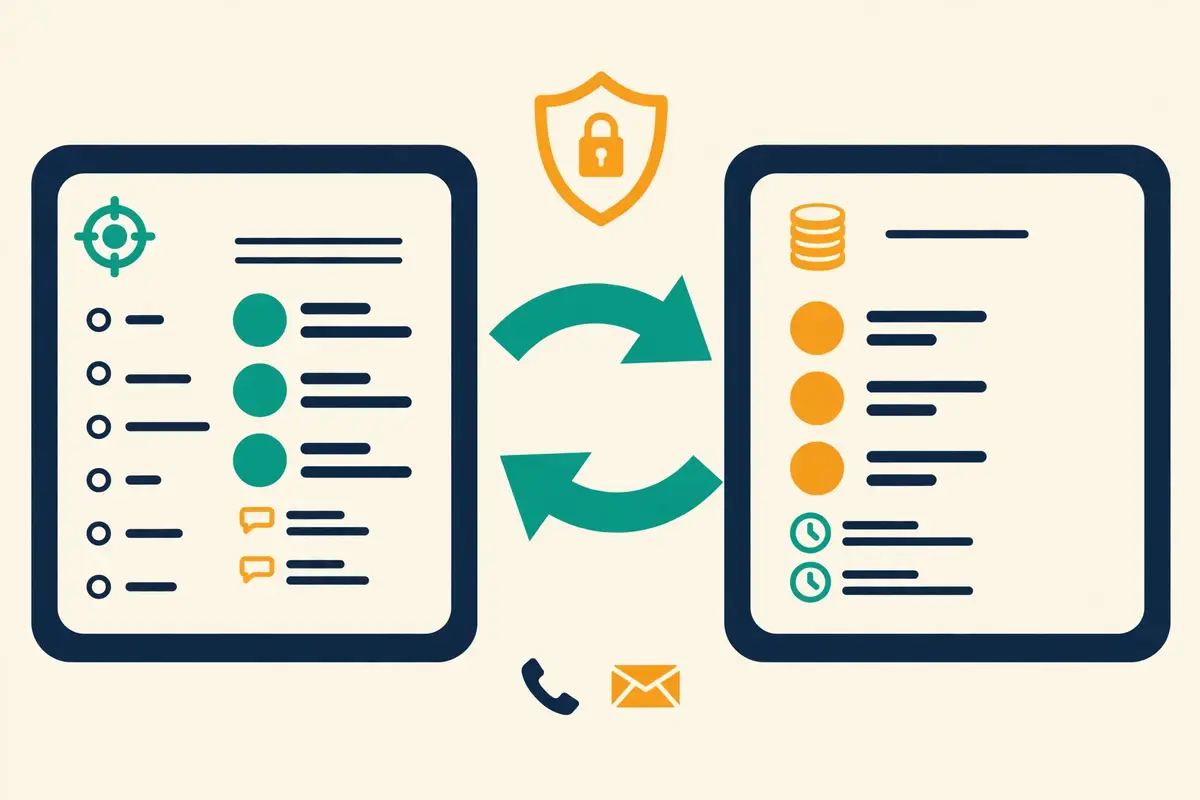
Salesforce-native workflows in this enterprise engagement guide
Firstly, Groove is the purest example of Salesforce-native design in this enterprise engagement guide. It lives inside Salesforce, runs its Flows from Salesforce records, and logs every activity back to the same objects a Salesforce admin already manages. That depth is why Salesforce-heavy teams loved it, and why its disappearance as a standalone product still stings for them. Salesloft’s Deals module is Salesforce-only in places, and its Elite package adds custom Salesforce object signals, so Salesforce teams should check which features need Salesforce and which work on HubSpot too.
Outreach is also Salesforce-first in practice, with deep two-way sync, custom objects on the higher Amplify packages, and integrations with Zoom, Teams, Google Meet and Webex for meetings. Its pricing page lists 5 custom objects on Essentials and Core, 10 on Plus and 20 on Pro, which is a useful proxy for how much Salesforce customisation each tier supports. A team with heavy Salesforce customisation should confirm its object count against the tier it is quoted.
HubSpot and Salesforce sync elsewhere in this enterprise engagement guide
In contrast, HubSpot Sales Hub needs no sync at all for HubSpot teams, because the engagement tools and the CRM share the same records. Sequences, calls, meetings, deals and forecasts all read from one database, which removes a whole class of sync errors. HubSpot also syncs with Salesforce for teams that run both, and its pricing page lists LinkedIn Sales Navigator and CRM Sync integrations among its features.
Apollo syncs two-way with both HubSpot and Salesforce, and also integrates with Outreach, Salesloft, Marketo, SendGrid and LinkedIn, according to its own pricing page. ZoomInfo integrates with HubSpot, Salesforce, Marketo, Eloqua, Sugar, Zoho and Dynamics, plus Outreach and Salesloft for the engagement handoff, according to its pricing page. Both data-first platforms are CRM-agnostic by design, which is why they pair well with any engagement tool in this enterprise engagement guide.
The CRM decision in one paragraph in this enterprise engagement guide
In sum, the rule is simple. If your team runs Salesforce and wants the deepest native workflows, shortlist Salesloft and Outreach, and ask Groove customers what they miss. HubSpot teams should shortlist HubSpot Sales Hub first, because nothing beats sharing the same database. Teams on both CRMs, or planning a switch, should shortlist Apollo and ZoomInfo, because they sync with everything and lock you into nothing.
Implementation and onboarding realities
In fact, implementation is the hidden half of the enterprise price, and it is where most buyers get surprised. A published seat price tells you nothing about the weeks of setup, the data migration, the sequence rebuild and the training that come before the first rep sends a sequence. This enterprise engagement guide sets out the honest timeline, because a platform that takes a quarter to deploy costs a quarter of pipeline.
Two-week onboarding is the optimistic case in this enterprise engagement guide
Firstly, two weeks is the fastest honest timeline for a small, clean deployment: a ten-seat team, a tidy CRM, standard sequences and a vendor-led onboarding call. HubSpot’s onboarding fees, $1,500 for Professional and $3,500 for Enterprise, buy that kind of structured start, and HubSpot’s Academy and knowledge base cover the rest. Apollo, with its published prices and self-serve signup, can be live faster still for a small team, because there is no procurement cycle to wait for.
Secondly, a larger deployment takes longer. Outreach offers professional services packages from self-serve to complete implementation with dedicated resources, and its pricing page invites buyers to request a quote for onboarding. Salesloft’s combined platform, with its separate logins still being unified after the Clari merger, needs a migration plan as well as an implementation plan. ZoomInfo’s Copilot Enterprise includes white-glove onboarding, while its Marketing Demand tier includes a dedicated onboarding manager, according to its pricing page.
Implementation costs, labelled as reported, in this enterprise engagement guide
Moreover, the money behind implementation is rarely published, so the figures here are reported, not verified. Groove implementation costs are reported at $10,000 to $75,000 depending on team size and Salesforce complexity, a range that reflects how deeply Groove was embedded in each customer’s Salesforce instance. Outreach implementation is reported at $5,000 to $25,000 or more, on top of a reported platform fee of $2,000 to $5,000 a year. Salesloft buyers report onboarding and dialer costs that push the all-in year-one figure well above the seat price alone.
Above all, budget for the uplift clause as well as the onboarding fee. Enterprise contracts commonly include an annual uplift of around 7%, and multi-year deals lock the price in exchange for a longer commitment. Ask every vendor for the year-two and year-three price in writing, not just the year-one quote, and ask what happens to your data and sequences if you leave.
What good onboarding looks like in this enterprise engagement guide
Finally, good onboarding has four parts, and a buyer should ask for all four in writing. Data migration covers contacts, accounts and activity history from the old tool. Sequence migration covers rebuilding the best-performing cadences in the new platform, not copying them blindly. CRM mapping covers field-level sync rules, so nothing is lost between systems. Training covers reps, managers and admins separately, because each group uses the platform differently. If a vendor’s quote covers only one of the four, the missing three will be paid for in rep time later.
Security and compliance
Secondly, security and compliance are not optional extras at enterprise scale. Legal, IT and procurement will ask about them before the contract is signed, and a platform that fails the review cannot be bought at any price. All six platforms in this enterprise engagement guide carry the standard badges, yet the details differ in ways that matter for European teams and regulated industries.
SOC 2, GDPR and ISO badges in this enterprise engagement guide
Firstly, SOC 2 Type II is the baseline badge across the category. Apollo lists GDPR, CCPA, SOC 2 Type II and ISO 27001 among its compliance badges. ZoomInfo lists ISO 27001, ISO 27701, SOC 2 Type II, TRUSTe GDPR and TRUSTe CCPA, and processes professional contact data under GDPR’s legitimate-interest basis. HubSpot, Outreach and Salesloft all publish SOC 2 and GDPR compliance as part of their enterprise trust centres, and all three support single sign-on on their higher tiers. Apollo reserves API access and advanced security for its Custom plan, so a team with strict security needs should price Custom, not Professional.
Secondly, data residency and access controls matter as much as the badges. Enterprise tiers add role-based permissions, audit logs, data retention controls and, on Outreach Pro, multi-currency and territory management for global teams. Salesloft’s Elite package adds sandbox environments, so admins can test changes without touching the live system. HubSpot Enterprise adds the deepest admin controls in the HubSpot family, including hierarchy-based forecasting and reporting.
The Drift incident: a security question worth asking Salesloft
In contrast, one event deserves a direct question in any Salesloft evaluation. In August 2025, attackers stole OAuth tokens connected to Salesloft’s Drift chat integration and used them to access data in customers’ Salesforce instances between 8 and 18 August 2025, according to reports citing Salesloft and Google’s Threat Intelligence Group. Salesloft revoked the tokens with Salesforce, and Drift has since been placed on a gradual sunset path after the Clari merger. A buyer should ask Salesloft what changed in its integration security since then, and whether Drift remains part of the quoted package.
Finally, GDPR deserves a specific check for teams selling into Europe. ZoomInfo’s data is built for GDPR compliance with legitimate interest as its basis, and its accuracy guarantee is written into its licence terms. Apollo’s GDPR compliance is listed on its homepage alongside its review score. HubSpot’s European data centres and consent tooling suit teams that already run HubSpot’s marketing tools. Whatever the vendor claims, ask for the data processing agreement and the sub-processor list before you sign, because those documents, not the marketing page, decide what your legal team will approve.
Feature matrix: all six platforms side by side
Moreover, a feature matrix is only useful when it is honest about what each platform does not do. A tick means the feature is stated on the provider’s own site. A dash means it is not confirmed, or is confirmed absent. This enterprise engagement guide checks the matrix against the official product and pricing pages on 16 November 2026, and against the published reviews on this site.
Engagement and data features in this enterprise engagement guide
The engagement matrix
| Feature | Outreach | Salesloft | HubSpot | Groove | Apollo | ZoomInfo |
|---|---|---|---|---|---|---|
| Multi-channel sequences | ✓ | ✓ | ✓ | ✓ | ✓ | — |
| Built-in dialer | ✓ | Add-on | ✓ | ✓ | ✓ | ✓ |
| LinkedIn steps | ✓ | ✓ | ✓ | ✓ | ✓ | — |
| Conversation intelligence | ✓ | ✓ | ✓ | ✓ | — | ✓ |
| AI coaching and scoring | ✓ | ✓ | ✓ | ✓ | — | — |
| AI agents | ✓ | ✓ | ✓ | — | ✓ | ✓ |
| Contact database included | — | — | — | — | ✓ | ✓ |
| Buyer intent data | — | ✓ | ✓ | — | ✓ | ✓ |
Last checked: 16 November 2026. ✓ means the feature is stated on the provider’s own site; — means it is not confirmed or is confirmed absent. ZoomInfo sends no sequences of its own and exports to Outreach or Salesloft instead. Features and pricing can change, so please check the provider’s site before you buy.
Forecasting, CRM and commercial features in this enterprise engagement guide
The forecasting and commercial matrix
| Feature | Outreach | Salesloft | HubSpot | Groove | Apollo | ZoomInfo |
|---|---|---|---|---|---|---|
| Deal management | ✓ | ✓ | ✓ | ✓ | ✓ | — |
| Forecasting | ✓ | ✓ | ✓ | ✓ | — | — |
| Multi-threading / account plans | ✓ | ✓ | ✓ | ✓ | — | ✓ |
| Salesforce two-way sync | ✓ | ✓ | ✓ | ✓ | ✓ | ✓ |
| HubSpot two-way sync | ✓ | ✓ | ✓ | — | ✓ | ✓ |
| Published prices | — | — | ✓ | — | ✓ | — |
| Free plan | — | — | ✓ | — | ✓ | ✓ |
| Free trial | — | — | ✓ | — | ✓ | ✓ |
| SOC 2 Type II | ✓ | ✓ | ✓ | ✓ | ✓ | ✓ |
Last checked: 16 November 2026. ✓ means the feature is stated on the provider’s own site; — means it is not confirmed or is confirmed absent. Salesloft’s dialer and forecasting are paid add-ons, and Outreach’s forecasting sits on Amplify Pro. Features and pricing can change, so please check the provider’s site before you buy.
In sum, the matrix shows the trade-offs plainly. Outreach and Salesloft tick almost every engagement and forecasting box, yet publish no prices and offer no free trial. HubSpot ticks nearly as many boxes and publishes every price. Apollo ticks the engagement boxes and adds a database, at the lowest published price. ZoomInfo ticks the data and intent boxes and leaves engagement to others. Groove ticks the Salesforce boxes, yet cannot be bought any more. In sum, no platform ticks everything, which is why the decision framework in this enterprise engagement guide matters more than the matrix alone.
Pros and cons: the honest case for each platform
Finally, every platform in this enterprise engagement guide has a real weakness, and a buyer who knows it in advance negotiates better. The pros and cons below come from the official product pages, the published reviews on this site, and third-party buyer reports checked in November 2026. No platform is scored here, because OutreachCompare has not tested these platforms hands-on yet.
Outreach pros and cons in this enterprise engagement guide
Outreach’s strengths are its AI agents, its Kaia coaching, its deal management and its forecasting on Pro. It is the only platform here that covers the whole revenue cycle with an AI layer on every step, and its 6,000-plus customers include some of the largest revenue teams in the world. Our Outreach review covers the platform in full depth.
Outreach’s weaknesses are its opaque pricing, its credit meter and its lack of a contact database. Every deal needs a sales conversation, every AI action consumes credits, and every prospect list needs a separate data vendor such as ZoomInfo or Apollo. In sum, a team that buys Outreach should budget for the data contract as well as the Outreach contract, and should ask for the credit cost of a typical week before it signs.
Salesloft pros and cons in this enterprise engagement guide
Salesloft’s strengths are its Rhythm action queue, its coaching, and its forecasting now that Clari Forecast sits inside the same platform. It is the closest rival to Outreach, and for Salesforce teams that want one vendor for engagement and forecasting, it is now the most complete answer. Our Salesloft review covers the platform in full depth.
Salesloft’s weaknesses are its add-on pricing, its missing dialer and its recent merger. The dialer, forecasting and both AI agents cost extra, so the quoted package price is never the final price. The Clari integration is still settling, with some products on separate logins, and the August 2025 Drift security incident is a fair question to raise in the evaluation.
HubSpot Sales Hub pros and cons in this enterprise engagement guide
HubSpot’s strengths are its published prices, its free CRM, its sequences and forecasting on Professional, and its Prospecting Agent working from the same records as everything else. It is the easiest platform here to buy, to adopt and to explain to a finance team. Our HubSpot Sales Hub review covers the platform in full depth.
HubSpot’s weaknesses are the steep step from Starter to Professional, the mandatory onboarding fees, and the credit meter on its AI features. Starter at $20 a seat a month looks cheap, yet it has no sequences and no forecasting, so a team that needs those must pay $90 a seat plus $1,500 onboarding. The Prospecting Agent’s 100-credit cost per lead also means heavy AI use burns through the included credits fast.
Groove pros and cons in this enterprise engagement guide
Groove’s strengths were its Salesforce-native design, its Flows, its dialer and its coaching, all running inside the CRM its customers already lived in. Salesforce-heavy teams rated it highly for exactly that depth, and its implementation, while expensive, produced a system that felt like part of Salesforce rather than a tool bolted onto it.
Groove’s weakness is now total: it cannot be bought. Clari bought it in 2023, Salesloft absorbed Clari in December 2025, and there is no standalone website, price list or trial any more. Existing customers should talk to Salesloft about migration, and new buyers should shortlist Salesloft or Outreach instead. Our Groove review records the full history.
Apollo pros and cons in this enterprise engagement guide
Apollo’s strengths are its published prices, its free plan, its 240M+ contact database and its all-in-one login. It is the only platform here that finds the prospect, sequences the outreach, dials the number and tracks the deal on one bill, from $49 a seat a month. Our Apollo review covers the platform in full depth.
Apollo’s weaknesses are its credit system, its single plan level per account, and its lighter forecasting. Credits expire every cycle and do not roll over, so a quiet month wastes allowance already paid for. All seats sit on the same plan, so a team cannot mix Basic and Professional. Its deal tracking is useful, yet it is not a board-ready forecasting suite.
ZoomInfo pros and cons in this enterprise engagement guide
ZoomInfo’s strengths are its 500M+ contact database, its 100M+ company records, its Copilot intent signals and its free Lite plan with a trial on the paid tiers. It is the deepest data in this enterprise engagement guide, and its accuracy guarantee is written into its licence terms. Our ZoomInfo Engage review covers the platform in full depth, and our Apollo vs ZoomInfo comparison tests it head to head against Apollo.
ZoomInfo’s weaknesses are its quote-only pricing, its annual contracts and its missing engagement layer. It sends no sequences, runs no coaching and forecasts nothing on its own, so a buyer must add Outreach or Salesloft on top of the ZoomInfo contract. The reported median contract near $33,500 a year makes it the most expensive starting point in this enterprise engagement guide before any engagement tool is added.
A decision framework: team size, CRM, budget and channels
In fact, a decision framework beats a feature list, because it forces the buyer to answer four questions in order. Team size decides the category. CRM decides the shortlist. Budget decides the tier. Channels decide the add-ons. Answer them in that order, and the right platform in this enterprise engagement guide usually picks itself.

Step one in this enterprise engagement guide: count the team
Firstly, count the sellers who will use the platform every day. One to five sellers should buy Apollo or HubSpot Starter, not an enterprise platform. Five to fifteen sellers should compare Apollo Professional, HubSpot Professional and a Salesloft or Outreach quote, and should favour the published prices unless the enterprise features are genuinely needed. Fifteen to fifty sellers should shortlist Outreach and Salesloft seriously, because coaching, forecasting and governance start to pay at that scale. Fifty or more sellers should run a formal proof of concept with both enterprise vendors, because the contract will run into six figures over three years.
Step two in this enterprise engagement guide: name the CRM
Secondly, name the CRM and check the sync before anything else. Salesforce teams should shortlist Salesloft and Outreach, and should ask Groove customers what they miss. HubSpot teams should shortlist HubSpot Sales Hub first, because nothing beats sharing the same database. Teams on both CRMs, or planning a switch, should shortlist Apollo and ZoomInfo, because they sync with everything and lock the buyer into nothing. A platform that fights the CRM will cost more in admin time than it saves in rep time.
Step three in this enterprise engagement guide: set the real budget
Thirdly, set the real budget, not the seat price. Add the onboarding fee, the add-ons, the data contract and the implementation to the seat cost, and ask for the year-two and year-three prices in writing. A $90 HubSpot seat becomes $12,300 in year one for ten seats. A reported $125 Salesloft seat becomes $15,000 to $20,000 or more once the dialer and forecasting are added. A reported $33,500 ZoomInfo median becomes far more once Outreach or Salesloft is added on top. The platform that looks cheapest on the seat price is rarely the cheapest all-in.
Step four in this enterprise engagement guide: list the channels
Finally, list the channels the team actually uses. Email and phone are table stakes everywhere. LinkedIn steps matter for teams that sell to executives, and all six platforms except ZoomInfo cover them. SMS matters for a few industries and is an add-on or a manual step on most platforms. Conversation intelligence matters for teams that coach from call recordings, and Outreach, Salesloft, HubSpot and ZoomInfo all cover it. A team that dials all day should check the dialer first, because Salesloft charges extra for it while Outreach, HubSpot and Apollo include it.
Migration: moving from one platform to another
Secondly, migration is the part of the enterprise decision that buyers plan last and regret first. Sequences, templates, call recordings, deal history and CRM mappings all live in the old platform, and none of them moves itself. A migration plan belongs in the evaluation, not after the contract is signed.
What to move first in this enterprise engagement guide
Firstly, move the CRM data first, because it is the system of record. Contacts, accounts, opportunities and activity history should sync cleanly before any sequence is rebuilt. Secondly, rebuild the best-performing sequences by hand in the new platform, rather than copying them blindly, because each platform’s step types and limits differ. Thirdly, migrate templates and snippets, and test them against the new platform’s deliverability rules. Finally, move call recordings and coaching playlists last, because they are the hardest to transfer and the least urgent to keep.
How long a migration takes in this enterprise engagement guide
In contrast, the timeline depends on the size of the move. A ten-seat move from Apollo to HubSpot can take two weeks, because both publish their prices and both offer structured onboarding. A fifty-seat move from Groove to Salesloft can take a quarter, because the Salesforce mappings are deep and the Clari integration is still settling. A move from Outreach to Salesloft, or the reverse, can take longer still, because the sequence logic, the AI agents and the forecasting rules all differ. Plan a parallel run of two to four weeks, where the old platform stays live while the new one is tested on a pilot team.
The exit question to ask before you sign in this enterprise engagement guide
Moreover, the most important migration question is the one asked before the first contract, not the last: how do we leave? Ask every vendor how sequences, templates, call recordings and activity history export, what format they arrive in, and what happens to the data when the contract ends. A vendor that answers clearly is a vendor worth trusting. A vendor that dodges the question is telling you something about the next migration, not this one.
Frequently asked questions in this enterprise engagement guide
What is the best enterprise engagement platform in 2026?
There is no single best platform in this enterprise engagement guide, because the best choice depends on the team, the CRM and the budget. Outreach leads for AI-first revenue teams. Salesloft leads for teams that want forecasting and engagement from one vendor. HubSpot leads for teams already on HubSpot. Apollo leads for smaller teams on a published price. ZoomInfo leads for data depth. Read the decision framework above and match the platform to your own situation.
How much does an enterprise engagement platform cost?
Apollo Professional costs $79 a seat a month on annual billing, and HubSpot Professional costs $90 a seat a month plus a $1,500 onboarding fee, both published on their official sites and checked on 16 November 2026. Outreach, Salesloft and ZoomInfo publish no prices: buyer reports put Outreach near $100 to $160 a user a month, Salesloft near $125 to $165 at list, and ZoomInfo’s median contract near $33,500 a year. Those reported figures are not verified prices, so ask each vendor for a quote.
Is Groove still available to buy?
No. Clari bought Groove in August 2023, and Salesloft then merged with Clari, closing on 3 December 2025. Groove has no website or prices of its own any more, and groove.co and clari.com both serve the Salesloft homepage. Existing Groove customers still use the product, yet a new buyer cannot buy Groove as a standalone platform and should talk to Salesloft instead.
Do Outreach and Salesloft publish their prices?
No, neither publishes prices. Outreach lists four Amplify packages with AI credit allotments from 10,000 to 100,000 and no dollar figures. Salesloft lists two packages, Advanced and Elite, with no dollar figures, and four paid add-ons: the Dialer, Forecasting, the Account Agent and the Coaching Agent. Both sell annual contracts through a demo and a quote, with no free trial.
Does ZoomInfo have a free plan?
Yes. ZoomInfo Lite is a permanent free plan with a small monthly credit allowance and no card needed, and the paid plans carry a free trial, as shown on ZoomInfo’s pricing page and verified in our earlier comparison. Lite gives around 10 credits a month, or 25 with the Community Edition, which is enough to test data quality on your own accounts.
Which platform is best for a Salesforce team?
Salesloft and Outreach are the strongest choices for a Salesforce team, because both were built around Salesforce first and both offer deep two-way sync. Salesloft’s Deals module and Elite package are Salesforce-centric, while Outreach supports custom Salesforce objects on its higher Amplify tiers. HubSpot also syncs with Salesforce, and Apollo and ZoomInfo sync with both HubSpot and Salesforce.
The verdict in this enterprise engagement guide
Our verdict
Outreach is the best enterprise engagement platform for AI-first revenue teams. Its Amplify packages cover sequences, Kaia coaching, deal management and forecasting in one place, and its AI agents are the most complete in this enterprise engagement guide. Salesloft is the best choice for Salesforce teams that want forecasting and engagement from one vendor, now that Clari Forecast sits inside the same platform. HubSpot Sales Hub is the best choice for teams already on HubSpot, because sequences, forecasting and the Prospecting Agent share the same CRM records at a published price. Apollo is the best choice for smaller teams, with data, sequences and a dialer from $49 a seat a month. ZoomInfo is the best choice for data depth, with 500M+ contacts and Copilot intent, although it needs an engagement tool beside it.
Groove cannot be recommended to new buyers, because it no longer exists as a standalone product to buy. No numeric score is given here, because OutreachCompare has not tested these platforms hands-on yet, and a score without testing would be guesswork. Run a proof of concept on your own pipeline before you sign, and ask every quote-only vendor for the all-in year-one price, including add-ons, onboarding and uplift, in writing.
In sum, the enterprise engagement market in 2026 is really two markets. One market publishes its prices, offers a free plan, and lets a team start this week: Apollo and HubSpot. The other market sells by quote, expects an annual contract, and rewards a team that negotiates well: Outreach, Salesloft and ZoomInfo. Both markets are honest, and both serve real teams. The mistake is buying from the wrong market for your team’s size, CRM and budget, and this enterprise engagement guide exists so that mistake is easy to avoid.
Keep reading
- Outreach Review 2026 — the full Outreach review, with Amplify packages, Kaia and pricing in depth.
- Salesloft Review 2026 — the full Salesloft review, with Rhythm, Cadence and the Clari merger.
- HubSpot Sales Hub Review 2026 — the full HubSpot review, with sequences, forecasting and the Prospecting Agent.
- Groove Review 2026 — the full Groove review, with the Clari acquisition and the Salesloft merger.
- Apollo Review 2026 — the full Apollo review, with pricing, credits and the dialer.
- ZoomInfo Engage Review 2026 — the full ZoomInfo review, with Copilot, intent and the free Lite plan.
- Apollo vs ZoomInfo 2026 — the two data-first platforms compared head to head.
- Apollo vs ZoomInfo vs Cognism 2026 — the three-way data comparison, with database size, accuracy and intent.
- Best Cold Email Software 2026 — the wider software guide, for teams that need sending tools rather than enterprise platforms.
- Best B2B Data Providers 2026 — the data guide, for teams that need contacts before they need engagement.
- Cold Email for Beginners: The Complete 2026 Guide — the starting guide, for teams that are new to outbound altogether.
Leave a Reply