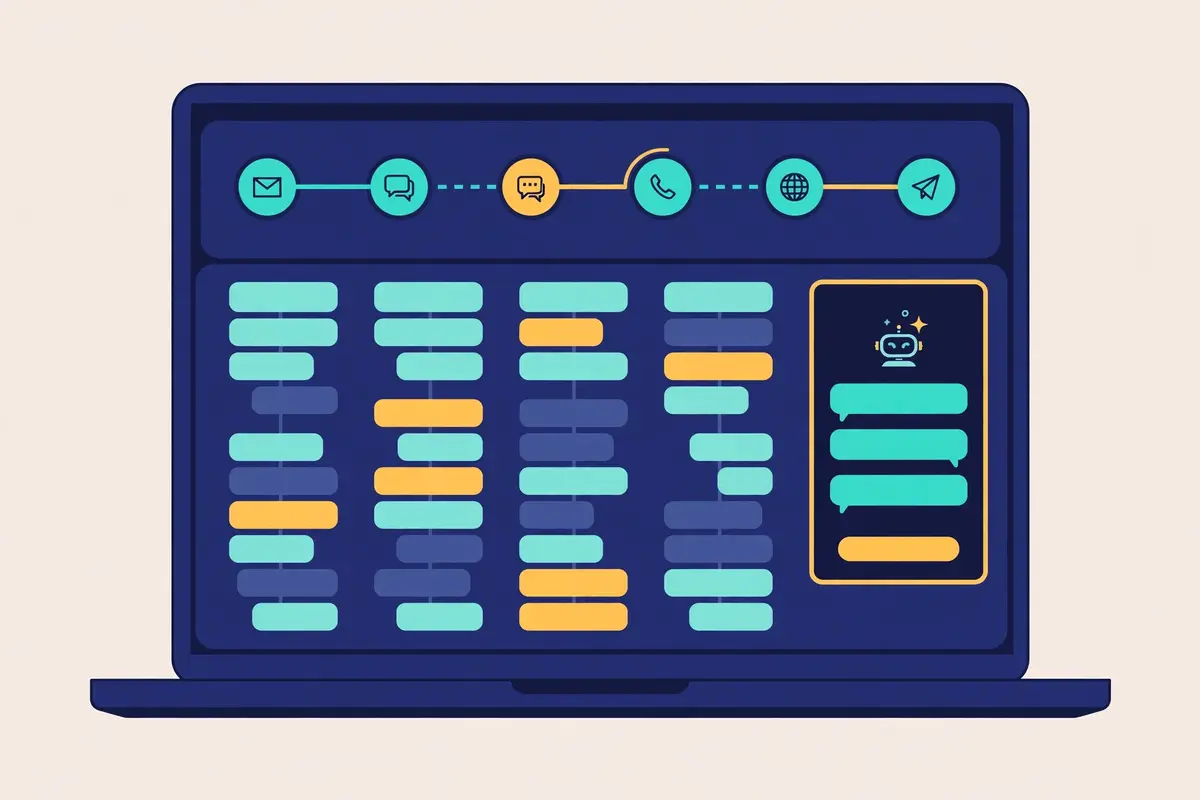
Best for enterprise revenue teams that want sequences, Kaia coaching and forecasting in one platform: Outreach
Outreach is an enterprise sales engagement platform, now sold as the AI Agent Platform for Revenue teams at outreach.ai, that runs multichannel sequences, live call coaching through its Kaia assistant, deal management and AI forecasting from one system. It does not publish prices: every one of its four Amplify packages ends in a Request pricing button, and the cost combines per-seat licences with consumption-based AI credits. The packages carry 10,000, 25,000, 50,000 or 100,000 AI credits, and the most popular tier, Amplify Plus, claims to predict deal outcomes with 81% accuracy and to ramp reps three times faster. There is no free plan, no advertised free trial and no self-serve signup.
This Outreach review works through the whole platform as it stood on 16 November 2026. It covers the four Amplify packages and the credit model that sits underneath them, the AI agents, the sequences, Kaia coaching, deal management and forecasting, and how Outreach compares with Salesloft, Klenty and Apollo. By the end you should know whether an enterprise platform with quote-only pricing is the right buy for your revenue team, or whether a tool with published prices and a trial would serve you better.
Visit Outreach → Jump to the comparison tableWhy this Outreach review starts with the price question
Before anything else, this Outreach review needs to say plainly what Outreach is not. That is because it explains every other choice in the platform. Outreach is not a tool a founder buys on a Tuesday afternoon with a credit card. It is an enterprise platform sold by its own sales team to whole revenue teams, on annual contracts, after a demo and a custom quote. That single fact, that the buying motion is enterprise from the first click, shapes the product, the pricing and the support. In addition, this Outreach review tests it step by step, from the pricing page to the forecast rollup. As a result, a buyer can judge whether the platform earns that motion.
The numbers behind the enterprise pitch
That enterprise positioning is not a slogan. It is the reason Outreach rebuilt itself around AI agents in 2026. Also, the company has put numbers behind the change. The homepage states the pitch in plain terms. An agentic AI platform that unifies prospect engagement, customer retention, coaching and revenue intelligence, with agents that can autonomously execute the work. Behind that line sit the figures the vendor publishes. 10 hours saved per rep per week, three times higher reply rates, 99% faster speed to lead, win rates up 26% on average, and more than 2 million opportunities closed every month. Those are a platform vendor’s numbers, honestly presented as vendor claims, and this Outreach review weighs them as such. A serious system for serious teams, not a quick tool for a quick job.
Quick Answer
Outreach is an enterprise AI revenue platform at outreach.ai (formerly outreach.io) that combines multichannel sequences, the Kaia conversation-intelligence assistant, deal management and AI forecasting in one system, with AI agents for research, revenue, personalisation, deals and meeting preparation. Pricing is quote-only: four Amplify packages carry 10,000, 25,000, 50,000 or 100,000 AI credits, and every package ends in a Request pricing button. The cost combines per-seat licences with consumption-based AI credits, with no published price, no free plan and no advertised free trial. Third-party buyer reports put the entry cost at roughly $100 to $150 per user per month, but that is a reported range, not an official price.
The vendor claims 81% forecast accuracy on Amplify Plus, three times faster rep ramp, 10 hours saved per rep per week, and win rates up 26% on average.
Outreach is best for enterprise and mid-market revenue teams that want one platform for sequences, coaching, deals and forecasting, and that can run a sales-led buying process. It is not the tool for a solo seller, a small team that needs a published price and a trial, or a team that needs a built-in contact database or email warm-up, because Outreach supplies none of those.
Contents
- What Outreach actually is
- Who Outreach fits best — and who should skip it
- Pricing in this Outreach review: quote-only Amplify packages
- The AI agents in this Outreach review: Omni, Research, Revenue and more
- Sequences in this Outreach review: multichannel engagement at enterprise scale
- Kaia in this Outreach review: coaching that happens during the call
- Deal management and forecasting in this Outreach review
- Deliverability in this Outreach review: your mailbox, your reputation
- Integrations in this Outreach review: Salesforce, HubSpot and 90-plus apps
- Security in this Outreach review, and the rules around cold email
- Outreach against Salesloft, Klenty and Apollo
- Strengths and weaknesses in this Outreach review, side by side
- Getting started in this Outreach review: a sensible first 90 days
- Frequently asked questions
- The verdict in this Outreach review
What Outreach actually is
Outreach describes itself as the AI Agent Platform for Revenue teams, and its homepage makes the positioning easy to grasp. The platform helps account executives, sales leaders and revenue executives drive pipeline, close deals and deliver accurate forecasts, with agents for every persona. It unifies prospect engagement, customer retention, coaching and revenue intelligence in one place. As a result, a revenue team stops stitching together point solutions. That is the product in the vendor’s own words. Furthermore, it matches what this Outreach review found on the pricing page and the platform page. A full revenue system, not a sequencer with a few extras bolted on.
Behind the pitch sits a deliberate piece of rebranding. Typing outreach.io into a browser now redirects to outreach.ai, and the company completed that move in April 2026 alongside a conversational agent called Omni and a no-code Agent Studio. Outreach was founded in 2014 in Seattle, and Abhijit Mitra has led it as chief executive since September 2024. The old Engage, Call, Meet, Deal and Forecast packages are gone. What a buyer purchases now is one of four Amplify tiers, each carrying a pool of AI credits. A buyer who remembers Outreach as a sequencer should update that picture. That is because the sequencer is still there, yet the platform around it has changed completely.
Seven capabilities this Outreach review found defining
First come the AI Agents. Research, Revenue, Personalisation and Deal Agents support account research, prospect engagement and opportunity updates. Meanwhile, Omni answers questions and takes actions across the platform, and Agent Studio lets administrators assemble custom agent workflows. Next comes Sales Engagement, where sequences combine email, calls and seller tasks with meeting scheduling and engagement reporting. Then comes Conversation Intelligence, where Kaia records and transcribes meetings, produces summaries and action items, and surfaces live content cards. After that comes Deal Management, with an editable deal grid, health scoring and mutual action plans. Then comes Sales Forecasting, with AI projections, scenario planning and rollups. Finally come Pipeline Management and Rep Coaching, which diagnose funnel quality and scale the habits of the best reps across the whole team.
The seven capabilities at a glance, in this Outreach review
- AI Agents: Omni, Research, Revenue, Personalisation, Deal and Meeting Prep agents that research accounts, draft outreach and update deals.
- Sales Engagement: multichannel sequences across email, phone, LinkedIn tasks and manual tasks, with templates, snippets and triggers.
- Conversation Intelligence: Kaia joins meetings, transcribes in real time, detects action items and coaches reps live with content cards.
- Deal Management: an editable deal grid, AI health scoring, mutual action plans and pipeline views that sync with the CRM.
- Sales Forecasting: AI forecast projection, scenario planning, rollups and trends, on the Amplify Pro package.
- Pipeline Management: funnel diagnosis by risk, buyer sentiment and pipeline performance, with win and loss outcomes tracked.
- Rep Coaching: AI coach cards with automated scoring, playlists, topic analysis and talk-to-listen ratios, so managers coach at scale.
One more framing point helps before the details. Outreach is not a cold email tool, and it does not claim to be one. It is a revenue execution platform that happens to include sequences, and the sequences are one capability among seven. That boundary is a strength for a revenue leader who already has a data provider and a mailbox strategy. Outreach slots into the stack without asking you to move anything else. It is a gap for a buyer who wants one tool to find leads, warm inboxes and send cold email. That is because that buyer will need a second subscription for the data and the deliverability. This Outreach review keeps that distinction visible throughout, because confusing the two jobs is how buyers end up disappointed.
Who Outreach fits best — and who should skip it
First, this Outreach review finds the product fits enterprise revenue teams first. Think of a company with twenty or more sellers, a sales operations team, a formal CRM in Salesforce or HubSpot, and a chief revenue officer who needs one forecast the whole business can trust. That team needs sequences that follow a playbook, coaching that happens during the call rather than after it, deal health that flags risk before the quarter ends, and a forecast that rolls up cleanly. Outreach gives them exactly that, with the agents doing the research and the follow-up drafting while the reps focus on conversations. The price is a quote, and the comparison is against the cost of five point solutions, not against one sequencer subscription. This Outreach review rates it highly for teams of that shape.
Meanwhile, in this Outreach review, mid-market teams with a real sales process come next. A team of ten to twenty sellers that already runs a disciplined pipeline, holds a weekly forecast call and coaches from call recordings will feel the platform pay for itself quickly. Amplify Core brings the sequences and the Revenue and Personalisation agents, and Amplify Plus adds the live coaching and the deal health alerts that managers actually use. A team of that size should still expect a sales-led buying process, an implementation project and an annual contract, because Outreach does not sell itself. Yet a team that already works the way Outreach assumes will find the platform fits like a glove, and this Outreach review says so plainly.
Buyers who should look elsewhere
Now the other side. However, solo sellers and small teams should look elsewhere. Outreach has no free plan, no advertised free trial and no self-serve signup. Moreover, the pricing page offers only a Request pricing button and a demo form. A founder with three sellers and a hundred dollars a month to spend cannot buy Outreach tonight, and should not try. That team will get more from Apollo, which starts at $49 a user a month on monthly billing with a free plan and a 270M-plus contact database, or from Klenty, which starts at $50 a month billed annually with a 14-day trial. Likewise, a team that needs a built-in contact database should not buy Outreach expecting one. There is no prospect database, and the data enrichment on the pricing page enriches records you already hold.
High-volume cold email teams should think twice as well. Outreach sends through your own Google or Microsoft mailbox rather than through its own sending infrastructure. In addition, it offers no warm-up pool, no inbox rotation across many mailboxes and no placement testing. A team planning thousands of cold emails a month from many domains will find Instantly from $47 a month on Growth, or Smartlead from $39 a month, a far better fit for that motion, and can still use Outreach for the deals those emails create. If your buying process needs a published price, a trial and a checkout page, Outreach will feel closed. That is because it is built for enterprise procurement and it says so on its own pricing page.
Why an enterprise buyer should still take the demo
Between those two poles sits the buyer this Outreach review expects most often. A revenue leader whose team runs five tools that barely talk to each other, and whose forecast is a spreadsheet nobody trusts. That buyer should take the demo, and bring a real deal to it. Ask the rep to show the deal grid on one of your live opportunities, the Kaia coaching card on one of your recorded calls, and the forecast rollup for your current quarter. If the platform answers those three questions in one screen, the case is made. If the demo stays on slides, that tells you something useful too, before a single dollar is committed. A demo with your own pipeline answers the question with evidence. Also, that is a better test than any sales deck.
Pricing in this Outreach review: quote-only Amplify packages
Outreach keeps its pricing deliberately opaque, and this Outreach review starts with that fact before any figures. The official pricing page lists four packages, and every one of them ends in a Request pricing button, with no price card, no plan grid with numbers and no public calculator. Its wording on the model is plain. Pricing combines seat-based access, where you pay for each user, with consumption-based AI credits, where you pay for what you use. AI credits power the agentic workflows, research, personalisation, sequencing automation, conversation analysis, forecasting and more. Your team’s usage directly determines credit consumption. Those are the words on outreach.ai/pricing, checked on 16 November 2026, and this Outreach review uses them throughout.
The four Amplify packages in this Outreach review
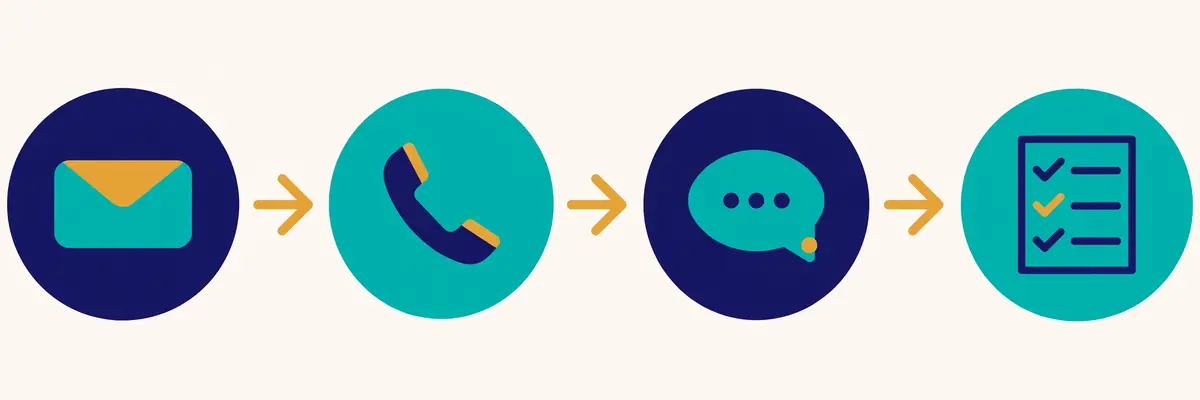
Meanwhile, the four packages are easy to tell apart once the credit pools are clear. Amplify Essentials carries 10,000 AI credits and centres on conversation intelligence and coaching, with Kaia, Omni, the Research and Deal agents, the Meeting Prep agent, the Outreach Voice dialer, real-time transcription, action item detection, sentiment analysis, deal and pipeline management, account planning and relationship maps. It has no sequences. Amplify Core carries 25,000 AI credits, 250,000 API calls, 5 custom objects and 500 MB of knowledge. Furthermore, it adds multichannel sequences, the Revenue and Personalisation agents, engagement reporting and Plus support. Amplify Plus, the most popular tier, carries 50,000 AI credits, 500,000 API calls, 10 custom objects and 750 MB of knowledge. Moreover, it adds everything in Essentials and Core, plus live coaching cards, deal health and alerts, data enrichment and the Outreach MCP server and client.
Amplify Pro carries 100,000 AI credits, 1,000,000 API calls, 20 custom objects and 1,500 MB of knowledge. In addition, it adds AI forecast projection, the scenario planner, forecast rollups and trends, territory management, multi-currency, parallel forecasts and advanced managed services.
The pricing table in this Outreach review, checked today
| Package | Price | AI credits | API calls / objects / knowledge | Visit Site → |
|---|---|---|---|---|
| Amplify Essentials | Request pricing | 10,000 | Not listed / not listed / not listed | Visit Site → |
| Amplify Core | Request pricing | 25,000 | 250,000 / 5 custom objects / 500 MB | Visit Site → |
| Amplify Plus | Request pricing | 50,000 | 500,000 / 10 custom objects / 750 MB | Visit Site → |
| Amplify Pro | Request pricing | 100,000 | 1,000,000 / 20 custom objects / 1,500 MB | Visit Site → |
Last checked: 16 November 2026 on Outreach’s pricing page. Outreach publishes no prices: every package is a custom quote, per-user pricing, no platform fees, support included. Features and pricing can change, so please check the provider’s site before you buy. We do not guess at features, prices or trials.
Two details that decide what a quote costs
Two details deserve a closer look, because they decide what the quote actually contains. First, the credits. Consumption-based pricing is measured on discrete actions, and an action is a specific AI-powered task, such as generating a personalised message or completing an individual search, each with a predictable credit cost. If a team needs more credits than its package includes, it can purchase additional credit packs at any time. A third-party report of the June 2025 pay-as-you-go terms lists $1.40 per overage credit, subject to change. Also, this Outreach review flags that figure as reported rather than official. That is because the pricing page itself states no overage rate. Second, the support. Plus support is included with Amplify Core, and additional managed services are included with Amplify Pro. Meanwhile, professional services packages, from self-serve to full implementation with dedicated resources, are available to speed up onboarding.
A buyer should price the implementation alongside the licences. That is because the platform is not a tool you switch on and forget.
What buyers report paying, and why it is only a guide
One more pricing point matters for buyers who need a budget number before the first sales call. Because Outreach publishes no prices, the only figures available come from buyer reports and procurement marketplaces. Those reports consistently put the entry cost at roughly $100 to $150 per user per month for core sales engagement, with mid-tier packages higher and enterprise configurations entirely custom. A public marketplace listing has shown a 50-seat annual contract at $108,000, or roughly $180 per user per month, which gives an upper reference point rather than a quote. Treat every one of those numbers as a reported range, not a price you can hold Outreach to, and use them only to decide whether the demo is worth your time. The honest answer to what Outreach costs is that you find out on the sales call.
Furthermore, this Outreach review says so plainly rather than dressing a guess up as a price.
What the fine print says about contracts and add-ons
Finally, the fine print deserves a paragraph of its own, because it is short and it matters. Per-user pricing applies across the packages, with no platform fees, and support is included. Contracts run annually, and the terms of service state that service begins on the effective date in a signed order and then auto-renews in successive twelve-month periods. Add-ons available for purchase include Data Sharing, Connectors, Additional Instances and Listener Licences. There is no publicly advertised free trial, free plan or self-serve signup. Moreover, the pricing page does not mention a seat minimum. A buyer who signs should read the order form as carefully as the feature list. That is because the order form is where the seat count, the credit pool, the renewal and the uplift actually live.
The AI agents in this Outreach review: Omni, Research, Revenue and more
The agents are the change that defines Outreach in 2026. In addition, they are the feature this Outreach review spent the longest checking. Strip the branding away and the agents fall into three groups. Research Agent and Revenue Agent find and profile accounts, mixing Outreach’s own engagement and call data with third-party public data. Personalisation Agent turns that research into email, call and LinkedIn drafts for a rep to approve. Deal Agent and Meeting Prep Agent work the pipeline. The first proposes changes to opportunity fields and sends them to Slack for approval. Meanwhile, the second writes a brief before each meeting. Omni sits over all of it as a chat box in the web app, the mobile app and Slack, answering questions about accounts and deals from the company’s own records and drafting follow-ups from them.
Agent Studio is the part of the story that matters most to revenue operations. Also, this Outreach review counts it as the platform’s most interesting bet. It is a visual canvas where RevOps builds and schedules custom agents without engineering help, with templates for the workflows every team wants automated, such as inbound lead engagement that responds and routes before the lead goes cold. Since June 2026 an MCP server and a ChatGPT app take the agents outside the Outreach tab, and since 15 September they can be bought through Salesforce AgentExchange. The MCP suite means external AI agents such as Claude, Microsoft Copilot, Agentforce, ChatGPT and Codex can sequence prospects, update records and run workflows inside Outreach. Meanwhile, Outreach’s own agents can reach out into Seismic, Snowflake, ZoomInfo, Slack and the rest of the stack. That is a genuinely open architecture, and it is rare in this market.
Seeing the agents in action
Video: “How Freshworks Built a Unified GTM Engine with Outreach” by Outreach on YouTube. This video is the property of its creator, embedded via YouTube for education. OutreachCompare is not affiliated with Outreach and does not claim ownership of the video.
Where the agents are strongest, and where they are still young
One honest limit belongs in this section. The agents are strongest where they read data Outreach already holds. Kaia has been transcribing calls for years, and a research brief that knows what the prospect said on last month’s call beats one assembled from LinkedIn alone. Yet several agents were still in beta or only recently generally available when this Outreach review was written, with Deal Agent and Research Agent reaching general availability in August 2025 and the Spring 2026 release adding Omni and Agent Studio in April. A buyer should ask, on the demo, which agents are generally available on the package being quoted, which are in beta, and what each one costs in credits. The agent story is real, and the platform has rebuilt itself around it. Yet, the newest parts deserve the hardest questions.
Sequences in this Outreach review: multichannel engagement at enterprise scale
Sequences are where Outreach began, and they remain the capability most buyers actually use every day. A sequence is a structured, multi-step series of touchpoints that engages prospects across channels, and the available step types include auto email, manual email, phone call, generic task and LinkedIn task. Reps work from proven templates and snippets, follow account-based strategies, and let the platform pause a prospect’s sequence automatically when that person is out of the office, resuming it on their return. Machine learning tools, including A/B testing, buyer sentiment analysis and sequence insights, make optimising each step straightforward. That is the sequencer in the vendor’s own words. Furthermore, it matches what this Outreach review found on the platform and pricing pages. A mature, enterprise-grade engine, not a first attempt.
Smart Email Assist and the automation around it
Around the sequences sit the automation features that save reps hours a week. Moreover, this Outreach review counts them as the difference between a sequencer and a good sequencer. Smart Email Assist drafts emails, replies and follow-ups from the conversation context. As a result, a rep reviews and sends rather than writing from a blank page. Automations and triggers move prospects between sequences, assign tasks and update records when a buyer replies, books or goes quiet. Smart Account Plans and prospect relationship maps show who matters inside an account and what each person cares about. The vendor claims the platform saves 10 hours per rep per week and delivers three times higher reply rates. In addition, those figures should be read as vendor claims. Yet, the mechanism behind them is visible in the product: less admin, more conversation.
Where sequences stop, and what that means for LinkedIn
One honest limit belongs in this section. LinkedIn steps in Outreach are manual tasks, not automated sends, and a rep still has to open LinkedIn and do the work. That is the compliant choice, and it keeps the platform on the right side of LinkedIn’s rules. Yet, a team that wants LinkedIn automation should not buy Outreach expecting it. The sensible pairing is a LinkedIn tool such as Waalaxy from €19 a user a month, or HeyReach, feeding from the same account list. Budget for both, and judge Outreach on the email, the calls and the coaching, not on a channel it deliberately keeps manual.
Kaia in this Outreach review: coaching that happens during the call
This assistant is Outreach’s conversation intelligence offering, and it is the feature this Outreach review counts as the platform’s best. Kaia joins sales calls and meetings, coaches reps in real time, transcribes conversations and surfaces the key moments managers need for coaching. During a live call it shows content cards with product answers and objection handling, detects action items as they are agreed, and tracks sentiment and talk-to-listen ratios. After the call it produces summaries, flags the moments that matter and feeds the coaching workflow. The vendor says Kaia helps onboard reps three times faster and boost win rates by 41%. Also, those figures should be read as vendor claims. Yet, the mechanism is easy to see. The rep gets help while the buyer is still talking, not in a review a week later.

Coaching at scale in this Outreach review
Behind the live coaching sits the manager workflow. Furthermore, this Outreach review puts it at the centre of Kaia’s value for a team. Managers filter the call library by rep, meeting type, topic or account, instead of scrolling through everything, and use AI-suggested answers on coaching cards to evaluate a call faster. Playlists gather the best calls so new reps can hear what great sounds like. Moreover, the two-way feedback loop lets reps request coaching instead of only receiving it whenever a manager gets around to it. A sales leader in the vendor’s own video describes filtering call reviews by rep for targeted sessions, and using AI insights to show reps their talk-to-listen ratios and where to let the prospect lead. That is coaching as a system, not as a favour, and it is what the Essentials package is built around.
Video: “How Sales Teams Use Kaia to Coach Reps Faster and Scale What Great Looks Like” by Outreach on YouTube. This video is the property of its creator, embedded via YouTube for education. OutreachCompare is not affiliated with Outreach and does not claim ownership of the video.
What Kaia cannot hear
One honest limit belongs in this section. Kaia covers Outreach’s native dialer plus connected video platforms, Zoom, Microsoft Teams, Google Meet and Cisco Webex, and calls outside those channels are not captured, with no workaround today. A team that sells over WhatsApp, over a phone system Kaia cannot join, or in person will have gaps in the record. In addition, the coaching will only ever be as complete as the calls it can hear. The sensible move is to check, before signing, which of your team’s real calls run through a supported channel. If most of them do, Kaia earns its keep. When most of them do not, the Essentials package loses its centre, and this Outreach review says so plainly.
Deal management and forecasting in this Outreach review
Deal management is where Outreach stops being a prospecting tool and becomes a revenue system. Also, it is the capability this Outreach review checked next. The deal grid is an editable view of every opportunity, with value, close date, next steps, activity and buyer engagement in one place, and changes sync back to the CRM. AI health scoring reads the engagement signals and flags deals that are stalling. Meanwhile, mutual action plans align the seller and the buyer on the steps that get the deal closed. Pipeline management diagnoses funnel quality by risk, buyer sentiment and pipeline performance. As a result, a manager can see where the quarter actually stands. That is the workflow for a team that already has pipeline and needs to close it, rather than a team still looking for its first meetings.

Forecasting in this Outreach review, from Plus to Pro
Day to day, the forecasting story splits across two packages, and the package you buy decides how much of it you get. Amplify Plus claims to predict deal outcomes with 81% accuracy. Furthermore, it includes deal health and alerts alongside the pipeline views. Amplify Pro adds the full forecasting suite. AI forecast projection, the scenario planner, forecast rollups, forecast trends, territory management, multi-currency, parallel forecasts and self-service forecast configuration. The vendor claims Pro helps teams spend half the time preparing forecasts and reduce forecast errors by 15%. A buyer choosing between Plus and Pro should ask one question. Who owns the forecast in your company, and how many hours a week do they spend building it? If the answer is a revenue operations lead with a spreadsheet, Pro earns its keep. A sales manager with a whiteboard will find Plus enough.
The forecast is only as good as the data feeding it
One honest limit belongs in this section. A forecast built on engagement signals is only as honest as the activity feeding it, and Outreach knows this. The platform captures all sales activity as it happens, across email, calls and meetings. Moreover, that capture is what makes the health scores and the projections credible. Yet a team that logs half its calls outside Outreach, or that runs its real pipeline in a spreadsheet beside the CRM, will get a forecast that reflects the tool, not the business. The practical answer is to run the CRM sync properly, keep every rep inside the platform, and treat the first quarter as a calibration exercise. Three months of complete data beats a year of hoping, and this Outreach review makes that test explicit.
Deliverability in this Outreach review: your mailbox, your reputation
Deliverability is the quiet risk in every outreach tool. In addition, Outreach handles it at the mailbox rather than at the platform. Email goes out through your own Google or Microsoft mailbox, and each user connects their own sending identity. As a result, the reputation at stake is yours, not a shared pool’s. That is a sensible control for an enterprise platform, and this Outreach review counts it as honest. Outreach protects the sequence, without pretending to be a deliverability platform. Sequences pause automatically when a prospect is out of office. Also, the engagement reporting shows what was opened, replied to and bounced. As a result, a team can see the damage before it spreads.
How much cold email Outreach can carry
The ceiling is clear all the same. A team planning thousands of cold emails a month from many domains needs deliverability kit that Outreach does not supply. The official feature pages list no warm-up pool, no rotation across many mailboxes, no placement testing and no custom tracking domain controls. Outreach never claims those capabilities, and this Outreach review will not attribute them to the platform. A team planning heavy cold email across many domains should look at our Instantly review and our warm-up tools roundup first. That is because Outreach on its own will not carry that volume. Treat the sequencer as a guardrail rather than an engine, and the limits make sense.
Sender rules that still apply to you
Separately, the sender rules that govern every outreach tool still bind you here, and Outreach grants no exemption from them. Since February 2024 Gmail has insisted on SPF or DKIM from every sender, caps spam complaints at 0.3%, and requires DMARC plus one-click unsubscribe on marketing mail from senders passing 5,000 messages a day to Gmail. A plain summary, not legal advice. United States law requires honest headers and subject lines, a genuine postal address, and an opt-out honoured within ten business days. European B2B outreach normally rests on legitimate interest, with every recipient free to object to direct marketing at any moment, and Germany is one of the countries that requires prior consent for marketing email, even between businesses. Those duties stay with you whatever you buy, and a connected mailbox handles the mechanics while the judgement stays yours.
Integrations in this Outreach review: Salesforce, HubSpot and 90-plus apps
Outreach connects to the tools a revenue team already runs, and the list is broad without being thin. The platform page states that more than 90 supported integrations streamline sales workflows and maximise rep productivity, and the pricing page names the meeting integrations explicitly. Zoom, Microsoft Teams, Google Meet and Cisco Webex. Salesforce and HubSpot sit at the centre, with two-way CRM sync that keeps the deal grid, the activity and the opportunity fields aligned. The mobile app and the Slack app put the same platform in a rep’s pocket and in the channel where the team already talks. That integration position matters, because an enterprise platform that cannot sync is a dead end. Furthermore, Outreach syncs everywhere a revenue team actually works.
The API, and who actually gets it
One more point about integrations deserves a note, because it explains the shape of the product. API access is metered by package, and the pricing page states the allowances plainly. Core includes 250,000 API calls, Plus includes 500,000, and Pro includes 1,000,000, alongside 5, 10 and 20 custom objects and 500 MB, 750 MB and 1,500 MB of knowledge respectively. Essentials lists no API allowance on the pricing page. As a result, a team that wants to call Outreach from its own systems should confirm the allowance on the package being quoted. The MCP server and client, listed on every package from Essentials upward, open a second route. External agents can work inside Outreach, and Outreach’s agents can reach into the rest of the stack.
A buyer who genuinely needs deep API access should budget for Core or above, and a buyer who only needs the CRM sync will never notice the meter.
Gaps in the integration list
As far as the official pages show, Outreach has no built-in B2B contact database, no native warm-up tool and no data provider of its own beyond the enrichment of records you already hold, and a team that needs those capabilities should confirm their absence on the demo rather than assume they exist. The integration list covers the gap in practice, because ZoomInfo, Apollo and the other data providers all connect. Yet, the data is a separate subscription rather than part of the platform. That gap is not a surprise: Outreach is a revenue execution platform. Moreover, it does those jobs well rather than doing five badly. A buyer who wants the leads to flow straight into a sequence should budget for the data subscription, and a buyer who only needs the execution will never notice the gap.
Security in this Outreach review, and the rules around cold email
Security is the section where this Outreach review can report good news, because the official site states its position plainly. Outreach calls itself the first revenue platform certified in responsible AI, and its security page lists SOC 2 Type II, ISO 27001, ISO 27701, ISO 42001, the AI-management standard, and HIPAA. The vendor’s documentation also states that customer data does not train the Azure OpenAI models its Smart Email Assist and Smart Account Assist use, and its privacy statement excludes Google Workspace data from AI and machine-learning training. Those are the claims a buyer with a formal security review asks about first. In addition, Outreach makes them on public pages rather than behind a sales call.
Running your own checks before signing
Inside the product, the controls are practical rather than decorative. Every sequence step, call and deal change is captured as it happens. As a result, a team can see what went out, who was reached and what followed. Meanwhile, the deal grid keeps a person in charge of every opportunity update. The Deal Agent proposes changes to opportunity fields and sends them to Slack for approval, rather than writing straight to the CRM, which is the right control for an agent that acts. A team that keeps human review on for the first month, checks the sender reputation of every identity it connects and asks for the data-processing agreement in writing will get the best from the platform without putting its domain at risk. A team with a formal review should still ask for the agreement in writing.
That is because a marketing page is not a contract, yet the claims are there to be checked.
Consent rules worth knowing
One last point on cold email rules, because they catch buyers out. A work email address counts as personal data across the European Union. B2B outreach there normally rests on legitimate interest, and every recipient keeps the right to object whenever they like. Meanwhile, Germany is among the countries insisting on prior consent for marketing email, even between businesses. United States law demands honest headers and subject lines, a real postal address, and an opt-out honoured within ten business days. Keep lists targeted rather than blasted, keep the opt-out working, and treat the compliance pages as guidance, not legal advice. A tool that sequences exactly as instructed is only as safe as the instructions themselves.
Outreach against Salesloft, Klenty and Apollo
The headline difference is the job each tool does. Outreach charges by quote only, across four Amplify packages, and gives you sequences, Kaia coaching, deal management and AI forecasting in one platform, with no database and no warm-up. Salesloft also charges by quote only, across two plans, Advanced and Elite, and gives you cadences, Conversations, Rhythm plays and, since the Clari merger closed on 3 December 2025, Clari forecasting in the same story. Klenty charges from $50 a month billed annually, with published prices and a 14-day trial, and gives you sequences, a parallel dialler and AI call coaching for mid-market teams. Apollo charges from $49 a user a month on monthly billing, with a free plan, and gives you a 270M-plus contact database, sequences and a dialler in one subscription.
Treat the table as a buying guide rather than a scoreboard, and start from the bottleneck that hurts your team most.
The comparison table in this Outreach review, in brief
| Tool | Entry price | What you get | Best for | Visit Site → |
|---|---|---|---|---|
| Outreach | Quote only | Amplify packages, 10,000 to 100,000 AI credits; sequences, Kaia coaching, deal grid, AI forecasting; no database, no warm-up | Enterprise revenue teams that want sequences, coaching and forecasting in one platform | Visit Site → |
| Salesloft | Quote only | Advanced and Elite plans; cadences, Conversations, Rhythm, Clari forecasting; dialer as a paid add-on | Teams that want cadences, Conversations and Clari forecasting together | Visit Site → |
| Klenty | $50 / month, Starter | Published pricing, 14-day trial; sequences, parallel dialler, AI call coaching, CRM sync from Growth | Mid-market teams that want published pricing and a parallel dialler | Visit Site → |
| Apollo | $49 / user / month | Free plan; 270M-plus contact database, sequences, cloud dialer, LinkedIn tasks, verification | Small teams that want data, sequences and a dialler from $49 a month | Visit Site → |
Last checked: 16 November 2026 on the pricing pages linked above. Outreach and Salesloft publish no prices; Salesloft figures below are third-party reported ranges, not official prices. Klenty and Apollo figures are from our published reviews, cross-checked on their official sites. Features and pricing can change, so please check the provider’s site before you buy. We do not guess at features, prices or trials.
Which buyer each tool suits
Three buying patterns come out of that table, and each one points at a different tool. If your team runs a full revenue motion, with SDRs, AEs, managers and a forecast the business depends on, choose Outreach. That is because the sequences, the Kaia coaching, the deal grid and the AI forecast live in one platform. Also, the agents do the research and the drafting while the reps talk. If you want the same enterprise shape with Clari forecasting in the story, choose Salesloft. That is because the Advanced and Elite plans pair cadences with Conversations and Rhythm. Furthermore, the Clari merger puts the forecast in the same vendor. If you want published prices, a trial and a dialler without an enterprise sales process, choose Klenty.
That is because $50 a month billed annually buys the Starter plan with a 14-day trial, and Growth at $70 a user a month adds the calling. If you want the data as well as the sequences, choose Apollo. That is because $49 a user a month on monthly billing buys a 270M-plus database with sequences and a dialler. If you are still choosing, our best cold email software roundup lines up the tools against the rest of the market. Moreover, it is the best place to continue.
The feature matrix in this Outreach review, at a glance
| Feature | Outreach | Salesloft | Klenty | Apollo |
|---|---|---|---|---|
| Multichannel sequences | ✓ | ✓ | ✓ | ✓ |
| AI agents that act on deals | ✓ | — * | — | — |
| Conversation intelligence and live coaching | ✓ | ✓ | ✓ | — |
| Integrated dialler | ✓ | ✓ † | ✓ | ✓ |
| Deal management and health scoring | ✓ | ✓ | — | ✓ |
| AI forecasting | ✓ ‡ | ✓ § | — | — |
| Built-in B2B contact database | — | — | ✓ | ✓ |
| Warm-up and inbox rotation | — | — | — | ✓ |
| Free plan | — | — | — | ✓ |
| Free trial advertised | — | — | ✓ 14 days | ✓ |
| Published pricing | — | — | ✓ | ✓ |
| Entry price | Quote only | Quote only | $50 / mo | $49 / user / mo |
Last checked: 16 November 2026 on each provider’s official site, as linked above. ✓ = stated on the provider’s site. — = not confirmed or confirmed absent. * Salesloft sells Rhythm plays and AI features, but no agent suite equivalent to Outreach’s Omni, Research, Revenue, Personalisation and Deal agents. † Salesloft’s dialler is a paid add-on, reported at roughly $300 to $400 per user per year. ‡ Outreach AI forecast projection is on Amplify Pro only; Plus claims 81% deal-outcome accuracy. § Salesloft forecasting comes through Clari after the December 2025 merger. Features and pricing can change, so please check the provider’s site before you buy. We do not guess at features, prices or trials.
Two matrix rows that swing the choice
A couple of rows in that matrix deserve a closer look. First, the AI agents row: Outreach is the only tool of the four with an agent suite that researches accounts, drafts outreach and proposes deal updates. In addition, that one difference is the reason its pricing sits where it does. Salesloft sells Rhythm plays and AI features, yet nothing equivalent to Omni, Research, Revenue, Personalisation and Deal agents. Klenty and Apollo sell AI writing and enrichment, yet neither runs agents that act on deals. A buyer whose team drowns in research and follow-up drafting will feel that difference in the first month. Meanwhile, a buyer whose reps already know their accounts will never notice it. Second, the published pricing row: only Klenty and Apollo publish prices. Also, Outreach and Salesloft both hide behind a sales call.
A team that needs a budget number this week should start with the two that publish. That is because a quote-only platform costs a demo, a scoping call and a procurement round before the first number appears.
Strengths and weaknesses in this Outreach review, side by side
Every tool in this market trades one strength for another, and Outreach is no exception. Its strengths cluster around the agent suite, Kaia coaching, the deal grid and the forecast. Meanwhile, its weaknesses cluster around the hidden pricing, the missing database and the missing warm-up. This Outreach review puts the two sides in one place, so the trade is visible at a glance. The pattern is consistent: Outreach is generous where the work is running a revenue team, and modest where the work is finding leads or warming inboxes. Buyers who arrive knowing that trade-off usually stay happy. Meanwhile, buyers who arrive expecting a database and a sender usually leave disappointed.
The short version in this Outreach review: five strengths, five weaknesses
- First strength: the AI agent suite, Omni, Research, Revenue, Personalisation, Deal and Meeting Prep agents, with Agent Studio and MCP for custom workflows.
- Second strength: Kaia live coaching, with real-time transcription, content cards, action items and talk-to-listen ratios, during the call rather than after it.
- Third strength: deal management and AI forecasting in the same platform as the sequences, with an editable deal grid, health scoring and mutual action plans.
- Fourth strength: enterprise depth, with 90-plus integrations, two-way Salesforce and HubSpot sync, SOC 2 Type II and ISO certifications, and responsible-AI certification.
- Fifth strength: a mature sequencer, with multichannel steps, Smart Email Assist, triggers, A/B testing and out-of-office pausing, proven across 2 million opportunities a month.
Five weaknesses to weigh
- First weakness: no published prices, no free plan and no advertised free trial, so a buyer cannot budget without a sales call and a custom quote.
- Second weakness: no built-in B2B contact database, so a team that needs leads must buy a separate data subscription on top of the platform.
- Third weakness: no warm-up, inbox rotation or placement testing, so high-volume cold email needs a separate sender and deliverability tool.
- Fourth weakness: consumption-based AI credits sit on top of seat licences, so the total bill is harder to predict than a flat per-seat price.
- Fifth weakness: several agents were only recently generally available, and no hands-on test in this Outreach review, so buyers should lean on the demo before paying.
One more drawback is easy to miss, so it belongs here too. Outreach is an enterprise platform, and enterprise cuts both ways. The concentration is real: a revenue team that lives in the platform gets a system built for exactly that job, with a Gartner Leader position in Revenue Action Orchestration for the second year running to show for it. Yet a vendor of that size cannot match the self-serve speed of a vendor a tenth its size, and a buyer who needs to start tonight should not expect to. In practice the trade is clear: you buy the most complete revenue execution platform in this comparison set, from a vendor that knows its lane. A buyer who wants published prices and a trial should compare Klenty before deciding, and a buyer who wants one platform for the whole revenue motion should take the demo.
Getting started in this Outreach review: a sensible first 90 days
The first two weeks, in this Outreach review’s getting-started plan, are for the demo and the deal. Start with the Request a demo form, which is the only way in, and bring a real opportunity to the call, not a slide deck. Ask the rep to show the deal grid on one of your live deals, the Kaia coaching card on one of your recorded calls, and the forecast rollup for your current quarter. Also ask which agents are generally available on the package being quoted, what each one costs in credits, and what the annual contract, the renewal and the uplift actually say. A demo spent on your own pipeline answers the question with evidence, and a demo spent on slides answers nothing.
Weeks three to six: a measured pilot
Weeks three to six are for a measured pilot, and this Outreach review keeps the numbers small on purpose. For example, start with one team, not the whole company. That is because that is where the sequences, the Kaia coaching and the deal grid either prove themselves or do not, and run one sequence end to end. Track the reply rate, the meetings booked, the Kaia coaching moments and the deals moved, not the send volume. Read every reply yourself, including the ones that bounced, and check whether the bounces came from a list that needed verifying first. If one sequence underperforms, look at the targeting before changing the wording. The best-written email still books nothing when it lands with the wrong companies.
Deciding in weeks seven to twelve
Weeks seven to twelve are for the decision, and this Outreach review makes the test explicit. Open the throttle a little on the sequence that works, and keep a close eye on the one that does not. If the team needs more volume, move up the Amplify ladder for more credits, more API calls and the forecasting suite, or stay on Plus if the deal health alerts already do the job. Divide the quarterly cost by the meetings booked to get your cost per meeting, and compare it with the cost of the five point solutions that Outreach replaced. Finally, if Outreach books meetings cheaper than the old stack did, keep it. If it does not, narrow the list, tighten the targeting, and run one more test before you sign the renewal. Three months of real numbers beats a year of hoping.
Frequently asked questions
What is Outreach?
Outreach is an enterprise AI revenue platform, and this Outreach review answers the most common questions about it. It combines multichannel sequences, the Kaia conversation-intelligence assistant, deal management and AI forecasting in one system, with AI agents for research, revenue, personalisation, deals and meeting preparation. The company sells it at outreach.ai, after rebranding from outreach.io in April 2026. Furthermore, it is built for account executives, sales leaders and revenue executives running a full revenue motion.
How much does Outreach cost?
Outreach does not publish prices, and this Outreach review lists the facts plainly. All four Amplify packages end in a Request pricing button, and the cost combines per-seat licences with consumption-based AI credits. The packages carry 10,000, 25,000, 50,000 or 100,000 AI credits, for Essentials, Core, Plus and Pro respectively. Third-party buyer reports put the entry cost at roughly $100 to $150 per user per month. However, that is a reported range, not an official price. Prices were checked on 16 November 2026 on outreach.ai/pricing.
Is Outreach free?
No. Outreach offers no free plan and no advertised free trial, and this Outreach review says so plainly. The only way in is a demo request and a custom quote, through the Request pricing button on the pricing page. A team that needs a free plan or a trial should compare Apollo, which starts at $49 a user a month on monthly billing with a free plan, or Klenty, which starts at $50 a month billed annually with a 14-day trial.
What are Outreach AI credits?
AI credits power Outreach’s agentic workflows, and this Outreach review explains them in plain terms. They pay for research, personalisation, sequencing automation, conversation analysis, forecasting and more. Consumption is measured on discrete actions, and an action is a specific AI-powered task, such as generating a personalised message or completing an individual search, each with a predictable credit cost. Essentials includes 10,000 credits, Core 25,000, Plus 50,000 and Pro 100,000, and additional credit packs can be bought at any time.
Does Outreach have a contact database?
No. Outreach has no built-in B2B contact database, and this Outreach review says so plainly rather than hiding it. The data enrichment on the pricing page enriches records you already hold, rather than supplying new prospects. A team that needs leads should pair Outreach with a data provider such as Apollo, with 270M-plus contacts from $49 a user a month, or read our best B2B data providers roundup before deciding.
Who should not use Outreach?
Solo sellers and small teams should not use it. That is because Outreach has no free plan, no advertised trial and no self-serve signup. Moreover, this Outreach review says so plainly rather than hiding it. A team hunting for a built-in contact database should not use it either. That is because no prospect database ships with the platform, and enrichment only covers records you already hold. Teams that want high-volume cold email with warm-up and inbox rotation should not use it either. That is because Outreach sends through your own mailbox and offers none of those. If any of those describes your team, compare Klenty or Apollo before you decide.
The verdict in this Outreach review
Verdict: best for enterprise revenue teams that want sequences, Kaia coaching and forecasting in one platform
Outreach is the most complete revenue execution platform in this Outreach review’s comparison set, and it earns that title by putting the sequence, the call, the deal and the forecast on one screen. The AI agents do the research and the drafting, Kaia coaches the rep while the buyer is still talking, the deal grid keeps every opportunity honest, and the AI forecast rolls the quarter up without a spreadsheet. Ninety-plus integrations, two-way Salesforce and HubSpot sync, SOC 2 Type II and ISO certifications, and responsible-AI certification make the buying decision easy to defend. That combination is the product’s core strength, and it is why this Outreach review recommends it to enterprise and mid-market revenue teams that can run a sales-led buying process.
Go in with open eyes. Outreach publishes no prices, offers no free plan and no advertised trial, has no built-in contact database and no warm-up, and the AI credit bill sits on top of the seat licences. Take the demo with your own pipeline, ask which agents are generally available on the package being quoted, and judge it on cost per meeting, not on features ticked. Do that, and Outreach can carry the whole revenue motion while your data provider supplies the leads. Skip the demo and a quote you never saw coming is what you will get, not a pipeline. We have not tested Outreach hands-on, so there is no numeric score here — only this verdict, and the evidence above to check it against.
Visit Outreach →Keep reading
More sales engagement and enterprise reviews
- Klenty Review 2026 — sales engagement with a parallel dialler, from $50 a month billed annually.
- Apollo Review 2026 — the 270M-plus database with sequences, from $49 a user a month.
- Lemlist Review 2026 — the five-channel suite with a 650M-plus database, from $69 a month.
- Reply.io Review 2026 — Jason AI with multichannel sequences, Email Volume from $59 a month.
- Saleshandy Review 2026 — a database-backed sequencer with 852M-plus contacts.
- Close CRM Review 2026 — a phone-first CRM with a built-in dialler, from $9 a month.
- Overloop Review 2026 — data, email and LinkedIn in one seat from $69 a month.
- Waalaxy Review 2026 — LinkedIn automation with AI prospect finding, from €19 a user a month.
- HeyReach Review 2026 — LinkedIn outreach with unified inboxes, from $79 a month.
Guides and roundups
- Best Cold Email Software 2026 — the full roundup with the leading tools beside each other.
- Best B2B Data Providers 2026 — where to find the leads, since Outreach finds none itself.
- Instantly Review 2026 — the volume-built sender to pair with Outreach for cold email.
- Smartlead Review 2026 — agency deliverability infrastructure from $39 a month.
- Woodpecker Review 2026 — a deliverability-first sequencer from $39 a month.
- Mailshake Review 2026 — email outreach plus a power dialler, from $29 a month.
- QuickMail Review 2026 — a deliverability-focused sequencer from $49 a month.
- ReachInbox Review 2026 — a newer sequencer with AI personalisation from $30 a month.
- Emelia Review 2026 — ultra-personalised email prospecting with AI from $37 a month.
- Email Deliverability Tools 2026 — placement and reputation tools to pair with any sender.
- Best Warmup Tools 2026 — warming an inbox properly before scaling up.
- Is Cold Email Legal? The Simple Checklist — the consent rules for finding and emailing, in plain language.
- Cold Email for Beginners: The Complete 2026 Guide — a beginner’s path through lists, writing and follow-ups.
- Best cold email tools — all the best-of roundups gathered on one page.
Leave a Reply