
Last updated: 15 November 2026. A ranked shortlist of the best email deliverability tools, with the reasons behind each pick.
Deliverability is the quiet part of cold email. Nobody celebrates it when it works, and everybody notices when it stops. One week your emails land in the inbox and replies flow in. The next week they slide into spam, and the same emails to the same kind of people get silence. The good news is that this is a fixable problem, and the tools below exist to fix it. Some warm up your mailboxes so providers learn to trust you. Others test your emails before you send them, so you see where they land. A third group watches your reputation day after day and warns you before a small problem becomes a big one. This guide ranks eight of the best email deliverability tools for 2026, explains what each one actually does, and helps you pick the one that matches your situation.
We have not scored these tools yet. Scores only mean something after hands-on testing, and that testing is still to come. Each tool below carries a Best-for label instead. Each label sums up what the tool is designed for and what its own website says it does best. Skim the comparison table to cut the list to two or three, try the free option on each, and let a real placement test settle it. Within a week, a good deliverability tool should feel reassuring: you connect a mailbox, watch the warmup climb, and send your next campaign knowing where it will land.
Our pick in one line: Instantly for warmup built in, MailReach for warmup plus testing
If you already send cold email, start with Instantly — warmup is built into the sending tool you already use. If you want a specialist that warms up and tests in one place, start with MailReach. If you only need to find out where your emails land before you send, GlockApps is the test-first pick. Compare all eight in the table below — then run one placement test before your next campaign.
Compare the best tools Jump to the comparison tableQuick Answer
The best email deliverability tools, in one paragraph: Instantly is the best email deliverability tool for warmup built into high-volume sending, MailReach is the best email deliverability tool for warmup and spam testing in one subscription, Lemwarm is the best email deliverability tool for Lemlist users because it is included with every Lemlist plan, Warmbox is the best email deliverability tool for standalone warmup on a budget, Warmup Inbox is the best email deliverability tool for simple per-inbox warmup with sending built in, Smartlead is the best email deliverability tool for agencies that need warmup at scale, Folderly is the best email deliverability tool for ongoing monitoring and spam-trigger detection, and GlockApps is the best email deliverability tool for inbox placement testing before you send. Most offer a free trial or a free test.
The right choice depends on whether you need warming, testing, monitoring — or all three. Read the table first, then try the free option on your shortlist.
Table of Contents
- How we ranked these tools
- Best email deliverability tools at a glance — includes comparison table
- The 8 best email deliverability tools for 2026
- How to choose the best email deliverability tool for you — includes video
- Warmup, testing and monitoring: three different jobs
- Your first month with your new deliverability tool
- What the best email deliverability tools cost
- Mistakes to avoid when you pick a deliverability tool
- Frequently asked questions
- Our verdict
- Your next step
How we ranked the best email deliverability tools
A ranking only helps when you can see the thinking behind it, so here it is. First, we sorted the tools by the job they do. Some warm up mailboxes, some test placement, and some watch reputation. A few do more than one of those jobs, and those earn their place higher when they do both well. Then we checked which features each provider’s own website confirms, how it charges, and whether you can try it before you pay. The heaviest weight went to the things that decide whether your emails reach real people. A warmup network with real inboxes matters most. So do placement tests across Gmail and Outlook, clear authentication checks, and alerts that arrive before a campaign goes out.
Then we looked at the extras that save time day to day. A simple dashboard, a free test to start with, and honest plan limits all help.
We did not rank on price alone. The cheapest warmup tool is not one of the best email deliverability tools for everyone, and the most expensive monitoring suite is not either. A solo founder warming up one mailbox needs something different from an agency watching fifty domains. Both need something different again from a sender who only wants to know why one campaign landed in spam. So every tool below carries a Best-for label instead of a number. The label names who it suits. The table shows what it includes. The trial shows whether it feels right in your hands.
No scores yet — and why
Before the list, one honest note. We have not run hands-on tests on these tools yet, so this article has no scores. Scores will only come after we have connected real mailboxes, run real warmups, and sent real placement tests through each tool. Until then, everything here comes from the providers’ own official websites, checked on 15 November 2026. The source note under each table links to the exact pages we checked, so if a feature matters to you, confirm it on the provider’s site before you buy. Features and plans change, and the provider’s page is always the final word.
Best email deliverability tools at a glance
The whole shortlist fits on one screen. Start with the Best-for label, then the strengths, then the starting point. In that order, eight tools become two or three in under a minute. The reviews further down go into detail on each pick, and the feature matrix after the table shows which tools warm up, test placement, or monitor — and which do all three.
| # | Tool | Key strengths | Starting point | |
|---|---|---|---|---|
| 1 | Instantly ★ Best for: Warmup built into sending Warmup built into high-volume sending. | ✓ Warmup and inbox rotation built in ✓ Unlimited mailboxes on a flat price | 14-day free trial | Visit Site →Check the site for current pricing & trial |
| 2 | MailReach ★ Best for: Warmup + spam testing Warmup and spam testing in one subscription. | ✓ 30,000+ inbox warmup network ✓ Spam test credits included in the plan | Free spam test; no warmup trial | Visit Site →Check the site for current pricing & trial |
| 3 | Lemwarm ★ Best for: Lemlist users Warmup included with every Lemlist plan. | ✓ 20,000+ domain warmup network ✓ Deliverability score and DNS checks | Free with Lemlist; no standalone trial listed | Visit Site →Check the site for current pricing & trial |
| 4 | Warmbox ★ Best for: Standalone warmup on a budget Dedicated warmup, nothing else to pay for. | ✓ 35,000+ private inbox network ✓ GPT-4 warmup emails and spam-score monitor | Free DNS & blacklist checker | Visit Site →Check the site for current pricing & trial |
| 5 | Warmup Inbox ★ Best for: Simple warmup + sending Warmup with a sequencer built in. | ✓ 30,000+ real inbox network ✓ Outreach sequences included in the plan | 7-day free trial | Visit Site →Check the site for current pricing & trial |
| 6 | Smartlead ★ Best for: Agencies at scale Warmup and deliverability for many clients. | ✓ Warmup, rotation and placement checks ✓ Multi-client workspaces, unlimited mailboxes | 14-day free trial | Visit Site →Check the site for current pricing & trial |
| 7 | Folderly ★ Best for: Monitoring & spam triggers Ongoing monitoring with fixes, not just scores. | ✓ Folderly Score and spam-trigger detection ✓ Real-time alerts with recommended fixes | Free Pulse alerts; core plan paid | Visit Site →Check the site for current pricing & trial |
| 8 | GlockApps ★ Best for: Placement testing Test before you send, then fix what it finds. | ✓ Seed-list tests across major providers ✓ DMARC reports and 50+ blocklist monitoring | Free plan (2 test credits) | Visit Site →Check the site for current pricing & trial |
Last checked: 15 November 2026. The trial and starting-point details above come from each provider’s official website — see the linked source note under the feature matrix below. Features and pricing can change, so please check the provider’s site before you buy.
The best email deliverability tools compared at a glance
Same eight tools, one view. You can see at a glance which ones warm up mailboxes, which test placement, and which keep watch afterwards. A tick means the feature is stated on the provider’s own site; a dash means we could not confirm it there.
| Feature | Instantly | MailReach | Lemwarm | Warmbox | Warmup Inbox | Smartlead | Folderly | GlockApps |
|---|---|---|---|---|---|---|---|---|
| Warmup network | ✓ | ✓ | ✓ | ✓ | ✓ | ✓ | ✓ | — |
| Inbox placement testing | — | ✓ | — | — | — | ✓ | ✓ | ✓ |
| Spam / content testing | — | ✓ | ✓ | ✓ | ✓ | — | ✓ | ✓ |
| Authentication & blacklist checks | — | ✓ | ✓ | ✓ | ✓ | — | ✓ | ✓ |
| Ongoing monitoring & alerts | ✓ | ✓ | ✓ | ✓ | ✓ | ✓ | ✓ | ✓ |
| Free trial or free plan | ✓ | ✓ | — | ✓ | ✓ | ✓ | ✓ | ✓ |
Last checked: 15 November 2026. The features and trial information in this table are based on what we found on each provider’s official website on that date — Instantly, MailReach, Lemwarm, Warmbox, Warmup Inbox, Smartlead, Folderly, GlockApps. Features and pricing can change, so please check the provider’s site before you buy. ✓ = the feature is stated on the provider’s site (some features only on certain plans — see the notes below). — = not confirmed for this tool. We do not guess at features, prices or trials.
Reading the table: plan notes
Plan notes, so the ticks above are not overstated: Instantly’s warmup is built into its sending plans, and its monitoring covers deliverability inside the campaign workflow; we could not confirm a standalone placement-test product on its site. MailReach includes at least 20 spam test credits in its All-in-One plan, and its warmup has no free trial — the free option is a spam test, up to three a day. Lemwarm is free with any paid Lemlist plan and has no standalone trial listed on its pricing page; it tracks spam per template but does not run seed-list placement tests.
Plan notes, continued: Warmbox is warmup only — there is no placement testing, and its free option is a DNS and blacklist checker. Warmup Inbox includes spam and category monitoring and a built-in sequencer, with a 7-day free trial and no card required. Folderly’s placement testing, Inbox Insights, is a separate product with a free tier of two tests a month, and its Pulse monitoring alerts are free; Folderly’s warmup runs as an automated Daily Upkeep process. GlockApps has no warmup at all — it tests and monitors — and its free plan includes two spam-test credits.
The 8 best email deliverability tools for 2026
Below is the full shortlist, one tool at a time, with what each one is good at, who it suits, and what to watch out for. Read the two or three that match your situation, skip the rest, and then use the free trials and free tests to settle it. If cold email is entirely new to you, read our Cold Email for Beginners guide first. It covers the whole system, from your offer to your first replies, and this ranking will make much more sense afterwards.
1. Instantly — Best for warmup built into sending
Instantly earns the top spot here for a simple reason: it removes a decision. If you already send cold email through Instantly, you do not need to buy, connect, and learn a separate warmup tool. Warmup is built into the same product, running on the same mailboxes you send from, and sending rotates across unlimited mailboxes on a flat monthly price. That matters because deliverability problems usually come from one mailbox doing too much. Rotation spreads the load, warmup builds the reputation, and the unified inbox gathers every reply in one place. For senders who already know cold email works for them and simply want more of it landing safely, that combination is hard to beat.
The trade-off is that Instantly is a sending tool first and a deliverability specialist second. We could not confirm a standalone placement-test product on its site, so if you want to test a specific email against seed inboxes before a big send, you will still want a tester like GlockApps or MailReach alongside it. That is a fair pairing, not a flaw: Instantly keeps your mailboxes warm day after day, and a tester checks the occasional campaign that matters most. The 14-day free trial is long enough to warm a mailbox properly and run a genuine test campaign. If you want the full sending comparison, read our Best Cold Email Software 2026 ranking, where Instantly leads the list for the same reasons.
2. MailReach — Best for warmup and spam testing in one
MailReach is the specialist that does two jobs at once. It warms your mailboxes through a network of more than 30,000 real inboxes, mostly Google Workspace and Microsoft 365 accounts, and it runs seed-list spam tests that show where your real emails land at Google, Microsoft, and Yahoo. Every All-in-One plan includes at least 20 spam test credits a month, so warming and testing come in one subscription instead of two. It also checks your SPF, DKIM, and DMARC records, watches more than 50 blacklists, and shows your reputation per provider. For a sender who wants one deliverability subscription that covers both the slow work of warming and the quick check before a campaign, MailReach is the most complete single purchase on this list.
There are two things to know before you commit. MailReach charges per mailbox, so the cost grows with every inbox you add, and there is no free trial for the warmup itself — you pay from day one, and the free option is a spam test, up to three a day without an account. That makes it a weaker pick if your sequencer already includes warmup for unlimited mailboxes, because you would be paying twice for the same job. But if you send from a tool without warmup, or you manage mailboxes across several senders, MailReach is the tidiest answer. Warmup takes at least fourteen days before campaigns should start, so plan for that wait, and use the free spam test first to see the tool’s reporting style.
3. Lemwarm — Best for Lemlist users
Lemwarm is the warmup tool from the team behind Lemlist, and its best feature is its price for the right person: free. Every paid Lemlist plan includes Lemwarm Essential at no extra cost, so if you already send through Lemlist, you already own a warmup tool. It works by exchanging emails across a network of more than 20,000 real domains in over 150 countries, generating opens, replies, and spam removals that build your sender reputation. A deliverability score out of 100, updated daily, shows how each inbox is doing, and built-in DNS checks cover your SPF, DKIM, and DMARC setup. The Smart plan goes further and warms up your mailboxes using your actual email templates, with per-template spam tracking that pauses risky templates automatically.
The honest caveat is about who it suits. Bought on its own, Lemwarm costs $29 a month per inbox on Essential, or $49 on Smart, and there is no standalone free trial listed on its pricing page. That makes it a poor standalone purchase when cheaper dedicated tools exist, and a superb bundled one when you already pay for Lemlist. It also does not run real seed-list placement tests, so it tells you your reputation score rather than showing you exactly which folder an email lands in. If you are a Lemlist user, turn it on today — it costs you nothing extra. If you are not, read the Lemlist review in our Best Cold Email Software 2026 guide first, and compare it with the standalone warmup tools below before you decide.
4. Warmbox — Best for standalone warmup on a budget
Warmbox does one job and does it with unusual focus: it warms up mailboxes. You connect an inbox in about two minutes, pick a warmup recipe — Grow, Flat, Randomize, or Fully Custom — and its network of more than 35,000 private inboxes starts trading GPT-4-written emails with yours, opening them, replying, and pulling anything that lands in spam back out. A live spam-score monitor tracks the trend over time, and a free DNS deliverability checker audits your SPF, DKIM, and DMARC records plus blacklists across more than 120 data points. Because it has no sending platform attached, it works with any provider that supports SMTP, from Gmail and Outlook to Amazon SES. For a solo sender or a small team that wants a dedicated warmup tool without paying for features they will never use, Warmbox is the simplest buy on this list.
Two limits are worth knowing. Warmbox runs no inbox-placement tests, so it cannot show you a seed-list report before a campaign, and it does not check your email content for spam trigger words — a separate content check is still wise before a big send. Its per-mailbox pricing also climbs as you add inboxes, so agencies warming twenty mailboxes will pay far more than a solo sender warming one. None of that matters much at small scale: connect one inbox, let the recipes run, and watch the spam score fall over two to three weeks. Start with the free DNS checker on Warmbox’s site to see whether your domain has any obvious problems before you pay for anything.
5. Warmup Inbox — Best for simple warmup with sending built in
Warmup Inbox is the friendly option on this list. It warms your mailboxes across a network of more than 30,000 real inboxes, with spam and category monitoring, a reputation check, and human-like AI-generated warmup content — and it also includes a built-in cold email sequencer, so you can warm up and send from the same login. Setup takes under a minute, the pricing is a flat per-inbox monthly rate, and the 7-day free trial needs no credit card, which makes it the easiest tool here to try properly before spending anything. For a founder warming one or two mailboxes who also needs a simple way to send, that combination of warmup plus sequences in one cheap subscription is genuinely appealing.
The trade-off is depth. Warmup Inbox covers warmup and basic monitoring well, but it does not offer the deep placement testing of GlockApps or the managed diagnostics of Folderly, and its per-inbox pricing climbs steeply once you pass a handful of mailboxes — ten inboxes cost roughly ten times one. It suits senders who want warmup to be simple and cheap, not senders who need forensic answers about a damaged domain. If that is you, start the free trial with one mailbox, let it run for the full seven days, and judge it on whether the reputation check moves. Our Best Warmup Tools hub puts it alongside the other warmup-first tools if you want to compare them side by side.
6. Smartlead — Best for agencies that need warmup at scale
Smartlead is the agency pick in this ranking. It is built for teams that send on behalf of several clients or products and need every client’s sending kept apart. Warmup, inbox rotation, and placement checks are tuned for the volumes where a small deliverability slip costs real meetings, and multi-client workspaces with unlimited mailboxes keep reputations separate. SmartProspect lead data is bundled in, so agencies can find verified prospect emails without a second database subscription on every plan. For an agency warming dozens of mailboxes across several clients, having warmup inside the sending platform — rather than bolted on per mailbox — saves money and admin time.
Two details deserve a check before you commit. LinkedIn steps do not run natively — they come through HeyReach or Aimfox — and calls need the SmartDialer add-on, so building a fully multichannel setup takes more assembly than it does in Lemlist. Verified prospect emails are also free only on Unlimited plans; on Base and Pro they are a paid add-on. Neither detail is a deal-breaker. Agencies pick Smartlead because it handles scale and client separation so well. But both details change the real monthly cost, so confirm them on the pricing page before you budget. The 14-day free trial leaves room to set up one client workspace properly and judge whether the workflow fits your team. The full review sits in our Best Cold Email Software 2026 ranking.
7. Folderly — Best for ongoing monitoring and spam-trigger detection
Folderly works differently from the warmup tools above. Instead of testing one email, it runs continuously: analysing DNS records, sending behaviour, content, and domain reputation every day, and flagging problems before your next campaign goes out. Its Folderly Score gives you a high-level view of sender health, its spam-trigger detection points at the exact words and content patterns that push you out of the inbox, and its real-time alerts arrive with recommended next steps rather than just a raw diagnosis. Around the core sit separate products: Inbox Insights for on-demand placement tests, Pulse for free real-time spam-placement alerts, and EmailGen AI for cold email copy. For a team with a valuable domain that cannot afford a surprise spam problem, that always-on watch is the point.
The honest caveat is cost and structure. Folderly’s core product is priced per mailbox with a minimum commitment, starting at around $96 per mailbox per month on annual billing, and placement testing is a separate Inbox Insights product on top of that — although its free tier includes two tests a month. That puts it out of reach for a solo sender warming one inbox, and squarely in reach for a funded team or agency protecting a domain that earns real revenue. Start free with Pulse, the free monitoring alerts, and run the two free Inbox Insights tests before you talk to sales. If the alerts catch something real, the paid plan will have already earned its keep. Pair it with verification: our Best Email Verification Tools hub covers checking every address before you send, so bounces never put your domain at risk.
8. GlockApps — Best for inbox placement testing before you send
GlockApps is the test-first tool on this list. Its best-known feature, Inbox Insight, sends your email to a seed list across Gmail, Outlook, Yahoo, and many more providers, then reports exactly where it lands — primary inbox, promotions tab, or spam — and runs it through five spam filters including SpamAssassin, Barracuda, and Google’s own filter. Around that sit a DMARC Analyzer, an Uptime Monitor that watches blocklists and DNS records, and a free spam checker that needs no account at all. For a sender about to launch a campaign that matters, that before-you-send answer is worth more than any warmup schedule.
The trade-off is that GlockApps diagnoses, it does not repair. It has no warmup network, so once a test reveals a reputation problem, you still need a warmup tool to fix it — pair it with Warmbox, MailReach, or the warmup built into your sender. Its free plan includes two spam-test credits and DMARC processing for up to 10,000 messages a month, which is enough to test the product properly, and paid plans start from a modest monthly price. Run the free spam checker first, read the action steps it gives you, and fix one thing before your next send. If you want the full picture of what a placement test can and cannot tell you, the video below explains it with real test results.
Watch: what 1,000 placement tests actually show
Prefer to watch? This video runs over 1,000 inbox placement tests and shows what actually moves an email out of promotions and spam — including small fixes, like dropping the www from a link, that changed placement overnight.
Video credit: “I Ran 1,000 Email Deliverability Tests. Here’s What Works in 2026” by Lead Gen Jay on YouTube. This video is the property of its creator and is embedded here via YouTube for educational purposes. OutreachCompare is not affiliated with Lead Gen Jay and does not claim ownership of this content.
How to choose the best email deliverability tools for you
Three questions that narrow the list of the best email deliverability tools
Eight good tools is still seven too many to test properly. Five honest minutes with three questions will cut the list down, and the answer usually picks itself. First, what is actually wrong? If your mailboxes are new or your reputation has slipped, you need warmup — Instantly, MailReach, Lemwarm, Warmbox, or Warmup Inbox. If your reputation is fine but one campaign landed badly, you need testing — GlockApps or MailReach. When everything works today and you want warning before it breaks, you need monitoring — Folderly or GlockApps.
Second, how many mailboxes are you protecting? One or two points to a per-inbox tool like Warmbox or Warmup Inbox. Ten or more points to a flat-price sender like Instantly or an agency platform like Smartlead, because per-mailbox pricing climbs fast. Third, do you already send through a tool with warmup built in? If yes, do not pay twice — add a tester instead. The best email deliverability tools all do one of these jobs well, so matching the job to the tool is the whole trick.
Run the trial like a real check
Then give the trial a real job to do. A trial is not a tour of the settings page; it is a small live check. Connect one mailbox, start the warmup, and run a placement test on a real email you plan to send. The tool has earned its place when that loop feels easy.
Connecting takes minutes. The dashboard shows a clear score or placement result, and nothing about the interface makes you sigh. If the tool fights you in week one, it will still be fighting you in month six, so trust that first impression. Keep everything else the same while you test: same mailbox, same sending domain, same email. That way you are comparing tools, not campaigns. Our sending domain guide pairs well with any of these tools. SPF, DKIM, and DMARC have to be right before warmup or testing can tell you anything useful.

Watch the other side of the problem: this short video follows a real domain that lands in spam even though it is verified, and shows the missing DMARC record, the warmup plan, and the test that proves delivered does not mean inbox.
Video credit: “Resend Emails Going to Spam? How to Fix It (DMARC, Warm-Up)” by Unspam on YouTube. This video is the property of its creator and is embedded here via YouTube for educational purposes. OutreachCompare is not affiliated with Unspam and does not claim ownership of this content.
Warmup, testing and monitoring: three different jobs
Warmup builds reputation slowly
Warmup is the slow job. A brand-new mailbox that suddenly sends hundreds of emails looks exactly like spam to Gmail and Outlook, so a warmup tool trades small, realistic emails with a network of real inboxes over two to four weeks. Those inboxes open the emails, reply to some, and pull any that land in spam back out. Over time, providers learn that mail from your domain is wanted. That is why every warmup tool on this list quotes a network size: the bigger and more realistic the network, the more convincing the signals. Warmup is not a one-off fix, either. Mailboxes that stop warming slowly lose reputation again, so most tools keep a low level of warmup running for as long as you send.
Testing answers one question before you send
Testing is the fast job. A placement test sends your actual email to seed inboxes across Gmail, Outlook, Yahoo, and other providers, then reports where each copy landed — inbox, promotions, or spam — and what the spam filters thought of it. That answer takes minutes, and it is the only way to know whether a specific subject line, link, or image is hurting you before a real campaign goes out. Testing cannot fix a bad reputation, though. It can only tell you the truth about it, which is why the best setups pair a tester with a warmup tool: test, find the problem, warm up to fix it, test again to confirm. If you only buy one of the two, buy warmup first — a good reputation makes most tests pass on their own.
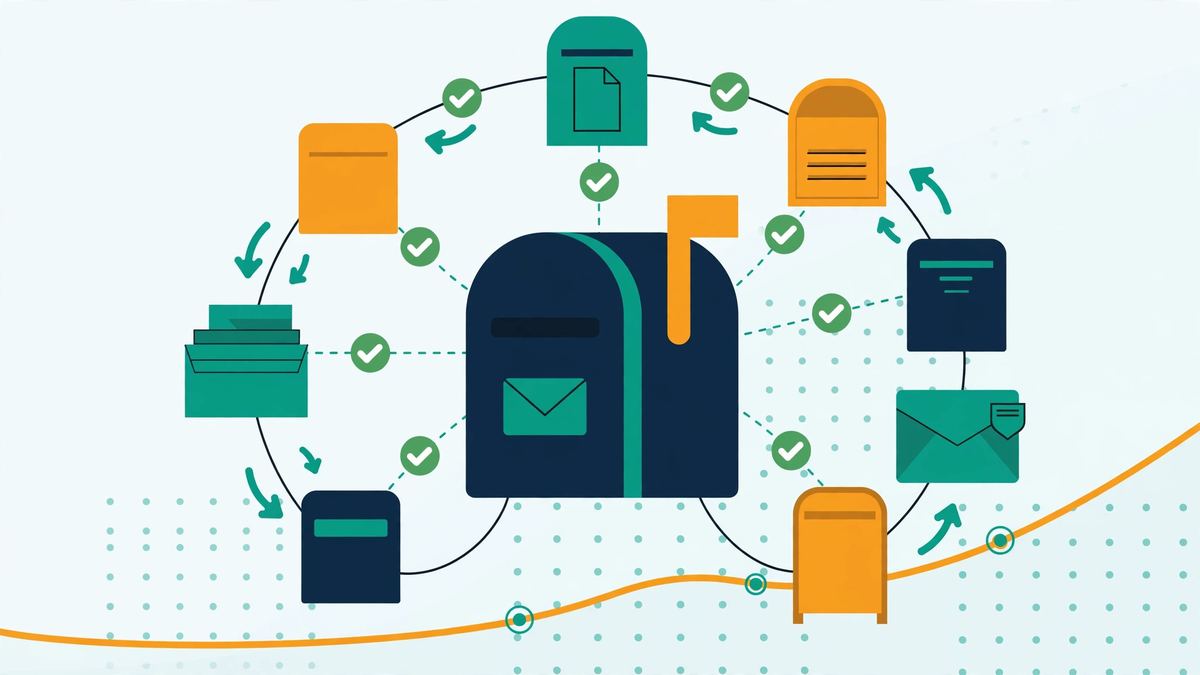
Monitoring watches while you sleep
Monitoring is the quiet job. It watches your authentication records, your blacklist status, and your placement day after day, and it tells you when something changes. A domain can be fine on Monday and listed on a blacklist on Tuesday because a shared IP misbehaved, and without monitoring you only find out when replies dry up. The best email deliverability tools for monitoring do more than alert you: they explain what changed and what to fix first. That is Folderly’s strength, and it is why GlockApps pairs its tests with DMARC and blocklist monitors. If your domain earns real revenue, monitoring is cheap insurance. If you are just starting out, warmup plus an occasional free test will carry you until the volume justifies it.
Your first month with one of the best email deliverability tools
A four-week plan: warmup first, then test
Once you have picked a tool, the first month is about patience, not volume. Start in week one by fixing the basics. Set up a separate sending domain with SPF, DKIM, and DMARC. Connect your mailbox to the warmup tool, and run a free spam test to get a baseline. Week two is for watching the warmup climb while you write your first real campaign. Keep it under 120 words, with a single clear ask, and verify every address before you send.
In week three, send your first twenty-five emails and run a placement test on the exact email you sent. Read every reply, notice what people ask, and change one thing at a time. By week four, the warmup should be finishing and your placement should be improving. Raise the volume gradually instead of all at once.
By the end of that month, you will understand your deliverability better than any review could explain it. You will see whether the warmup is progressing, whether your emails land in the inbox, and whether the tool’s alerts are useful or just noise. Most senders who follow this order book their first meeting in week three or four, once the warmup has finished and the follow-ups have had time to work. For the full week-by-week plan, our beginner’s guide walks through it in detail, and the How Cold Email Works page explains the system behind it. If placement is still poor after a full month of warmup, read our Best Email Verification Tools hub — dirty data, not the warmup tool, is the usual culprit.

What the best email deliverability tools cost
Three pricing models to know
The best email deliverability tools are priced in three different ways, and understanding the model matters more than comparing any single number. Per-mailbox tools charge for every inbox you connect. That suits a solo sender with one mailbox, and punishes an agency with fifty. Flat-fee tools charge one monthly price for the workspace, however many mailboxes you connect, which suits volume because adding a mailbox costs nothing extra. Per-test tools charge for the tests you run, which suits senders who only need an occasional check before a big campaign and punishes senders who test every day. Before you compare prices, work out which model fits your setup. A solo founder and a five-person agency can look at the same two tools and walk away with opposite answers.
Watch for the extras
Watch for the extras, too. Placement testing is often a separate product from warmup, even inside the same company. Folderly’s Inbox Insights is the clearest example. Spam test credits are frequently capped per month, so check how many tests your plan actually includes.
Warmup on the best network can be a paid add-on inside a sending tool. Multichannel steps frequently sit on a higher tier than the plan you first looked at. None of that is hidden — it is all on the pricing pages we link to under the tables. It just means the headline price is rarely the whole story. Add up the plan, the test credits, and any add-ons you need, then compare that total across your shortlist. Use the free trials and free tests, too. Six of the eight tools on this list offer one, and a week of real warming tells you more about value than any pricing page can. Check the provider’s site for current pricing before you buy. Prices and plans change.
Mistakes to avoid when you pick the best email deliverability tools
- Buying warmup when you need testing. Warmup builds reputation over weeks. If one campaign landed badly and you need to know why today, you need a placement test, not a warmup subscription.
- Skipping the free test. Most tools on this list offer a free spam test or a free trial. Run it before you pay, or you have not really tried the tool.
- Sending from your main domain. Keep cold email on a separate sending domain, whatever tool you choose. Your main domain is too valuable to gamble with.
- Paying per mailbox at agency scale. Per-inbox pricing is cheap for one mailbox and painful for fifty. Count your mailboxes before you count the monthly price.
- Judging warmup by its first day. Warmup takes two to four weeks, and placement improves gradually. Wait a full month before you decide a new tool is not working.
- Ignoring the authentication basics. No warmup tool can save a domain with broken SPF, DKIM, or DMARC. Fix the records first, then warm up.
- Buying a huge list to fill a big plan. Begin with fifty to two hundred verified contacts. Small and accurate beats large and stale every time, and it keeps your deliverability safe.
Frequently asked questions about the best email deliverability tools
What are the best email deliverability tools for beginners?
For a complete beginner, Warmup Inbox is the gentlest start on this list: it is simple to set up in under a minute, it includes a sequencer, and its 7-day free trial needs no credit card. If you already send through Instantly or Lemlist, start with the warmup built into the tool you already use instead. Read our Best Cold Email Tools for Beginners 2026 guide for the beginner-focused version of our rankings.
Do I need a separate warmup tool if my sender has warmup built in?
No — if your sending tool already warms up your mailboxes, do not pay twice for the same job. Instantly, Smartlead, and Lemlist all include warmup, so their users should spend the extra budget on a placement tester like GlockApps or MailReach instead. A separate warmup tool earns its keep when you send from a tool without warmup, or when you manage mailboxes across several different senders.
What is the difference between warmup and inbox placement testing?
Warmup builds your sender reputation slowly, over two to four weeks, by trading realistic emails with a network of real inboxes. Placement testing answers one fast question: where does this specific email land right now — inbox, promotions, or spam? Warmup fixes reputation; testing diagnoses it. The best setups use both, and the best email deliverability tools for most senders combine the two in one subscription, like MailReach does.
How long does email warmup take?
Plan for two to four weeks before your first real campaign, and at least fourteen days as an absolute minimum. Warmup works by building a history of positive signals with mailbox providers, and that history cannot be rushed without looking suspicious. Keep a low level of warmup running after that, for as long as you send, because reputation fades when the positive signals stop.
Can I test the best email deliverability tools for free?
Yes. GlockApps has a free plan with two spam-test credits and a free spam checker that needs no account, MailReach offers a free spam test up to three times a day, Warmbox has a free DNS and blacklist checker, and Folderly’s Pulse monitoring alerts are free. Start with one of those free tests to get a baseline before you pay for anything.
Why are my emails going to spam even though my domain is verified?
Verification only sets up SPF and DKIM. The usual missing pieces are a DMARC record, a mailbox that was never warmed up, or a sending volume that jumped too fast. Run a placement test to see where your emails actually land, check your DMARC record, and start warmup before your next campaign. Our sending domain guide walks through SPF, DKIM, and DMARC step by step.
Our verdict on the best email deliverability tools
Your next step
That is the whole shortlist: eight tools, a comparison table, a feature matrix, and a Best-for label on each one, all checkable against the providers’ own sites. The next step is a small one. Pick the tool that matches the job you actually have — warmup, testing, or monitoring — and run one free test or trial this week. Compare the placement result, not the homepage — the tool that makes your first month feel easy is the right one. Then work through the rest of the system: our Start Here hub, Cold Email for Beginners, and the hub page for this ranking, where it sits alongside the rest of our comparisons. You are in the right place, and your first campaign is closer than it feels.
Keep reading — next in this series
You have the ranking now. These guides go deeper on the pieces around it:
- Cold Email for Beginners: The Complete 2026 Guide — the whole system, from your offer to your first replies.
- Best Cold Email Software 2026 — the sending-tool ranking this deliverability guide pairs with.
- Best Cold Email Tools for Beginners 2026 — the beginner-focused version of the rankings.
- How to Set Up a Sending Domain: SPF, DKIM, DMARC and Warmup
- How to Get Your First Email Addresses — the Safest Ways, in Order
- Is Cold Email Legal? The Simple Checklist
- Our comparison hub — the hub page for this ranking.
Leave a Reply