Is cold email legal? If you have ever hovered over the send button and wondered whether you were about to break the law, you are not alone. Almost every beginner asks the same question, and the honest answer is reassuring: yes, cold email is legal in most countries, including the United States, the European Union, the United Kingdom, Canada and Australia — as long as you follow a short checklist. Cold email is a normal, everyday part of business.
Sales teams, founders and freelancers all use it to start conversations with people who might genuinely want what they offer. The law does not ban that. What the law does is set ground rules: be honest about who you are, only email people your offer is relevant to, and stop the moment someone asks you to. Follow those rules, and you are on solid ground. This guide gives you the checklist first, then walks through each country in plain English, so you can send with confidence.
Last updated: 15 November 2026. General information, not legal advice — if you are sending at large scale, or if a regulator ever writes to you, speak to a lawyer in that country.
Is cold email legal? The short version: yes — with a checklist
Cold email to businesses is legal in the US, the EU, the UK, Canada and Australia when you follow the rules in this guide. Run the 10-point checklist below before every campaign, and keep this page bookmarked for the country rules.
Run the 10-point checklist See the country rules at a glanceQuick Answer
Is cold email legal? Yes — in most countries, when you follow a short checklist. In the United States, the CAN-SPAM Act lets you email business contacts without prior consent, as long as you identify yourself, include your postal address, use an honest subject line and honour opt-outs within 10 business days. Across the European Union and the United Kingdom, most B2B cold email relies on legitimate interest under GDPR: the person must be relevant to your offer, you must be able to say where you found their details, and you must stop if they object.
In Canada, CASL is stricter and generally needs consent first, including implied consent for published business addresses. In Australia, the Spam Act needs consent too, but a work address published for business contact can count. Two countries are the exception to the friendly rule: Germany and Austria generally require prior express consent, so use LinkedIn, calls or content marketing there instead. In short, cold email is legal — the checklist is what keeps it that way.
Table of Contents
- The universal checklist: 10 checks before you send
- What makes an email “cold” — and what makes it spam — includes video
- Is cold email legal in the United States? CAN-SPAM — includes video
- Is cold email legal in the EU? GDPR and legitimate interest
- The ePrivacy patchwork: France, Ireland, Germany and Austria
- Is cold email legal in the UK? PECR and the corporate subscriber rule
- Is cold email legal in Canada? CASL
- Is cold email legal in Australia? The Spam Act
- Country rules at a glance — includes comparison table
- Honouring opt-outs: the rule every country agrees on
- What happens if you get it wrong? Penalties in small print
- Common mistakes beginners make
- Frequently asked questions
- Your next step
The universal checklist: 10 checks before you send
Before the country rules, here is the part that matters most. Almost every cold email law in the world boils down to the same ten checks. If you can tick all ten, you are doing what the law asks in the United States, the EU, the UK, Canada and Australia. Print this list, or keep it open beside your sending tool, and run through it before every campaign. It takes five minutes, and it is the single best habit a cold email beginner can build.
Checks 1–5: who you email
| # | Check | What it means in practice |
|---|---|---|
| 1 | Is this person relevant? Your offer must match their job, company and problem. | Only email people who could reasonably want what you offer. A dentist does not need your software for hair salons. Relevance is not just good manners — under GDPR it is part of the legal test. |
| 2 | Is it a work address? Business contact details, not personal inboxes. | Use work emails published for business contact. Personal addresses such as Gmail or Hotmail accounts are off limits for cold outreach in almost every country. |
| 3 | Do you know where you got it? Record the source and the date for every address. | Write down where each address came from and when you found it. If anyone ever asks, you can answer precisely. See our guide to getting your first email addresses for the safest sources, in order. |
| 4 | Have you checked the country? The recipient’s country decides the rules, not yours. | Look up the rules for every country on your list before you send. Germany and Austria need prior consent; Canada needs consent; the US, most of the EU and the UK do not, for relevant B2B mail. The country table below has the details. |
| 5 | Is the sender honest? Real name, real company, real reply address. | Your emails must say who you are and which company you are writing from. Never hide behind a vague name, a fake role or a no-reply address. |
Checks 6–10: what goes in the email
| # | Check | What it means in practice |
|---|---|---|
| 6 | Is the subject line honest? It must reflect what is inside the email. | Do not pretend you have met before, fake an invoice, or promise something the email does not deliver. Misleading subject lines are banned under CAN-SPAM and are the fastest way to look like spam. |
| 7 | Does the email say what it is? The reader should know it is a sales email in seconds. | State your purpose plainly in the first two or three lines. Nobody should have to read to the end to work out that you are selling something. |
| 8 | Is your postal address in the email? Required in the US, good practice everywhere. | CAN-SPAM requires a valid physical postal address in every commercial email. Add yours to your email signature once, and it will be there every time. |
| 9 | Is there a clear way to opt out? One click, no login, no reply required. | Every email needs a working unsubscribe link or a clear way to say stop. The link must work, and the request must be honoured fast — within 10 business days in the US, 5 business days in Australia, and immediately in practice everywhere else. |
| 10 | Have you checked the suppression list? Never email someone who already said stop. | Keep one list of everyone who has opted out, complained or bounced, and check every campaign against it before you send. This is the check beginners skip most — and the one regulators care about most. |
The universal checklist: ten checks that cover the shared core of CAN-SPAM, GDPR, PECR, CASL and the Spam Act. Country-specific extras follow in the sections below. Last checked: 15 November 2026.
Why a checklist beats memorising the law
First, the law is written for lawyers, and you are a sender, not a lawyer. Next, the checklist turns long statutes into actions you can actually do before you press send. After that, it protects you in a second way: if anyone ever questions an email, your checklist habit — the recorded sources, the suppression list, the honest subject lines — is your evidence that you took the rules seriously. Finally, the checklist makes your emails better, not just safer. Relevant people, honest subject lines and a clear opt-out are exactly what makes people reply instead of reporting you as spam. In short, compliance and good cold email are the same thing.
What makes an email “cold” — and what makes it spam
A cold email is simply an email to someone you have not spoken to before, about something relevant to their work. Spam is different. Spam is untargeted, deceptive or sent to people who have already said no. The law cares about the difference, and so do your recipients. For example, a short, honest email to the operations manager of a dental clinic, offering software that solves a problem dental clinics actually have, is a cold email. In contrast, the same message sent to 10,000 random addresses, from a fake name, with a subject line that says “Your invoice is overdue”, is spam. As a result, the first email is legal in most countries, and the second is not — and would also destroy your sender reputation in days.
Prefer to watch? This walkthrough shows how to spot the spam signals in your own emails before you send them, so your prospecting stays on the right side of the line:
Video credit: “How to Identify Spam Emails and Avoid Sending Them in Prospecting”, as featured in Scrap.io’s Cold Email Compliance 2026 guide — watch it on YouTube. This video is the property of its creator and is embedded here via YouTube for educational purposes. OutreachCompare is not affiliated with the creator and does not claim ownership of this content.
The three signs your cold email has become spam
First, irrelevance. If the person could not reasonably want what you offer, the email is spam to them, whatever the law says. Next, deception. A misleading subject line, a fake sender name or a hidden sales pitch turns a cold email into spam in the eyes of every regulator. Finally, persistence after an opt-out. One email to a relevant person is a cold email. A second email after they said stop is spam — and in most countries, it is also unlawful. However, the good news is that all three signs are easy to avoid. Choose relevant people, write honest subject lines, and honour every opt-out the same day. In addition, keep your list small and clean: our guide to getting email addresses shows how to build a first list of 50 to 200 verified work addresses without buying anything.
Is cold email legal in the United States? CAN-SPAM
Yes. Is cold email legal in the United States? The answer is the friendliest of any major country. The US CAN-SPAM Act of 2003 does not require prior consent for commercial email, and it does not exempt B2B email — it covers all of it, business to business included. In other words, you can email a stranger in the US about your product without asking permission first. However, CAN-SPAM sets seven clear rules for how you send, and breaking any of them is where the trouble starts.
First, do not use false or misleading header information: your “From”, “To” and reply address must identify who you really are. Next, do not use deceptive subject lines: the subject must reflect what is inside. Then, identify the message as an advertisement, tell the recipient where you are located with a valid physical postal address, and give them a clear way to opt out. Finally, honour opt-out requests promptly — within 10 business days — and monitor what anyone sending on your behalf is doing, because you are responsible for their emails too.
Prefer to watch? QuickMail’s guide walks through CAN-SPAM and GDPR side by side, so you can see how the US opt-out model differs from Europe’s approach:
Video credit: QuickMail’s cold email compliance video, embedded in its guide “Is Cold Email Illegal? How To Send Compliant Cold Emails (CAN SPAM & GDPR)” — watch it on YouTube. This video is the property of its creator and is embedded here via YouTube for educational purposes. OutreachCompare is not affiliated with QuickMail and does not claim ownership of this content.
What CAN-SPAM does not require
First, CAN-SPAM does not require you to get permission before you send. That is the biggest difference from Canada and the EU, and it is why the US is the easiest country to start cold email in. Next, it does not require a specific form of opt-out: a working unsubscribe link is enough, as long as it works for at least 30 days after you send. After that, it does not ban commercial email to businesses, and it does not require you to prove consent for a B2B contact.
However, there are two catches. In the first place, the FTC can fine you per email, not per campaign — so one bad send to a large list multiplies fast. In addition, some US states have their own rules on top of CAN-SPAM, and private lawsuits under state law are possible. As a result, the checklist above is still your best protection, even in the friendliest country on the list. Read the rules in the regulator’s own words in the FTC’s CAN-SPAM compliance guide for business.
Is cold email legal in the EU? GDPR and legitimate interest
Yes — with a little more paperwork than the US. Is cold email legal in the EU? GDPR did not ban cold email, despite what you may have heard. What GDPR bans is processing someone’s personal data without a lawful basis. A work email address that names a person, such as sarah@brightdental.example, is personal data. For most B2B cold email, the lawful basis is legitimate interest under Article 6(1)(f) of the GDPR.
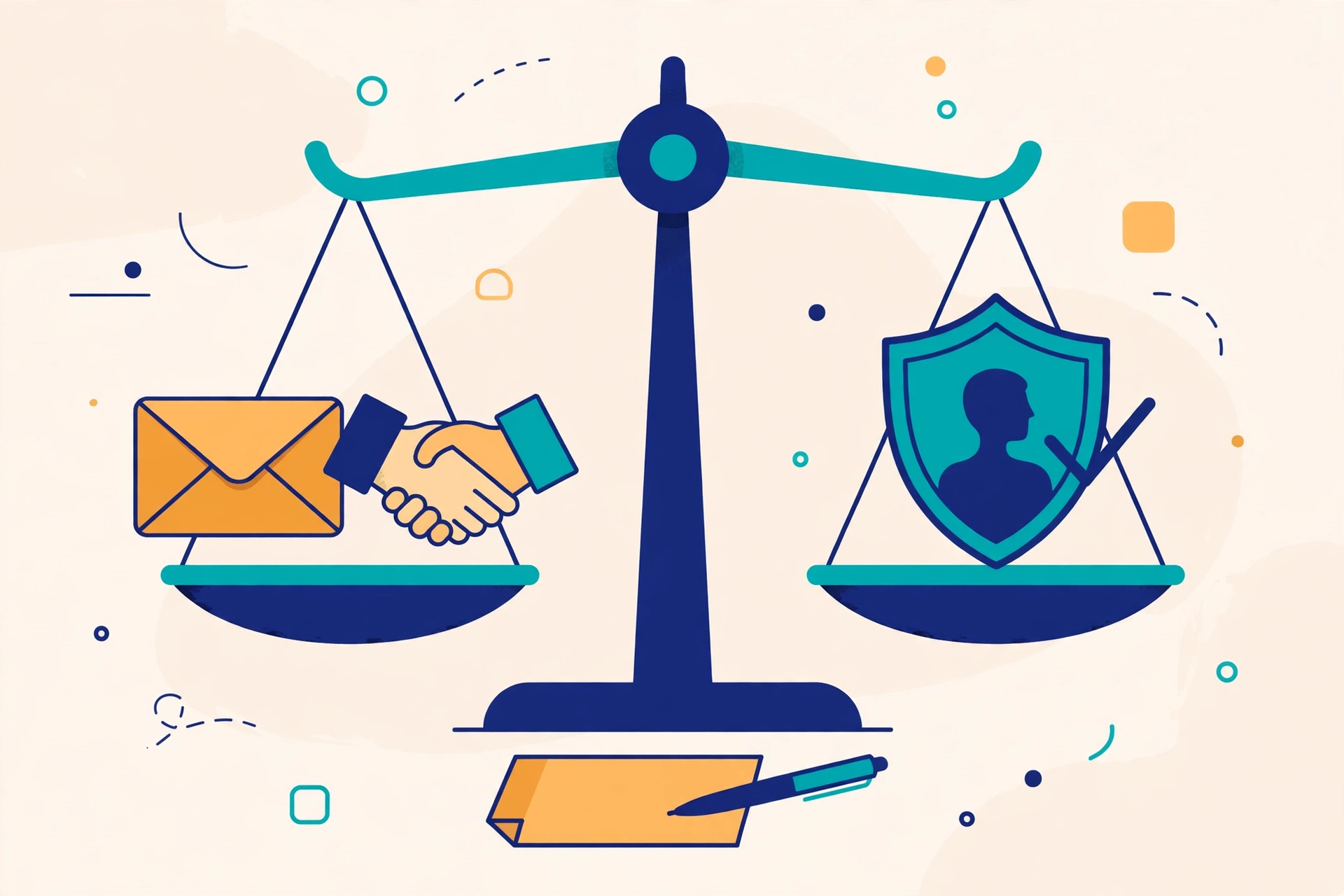
Recital 47 says direct marketing may be regarded as a legitimate interest, and that such an interest can exist where there is a relevant and appropriate relationship between you and the person you are contacting. In short, the law asks you to show your working: your interest in contacting this person is real, the email is necessary to pursue it, and it does not override their rights. That is a test you can pass, if you choose relevant people and write the reasoning down.
The three-part legitimate interest test
Before you email anyone in the EU, run this three-part test — and write the answers down. That written record is called a Legitimate Interests Assessment, or LIA, and it is your evidence that you thought about the rules before you sent. First, the purpose test: is there a real, legitimate reason to contact this person? Selling a product that solves their problem counts. Emailing everyone in a directory does not. Next, the necessity test: is email the reasonable way to pursue that purpose?
A short, relevant email to the right person usually passes. Finally, the balancing test: do the person’s interests and rights override yours? This is where relevance decides everything. A relevant email to a work address, from an identifiable sender, with a clear opt-out, rarely overrides anyone’s rights. In contrast, an irrelevant email to a personal address, sent in bulk, usually does. Read the text of the rule itself in Article 6 of the GDPR.
| The three-part test | Ask yourself | Passes when… |
|---|---|---|
| 1. Purpose | Why am I contacting this person? | There is a real business reason tied to their job or company. |
| 2. Necessity | Is email the reasonable way to do it? | A short, relevant email is proportionate to the goal. |
| 3. Balancing | Would this person reasonably expect it? | The email is relevant, the address is a work address, and opting out is easy. |
The legitimate interest test in brief. Keep your written LIA with your campaign notes — it is the document that shows you assessed the rules before you sent.
What GDPR also requires you to do
In addition to the test, GDPR gives every recipient three rights you must respect. First, the right to be informed: under Article 14, when you get someone’s details from a source other than the person themselves, you must tell them where you got their data, who you are, and why you are contacting them. In practice, that means saying in your first email who you are and where you found them — for example, “I found your work email on your company website.” Next, the right to object: under Article 21, anyone can object to direct marketing at any time, and you must stop immediately — no waiting period, no questions asked.
Finally, the right to erasure: if someone asks you to delete their details, delete them, including from your suppression list’s active sending lists (keep only the minimum needed to remember never to email them again). However, GDPR also sets a limit on how long you keep data: do not keep addresses forever. If you have not emailed someone in months and have no reason to, delete the record. As a result, a small, fresh list is not just better for deliverability — it is what GDPR expects.
The ePrivacy patchwork: France, Ireland, Germany and Austria
Here is the part that catches beginners out. GDPR is only half the story in Europe. The ePrivacy Directive sits alongside it, and each EU country turned it into national law in its own way. As a result, the rules for B2B cold email change at the border, even though GDPR is the same everywhere. The four countries below are the ones that matter most to a beginner, because they show the full range — from friendly, to careful, to consent-first.
France and Ireland: opt-out for role-relevant B2B email
France and Ireland are the friendliest EU countries for B2B cold email. In both countries, you can email a business contact without prior consent when the message is relevant to their professional role, as long as you identify yourself and offer a clear opt-out. The French regulator CNIL takes this approach for B2B messages sent to professional addresses, provided the email relates to the recipient’s role. Ireland follows the same opt-out model for B2B mail. However, the same limits apply as everywhere else in the EU: the email must be relevant to the person’s job, the address must be a work address, and you must stop the moment they object. In addition, GDPR’s Article 14 disclosure and Article 21 objection rights still apply in full. As a result, France and Ireland feel much like the UK: friendly, but only for genuinely relevant B2B mail.
Germany: prior express consent under UWG §7(2)
Germany is the strictest major EU country for cold email, and it is the one beginners get wrong most often. Under §7(2) of the German Unfair Competition Act (UWG), sending advertising by email without the recipient’s prior express consent is unreasonable harassment — and that applies to B2B email as well. In practice, German courts and regulators treat unsolicited B2B emails as needing consent first, even when GDPR legitimate interest might otherwise apply. As a result, cold email to Germany is a high-risk channel for a beginner. The safe alternatives are LinkedIn outreach, phone calls, content marketing, or asking for consent first — for example, through a lead magnet or an event signup. If Germany is a key market for you, get local advice before you send anything. Do not assume that what works in France or Ireland will work in Germany.
Austria: prior express consent under TKG §174
Austria is just as strict as Germany. Under §174 of the Austrian Telecommunications Act (TKG), sending electronic mail for direct marketing purposes requires the recipient’s prior express consent — again, including B2B email. As in Germany, there is no general B2B exception to rely on. In short, treat Austria the same way as Germany: no cold email without consent, and use LinkedIn, calls or content to start the conversation instead. The good news is that both countries are the exception, not the rule. Most of the EU, including France and Ireland, allows relevant B2B cold email on an opt-out basis. But if you are building a Europe-wide list, split it by country first, and leave Germany and Austria off the cold email list entirely until you have consent.
Is cold email legal in the UK? PECR and the corporate subscriber rule
Yes — and the UK is one of the friendliest countries for B2B cold email. Is cold email legal in the UK? The answer turns on one distinction in the Privacy and Electronic Communications Regulations (PECR): corporate subscribers versus individual subscribers. A corporate subscriber is a limited company, a limited liability partnership, a Scottish partnership or a similar body with its own legal identity. You can send marketing emails to corporate subscribers without prior consent, as long as you say who you are and give a working opt-out.
An individual subscriber is a sole trader, an ordinary partnership or another unincorporated business. For those, PECR requires consent first — or the “soft opt-in”, which only applies if you obtained their details in the course of a sale or negotiations for a sale, and you are marketing similar products. In short, email limited companies freely, but do not cold email sole traders without consent.
The UK rule that saves beginners from mistakes
First, check the business type before you send, not after. Next, if you cannot tell whether a business is a limited company or a sole trader, treat it as an individual subscriber — that is the ICO’s own guidance, and it keeps you on the safe side. After that, remember that UK GDPR still applies alongside PECR: if you email a named person at a company, you still need a lawful basis (usually legitimate interest), you still need to tell them where you got their details, and they can still object to direct marketing at any time.
Finally, the UK’s penalty ceiling has risen sharply: under the Data (Use and Access) Act, the ICO can now fine up to £17.5 million or 4% of global turnover for PECR marketing breaches, where the old ceiling was £500,000. That change took effect in February 2026. As a result, the UK is friendly — but the friendly rules still have teeth. Read the regulator’s own explanation in the ICO’s guidance on direct marketing using electronic mail.
Is cold email legal in Canada? CASL
Mostly no — and Canada is the country beginners underestimate most. Is cold email legal in Canada? CASL, Canada’s Anti-Spam Legislation, is an opt-in law: you need consent before you send a commercial electronic message. There are two kinds of consent. Express consent is the clear kind: someone ticked a box, signed up, or said yes in writing. Implied consent is narrower, but it is the route most B2B senders rely on.
It covers an existing business relationship, such as a current customer, and it covers a work address that has been conspicuously published for business contact — provided your message is relevant to the person’s role and there is no statement saying unsolicited messages are not wanted. In short, you can email a Canadian business contact whose work address is published on the company website, about something relevant to their job. What you cannot do is buy a list, scrape addresses, or email a personal address without consent.
What every CASL email must contain
First, your identification: who you are, and on whose behalf you are sending, with accurate contact details. Next, a working unsubscribe mechanism that stays functional for at least 60 days after you send, and is honoured within 10 business days. After that, keep records: CASL puts the burden of proving consent on you, so keep the source, the date and the reason you believed you had implied consent for every Canadian address. Finally, remember that CASL follows the recipient, not the sender. If you are based in Ireland, the UK or the US and you email someone in Canada, CASL applies to you. The CRTC enforces it, and it has fined senders for exactly the mistakes beginners make — bought lists and missing unsubscribe options. Read the regulator’s own answers in the CRTC’s frequently asked questions about CASL.
Is cold email legal in Australia? The Spam Act
Yes — in a narrower way than the US, and wider than Canada. Is cold email legal in Australia? The Spam Act 2003 sets three rules for every commercial electronic message: consent, identify, unsubscribe. Consent can be express, such as a signup form or a ticked box, or inferred — and the inferred route is the one that matters for cold email. Consent may be inferred from a work address that has been conspicuously published: a business address published with the organisation’s agreement, with no statement refusing unsolicited messages, where your message is relevant to the person’s role, functions or duties.
In other words, emailing a published work address about something relevant to that person’s job is generally permitted. Emailing the same address about an unrelated offer is not. There is no B2B exemption in the Spam Act, so a cold sales email to a company director is treated the same as one to a consumer — the conspicuous publication route is the only allowance for true cold email.
Australia’s three rules in practice
First, identify yourself accurately: your name or business name and contact details that stay correct for at least 30 days after you send. Next, provide a working unsubscribe that is honoured within 5 business days and stays functional for at least 30 days — and never require someone to log in or create an account to unsubscribe. After that, remember the burden of proof: under the Spam Act it is up to you to prove you had consent, so record the source and date for every Australian address, just as you would under GDPR.
Finally, do not send an email to ask for consent, because that email is itself a marketing message. ACMA, the Australian regulator, enforces the Act and has fined large brands for the most common failure of all: not honouring unsubscribe requests on lists they lawfully owned. In short, Australia rewards the same habits as everywhere else — relevant people, published work addresses, and an unsubscribe that actually works.
Country rules at a glance
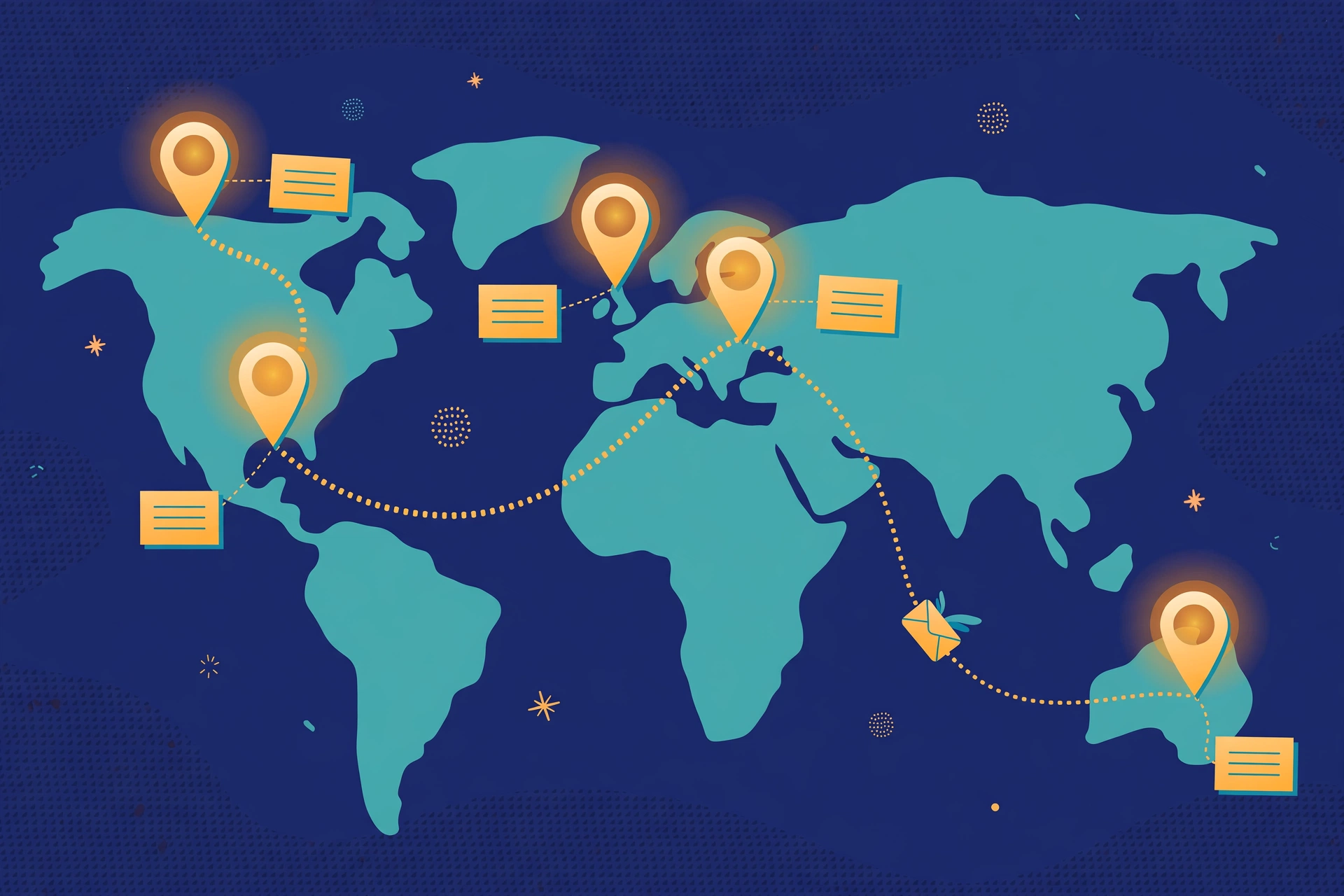
Here is the whole guide on one screen. The rule that decides which row applies is the recipient’s country, not yours. So split your list by country first, then apply the right row to each group. If you only remember one thing from this article, make it this table — and the fact that Germany and Austria need consent first.
| Country / region | Law | Cold B2B email without prior consent? | Opt-out deadline |
|---|---|---|---|
| United States | CAN-SPAM Act | ✓ Yes — opt-out model, no consent needed | Within 10 business days |
| European Union (most) | GDPR + ePrivacy | ✓ Yes — legitimate interest, role-relevant only | Immediately on objection |
| France & Ireland | GDPR + national ePrivacy law | ✓ Yes — opt-out for role-relevant B2B mail | Immediately on objection |
| Germany | GDPR + UWG §7(2) | ✗ No — prior express consent required | Immediately on objection |
| Austria | GDPR + TKG §174 | ✗ No — prior express consent required | Immediately on objection |
| United Kingdom | UK GDPR + PECR | ✓ Yes — corporate subscribers only, no consent needed | Immediately on objection |
| Canada | CASL | ✓ Only with express or implied consent | Within 10 business days |
| Australia | Spam Act 2003 | ✓ Only with express or inferred consent | Within 5 business days |
Country rules at a glance. “Yes” means cold B2B email is permitted when you follow the checklist and the country notes above — it never means you can email anyone about anything. Last checked: 15 November 2026. Rules change, so check the regulator’s guidance linked in each section before you send to a new country.
How to use this table on a real list
First, add a country column to your list sheet, next to the source and date columns you already keep. Next, sort the list by country and check each group against the table above. Then, remove Germany and Austria from the cold email list entirely, unless you already have their express consent. After that, check your Canadian and Australian contacts for consent — published work address, relevant message — and remove anyone who does not pass.
Finally, send to the rest in small batches, and watch the replies: a relevant list answers, and an irrelevant one complains. In addition, keep the table with your campaign notes, so anyone who sends on your behalf follows the same rules. If you are still building your first list, our guide to getting email addresses shows the safest sources, in order — and the beginner’s guide walks through the whole system, from offer to first meeting.
Honouring opt-outs: the rule every country agrees on
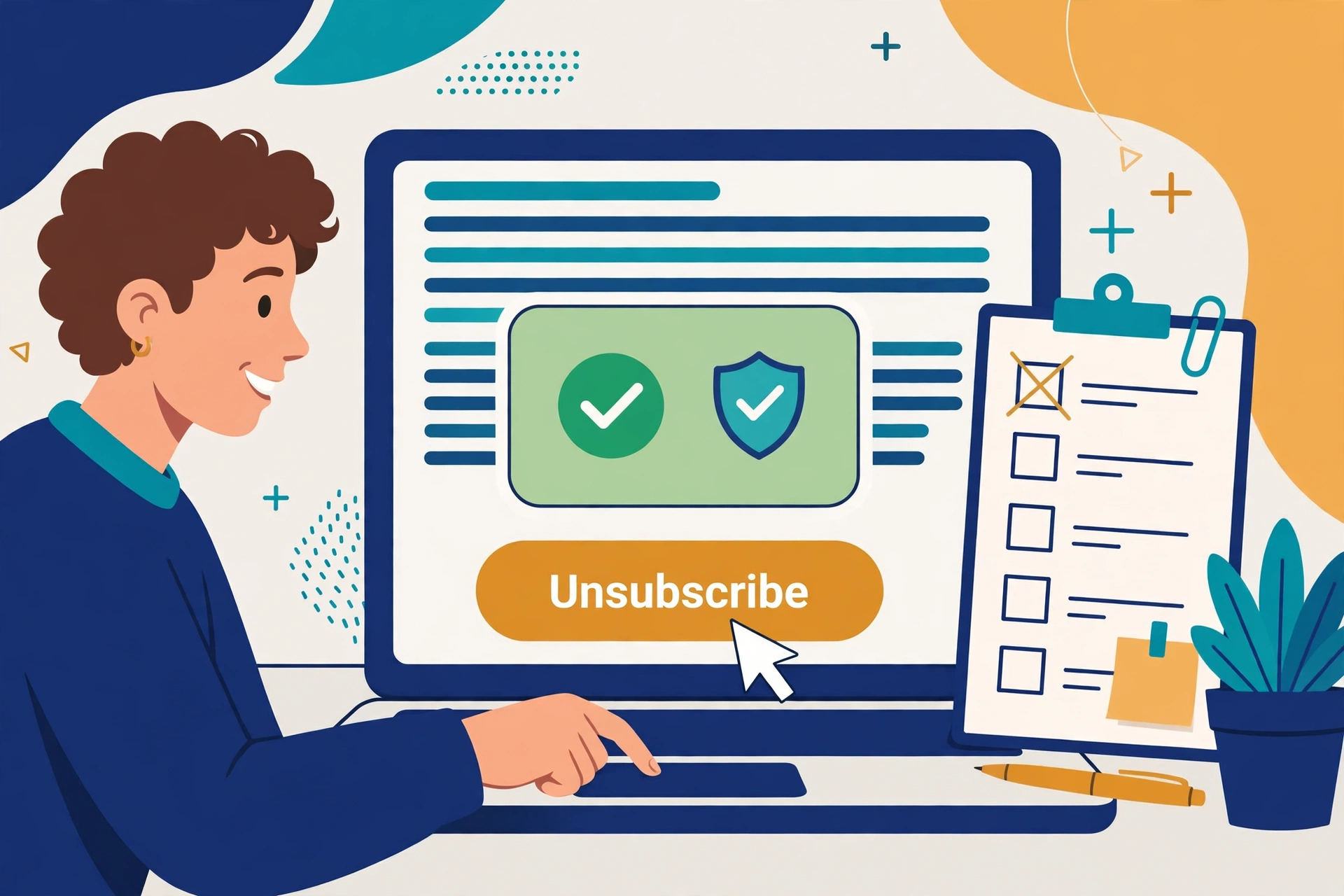
Every law in this guide agrees on one thing: when someone says stop, you stop. The deadlines differ — 10 business days in the US and Canada, 5 business days in Australia, immediately in the EU and UK — but the habit should be the same everywhere: honour every opt-out the same day you receive it. Do not send a “just one more email” to confirm. Do not ask them to log in, fill in a form, or reply with a reason. One click, and they never hear from you again. That is not just the law. It is also the kindest and smartest thing you can do, because a person who asked to stop and keeps receiving your emails will mark you as spam — and spam complaints hurt your deliverability far more than one lost contact.
Build one suppression list and use it everywhere
First, keep a single suppression list that covers every tool and every campaign you run — not one list per tool. Next, add to it the same day: every opt-out, every spam complaint, every hard bounce, and every “please remove me” reply, however it arrives. Then, check every new campaign against it before you send, even if the campaign uses a different tool.
After that, never delete the suppression list itself: the names on it are the people you must never email again, and deleting it means you will email them again by accident. Finally, remember that a good suppression list is a sign of a healthy sender, not a failure. Lists that never lose anyone are usually lists that never emailed anyone real. Compare verification tools that keep your list clean on our Best Email Verification Tools hub, and sending tools with warmup built in on our Best Warmup Tools hub.
Tools that make the checklist easier
The checklist is a habit, not a product — but the right tools make it much easier to keep. These three are the ones beginners pick first, and each one covers a different part of the checklist: finding verified work addresses, sending with warmup and unsubscribe handling, and working from a licensed database instead of a bought list.
| # | Tool | How it helps you stay compliant | |
|---|---|---|---|
| 1 | Hunter ★ Best for: Verified work emails Finds work emails and verifies them before you see them. | ✓ Verified work addresses, so you email real business contacts ✓ Source is clear: name + company domain | Visit Site →Check the site for current pricing & trial |
| 2 | Instantly ★ Best for: Beginners Sending with warmup and unsubscribe handling built in. | ✓ Warmup and sending in one place ✓ Unsubscribe handling for every campaign | Visit Site →Check the site for current pricing & trial |
| 3 | Apollo ★ Best for: Data + sending Licensed B2B database and sending in one tool. | ✓ Licensed database, so you know where data came from ✓ Sequences and sending built in | Visit Site →Check the site for current pricing & trial |
Last checked: 15 November 2026. Tool descriptions match the checks in our beginner’s guide and our email addresses guide. Features and pricing can change, so please check the provider’s site before you buy. We do not guess at features, prices or trials.
What happens if you get it wrong? Penalties in small print
Let us keep this section short and in small print, because the numbers are not the point. The point is the checklist, and the numbers only exist to show that regulators take it seriously. In practice, regulators start with warnings, guidance and corrective orders — especially for small senders who made an honest mistake and fix it fast. The big fines you read about are for large-scale, repeated or deliberate breaches: bought lists, ignored opt-outs, and deceptive subject lines sent to thousands of people. So read the table below once, then forget the numbers and remember the checklist instead.
| Law | Maximum penalty (small print) |
|---|---|
| US CAN-SPAM | Up to $53,088 per violating email (FTC, 2025 figure, unchanged for 2026) |
| EU GDPR | Up to €20 million or 4% of global annual turnover, whichever is higher (upper tier, Art. 83(5)); €10 million or 2% for the lower tier |
| UK PECR / UK GDPR | Up to £17.5 million or 4% of global turnover (since February 2026; previously £500,000 under PECR) |
| Canada CASL | Up to CAD $10 million per violation for organisations, CAD $1 million for individuals (CRTC) |
| Australia Spam Act | Penalties in penalty units; up to A$3.64 million per day for a repeat corporate offender (10,000 units at the 2026 unit value) |
Penalty maxima only, checked 15 November 2026 from the FTC, the GDPR text, the ICO, the CRTC and Australian Spam Act guidance. Maxima are ceilings, not forecasts: actual penalties are usually far lower, and small senders who fix mistakes quickly most often receive a warning first. This is general information, not legal advice.
Common mistakes beginners make
Mistakes to avoid when you ask “is cold email legal?”
- Assuming one country’s rules apply everywhere. In fact, the recipient’s country decides the rules. A list that is fine in the US can break the law in Germany. Split your list by country first.
- Emailing Germany or Austria like France or Ireland. Both need prior express consent for B2B email. Use LinkedIn, calls or content marketing there instead.
- Buying a list. Above all, bought lists are the hardest addresses to defend: you cannot show where they came from or that anyone agreed to anything. Build your own list from the safest sources instead.
- Using personal email addresses. Stick to work addresses published for business contact. Personal inboxes are off limits for cold outreach in almost every country.
- Hiding who you are. First, a vague sender name looks like spam. Next, it breaks CAN-SPAM and GDPR’s disclosure rules. Say who you are in every email.
- Writing a misleading subject line. If the subject promises something the email does not deliver, it is deceptive — and deceptive subject lines are banned under CAN-SPAM and treated as spam everywhere else.
- Forgetting the postal address. CAN-SPAM requires a valid physical postal address in every commercial email. Add it to your signature once and it is there every time.
- Ignoring opt-outs — or honouring them slowly. When someone says stop, stop the same day and add them to your suppression list. Slow opt-out handling is the most common reason regulators act.
- Keeping addresses forever. Addresses go stale, people change jobs, and GDPR expects you to delete data you no longer need. Re-verify anything older than six months and delete the rest.
- Treating the law as a one-time read. Rules change — the UK penalty ceiling rose in 2026, and penalty figures are adjusted for inflation. Re-check the country table every few months.
Frequently asked questions
Is cold email legal in the United States?
Yes. Under the CAN-SPAM Act you can email US business contacts without prior consent, as long as you use honest headers and subject lines, identify yourself, include your postal address, and honour opt-outs within 10 business days. See the CAN-SPAM section above for the full list of rules.
Is cold email legal in the EU under GDPR?
Yes, in most EU countries, when you rely on legitimate interest under Article 6(1)(f), email only role-relevant work addresses, write down your legitimate interests assessment, tell recipients where you found their details, and stop immediately if they object. However, Germany and Austria generally require prior express consent, so do not cold email there without it.
Is cold email legal in the UK?
Yes, for corporate subscribers — limited companies, LLPs and similar bodies — without prior consent, as long as you identify yourself and give a working opt-out. Sole traders and ordinary partnerships need consent first under PECR, or the soft opt-in. If you cannot tell which type a business is, treat it as an individual subscriber.
Is cold email legal in Canada?
Only with consent. CASL is an opt-in law, but implied consent covers an existing business relationship and a work address conspicuously published for business contact, when your message is relevant to the person’s role. Bought lists and scraped addresses do not count. Every CASL email must also identify you and include an unsubscribe that works for at least 60 days.
Do I need consent to send cold email?
It depends on the country. The US needs no prior consent for B2B email. Across most of the EU, the UK, France and Ireland, you need a lawful basis — usually legitimate interest — rather than consent. Canada, Australia, Germany and Austria do need consent first, though Canada and Australia allow consent to be implied in the narrow cases explained above. When in doubt, ask for consent: it is the safest basis in every country.
What happens if someone reports my cold email as spam?
First, do not panic. One complaint does not bring a regulator to your door. Next, remove the person from your list the same day and add them to your suppression list. Then, check what went wrong: was the email relevant to them, was the subject line honest, and was the opt-out easy to find? Finally, fix the cause before you send again. Regulators act on patterns — repeated complaints, bought lists and ignored opt-outs — not on a single honest mistake that you fixed.
Your next step
By now you know the answer to “is cold email legal?” — yes, in most countries, when you follow a short checklist. Your next step is simple. First, save the 10-point checklist and run it against your next campaign before you send. Next, split your list by country and remove Germany and Austria from the cold email list until you have consent. Then, check that every email carries your name, your company, your postal address and a working unsubscribe link.
After that, send a small batch — 50 relevant people is plenty — and watch the replies. Our Cold Email for Beginners: The Complete 2026 Guide walks through the whole system, from offer to first meeting, and our guide to getting email addresses shows how to build your list the safe way. You are in the right place — start with the checklist, and build from there. General information, not legal advice. Sending at large scale, or if you receive a regulator letter, speak to a lawyer.
Keep reading — next in this series
You know the rules now. Go deeper with the guides that go with this one:
- Cold Email for Beginners: The Complete 2026 Guide — the full beginner system, from offer to first meeting.
- How to Get Your First Email Addresses — the Safest Ways, in Order — build your first list of 50 to 200 verified work addresses.
- Start Here — the hub that maps the whole beginner journey, in order.
- How Cold Email Works — the seven steps of a campaign, end to end.
- The short checklist version of this guide — the same rules in a shorter form.
- Best B2B Data Providers — where to find licensed contact data instead of buying a list.
- Best Email Verification Tools — how to verify your list before you send.
- Best Warmup Tools — warm up your domain before your first campaign.
- How to Set Up a Sending Domain: SPF, DKIM, DMARC and Warmup (coming soon — the next article in this series)
- Best Cold Email Tools for Beginners 2026 (coming soon)
Leave a Reply