
Best for teams wanting one AI BDR to run outbound end to end: Artisan
Artisan sells Ava, an AI business development representative that finds leads, writes personalised outreach, handles replies and books meetings on your team’s calendar. Behind that short description sits a database of 250 million or more verified B2B contacts, more than 20 ready-made campaign types, buying-signal triggers, managed deliverability, and a dialler your reps use while Ava sends the emails. Pricing works in two views. Startups can self-serve from $250 a month on annual billing, while larger teams get a quoted plan sized by leads contacted, from about 2,500 a month on Team to about 6,000 on Scale.
This Artisan review works through both views as published on 16 November 2026. It covers what Ava does well, where a human still has to step in, and how Artisan compares with 11x, Reply.io and Salesforge. By the end you should know whether hiring an AI BDR beats hiring a person, or whether a cheaper sequencer with an AI add-on would serve you better.
Visit Artisan → Jump to the comparison tableWhy an AI BDR appeals to busy sales teams
Outbound eats time in small pieces. A list has to be built, addresses have to be found, prospects have to be researched, messages have to be written, follow-ups have to be sent, and replies have to be chased across inboxes. Most sales teams handle that chain with three or four separate tools, and every handoff between them loses something. A detail gets typed wrong, a message bounces, a reply sits unread in an inbox nobody checks. Artisan was built to hold the whole chain in one place, with an AI agent doing the repetitive steps. This Artisan review tests whether that promise holds up in practice, and where the edges still show.
In addition, think of Ava as a junior rep who never sleeps. In practice, she works through a list, researches each prospect, writes a message in your voice, sends it from your domain, answers the reply, and puts the meeting on a calendar. Meanwhile, your human reps spend their hours on calls and closing, which is the work only a person can do well. For example, for a team with more pipeline targets than headcount, that division of labour is the attraction. Instead of hiring another BDR, you hire software that does the BDR’s busiest work. Whether that trade is worth it depends on three things. How much you trust AI-written copy, how much volume you need, and whether your ideal customer responds well to email. Those three questions run through every section below.
How this Artisan review was put together
There is also a useful piece of history. Artisan launched Ava 2.0 in May 2026, a ground-up rebuild that added autonomous reply handling, meeting booking and a rep dialler, and cut the entry price from about $2,500 a month to $250 a month. Since then the company has opened self-serve signup for startups while keeping quoted plans for larger teams. Understanding that history helps explain both the strengths and the limits you will meet later in this Artisan review.
A word on how this review was put together. Every price and feature below comes from Artisan’s own website, checked on 16 November 2026, and the tables carry that date. One honest caveat belongs here. The pricing page loads with a quote-only view for businesses, and the self-serve Startup prices sit behind a second tab that does not render in a plain page fetch. Those Startup figures are therefore cross-checked against three independent reviews of the same page from October 2026, all of which agree, and the article flags exactly which figures come from that cross-check. We have not tested Artisan hands-on, so there is no numeric score here, only a Best-for verdict and an honest list of trade-offs.
Quick Answer
Artisan is an AI SDR platform built around Ava, an AI BDR that finds leads in a 250M+ verified contact database, writes personalised email and social outreach, handles replies and books meetings on your reps’ calendars. Its core features are 20+ ready-made campaign types, buying-signal triggers including website visitor identification, managed deliverability with warm-up, a rep dialler, and two-way Salesforce and HubSpot sync. Startup pricing starts at $250 a month on annual billing ($280 monthly) for the Intern plan, with a free plan at $0 and larger Team and Scale plans quoted by volume.
Artisan is best for B2B teams with a clear ideal customer profile that want one vendor to run outbound end to end. It is not the cheapest choice for a solo seller, and it is not a tool for teams that want to cold call, because Ava does not place calls herself.
Contents
- What Ava actually does for a sales team
- Who Artisan fits best — and who should skip it
- Pricing: the two views that confuse buyers
- Finding buyers in the 250M+ database
- How autonomous Ava really is
- Watchtower and buying signals
- Deliverability, warm-up and sending health
- Calling, CRM sync and the rep’s side of the job
- Security, guardrails and compliance
- Artisan against 11x, Reply.io and Salesforge
- Strengths and weaknesses, side by side
- Getting started: a sensible first month
- Frequently asked questions
- The verdict in this Artisan review
What Ava actually does for a sales team
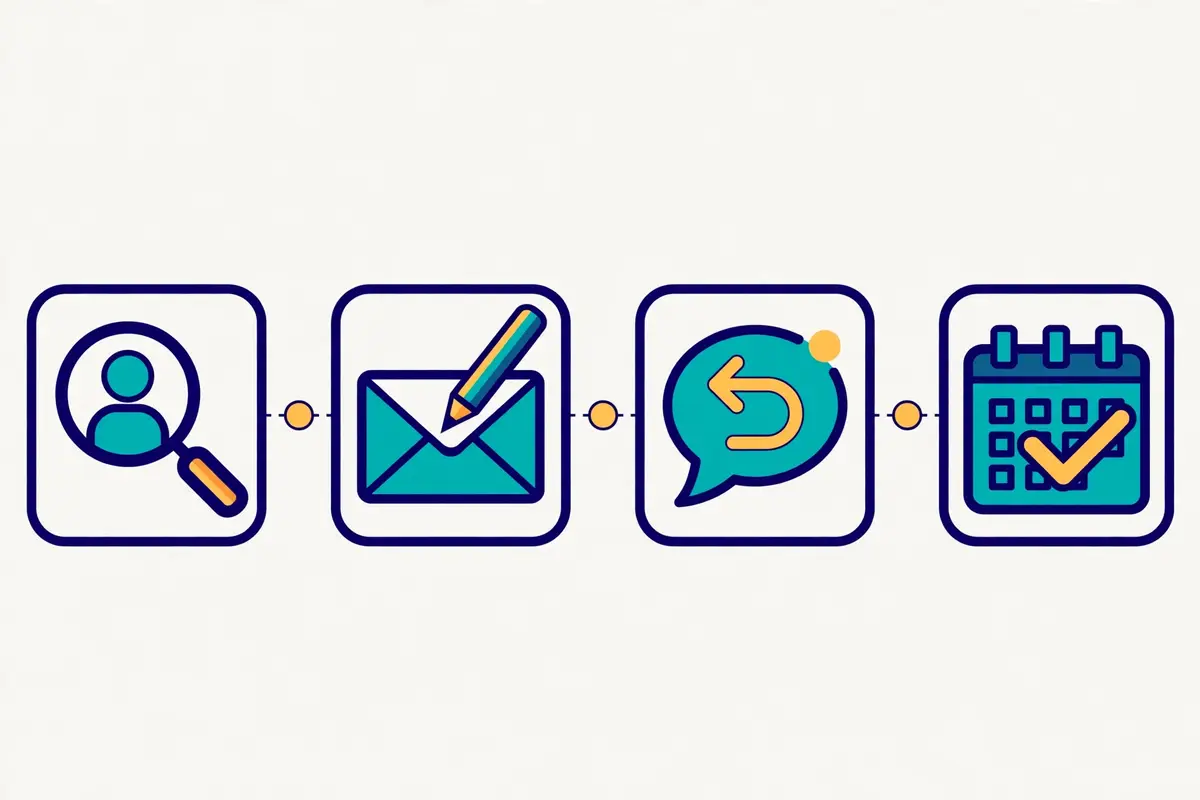
Artisan describes itself as a builder of AI employees for go-to-market teams. As a result, the homepage pitch makes the promise plainly: Ava is the first of those employees, an AI BDR that runs outbound from first touch to booked meeting. Behind that promise sits a five-part workflow. First, Ava finds companies that match your ideal customer, and the people to contact there, from a built-in database of more than 250 million verified contacts. Next, she researches each prospect and writes a message based on what she finds, rather than a template with a first-name merge field. After that she runs the sequence, answers replies, handles objections, and books the meeting directly on a rep’s calendar. In short, you set the strategy once, and Ava owns the execution after that.
That sequence matters, because it shows where Artisan spends its effort, and this Artisan review keeps coming back to it. Most sequencers start with a list you bring and a message you write. Artisan starts one step earlier, with the list itself, and it ends one step later, with the reply handled and the meeting booked. In between, the AI drafts the message from the prospect’s company, role, and recent activity. For example, for a team that currently researches every prospect by hand, that drafting step is the biggest time saving in the product, and this Artisan review counts it as the main reason to try Ava. For a team that already owns a data provider and a sequencer, it may feel like paying twice for the same list, so the value depends on what you already own.
Six features this Artisan review found defining
First comes data and lead generation. You define an ideal customer profile, and Ava sources matching leads from the built-in database, or you import contacts from your CRM or a data warehouse. Next comes campaign choice. More than 20 ready-made campaign types cover cold outbound, CRM lead reactivation, closed-lost follow-up, event follow-up, upsell and cross-sell, and new customer onboarding. Then comes engagement. Ava runs email and social sequences, tests message variants, and shifts volume toward what converts. After that comes reply handling. Ava reads replies, answers questions, handles objections, and books meetings. Finally comes the AI layer. Guardrails, approval gates and escalation rules sit across the whole workflow, so a human can review what goes out. Overall, each part is simple on its own. Combined, they add up to more than the sum of the parts, because the handoffs between them disappear.
The six features at a glance, in this Artisan review
- Ava, the AI BDR: an autonomous agent that finds leads, researches them, writes outreach, runs sequences, handles replies and books meetings.
- 250M+ verified contacts: a built-in B2B database with waterfall enrichment across 22 or more data sources, plus CRM and warehouse imports.
- 20+ campaign types: ready-made campaigns for cold outbound, reactivation, closed-lost, events, upsell and onboarding, with Ava suggesting the right fit.
- Buying signals: intent triggers such as funding rounds, job changes, hiring surges and website visitors, covered in detail below.
- Managed deliverability: warm-up, domain health monitoring, send throttling and bounce handling, built into the platform.
- Rep dialler and CRM sync: Ava queues call steps for your reps, and activity syncs two ways with Salesforce and HubSpot.
Finally, one more framing point helps before the details. Artisan is not a sequencer with an AI writing add-on. Its own pages describe Ava as autonomous by default, with approval gates wherever you want them. That honesty is useful, because other tools in this market promise full autonomy and deliver far less. Artisan promises a faster version of the work you already do, with a human able to check the output at any stage, and that is a promise it can plausibly keep.
Who Artisan fits best — and who should skip it
First, this Artisan review finds the product fits funded B2B teams first. Think of a funded team with a handful of sellers, or a founder-led team with a real budget, prospecting every working day. That team needs a list, verified emails, a reason to write now, decent first drafts, and follow-ups that happen without being chased. Moreover, Artisan gives them all five in one contract, from $250 a month on the Startup side. In addition, the free trial credits let them test a real campaign before paying. Because the price covers a whole workflow rather than one job, a small team knows its bill exactly: one contract, one credit allowance, one dashboard. That simplicity is the product’s main selling point. This Artisan review rates it highly for teams of that size.
Meanwhile, in this Artisan review, sales development representatives come next. An SDR who lives in sequences all day benefits from Ava most, because the tool removes the blank-page problem from every first email. The signals help too. A funding round or a job change gives the SDR a reason to write today, rather than a cold list to work through. There is no need to research each prospect from scratch. Meanwhile, the dialler queues the call steps, and the analytics show sends, replies and meetings without a separate reporting tool. For that working pattern, Artisan feels designed around the job, not around a feature list.
Who this Artisan review says should look elsewhere
Now the other side. However, solo founders and tiny teams should look elsewhere, unless the Startup plan fits their volume. Intern costs $250 a month on annual billing, which is $3,000 a year before any dialler seats or extra credits. A single seller sending a few hundred emails a month will not use 10,000 credits or contact about 500 leads every month. Tools built for one person, such as Lemlist at $69 a month or Instantly at $47 a month, cover that shape for a fraction of the price, and this Artisan review would not argue otherwise.
Similarly, buyers who want to cold call should pause too. Ava does not place calls herself, and Artisan says so plainly. The dialler queues call steps for your reps, with a brief before each call and a distilled follow-up after it. If your motion depends on a person dialling all day, or on an AI voice agent making the calls, Artisan is not the tool for that job. A team whose main channel is the phone will get more from a dialler-first platform, or from an AI SDR that includes voice, such as 11x with its Julian agent.
Why middle-ground buyers should test first, in this Artisan review
There is also a middle group who should test before buying. A team that already owns a good data provider, for instance, may find Artisan’s database redundant. A dedicated finder already covers that job, so the built-in contacts feel like a second bill for the same list. Likewise, a team whose ideal customers sit in a narrow niche may find Ava’s targeting drifts, because the agent works best with a broad, well-defined profile and plenty of lookalike accounts. If either description fits you, use the free trial credits with your own list and your own message, and compare the reply rate with your current stack before signing an annual contract.
Pricing in this Artisan review: the two views that confuse buyers
Artisan sells pricing in two views, and they do not look alike. That last detail is unusual, and it is worth stating plainly. The page that loads first shows three quoted plans for businesses and enterprises, with no public price at all. A second tab shows self-serve Startup plans with published prices. Many buyers only ever see the first view, so they conclude Artisan hides its pricing entirely. In fact, the Startup prices are published, just one click away. This Artisan review works through both views as they stood on 16 November 2026.
First, in this Artisan review, the business view lists Team, Scale and Enterprise. Team suits teams running their first serious outbound motion, with about 2,500 leads contacted a month. Scale suits teams scaling outbound across reps and segments, with about 6,000 leads contacted a month. Enterprise covers custom volume, security and rollout support. Every plan includes the full platform: every campaign type, autonomous replies and meeting booking, the 250M+ verified contact database, Salesforce and HubSpot sync, and customer success support with onboarding. Scale adds a dedicated success manager, CRM setup included, and priority support. Enterprise adds a forward-deployed strategist, a full onboarding buildout, dedicated strategic support, and advanced security controls with audit logs. The AI dialler is an add-on per seat on every plan. Pricing is scoped on your plan, which means you talk to sales for a number.
Startup plans with published prices, in this Artisan review
Second, the Startups tab lists credit-based plans you can start without a sales call. A free plan costs $0 and includes 300 credits a month for lead search, lists and enrichment only, with no campaigns. Intern costs $280 a month on monthly billing, or $250 a month on annual billing, with 10,000 credits a month, which Artisan estimates at about 500 leads contacted. Employee costs $660 a month on monthly billing, or $600 a month on annual billing, with 25,000 credits a month, or about 1,250 leads contacted. A human power dialler is extra at $75 per seat a month on monthly billing, or $67 on annual billing. New accounts also start with 10,000 free trial credits, worth about $300, with 30 days to use them and no card required.
One honest flag belongs here. Some sources from May 2026 cite 12,000 credits on Intern and 30,000 on Employee, while the October 2026 reviews of the same page cite 10,000 and 25,000. This Artisan review uses the October figures, because they are the most recent, and because three independent reviews agree on them. The lesson for buyers is simple. Confirm the credit allowance in writing before you pay, and ask how many credits a typical end-to-end campaign spends per lead contacted, since that number decides what your monthly bill really buys.
The plans side by side in this Artisan review
| Plan | Price | Volume | Best for | Visit Site → |
|---|---|---|---|---|
| 1 Intern (Startup) Best for testing Ava Self-serve entry with 10,000 credits a month. | $250/mo annual billing ($280 monthly) | About 500 leads contacted a month | Startups testing an AI BDR on a small list | Visit Site →Free trial: 10,000 credits, 30 days, no card |
| 2 Employee (Startup) Best for daily prospecting More credits and fuller self-driving Ava. | $600/mo annual billing ($660 monthly) | About 1,250 leads contacted a month | Small teams prospecting every day | Visit Site →25,000 credits a month |
| 3 Team Best for first serious outbound Full platform with success support. | Quoted pricing scoped on your plan | About 2,500 leads contacted a month | Teams running outbound properly for the first time | Visit Site →Dialler add-on per seat |
| 4 Scale Best for scaling outbound Dedicated success manager and CRM setup. | Quoted pricing scoped on your plan | About 6,000 leads contacted a month | Teams scaling across reps and segments | Visit Site →Priority support included |
| 5 Enterprise Best for large rollouts Strategist-led rollout and advanced security. | Custom flexible plans | Custom volume | Enterprises with security and rollout needs | Visit Site →Advanced security and audit logs |
Last checked: 16 November 2026 on the Artisan pricing page. Team, Scale and Enterprise show no public price; pricing is scoped on your plan. Startup figures are from the Startups tab, cross-checked against three independent reviews of the same page from October 2026, which agree. Features and pricing can change, so please check the provider’s site before you buy. We do not guess at features, prices or trials.
How to use the pricing table
What does that mean for a buyer? Start with the trial credits and a small, well-defined list. Count how many leads Ava contacts, how many reply, and how many meetings land. Then divide the monthly price by the meetings booked. That cost per meeting is the number Artisan itself puts at the centre of its pitch, and it is the only number that tells you whether the credit model works for your market. In other words, a plan that looks cheap per lead can still be dear per meeting, and a plan that looks dear per lead can still be cheap per meeting, so measure the outcome, not the allowance.
Finding buyers in the 250M+ database
Artisan puts its database at the centre of the product. The pricing page states 250 million or more verified B2B contacts, and the homepage video mentions about 280 million contacts, trimmed from 450 million for quality. Other pages cite 300 million or more, and some cite 350 million. This Artisan review uses the 250M+ figure from the pricing page, because it is the figure Artisan prints next to its plans, and it notes the others so you can see the range. What matters more than the headline number is how Ava uses it. She searches by your ideal customer profile, enriches each record through a waterfall of 22 or more data sources, and scores leads by intent signals before she writes a word.
In practice, the database removes one whole purchase from your stack. A team that buys Apollo, ZoomInfo or a dedicated finder separately can stop paying for that tool, because Ava sources and enriches from her own data. For example, for a team starting outbound from scratch, that is a genuine saving. For a team that already owns a data provider it trusts, it is a duplicate. The honest question is whether Artisan’s data is good enough for your market. Broad B2B markets in the United States and Europe are well covered. Narrow niches, small countries, and unusual job titles are where any database thins out, and independent reviewers have reported thin results for very specific roles. For that reason, test with your own target accounts before you commit.
Enrichment, research and the personalisation waterfall
Ava does not just pull a name and an email. She researches each prospect across dozens of data sources, looking for something worth mentioning: a funding round, a new hire, a job post, a technology change, or a recent post. Artisan calls this the personalisation waterfall, and it is the step that separates Ava’s output from a mail merge. As a result, a message that mentions a real event reads like a person wrote it. A message that mentions only a job title reads like software wrote it. The difference shows up in reply rates, and it is why the research step matters more than the writing step.
There is a limit worth knowing. Research takes credits, and a deep research pass on every lead costs more than a shallow one. Teams that chase volume will feel the credit meter move faster than teams that chase a short list of dream accounts. That trade-off is the heart of the credit model. You are not paying for seats or for emails sent. You are paying for research and outreach work done per lead. Keep that in mind when you compare Artisan with a flat-rate sequencer, because the two tools charge for different things.
How autonomous Ava really is
Autonomy is the word Artisan uses most, so it deserves a careful look. Ava runs in two modes. In Copilot mode she drafts emails for review before sending, and a human approves each step. In Autopilot mode she sends on her own, handles replies, and books meetings without a human in the loop. Artisan says Ava is autonomous by default, with approval gates wherever you want them. That framing is helpful, and this Artisan review recommends it. You can start in Copilot mode, watch the output for a week or two, and only then open the gates wider. Most teams should do exactly that, because trust in an AI agent is earned in small steps, not granted on day one.
The workflow itself has six steps. Campaign setup comes first, where you set the strategy, the audience, and the guardrails. Lead discovery follows, then prospect research, then message generation, then multi-channel outreach, and finally lead qualification with handoff to a human rep. In Ava 2.0, the last step closes the loop. The first version wrote and sent outbound. The second version answers the reply, handles the objection, and drops the meeting on a calendar. That is the change that makes Ava a BDR rather than a writer. A writer produces text. A BDR produces meetings.
A live demo worth watching, in this Artisan review
Artisan’s chief executive, Jaspar Carmichael-Jack, ran a live demo of Ava 2.0 at SaaStr AI Annual, and the recording is unusually honest for a vendor talk. He shows a real campaign, names real numbers, and admits a customer got terrible results for two months before the team fixed the targeting. The campaign he led with sent 7,000 emails over six weeks and reached a 3.6% positive response rate, generating hundreds of thousands of dollars in revenue. A second campaign he ran himself, targeting YC founders in San Francisco with human-sounding copy, reached a 4% response rate. Those are Artisan’s own numbers from its own campaigns, not an independent test, yet they show what the product can do when the targeting is right.
Video: “The AI BDR That Won’t Cold Call (And Why That’s Smart) | Artisan’s Jaspar Carmichael-Jack” by SaaStr. This video is the creator’s property, embedded via YouTube for education. OutreachCompare is not affiliated with SaaStr or Artisan and does not claim ownership of the video.
Two ideas from that talk deserve repeating in this Artisan review. The first is accountability. Ava’s dashboard shows cost per lead and cost per meeting, with the credit cost behind each outcome, so a buyer can judge the tool on meetings rather than on sends. The second is outbound market fit. Product-market fit does not guarantee cold outbound works. Sometimes the answer is that cold email is not your channel, and no AI fixes that. A buyer who hears that warning before signing is better prepared than one who discovers it after three months of poor replies.
Where a human still has to step in
Autonomy has edges, and this Artisan review lists them plainly for buyers. LinkedIn is one. Ava drafts LinkedIn messages, yet independent reviewers report that each LinkedIn message still needs a manual click to send, so the autonomous part is email-only. Calling is another. Ava cannot legally make calls, so every call step queues for a human rep. Brand voice is a third. Ava needs two or three weeks of training before her output sounds reliably like your team, according to independent reviews, and early drafts can read generic at volume. None of these limits makes the product bad. Each one simply sets the job Ava can actually do, and the job your team still has to do.
Watchtower and buying signals
Timing beats volume in outbound, and Artisan knows it. This Artisan review starts the signals section there for a reason. Ava watches for buying signals, then triggers personalised outreach at the moment intent peaks. The best known of these is Watchtower, which identifies anonymous website visitors in real time through a JavaScript snippet in your site header. A visitor who matches your ideal customer can receive a personalised sequence automatically, while they are still thinking about you. For example, for a team with decent website traffic, that is the closest thing to inbound that outbound ever gets.
Other triggers work the same way. A job posting trigger finds companies with recent openings matching keywords you choose. A fundraise trigger flags companies announcing funding rounds. Leadership hires, hiring surges, and technology changes add more. Each trigger turns a news event into a reason to write today, which is the hardest part of cold email to fake. A message that opens with a real event reads like a person noticed something. A message that opens with a generic compliment reads like software noticed nothing.

Signals, webhooks and campaign types
Artisan also lets outside systems fire outreach through custom webhooks. A billing event, a product analytics event, a form submission, or a product-qualified-lead signal can all become a trigger, with Ava personalising the message from the webhook payload. That matters for product-led teams, because it connects what a user does inside the product with what Ava says outside it. A trial signup, a usage milestone, or a feature adoption can each start a conversation at the right moment, without a human watching a dashboard.
The campaign library ties the signals together, and this Artisan review treats it as one of Ava’s stronger features. More than 20 ready-made campaign types cover cold outbound, website visitor de-anonymisation, intent-triggered outreach, CRM lead reactivation, closed-lost follow-up, event follow-up, upsell and cross-sell, self-serve to sales-assisted conversion, and new customer onboarding. Ava suggests the campaigns that fit your goals, so a new team does not start from a blank page. Existing customers are a campaign type too, which is easy to forget. Growing the accounts you already have, from CRM and product usage data, is often cheaper than finding new ones.
Deliverability, warm-up and sending health
Deliverability is where AI SDRs win or lose, because an email that lands in spam books no meetings. This Artisan review therefore checks what Artisan actually promises here. Artisan claims to automate deliverability management, and the claim rests on three levels: monitoring, improvement, and optimisation. The system watches domain health, warms up mailboxes, throttles sends when a domain looks stressed, and handles bounces. Messages go out in your reps’ names from your own sending domains, which keeps the sending reputation attached to your brand rather than to a shared pool. In short, Artisan manages the plumbing so Ava’s output has a fair chance of being seen.
There is a practical point here that new buyers often miss. Warm-up takes time, and results take a few weeks because mailboxes need to build reputation before volume rises. Consequently, a team that buys Artisan on Monday and expects meetings on Friday will be disappointed, and that disappointment is not the product’s fault. Plan for a ramp. Start with a small list, let the domains warm, watch the placement, and scale only when the numbers look healthy. The same advice applies to every cold email tool, yet it matters more here because Ava can send at a volume a human never would.
What this Artisan review could not verify about deliverability
One honest gap belongs in this Artisan review. Artisan does not publish an inbox-placement percentage, a bounce-rate guarantee, or an independent deliverability audit. The homepage promises managed deliverability, and the pricing page lists it as part of the full platform, yet the numbers behind the promise are not public. That is normal for this category. Almost no vendor publishes placement figures, because placement depends on your domains, your list, and your copy as much as on the tool. In the end, judge deliverability by your own pilot, not by a vendor’s claim. Send to your own list, check where the messages land, and decide on evidence.
Calling, CRM sync and the rep’s side of the job
Ava emails, and your reps dial. That is how Artisan describes the split, and this Artisan review calls it the most honest line on the site. Every call comes with a brief before it and a distilled follow-up after it, so the rep walks into the conversation knowing who the prospect is, what Ava already said, and what the prospect replied. In addition, the dialler is a human power dialler, offered as an add-on per seat, at $75 a month on monthly billing or $67 on annual billing. Ava queues the call steps, and the rep makes the calls. For a team that already dials every day, that is a sensible division. For a team that wanted the AI to dial too, it is a clear limit.
CRM sync is two-way with Salesforce and HubSpot, and both are named on the pricing page as part of every plan. Activity, replies, and booked meetings flow back into the CRM, so a rep sees the full history without opening a second tool. Other CRMs are not named, and integrations beyond the two big names are unconfirmed, so a team on Pipedrive, Close, or a niche CRM should confirm the sync before buying. Custom webhooks can carry data out to other systems, yet a native two-way sync is a different thing from a webhook, and the difference matters when a rep lives in the CRM all day.
A walkthrough of Ava’s dashboard, in this Artisan review
Video: “Artisan.co demo | Will AI agents replace Human SDRs?” by Salesforge. This video is the creator’s property, embedded via YouTube for education. OutreachCompare is not affiliated with Salesforge or Artisan and does not claim ownership of the video.
The demo above walks through Ava’s dashboard, the chat with Ava, campaigns, leads, the pitch, outreach, autopilot, pending emails, mailboxes, the inbox, integrations, the lead CRM, analytics, and settings. It is a useful watch because it shows the interface rather than a slide deck. Watch how Ava presents her work for review, and how a rep approves or edits before anything goes out. That review step is where a team keeps control, and it is worth seeing before you buy.
Security, guardrails and compliance
Enterprise buyers ask about security before they ask about features, and Artisan answers that question prominently. This Artisan review therefore gives security its own section. The platform is SOC 2 Type II certified, with single sign-on, SAML and SCIM, role-based access control, audit logs, workspace isolation per brand, AI guardrails with policy controls, GDPR compliance, and custom terms including a master services agreement. A trust centre carries the full documentation, from the latest penetration test report to the data processing agreement and the subprocessor list. For a team that has to pass procurement, that documentation matters as much as any feature.
Guardrails deserve a closer look in this Artisan review, because they are what stop an autonomous agent from embarrassing your brand. You can set rules per campaign, lock tone and call to action, ban phrases, and require approval before sending. Escalation rules hand a conversation to a human when a prospect asks something Ava cannot answer, and do-not-contact lists keep her away from people who asked not to be contacted. Those controls are the difference between an agent you can trust and an agent you have to watch. Use them. To sum up, an autonomous tool without guardrails is a risk, not a shortcut.
A note on the LinkedIn ban and the billboards
Two pieces of history belong in an honest Artisan review, and both shaped the product you can buy today. In late December 2025, LinkedIn suspended Artisan’s company page and employee accounts, reportedly over data-scraping and trademark concerns, and reinstated them in January 2026 after Artisan addressed the issues. The episode lasted about two weeks, and it surfaced a risk that applies to the whole category: AI outreach tools that depend on enriched data can inherit their providers’ compliance problems. Artisan has since revised its data supplier vetting and committed to a multi-channel roadmap that reduces dependence on any single platform.
The second piece is marketing. Artisan’s “Stop Hiring Humans” billboards across San Francisco, and an AI-generated face for Ava, made the company famous and controversial in equal measure. The slogan was retired with an apology in September 2026. The product underneath the noise is more modest than the billboards suggested, and more useful. Ava does not replace your sales team. She replaces the busiest, most repetitive part of one rep’s job, and your reps still close the deals.
Artisan against 11x, Reply.io and Salesforge
The headline difference is the pricing model. Artisan charges by credits sized to leads contacted, with a self-serve entry at $250 a month on annual billing. 11x charges a flat annual fee for Alice, starting at $3,750 a month, with managed mailboxes included. Reply.io charges per user per month for its sequencer, with its AI SDR Jason as a separate tier from $500 a month. Salesforge charges per user for its sequencer, with Agent Frank as a separate subscription from $499 a month. At one user and a small list, Artisan costs $250 a month, while 11x costs $3,750 a month, Reply.io AI SDR costs $500 a month, and Agent Frank costs $499 a month. Yet 11x includes managed sending infrastructure and a far higher volume, while Reply.io and Salesforge include a full sequencer you can drive yourself.
Treat the table as a buying guide rather than a scoreboard, and match the tool to your volume first.
The comparison table in this Artisan review, in brief
| Tool | Entry price | What you get | Best for | Visit Site → |
|---|---|---|---|---|
| 1 Artisan (Ava) Best for one-vendor outbound Data, AI writing, sending, replies and booking in one contract. | $250/mo annual billing, Intern ($280 monthly) | 250M+ database, 20+ campaigns, signals, dialler add-on, CRM sync | Teams wanting Ava to run outbound end to end | Visit Site →Free plan $0, 300 credits a month |
| 2 11x (Alice) Best for managed infrastructure Managed mailboxes, domain setup, warm-up and rotation included. | $3,750/mo annual billing, Alice Growth | Up to 5 users, 2,000 prospects a month, managed mailboxes, CRM sync | Enterprises delegating infrastructure and outreach | Visit Site →No free plan; buy through a demo |
| 3 Reply.io (Jason AI) Best for AI inside a sequencer Multichannel sequences with an AI SDR tier on top. | From $500/mo annual billing, AI SDR ($800 monthly) | Jason AI, email and LinkedIn sequences, calls and SMS add-ons, 14-day trial | Teams wanting human control with AI help | Visit Site →Email Volume from $59 a month |
| 4 Salesforge (Agent Frank) Best for AI SDR on a budget Agent Frank with a 500M+ contact search engine. | From $499/mo billed quarterly, Agent Frank | AI SDR with 20+ languages, Primebox inbox, warm-up, sequencer from $48 a month | Teams wanting an AI SDR beside a cheap sequencer | Visit Site →14-day trial on the sequencer |
Last checked: 16 November 2026 on the Artisan pricing page, and 15 November 2026 on the Reply.io and Salesforge pricing pages. 11x Alice at $3,750 a month comes from 11x’s published pricing as reported by independent trackers in October 2026; the same page’s FAQ cites $36,000 a year, so confirm in writing. Features and pricing can change, so check the provider’s site before you buy. We do not guess at features, prices or trials.
Feature matrix in this Artisan review: what each AI SDR actually includes
| Feature | Artisan | 11x Alice | Reply.io Jason | Salesforge Frank |
|---|---|---|---|---|
| Built-in B2B database | ✓ | ✓ | — | ✓ |
| Autonomous reply handling | ✓ | ✓ | ✓ | ✓ |
| Meeting booking on rep calendars | ✓ | ✓ | ✓ | ✓ |
| Buying-signal triggers | ✓ | ✓ | — | — |
| Website visitor identification | ✓ | — | — | — |
| AI makes phone calls | × | ✓ | — | — |
| Human dialler included | ✓ | — | ✓ | — |
| Managed warm-up and deliverability | ✓ | ✓ | ✓ | ✓ |
| Approval gates and guardrails | ✓ | ✓ | ✓ | ✓ |
| Salesforce and HubSpot sync | ✓ | ✓ | ✓ | ✓ |
| Free plan or self-serve trial | ✓ | × | ✓ | ✓ |
| Published entry price | ✓ | ✓ | ✓ | ✓ |
Last checked: 16 November 2026 on each provider’s official site. ✓ means the feature is stated on the provider’s site. — means it is not confirmed or not listed. × means it is confirmed absent. 11x makes calls through Julian, its separate voice agent, not through Alice. Features and pricing can change, so please check the provider’s site before you buy. We do not guess at features, prices or trials.
What the matrix means for your budget, in this Artisan review
What should a buyer take from the matrix in this Artisan review? Artisan is the only one of the four with website visitor identification built in, and the only one whose entry price sits at $250 a month with a free plan. 11x is the only one with a managed sending infrastructure and an AI voice agent, yet it costs fifteen times Artisan’s entry price. Reply.io is the only one that works as a normal sequencer first, with AI as a tier on top, which suits teams that want to keep driving. Salesforge is the closest in price to Artisan’s AI SDR, and the closest in spirit, yet its database and signal layer are thinner. Match the tool to the job, not to the headline.
Strengths and weaknesses, side by side
Every tool in this market trades something away, and Artisan is no exception. This Artisan review weighs both sides before the verdict. The strengths are real. One contract covers data, writing, sending, replies, and booking, which removes three or four subscriptions from a sales stack. The self-serve entry price is low for an AI SDR, and the free trial credits let a team test with real prospects before paying. The guardrails and approval gates are serious, the security story passes procurement, and the signal layer gives Ava a reason to write today rather than a cold list to work through. Those are genuine advantages, and this Artisan review counts them as the reason the product is worth a look.
The weaknesses in this Artisan review are real too. Ava does not place calls, so a phone-first team needs a second tool or a different AI SDR. LinkedIn is only partly autonomous, with manual clicks still needed to send. The credit model makes costs hard to predict until you have run a real campaign, and the Startup credit figures have changed between May and October 2026, which does not help trust. Larger plans carry no published price at all, so a growing team cannot budget without a sales call. Early output can read generic at volume, and training Ava takes two or three weeks of human attention. Finally, independent reviewers report mixed results, with third-party trackers putting Artisan’s G2 score at about 4.2 out of 5 across roughly 60 reviews in November 2026, down from higher figures earlier in the year, so check G2 directly before you decide.
The short version: four strengths, four weaknesses
- Strength: one vendor for data, writing, sending, replies and booking, with no separate data subscription.
- Strength: self-serve entry from $250 a month, with a free plan and 10,000 trial credits.
- Strength: buying signals and Watchtower give Ava a timely reason to write.
- Strength: serious guardrails, approval gates, and enterprise security including SOC 2 Type II.
- Weakness: Ava does not make phone calls; reps dial through a paid add-on.
- Weakness: LinkedIn messages still need a manual click to send, per independent reviews.
- Weakness: credit costs are hard to predict, and larger plans are quote-only.
- Weakness: early copy can read generic, and training takes weeks of human time.
Getting started: a sensible first month in this Artisan review
Week one, in this Artisan review’s getting-started plan, is for setup and trust. Define your ideal customer profile carefully, because Ava is only as good as the profile you give her. Connect your CRM, add your sending domains, and let the mailboxes warm. Run Ava in Copilot mode, review every draft, and correct the ones that miss your voice. That correction is training, not wasted time. Every edit teaches Ava what your team sounds like, and the edits get fewer each week.
Week two is for a small live campaign, and this Artisan review keeps the numbers small on purpose. For example, pick one segment, one campaign type, and about 100 to 200 leads. Watch the reply rate, the positive reply rate, and the meetings booked, not the send volume. Read every reply yourself, including the ones Ava handled, and check whether her answers sound like your team. If a message type underperforms, change the targeting before you change the copy. Bad targeting with good copy still books nothing.
Weeks three and four are for the decision, and this Artisan review makes the test explicit. Open the gates a little wider on the campaign that works, and keep Copilot mode on the campaign that does not. Divide the monthly price by the meetings booked to get your cost per meeting, and compare it with the cost of a human BDR’s time. Finally, if Ava books meetings cheaper than a person would, keep her. If she does not, narrow the list, tighten the profile, and run one more test before you cancel. A month of honest measurement beats a year of hopeful spending.
Frequently asked questions
What is Artisan?
Artisan is an AI SDR platform built around Ava, an AI business development representative, and this Artisan review answers the most common questions about it. Ava finds leads in a 250M+ verified contact database, writes personalised outreach, runs email and social sequences, handles replies, and books meetings on your team’s calendar. The company also describes Ava as the first of its AI employees for go-to-market teams.
How much does Artisan cost?
Startup plans are published, and this Artisan review lists them plainly. A free plan costs $0 with 300 credits a month. Intern costs $280 a month on monthly billing, or $250 a month on annual billing. Employee costs $660 a month monthly, or $600 a month annual. Larger Team, Scale and Enterprise plans are quoted by volume, with about 2,500 leads a month on Team and about 6,000 on Scale. The dialler is an add-on at $75 per seat a month monthly, or $67 annual. Prices were checked on 16 November 2026.
Does Ava make phone calls?
No. Ava does not place calls herself, and Artisan says so plainly. She queues call steps for your reps in a human power dialler, with a brief before each call and a distilled follow-up after it. If your motion needs AI voice calls, 11x offers Julian as a separate voice agent, and other tools in this category include voice as well.
Is there a free trial?
Yes. New accounts start with 10,000 free trial credits, worth about $300, with 30 days to use them and no card required. A free plan also exists at $0 with 300 credits a month, although it covers lead search, lists and enrichment only, with no campaigns.
Does Artisan work with Salesforce and HubSpot?
Yes. Both sync two ways with Artisan, and both are included in every plan on the pricing page. Activity, replies, and booked meetings flow back into the CRM. Other CRMs are not named on the pricing page, so confirm the sync for your CRM before buying.
Who should not use Artisan?
Solo sellers sending a few hundred emails a month should not use it, because cheaper sequencers cover that volume for a fraction of the price. This Artisan review says so plainly rather than hiding it. Phone-first teams should not use it either, because Ava does not dial. Teams with a very narrow niche, or with a CRM other than Salesforce or HubSpot, should test carefully before committing to an annual contract.
The verdict in this Artisan review
Verdict: best for teams wanting one AI BDR to run outbound end to end
Artisan is the most complete AI BDR a small or mid-sized team can buy without an enterprise budget. Ava finds the leads, writes the messages, handles the replies, and books the meetings, and she does it from one contract that includes the data, the signals, the sending, and the guardrails. The self-serve entry price of $250 a month on annual billing is low for this category, and the trial credits make a real test possible before you pay. That combination is the product’s core strength, and it is why this Artisan review recommends it to funded B2B teams with a clear ideal customer profile.
Go in with open eyes. Ava does not call, LinkedIn still needs a manual click, the credit meter makes costs hard to predict, and larger plans are quote-only. Train her for two or three weeks, keep Copilot mode on until you trust the output, and judge her on cost per meeting, not on emails sent. Do that, and Artisan can carry the busiest part of outbound while your reps close. Skip the training, and you will get generic volume instead of meetings. We have not tested Artisan hands-on, so there is no numeric score here — only this verdict, and the evidence above to check it against.
Visit Artisan →Keep reading
More AI SDR reviews
- Salesforge Review 2026 — a more autonomous AI SDR, Agent Frank, from $48 a month.
- Reply.io Review 2026 — Jason AI with multichannel sequences, Email Volume from $59 a month.
- Amplemarket Review 2026 — Duo AI, data and sequences in one contract from $600 a month.
- Overloop Review 2026 — data, email and LinkedIn in one seat from $69 a month, from the AI prospecting rival.
- Lemlist Review 2026 — the five-channel suite with a 650M+ database, compared at $69 a month.
Guides and roundups
- Best Cold Email Software 2026 — the full roundup with Artisan beside every leading tool.
- Best B2B Data Providers 2026 — how Artisan’s 250M+ database ranks among the data providers.
- Instantly Review 2026 — the volume-built sender for the day Artisan’s credits run short.
- Smartlead Review 2026 — agency deliverability infrastructure from $39 a month.
- Woodpecker Review 2026 — a deliverability-first sequencer from $39 a month.
- Saleshandy Review 2026 — a database-backed sequencer with 852M+ contacts.
- Snov.io Review 2026 — finding, verifying and drip campaigns together.
- Hunter Review 2026 — the domain-search specialist, verification from $49 a month.
- Klenty Review 2026 — sales engagement with a parallel dialler, from $50 a month.
- Mailshake Review 2026 — email outreach plus a power dialler, from $29 a month.
- ReachInbox Review 2026 — a newer sequencer with AI personalisation from $30 a month.
- Do You Mail Review 2026 — dedicated inbox servers in the USA and EU from $39 a month.
- Pipl.ai Review 2026 — the sequencer now sold as PlusVibe from $37 a month.
- Emelia Review 2026 — ultra-personalised email prospecting with AI from $37 a month.
- QuickMail Review 2026 — a deliverability-focused sequencer from $49 a month.
- Email Deliverability Tools 2026 — placement and reputation tools to pair with any sequencer.
- Best Warmup Tools 2026 — warming an inbox properly before scaling up.
- Cold Email for Beginners: The Complete 2026 Guide — a beginner’s path through lists, writing and follow-ups.
- Best cold email tools — all the best-of roundups gathered on one page.
Leave a Reply