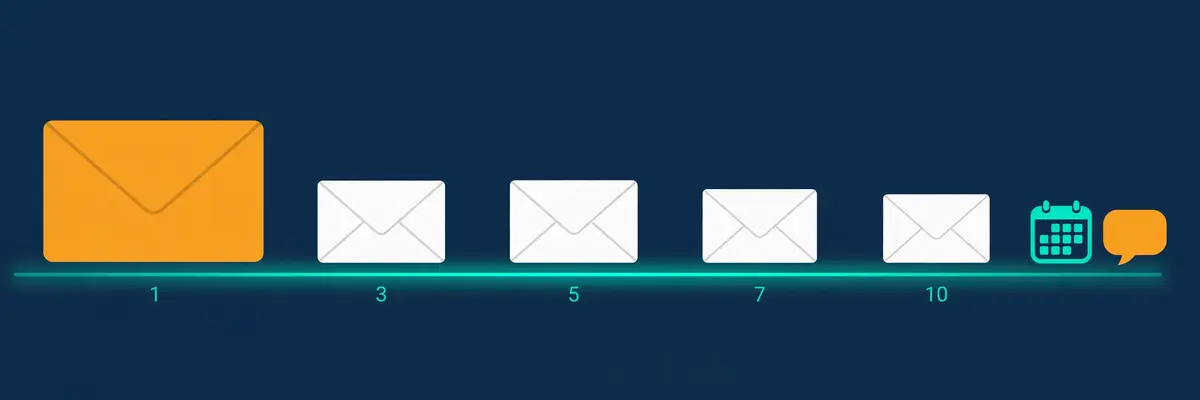
Most replies do not come from your first email. They come from the follow-ups.
Most cold email campaigns are judged on the wrong email. The sender writes a careful first message, sends it to a clean list, watches the replies trickle in, and decides the campaign worked or failed. In fact, the first email is only the opening of the conversation. The replies that matter most often arrive on the second, third or fourth touch, from people who were busy, who meant to reply, or who needed a second reason to say yes. This guide shows you how to build cold email follow up sequences that earn those replies: how many follow-ups to send, when to send them, what to say in each one, when to stop, and which tool should run the whole thing for you.
Visit Instantly →See Smartlead →Explore Lemlist →Prices and features in this guide were checked 16 November 2026. Features and pricing can change, so please check the provider’s site before you buy.
Quick Answer
Send the first email, then three or four follow-ups: a short bump on day 3, a value-add or proof point on day 7, a different angle on day 14, and a polite breakup email after that for your most valuable prospects. Keep every follow-up short, add something new in each one, reply in the same thread, and stop the sequence the moment someone replies. That is the whole system, and the rest of this guide is the detail that makes it work.
Follow-ups are not pestering. They are how busy people get a second chance to reply. As long as each touch adds value, respects the reader, and stops when asked, a follow-up sequence is good manners, not spam.
Contents
- Why follow-ups work: most replies arrive after the first email
- The cadence: how many follow-ups and when to send them
- What to say in each follow-up: bump, value-add, proof and breakup
- When to stop: the breakup email and the graceful exit
- Multichannel follow-ups: email, LinkedIn and calls in one sequence
- Conditional subsequences: follow-ups that react to behaviour
- Reply handling: triage every reply in one inbox
- A/B testing your follow-ups: what to test first
- The tools compared for follow-up automation
- Which follow-up setup fits your volume and team
- Frequently asked questions
- Our verdict
Cold email follow up sequences: start with the reply, not the send
Firstly, a follow-up sequence is a planned series of messages to the same person, each one sent because the last one went unanswered, and each one stopping the moment a reply arrives. The first email opens the conversation. The follow-ups keep it open, gently, for the people who were interested but busy. In fact, most senders treat the first email as the campaign, and the follow-ups as an afterthought, which is exactly backwards: the follow-ups are where the campaign is won.
Secondly, the reassuring news is that follow-ups are a skill you can learn in an afternoon and improve forever. Cold email is normal, widely used business practice, and a polite, well-timed follow-up is something most recipients welcome, because it saves them the work of remembering. For example, you do not need a big budget or a complicated tool to start. You need a clear cadence, one new reason to reply in each message, and the discipline to stop when the sequence ends. If you have those three things, you are ready for the rest of this guide.
Cold email follow up sequences: how this guide is organised
Finally, this guide follows the journey your sequence takes. It starts with the numbers, so you can see why follow-ups earn their place. Then it sets the cadence, the timing framework of day 0, day 3, day 7 and day 14, with honest caveats about why those days are a starting point, not a law. After that come the words themselves, with example copy for every follow-up, the breakup email, multichannel sequences, conditional branches that react to opens and clicks, reply handling, A/B testing, and the ten tools compared, so you can pick the one that fits your volume and your team.
Why follow-ups work: most replies arrive after the first email
Secondly, the single most important fact about follow-ups is how much of the reply rate they carry. Instantly’s 2026 benchmark report, covering billions of cold email interactions, puts the average reply rate at about 3.4%, and finds that 58% of replies come from the first email while 42% come from follow-ups. In other words, nearly half of every reply you will ever get arrives after the first message, from people who needed a second or third nudge. A campaign with no follow-ups leaves almost half its replies on the table.
Moreover, Belkins’ analysis of 7.5 million B2B emails tells a similar story from the other side: the first email captures just 41.4% of replies, while follow-ups drive the other 58.6%, and the third step alone books more appointments than the first two steps combined. Woodpecker’s data agrees in its own way: its users averaged about a 9% reply rate with no follow-up, and about 13% with at least one. The sources count different things, and none of them is a controlled test, yet they all point the same way. Follow-ups are not a small optimisation. They are a large share of the result.
Cold email follow up sequences: busy is not the same as uninterested
In contrast to what many senders assume, silence after a first email usually means busy, not uninterested. A prospect who would have replied on a quieter day simply never saw the message, or saw it between two meetings and meant to come back to it. Similarly, a short follow-up that floats the same thread back to the top of their inbox does them a favour, because it removes the work of searching for a message they half-remember. That is why the best follow-ups are short, kind and useful, and why the worst ones feel like nagging.
Thirdly, follow-ups also work because they let you earn trust over time. One email from a stranger is easy to ignore. Four short, honest messages over two weeks, each one adding a new proof point or a new angle, build a picture of a sender who knows their subject and respects the reader’s time. Our guide to writing cold emails makes the same point about the first email itself: a 60 to 120 word message, one problem, one ask, written for one person. Follow-ups simply extend that same discipline across the whole sequence.
Cold email follow up sequences: the numbers that keep you honest
Finally, the benchmarks that matter for follow-ups are the same ones that govern all cold email, and they are worth keeping in mind before you write a single follow-up. Keep your bounce rate under 2%, because every bounce hurts your sender reputation. Aim for spam complaints under 0.1%, and never let them reach 0.3%, because that level risks your domain itself. Expect a positive reply rate of 1% to 3%, and treat opens, around 21% on average, as unreliable, because Apple Mail Privacy Protection inflates them. Send 25 to 30 emails per mailbox per day, never more than 40. Our Deliverability Guide explains the full sending setup behind those numbers, from a separate sending domain to warmup.
The cadence: how many follow-ups and when to send them
Secondly, the cadence is the rhythm of your sequence: how many follow-ups you send, and how many days you wait between them. Get the rhythm right and each message arrives while the last one is still faintly remembered, which is exactly when a nudge works. Get it wrong in either direction and the sequence fails: too fast, and you look pushy; too slow, and the reader has forgotten you entirely. The framework below is the starting point we recommend, and the table after it shows what four vendors publish, so you can see where the consensus sits.
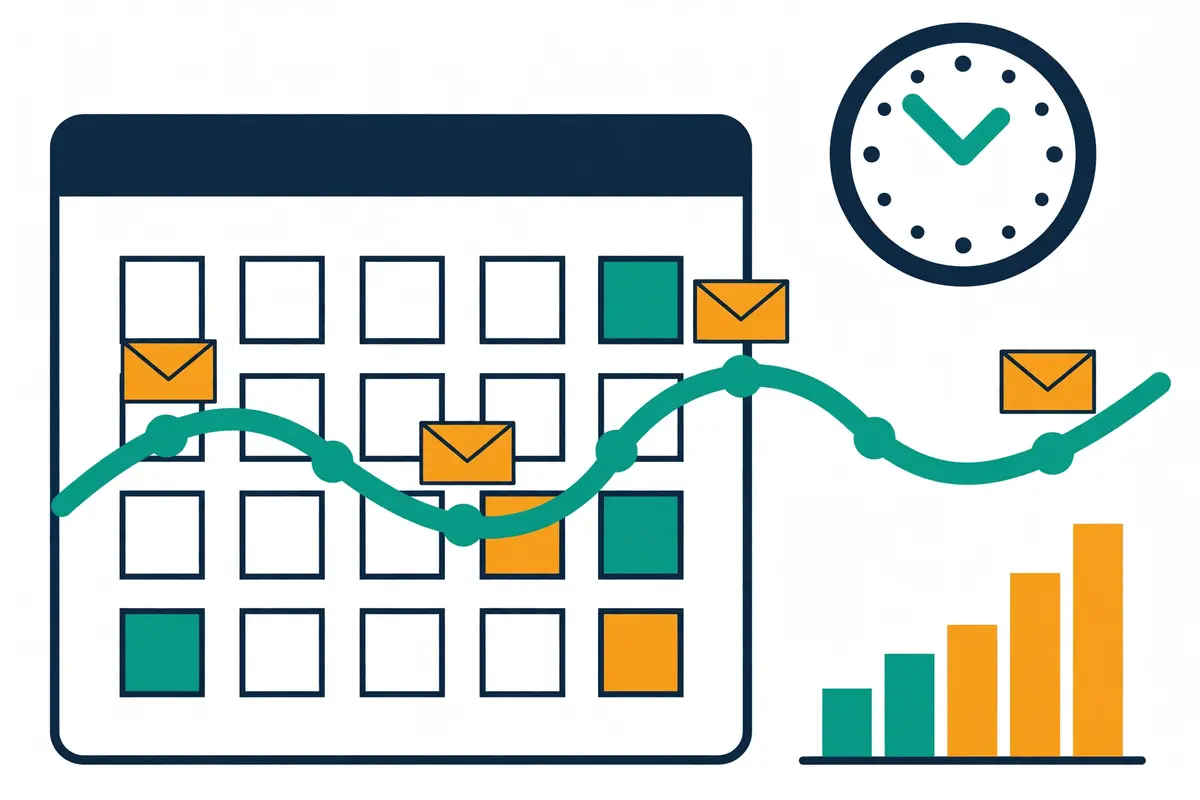
Cold email follow up sequences: the day 0, 3, 7, 14 framework
| Touch | Day | Job of this email | Length |
|---|---|---|---|
| First email | Day 0 | Open the loop: one problem, one ask | 60 to 120 words |
| Follow-up 1: the bump | Day 3 | Float the thread back to the top | Under 50 words |
| Follow-up 2: value-add | Day 7 | Add proof: a result or a case study | 60 to 90 words |
| Follow-up 3: new angle | Day 14 | Reframe the value, or name a new pain | 60 to 90 words |
| Breakup email | Day 21* | Close the loop kindly, leave the door open | Under 60 words |
Last checked: 16 November 2026. *The breakup email on day 21 is for your most valuable prospects only; for everyone else, the sequence ends after follow-up 3 on day 14. The day counts are a starting framework to test against your own reply data, not a law. Features and pricing can change, so please check the provider’s site before you buy.
Cold email follow up sequences: what four vendors recommend
| Source | How many | How far apart | Notable figure |
|---|---|---|---|
| Belkins | 3 to 5 steps | Not stated | Follow-ups drive 58.6% of replies |
| Instantly | 4 to 7 touchpoints | 3 to 4 days | 42% of replies from follow-ups |
| Woodpecker | 2 to 3 follow-ups | At least 2 to 3 days | 9% replies without, about 13% with |
| Lemlist | 4 to 9 follow-ups | 2 days, then 4, then 5 or more | Cumulative reply rate about 22% |
Last checked: 16 November 2026. Instantly’s “4 to 7” counts touchpoints including the first email, while Woodpecker and Lemlist count follow-ups only, so the figures are not directly comparable. Lemlist’s own research puts one email at about a 4.5% reply rate, climbing to about 22% across a full sequence of up to ten touches. None of these is a controlled test, so treat them as vendor-published guidance, not proof. Features and pricing can change, so please check the provider’s site before you buy.
Cold email follow up sequences: why the gaps widen
Moreover, the gaps in the framework widen on purpose, and the reason is simple: the first follow-up rides on fresh memory, so three days is enough, while the later ones need more room, because the reader has had longer to forget. Lemlist’s own cadence follows the same shape: about 2 days between the first and second email, roughly 4 days between the second and third, and 5 or more days after that, across a total sequence of 10 to 25 days. In sum, start close together and spread out over time. That loose rhythm, sometimes described as a Fibonacci-style spacing, is the pattern most vendors converge on, whatever their exact numbers.
Video: The Best Cold Email Follow Up Strategy in 2025 by Instantly on YouTube. This video is the creator’s property, embedded via YouTube for education. OutreachCompare is not affiliated with Instantly and does not claim ownership of this video.
Cold email follow up sequences: timing is a starting point, not a law
In contrast to the confident tables above, the honest truth is that no vendor has run a controlled test that proves day 3 beats day 2, or that four follow-ups beat three, for your audience. The senders who succeed treat the framework as a hypothesis: they run it for a few hundred prospects, note the reply rate at each step, and then adjust. If step 2 earns almost nothing while step 3 earns a lot, the problem is the message, not the day. If replies stop after step 3 and complaints rise at step 4, the sequence is one touch too long for that audience. Your own reply data is the only timing authority that matters.
Finally, a practical note on timing: send on Tuesday, Wednesday or Thursday, in the recipient’s timezone, and avoid Mondays and Fridays, when inboxes are either overflowing or emptying. Woodpecker found that the day of the week and the time of day have no meaningful impact on reply rates, so do not agonise over the hour. The day gap matters far more than the clock. And once the cadence is set, let the tool run it: every sequencer in the tools section of this guide automates the delays, so no one on your team has to track them by hand.
What to say in each follow-up: bump, value-add, proof and breakup
Secondly, every follow-up needs a job, and the job changes with each touch. A sequence where every email says “just following up” is not a sequence at all. It is the same email sent four times, and the reader can tell. The table below gives each touch its job, and the examples after it show the words that do that job, short enough to read in seconds and specific enough to prove you are writing to one person, not a list.
Cold email follow up sequences: the four follow-up jobs at a glance
| Follow-up | Its job | What it adds | What to avoid |
|---|---|---|---|
| The bump | Surface the thread again | One new line, one easy question | Repeating the first email |
| Value-add | Teach something useful | A tip, a template, a short insight | A sales pitch in disguise |
| Social proof | Show it worked for someone like them | One result from a similar company | Namedropping without permission |
| Breakup | Close the loop kindly | Permission to stop, door left open | Guilt, pressure or fake urgency |
Last checked: 16 November 2026. The example copy in this section is original writing for this guide, adapted from the patterns in our guide to writing cold emails and the vendor templates published by Instantly and Lemlist. Swap in your own proof points and your own customer results before you send. Features and pricing can change, so please check the provider’s site before you buy.
Cold email follow up sequences: follow-up 1, the bump
Moreover, the bump is the shortest email in the sequence, and it has one job: float the thread back to the top of the inbox. It adds almost nothing new, because nothing new is needed yet. The reader saw the first email, meant to reply, and forgot. A bump reminds them, politely, and asks a question so easy that answering takes ten seconds. Keep it under 50 words, reply in the same thread so the context is visible, and never attach anything.
Example, follow-up 1 (day 3): “Hi Sarah, just floating this back up in case it slipped past you. We help operations teams cut onboarding from nine days to three, and I wondered if that is a problem on your radar this quarter. Worth a quick yes or no? Best, Alex.”
In fact, the bump works because it respects the reader’s time. It does not re-explain the offer, it does not paste the first email again, and it does not demand a call. It simply asks whether the problem matters, and gives the reader a one-word answer. If the bump earns no reply, that tells you something useful too: the reader needs a new reason to care, which is exactly what the next follow-up supplies.
Cold email follow up sequences: follow-up 2, the value-add
Thirdly, the value-add earns its place by teaching the reader something useful, whether or not they ever buy from you. A short insight, a template, a benchmark, or a mistake to avoid, given freely, proves that you know the subject and that you are not only here to sell. In contrast to the bump, which is short and empty of new content, the value-add is the longest follow-up in the sequence, and the one most likely to earn a reply from someone who ignored the first two touches.
Example, follow-up 2 (day 7): “Hi Sarah, one thing worth knowing either way: teams your size usually lose the most time on the handover between hiring and day one, not on training itself. We put together a one-page checklist for that handover, happy to send it over if it would help. And if onboarding is not a priority right now, no worries at all. Best, Alex.”
Finally, the value-add also protects your reputation, because a reader who never buys still remembers the sender who sent something useful. That memory is worth more than a reply today, because the same person may be a buyer in six months, and they will remember who helped them. Keep the gift genuinely useful, keep it short, and never make the gift conditional on a call.
Video: Give me 13 mins, and I will make your cold emails impossible to ignore by Instantly on YouTube. This video is the creator’s property, embedded via YouTube for education. OutreachCompare is not affiliated with Instantly and does not claim ownership of this video.
Cold email follow up sequences: follow-up 3, social proof and a new angle
Secondly, the third follow-up changes the angle, because by now the reader has heard the offer twice and has not replied to it. A new angle means a different pain point, a different result, or a proof point from a company like theirs. One result, stated plainly, beats a paragraph of claims: a similar team, a similar problem, a number that shows what changed. Do not name a customer without their permission, and do not invent a result. A modest true result beats an impressive invented one, every time.
Example, follow-up 3 (day 14): “Hi Sarah, a quick one from a team like yours: a 40-person professional services firm cut their onboarding from nine days to three in the first month, mostly by fixing the handover we talked about. If it would help to see how they did it, I can send the one-page summary. If the timing is wrong, just say so and I will stop here. Best, Alex.”
Moreover, the third follow-up is also where you make the next step smaller. Instead of asking for a call, ask for a yes or no, or offer the one-page summary, or ask who owns the problem if it is not the reader. A smaller ask earns more replies, because it costs the reader less to say yes. And if the reader still does not reply, the sequence has one honest move left, which is the breakup email in the next section.
When to stop: the breakup email and the graceful exit
Secondly, every sequence needs an ending, and the ending is what separates a professional sender from a nuisance. A sequence that never ends, that keeps emailing for months, earns complaints, unsubscribes and spam reports, and those cost far more than any reply the extra touches might win. The rule is simple: after three or four follow-ups, stop. For your most valuable prospects, send one breakup email first, then stop. For everyone else, stop after the third follow-up and move on.

Cold email follow up sequences: what a good breakup email does
Moreover, a breakup email does three things in under 60 words. It says you will stop, so the reader feels relief rather than pressure. It leaves the door open, so the reader can reply later without embarrassment. And it asks one useful question, usually whether someone else owns the problem, because the most common reason for silence is that you emailed the wrong person. Done well, breakup emails often earn the highest reply rate in a sequence, precisely because they remove the pressure to reply.
Example, breakup email (day 21, high-value prospects only): “Hi Sarah, I will stop here so I am not cluttering your inbox. If onboarding is not a priority right now, that is completely fine. If it is, and I have the wrong person, would you mind pointing me to whoever owns it? Either way, thanks for your time. Best, Alex.”
Cold email follow up sequences: stop immediately when the reader asks
In contrast to the planned ending above, some stops are not planned at all, and they are non-negotiable. If a prospect replies “not interested”, “unsubscribe”, “remove me”, or anything like it, stop immediately, suppress the address on your shared do-not-email list, and never email them again from any campaign. Our guide to building a cold email list makes the same point about hygiene: one shared suppression list, checked by every campaign, is the habit that protects your domain. Emailing someone again after they asked to be left alone does not just lose a sale. It is a complaint waiting to happen, and a complaint is the most expensive reply a sequence can earn.
Thirdly, stop the sequence the moment someone replies positively, too, because nothing looks worse than an automated follow-up landing after a human has already answered. Every sequencer in the tools section stops automatically on reply, and that is a feature to check before you buy, not after. Similarly, stop when an email bounces hard, when the address is a role account that will never reach a decision maker, and when the prospect has changed jobs. A sequence that keeps emailing a dead address is a sequence that is damaging your sender reputation for nothing.
Cold email follow up sequences: move silent prospects to nurture, not to the bin
Finally, stopping does not mean deleting. A prospect who never replied is not a bad prospect, only a prospect whose timing was wrong. Move them to a light nurture list: a useful email once a quarter, a new result, a relevant insight, nothing more. That way the relationship stays warm, the door stays open, and when their problem becomes urgent, your name is the one they remember. Deleting a silent prospect throws away the work you did to find them. Nurturing them quietly costs almost nothing.
Multichannel follow-ups: email, LinkedIn and calls in one sequence
Secondly, email is not the only channel a follow-up can use, and for many prospects it is not the best one. A LinkedIn message from a real person, a short call, or a voice note can reach someone who never opens cold email, and a sequence that mixes channels earns more replies than one that stays in the inbox. The idea is simple: one prospect, one sequence, several channels, each touch building on the last. Our Multichannel and AI Personalisation Guide covers the full picture, and this section applies it to follow-ups specifically.
Cold email follow up sequences: the 3-3-1 multichannel rhythm
| Touch | Day | Channel | What to do |
|---|---|---|---|
| Touch 1 | Day 1 | First email: one problem, one ask | |
| Touch 2 | Day 4 | Bump: float the thread back up | |
| Touch 3 | Day 10 | New angle or proof point | |
| Touch 4 | Day 14 | Connection request, reference the emails | |
| Touch 5 | Day 18 | Short message, or a voice note | |
| Touch 6 | Day 21 | LinkedIn and call | Ask for a 10-minute call, leave a voicemail |
Last checked: 16 November 2026. The 3-3-1 rhythm, three emails in the first ten days, three LinkedIn touches in the first two weeks, and one or two calls with a voicemail around day 21, is a published multichannel pattern, not a vendor rule. LinkedIn connection requests and voice notes need a real person behind them, so plan them as manual tasks in your sequencer, not as automated sends. Features and pricing can change, so please check the provider’s site before you buy.
Cold email follow up sequences: the “If Connected” rule
Moreover, multichannel sequences need one piece of logic that email-only sequences never need: what happens when a channel connects. In Lemlist, Apollo, Reply.io, Klenty and QuickMail, a LinkedIn step can be a manual task, and the sequence branches on what happens next. If the prospect accepts your connection request, the next step is a LinkedIn message, not another email. When they do not accept, the sequence falls back to email. Once a call connects, the sequence pauses for a human to take over. That branching is called “If Connected” logic, and it is the difference between a multichannel sequence and three separate campaigns that happen to target the same person.
Thirdly, keep the channels honest about what each one is good at. Email is best for the first contact and for anything that needs a link or a document. LinkedIn is best for a short, human nudge and for showing the prospect that you are a real person with a real profile. Calls are best for the moment a prospect has shown interest and needs a conversation, not for a cold first touch. A sequence that uses each channel for its strength earns more replies than one that treats them as interchangeable.
Cold email follow up sequences: do not automate the human parts
Finally, the most common multichannel mistake is automating the parts that should stay human. A LinkedIn connection request with a generic note, a voice note read from a script, or a call that starts with a pitch will all be spotted in seconds, and they damage the trust the email sequence built. Use the tool to schedule and remind, and use a person to write the LinkedIn message, record the voice note, and make the call. Lemlist’s multichannel plans, Apollo’s LinkedIn task queues, and Klenty’s dialer all work this way by design: the tool queues the task, and a human does the talking.
Conditional subsequences: follow-ups that react to behaviour
Secondly, a fixed sequence sends the same follow-ups to everyone, whether they opened your email, clicked your link, or never saw it at all. A conditional sequence does something smarter: it watches what the prospect does, and it changes the next step to match. Someone who opened three times but never replied gets a different follow-up from someone who never opened at all. Someone who clicked a link gets a follow-up about what they clicked on. That is what conditional subsequences are, and they are the single biggest reply-rate improvement most senders have not tried yet.
Cold email follow up sequences: the four branches that matter
| What the prospect did | What it probably means | Send next |
|---|---|---|
| Never opened | Busy, or the subject line missed | A bump with a new subject line |
| Opened, no reply | Interested, but not convinced yet | Value-add or proof point |
| Clicked a link | Actively evaluating you | A short, specific follow-up about the page |
| Replied positively | Ready to talk | Stop the sequence, reply by hand |
Last checked: 16 November 2026. Open tracking is unreliable, because Apple Mail Privacy Protection opens emails automatically, so treat “opened” as a weak signal and “clicked” as a strong one. The tools in the next sections that offer conditional subsequences are Lemlist, Reply.io, Smartlead, Instantly and Woodpecker, each under its own name. Features and pricing can change, so please check the provider’s site before you buy.
Cold email follow up sequences: opened but no reply
Moreover, the opened-but-no-reply branch is the most useful one, because it catches the people who are closest to saying yes. They read your email, they understood the offer, and something stopped them: the timing was wrong, the ask was too big, or the proof was too thin. The right follow-up for them is not another nudge. It is a smaller ask, a stronger proof point, or a new angle on the same problem. Smartlead, Reply.io and Instantly all let you build exactly this branch, with the follow-up sent only to openers, while everyone else stays on the standard path.
Thirdly, the clicked branch is even stronger, because a click is a deliberate act. Someone who clicked your case study link wants to know about results, so the follow-up should talk about results. Someone who clicked your pricing page wants to know about cost, so the follow-up should talk about cost. That kind of follow-up feels personal because it is personal: it responds to something the prospect actually did, rather than to a schedule. Woodpecker’s condition-based sequences and Lemlist’s condition-based sequences both support this, with the next step triggered by the click itself.
Cold email follow up sequences: negative replies need their own branch
Finally, do not forget the negative replies. A prospect who says “not now” is not a dead lead, only a lead whose timing is wrong, and the right branch moves them to a nurture list with a note to try again in three months. A prospect who says “wrong person” should trigger a follow-up asking who the right person is, because that question often earns a warm introduction. And a prospect who says “remove me” must stop everything, immediately, with no branch at all. A conditional sequence that only handles the positive cases is only half a sequence.
Reply handling: triage every reply in one inbox
Secondly, a follow-up sequence only works if someone is watching the replies, because every reply is a prospect telling you what to do next, and a reply that sits unread for three days is a meeting that never happens. The problem is volume: once a sequence is running across several mailboxes, replies arrive in different inboxes, at different times, mixed in with newsletters and out-of-office messages. The fix is a master inbox, one place where every reply lands, sorted by what it means, so the important ones get answered first.
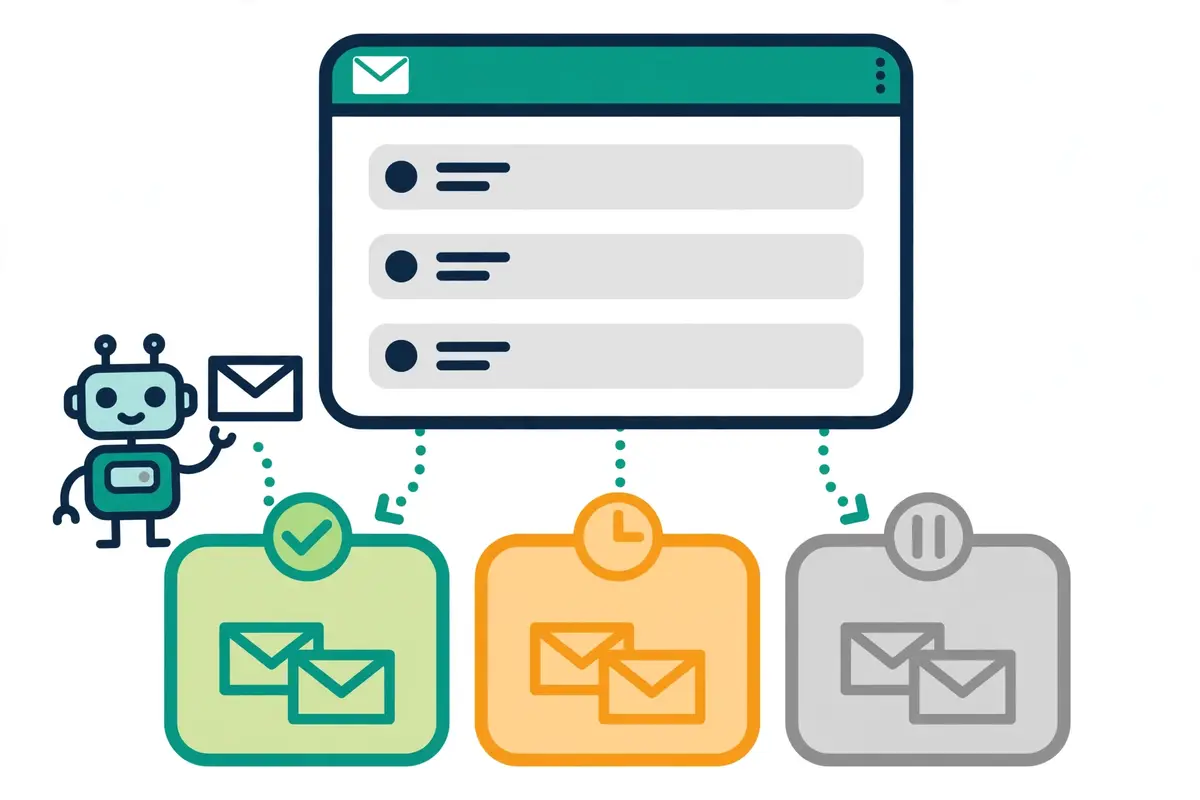
Cold email follow up sequences: the four reply categories
| Reply type | What it looks like | What to do | How fast |
|---|---|---|---|
| Positive | “Yes, tell me more” or a question | Answer by hand, offer a call | Within hours, ideally minutes |
| Not now | “Check back in three months” | Thank them, add to nurture | Same day |
| Wrong person | “Try Sarah in operations” | Ask for an introduction, restart | Same day |
| Stop | “Remove me” or “unsubscribe” | Suppress immediately, no reply needed | Immediately |
Last checked: 16 November 2026. Instantly’s Unibox and Smartlead’s Master Inbox both pull replies from unlimited mailboxes into one place, and Lemlist’s unified inbox does the same across email, LinkedIn and other channels. Reply.io and Smartlead both categorise replies by AI sentiment, which is how the four categories above can be sorted automatically. Features and pricing can change, so please check the provider’s site before you buy.
Cold email follow up sequences: AI reply sentiment categorisation
Moreover, the newest reply-handling feature is AI sentiment categorisation: the tool reads each reply and labels it positive, neutral, negative, out-of-office, or unsubscribe, before a human ever sees it. Smartlead and Reply.io both offer this, and it matters because it turns a pile of replies into a sorted list. Positive replies go to the top, unsubscribes get suppressed automatically, and out-of-office messages get parked until the prospect returns. Without it, a human has to read every reply to find the five that matter, and the five that matter wait.
Thirdly, speed matters more than most senders realise. A prospect who says yes is often talking to three other vendors at the same time, and the first useful reply wins the meeting. Instantly’s meeting-scheduling guidance says to respond within five minutes of a positive reply, with the calendar link included, and that is a good target even if it sounds ambitious. A master inbox makes it possible, because the reply is visible the moment it arrives, rather than buried in a mailbox no one is watching. If your team cannot answer within hours, the sequence is sending replies into a void.
Cold email follow up sequences: out-of-office replies are not replies
Finally, a practical detail that trips up many beginners: out-of-office replies are not real replies, and they should never stop a sequence or count as engagement. A prospect on holiday for two weeks will return to a full inbox, and a follow-up that landed while they were away is a follow-up they never saw. Good tools know this and keep the sequence running, or pause it until the return date. If your tool counts an out-of-office as a reply and stops the sequence, check its settings, because you are losing the prospects who were simply away.
A/B testing your follow-ups: what to test first
Secondly, A/B testing is how a good sequence becomes a great one, and the principle is simple: change one thing at a time, send both versions to similar prospects, and keep the version that earns more positive replies. The mistake is testing everything at once, because then you never learn what worked. The order below is the order that teaches you the most, fastest, and it starts with the things that move the reply rate most.
Cold email follow up sequences: test the cadence first
Moreover, the first thing to test is the cadence itself, because it shapes every other result. Run one group on the day 0, 3, 7, 14 framework in this guide, and another on a shorter rhythm, such as day 0, 2, 5, 10, and compare the positive reply rate after two weeks. Then test the number of touches: three follow-ups against four, with the breakup email as the fourth. Only after the cadence is settled should you test the words, because a great email on a bad cadence still underperforms, and a mediocre email on a good cadence still earns replies.
Cold email follow up sequences: then test one variable at a time
Thirdly, once the cadence is set, test one variable at a time, in this order. First, the subject line of the follow-up, because it decides whether the thread gets opened again. Second, the length: a 40-word bump against a 90-word value-add, to learn whether your audience prefers short or substantial. Third, the proof point: a customer result against a benchmark, to learn what persuades them. Fourth, the call to action: a yes-or-no question against a calendar link, to learn how much commitment they will give. Lemlist, Apollo and Woodpecker all have built-in A/B testing for sequences, so the tool can split the audience and report the winner for you.
In contrast to the tests above, some things should never be tested, because the answer is already known. Never test whether to stop on a reply, never test whether to honour an unsubscribe, and never test sending more than 40 emails per mailbox per day, because the cost of those experiments is your domain reputation. Test the words, the timing and the proof. Do not test the rules that keep you out of spam.
Cold email follow up sequences: read positive replies, not opens
Finally, judge every test by positive replies, not by opens or by total replies. Opens are unreliable, because Apple Mail Privacy Protection inflates them, and total replies include complaints, unsubscribes and “not interested” messages, which are not wins. A positive reply rate of 1% to 3% is the honest target, and a test that moves it from 1.2% to 1.8% has earned its keep, even if the open rate never moved. Run each test on at least a few hundred prospects before you call a winner, because a test on fifty people proves nothing except that fifty people are a small sample.
The tools compared for follow-up automation
Secondly, ten tools cover almost every follow-up job in this guide, and they split into two groups. Instantly, Smartlead, Lemlist, Reply.io, Woodpecker, Saleshandy, Klenty, Emelia and QuickMail are sequencers: they build the sequence, run the cadence, branch on behaviour, and sort the replies. Apollo is a database that also sequences, which makes it the all-in-one choice for teams that want the contacts and the follow-ups in one place. Many senders use one sequencer and one database, and that pairing is the cheapest way to run follow-ups that are both well-targeted and well-timed.
Cold email follow up sequences: the ten tools at a glance
| Tool | Price from | Free plan or trial | Best for |
|---|---|---|---|
| Instantly | $47/mo; $37.60 annual | No trial shown | Behaviour-based follow-ups at scale |
| Smartlead | $39/mo | Check the site | Conditional subsequences and reply sorting |
| Lemlist | $69/mo; $55 annual | 14-day trial | Multichannel sequences with AI writing |
| Reply.io | $59/mo; $49 annual | 14-day trial | Conditional subsequences plus AI SDR |
| Apollo | $49/user/mo | Free plan, $0 | Database plus sequences in one place |
| Woodpecker | $35/mo; $23.33 annual | Check the site | Condition-based sequences for agencies |
| Saleshandy | $34/mo annual; $41 monthly | 7-day trial, no card | Cheapest honest starting point |
| Klenty | $50/mo annual | 14-day trial, no card | Multichannel cadences with a dialer |
| Emelia | $37/mo; $31 annual | 7-day trial, no card | Simple sequences with LinkedIn included |
| QuickMail | $49/mo | 14-day trial | Unlimited senders and warmup included |
Last checked: 16 November 2026. Instantly Growth is $47 a month, or $37.60 on annual billing, and Hypergrowth is $107, or $85.58 annual; its plan card says 125,000 emails a month while its own comparison table says 100,000, so check the site for the current limit. Woodpecker’s entry price is $35 a month, or $23.33 on annual billing, for 500 contacted prospects, 8,000 emails and 2 warm-ups, then $67 for 2,000 prospects, $99 for 4,000, $159 for 8,000, $188 for 10,000 and $262 for 15,000. Our Woodpecker Review still shows the older figures, so use the figures here. Reply.io’s AI SDR (Jason) starts from $500 a month on annual billing, and the $800 monthly figure rests on our 15 November check, behind the pricing slider. Features and pricing can change, so please check the provider’s site before you buy.
Cold email follow up sequences: follow-up features, first five tools
| Tool | Conditional follow-ups | Multichannel steps | AI reply sorting | Master inbox | A/B testing |
|---|---|---|---|---|---|
| Instantly | Yes, behaviour-based | Yes | Yes, AI Reply Agent | Yes, Unibox | Not confirmed |
| Smartlead | Yes, conditional | Yes | Yes, sentiment | Yes, Master Inbox | Not confirmed |
| Lemlist | Yes, condition-based | Yes, email and LinkedIn | Not confirmed | Yes, unified inbox | Yes |
| Reply.io | Yes, conditional | Yes, email and LinkedIn | Yes, sentiment | Yes | Not confirmed |
| Apollo | Yes, automated | Yes, dialer and LinkedIn | Not confirmed | Not confirmed | Yes |
Last checked: 16 November 2026. A tick means the feature is stated on the provider’s official site or in the verified profiles Matthew supplied. “Not confirmed” means we could not verify it on the official site today, not that the tool lacks it. Features and pricing can change, so please check the provider’s site before you buy.
Cold email follow up sequences: follow-up features, next five tools
| Tool | Conditional follow-ups | Multichannel steps | AI reply sorting | Master inbox | A/B testing |
|---|---|---|---|---|---|
| Woodpecker | Yes, condition-based | Yes, LinkedIn via Dux-Soup | Not confirmed | Not confirmed | Yes |
| Saleshandy | Yes, subsequences | Yes | Not confirmed | Yes, unified inbox | Not confirmed |
| Klenty | Not confirmed | Yes, email, calls, LinkedIn | Not confirmed | Not confirmed | Not confirmed |
| Emelia | Not confirmed | Yes, email and LinkedIn | Not confirmed | Not confirmed | Not confirmed |
| QuickMail | Not confirmed | Yes, email and LinkedIn | Not confirmed | Yes, unified inbox | Not confirmed |
Last checked: 16 November 2026. Woodpecker’s LinkedIn steps run through Dux-Soup, and its calling runs through Aircall, so check those integrations on the official site before you rely on them. Klenty’s dialer is its strength: a parallel dialer add-on at $45 a user a month, and Dynamic Presence at $50 a seat a month. Features and pricing can change, so please check the provider’s site before you buy.
Cold email follow up sequences: what each tool costs to run follow-ups
Moreover, the price that matters for follow-ups is not the headline plan price but the cost of running your cadence at your volume. Instantly Growth at $47 a month suits high volume, because it includes unlimited warmup and inbox rotation, while Smartlead Base at $39 a month suits agencies, because it includes unlimited mailboxes and white-label client portals. Saleshandy Starter at $34 a month on annual billing is the cheapest honest starting point in this guide, and Emelia Start at $37 a month, or $31 annual, is the cheapest way to get LinkedIn steps included. Lemlist Email at $69 a month, or $55 annual, is the most expensive starting point here, and it earns that price with AI icebreakers, spintax, lemAgent and a 650 million contact database.
Thirdly, watch the pricing traps that catch beginners. Woodpecker now charges by contacted prospects on a slider, so a plan that covers 500 prospects costs $35 a month, while one that covers 15,000 costs $262, and the price rises with your list whether or not you send more emails. QuickMail charges $49, $99 or $299 with no annual discount published, but it includes unlimited senders, LinkedIn accounts and users on every plan, plus free warmup, so the headline price is the whole price. Klenty’s Starter at $50 a month is email only, and the dialer that makes its multichannel sequences work costs $45 a user a month extra. The cheapest plan is rarely the cheapest setup, once the add-ons are counted.
Cold email follow up sequences: the honest pros and cons
Finally, no tool in this guide is the best at everything, and the honest trade-offs are worth stating plainly. Instantly is the strongest at scale, yet it shows no free trial on its pricing page, so you pay before you can test it properly. Smartlead is the strongest for agencies, yet its most useful features sit on the higher plans, and its entry plan is deliberately limited. Lemlist is the strongest for multichannel personalisation, yet it is the priciest starting point and it has no free plan. Reply.io is the strongest for AI reply handling, yet its AI SDR starts from $500 a month, which is a different budget entirely.
Apollo is the strongest all-in-one, yet its sequences are simpler than a dedicated sequencer’s. Woodpecker is the strongest for agencies that want condition-based logic, yet its new per-prospect pricing makes large lists expensive. Saleshandy, Emelia and QuickMail are the cheapest honest starts, yet none of them offers the conditional branching or AI reply sorting that the pricier tools do. Pick the tool whose strength matches your weakest point, not the tool with the longest feature list.
Which follow-up setup fits your volume and team
Secondly, the right follow-up setup depends on how many prospects you email, how many people run the sequences, and whether you need LinkedIn and calls as well as email. The framework below matches the setup to the situation, so you spend your money where it earns replies instead of spending it where it only earns activity.
Cold email follow up sequences: the decision table
| Your situation | Best setup | Tool to start with |
|---|---|---|
| First sequence, tiny budget | Simple email cadence, 3 follow-ups | Saleshandy Starter $34/mo, or Emelia Start $37/mo |
| 50 to 200 prospects a month, solo | Email cadence plus a master inbox | Instantly Growth $47/mo, or Smartlead Base $39/mo |
| High volume, many mailboxes | Behaviour-based follow-ups at scale | Instantly Growth $47/mo, or Hypergrowth $107/mo |
| Agency, many clients | Conditional subsequences, white-label | Smartlead Base $39/mo, or Woodpecker from $35/mo |
| LinkedIn-first outreach | Multichannel sequence, manual tasks | Lemlist Multichannel $109/mo, or Klenty Growth $70/mo |
| Need the contacts too | Database plus sequences in one place | Apollo Basic $49/user/mo, or Professional $99/mo |
Last checked: 16 November 2026. Prices above come from the official pricing pages named in the tools section. Woodpecker’s price depends on contacted prospects on a slider, so its row is the entry price for 500 prospects. Instantly shows no trial on its pricing page, so check the site before you buy. Features and pricing can change, so please check the provider’s site before you buy.
Cold email follow up sequences: start simple, add branches later
Moreover, the pattern in the table is deliberate: start with a simple email cadence, prove it works by hand, and only then add conditional branches, multichannel steps and AI reply sorting. A founder who runs a four-touch email sequence and gets two positive replies has a working system. That system can then be improved with a conditional branch for openers, a LinkedIn step for the silent ones, and a master inbox to catch the replies faster. A founder who starts with the most complicated setup has no idea whether the cadence, the copy or the tool is the problem, and will spend months guessing.
Thirdly, money is a real limit for most senders, and the framework above is built around that limit. A $34 a month plan that runs a clean three-follow-up cadence beats a $109 a month plan that runs a complicated multichannel sequence no one has time to manage, because the reply rate is what pays, not the tool. Our Best Cold Email Tools for Beginners guide ranks the cheapest honest starting points, and our Multichannel and AI Personalisation Guide covers the multichannel end of the same decision. Pick the guide that matches where you are, and put the money you save towards better targeting.
Frequently asked questions
Cold email follow up sequences: how many follow-ups should I send?
Firstly, send three or four follow-ups after the first email, which is four or five messages in total. In fact, that range sits inside what the vendors publish: Belkins says 3 to 5 steps, Instantly says 4 to 7 touchpoints, Woodpecker says 2 to 3 follow-ups, and Lemlist says 4 to 9. For most beginners, the day 0, 3, 7, 14 framework in this guide is the right starting point, with a breakup email on day 21 for your most valuable prospects only.
Cold email follow up sequences: how long should I wait between follow-ups?
Secondly, wait about three days before the first follow-up, then widen the gaps: day 3, day 7, day 14, and a breakup on day 21 for high-value prospects. For example, Lemlist recommends about 2 days between the first and second email, roughly 4 days between the second and third, and 5 or more days after that. The exact days matter less than the shape: start close together and spread out over time, and test the cadence against your own reply data.
Cold email follow up sequences: should follow-ups be in the same thread?
Thirdly, yes. Reply in the same thread, so the reader sees the whole conversation and the context is visible without searching. In addition, a follow-up that starts a new thread looks like a new cold email, and it loses the trust the first email built. Every sequencer in the tools section sends follow-ups in the same thread by default, so check that setting before you launch.
Cold email follow up sequences: do follow-ups hurt deliverability?
Moreover, follow-ups only hurt deliverability when they are sent too often, to stale lists, or to people who asked to stop. In contrast, a clean list, three or four well-spaced follow-ups, and immediate suppression of complaints will not damage a warmed domain. Keep your bounce rate under 2% and your spam complaints under 0.1%, and never let complaints reach 0.3%. Our Deliverability Guide explains the full sending setup, from a separate sending domain to warmup.
Cold email follow up sequences: what is a conditional subsequence?
In fact, a conditional subsequence is a follow-up path that changes based on what the prospect does. Openers who do not reply get a value-add. Clickers get a follow-up about what they clicked. And a positive reply stops the sequence. Lemlist, Reply.io, Smartlead, Instantly and Woodpecker all offer this, each under its own name, and it is the single biggest reply-rate improvement most senders have not tried yet.
Cold email follow up sequences: is it rude to follow up four times?
Finally, no, when each follow-up adds something new and stops when asked. As a result, a follow-up that teaches, proves or helps is good manners, not pestering, and most recipients welcome the reminder, because they were busy, not uninterested. What is rude is repeating the same email four times, ignoring a “not interested”, or emailing someone who asked to be removed. Send value, respect the reader, stop when asked, and four touches is polite.
The verdict on cold email follow-up sequences
Our verdict
Best for most senders: run the day 0, 3, 7, 14 cadence, with a short bump, a value-add, a new angle, and a breakup email for your most valuable prospects. That is four or five messages over two weeks, each one adding something new, each one stopping the moment someone replies. For behaviour-based follow-ups at scale, Instantly leads, with behaviour-based subsequences and Unibox from $47 a month. Smartlead leads on conditional subsequences, with AI reply sentiment categorisation and a Master Inbox from $39 a month. Lemlist leads on multichannel sequences, with condition-based sequences, AI icebreakers and lemAgent from $69 a month. We have not hands-on tested these tools, so this guide gives Best-for labels only and no numeric score, and that is stated plainly.
Start this week with one sequence, one cadence, and fifty prospects. Firstly, write the first email at 60 to 120 words, then the bump, the value-add and the new angle, each shorter than the last. Send 25 to 30 emails a day from a warmed mailbox, watch the positive reply rate after fourteen days, and change one thing at a time. Follow-ups are a craft you improve by sending, measuring and adjusting, and the first fifty prospects teach you more than any guide can.
Keep reading
- Best for beginners: Cold Email for Beginners — the complete starting guide, from foundations to your first campaign.
- Best for writing the email: How to Write Cold Emails That Get Replies 2026 — subject lines, first lines and templates for the first touch.
- Best for building the list: How to Build a Cold Email List 2026 — ICP, sourcing, verification and segmentation.
- Best for first addresses: How to Get Your First Email Addresses — the safest ways to find your first contacts.
- Best for beginner tools: Best Cold Email Tools for Beginners 2026 — the cheapest honest starting points.
- Best for multichannel: Multichannel and AI Personalisation Guide 2026 — email, LinkedIn and calls in one sequence.
- Best for deliverability: Deliverability Guide 2026 — warmup, sending limits and the benchmarks to watch.
- Best for Instantly: Instantly Review 2026 — behaviour-based follow-ups and Unibox from $47 a month.
- Best for Smartlead: Smartlead Review 2026 — conditional subsequences and a Master Inbox from $39 a month.
- Best for Lemlist: Lemlist Review 2026 — AI icebreakers, lemAgent and a 650 million contact database.
- Best for Apollo: Apollo Review 2026 — a 240 million contact database with sequences built in.
- Best for Reply.io: Reply.io Review 2026 — conditional subsequences and AI reply sorting from $59 a month.
- Best for Woodpecker: Woodpecker Review 2026 — condition-based sequences for agencies.
- Best for Saleshandy: Saleshandy Review 2026 — the cheapest honest starting point from $34 a month.
- Best for Klenty: Klenty Review 2026 — multichannel cadences with a dialer from $50 a month.
- Best for Emelia: Emelia Review 2026 — simple sequences with LinkedIn from $37 a month.
- Best for QuickMail: QuickMail Review 2026 — unlimited senders and free warmup from $49 a month.
Leave a Reply