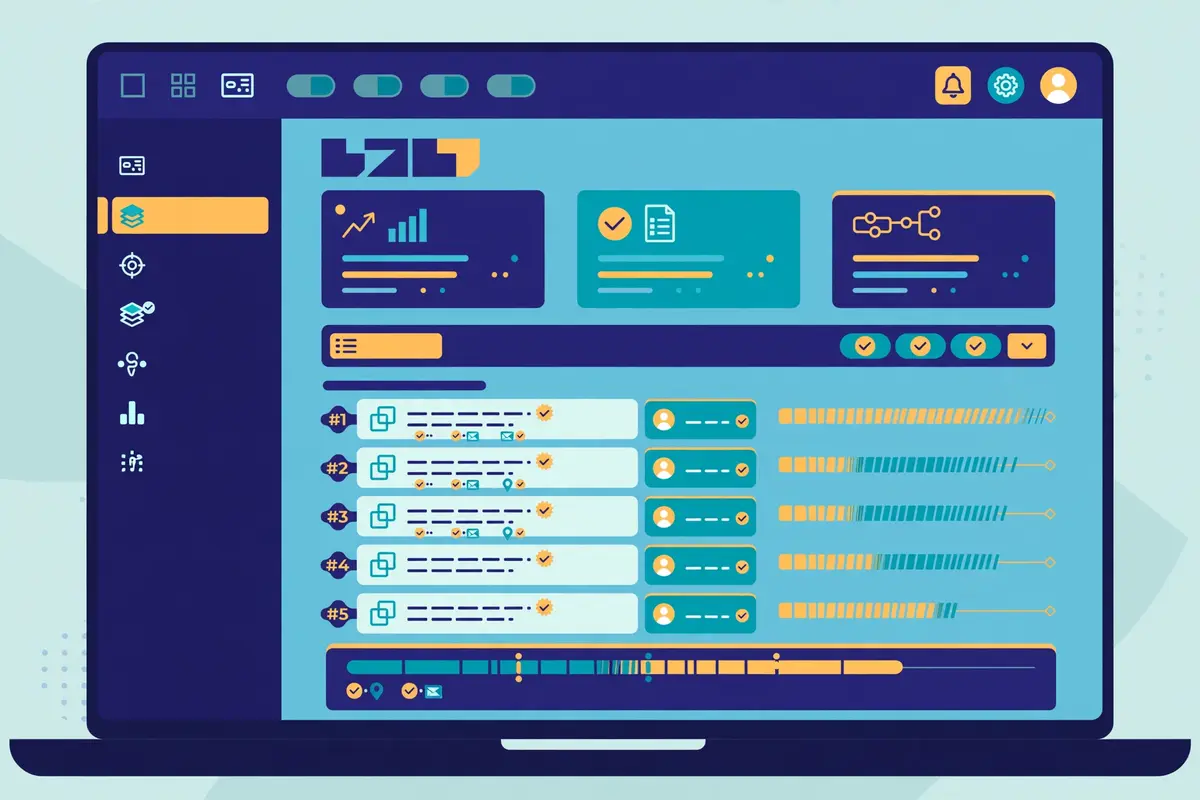
Best for European scale-ups wanting one platform for list, enrichment and outreach: Genesy.ai
Genesy.ai is an all-in-one AI sales platform from Barcelona that finds your buyers, enriches their records and runs multichannel outreach from a single workspace. You describe your ideal customer in plain language, its AI Finder builds the list, a waterfall across 30+ data providers verifies the emails and mobile numbers, and AI Sales Agents run personalised email and LinkedIn sequences, answer the replies in a smart inbox and book the meetings. The company now calls itself Enginy, and the product is the same one its customers knew as Genesy.ai. Plans start at €599 a month on the Basic plan, quoted after a short call, and a fully managed service that books meetings for you starts from €5,000 a month.
This Genesy.ai review works through the whole platform as it stood on 16 November 2026. It covers the rebrand, what the AI Finder and the waterfall enrichment actually do, how the credit system turns into a monthly bill, and how Genesy.ai compares with Apollo, Lemlist and Amplemarket. By the end you should know whether one platform for the whole outbound job is the right buy for your team, or whether a cheaper database plus a cheaper sequencer would serve you better.
Visit Genesy.ai → Jump to the comparison tableWhy this Genesy.ai review starts with the name
Before anything else, this Genesy.ai review needs to clear up the name. That is because it confuses almost every buyer who searches for the product. Genesy.ai was founded in Barcelona in 2023 by childhood friends Kai Brandt and Jaume Puig. In addition, it raised a €5 million seed round in 2025. After about a year trading as Genesy, the company rebranded as Enginy, and its chief executive said so plainly in an October 2026 interview: “Genesy. Genesy we rebranded after one year.” Today the genesy.ai address serves the Enginy homepage, its help centre lives at help.enginy.ai, and its G2 reviews still sit under the Genesy name. This Genesy.ai review uses the name buyers search for, Genesy.ai, and calls the current product Enginy where the distinction matters. That is because both names point at the same platform, the same team and the same pricing.
That rebrand is not a footnote. It explains why older reviews quote different prices, why the G2 page and the homepage carry different names, and why a buyer who searches for Genesy.ai pricing lands on a page that says Enginy. It also tells you something useful about the company. A vendor that rebrands a year after launch is still young, still finding its shape, and still growing fast: the same October 2026 interview puts Enginy at about 650 customers, 83 full-time staff and close to €7 million in annual recurring revenue, up from zero in January 2024. Those are a young company’s numbers, and this Genesy.ai review weighs them as such: impressive growth, and a product you should test on a demo before you commit to a four-figure monthly bill.
Quick Answer
Genesy.ai is an all-in-one AI sales platform, now called Enginy, that covers the whole outbound job in one workspace: AI list building from a plain-language description, waterfall enrichment across 30+ data providers for verified emails and mobile numbers, intent signals from job changes, hiring and funding, and multichannel sequences across email, LinkedIn and cold calling, with AI Sales Agents that warm leads, answer replies in a smart inbox and book meetings. It syncs enriched data two ways with HubSpot, Salesforce, Pipedrive, Zoho and Microsoft Dynamics 365, and it is GDPR compliant and ISO 27001 certified. Pricing is custom-quoted after a short call, with plan prices of €599, €799 and €1,199 a month listed in Enginy’s official help centre, plus a fully managed service from €5,000 a month. There is no free plan and no free trial stated on the official site; the route in is a demo.
Genesy.ai is best for mid-market B2B sales teams, especially European scale-ups, that want to replace three subscriptions — a database, an enrichment tool and a sequencer — with one platform and one bill. It is not the tool for a solo seller, a small team on a tight budget, or a buyer who wants a self-serve free plan to try first.
Contents
- What Genesy.ai actually is
- Who Genesy.ai fits best — and who should skip it
- Pricing in this Genesy.ai review: €599 a month, and why there is no price list
- Finding buyers: describe them, and the AI builds the list
- Enrichment in this Genesy.ai review: 30+ sources, one waterfall, and the credit maths
- Multichannel sequences in this Genesy.ai review: email, LinkedIn and calls in one flow
- The smart inbox in this Genesy.ai review: replies sorted, drafted and booked
- Deliverability in this Genesy.ai review: careful LinkedIn limits, basic email controls
- Integrations in this Genesy.ai review: your CRM stays, Genesy.ai does the prospecting
- Security in this Genesy.ai review, and the rules around automated outreach
- Genesy.ai against Apollo, Lemlist and Amplemarket
- Strengths and weaknesses in this Genesy.ai review, side by side
- Getting started in this Genesy.ai review: a sensible first 90 days
- Frequently asked questions
- The verdict in this Genesy.ai review
What Genesy.ai actually is
Genesy.ai describes itself as an all-in-one B2B sales platform, and its chief executive calls it an AI sales operating system. The idea is simple enough to state in one sentence: instead of buying a database, an enrichment tool, a LinkedIn automation tool, an email sequencer and a CRM sync, a sales team runs the whole outbound job in one place. You find the buyers, verify their contact details, reach them on email and LinkedIn, answer the replies and book the meetings, all without exporting a spreadsheet between tools. That single-workspace pitch is the whole product. Also, this Genesy.ai review tests it step by step, from the first list to the booked meeting.
Behind the pitch sits a deliberate piece of engineering honesty. Enginy does not pretend to own every database it queries. Its chief executive says the company partners with the best point solutions, with FullEnrich as its main waterfall enrichment provider, and adds its own technology and AI layer on top. Every time a user asks for a phone number or an email address, they are effectively using FullEnrich through Enginy, plus the other 30+ providers in the waterfall. That matters, because it explains both the strength and the limit of the product: the data is as good as the providers behind it. Furthermore, the value Enginy adds is the workflow, the AI personalisation and the single bill. A buyer who understands that trade will judge the platform on the workflow, not on a database it does not own.
Seven features this Genesy.ai review found defining
First comes the AI Finder. You describe your ideal customer in plain language, such as B2B software chief financial officers in the United States with more than five years in the role. Moreover, the AI turns that sentence into filters for industry, size, location, funding, technology and hiring signals. Next comes waterfall enrichment. The platform pulls verified emails and mobile numbers from 30+ providers in sequence, filling gaps and checking each result, with Google Maps data, technology stack data and job posting data available too. Then come intent signals. Job changes, hiring, funding rounds and technology changes tell the team when to reach out. As a result, the message lands while the buying window is open. After that come multichannel sequences. Email and LinkedIn steps run in one flow, with connection requests, messages, post likes and conditional steps between them, plus cold calling from the same sequence.
Finally come the smart inbox and the analytics. Replies from every channel land in one inbox, the AI categorises them and drafts the answer. In addition, the campaign dashboard shows who engaged, who replied positively and who booked.
The seven features at a glance, in this Genesy.ai review
- AI Finder: describe your ideal customer in plain language and the AI builds a targeted list, with filters for firmographics, funding, investors, technology and hiring.
- Waterfall enrichment: verified emails and mobile numbers pulled from 30+ data providers in sequence, so gaps in one source are filled by the next.
- Intent signals: job changes, leadership hires, hiring, funding rounds and technology stack changes, so the team reaches out while the timing is right.
- AI Variables and Deep Research: the AI agent browses the web to research each lead and writes personalised fields for every message.
- Multichannel sequences: email, LinkedIn and cold calling in one flow, with connection requests, messages, post likes, waits and conditional steps.
- Smart inbox: every reply from every channel in one place, automatically categorised, with AI-drafted answers and meeting booking.
- CRM sync and Chrome extension: two-way sync with HubSpot, Salesforce, Pipedrive, Zoho and Microsoft Dynamics 365, plus a Chrome extension that opens an Enginy side panel on LinkedIn Sales Navigator profiles.
One more framing point helps before the details. Genesy.ai is not a CRM, and it does not claim to be one. Its own comparison pages say plainly that it is not a full CRM or a deep analytics platform. Also, that its job is lead sourcing and outreach automation. The CRM stays where it is, and Enginy keeps it current. A buyer who expects a Salesforce replacement will be disappointed, and a buyer who wants their CRM fed with clean, enriched, engaged contacts will find exactly that.
Who Genesy.ai fits best — and who should skip it
First, this Genesy.ai review finds the product fits mid-market B2B sales teams first. Think of a European scale-up with five to fifty sellers, a clear ideal customer, and a stack that has grown into four or five subscriptions that nobody enjoys managing. That team needs one place where a rep can build a list in the morning, enrich it before lunch, launch the sequence after lunch and work the replies the next day. Genesy.ai gives them that single workspace, with the data, the outreach and the inbox in one contract. The price is high, yet the team it replaces is three tools and a weekly spreadsheet export. As a result, the comparison is against the whole stack, not against one sequencer. This Genesy.ai review rates it highly for teams of that shape.
Meanwhile, in this Genesy.ai review, teams selling into Europe come next. The company is based in Barcelona, its go-to-market teams cover Italy, Germany and the UK and Ireland from that office, and its customer list leans European: Factorial, Sequra, Metricool and Red Points are the names it publishes. A team whose buyers sit in Madrid, Milan or Munich gets a vendor in its own time zone, with support that understands European data rules and European buying habits. Factorial, the best-known customer story, reports going from about ten leads a day from one person to 5,000 leads a month, with reply rates rising from 10% to 45%. Those are the vendor’s own figures, and this Genesy.ai review flags them as such. Yet, they show the shape of customer the product is built around.
Buyers who should look elsewhere
Now the other side. However, solo sellers and small teams on a tight budget should look elsewhere. The cheapest plan in Enginy’s help centre is €599 a month, and the pricing page itself asks for your details before it will quote you anything. A founder sending fifty emails a week does not need a 5,000-credit waterfall. Furthermore, the bill would swallow the pipeline it creates. Apollo starts free and charges $49 a month for its Basic plan, and Lemlist starts at $69 a month for email outreach. Either one leaves a small team hundreds of euros a month better off. Moreover, this Genesy.ai review would not argue otherwise.
Buyers who like to test a tool themselves before paying should think twice as well. Genesy.ai states no free plan and no free trial on its official site. In addition, the route in is a demo followed by a qualification call. A team that likes to sign up, connect a mailbox and send a test campaign on a Friday afternoon will find that door closed. If self-serve testing matters to you, compare Amplemarket, which includes a free trial on all plans, or Apollo, whose free plan has no time limit, before you book the Genesy.ai demo.
Why a demo-first buyer should still take the call
Between those two poles sits the buyer this Genesy.ai review expects most often: a sales leader with a team of five or more, a working offer and a stack that costs more than €599 a month already. That buyer should take the demo, and bring a real list to it. Ask Enginy to build the list live, enrich fifty of your own target accounts, and show you the reply handling on a real thread. If the data comes back cleaner than your current database and the sequences run without a spreadsheet in sight, the single-platform case is made. If the enrichment looks no better than what you already buy, the demo has saved you a four-figure monthly commitment. Either way, a demo with your own data answers the question with evidence. Also, that is a better test than any sales deck.
Pricing in this Genesy.ai review: €599 a month, and why there is no price list
Genesy.ai keeps its pricing behind a conversation, and this Genesy.ai review states that plainly before any figure appears. The official pricing page carries no prices at all. It says “provide your details and we’ll create a custom plan for you,” and the page is a lead form, not a price list. That is a deliberate choice, and it is the first thing a buyer should understand: you cannot compare Genesy.ai on price without talking to the vendor. A team that hates sales calls will hate this step, and a team that is used to enterprise buying will find it normal. Either way, the price you pay depends on your team size, your volumes and the features you need, and the only way to learn it is to ask.
Fortunately, the vendor’s own help centre publishes the plan table, and this Genesy.ai review uses those figures throughout. The help centre page on plans and credits, updated 6 November 2026, lists four self-serve plans and one managed service. Basic costs €599 a month, or €7,188 a year, with 5,000 credits a month, up to 500 contacts a month and 1 identity included. Smart costs €799 a month, or €9,588 a year, with 10,000 credits, up to 1,000 contacts and 2 identities. Business costs €1,199 a month, or €14,388 a year, with 32,000 credits, up to 2,000 contacts and 4 identities. Enterprise is custom-priced, with custom credits, contacts and identities. On top of those sits a fully managed service from €5,000 a month, in which Enginy books qualified meetings on your behalf and adds them directly to your calendar.
Those are the figures the vendor itself publishes, checked on 16 November 2026. Furthermore, they are the only concrete prices available anywhere.
The pricing table in this Genesy.ai review, checked today
| Plan | Price | Credits & contacts | Best for | Visit Site → |
|---|---|---|---|---|
| Basic | €599 / month | 5,000 credits a month; up to 500 contacts a month; 1 identity included | A small team testing one platform for list, enrichment and outreach | Visit Site → |
| Smart | €799 / month | 10,000 credits a month; up to 1,000 contacts a month; 2 identities included | A growing team that needs more volume and a second sender identity | Visit Site → |
| Business | €1,199 / month | 32,000 credits a month; up to 2,000 contacts a month; 4 identities included | A mid-market team running outbound at real volume | Visit Site → |
| Enterprise | Custom | Custom credits, contacts and identities | Larger teams with custom volumes and requirements | Visit Site → |
| Fully Managed | From €5,000 / month | Enginy books qualified meetings for you, added straight to your calendar | Teams that want meetings delivered, not a tool to run | Visit Site → |
Last checked: 16 November 2026 on Genesy.ai’s pricing page (custom-quote form, no prices shown) and Enginy’s plan and credits help page (updated 6 November 2026). Features and pricing can change, so please check the provider’s site before you buy. We do not guess at features, prices or trials.
Two details that decide what €599 buys
Two details deserve a closer look, because they decide what the monthly figure actually buys. First, the plan table can be toggled between Without Phones and With Phones. As a result, the figures above are the standard plans and phone enrichment may change the quote. A team that needs mobile numbers at volume should confirm the phone-inclusive price on the qualification call, not assume the table covers it. Second, the annual prices are exactly twelve times the monthly prices. As a result, there is no annual discount visible in the help centre table. A buyer who prefers to pay monthly loses nothing against the annual figure, which is unusual in this market and worth knowing before negotiating.
One more pricing point matters for buyers comparing Genesy.ai with the self-serve tools. At €599 a month, Genesy.ai costs roughly twelve times Apollo’s Basic plan at $49 a month, and roughly nine times Lemlist’s Email plan at $69 a month. That gap is the whole pitch in reverse: Genesy.ai does not try to be the cheapest database or the cheapest sequencer, so it does not charge like one. Instead it charges like a platform that replaces both. Moreover, the buyer should judge it on the cost of the stack it replaces, not on the cost of one tool. A team already paying for a database, an enrichment tool and a sequencer may well spend more than €599 a month today. A team paying for one of those three will not. In addition, this Genesy.ai review counts that arithmetic as the first test any buyer should run.
What the credit system means for your bill
Finally, a caution about the price you may see elsewhere. Third-party review sites quote a Smart plan at €799 a month from a Capterra listing, which matches the help centre figure, and some older pages still describe Genesy.ai as having no public pricing at all. Both are consistent with what this Genesy.ai review found: the pricing page shows nothing, and the help centre shows everything. If a page quotes a dollar price for Genesy.ai, treat it with care, because the vendor prices in euros. When in doubt, the help centre page linked above is the source this Genesy.ai review used. Also, it is the page to check before you buy.
Finding buyers: describe them, and the AI builds the list
List building is where Genesy.ai starts, and it is the feature that most clearly shows the product’s ambition. Instead of opening a filter panel and ticking boxes, you chat with the AI. You describe the buyers you want in plain language, and the AI turns that description into a list. The homepage shows the idea in action: a search for B2B software chief financial officers with more than five years of experience becomes filters for department headcount, previous company, annual revenue, total raised, industry, location, valuation, founding date, technologies used, job title, years in role, education and leadership hires. A rep who knows their buyer can build a list without learning a query language, and a sales leader can hand the same description to every rep and get the same list back. That consistency is the point.

Intent signals in this Genesy.ai review: knowing when to reach out
Behind the chat sit the intent signals, and this Genesy.ai review puts them second only to the Finder itself. The platform watches for job changes, leadership hires, hiring, funding rounds and technology stack updates. Furthermore, it surfaces the accounts where something just changed. A company that just hired a head of sales, raised a Series B or switched its CRM is a company with a reason to talk this week, and the signal tells the rep why. That timing is what separates a good list from a lucky one. A list of a thousand perfect-fit accounts is useful. Meanwhile, a list of fifty perfect-fit accounts with a hiring signal this week is a pipeline. Genesy.ai is built around the second kind of list. Moreover, the signals are the reason its customers report reply rates climbing rather than falling as volume grows.
Lists from LinkedIn, Google Maps and spreadsheets
Meanwhile, the Finder is not the only way in. Teams can import lead and company lists from LinkedIn, Google Maps or a CSV or Excel file, clean them against their ideal customer rules, and remove duplicates before a single message goes out. The Chrome extension adds a third route: it opens an Enginy side panel on any LinkedIn Sales Navigator profile, showing the fit score and history. In addition, it drafts an opening line for the rep to send from their own account. For example, a rep working a Sales Navigator list can check each profile in context, enrich it, and draft the first line without leaving LinkedIn. That working pattern suits teams whose prospecting already lives in Sales Navigator. Also, it is one of the few features in this market that meets reps where they already work.
Where list building stops being enough
One honest limit belongs in this section. The AI Finder is only as good as the description you give it, and a vague ideal customer produces a vague list. A team that has never written down who it sells to will get more from an afternoon defining the buyer than from any feature in the product. Genesy.ai’s own onboarding reflects that: the vendor says setup depends on how well your ideal customer rules are defined, and its onboarding runs across five structured setup sessions. Budget that time. A list built on a sloppy brief will enrich cleanly, sequence smoothly and book nothing, and no waterfall can fix a brief that points at the wrong companies.
Enrichment in this Genesy.ai review: 30+ sources, one waterfall, and the credit maths
Enrichment is where Genesy.ai earns its premium, and it is the feature this Genesy.ai review spent the longest checking. The platform pulls verified emails and mobile numbers from more than 30 data providers, running them in a waterfall: when one provider has no email for a contact, the next one is tried, and the next, until the record is filled or the sources run out. The same waterfall covers company data, technology stack data, job posting data and Google Maps data, and every result is verified before it reaches your list. That is the theory, and it is a good one. A single database is wrong about a fifth of its records on a bad day. Meanwhile, a waterfall that checks several sources can fill the gaps the first source leaves.
Whether the practice matches the theory depends on your market, which is why the demo matters more here than anywhere else in the product.
The credit table in this Genesy.ai review, from the help centre
| Action | Credit cost | What it does |
|---|---|---|
| Extract company and contact data | 1 credit / result | Pulls the company and contact record from the waterfall |
| Email enrichment | 5 credits / result | Finds a verified work email for the contact |
| Google Maps data | 1 credit / result | Pulls business data from Google Maps listings |
| Technology stack data | 1 credit / result | Shows the technologies the company uses |
| Job posting data | 1 credit / result | Shows the roles the company is hiring for |
| Email verification | 1 credit / result | Checks that an email address is deliverable |
| Phone verification | 3 credits / result | Checks that a phone number is valid |
| AI Variables | 3 credits / field | AI-researched personalisation fields for each lead |
Last checked: 16 November 2026 on Enginy’s plan and credits help page. Features and pricing can change, so please check the provider’s site before you buy. We do not guess at features, prices or trials.
Working out what 5,000 credits really covers
Now the credit maths, because it decides whether the plan fits your volume. On Basic, 5,000 credits a month cover 500 contacts, which works out at 10 credits per contact on average. Extracting the record costs 1 credit, enriching the email costs 5, verifying it costs 1, and one AI Variable field costs 3, which already totals 10 before a phone number is verified at 3 credits. A team that enriches email and phone for every contact, plus two AI Variable fields, spends 16 credits per contact, and 5,000 credits cover about 300 contacts, not 500. A team that only needs emails spends 7 credits per contact, and the same allowance covers about 700. The help centre includes a credit calculator for exactly this reason. Furthermore, this Genesy.ai review recommends running your real mix through it before you sign.
The contact limit and the credit limit bind at different volumes, and the one that binds first is the one that sets your real ceiling.
Why the waterfall beats one database, and where it does not
Meanwhile, the waterfall itself deserves a fair hearing. Genesy.ai’s own comparison pages argue that Apollo’s data is a single static database, refreshed periodically. Meanwhile, Enginy pulls live data from every source at the moment you ask. That is the vendor’s claim, and it is a plausible one for a waterfall product. Yet, it is also a claim this Genesy.ai review cannot verify without hands-on testing. What can be verified is the structure: 30+ providers, a named main provider in FullEnrich, and per-action credit costs published in the help centre. A buyer comparing Genesy.ai with Apollo should test the same fifty accounts in both tools and count the verified emails each returns. That single test, run on your own market, is worth more than any comparison page, including this one.
Multichannel sequences in this Genesy.ai review: email, LinkedIn and calls in one flow
Sequences are where the list becomes pipeline, and Genesy.ai runs them across email, LinkedIn and cold calling from one flow. A single sequence can send a LinkedIn connection request, wait two days, send a message, like the prospect’s last post, send an email, and queue a call, with conditional steps between each move: if the prospect accepts the connection, the next step is a message. Meanwhile, if they ignore it, the next step is an email. The AI writes the messages from the enriched profile data and the AI Variables. As a result, each email can mention the prospect’s recent post, their technology stack or their hiring plans. Deep Research lets the agent browse the web for more context before it writes. That is the multichannel promise, and it is the feature that separates Genesy.ai from an email-only sequencer.

AI Sales Agents in this Genesy.ai review: warming leads and booking meetings
Behind the sequences sit the AI Sales Agents, and this Genesy.ai review counts them as the product’s most distinctive feature. The agent does not just send the first message and stop. It warms the lead, follows up automatically, continues the conversation when the prospect replies, and books the meeting while the team focuses on live conversations. The homepage shows the model in the message composer: GPT 5.2 drafting the outreach, with a booking link and a preview before anything goes out. A lead who replies with a question gets an answer from the agent, and a lead who asks for a time gets a booking link. For example, a prospect who writes back asking what the product costs gets a drafted answer drawn from the playbook, not a generic follow-up.
That continuity, from first touch to booked meeting without a human in the middle, is what the vendor means by an AI sales agent. Moreover, it is the reason teams buy the platform rather than a cheaper sequencer.
Cold calling, the channel buyers ask about most
Meanwhile, cold calling deserves its own paragraph, because the vendor’s own interviews call it the best-performing channel in the product. The same October 2026 interview that disclosed the rebrand says cold calling is where Enginy’s customers see the strongest results, which is a striking claim for a platform most buyers discover through its LinkedIn and email features. The vendor’s blog describes AI-personalised outreach across email, social prospecting and cold calling, run from one sequence, and its comparison pages list calls alongside email and social media as channels the platform covers. What the official pages do not spell out is whether the calls are placed by an AI voice agent or queued for a rep to dial, and this Genesy.ai review does not guess. A buyer whose motion depends on calling should ask that question on the demo and hear the answer before signing.
That is because the difference between an AI caller and a call queue is the difference between two products.
Where sequences stay within safe limits
One more sequence point deserves attention: the platform caps automated LinkedIn requests at 20 per day and monitors account health to avoid triggering flags. That cap is low by design, and it tells you how Genesy.ai thinks about LinkedIn. A tool that lets a rep send a hundred connection requests a day will get the account restricted. In addition, the vendor would rather lose the volume than lose the account. A team that needs LinkedIn volume should plan around that cap: twenty requests a day per identity, two identities on Smart, four on Business. Multiply the cap by the identities on your plan, and you have your real LinkedIn ceiling. A team that needs more than that should look at a dedicated LinkedIn tool, or accept that Genesy.ai trades volume for safety on purpose.
The smart inbox in this Genesy.ai review: replies sorted, drafted and booked
Every multichannel campaign ends in the same place: the replies. Genesy.ai gathers them into a smart inbox. Also, this Genesy.ai review puts the inbox at the centre of the product’s value. Email and LinkedIn conversations land in one view, automatically prioritised so reps know where to act first, and the AI categorises each reply as interested, not interested, bad timing, referred or meeting booked. The homepage shows the inbox in action: 412 conversations, 118 AI drafts, 36 interested, 21 meetings booked, and each reply tagged with a reason, such as “expressed relevance and openness to a call.” A rep starting the day can work the interested list first, ignore the automatic replies, and let the AI draft the answers to the rest. That triage is where the hours go back into the day.

Drafts that keep the rep in control
Inside the inbox, the AI drafts the answer and the rep stays in control. The draft appears beside the thread, the rep can edit it or send it as written, and the sequence stops on its own when the prospect replies or books. The vendor’s own pages describe the same pattern for Sales Navigator: the extension drafts an opening line. Furthermore, the rep sends it from their own account. Keeping a person in the loop is the sensible setup for software that writes in your company’s voice, since any error about a prospect goes out under your name rather than the vendor’s. Keep review on for the first month, read the drafts before they go out, and correct the ones that miss your voice. Every correction teaches the agent what your team sounds like, and the edits get fewer each week.
Analytics that show the whole funnel
Behind the inbox sits the analytics dashboard. Moreover, it is worth a paragraph because it closes the loop the product promises. The campaign view shows total audience, engaged, contacted, replied and positive counts, with the split between social and email channels, and the tagged conversations show how many turned into referrals, meetings and conversions. The Apollo comparison page shows a real-looking snapshot: 2,763 contacted, 484 replied, 326 positive, with campaign-level reply rates between 14% and 22%. Those are the vendor’s own screenshots, and this Genesy.ai review flags them as such. Yet, they show the shape of reporting a buyer gets: channel by channel, campaign by campaign, with the meeting as the unit that matters. A team that judges outreach on meetings booked will find that dashboard honest, and a team that judges it on emails sent will find it unflattering, which is probably the point.
Deliverability in this Genesy.ai review: careful LinkedIn limits, basic email controls
Deliverability is the quiet risk in every outreach tool, and Genesy.ai handles it in two very different ways on its two channels. On LinkedIn, the controls are explicit and conservative: automated requests are capped at 20 per day, account health is monitored. In addition, the sequences are built around conditions and waits rather than blasts. On email, the controls are thinner. The vendor verifies every email address before it is used, at 1 credit per verification, and the sequences stop when a prospect replies or books. Yet, there is no dedicated warmup product, no inbox rotation across many mailboxes and no placement testing claimed on the official pages. A rival’s migration guide describes Genesy.ai’s deliverability as basic sending controls. Also, this Genesy.ai review finds nothing on the official site that contradicts that description.
The volume ceiling, stated plainly
However, the same design sets a clear ceiling. Anyone planning thousands of cold emails a month from many domains needs deliverability kit that Genesy.ai does not supply. As a result, the sensible move is to run it beside a dedicated volume sender. The vendor’s own comparison pages name Instantly as a tool for the outreach stage, which is a refreshingly honest admission that one platform does not cover every job. If your plan is high-volume cold email across many domains, read our Instantly review and our deliverability tools roundup before you decide. That is because Genesy.ai alone will not carry that motion. The 20-a-day LinkedIn cap and the per-identity model point the same way: this is a platform for targeted outreach to named accounts, not for blasting a purchased list.
Sender rules that still apply to you
Meanwhile, the rules that protect every sender still apply, and Genesy.ai does not exempt you from them. Gmail has required SPF or DKIM from every sender since February 2024, with spam complaints kept below 0.3%. Meanwhile, senders topping 5,000 messages a day to Gmail also need DMARC and one-click unsubscribe on marketing mail. LinkedIn has its own limits, and an account that ignores them gets restricted, which is why the 20-a-day cap exists. A plain summary, not legal advice. In the United States, commercial email must carry honest headers and subject lines, a real postal address, and an opt-out that is honoured within ten business days. For B2B outreach inside the European Union, legitimate interest is the usual legal basis, and every recipient can object to direct marketing whenever they choose. Germany is one of the countries that demands prior consent for marketing email, even when both sides are businesses.
Those rules are yours to follow, whichever tool you buy.
Integrations in this Genesy.ai review: your CRM stays, Genesy.ai does the prospecting
Genesy.ai connects to the CRM you already run, and the list is short, clear and honest. HubSpot, Salesforce, Pipedrive, Zoho and Microsoft Dynamics 365 sync two ways. As a result, enriched data flows into the CRM and engagement flows back, and the team never updates a record by hand. The homepage adds that more than a dozen further tools connect natively. Furthermore, the wider catalogue covers the usual sales stack. That breadth matters, because Genesy.ai is designed to sit inside a stack rather than replace it. A team can keep the CRM it already pays for and add Genesy.ai for the list, the enrichment and the outreach, without migrating a single record. The vendor’s own pages say the same thing from the other side: Genesy.ai is not a full CRM. Moreover, it does not try to be one.
The two integration setups most teams end up using
Two integration patterns cover most buyers. First, the CRM pattern: the list is built in Genesy.ai, the records are enriched through the waterfall, the sequences run from the platform, and every reply, meeting and status lands back in HubSpot or Salesforce. A manager can see the pipeline in the CRM they already trust. In addition, the reps can work the smart inbox without opening a second system. Second, the Sales Navigator pattern: the Chrome extension opens an Enginy side panel on every Sales Navigator profile, showing the fit score and the history. Also, the rep enriches and drafts from inside LinkedIn. For a team whose prospecting already lives in Sales Navigator, that second pattern is the more interesting one. That is because the list never leaves the place the reps already work.
What the integrations do not include
One more integration point deserves a note, because it explains the shape of the product. Genesy.ai’s own pages list OpenAI among its integrations, and the homepage shows GPT 5.2 drafting messages inside the platform. As a result, the AI layer is built on the leading models rather than a model the vendor trained itself. The chief executive says the company spends about a tenth of its revenue on foundation model credits, which is the cost of that choice. A buyer should read that as a strength, not a weakness: the models improve every few months, and Genesy.ai improves with them. What the integrations do not include, as far as the official pages show, is a native dialler with call recording, a WhatsApp step, or an SMS step, and a team that needs those channels should confirm their absence on the demo rather than assume they exist.
Security in this Genesy.ai review, and the rules around automated outreach
Security is the section where this Genesy.ai review can report good news, because the official site states its position plainly. The homepage carries a security block that says the platform is GDPR compliant and independently audited and certified to ISO 27001. Those are the two claims a European buyer asks about first, and Genesy.ai makes both on the page every visitor sees. A team with a formal security review should still ask for the certificate and the data-processing agreement in writing, because a homepage badge is not a contract. Yet, the claims are there to be checked, and they put Genesy.ai ahead of several rivals in this market that publish no security position at all.
Guardrails a buyer can check for themselves
Meanwhile, the guardrails inside the product are practical rather than ceremonial. Sequences stop when a prospect replies or books, LinkedIn requests are capped at 20 a day. Furthermore, the smart inbox keeps a human in the loop on every drafted reply. Every agent follows the rules the team writes. Moreover, the campaign dashboard shows what was sent, who replied and what happened next. That arrangement suits a product that sends mail as you, since a mistake about a prospect’s business still carries your signature, not the vendor’s. A team that keeps human review on for the first month, reads the drafts before they go out, and checks the sender reputation of every identity it connects will get the best from the platform without putting its domain at risk.
AI outreach and the consent rules
Finally, the rules around automated outreach deserve a plain statement, because they catch buyers out. A February 2024 FCC ruling treats AI-generated voices as artificial under the TCPA in the United States, which means AI calls need the called person’s prior express consent. Across the European Union, a work email is personal data. Inside the European Union, B2B outreach normally rests on legitimate interest, with an ever-present right for recipients to object. Germany is one of the countries that demands prior consent for marketing email, even when both sides are businesses. LinkedIn’s own terms limit automation, which is why the 20-a-day cap and the account health monitoring exist. Keep human review on replies until you trust the drafts, keep the volume targeted rather than blasted, and treat the compliance pages as guidance, not legal advice.
Software that carries out your instructions to the letter is only as safe as the instructions themselves.
Genesy.ai against Apollo, Lemlist and Amplemarket
The headline difference is the job each tool does. Genesy.ai charges from €599 a month and covers the whole outbound job in one workspace: AI list building, waterfall enrichment, multichannel sequences and a smart inbox. Apollo charges from $49 a month on Basic, with a free plan at $0, and gives you a 240M+ contact database with sequences on top. Lemlist charges from $69 a month for email, or $109 a month for multichannel, with a 650M+ database and five channels in one sequence. Amplemarket charges from $600 a month on an annual term and gives you Duo AI with a 200M+ verified database, multichannel sequences and a deliverability suite. At one user and a small list, Apollo costs $49 a month, Lemlist costs $69 a month, Amplemarket costs $600 a month, and Genesy.ai costs €599 a month.
Yet Genesy.ai is the only one of the four that starts with a plain-language description and ends with a booked meeting without a spreadsheet in between. Treat the table as a buying guide rather than a scoreboard, and start from whichever bottleneck hurts most.
The comparison table in this Genesy.ai review, in brief
| Tool | Entry price | What you get | Best for | Visit Site → |
|---|---|---|---|---|
| Genesy.ai | €599 / month | AI Finder list building; waterfall enrichment across 30+ providers; email, LinkedIn and calling sequences; AI Sales Agents; smart inbox; CRM sync | European scale-ups wanting one platform for list, enrichment and outreach | Visit Site → |
| Apollo.io | $49 / month | 240M+ contact database; waterfall enrichment; cold email sequences; cloud dialler; LinkedIn task queues; free plan at $0 | Teams wanting a huge database with a free plan to start | Visit Site → |
| Lemlist | $69 / month | 650M+ contact database; email, LinkedIn, calling, WhatsApp and SMS in one sequence; lemwarm; inbox rotation; AI icebreakers | Teams wanting five channels and deliverability in one suite | Visit Site → |
| Amplemarket | $600 / month, annual | Duo AI copilot and copywriter; 200M+ verified database; multichannel sequences; Duo Voice; deliverability suite; free trial | Teams wanting Duo AI with a verified database and a trial | Visit Site → |
Last checked: 16 November 2026 on the pricing pages linked above. Genesy.ai prices come from Enginy’s help centre, as the pricing page itself is a custom-quote form. Cross-checked against our own reviews of Apollo, Lemlist and Amplemarket. Features and pricing can change, so please check the provider’s site before you buy. We do not guess at features, prices or trials.
What the table means for three kinds of buyer
Three buying patterns fall out of that table, and each one points to a different tool. If your stack already costs more than €599 a month across a database, an enrichment tool and a sequencer, choose Genesy.ai. That is because one platform and one bill replace all three, and the AI Finder plus the waterfall do the work your reps do by hand today. If you need a huge database with a free plan and you are happy to run the sequences yourself, choose Apollo. That is because $49 a month buys 240M+ contacts and a sequencer in one contract. If you want five channels, deliverability infrastructure and a price under $110 a month, choose Lemlist. That is because no other tool in this table gives you calling, WhatsApp and SMS alongside email and LinkedIn for that money.
If you are still choosing, our best cold email software roundup lines up all four against the rest of the market. In addition, it is the best place to continue.
The feature matrix in this Genesy.ai review, at a glance
| Feature | Genesy.ai | Apollo.io | Lemlist | Amplemarket |
|---|---|---|---|---|
| AI list building from plain language | ✓ | — | — | — |
| Built-in contact database | ✓ * | ✓ 240M+ | ✓ 650M+ | ✓ 200M+ |
| Waterfall enrichment, 30+ providers | ✓ | ✓ | ✓ 14+ | ✓ |
| Verified emails and mobile numbers | ✓ | ✓ | ✓ | ✓ |
| Intent signals | ✓ | ✓ | ✓ | ✓ |
| Multichannel sequences | ✓ | ✓ | ✓ | ✓ |
| LinkedIn automation | ✓ | ✓ † | ✓ | ✓ |
| Cold calling in sequences | ✓ | ✓ | ✓ | ✓ |
| AI SDR agent that books meetings | ✓ | — | ✓ | ✓ |
| Smart inbox with AI-drafted replies | ✓ | — | ✓ | ✓ |
| Built-in warm-up | — | ✓ | ✓ | ✓ |
| Free plan | — | ✓ $0 | — | — |
| Free trial stated | — ‡ | — | ✓ | ✓ |
| Entry price | €599 / mo | $49 / mo | $69 / mo | $600 / mo, annual |
Last checked: 16 November 2026 on each provider’s official site, as linked above. ✓ = stated on the provider’s site. — = not confirmed or confirmed absent. * Genesy.ai has no single owned database; it queries 30+ providers through a waterfall. † Apollo runs LinkedIn as task queues for reps, not automated steps. ‡ Genesy.ai states no free trial. The route in is a demo. Features and pricing can change, so please check the provider’s site before you buy. We do not guess at features, prices or trials.
Two rows in the matrix that change the decision
Two rows in that matrix deserve a second look. First, the database row: Genesy.ai is the only tool of the four without a single owned database. Also, that single difference explains both its strength and its price. Apollo, Lemlist and Amplemarket each own or license a database of a stated size. Meanwhile, Genesy.ai queries 30+ providers through a waterfall and charges per result in credits. A buyer whose market is well covered by one database will pay less there. Meanwhile, a buyer whose market is patchy will get more verified contacts from the waterfall. Second, the warm-up row: Genesy.ai is the only tool of the four without a built-in warm-up product. Furthermore, that gap matters for any team sending cold email at volume. Apollo, Lemlist and Amplemarket each warm inboxes as part of the platform. Meanwhile, Genesy.ai verifies the address and caps the LinkedIn volume instead.
A team that needs warm-up should budget for a separate tool or choose a rival that includes it.
Strengths and weaknesses in this Genesy.ai review, side by side
Every tool in this market trades one strength for another, and Genesy.ai is no exception. Its strengths cluster around the single workspace, the waterfall and the AI agent. Meanwhile, its weaknesses cluster around the price, the demo-only door and the deliverability ceiling. This Genesy.ai review puts both sides in one place. As a result, you can balance them in one pass instead of hunting through the article. The pattern is consistent: Genesy.ai is generous where the work is finding and enriching, and modest where the work is trying it cheaply or sending at scale. Buyers who walk in knowing that trade-off tend to stay happy. Meanwhile, buyers who arrive expecting a cheap self-serve trial will walk away disappointed.
The short version in this Genesy.ai review: five strengths, five weaknesses
- First strength: one workspace for the whole outbound job, from a plain-language list to a booked meeting, with no spreadsheet export between tools.
- Second strength: waterfall enrichment across 30+ providers for verified emails and mobile numbers, with per-action credit costs published in the help centre.
- Third strength: AI Sales Agents that warm leads, continue conversations and book meetings, plus a smart inbox that categorises every reply and drafts the answer.
- Fourth strength: intent signals from job changes, hiring, funding and technology changes, so the team reaches out while the buying window is open.
- Fifth strength: GDPR compliance and ISO 27001 certification stated on the homepage, with a Barcelona base and European go-to-market teams for buyers selling into Europe.
Five weaknesses to weigh
- First weakness: the entry price is €599 a month, with no prices on the pricing page itself, so the buyer cannot compare costs without a sales call.
- Second weakness: no free plan and no free trial stated, so the only way in is a demo followed by a qualification call.
- Third weakness: no built-in warm-up, inbox rotation or placement testing, so high-volume cold email needs a separate deliverability tool.
- Fourth weakness: the credit system caps real volume below the headline contact limit, because enriching email and phone plus AI Variables costs about 16 credits per contact.
- Fifth weakness: the company rebranded a year after launch, the review base still sits under the old Genesy name, and there is no hands-on test in this Genesy.ai review, so buyers should lean on the demo before paying.
There is one more drawback worth spelling out, because it is easy to overlook. Genesy.ai is a young company, and youth cuts both ways. The growth is real, from zero to close to €7 million in annual recurring revenue in three years, and the customer stories are real too. Yet a vendor of 83 people cannot match the support depth of a vendor ten times its size, and a buyer who needs a named contact at 2 a.m. should ask about support hours on the demo. In practice the trade is clear: you buy the most complete single workspace in this price band, from a vendor still proving it can support that workspace at scale. A buyer who wants a proven giant should compare Apollo or Lemlist before deciding, and a buyer who wants the newest approach should take the Genesy.ai demo.
Getting started in this Genesy.ai review: a sensible first 90 days
The first two weeks, in this Genesy.ai review’s getting-started plan, are for the demo and the brief. Book the demo, and bring a real list of fifty target accounts, not a slide deck. Ask Enginy to build the list live from your plain-language description, enrich those fifty accounts through the waterfall, and show you the reply handling on a real thread. Write the ideal customer down before the call. That is because the vendor says setup depends on how well those rules are defined, and a sloppy brief produces a sloppy list. Run the credit calculator with your real mix of email enrichment, phone verification and AI Variables, and check whether 5,000 credits cover your month or whether Smart at €799 is the honest starting point.
Weeks three to six: a measured pilot
Weeks three to six are for a measured pilot, and this Genesy.ai review keeps the numbers small on purpose. For example, start on Basic at €599 a month, connect the CRM, and run one sequence to a small, well-defined list of a hundred accounts. Track the verified email rate, the reply rate, the positive reply rate and the meetings booked, not the send volume. Read every reply yourself, including the ones the AI agent handled, and check whether the answers sound like your team. If one message type underperforms, check the targeting before you touch the wording. Even brilliant copy books zero meetings when it lands in front of the wrong companies.
Deciding in weeks seven to twelve
Weeks seven to twelve are for the decision, and this Genesy.ai review makes the test explicit. Widen the throttle a little on the campaign that works, and watch the one that does not like a hawk. If the team needs more volume, move to Smart at €799 a month for 10,000 credits and a second identity, or to Business at €1,199 for 32,000 credits and four identities. Divide the monthly price by the meetings booked to get your cost per meeting, and compare it with the cost of the three tools Genesy.ai replaced. Finally, if Genesy.ai books meetings cheaper than the old stack did, keep it. If it does not, narrow the list, tighten the brief, and run one more test before you renew. Three months of real numbers beats a year of wishful thinking.
Frequently asked questions
What is Genesy.ai?
Genesy.ai is an all-in-one AI sales platform that covers the whole outbound job in one workspace. Moreover, this Genesy.ai review answers the most common questions about it. It builds targeted lead lists from a plain-language description, enriches them through a waterfall across 30+ data providers, watches intent signals from job changes, hiring and funding, and runs multichannel sequences across email, LinkedIn and cold calling. AI Sales Agents warm the leads, answer the replies in a smart inbox and book the meetings. Meanwhile, the enriched data syncs two ways with HubSpot, Salesforce, Pipedrive, Zoho and Microsoft Dynamics 365. The company was founded in Barcelona in 2023 and now trades as Enginy.
Is Genesy.ai now called Enginy?
Yes. Genesy.ai rebranded as Enginy after about a year. In addition, this Genesy.ai review uses the name buyers search for while calling the current product Enginy where it matters. The genesy.ai address now serves the Enginy homepage, the help centre lives at help.enginy.ai, and the chief executive confirmed the rebrand in an October 2026 interview. The product, the team and the pricing are the same under either name, and the G2 reviews still sit under the Genesy name. If a page mentions Enginy and a page mentions Genesy.ai, they are describing the same platform.
How much does Genesy.ai cost?
Genesy.ai costs €599 a month on Basic, €799 a month on Smart, €1,199 a month on Business, and a custom price on Enterprise. Also, this Genesy.ai review lists the figures plainly. Basic includes 5,000 credits a month, up to 500 contacts and 1 identity. Smart includes 10,000 credits, up to 1,000 contacts and 2 identities. Business includes 32,000 credits, up to 2,000 contacts and 4 identities. A fully managed service, in which Enginy books qualified meetings for you, starts from €5,000 a month. Prices were checked on 16 November 2026 in Enginy’s official help centre. That is because the pricing page itself is a custom-quote form with no prices shown.
Does Genesy.ai have a free trial?
No free trial is stated on Genesy.ai’s official site, and this Genesy.ai review says so plainly rather than hiding it. The route in is a demo followed by a short qualification call, after which the vendor creates a custom plan. One third-party listing reports 25 free leads to get started. Yet, that offer does not appear on the official pricing page, so this Genesy.ai review does not treat it as confirmed. If you want to test the platform, the honest test is a demo with your own list of fifty target accounts, followed by one month on Basic at €599. That is expensive enough to be a real test rather than a casual trial.
Does Genesy.ai find leads for you?
Yes. Genesy.ai is built for exactly that job, and this Genesy.ai review counts it as the product’s main strength. The AI Finder turns a plain-language description of your ideal customer into a targeted list, intent signals show when to reach out, and the waterfall across 30+ providers verifies the emails and mobile numbers. Lists can also be imported from LinkedIn, Google Maps or a spreadsheet, and a Chrome extension works inside LinkedIn Sales Navigator. If you already own a database and only need a sequencer, a cheaper tool such as Apollo from $49 a month may serve you better. That is because Genesy.ai charges for the whole workflow, not just the sending.
Who should not use Genesy.ai?
Solo sellers and small teams on a tight budget should not use it. That is because the entry price is €599 a month and there is no free plan to start on. This Genesy.ai review says so plainly rather than hiding it. Buyers who want to try before they buy should not use it either. That is because there is no free trial stated and the route in is a demo and a sales call. Teams sending high-volume cold email should also test carefully. That is because Genesy.ai has no built-in warm-up or inbox rotation, and the LinkedIn cap of 20 automated requests a day per identity limits volume by design.
The verdict in this Genesy.ai review
Verdict: best for European scale-ups wanting one platform for list, enrichment and outreach
Genesy.ai is the most complete single workspace for outbound in this Genesy.ai review’s comparison set, and it earns that title by covering the whole job: AI list building from a plain-language description, waterfall enrichment across 30+ providers, intent signals, multichannel sequences and a smart inbox that books the meetings. GDPR compliance and ISO 27001 certification are stated on the homepage, the Barcelona base suits teams selling into Europe, and the Factorial story shows what the platform can do when the brief is sharp. That combination is the product’s core strength, and it is why this Genesy.ai review recommends it to mid-market B2B teams whose stack already costs more than €599 a month across three tools.
Go in with open eyes. Genesy.ai costs €599 a month at the entry, shows no prices on its own pricing page, states no free plan and no free trial, and has no built-in warm-up for cold volume. The credit system caps real volume below the headline contact limit, and the company is young enough that its reviews still sit under its old name. Take the demo with your own list, run the credit calculator with your real mix, and judge it on cost per meeting, not on emails sent. Do that, and Genesy.ai can carry the whole outbound job while your reps close. Skip the demo and a €599 monthly bill is what you will get, not a pipeline. We have not tested Genesy.ai hands-on, so there is no numeric score here — only this verdict, and the evidence above to check it against.
Visit Genesy.ai →Keep reading
More AI SDR and prospecting reviews
- Apollo Review 2026 — the 240M+ database with sequences, from $49 a month with a free plan.
- Lemlist Review 2026 — the five-channel suite with a 650M+ database, from $69 a month.
- Amplemarket Review 2026 — Duo AI, data and sequences in one contract from $600 a month.
- Artisan Review 2026 — Ava, the AI BDR, from $250 a month with a free plan.
- 11x Review 2026 — Alice, the outbound agent, from $36,000 a year with managed mailboxes.
- Carly AI Review 2026 — sequences and AI-drafted replies from your own mailboxes, from $35 a month.
- Reply.io Review 2026 — Jason AI with multichannel sequences, Email Volume from $59 a month.
- Salesforge Review 2026 — Agent Frank, the budget AI SDR, from $499 a month.
- Overloop Review 2026 — data, email and LinkedIn in one seat from $69 a month.
Guides and roundups
- Best Cold Email Software 2026 — the full roundup with Genesy.ai beside every leading tool.
- Best B2B Data Providers 2026 — how Genesy.ai’s 30+ provider waterfall ranks among the data providers.
- Instantly Review 2026 — the volume-built sender to pair with Genesy.ai when the prospect cap runs short.
- Smartlead Review 2026 — agency deliverability infrastructure from $39 a month.
- Woodpecker Review 2026 — a deliverability-first sequencer from $39 a month.
- Saleshandy Review 2026 — a database-backed sequencer with 852M+ contacts.
- Snov.io Review 2026 — finding, verifying and drip campaigns together.
- Hunter Review 2026 — the domain-search specialist, verification from $49 a month.
- Klenty Review 2026 — sales engagement with a parallel dialler, from $50 a month.
- Mailshake Review 2026 — email outreach plus a power dialler, from $29 a month.
- ReachInbox Review 2026 — a newer sequencer with AI personalisation from $30 a month.
- Do You Mail Review 2026 — dedicated inbox servers in the USA and EU from $39 a month.
- Pipl.ai Review 2026 — the sequencer now sold as PlusVibe from $37 a month.
- Emelia Review 2026 — ultra-personalised email prospecting with AI from $37 a month.
- QuickMail Review 2026 — a deliverability-focused sequencer from $49 a month.
- Email Deliverability Tools 2026 — placement and reputation tools to pair with any sequencer.
- Best Warmup Tools 2026 — warming an inbox properly before scaling up.
- Cold Email for Beginners: The Complete 2026 Guide — a beginner’s path through lists, writing and follow-ups.
- Best cold email tools — all the best-of roundups gathered on one page.
Leave a Reply