Best for Gmail sellers who want sequences, scheduling and CRM sync in one inbox: Mixmax
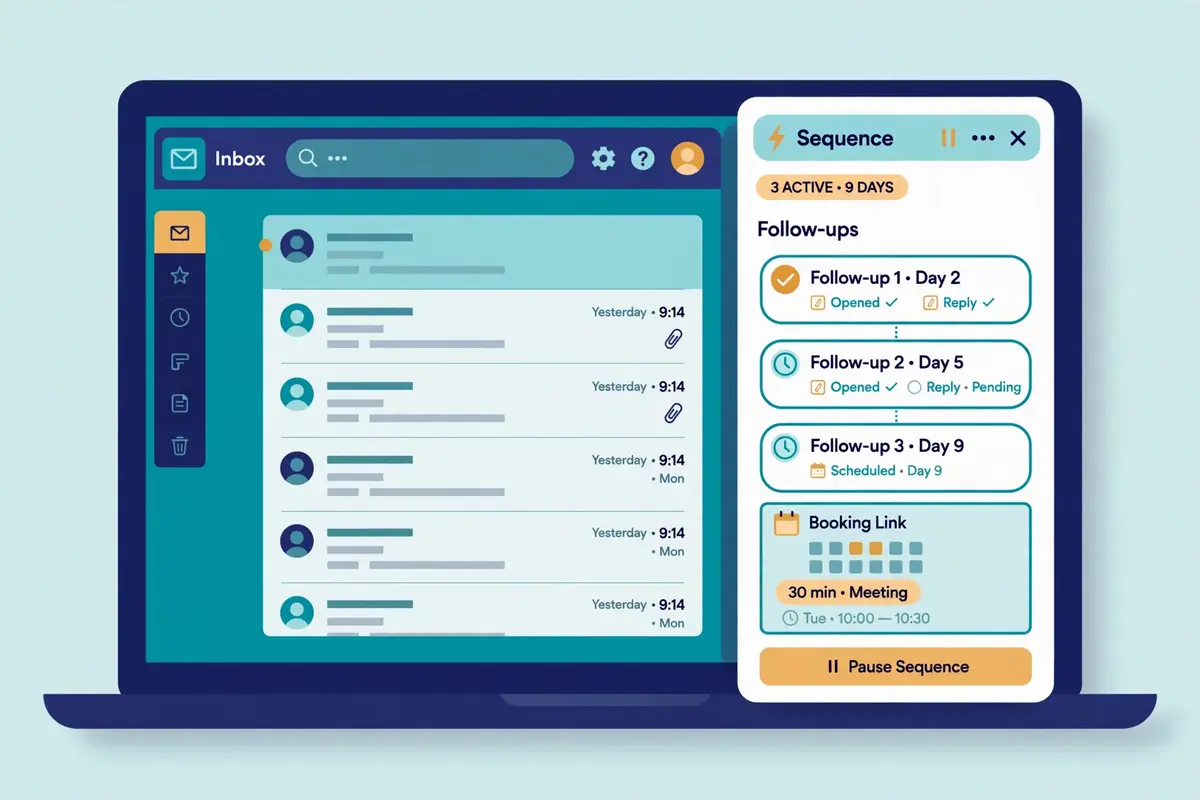
Mixmax is a sales engagement platform that lives inside Gmail. You add a Chrome extension, connect your Gmail account, and from then on your sequences, your meeting scheduling, your email tracking and your CRM sync all happen in the inbox you already open every morning. A sequence is a series of emails, calls, tasks and LinkedIn steps that sends itself until someone replies, and Mixmax runs it from your own Gmail address, not from a bulk server, so your outreach lands where ordinary email from you lands. The homepage promises you can be live before lunch, with the first sequence running inside ten minutes, and it asks for no onboarding call, no IT ticket and no sales call to get started.
Pricing is unusual, and this Mixmax review explains it first because it shapes every buying decision that follows. There is only one plan, and the price depends on how many people you reach out to each month: free for 50 recipients a month, $29 a month per user billed yearly for 100 recipients, and $89 a month billed yearly for 1,500 recipients, with larger volumes priced on the page’s calculator. Every paid tier includes every feature, so you never pay more to unlock sequences, scheduling or CRM sync. A 14-day free trial asks for no card and runs at the full 1,500-recipient level.
What this Mixmax review covers
This Mixmax review works through the product as it stood on 16 November 2026. It covers the recipient-based pricing and the add-ons, the sequences and the AI that builds them, the one-click scheduling and the AI meeting notes, the tracking and the signals, deliverability and Gmail’s sending limits, the CRM sync and the dialler, and how Mixmax compares with GMass, Yesware and Mailshake. By the end you should know whether Mixmax is the right way to run outreach from Gmail, or whether a cheaper mail merge tool, or a full volume sender, would serve you better.
Visit Mixmax → Jump to the comparison tableA note on the prices in this Mixmax review
One thing to know before the numbers. Every price in this Mixmax review was read from mixmax.com/pricing on 16 November 2026. In addition, the page lists its prices in US dollars, per user per month, billed yearly. The page shows two figures plainly, $29 a month for 100 recipients and $89 a month for 1,500 recipients. Also, it sets larger volumes through an on-page calculator. As a result, this review does not state a price for the scale tier as a fact. Independent trackers that read the same page in October and November 2026 list a 500-recipient tier at $49 a month billed yearly, 3,000 recipients at $129, 5,000 at $159 and 15,000 at $229, with monthly billing at $34 for 100 recipients and $105 for 1,500. Furthermore, those figures are quoted in this review as a cross-check, not as prices read off the live page.
If a figure matters to your budget, check the pricing page once more before you buy, since Mixmax has restructured its pricing more than once in the last two years.
Quick Answer
Mixmax is a sales engagement platform that lives inside Gmail, and it is the most complete Gmail-native option in this Mixmax review. You add a Chrome extension, connect Gmail, and Mixmax runs multichannel sequences of emails, calls, tasks and LinkedIn steps from your own address, tracks every open, click and reply, books meetings in one click, takes AI notes on your calls, and logs every send and reply to Salesforce or HubSpot automatically. Pricing starts at $29 a month per user billed yearly for 100 sequence recipients a month, with 1,500 recipients at $89 a month, and every paid tier includes every feature. A 14-day free trial asks for no card, and a free plan covers 50 recipients a month.
The catch is Gmail’s ceiling, not Mixmax’s: Google caps a Workspace account at about 2,000 emails in a rolling 24 hours, and Mixmax caps sequence sends at 1,000 a day by design, spacing large lists over weekdays so Gmail treats the sends as manual. Mixmax offers no warm-up pool and no lead database, so a cold outreach buyer still needs a list and a way to warm a new domain.
Mixmax is best for account executives and founders who already live in Gmail and want their follow-ups, scheduling and CRM logging to happen in one place. It is not the tool for a team that sends thousands of cold emails a week, needs a lead database, or sends mainly from Outlook, where Mixmax is only an add-on rather than the full experience.
Contents
- What Mixmax actually is
- Who Mixmax fits best — and who should skip it
- Pricing in this review: pay by recipients, not by features
- Sequences that run themselves inside Gmail
- Scheduling and AI: the meeting side of Mixmax
- Tracking, signals and reporting
- Deliverability: Gmail’s ceiling, Mixmax’s safeguards
- Integrations: CRM sync, Sidechat and the dialler
- Recipient limits: the maths that decides your bill
- Mixmax against GMass, Yesware and Mailshake
- Strengths and weaknesses, side by side
- Getting started: a sensible first 30 days
- Frequently asked questions
- The verdict in this review
What Mixmax actually is
Mixmax is a sales execution platform that lives inside Gmail, and that single fact explains almost everything about it. You install the Chrome extension, connect your Gmail account, and the inbox you already know gains a sidebar, a sequence builder, a meeting scheduler and a live feed of who opened what. Nothing else changes: the emails you send still come from your own Gmail address, the replies still land in your inbox as ordinary replies, and the calendar you book from is still your Google Calendar. Mixmax adds the machinery behind that familiar window, so a normal inbox becomes a sales platform. This Mixmax review starts there because the inbox is the product, and every strength and every limit that follows comes from living inside Gmail rather than replacing it.
How a sequence works, step by step
A sequence in Mixmax takes three steps, and the homepage says the whole setup can be done before lunch. First you add Mixmax to Chrome from the Web Store, which takes one click. Next you connect your Gmail account, which is the whole integration, since signing in is all it asks. Then you send your first sequence: import a list, pick a template, and go. Mixmax’s own demo timeline puts the first sequence live at nine minutes and forty-seven seconds, with 82 contacts imported at four minutes and ten seconds. That speed is the point, since a seller who can start without an onboarding call or an IT ticket will actually start. Meanwhile, a seller who waits for implementation may never get going.
Eight capabilities this Mixmax review found defining
Eight capabilities define the product, and they are worth naming before the detail. First come the multichannel sequences, with emails, calls, tasks and LinkedIn steps in one flow. Next comes the unlimited email tracking on paid plans, with opens, clicks and replies on every email you send. Then comes the one-click scheduling, with booking pages and times embedded in any email. After that come the AI meeting notes, with briefs, notes and recaps for every call. Then comes the AI in the inbox, with AI Compose, Smart Send, Signals and Inbox Categorization. Next comes Sidechat, which lets teammates collaborate inside Gmail. Then comes the CRM sync, which logs every send and reply automatically. Finally comes the option to run Mixmax from Claude or ChatGPT. As a result, you can drive outreach from the AI tools you already use.
The eight capabilities at a glance
- Multichannel sequences: emails, calls, tasks and LinkedIn steps in one sequence, sent until someone replies.
- Unlimited tracking: opens, clicks and replies on every email, with a live feed of who is interested right now.
- One-click scheduling: booking pages, times in any email, meeting reminders, and booking for teammates.
- AI meeting notes: briefs before the call, notes during it, and recaps after it, for every meeting.
- AI in the inbox: AI Compose, Smart Send, Signals and Inbox Categorization, all inside Gmail.
- Sidechat: collaborate with teammates right inside Gmail, without a separate chat tool.
- CRM sync: every send and reply logged to Salesforce or HubSpot automatically.
- Run from AI assistants: drive outreach from Claude or ChatGPT, with sequences, meetings and emails by request.
Watch: the easiest-to-use sales engagement platform
Video credit: “The Easiest-to-Use Sales Engagement Platform” by Mixmax on YouTube (watch the original on YouTube). This video is the creator’s property, embedded here via YouTube for education. OutreachCompare has no affiliation with the creator and claims no ownership of the video.
One more framing point helps before the details. Mixmax is a sales tool for people who already have relationships to run, not a tool that finds strangers for you. It has no lead database and no email finder, and it does not pretend otherwise. It assumes you bring the contacts, usually from your CRM or a CSV import, and it assumes you send from Gmail. That boundary suits an account executive, a founder, a broker or a consultant who already works in Gmail and wants their follow-ups, meetings and CRM logging to happen in one place. That boundary leaves volume buyers short: anyone who wants one subscription to find leads, warm inboxes and blast cold email at scale will need a second tool for the list and a third for the deliverability.
This Mixmax review keeps that distinction visible throughout, because confusing the two jobs is how buyers end up disappointed.
Who Mixmax fits best — and who should skip it
First, this Mixmax review finds the product fits account executives and founders who already live in Gmail. Think of a seller working a pipeline of warm deals, a founder following up after demos, a broker chasing signatures, or a consultant nudging clients, all from the inbox they open every morning. That person needs follow-ups that send themselves, meetings that book themselves, and CRM logging that happens without thinking about it. Mixmax gives them exactly that, and the price starts at $29 a month per user billed yearly, which is less than most sequencers charge for a single seat. This Mixmax review rates it highly for people of that shape. That is because the inbox is the product and Mixmax is the most complete way to run sales from it.
Small sales teams come next, and they get the most from Mixmax when every rep sends from their own Gmail account and the deals live in Salesforce or HubSpot. The CRM sync logs every send and reply automatically, so the pipeline stays honest without manual data entry. Sidechat lets a manager coach inside Gmail, and delegated sending lets an assistant run outreach from a rep’s address. A team that already pays for Google Workspace. In addition, that sends a few hundred emails a week rather than a few thousand, will find Mixmax a natural fit. Moreover, the per-user recipient pricing makes that easy to buy, since each rep can sit at a different tier.
Buyers who should look elsewhere
Now the other side. High-volume cold email teams should look elsewhere first. Mixmax sends through your Gmail account, Google caps a Workspace account at about 2,000 emails in a rolling 24 hours. Also, Mixmax itself caps sequence sends at 1,000 a day. As a result, a team that needs thousands of cold emails a week will hit the ceiling fast. Mixmax’s own help centre says it plainly. If you routinely send to more than 10,000 people at once for marketing automation, use a marketing automation tool. A volume buyer should weigh Instantly from $47 a month on Growth or Smartlead from $39 a month instead, since both are built for that job. Likewise, a team that needs a lead database should not buy Mixmax expecting one, since none is included, and Apollo from $49 a user a month with a 240M-plus database will serve that need better.
Outlook-first teams should think twice as well. Mixmax is Gmail-first, and its own blog says the Outlook experience is email tracking through an add-on, while Gmail is the full platform. A team that sends half its email from Outlook gets a thinner product from Mixmax, and Mailshake from $29 a month or Klenty from $50 a month billed annually will serve the whole team instead. If your team needs a published database, a done-for-you warm-up pool, or a built-in dialler without an add-on fee, Mixmax will frustrate you, since the database and the warm-up do not exist and the dialler costs $9 a member a month extra. Should any of those descriptions match your team, study the comparison table below before you start the trial.
Why a Gmail seller should still trial Mixmax first
Between those two poles sits the buyer this Mixmax review expects most often. A Gmail seller whose follow-ups still depend on memory, sticky notes and hope. That buyer should run the 14-day trial on a real pipeline before deciding. Pick fifty contacts you already know, build one short sequence, and send it with tracking and one-click scheduling. Measure the replies and the meetings booked, not the send volume. Read the replies yourself, and check whether a stale address caused the bounces before you blame the message. When a sequence underperforms, look at the list before rewriting the wording. Even the sharpest email books no meetings when it lands with the wrong people. Two weeks on your own pipeline settles the question with evidence, which beats any sales page as a test.
Pricing in this Mixmax review: pay by recipients, not by features
Mixmax publishes its prices openly, and this Mixmax review starts with the figures as they stood on 16 November 2026. There is only one plan, and the price depends on how many people you add to sequences each month. Every paid tier includes every feature, from email tracking to scheduling to CRM sync, so the only question is volume. The pricing page puts it in its own FAQ. The only thing that should change your price is how much automated outreach you run. That is a refreshingly simple model, and it removes the usual guessing about which tier hides the feature you actually need. Annual billing saves 15 to 25% depending on the tier, according to the same FAQ, and you can cancel any time.
The pricing table, checked today
| Recipients a month | Annual billing | Monthly billing | What it includes | Best for | Visit Site → |
|---|---|---|---|---|---|
| Free — 50 recipients | $0 / month | $0 / month | Basic tracking, meeting scheduling, limited sequences | Trying Mixmax after the trial | Visit Site → |
| 100 recipients | $29 / user / month | $34 / user / month * | Every feature included: sequences, tracking, scheduling, AI notes, CRM sync | Following up now and then — most popular entry point | Visit Site → |
| 1,500 recipients | $89 / user / month | $105 / user / month * | Every feature included, at full outreach volume | Outreach as a daily job | Visit Site → |
| Outreach at scale | Priced on the page’s calculator | Check the site | Every feature included, for teams running outreach at scale | Growing teams and high-volume reps | Visit Site → |
Last checked: 16 November 2026 on the Mixmax pricing page. Prices are per user per month in US dollars. * Monthly-billed figures are cross-checked against independent trackers that read the same page in October and November 2026, not read off the live page directly. The scale tier’s price is set on the pricing page’s calculator — check the site for an exact figure. Features and pricing can change, so please check the provider’s site before you buy. We do not guess at features, prices or trials.
Which tier is the real starting point for outreach
For most sellers, the $29 tier is the real starting point, and this Mixmax review says so plainly. It covers 100 sequence recipients a month, which is enough for a rep who follows up on warm deals and runs a modest outbound list. The $89 tier covers 1,500 recipients a month, which is the level for a rep whose job is outreach. Furthermore, it is also the level the 14-day trial runs at. As a result, the trial shows you the full volume before you pay. The free plan covers 50 recipients a month with limited features, which is enough to keep tracking and scheduling after the trial ends. Yet, too small to run real outreach on. A seller who is unsure should start the trial, watch how many recipients they actually use in two weeks, and then pick the tier that fits, since upgrades are immediate and prorated.
The free trial, and what happens when it ends
Mixmax offers a 14-day free trial, and the terms are generous in every way that matters. During the trial you get every feature, with no payment details asked, and the trial runs at 1,500 recipients. As a result, you can test the sequences, the scheduling and the AI notes properly. When the trial ends, you either buy the tier that fits your volume or you move to Mixmax Free with limited features, and your workspace and data stay intact. That is a fair deal, since nothing is held hostage. Moreover, it is the reason this Mixmax review recommends the trial without hesitation. A buyer who starts the trial on a Monday has two full working weeks to judge the product on real replies.
Add-ons in this Mixmax review, at $9 a member a month
Four add-ons sit on top of the paid plans, each at $9 a member a month billed annually, or $12 billed monthly. Custom branding and domains puts your logo on enhancements and booking pages and your domain on tracking and calendar links, which the pricing page says helps more email land. Advanced workspace rules run automations for the whole workspace, with round-robin assignment, shared workflows and org-wide settings. The Salesforce Insights package adds ready-made Salesforce dashboards, reports and activity fields that put Mixmax outreach next to revenue. The dialler lets you call and text prospects right from Mixmax, with SMS and local presence options, and per-minute calling rates are billed separately on top of the $9. None of these is needed to run sequences. In addition, this Mixmax review treats them as optional extras rather than hidden costs.
The scale tier and the higher volumes, stated honestly
Above 1,500 recipients a month, Mixmax prices through an on-page calculator. Also, this Mixmax review does not state a figure for that tier as a fact. Independent trackers that read the same page in October and November 2026 list a 500-recipient tier at $49 a month billed yearly, 3,000 recipients at $129, 5,000 at $159 and 15,000 at $229, with monthly billing higher. Furthermore, those figures are quoted here as a guide, not as prices read off the live page. The features table on the pricing page says automated outreach runs up to 15,000 a month on paid plans, which sets the ceiling for a single user. A team that needs more than that should talk to sales, since the page invites larger teams to do exactly that. Moreover, the per-user recipient counts can differ across the team.
Sequences that run themselves inside Gmail
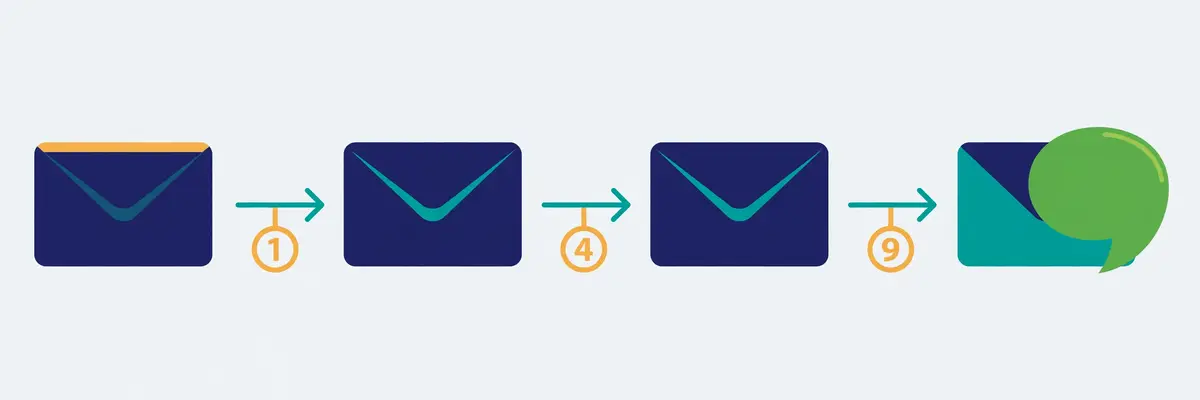
Sequences are the heart of Mixmax, and they are the feature that turns an inbox into a sales platform. A sequence is a series of emails, calls, tasks and LinkedIn steps that sends itself until someone replies. In addition, you build it once, add people, and let it run. Mixmax builds sequences with AI by default: you describe what you are selling. Also, it generates a complete multi-stage sequence, with subject lines, copy and follow-up timing, ready to customise and send. If you would rather write your own, you can switch at any time. Furthermore, the sequence builder lets you add stages, mix email with call and LinkedIn steps, and set the gaps between them. That is generous, and it is the reason sequences are the first thing this Mixmax review recommends a new user to try.
Watch: how to create a sequence
Video credit: “How to Create a Sequence” by Mixmax on YouTube (watch the original on YouTube). This video is the creator’s property, embedded here via YouTube for education. OutreachCompare has no affiliation with the creator and claims no ownership of the video.
AI-built sequences in this Mixmax review, and why they matter
The AI sequence builder deserves a moment, because it is the feature a new seller reaches for first. You type a short description of what you sell. Moreover, Mixmax writes the whole sequence for you, subject lines included, with the follow-up timing already set. That draft is a starting point, not a finished email, and the seller edits it, which is the right balance, since a generic AI email is easy to spot. Mixmax also offers AI Compose inside the inbox, which drafts replies and follow-ups in your voice, and Smart Send, which times each send for when the recipient is most likely to respond. Those are practical uses of AI, and they save the time a seller would otherwise spend staring at a blank compose window.
Multichannel steps in this Mixmax review: email, calls, tasks and LinkedIn
A sequence in Mixmax is not email-only, and that is what separates it from a plain mail merge. You can mix automated emails with call steps, task reminders and LinkedIn steps in the same flow. As a result, a prospect who ignores the first email gets a call task, and a prospect who answers the call gets a different follow-up. The sequence stops the moment someone replies, so nobody gets a follow-up after they have already answered. You can also add recipients from Salesforce, enrol them automatically with rules, and A/B test sequence steps to see which version earns more replies. Those are the controls a working seller needs, and they show years of product decisions behind the button.
Sending a sequence from Gmail in this Mixmax review
Sending a sequence from Gmail is the everyday workflow, and it is deliberately simple. You pick a sequence, add one person or a list. In addition, Mixmax sends the first email from your own Gmail address, in the same thread as the follow-ups that come after it. The follow-ups arrive as threaded replies, so the second email appears in the same conversation as the first, like a normal exchange. A prospect who sees a short bump in a thread they already opened is more likely to answer than a prospect who sees a fresh email with a new subject line. Mixmax also lets you run outreach for a teammate, sent from their address, through delegated sending, which is useful when an assistant books meetings for a busy rep.
Scheduling and AI: the meeting side of Mixmax
Scheduling is the second half of Mixmax, and it is the feature that closes the loop a sequence opens. A sequence earns a reply, and the reply needs a meeting. Also, Mixmax books that meeting without the back-and-forth that usually follows. You embed your availability in the email itself, the prospect picks a time, and the meeting lands on your calendar with a reminder attached. Booking pages work the same way for people who prefer a link. Furthermore, you can book meetings for teammates as well. As a result, an assistant can fill a rep’s calendar without asking for their password. That is a small design choice with a large effect on pipeline, since a meeting booked in one click is a meeting that actually happens.

AI meeting notes in this Mixmax review: briefs, notes and recaps
AI meeting notes are the feature that turns a booked meeting into a prepared one. Before the call, Mixmax writes a brief. As a result, the rep knows who they are talking to and what has already been said. During the call, the AI note taker captures what is discussed. After the call, it writes a recap, and can draft the follow-up email from what was agreed. That chain matters because the follow-up is where most deals stall. The rep means to write it, the day fills up, and the prospect cools off. A recap that arrives minutes after the call, with a draft follow-up attached, removes the stall. Moreover, that is why this Mixmax review rates the meeting notes as highly as the sequences themselves.
Follow-up reminders and Smart Send in this Mixmax review
Follow-up reminders are the quieter half of the scheduling story, and they deserve a mention. You can set a reminder when you send an email. As a result, the follow-up never slips, and Mixmax will surface the thread when the time comes. Smart Send then times the send for when the recipient is most likely to respond, based on when they have opened before. Those two features work together: the reminder stops the seller forgetting, and the timing stops the email landing at 3am. Neither is flashy, and both are the kind of thing a seller notices only when they are missing, which is why this Mixmax review names them explicitly.
Polls, templates and snippets in this Mixmax review
Templates, polls and snippets are the third leg of the inbox, and they make the daily work faster. You save your best emails as templates and reuse them in a click, right in Gmail, with merge fields for the name and the company. Snippets work the same way for a paragraph you send often, such as a pricing answer or a meeting link. Polls and surveys turn an email into an interactive widget. As a result, a prospect can answer a question without leaving the message. Those are small features, and they add up. A seller who reuses a good template, drops in a snippet, and embeds a poll can send a personalised email in under a minute, which is the whole point of a tool that lives in the inbox.
Tracking, signals and reporting in this Mixmax review
Tracking is where Mixmax earns its keep after the send, and it covers the three numbers that matter. Opens, clicks and replies are reported on every email you send, with unlimited tracking on paid plans, and a live feed shows you who opened what and when. That feed is the working surface of the product. You open Mixmax in the morning, see who is interested right now, and nudge while the interest is warm. Mixmax’s own homepage puts it plainly, saying the tool shows you who is interested and who is not, and lets you follow up at the right moment. That is a reassuring frame for a seller, because it turns tracking into action rather than a report nobody reads.
The free plan tracks too, yet with a limit that matters. Free accounts get basic tracking on up to 20 emails a month, according to the Chrome Web Store listing, while paid plans track without a cap. That gap is the real reason to pay, even before sequences. A seller who sends fifty emails a week will burn through the free tracking in two days. Paid tracking also covers attachment tracking, so you know when a prospect opens the proposal you sent, and link tracking, so you know which link they clicked. Those are the signals that tell a seller whether to call now or wait a week. In addition, they are included on every paid tier at no extra cost.
Signals in this Mixmax review: who is hot, and who has gone cold
Signals are Mixmax’s name for the engagement intelligence that sits on top of the tracking. The tool surfaces real-time engagement signals, such as who opened an email twice, who clicked a link, and who has gone quiet after opening. As a result, a seller can follow up at the right moment. Inbox Categorization then sorts the inbox itself. As a result, the threads that need an answer rise to the top and the noise sinks. That combination is powerful, since it answers the question every seller asks in the morning: who should I talk to first? A seller who works from Signals will call the prospect who opened the proposal twice before the prospect who never opened at all. Also, that ordering is worth more than any single feature.
Reporting and analytics in this Mixmax review
Reporting and analytics sit behind the live feed, and they answer the manager’s question rather than the rep’s. Live reporting shows how each sequence performs, stage by stage, with sent, opened and replied counts per step. As a result, a team can see which email earns replies and which one should be rewritten. The Salesforce Insights add-on, at $9 a member a month, adds ready-made dashboards, reports and activity fields that put Mixmax outreach next to revenue, which is the view a sales leader actually needs. A team that reviews those numbers weekly will improve its sequences steadily. Meanwhile, a team that never looks at them will keep sending the same weak second email. Mixmax gives you the numbers; the improvement is still yours to make.
Deliverability in this Mixmax review: Gmail’s ceiling, Mixmax’s safeguards
Deliverability is where Mixmax is most honest, and this Mixmax review says so plainly rather than hiding it. Mixmax sends through your Gmail account, which means Google’s rules apply directly, and no tool that lives in Gmail can promise otherwise. Google caps a Workspace account at about 2,000 emails in a rolling 24 hours, and Mixmax’s own help centre says the same thing, with a clear warning that sending too fast can get an account limited for minutes, hours or a full day. That is a reassuring frame for a buyer, since it manages expectations before the first send instead of after the first spam folder. Furthermore, it is the reason this Mixmax review treats deliverability as a shared responsibility.
What Mixmax does offer is a set of safeguards that keep a seller inside Google’s limits. A spacing algorithm makes Google treat sequence sends as if they were sent manually, sending messages individually and spreading them over time. If you upload a list of more than 500 recipients, Mixmax spaces the sending over multiple weekdays at 500 recipients a day, and if you want to reach more than 2,000 people, the help centre tells you to send in batches a few days apart. An admin can also set a daily send limit for sequences, from 100 to 1,000 emails a day. Moreover, Mixmax reschedules anything over the limit to the next available day. Those are real, useful controls, and they are included on every plan.
What Mixmax does not offer for deliverability
Two gaps belong here plainly. First, Mixmax offers no warm-up pool, and nothing on the official pricing page, homepage or feature list describes one. As a result, this Mixmax review counts warm-up as not offered rather than as a hidden feature. A team that needs warm-up should pair Mixmax with a dedicated tool from our warmup tools roundup, and use Mixmax for the Gmail-native sequences. Second, Mixmax publishes no inbox placement test and no placement percentage. As a result, a buyer who wants a measured placement score will not find one here. What Mixmax does list on its own deliverability blog is the honest toolkit. Daily send limits, deep personalisation, unsubscribe links, an authentication checker and email tracking, which are the controls that keep a sender reputable.
Keeping your domain safe while you use Mixmax
Keeping a domain safe comes down to the same rules whatever tool sends the email, and they are worth stating here. Set up SPF, DKIM and DMARC on the domain before the first send, following our sending domain guide, which explains each record in plain language. Warm a new domain slowly, hold the daily volume steady instead of spiky, and watch replies and bounces every single day. Verify the list before it goes into a sequence, since even a good list has a few bad addresses, and a bounce rate above a few percent will hurt the domain. Remove every unsubscriber at once, since a prospect who asked to be left alone and receives another email is the quickest route to a spam complaint. Mixmax gives you the limits and the tracking; the reputation is still yours to protect.
Our email deliverability tools roundup covers the tools that do the warming job properly.
Integrations in this Mixmax review: CRM sync, Sidechat and the dialler
Integrations are where Mixmax earns its keep inside a real stack, and the pricing page lists the headline names plainly. Salesforce, HubSpot, Slack, Zapier, LinkedIn, Dialpad and the Mixmax API are all listed as integrations. In addition, the CRM sync is the one that matters most. Every send and reply is logged to your CRM automatically, so the pipeline stays honest without manual data entry. That is a real saving, since a rep who logs every email by hand will stop doing it by Thursday, and a pipeline that depends on manual logging is a pipeline that lies. A team that already runs Salesforce and wants the activity synced by default will find Mixmax a natural fit. Also, the Salesforce Insights add-on puts the outreach next to revenue in the same dashboard.

CRM sync in this Mixmax review, and how it stays honest
The CRM sync works in both directions, and the details are worth knowing. You can add recipients to a sequence straight from Salesforce, and every send, open, click and reply flows back to the lead or contact record automatically. That means a manager can open a deal in Salesforce and see the whole conversation, without asking the rep what happened. The sync also respects the opt-out field. As a result, a contact who asked not to be emailed is skipped rather than mailed again. That is a small control with a large effect on compliance. Furthermore, it is the reason this Mixmax review rates the CRM sync as highly as the sequences themselves. A team that runs HubSpot gets the same automatic logging, with the same visibility into every touch.
Sidechat and delegated sending in this Mixmax review
Sidechat is the feature that turns a lonely inbox into a team workspace. It lets teammates collaborate right inside Gmail. As a result, a manager can comment on a thread, a colleague can share a template, and a new rep can learn from a senior’s best emails without leaving the inbox. Delegated sending works alongside it: an assistant can run outreach for a teammate, sent from that teammate’s address. As a result, the emails still come from the rep while the work happens elsewhere. Those are team features, and they are the reason Mixmax suits a small sales team better than a solo sender who never needs them. A solo seller will not miss them. Yet, a team that coaches together will feel their absence in any tool that lacks them.
Running Mixmax from Claude or ChatGPT in this Mixmax review
The newest integration is the most interesting one, and it is listed on the pricing page itself. Mixmax connects to Claude and ChatGPT, so you can drive your outreach from the AI tools you already use. You can ask for a four-step follow-up for the contacts you imported, ask how the week’s outreach is doing, or tell it to nudge everyone who opened twice but has not replied, and Mixmax runs it. That is a genuine change in how a seller works, since the inbox stops being a place you visit and becomes a tool you talk to. This Mixmax review has not tested the AI assistant hands-on. As a result, the claim is reported from the official site rather than measured. Yet, the direction is clear: the sellers who adopt it will spend less time clicking and more time talking to prospects.
The dialler in this Mixmax review, and what it costs
The dialler is the one feature that costs extra, and the price is plain on the pricing page. At $9 a member a month billed annually, or $12 billed monthly, plus per-minute calling rates billed separately, it lets you call and text prospects right from Mixmax, with SMS and local presence options. Local presence matters because a call from a local number is more likely to be answered than a call from an unknown area code. That is a fair price for a dialler, and it is cheaper than buying a separate calling tool. Yet, a team that dials all day should compare it with Mailshake, whose Sales Engagement plan includes a power dialler, or with Klenty, whose Growth plan includes 200 calling minutes. A team that calls rarely should skip the add-on and buy it only when the phone becomes part of the motion.
Recipient limits in this Mixmax review: the maths that decides your bill
The recipient limits are the most misunderstood part of Mixmax, and this Mixmax review states them plainly. A recipient is each person you add to an automated email sequence, and every follow-up in that sequence is included. As a result, a five-step sequence to one person counts once. Emails you send outside a sequence do not count at all. The same contact in two sequences counts twice, and your count resets at the start of each calendar month. Unused recipients do not roll over, and recipients cannot be pooled across the team, since each person buys their own count. That definition is the whole pricing model, and understanding it is the difference between a bill you expected and a bill you did not.
Three consequences follow from that definition, and each one suits a different seller. First, a rep who follows up on warm deals will rarely use more than 100 recipients a month, since the pipeline is small and the conversations are long. Second, a rep who runs outbound every day will need the 1,500 tier, since a list of fifty new prospects a day uses it up in a month. Third, a team can mix tiers, since each person has their own recipient count. As a result, the rep who follows up on a few deals and the rep who runs outbound full-time can sit at different tiers. That flexibility is the best part of the model. Moreover, it is the reason this Mixmax review recommends counting your real recipients before you buy, rather than guessing at a tier.
What the limits mean for a real campaign
In practice, the limits mean this: a free Gmail account suits a list of a few dozen a week, a Workspace account suits a few hundred a week, and anything larger needs a volume tool rather than a bigger Mixmax tier. Mixmax says its sequences can run up to 15,000 recipients a month on paid plans. In addition, the help centre adds that lists over 500 recipients are spaced over weekdays at 500 a day. As a result, a 1,500-recipient campaign takes at least three working days to send. That is an honest boundary, and it tells you who Mixmax is for. A seller who needs a thousand emails a day from one seat should buy a volume tool such as Instantly from $47 a month on Growth or Smartlead from $39 a month, and use Mixmax for the Gmail-native sequences where the personal touch matters most.
A seller who needs a few hundred a week from Gmail will never feel the ceiling at all.
Mixmax against GMass, Yesware and Mailshake in this Mixmax review
Mixmax does not compete with every sequencer, and this Mixmax review compares it with the three rivals that matter most. GMass is the other Gmail-native tool, and the best way to send a mail merge from Google Sheets. Yesware is the inbox sales tool for teams that split between Gmail and Outlook, with a free plan and a Salesforce tier. Mailshake is the sequencer with a power dialler and warm-up built in, from $29 a month. Those three cover the real alternatives: a cheaper merge, the Outlook-friendly option, and the deliverability-first sequencer. A buyer who compares Mixmax with a $39-a-month volume sender is comparing the wrong thing, since Mixmax is not a volume sender and never claimed to be.
The comparison table, checked today
| Tool | Starting price | Free plan / trial | Sequences | Works in | Best for | Visit Site → |
|---|---|---|---|---|---|---|
| Mixmax | Free $0; from $29 / user / month, billed yearly | Free plan, 50 recipients a month; 14-day trial, no card | Yes, multichannel, up to 15,000 a month | Gmail first, Outlook add-on | Gmail sellers who want sequences, scheduling and CRM sync | Visit Site → |
| GMass | Standard $29.95 / month | No free plan; 7-day trial, 50 emails a day | Yes, unlimited stages, Premium $39.95 | Gmail only | Gmail users who want mail merge and sequences | Visit Site → |
| Yesware | Free $0; Pro $19 / month, $15 annual | Free plan, 10 campaign recipients a month | Yes, unlimited campaigns on Premium $45 | Gmail and Outlook | Inbox sales with a free plan and Salesforce | Visit Site → |
| Mailshake | From $29 / month | No free trial advertised | Yes, plus power dialler on Sales Engagement $99 | Gmail, Outlook and more | Outreach plus calling, with warm-up built in | Visit Site → |
Last checked: 16 November 2026. Mixmax and Yesware figures are from each provider’s official pricing page, linked in the table. GMass and Mailshake figures are from our published reviews, verified on their official pricing pages on 16 and 15 November 2026. Features and pricing can change, so please check the provider’s site before you buy. We do not guess at features, prices or trials.
The feature matrix, checked today
| Feature | Mixmax | GMass | Yesware | Mailshake |
|---|---|---|---|---|
| Works inside Gmail | ✓ Chrome extension | ✓ Chrome extension | ✓ Gmail sidebar | ✓ |
| Works in Outlook | ✓ add-on, tracking | — Gmail only | ✓ | ✓ |
| Google Sheets mail merge | — not confirmed | ✓ live Sheet link | — not confirmed | — not confirmed |
| Multichannel sequences | ✓ email, calls, tasks, LinkedIn | — email only | ✓ email, calls, LinkedIn | ✓ email, calls, LinkedIn |
| Open, click and reply tracking | ✓ unlimited on paid | ✓ | ✓ | ✓ |
| One-click scheduling | ✓ | — not confirmed | ✓ meeting scheduler | — not confirmed |
| AI meeting notes | ✓ | — not confirmed | — not confirmed | — not confirmed |
| AI sequence building | ✓ AI Compose, Smart Send | ✓ ChatGPT helper | — not confirmed | ✓ AI email writing |
| Warm-up | — none offered | — none offered | — not confirmed | ✓ unlimited warm-up |
| Dialler | ✓ add-on $9 / member / month | — none | — call touches only | ✓ power dialler |
| CRM sync | ✓ Salesforce, HubSpot | — via Zapier / API | ✓ Salesforce on Enterprise | ✓ HubSpot, Pipedrive, Salesforce |
| Free plan | ✓ 50 recipients a month | — 7-day trial only | ✓ 10 campaign recipients a month | — no trial advertised |
Last checked: 16 November 2026. A tick means the feature is stated on the provider’s official site. A dash means it is not confirmed or is confirmed absent. Features and pricing can change, so please check the provider’s site before you buy. We do not guess at features, prices or trials.
GMass in this Mixmax review: the better mail merge
Most buyers will actually compare GMass with Mixmax, and the comparison is straightforward. GMass is a Chrome extension that turns Gmail into a mail merge tool, with a live Google Sheet link, personalised attachments, free email verification and a Spam Solver, from $29.95 a month. Mixmax is a Chrome extension that turns Gmail into a sales platform, with multichannel sequences, one-click scheduling, AI meeting notes and CRM sync, from $29 a month per user billed yearly. GMass is the better merge tool, with the Sheet link and the attachments. Meanwhile, Mixmax is the better sales tool, with the scheduling, the AI notes and the CRM sync. A Gmail sender who lives in Sheets should buy GMass. A Gmail seller who lives in meetings should buy Mixmax.
Yesware in this Mixmax review: the cheaper inbox tool
Yesware is the rival for a seller who wants inbox sales at the lowest price. It works in Gmail and Outlook, with email tracking, templates, campaigns, a meeting scheduler and LinkedIn touches, and its free plan covers 10 campaign recipients a month. Pro is $19 a month on monthly billing, or $15 a month when billed annually. Meanwhile, Premium is $45 a month, or $35 billed annually, with unlimited campaigns, shared templates and team reporting. Enterprise is $85 a month, or $65 when billed annually, and it adds the Salesforce sidebar with bi-directional sync. Mixmax is the fuller platform, with the AI meeting notes, the multichannel sequences and the Claude and ChatGPT control. Meanwhile, Yesware is the cheaper entry, with the free plan and the lower Pro price. A seller who sends from Outlook should weigh Yesware first.
A seller who sends only from Gmail should compare the two on sequences and AI, and Mixmax will usually win that test.
Mailshake in this Mixmax review: the deliverability-first sequencer
Mailshake is the rival for a seller who wants warm-up and a dialler without paying for add-ons. It runs email outreach with a power dialler on Sales Engagement at $99 a month, or $85 billed annually. Also, it includes unlimited warm-up and unlimited verification on every plan, which Mixmax does not offer at all. Mailshake starts at $29 a month, the same entry price as Mixmax. Yet, it advertises no free trial, while Mixmax offers 14 days with no card. Mixmax is the better Gmail-native tool, with the inbox sidebar, the scheduling and the AI meeting notes. Meanwhile, Mailshake is the better cold outreach tool, with the warm-up, the rotation and the dialler built in. A seller who runs cold email at volume should buy Mailshake. A seller who runs warm follow-ups from Gmail should buy Mixmax.
Strengths and weaknesses in this Mixmax review, side by side
Every tool in this Mixmax review’s comparison set has a clear trade, and Mixmax is no exception. Mixmax trades on one clear bargain, and the two lists below draw the decision in sharp lines. It is the best way to run sales from Gmail, and a poor way to buy high-volume cold email infrastructure. That is not a contradiction, and it is the reason this Mixmax review gives a Best-for label rather than a score. The lists below are drawn from the official site and the pricing page, checked on 16 November 2026, with gaps named openly wherever a claim could not be verified.
Five strengths to weigh
- First strength: the most complete Gmail-native sales platform, with multichannel sequences, scheduling, AI meeting notes and CRM sync inside one inbox.
- Second strength: one plan where the price depends only on recipients, so every paid tier includes every feature and no capability hides behind a higher tier.
- Third strength: a 14-day trial with every feature working and no card asked, running at the full 1,500-recipient level, plus a free plan for 50 recipients a month.
- Fourth strength: honest safeguards for deliverability, with a spacing algorithm, a configurable daily send limit and clear help-centre guidance on Gmail’s limits.
- Fifth strength: the easiest setup in this comparison set, with a three-step start, no onboarding call, and security audited by Google, GDPR and SOC 2 on every plan including free.
Five weaknesses to weigh
- First weakness: Gmail’s ceiling, about 2,000 emails a day on Workspace and 1,000 a day by Mixmax’s own cap, with no warm-up pool and no way to raise the limit from inside Mixmax.
- Second weakness: no lead database, no email finder and no verification tool, so a buyer who needs new contacts must pay for a second tool.
- Third weakness: the dialler costs $9 a member a month extra, plus per-minute usage, so a team that calls all day pays more than the headline price.
- Fourth weakness: Outlook is only an add-on with tracking, not the full platform, so a mixed-inbox team cannot use Mixmax equally for everyone.
- Fifth weakness: the scale tier’s price is set on a calculator rather than published plainly, so a high-volume buyer cannot budget without talking to the page first.
One more drawback is easy to miss, so it belongs here too. Recipients count per sequence, not per email, which means the same contact in two sequences counts twice. A seller who enrols one list in three sequences will burn three times the recipients they expected. Furthermore, the fix is to plan the enrolment before the send, not after it. That is not a hidden fee, since the pricing page explains it plainly. Yet, it is the mistake this Mixmax review sees most often in third-party comparisons. In practice, therefore, the trade is clear: you buy the best Gmail-native sales platform in this comparison set. Moreover, you pay for the recipients you actually use. A buyer who wants the cheapest merge should weigh GMass first. Meanwhile, a buyer who wants Gmail sequences with the least friction should start the Mixmax trial.
Getting started in this Mixmax review: a sensible first 30 days
The first week, in this Mixmax review’s getting-started plan, is for the trial and the first sequence. To begin with, install the extension, connect your Gmail account, and import a list of fifty contacts you already know. Give the list clean names and companies, and add one custom line about each person, since that line is what makes the email feel written for them. Build one short sequence with AI, edit the draft until it sounds like you, and send it with tracking and one-click scheduling. A trial on your own pipeline settles the workflow question with evidence, while a demo on slides settles nothing.
Weeks two to three: a measured first campaign
Weeks two to three run a small, measured campaign. Pick a real list of a few hundred contacts, verify the addresses with a tool from our email verification tools roundup, and run the sequence with the daily send limit set low. That is where the sequences, the tracking and the scheduling either prove themselves or fall flat. Measure the opens, the replies and the meetings booked, not the send volume. Read the replies yourself, bounces included, and check whether an old address caused the bounces before you fault the email itself. When a sequence underperforms, look at the list before rewriting the wording. Even the sharpest email books no meetings when it lands with the wrong people.
Week four: making the call
Week four brings the decision, and the test is a simple one. Give the working sequence a little more volume, and keep watching the one that lags. More replies than expected? Compare the cost per meeting with the $29 tier and the time saved on CRM logging. If deliverability is the bottleneck, lower the daily send limit before the next send. If volume is the bottleneck, count how many recipients you actually used in the trial, and pick the tier that fits, since each rep can sit at a different tier. Divide the monthly cost by the meetings booked to find your cost per meeting, and set it against the GMass or Yesware price for the same list. In short, when Mixmax books meetings cheaper than the old way of working, keep it.
When it does not, tighten the list, sharpen the targeting, and run one more test before the trial ends.
Frequently asked questions
What is Mixmax?
In short, Mixmax is a sales engagement platform that lives inside Gmail. In addition, this Mixmax review answers the most common questions about it. You add a Chrome extension, connect Gmail. Also, Mixmax runs multichannel sequences of emails, calls, tasks and LinkedIn steps from your own address, tracks every open, click and reply, books meetings in one click, takes AI notes on your calls, and logs every send and reply to Salesforce or HubSpot automatically. It works best in Gmail and Google Workspace, with an Outlook add-on for tracking.
How much does Mixmax cost?
Mixmax costs $29 a month per user billed yearly for 100 sequence recipients a month, and $89 a month billed yearly for 1,500 recipients. Furthermore, this Mixmax review checked those figures on mixmax.com/pricing on 16 November 2026. A free plan covers 50 recipients a month with limited features. Larger volumes are priced on the page’s calculator, and independent trackers list 500 recipients at $49 a month billed yearly, 3,000 at $129, 5,000 at $159 and 15,000 at $229, quoted here as a cross-check rather than as prices read off the live page. Add-ons cost $9 a member a month billed annually, or $12 billed monthly.
Is there a free trial of Mixmax?
Yes, Mixmax offers a 14-day free trial, and this Mixmax review says so plainly rather than hiding it. During the trial you get every feature, with no payment details asked. Moreover, the trial runs at 1,500 recipients a month. When the trial ends, you either buy the tier that fits your volume or you move to Mixmax Free with limited features, and your workspace and data stay intact. The trial asks for no credit card, according to the pricing page itself.
How many emails can Mixmax send a day?
Mixmax itself caps sequence sends at 1,000 a day, and this Mixmax review says so plainly. The ceiling behind that cap comes from Google. About 2,000 emails in a rolling 24 hours on a Google Workspace account. Mixmax spaces lists of more than 500 recipients over weekdays at 500 a day, and an admin can set a daily send limit from 100 to 1,000, with anything over the limit rescheduled to the next available day. Mixmax also counts recipients, not emails: a five-step sequence to one person counts once. Meanwhile, the same contact in two sequences counts twice.
Does Mixmax do warm-up?
No warm-up is offered, and this Mixmax review does not claim one. Nothing on the official pricing page, homepage or feature list describes a warm-up pool. As a result, warm-up is counted as not offered rather than as a hidden feature. What Mixmax does offer for deliverability is a spacing algorithm, a configurable daily send limit, deep personalisation, unsubscribe links, an authentication checker and email tracking. A team that needs warm-up should pair Mixmax with a dedicated tool from our warmup tools roundup, and use Mixmax for the Gmail-native sequences.
Who should not use Mixmax?
High-volume cold email teams should not use it. That is because Mixmax sends through Gmail, Google caps a Workspace account at about 2,000 emails a day. In addition, Mixmax itself caps sequence sends at 1,000 a day. Outlook-first teams should steer clear too, since Mixmax is Gmail-first and Outlook gets only an add-on with tracking. A team that needs a lead database, a built-in dialler without an add-on fee, or a published inbox placement score should weigh Apollo, which starts at $49 a user a month with a 240M-plus database, or Mailshake, which includes warm-up and a dialler, before deciding.
The verdict in this Mixmax review
Verdict: best for Gmail sellers who want sequences, scheduling and CRM sync in one inbox
Mixmax is the most complete way to run sales from Gmail, and that is the whole case for it. It earns that title by putting multichannel sequences, unlimited tracking, one-click scheduling, AI meeting notes, Sidechat and automatic CRM sync inside the inbox you already use. A seller can import a list, build a sequence with AI, and reach a hundred people who each feel written to alone, then book the meeting and log the deal without leaving Gmail.
Why Mixmax wins for Gmail sellers
One plan, published prices and a 14-day trial with every feature working are the numbers behind that claim, and the $29 tier for 100 recipients a month is the one this Mixmax review recommends for most sellers. The $89 tier for 1,500 recipients is the one for a rep whose job is outreach, and the free plan for 50 recipients is the one for a seller who wants to keep tracking after the trial ends. That is why this Mixmax review recommends Mixmax to anyone who already lives in Gmail and wants their follow-ups, meetings and CRM logging to happen in one place.
What to watch before you buy
Go in with open eyes. Google caps a Workspace account at about 2,000 emails a day and Mixmax caps sequence sends at 1,000, and Mixmax offers no warm-up, no lead database and no Outlook experience beyond an add-on. The dialler costs $9 a member a month extra, plus per-minute usage, and the scale tier’s price is set on a calculator rather than published plainly. The monthly-billed figures in this review are cross-checked against independent trackers, so confirm them on the pricing page before you budget for them.
Start the 14-day trial on a real pipeline of fifty contacts, run one sequence with tracking and one-click scheduling, and judge it on meetings booked, not on send volume. Mixmax can then carry the whole Gmail-native motion while a volume tool handles the scale. Skip the trial and you will buy a tier that cannot cover the recipients you need, not a pipeline. We have not tested Mixmax hands-on, so there is no numeric score here — only this verdict, and the evidence above to check it against.
Visit Mixmax →Keep reading
More Gmail and cold email reviews
- GMass Review 2026 — Gmail mail merge from Google Sheets, from $29.95 a month.
- Mailshake Review 2026 — email outreach plus a power dialler, from $29 a month.
- Instantly Review 2026 — the volume-built sender to pair with Mixmax for cold email, Growth $47 a month.
- Smartlead Review 2026 — agency deliverability infrastructure from $39 a month.
- QuickMail Review 2026 — a deliverability-focused sequencer from $49 a month.
- Woodpecker Review 2026 — a deliverability-first sequencer from $39 a month.
- ReachInbox Review 2026 — a newer sequencer with AI personalisation from $30 a month.
- Emelia Review 2026 — ultra-personalised email prospecting with AI from $37 a month.
- Klenty Review 2026 — sales engagement with a parallel dialler, from $50 a month billed annually.
- Lemlist Review 2026 — the five-channel suite with a 650M-plus database, from $69 a month.
- Apollo Review 2026 — the 240M-plus database with sequences, from $49 a user a month.
Guides and roundups
- Best Cold Email Software 2026 — the full roundup with the leading tools beside each other.
- Email Deliverability Tools 2026 — placement and reputation tools to pair with any sender.
- Best Warmup Tools 2026 — warming an inbox properly before scaling up.
- How to Set Up a Sending Domain — SPF, DKIM, DMARC and warmup, in plain language.
- Is Cold Email Legal? The Simple Checklist — the consent rules for finding and emailing, in plain language.
- Cold Email for Beginners: The Complete 2026 Guide — a beginner’s path through lists, writing and follow-ups.
- Best cold email tools — all the best-of roundups gathered on one page.
Leave a Reply