
A short, specific email beats a clever one every time.
Most cold emails fail before the second sentence. A stranger opens your message, scans it for a reason to care, and decides in about three seconds whether to reply, delete, or report it. The emails that win that test are not the longest, the cleverest, or the most automated. They are the shortest emails that prove the sender knows who they are writing to, names one problem that matters, and asks for one small, easy next step. This guide shows you exactly how to write one, line by line, with subject-line formulas, three templates you can steal, and an honest look at what AI writing tools can and cannot do for you.
Visit Lemlist →See Reply.io →Explore Instantly →Benchmarks and prices in this guide were checked 16 November 2026. Features and pricing can change, so please check the provider’s site before you buy.
Quick Answer
Keep your first cold email between 60 and 120 words, lead with a subject line of one to five words, and open with a first line that proves you researched this exact person. Name one problem they actually have, explain your fix in a single sentence, and close with one low-effort question, such as asking whether a short call next week would help. Short, specific and human wins far more replies than long, clever or heavily automated.
Measure replies, not opens. The average cold email reply rate is around 3.4%, a good positive reply rate is 1 to 3%, and open rates near 21% are unreliable because Apple Mail Privacy Protection inflates them. Send 25 to 30 emails per mailbox a day, follow up three or four times, and keep every follow-up shorter than the first email.
Contents
- The anatomy of a cold email that gets a reply
- Subject lines: short, specific, honest
- Your first line does the real persuading
- Personalisation that earns a reply
- Length and structure: 60 to 120 words
- Tone and voice: sound like a person
- What not to do
- Three templates you can steal
- AI writing tools: where they help
- Measuring what matters
- Which writing approach fits you
- Frequently asked questions
- Our verdict
How to write cold emails: start with the reader, not your product
Firstly, every good cold email starts in the reader’s world, not yours. A prospect does not wake up wondering about your product, your features, or your pricing page. They wake up with a diary full of meetings, a target to hit, and a problem that has been nagging them for weeks. Your email earns a reply when it shows, in the first two lines, that you understand that problem and that you can make it smaller. The rest of this guide breaks that job into parts you can practise one at a time: the subject line, the first line, the body, the call to action, and the follow-up.
Secondly, the reassuring news is that writing cold emails is a learnable skill, not a talent you either have or you do not. Cold email is normal, widely used business practice, and the senders who get the best replies are usually the ones who write the simplest emails. You do not need to be funny, and you do not need a huge vocabulary. You need a clear offer, a small and well-chosen list of people who genuinely need it, and the discipline to keep each email short. If you have those three things, the templates and formulas in this guide will do the rest.
How this guide is organised
Finally, this guide follows the order your reader experiences your email. It starts with the anatomy, so you can see every part and what each part must do. Then it works through subject lines, first lines, personalisation, length, tone and the mistakes to avoid. After that come three ready-to-adapt templates, an honest review of the AI writing tools that promise to do this work for you, and the numbers that tell you whether your writing is actually working. Read it in order the first time, then keep the templates and the decision framework beside you when you sit down to write.
The anatomy of a cold email that gets a reply
Secondly, a reply-getting cold email has six parts, and each part has exactly one job. The subject line earns the open. The preview text, which is really just your first line showing beside the subject, earns the read. The first line proves you wrote this email for this person. The body names one problem and one fix. The call to action asks for one small next step. The signature tells the reader who you are and why you are credible. When any part tries to do two jobs, the email gets longer, vaguer, and easier to ignore.
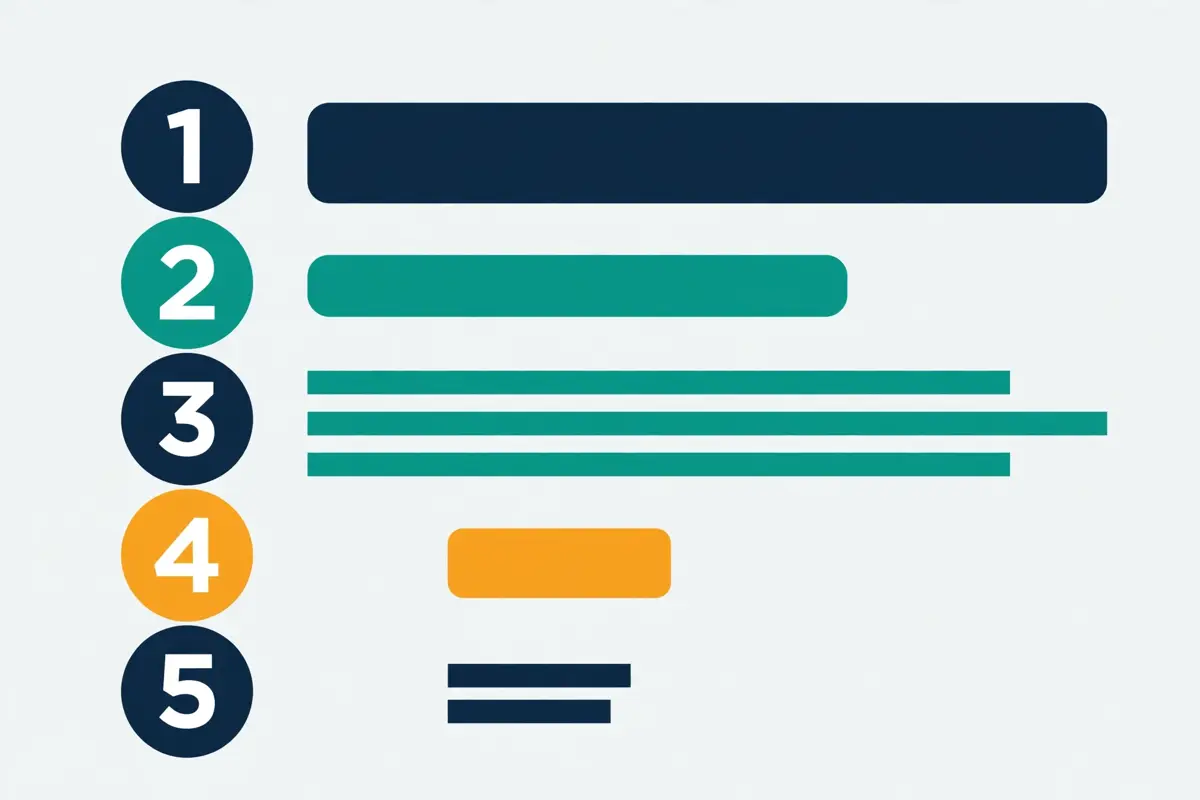
How to write cold emails: the six parts at a glance
| Part | Its one job | How long | What good looks like |
|---|---|---|---|
| Subject line | Earn the open | 1 to 5 words | Specific to this reader, honest, no shouting |
| First line | Prove you researched them | 1 sentence | A real detail from their company or role |
| Body | Name one problem and one fix | 2 to 3 sentences | Their pain, your result, no feature list |
| Call to action | Ask for one small step | 1 sentence | A question, not a calendar link |
| PS | Add one human detail | 1 short line | Optional: a proof point or a genuine compliment |
| Signature | Show who you are | 2 to 3 lines | Name, role, company, one link at most |
Last checked: 16 November 2026. The anatomy above follows the structure taught in our Cold Email for Beginners guide and the sending limits in our Deliverability Guide. Features and pricing can change, so please check the provider’s site before you buy.
How to write cold emails: why each part must stay small
Moreover, the table hides the most useful lesson in this whole guide: the parts that most beginners over-invest in are the parts that matter least. A long, polished body never rescues a vague subject line, because nobody reads the body of an email they never open. A clever PS never rescues a pushy call to action, because the reader has already decided you are selling too hard. Put your effort where the reader’s decision actually happens: the subject line and the first line. If those two work, a plain body will carry the reply.
Thirdly, think of the anatomy as a checklist you run before every send. Check the subject line out loud and ask whether it could have been sent to a thousand strangers. Look at the first line and ask whether it proves you know this person. Count the problems in the body: if there are two, cut one. Ask whether a busy person could answer the call to action with one word. If every answer is yes, send it. If any answer is no, fix that part and leave the rest alone.
Finally, the PS deserves a word of its own, because beginners either skip it or abuse it. A good PS adds one human detail that did not fit the body: a result a similar company got, a genuine observation about their work, or a short note that you are happy to send a one-page summary instead of a call. A bad PS repeats the pitch, adds a second ask, or smuggles in a link the body already carried. Use the PS to sound like a person. Never use it to squeeze in a second sales message.
Subject lines: short, specific, honest
Secondly, the subject line is the hardest working sentence in your whole campaign, and it is also the shortest. It has one purpose: to make one specific person curious enough to open. Explaining your product, proving your value, or closing the sale is not its job. What it must do is look like it came from a person who knows something about the reader, and do that in one to five words. Lowercase or sentence case reads like a real person wrote it. All caps reads like a promotion, and a promotion is what spam filters and busy humans both delete first.
How to write cold emails: seven subject-line formulas that work
| Formula | Example | Best when |
|---|---|---|
| Question | Quick question, Sarah? | You want a reply, not a click |
| Their company + yours | Acme + Northwind | A partnership angle fits |
| Show you know them | Your Leeds expansion | You found a real, recent detail |
| Problem they own | Replies slipping? | The pain is obvious and shared |
| Mutual connection | Met via James at Fintech Live | The connection is real and checkable |
| Short and plain | Introduction | Your name or company already carries weight |
| Helpful, not salesy | Idea for your onboarding emails | You can genuinely help before selling |
Last checked: 16 November 2026. These formulas come from the patterns that recur across the best-performing cold emails discussed in the two videos in this guide and in our Cold Email for Beginners guide. Features and pricing can change, so please check the provider’s site before you buy.
How to write cold emails: what the open rate will not tell you
Moreover, here is the honest context most guides skip: the average open rate for cold email sits near 21%, yet that number is unreliable, because Apple Mail Privacy Protection opens many emails automatically and inflates the count. A subject line that lifts your open rate from 21% to 30% has not necessarily earned you a single extra reply. It may simply have earned more automatic opens. Judge your subject lines by replies and positive replies, not by opens, and test them the same way every time: change one thing, send to a similar group, and compare the reply rate after a week.
Video: How to write cold emails that get responses (we fix 4 sequences LIVE) by Scrap-io on YouTube. This video is the creator’s property, embedded via YouTube for education. OutreachCompare is not affiliated with Scrap-io and does not claim ownership of this video.
How to write cold emails: subject lines to avoid
In contrast, the subject lines to avoid all share one trait: they promise something the email cannot deliver. “Re: our call” when there was no call is misleading, and a reader who feels tricked into opening will not reply. “FREE!!!”, “Act now” and “Guaranteed results” read like spam, trigger filters, and erode trust before the first line. A subject line that names a competitor, a fake invoice, or a legal threat is worse still: it may win an open and lose a reputation. Write the subject line you would be happy to defend if the reader quoted it back to you in a meeting.
Finally, test subject lines in small batches and keep a simple record. For example, write three versions for the same campaign, send each to a similar slice of your list, and note the reply rate for each after seven days. Keep the winner, retire the loser, and write one new challenger for the next batch. Over a month, that habit teaches you more about your own audience than any list of formulas ever will, because your buyers’ language is the only language that matters.
Your first line does the real persuading
Secondly, the first line is where most cold emails are won or lost, because it is the first proof that a human wrote this message for a human. Most inboxes show the subject line and the first line together as preview text, so the reader judges both at once. A first line that starts with “I hope you are well” or “My name is… and I work at…” wastes that moment on the sender. A first line that names something real about the reader spends it on the reader, and that is where it belongs.
How to write cold emails: first lines that open doors
Firstly, the strongest first lines come from ten minutes of real research. A recent hire, a new office, a product launch, a podcast appearance, a funding round, or a problem their industry is talking about this month all work, because each one proves you looked before you wrote. “Saw you opened a second Leeds office in October — congratulations, that is a fast hire.” earns a read. “I noticed you are hiring three account executives, which usually means pipeline is the bottleneck.” earns a read too, because it connects the detail to a problem. The detail is the door. The problem is what walks through it.
Thirdly, a weak first line is easy to spot, and you should cut it the moment you see it in your own draft. Any line that could be sent to a thousand strangers without changing a word is a weak first line. “I came across your company and was impressed” says nothing, because it could describe anyone. “We help companies like yours grow revenue” says nothing either, because every seller says it. If your first line still works after you swap in a different company name, delete it and start again with a real detail.
How to write cold emails: connect the detail to their problem
Moreover, the detail alone is not enough. A first line that only flatters the reader reads like a compliment with a sales pitch hiding behind it, and experienced buyers spot that in seconds. Connect the detail to a problem in the same breath: the hire means a bottleneck, the expansion means a process that will break, the launch means a launch list that needs filling. That connection is what turns research into relevance, and relevance is what turns an open into a reply.
Finally, keep the first line to one sentence and let the second sentence do the next job. A first line that runs to three clauses is a paragraph pretending to be a hook, and the reader will treat it like one. One sentence, one detail, one link to a problem. Then stop, take a breath, and let the body do its work.
Personalisation that earns a reply
Secondly, personalisation is the most misunderstood word in cold email. Real personalisation means the email could only have been written for this person, because it uses a detail that is true about them and connects it to a problem they actually have. Fake personalisation means a first name, a company name, or a city dropped into a template that was written for everyone. Readers can tell the difference instantly, and fake personalisation is worse than none at all, because it promises attention it never gave.
How to write cold emails: research signals worth using
Firstly, the best research signals are public, recent, and specific. A job post tells you what a team is struggling to hire for. A new office or a funding round tells you what is about to get harder. A podcast, a conference talk, or a LinkedIn post tells you what a person cares about right now. A technology change, a hire in a neighbouring team, or a competitor’s move tells you what pressure they are under. Collect two or three such signals per prospect, use the strongest one, and save the rest for the follow-up. A short list of 50 to 200 well-researched prospects will outperform a bought list of 5,000 strangers every time.
Thirdly, that last point matters enough to say plainly: do not buy lists. Bought lists are stale, full of people who never asked to hear from you, and full of spam traps that damage your sender reputation. Our guide to getting your first email addresses ranks the safe ways to build a list, from your own network and website to verified data providers, and buying a list sits at the bottom of that ranking for good reason. A small, clean, well-researched list is the foundation every other part of this guide stands on.
How to write cold emails: AI icebreakers, used honestly
Moreover, AI icebreakers can help, and the honest version of that sentence is that they help with the first draft, not the final email. Tools such as Lemlist write a personalised opening line from a prospect’s LinkedIn profile or website, using AI icebreakers and its lemAgent sequence builder, and that draft saves real time when you are writing to a hundred people. What AI cannot do is decide whether the detail it found actually matters, whether the tone fits the person, or whether the line is true. Read every AI-written line before you send it, fix the ones that sound generic, and delete the ones that are wrong. An AI icebreaker that mentions a three-year-old job change is worse than no icebreaker at all.
In contrast, spintax and text variables are the quiet workhorses of honest personalisation at scale. Spintax lets you rotate small variations of a sentence, so a hundred emails do not read as one copied message. Text variables pull a first name, a company, or a city into the right place automatically. Used lightly, both make a campaign feel human. Used heavily, both make it read like a mail merge that is trying to hide, and spam filters notice the pattern before your reader does. Keep the variations small, keep the variables true, and never let a variable do the job of real research.
How to write cold emails: the fake-personalisation trap
Finally, the trap to avoid is personalisation that flatters without understanding. “Loved your recent post!” with no mention of what the post said is not personalisation, it is a template with a compliment-shaped hole in it. “As a leader in your industry…” is not personalisation either, because it could describe any leader in any industry. If the reader can tell you pasted their name into a sentence written for someone else, you have spent trust you did not have. Write the line you would write if you had five minutes and one prospect, then use the tools to repeat that quality, not to fake it.
Length and structure: 60 to 120 words
Secondly, length is the easiest thing to fix in a cold email, and it is the fix that most improves reply rates. A first cold email should run between 60 and 120 words. Shorter than 60, and you have not said enough for the reader to care. Longer than 120, and you are asking a stranger to do homework before they know whether you are worth it. The research behind this guide and our beginner guide points the same way: a busy decision maker reads the first screen of an email on their phone, and a first screen holds about 120 words. Write for that screen.
How to write cold emails: one idea per email
Firstly, the rule behind the word count is simpler than the count itself: one email, one idea, one ask. An email that pitches three products, names four benefits, and asks for a call, a demo, and a referral is not three times as persuasive. It is three times as easy to delete, because the reader cannot tell what you want. Pick the single problem your reader cares about most, make the single case for your fix, and ask the single question that moves things forward. Everything else belongs in a follow-up, on your website, or in the call itself.
Thirdly, structure follows naturally once you accept the one-idea rule. Open with the researched first line. Follow it with one or two sentences that name the problem and the result you deliver. Close with one question. Sign off. That is the whole email, and it fits in 60 to 120 words without strain. If your draft runs long, the fix is almost never a better sentence. It is a smaller idea. Cut the second problem, cut the third benefit, and watch the email get shorter and stronger at the same time.
How to write cold emails: the 60-second test
Moreover, test every draft with a 60-second check before you send it. Read it on your phone, not your laptop, because that is where your reader will meet it. Time yourself reading it out loud. If it takes more than a minute, cut it. Stumble over a sentence and rewrite it shorter. When you cannot say in one breath what the email is asking for, the reader will not know either. A cold email that passes the 60-second test is an email a busy person can answer between meetings, and that is exactly when most replies happen.
Finally, remember that the first email is not the whole conversation. It is the opening of one. A short first email that earns a reply is worth more than a long first email that explains everything and earns silence, because the reply opens a conversation where you can explain properly. Follow-ups exist for a reason, and this guide covers them in the templates section. Write the shortest email that earns a reply, and let the conversation do the selling.
Tone and voice: sound like a person
Secondly, tone is what separates an email that gets a reply from an email that gets reported, and the right tone is easier than most senders think. Write the way you would speak to a respected colleague you have just met: warm, direct, specific, and brief. Keep sentences short. Mention the reader’s name once, not four times. Lean on “you” more than “I” and “we”, because the email is about their problem, not your company. A positive, human tone does not mean being casual about the reader’s time. It means respecting it.
How to write cold emails: specific beats clever
Firstly, specific language beats clever language in almost every test. “We helped a Leeds accountancy firm book 14 extra discovery calls in March” is specific, checkable, and interesting. “We supercharge your pipeline with AI-powered growth” is clever, vague, and forgettable. Every superlative you add makes the email sound more like an advertisement and less like a person. Cut the adjectives, keep the numbers, and let the result do the persuading. A single real number in a cold email is worth a paragraph of adjectives.
Thirdly, match your tone to the reader’s world, not to your own. A founder writing to another founder can be direct and informal. An agency writing to a finance director should be precise and measured. A seller writing to a creative director can afford more personality than one writing to a compliance officer. None of those tones is right in the abstract. Each one is right when it fits the person reading it. Read the prospect’s own writing before you write yours: their LinkedIn posts, their company blog, their job adverts. Then write in a register they will recognise as their own.
How to write cold emails: confidence without pressure
Moreover, confidence and pressure are different things, and the reader can feel the difference. Confidence sounds like this: “We do this well, here is the proof, and I would like ten minutes to show you.” Pressure sounds like this: “This offer ends Friday, I have tried to reach you five times, and your competitors are already using us.” The first invites a conversation. The second corners the reader, and cornered readers delete. Ask for a small step, accept a no gracefully, and remember that a polite “not now” is a better outcome than a spam complaint.
Finally, read your draft once for how it sounds, not for what it says. Read it out loud, in your normal voice, and listen for the sentences that sound like a brochure. Those are the sentences to rewrite. A cold email should sound like a short, thoughtful message from a person who did their homework, because that is exactly what it is.
What not to do
Secondly, the mistakes below cost senders more replies than any subject-line formula ever gains them, and most of them are easy to avoid once you know them. They fall into three groups: things that trigger spam filters, things that erode trust, and things that waste the reader’s time. Check your draft against all three before you send it.
How to write cold emails: spam triggers to avoid
Firstly, spam filters are pattern matchers, and the patterns they punish are the ones that look like bulk mail. All-caps subject lines, strings of exclamation marks, and words such as “free”, “guaranteed”, “act now” and “no risk” all raise your spam score. Too many links or images do the same, and attachments are worse still: never attach a deck, a PDF, or a brochure to a first cold email, because filters distrust attachments and readers distrust strangers who send them. One link at most, no attachments, no images, and plain text that looks like a person wrote it. Our Deliverability Guide explains the full sending setup, from a separate sending domain to warmup, that keeps these emails out of spam.
Thirdly, the technical setup matters as much as the words, and it is worth a sentence here even though this guide is about writing. Send from a separate sending domain with SPF, DKIM and DMARC set up, warm it up for two to four weeks, verify every address before you send, and keep to 25 to 30 emails per mailbox a day, never more than 40. A beautifully written email sent from a cold, unverified domain will land in spam, and the reader will never see your beautiful writing. Our guide to setting up a sending domain walks through the whole setup step by step.
How to write cold emails: trust killers to avoid
Moreover, trust is harder to win back than it is to lose, and a few habits destroy it in seconds. A misleading subject line, such as “Re: our call” when there was no call, tells the reader you will say anything to get an open. A fake “just bumping this to the top of your inbox” follow-up to an email they never saw tells them you are running a script. A claim you cannot prove, a testimonial you cannot name, or a competitor’s name used without permission all do the same damage. Write only what is true, claim only what you can prove, and let the reader check anything you say.
In contrast, the time wasters are quieter but just as costly. A calendar link in a first email asks a stranger to give you thirty minutes before you have earned thirty seconds. A five-paragraph company history asks them to read your story before you have shown interest in theirs. A list of ten features asks them to do your selling for you. Each one signals that you value your own time more than theirs, and the reader responds in kind by giving you none of it.
How to write cold emails: the legality line, in plain words
Finally, a word on the law, because good writing and legal writing are the same thing here. Cold email is normal, widely used business practice, and you are in the right place to learn to do it well. The rules are simple and reassuring: send to business addresses where you have a legitimate reason, identify yourself and your company honestly, give the reader a clear way to opt out, and stop immediately when they ask you to. Do not buy lists, do not hide who you are, and do not keep emailing people who said no. Our guide to whether cold email is legal covers the full checklist, including GDPR and the rules that differ by country, in plain language.
Three templates you can steal
Secondly, the templates below are starting points, not scripts to send unchanged. Each one follows the anatomy from the start of this guide: a short subject line, a researched first line, one problem, one fix, and one small ask. Adapt the detail in brackets to your own prospect, keep the length inside 60 to 120 words, and read the result out loud before you send it. A template you adapt beats a template you copy, because the adaptation is where the personalisation lives.

How to write cold emails: template 1, founder to prospect
Firstly, the founder email works because the sender is the person who built the product, and that carries weight a sales rep cannot borrow. Keep it short, name the problem in the prospect’s own language, and offer a brief call rather than a demo.
Subject: Your Leeds expansion
Hi Sarah, saw you opened a second Leeds office in October — that is a fast hire, and it usually means the onboarding process is about to creak.
We help growing professional firms onboard new starters in half the time, and a Leeds accountancy firm like yours booked 14 extra discovery calls in March after switching.
Would a ten-minute call next Tuesday help, or would a one-page summary be more useful?
Best, Alex — Founder, Northwind
Thirdly, notice what this email does not do. It does not list features, it does not attach a deck, and it does not ask for thirty minutes. It asks for ten, and it offers a one-page summary as an easier alternative, which gives the reader a way to say yes without committing to a call. That second option is the quiet trick in this template: a reader who would refuse a call may accept a summary, and a summary that gets read often earns the call anyway.
How to write cold emails: template 2, agency to client
Moreover, the agency email works differently, because the reader is buying an outcome, not a product. Lead with a result a similar client got, name the problem in one sentence, and ask whether the reader wants to see how it would work for them.
Subject: Idea for your onboarding emails
Hi James, I read your post about the support backlog after your spring launch — the part about new customers waiting three days for a reply stood out.
We run onboarding email for three SaaS teams your size, and one cut first-response time from three days to four hours in six weeks.
Open to a short call next week to see whether the same would work for you?
Best, Priya — Northwind Agency
In contrast to the founder email, this one leans on a proof point instead of a personal story, because an agency sells its track record. Keep the proof point specific and checkable: a real number, a real timeframe, and a client type the reader recognises. A vague claim such as “we help SaaS teams grow” would weaken this template to nothing, because every agency says it.
Video: Steal This Cold Email Template That Gets 20% Reply Rate by 30 Minutes to President’s Club on YouTube. This video is the creator’s property, embedded via YouTube for education. OutreachCompare is not affiliated with 30 Minutes to President’s Club and does not claim ownership of this video.
How to write cold emails: template 3, the follow-up
Finally, the follow-up is where most campaigns are won, because most replies arrive after the first email, not with it. Send three or four follow-ups, each shorter than the first, each adding one new reason to reply rather than repeating the pitch. Space them over two to three weeks, and stop the moment the reader asks you to.
Subject: Re: Your Leeds expansion
Hi Sarah, just floating this back up in case it got buried — happy to send the one-page summary instead of a call if that is easier.
One line that may help: the Leeds firm I mentioned now onboards a new starter in four days instead of nine.
Still worth a look, or should I close the loop?
Best, Alex
Secondly, the last line of that follow-up does real work: “should I close the loop?” gives the reader an easy, graceful way to say no, and a graceful no is valuable. It ends the sequence cleanly, protects your sender reputation, and often produces the opposite of what you expect — a reader who was ignoring you replies to say “not yet, try me in September”, and that is a warm lead for the future. Never send a fifth follow-up to someone who has not replied. The fourth is the end of the sequence, not the start of a new one.
AI writing tools: where they help
Secondly, AI writing tools promise to write your cold emails for you, and the honest answer is that they write a good first draft and a bad final email. The tools below all do something genuinely useful: they research a prospect, draft a personalised opening, or run a whole sequence without you touching it. What none of them can do is decide whether the detail they found matters, whether the tone fits the person, or whether the claim they wrote is true. Use them to start faster. Never use them to think less.
How to write cold emails: Lemlist, Reply.io and Salesforge compared
| Tool | What it writes for you | Price from | Best for |
|---|---|---|---|
| Lemlist | AI icebreakers, lemAgent sequences, spintax, personalised images and videos | Email $69/mo; $55 annual | AI personalisation at scale |
| Reply.io | Jason AI SDR writes and runs sequences, books meetings | Email Volume from $59/mo; Jason from $500/mo annual | Hands-off AI outreach |
| Salesforge | Agent Frank AI SDR, AI email generator, 20+ languages | Pro $48/mo; Frank from $499/mo billed quarterly | AI SDR with human review |
Last checked: 16 November 2026. Lemlist Email is $69 a month monthly or $55 annual, with a 650 million contact database, from lemlist.com/pricing. Reply.io Jason is from $500 a month on annual billing; the $800 monthly figure rests on the 15 November check and sits behind the pricing slider, so check the site. Salesforge Agent Frank is from $499 a month billed quarterly, needs a demo, and has no trial. Features and pricing can change, so please check the provider’s site before you buy.
How to write cold emails: Artisan, 11x, Carly AI and Enginy compared
| Tool | What it writes for you | Price from | Best for |
|---|---|---|---|
| Artisan | Ava AI SDR researches, writes and sends, with human review | Quote-led; Startups tab from $250/mo annual | AI SDR for funded teams |
| 11x | Alice AI SDR runs full outbound, Julian handles inbound | Growth from $36,000/yr billed annually | Enterprise AI outbound |
| Carly AI | AI agent writes and sends from 200 credits a month | Free $0; Personal $35/mo flat | Low-cost AI writing start |
| Enginy | AI prospecting and writing, formerly Genesy.ai | Check the site | AI prospecting with a rebrand to note |
Last checked: 16 November 2026. Artisan is quote-led on its default tab, with Startups-tab figures from $250 a month annual, cross-checked against three independent October 2026 reviews. 11x Growth is from $36,000 a year billed annually on its live pricing page; September to October trackers recorded $3,750 a month, flagged in our 11x review. Carly AI Personal is $35 a month flat, tax included, with 200 credits a month and no cap on MCP calls. Genesy.ai is now Enginy, confirmed on the genesy.ai homepage and by chief executive Kai Brandt. Features and pricing can change, so please check the provider’s site before you buy.
How to write cold emails: where AI writing fails
Moreover, AI writing fails in the same places, whatever the tool. It invents details when it cannot find any, and an invented detail in a cold email is a lie the reader can check in thirty seconds. What comes out reads like every other AI email, because it learned from the same data as every other AI email, and readers who receive ten AI-written emails a day learn to recognise the pattern. Generic flattery follows: praise for work it has not read, and results it cannot prove. Read every AI-written email as if a junior colleague wrote it: useful, fast, and in need of checking before it goes out.
Thirdly, the right workflow is a human loop, not a hands-off one. Let the tool draft the icebreaker and the sequence. Then read each email, fix the details that are wrong, cut the sentences that sound generic, and add the one observation only you could have made. That last step is the whole difference between an email that gets a reply and an email that gets deleted: the reader can feel when a person was involved. Our Multichannel and AI Personalisation Guide goes deeper on this workflow, including where AI personalisation fits beside LinkedIn and calling.
How to write cold emails: a fair test for any AI tool
Finally, test an AI writing tool the same way you test a subject line: on a small, similar group, against your own hand-written emails, judged by replies. Send fifty AI-drafted emails and fifty hand-written ones to similar prospects, wait a week, and compare the positive reply rate. If the AI version wins, use it and keep the human loop. If your own writing wins, the tool is not saving you time, it is costing you replies. A tool that writes faster but replies less is not a productivity tool. It is a reputation cost with a subscription attached.
Measuring what matters
Secondly, the numbers below are the honest benchmarks for cold email in 2026, and they exist to stop you from panicking or celebrating over the wrong metric. A reply rate near 3.4% is average, which means 96 or 97 people out of a hundred will not reply, and that is normal. A positive reply rate of 1 to 3% is good, which means one to three genuinely interested replies per hundred sends. Those numbers sound low until you remember what a cold email is: a short message to a stranger. One interested reply per hundred strangers is a working channel, not a failing one.
How to write cold emails: the benchmarks that count
| Metric | Healthy range | What it means |
|---|---|---|
| Reply rate | Around 3.4% average | All replies, positive and negative, per hundred sends |
| Positive reply rate | 1 to 3% | Interested replies per hundred sends; the number to optimise |
| Open rate | Around 21%, unreliable | Inflated by Apple Mail Privacy Protection; do not optimise for it |
| Bounce rate | Under 2% | Above 2% means your list or verification needs work |
| Spam complaints | Aim under 0.1%, never 0.3% | Above 0.3% risks your domain and your deliverability |
| First email length | 60 to 120 words | Shorter rarely says enough; longer rarely gets read |
Last checked: 16 November 2026. The 3.4% average reply rate comes from Instantly’s 2026 report, and the open-rate warning reflects Apple Mail Privacy Protection, which opens many emails automatically. The sending limits and follow-up counts match our Deliverability Guide. Features and pricing can change, so please check the provider’s site before you buy.
How to write cold emails: read the numbers like a writer
Moreover, read these numbers the way a writer would, not the way a dashboard would. A low reply rate with a high open rate means your subject line works and your body does not: the reader opened and then decided not to care. A high bounce rate means your list is the problem, not your writing, and no rewrite will fix a list full of dead addresses. A rising spam complaint rate means your targeting is the problem: you are writing to people who never wanted to hear from you. Each number points at a different part of your work, and fixing the wrong part wastes a week.
Thirdly, measure in weeks, not days, and change one thing at a time. A subject-line test needs a week to settle, because replies arrive slowly and follow-ups change the picture. If you change the subject line, the first line, and the call to action in the same week, you will never know which change worked. Change one thing, wait seven days, note the positive reply rate, and then change the next thing. That patience is the difference between a sender who improves every month and a sender who rewrites everything every Monday and learns nothing.
How to write cold emails: when to rewrite, and when to leave it alone
Finally, rewrite when the numbers tell you to, and leave the email alone when they do not. A positive reply rate above 3% means the email works: send more of it to a bigger, similar list instead of rewriting it. A rate between 1% and 3% means it works well enough to test one change at a time. A rate near zero after a hundred sends means something structural is wrong: the list, the offer, or the first line. Fix the structure first, and only then worry about the wording. A perfect email to the wrong list will always lose to a good email to the right one.
Which writing approach fits you
Secondly, the right way to write cold emails depends on how many you send and how much you can spend, and the honest answer is different for a founder sending twenty emails a week and an agency sending two thousand. The framework below matches the approach to the volume, so you spend your time where it earns replies instead of spending it where it only earns activity.
How to write cold emails: the decision table
| Your situation | Best approach | Tool to start with |
|---|---|---|
| Under 50 emails a week, tiny budget | Write every email by hand, research each prospect | Carly AI Free $0, or no tool at all |
| 50 to 200 a week, small budget | Templates plus variables, one researched line each | Lemlist Email $69/mo, or Apollo Free $0 |
| 200 to 1,000 a week, growing team | AI icebreakers with a human check on every email | Lemlist Multichannel $109/user/mo |
| Over 1,000 a week, agency or sales team | Sequences plus AI SDR, with human review built in | Reply.io Jason from $500/mo annual |
| Enterprise volume, AI-first mandate | Full AI SDR with a pilot and clear success criteria | Artisan or 11x, both quote-led |
Last checked: 16 November 2026. Prices above come from the official sites named in the AI tools section of this guide. Carly AI Free is $0, Lemlist Email is $69 a month monthly or $55 annual, and Reply.io Jason is from $500 a month on annual billing. Artisan and 11x are quote-led, so their rows state that plainly. Features and pricing can change, so please check the provider’s site before you buy.
How to write cold emails: start small, then scale what works
Moreover, the pattern in the table is deliberate: start small, prove the email works by hand, and only then add automation. A founder who writes twenty emails by hand and gets two replies has a working email. That email can then be turned into a template, tested with variables, and scaled with AI icebreakers. A founder who starts with an AI SDR and a bought list has no idea whether the email, the list, or the tool is the problem, and will spend months guessing. The journey is always the same: foundations, then offer and ideal customer, then a small list of 50 to 200, then a separate sending domain with warmup, then the first short email, then follow-ups, then measurement, then scale.
Thirdly, budget is a real constraint, and the table respects it. A free plan that writes decent emails by hand beats an expensive AI SDR that writes forgettable ones, because the reply rate is what pays, not the tool. Our Best Cold Email Tools for Startups guide ranks the cheapest honest starting points, and our Best Cold Email Tools for Agencies guide covers the agency end of the same decision. Read the one that matches your situation, and spend the money you save on a better list.
Frequently asked questions
How to write cold emails: how long should a cold email be?
Firstly, keep your first cold email between 60 and 120 words. Shorter than 60 rarely says enough for the reader to care, and longer than 120 rarely gets read on a phone, because a first screen holds about 120 words. Follow-ups should be shorter still, and each one should add one new reason to reply rather than repeating the first email.
How to write cold emails: what is a good reply rate?
Secondly, the average cold email reply rate is around 3.4%, and a good positive reply rate is 1 to 3%. That means one to three genuinely interested replies per hundred sends is a working campaign, not a failing one. Judge your writing by positive replies, not by opens, because open rates near 21% are unreliable: Apple Mail Privacy Protection opens many emails automatically and inflates the count.
How to write cold emails: how many follow-ups should I send?
Thirdly, send three or four follow-ups after the first email, spaced over two to three weeks, each shorter than the first and each adding one new reason to reply. Most replies arrive after the first email, so stopping at one email leaves most of your replies unsent. Stop the moment the reader asks you to, and never send a fifth follow-up to someone who has not replied.
How to write cold emails: is it better to write by hand or use AI?
Moreover, writing by hand wins for small volumes, and AI wins for large ones, provided a human checks every email before it goes out. AI icebreakers from tools such as Lemlist save real time on the first draft, and AI SDRs such as Reply.io Jason or Salesforge Agent Frank can run whole sequences. What AI cannot do is decide whether a detail matters, whether a claim is true, or whether the tone fits the person. Keep the human loop, whichever tool you choose.
How to write cold emails: what should I never put in a subject line?
In contrast, never put a misleading claim, an all-caps shout, a string of exclamation marks, or words such as “free”, “guaranteed” and “act now” in a subject line. “Re: our call” when there was no call is misleading, and a reader who feels tricked into opening will not reply. Keep subject lines to one to five words, specific to the reader, and honest about what the email contains.
How to write cold emails: do I need a separate sending domain?
Finally, yes. Send cold email from a separate sending domain, not your main company domain, with SPF, DKIM and DMARC set up, a custom tracking domain, and two to four weeks of warmup before your first campaign. Verify every address, keep to 25 to 30 emails per mailbox a day and never more than 40, and watch Google Postmaster Tools for spam complaints. Our guide to setting up a sending domain walks through the whole setup.
The verdict on writing cold emails that get replies
Our verdict
Best for most senders: write it by hand first, then scale what works. A 60 to 120 word email with a researched first line, one problem, one fix and one small ask will beat a longer, cleverer or more automated email in almost every test. For personalisation at scale, Lemlist leads, with AI icebreakers, lemAgent sequences and spintax from $69 a month for Email. For hands-off AI writing, Reply.io Jason leads, from $500 a month on annual billing, with a human review loop kept in place. Best for a free start: Carly AI Free at $0, or Apollo Free at $0 for data plus sequences. We have not hands-on tested these tools, so this guide gives Best-for labels only and no numeric score, and that is stated plainly.
Start this week with twenty hand-written emails to twenty well-researched people. Use one template from this guide, adapt the detail to each prospect, and note the positive reply rate after seven days. If it works, write twenty more. If it does not, change one thing and test again. Writing cold emails that get replies is a craft you improve by sending, measuring and rewriting, and the first twenty emails teach you more than any guide can.
Keep reading
- Best for beginners: Cold Email for Beginners — the complete starting guide, from foundations to your first campaign.
- Best for list building: How to Get Your First Email Addresses — the safest ways to build a list, in order.
- Best for the legal checklist: Is Cold Email Legal? — the simple checklist, in plain language.
- Best for sending setup: How to Set Up a Sending Domain — SPF, DKIM, DMARC and warmup, step by step.
- Best for choosing a tool: Best Cold Email Tools for Beginners 2026 — the shortlist for a first tool.
- Best for AI personalisation: Multichannel and AI Personalisation Guide 2026 — where AI writing fits beside LinkedIn and calling.
- Best for deliverability: Deliverability Guide 2026 — the benchmarks and sending limits behind this guide.
- Best for startups: Best Cold Email Tools for Startups 2026 — the cheapest honest starting points.
- Best for agencies: Best Cold Email Tools for Agencies 2026 — the agency end of the writing decision.
- Best for Lemlist: Lemlist Review 2026 — AI icebreakers, lemAgent and the 650 million contact database.
- Best for Apollo: Apollo Review 2026 — the 240 million contact database plus sequences from a free plan.
- Best for Reply.io: Reply.io Review 2026 — Jason AI SDR from $500 a month on annual billing.
- Best for Salesforge: Salesforge Review 2026 — Agent Frank from $499 a month billed quarterly.
- Best for Artisan: Artisan Review 2026 — Ava AI SDR, quote-led pricing.
- Best for 11x: 11x Review 2026 — Alice AI SDR, Growth from $36,000 a year.
- Best for Carly AI: Carly AI Review 2026 — the low-cost AI writing start.
- Best for Genesy.ai: Genesy.ai Review 2026 — now Enginy, after the rebrand.
Leave a Reply