Cold email is legal in most places. The rules are a checklist, not a wall.
Picture a founder who has just found their first good cold email. The replies are coming in, the meetings are booking, and then a worried thought arrives: is any of this actually legal? The short answer is reassuring. Cold email is normal, widely used business practice in the United States, most of Europe, the United Kingdom, Canada and Australia, and the rules that govern it are mostly common sense: say who you are, let people opt out, only contact people the message is genuinely relevant to, and keep a record of what you did. This guide on cold email compliance walks through each law in plain language, with a checklist table for every jurisdiction, the real maximum fines where they can be verified, and the tools that make the admin easy.
Nothing here is legal advice, and the guide says so plainly, but after reading it you will know exactly what to check before you press send.
See Smartlead →Check Lemlist →Visit Apollo →This guide is general information, not legal advice. The laws are summarised in plain language and the fine figures were checked on 16 November 2026. Get proper legal advice for your specific situation before you rely on any of it. Features and pricing can change, so please check the provider’s site before you buy. We do not guess at features, prices or trials.
Quick Answer
Yes, cold email is legal in most places when you follow the rules, and the rules are simpler than the headlines suggest. In the United States, CAN-SPAM is an opt-out law: say who you are, include a real postal address and a working opt-out, and honour opt-outs within 10 business days. In the EU, GDPR lets you email role-relevant business contacts under legitimate interest, with a written legitimate interest assessment, a clear opt-out, and an immediate stop when someone objects.
Germany and Austria are the strict exceptions: both require prior express consent for cold email. Canada is consent-first too, and Australia requires consent, clear identity and an unsubscribe honoured within 5 business days. The United Kingdom sits in the middle: companies need no prior consent if you identify yourself and offer an opt-out, while sole traders and partnerships need consent or a soft opt-in. Follow the checklist in this guide and cold email compliance becomes a habit, not a worry.
Contents
- United States: cold email compliance under CAN-SPAM
- European Union: cold email compliance under GDPR
- ePrivacy: France, Ireland, Germany and Austria
- United Kingdom: cold email compliance under PECR
- Canada: cold email compliance under CASL
- Australia: cold email compliance under the Spam Act
- The master cold email compliance checklist
- Handling opt-outs and data requests
- What happens if you get cold email compliance wrong
- How each tool helps with cold email compliance
- The honest pros and cons of doing it properly
- Pick the right tool for your compliance needs
- Frequently asked questions
- The verdict
Cold email compliance starts with one good habit
Firstly, most senders treat compliance as a legal department problem, and that is the first mistake. In fact, cold email compliance is a sending habit, and it lives in the same place as deliverability: in the list, the message and the follow-through. For example, a sender who only emails people the message is genuinely relevant to, who says who they are in the first line, and who removes anyone who asks to be removed, is already most of the way there. Similarly, a sender who buys a list of 100,000 strangers and blasts them all is breaking the rules in almost every jurisdiction at once. In short, the law rewards relevance and honesty, and it punishes volume without care.
Secondly, this guide follows the recipient, not the sender, because that is how the law works. In fact, the rules that apply to your email are usually the rules of the country where the recipient sits, not the country where you sit. For instance, a sender in Dublin emailing a prospect in Berlin must respect German law, and a sender in New York emailing a prospect in Toronto must respect Canadian law. Moreover, the sections below are ordered by the size of the market most readers email first, and each one ends with a checklist table you can copy into your own process. As a result, you can read the whole guide once, then keep the tables as your working reference.
United States: cold email compliance under CAN-SPAM
In fact, the United States is the friendliest place in the world to send cold email, and the reason is simple: CAN-SPAM is an opt-out law. For example, you do not need anyone’s permission before you send a commercial email, and the FTC’s own compliance guide says the law makes no exception for business-to-business email, which means B2B cold email is squarely inside it. Similarly, the rules are practical rather than philosophical. Say who you are, tell the truth about the subject line, include a real postal address, and give people a clear way to opt out. Moreover, the law applies to every commercial message, so a one-person business faces the same rules as a large company. In short, the United States rewards honest senders and leaves them alone.
Secondly, the opt-out rule is the one that catches most senders, because it has a deadline. In fact, you must honour an opt-out request within 10 business days, and you must not charge a fee, ask for more than an email address, or make the person jump through hoops. For instance, a single-click unsubscribe link in the footer does the job, and a reply that says “please remove me” counts as an opt-out too, so someone has to read the replies. Thirdly, the postal address must be real: a street address, a post office box registered with the postal service, or a private mailbox registered with a commercial mail agency. As a result, a campaign that hides its identity or buries its opt-out is the one that gets into trouble.
Cold email compliance: the CAN-SPAM checklist
| Requirement | What it means in practice | Do this |
|---|---|---|
| Honest headers | From, To and Reply-To must show who you really are | Send from your real name and domain |
| Truthful subject line | No misleading subject that misrepresents the content | Write what the email is actually about |
| Identify as advertising | The message must make clear it is an advertisement | Say who you are and why you are writing |
| Valid postal address | A real street address, PO box or registered mailbox | Put it in every footer, on every campaign |
| Clear opt-out | A visible way to stop future emails from you | One-click unsubscribe link in the footer |
| Honour opt-outs in 10 business days | Remove the person promptly, for free, without fuss | Suppress the address everywhere, including new lists |
| Monitor third-party senders | You stay liable for agencies sending on your behalf | Check what any agency sends in your name |
The table above is the CAN-SPAM checklist in one place. The FTC publishes its own compliance guide for business, and the penalty figure in this guide comes from the FTC’s current schedule. Last checked: 16 November 2026.
What counts as spam under CAN-SPAM
The line between cold email and spam is not about whether the recipient asked for the email. Firstly, it is about honesty and respect. For example, a short, relevant email from a real person, with a real address and a working unsubscribe link, is cold email, and it is legal. Secondly, an email with a fake sender name, a subject line that pretends to be a reply to a conversation that never happened, and no way to opt out, is spam, and it breaks the law. In sum, the test is simple: would the recipient feel tricked if they knew the full story? If the answer is yes, rewrite the email.
Video: How to Identify Spam Emails: A Guide to Avoid Sending Them in Your Prospecting Campaigns by Scrap-io on YouTube. This video is the creator’s property, embedded via YouTube for education. OutreachCompare is not affiliated with Scrap-io and does not claim ownership of this video.
In addition, the video above is a useful second opinion on the same line. Above all, it walks through the signals that make an email look like spam, and the fixes that keep a prospecting campaign on the right side of them. For example, the advice lines up with the checklist above: honest identity, relevant targeting, and a working opt-out. Moreover, the video is the creator’s own work, embedded here for education, and it is worth ten minutes before your next campaign goes out. As a result, watch it once, then compare your own template against it line by line.
European Union: cold email compliance under GDPR
In fact, the biggest misunderstanding about cold email in Europe is that GDPR banned it. It did not. For example, GDPR does not ban cold email at all. What it bans is processing someone’s personal data without a lawful basis, and a work email address that contains a person’s name, such as firstname.lastname@company.com, is personal data. Similarly, the law gives you six lawful bases to choose from, and for B2B cold email the honest one is usually legitimate interest under Article 6(1)(f). Moreover, Recital 47 of the regulation says directly that processing personal data for direct marketing purposes may be regarded as carried out for a legitimate interest. In short, the door is open, and the law tells you how to walk through it.
Secondly, legitimate interest is not a free pass, and that is where the paperwork starts. In fact, you must write a legitimate interest assessment, known as an LIA, before you send. The LIA has three parts: the purpose test, which asks whether you have a real, specific interest in contacting this person; the necessity test, which asks whether email is a reasonable way to pursue it; and the balancing test, which asks whether the person’s rights and interests override yours. For instance, emailing a sales director about a tool that solves a problem their team clearly has will usually pass the balancing test, while emailing a random employee about an unrelated product will not. As a result, the LIA is the document that turns a hunch into a defensible decision.
Cold email compliance: the GDPR checklist
| Requirement | What it means in practice | Do this |
|---|---|---|
| Lawful basis | Legitimate interest, Art. 6(1)(f), for role-relevant B2B | Pick the basis before you send, and write it down |
| Documented LIA | Purpose, necessity and balancing tests, in writing | Keep one LIA per campaign type, and review it yearly |
| Transparency, Art. 14 | Tell people what data you hold and why | Link your privacy notice in the email footer |
| Right to object, Art. 21 | Absolute right to object to direct marketing | Stop immediately, no questions asked, no delay |
| Data minimisation | Collect only the fields you actually need | Name, role, work email, company, nothing more |
| Storage limits | Do not keep data longer than you need it | Set a retention rule, and delete stale contacts |
The table above is the GDPR checklist in one place. The fine figures in this guide come from Article 83 of the regulation itself, which sets the maximums in law. Last checked: 16 November 2026.
The legitimate interest assessment, step by step
The LIA sounds formal, and it is, but a good one fits on a single page. Firstly, write the purpose in one sentence: what are you offering, and to whom? Secondly, write the necessity test in one sentence: why is a direct email the reasonable way to reach these people? Thirdly, write the balancing test in a short paragraph: why would a reasonable person in this role expect, or at least not mind, hearing from you? For example, a finance director receiving an email about invoice automation is a fair balance, while a junior designer receiving an email about enterprise software is not. In sum, if you cannot write the balancing test honestly, do not send the campaign.
Video: GDPR – Lawful Bases for Processing and Valid Consent by Nigerian Tech Bro on YouTube. This video is the creator’s property, embedded via YouTube for education. OutreachCompare is not affiliated with Nigerian Tech Bro and does not claim ownership of this video.
In addition, the video above explains the six lawful bases in plain language, including the legitimate interest balancing test this section describes. Above all, it is a general GDPR explainer, not a cold email video, and that is a strength: it shows the framework the law actually uses, rather than a marketer’s summary of it. For example, the sections on legitimate interest and on valid consent map directly onto the LIA and the consent rules in this guide. Moreover, the video is the creator’s own work, embedded here for education. As a result, watch it before you write your first LIA.
Transparency and the right to object
Transparency is the part of GDPR that most senders forget, because it happens after the send. Firstly, Article 14 says that when you collect personal data from someone else, rather than from the person themselves, you must tell them what you hold, where you got it, and what you will do with it. For instance, a link to your privacy notice in the email footer covers most of this, and the notice should name your company, the purpose of the processing, and the person’s rights. Secondly, Article 21 gives every recipient an absolute right to object to direct marketing, and once they object you must stop. There is no balancing test at that point, no cooling-off period, and no second chance. In sum, the objection is the end of the conversation, and honouring it instantly is what keeps you compliant.
ePrivacy: France, Ireland, Germany and Austria
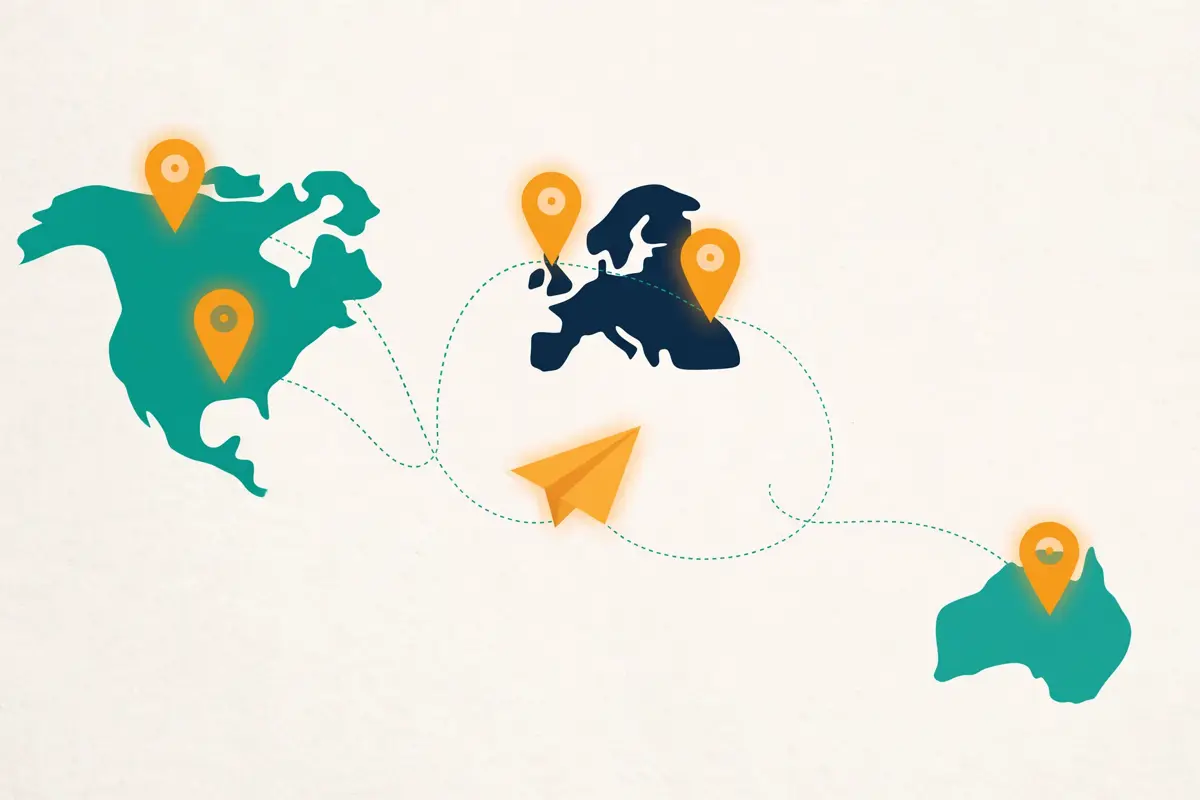
In fact, GDPR is only half the European story, and the other half is the ePrivacy Directive, which each member state implements in its own way. For example, GDPR decides whether you may process the data, while ePrivacy decides whether you may send the marketing message at all, and the two answers can differ. Similarly, the practical result is that Europe is not one rule but a patchwork, and the four countries below are the ones that matter most to cold emailers. Moreover, the pattern is easy to remember: France and Ireland are permissive for role-relevant B2B, while Germany and Austria are strict. In short, check the country, not just the continent.
Secondly, the reason for the patchwork is history. In fact, the ePrivacy Directive dates from 2002, long before GDPR, and it left member states free to choose between an opt-in and an opt-out model for business-to-business marketing. For instance, France and Ireland chose opt-out for companies, while Germany and Austria chose opt-in for everyone. Thirdly, a new ePrivacy Regulation has been discussed for years, and it has not arrived, so the patchwork is the law you actually have to follow today. As a result, a campaign that is perfectly legal in Paris can be illegal in Berlin, and the table below is the quickest way to keep them straight.
Cold email compliance: the ePrivacy checklist
| Country | Model for B2B cold email | What to do |
|---|---|---|
| France | Opt-out for role-relevant B2B | Email professionals about their role, with a clear opt-out |
| Ireland | Opt-out for corporate subscribers | Companies need no prior consent; sole traders do |
| Germany | Prior express consent, UWG section 7(2) | Do not cold email without consent; use ads or events instead |
| Austria | Prior express consent, TKG section 174 | Do not cold email without consent |
The table above is the ePrivacy position in one place. The German and Austrian rules come from their unfair-competition and telecoms laws, not from GDPR itself, which is why they are stricter than the GDPR baseline. Last checked: 16 November 2026.
France and Ireland: opt-out, with a relevance test
France is the most sender-friendly country in the EU for B2B cold email. Firstly, the French regulator, the CNIL, allows prospecting emails to professionals without prior consent, provided the message relates to the person’s professional role and offers a clear opt-out. For instance, emailing a marketing director about a marketing tool is role-relevant, while emailing the same person about office catering is not. Secondly, Ireland works in a similar way for corporate subscribers: you may email a company without prior consent, but you must identify yourself and offer an opt-out, and sole traders and individuals need consent. In sum, both countries reward relevance, and both punish indiscriminate blasts.
In addition, the relevance test is the part that needs judgement. Above all, ask whether the recipient would reasonably expect an email about this topic in this role. For example, a head of sales receiving an email about a sales tool passes the test easily, while a receptionist receiving the same email does not. Moreover, keep the email short, professional, and plainly identified, because a message that reads like a mass blast will be treated as one, however good your legal basis. As a result, France and Ireland are open doors, but only for messages that belong in the recipient’s working day.
Germany and Austria: consent first, no shortcuts
Germany is the country that catches the most senders, because its rule is the opposite of the GDPR baseline. Firstly, section 7(2) of the German Unfair Competition Act, the UWG, treats unsolicited advertising by email as an unreasonable harassment unless the recipient has given prior express consent, and that applies to businesses as well as consumers. For instance, a German company that never asked to hear from you can complain, and a competitor can send a formal warning and seek a court order. Secondly, Austria is the same: section 174 of the Telecommunications Act, the TKG, requires prior consent for direct marketing by email. In sum, do not cold email into Germany or Austria without consent, however good your GDPR legitimate interest assessment looks.
Secondly, the practical answer for Germany and Austria is not to give up on the market, but to reach it differently. In fact, consent can be earned: a white paper download, a webinar registration, a trade-show conversation, or a LinkedIn connection that leads to a requested email are all legitimate routes. For example, a German prospect who downloads your guide and ticks the box to hear from you is now a warm contact, and you may email them. Moreover, advertising, search and events all work in these markets, and they often work better than cold email would have. As a result, treat Germany and Austria as consent markets, and build the list properly.
United Kingdom: cold email compliance under PECR
In fact, the United Kingdom is the easiest European market to explain, because its rule is a clean split. For example, the Privacy and Electronic Communications Regulations, known as PECR, say you may send marketing emails to corporate subscribers, which means companies, without prior consent, provided you identify yourself and give the recipient a way to opt out. Similarly, you may not send marketing emails to individual subscribers, which means sole traders, partnerships and individuals, without their consent or a soft opt-in. Moreover, the split turns on the legal form of the recipient, not on the size of the company, so a one-person limited company is a corporate subscriber, while a sole trader with fifty staff is an individual subscriber. In short, check the legal form before you send.
Secondly, the soft opt-in is the exception that makes UK cold email practical for many senders. In fact, it applies when you collected the person’s details in the course of a sale or negotiations for a sale, the message is about similar products or services, and you gave them a chance to opt out when you collected the details and in every message since. For instance, a prospect who asked for a quote and then went quiet is a soft opt-in candidate, while a name scraped from a directory is not. Thirdly, UK GDPR sits alongside PECR, so you still need a lawful basis for processing the data, and legitimate interest usually does that job. As a result, the United Kingdom is a two-law market, and both laws must be satisfied.
Cold email compliance: the UK PECR checklist
| Recipient | Consent needed? | What to do |
|---|---|---|
| Company (corporate subscriber) | No, if you identify yourself and offer an opt-out | Send, with clear identity and an unsubscribe link |
| Sole trader or partnership | Yes, consent or soft opt-in | Do not cold email without consent or a prior sale |
| Individual consumer | Yes, consent or soft opt-in | Do not cold email consumers at all |
| Soft opt-in contact | No, if the conditions are met | Similar products only, opt-out in every message |
The table above is the UK position in one place. The Information Commissioner’s Office, the ICO, enforces PECR, and its guidance on electronic mail marketing is the reference to read before you send into the UK. Last checked: 16 November 2026.
The 2026 change to PECR fines
The fine ceiling for PECR changed in 2026, and it changed a lot. Firstly, the Data (Use and Access) Act 2025 raised the maximum PECR fine from £500,000 to £17.5 million or 4% of global turnover, whichever is higher, from 5 February 2026, aligning PECR with UK GDPR. For instance, the ICO’s own guidance still showed the old £500,000 figure while it was under review, which is a reminder to check the law itself, not just the guidance page. Secondly, no fine has tested the new ceiling yet, and the ICO’s recent PECR fines have been far below it, but the ceiling is now the law. In sum, the United Kingdom is no longer a low-fine jurisdiction, and the checklist above is worth following carefully.
Canada: cold email compliance under CASL
In fact, Canada is the strictest of the large English-speaking markets, and the reason is that CASL is consent-first. For example, you need express or implied consent before you send a commercial electronic message to anyone in Canada, and “we thought they might be interested” is not consent. Similarly, implied consent has a precise meaning: an existing business relationship, such as a purchase or a contract, or an existing non-business relationship, such as a donation or membership, or a recent inquiry, all within defined time limits. Moreover, express consent is the safe route, because it is documented, specific, and hard to dispute. In short, Canada rewards senders who ask first.
Secondly, CASL also sets strict content and timing rules. In fact, every message must identify the sender, give accurate contact information, and include a working unsubscribe mechanism that stays functional for at least 60 days after the message is sent. For instance, an unsubscribe link that breaks after a week is itself a breach, even if the original email was fine. Thirdly, unsubscribe requests must be processed within 10 business days, the same deadline as CAN-SPAM. As a result, a Canadian campaign needs the same plumbing as an American one, plus a consent record for every recipient before the first send.
Cold email compliance: the CASL checklist
| Requirement | What it means in practice | Do this |
|---|---|---|
| Consent before sending | Express or implied consent, documented | Record the source, date and wording of consent |
| Identify the sender | Name, contact details and the person on whose behalf you send | Put real identity in every message |
| Working unsubscribe | Must work for at least 60 days after sending | Test the link, and keep it live for 60 days |
| Honour opt-outs in 10 business days | Remove the person promptly, for free | Suppress the address everywhere, including new lists |
| Keep proof | Consent records are your defence | Store consent with the contact record, not in a spreadsheet |
The table above is the CASL checklist in one place. The CRTC, Canada’s regulator, enforces CASL, and its CASL FAQ sets out the three requirements in plain language. The maximum administrative penalties are set in the legislation itself. Last checked: 16 November 2026.
Implied consent: useful, but easy to get wrong
Implied consent is the part of CASL that causes the most trouble, because it feels broader than it is. Firstly, an existing business relationship means the person bought something from you, or had a contract with you, within the last two years, and an inquiry means they asked about your products within the last six months. For example, a prospect who requested a demo eight months ago is no longer covered by implied consent, and a prospect who downloaded a white paper never was, because a download is not a business relationship. Secondly, implied consent expires, and it expires silently, so a list that was legal last year can be illegal this year. In sum, treat implied consent as a short window, and ask for express consent whenever you can.
Australia: cold email compliance under the Spam Act
In fact, Australia’s Spam Act 2003 is short, clear, and strict, and it has only three rules. For example, you must have consent before you send a commercial electronic message, you must accurately identify yourself and how to contact you, and you must include a working unsubscribe facility. Similarly, consent can be express, such as a ticked box, or inferred, such as a business card handed over with a reasonable expectation of contact about a related matter. Moreover, the Act applies to messages sent to or from Australia, so a sender overseas emailing an Australian address is covered. In short, Australia is a consent market with a simple test.
Secondly, the unsubscribe rule is the strictest of the three. In fact, you must honour an unsubscribe request within 5 business days, which is faster than the 10 days allowed in the United States and Canada, and the unsubscribe facility must keep working for at least 30 days after the message is sent. For instance, a campaign that sends on a Friday and breaks its unsubscribe link the following week is already in breach. Thirdly, the Australian Communications and Media Authority, the ACMA, enforces the Act, and its recent penalties have mostly been for failing to honour unsubscribe requests on lists the sender lawfully owned. As a result, the unsubscribe is not a footer decoration in Australia: it is the rule that gets enforced.
Cold email compliance: the Spam Act checklist
| Requirement | What it means in practice | Do this |
|---|---|---|
| Consent | Express or inferred, before you send | Record how and when consent was given |
| Identify yourself | Accurate sender identity and contact details | Real name, real company, real contact details |
| Working unsubscribe | Must work for at least 30 days after sending | Test the link, and keep it live for 30 days |
| Honour opt-outs in 5 business days | Faster than the US and Canada | Process opt-outs daily, not weekly |
| Do not use harvested addresses | Address harvesting software is separately banned | Never buy or scrape a list for Australia |
The table above is the Spam Act checklist in one place. Penalties are set in penalty units under the Act, and the unit value changes over time, so check the current value before you quote a figure. The ACMA’s guidance on avoiding spam explains consent and list responsibilities in plain language. Last checked: 16 November 2026.
Inferred consent: the business card test
Inferred consent is Australia’s most useful feature, and its most misunderstood one. Firstly, consent can be inferred from a person’s conduct and the business relationship, and the classic example is a business card handed over at a meeting, with a reasonable expectation that you will follow up about a related matter. For example, a card exchanged at a trade show, followed by an email about the product you discussed, is inferred consent. Secondly, the same card does not cover an email about an unrelated product, a newsletter the person never asked for, or a message sent two years later. In sum, inferred consent is narrow, recent, and tied to the topic, and the moment the link to the original conversation breaks, so does the consent.
The master cold email compliance checklist
In fact, the six jurisdiction sections above collapse into one working checklist, and this is the section to print out. For example, every campaign you send should pass all seven checks below, whatever country the recipient sits in, because the strictest rule in the set is usually the one that applies. Similarly, the checklist is deliberately short: seven items, each with a single action, and a campaign that passes all seven is compliant in the United States, the EU, the United Kingdom, Canada and Australia, except for Germany and Austria, where consent is still required. Moreover, the checklist doubles as a training sheet for anyone new on your team. In short, tick all seven, then send.
Secondly, the checklist works because it is checked before the send, not after it. In fact, a compliance check that happens after the campaign has gone out is an incident report, not a control. For instance, build the seven checks into your campaign setup: the list is verified, the lawful basis is recorded, the identity is honest, the opt-out is tested, the suppression list is applied, and the records are stored. Thirdly, keep the completed checklist with the campaign record, because a regulator who asks what you did will want to see the process, not just the outcome. As a result, the checklist is both a safety net and a paper trail.
Cold email compliance: the seven checks before every send
| Check | What good looks like | Where to record it |
|---|---|---|
| 1. Identity | Real name, real company, real postal address | In the email footer, on every campaign |
| 2. Lawful basis | LIA written, or consent recorded, before sending | With the campaign record |
| 3. Opt-out | One-click unsubscribe, tested and working | Tested before every send |
| 4. Data minimisation | Only the fields you need: name, role, work email | In the list definition |
| 5. Suppression list | Every opt-out applied to every list, forever | In the sending tool, checked before import |
| 6. Consent records | Source, date and wording stored with the contact | In the CRM or sending tool |
| 7. Country check | Germany and Austria need consent; others follow the tables | In the segment definition |
The table above is the master checklist in one place. If you only keep one page from this guide, keep this one. Last checked: 16 November 2026.
Data minimisation: collect less, keep less
Data minimisation is the GDPR principle that most senders ignore, because more data feels useful. Firstly, Article 5(1)(c) says personal data must be adequate, relevant and limited to what is necessary for the purpose, which means a cold email list needs a name, a role, a work email address and a company, and not much else. For example, a home address, a personal mobile number or a date of birth has no place in a cold email list, and holding it creates risk without benefit. Secondly, the same principle applies to storage: set a retention rule, such as deleting contacts who have not engaged in twelve months, and follow it. In sum, a smaller, cleaner list is both more compliant and more effective.
Handling opt-outs and data requests

In fact, the opt-out is the moment of truth for cold email compliance, because it is the only part of the law most recipients will ever test. For example, a recipient who clicks unsubscribe and then receives another email a week later has proof of a breach, and that proof is what regulators and providers act on. Similarly, a recipient who replies “please remove me” and gets a polite confirmation within a day has no reason to complain at all. Moreover, the difference between those two outcomes is not the law, but the process behind it. In short, the opt-out deserves the same care as the campaign itself.
Secondly, the process has four steps, and all four matter. In fact, the request must be easy to make, which means a visible unsubscribe link and a monitored reply inbox; it must be processed fast, within the deadline for the recipient’s country; it must be applied everywhere, including new lists and other tools; and it must be kept as proof, so you can show the person was removed and stayed removed. For instance, a suppression list that lives in one tool but not in another is a breach waiting to happen, because the next import will resurrect the address. As a result, centralise the suppression list, and sync it to every tool that sends.
Cold email compliance: opt-out deadlines by country
| Country or law | Deadline to honour an opt-out | How long the link must work |
|---|---|---|
| United States, CAN-SPAM | 10 business days | Not specified; keep it working |
| EU, GDPR Art. 21 | Immediately, no delay | Not specified; keep it working |
| United Kingdom, PECR | Promptly, without delay | Not specified; keep it working |
| Canada, CASL | 10 business days | At least 60 days after sending |
| Australia, Spam Act | 5 business days | At least 30 days after sending |
The table above is the opt-out deadlines in one place. The safe operating rule is the strictest one: process every opt-out within 5 business days, and keep every unsubscribe link working for 60 days. Last checked: 16 November 2026.
Data requests: access, erasure and the right to know
An opt-out is not the only request a recipient can make, and GDPR gives them several more. Firstly, a person can ask what data you hold about them, where you got it, and what you do with it, and you must answer within a month. Secondly, they can ask you to delete their data, and you must do so unless you have a legal reason to keep it, such as a suppression record that proves you will not email them again. Thirdly, they can ask you to correct data that is wrong, and they can object to processing altogether.
For example, a deletion request that removes the person from your list but keeps them on your suppression list is the correct outcome, because the suppression record is what stops the next email. In sum, answer data requests promptly, keep a log of what you did, and never argue with the request.
What to keep as proof, and for how long
Proof is the unglamorous half of compliance, and it is the half that saves you. Firstly, keep the lawful basis record: the LIA for legitimate interest campaigns, or the consent record, with its source, date and wording, for consent campaigns. Secondly, keep the suppression list forever, because it is the record that proves you stopped emailing someone, and deleting it would let them back onto a list. Thirdly, keep campaign records, including the list source, the send date, the template used, and the opt-out log, for as long as your retention policy says, and at least long enough to answer a complaint. For example, a regulator who asks about a campaign from six months ago will expect you to find it in minutes. As a result, store records in the tool, not in a spreadsheet on someone’s laptop.
What happens if you get cold email compliance wrong
In fact, the consequences of getting cold email compliance wrong fall into three groups, and only the first is a fine. For example, the most common consequence is a provider suspension: your sending tool, your email provider or your domain registrar stops you sending, and your campaigns stop the same day. Similarly, the second consequence is reputational: spam complaints damage your domain, your emails land in spam, and your reply rate falls, which is a slow, expensive failure. Moreover, the third consequence is regulatory: a fine, an enforcement notice, or an order to stop. In short, the fine is the headline, but the suspension is the consequence most senders actually meet.
Secondly, the good news is that all three consequences are avoidable, and the same checklist prevents all three. In fact, a sender who follows the master checklist, honours opt-outs fast, and keeps clean records will rarely hear from a regulator, and will never be surprised by a provider suspension. For instance, the Verkada case below shows what happens when the basics are ignored at scale, while the thousands of senders who follow the rules simply keep sending. As a result, read this section as a reason to follow the checklist, not as a reason to stop sending.
Cold email compliance: the maximum fines, verified
| Law | Maximum fine | Who enforces it |
|---|---|---|
| US, CAN-SPAM | Up to $53,088 per violating email | Federal Trade Commission |
| EU, GDPR Art. 83(5) | Up to €20 million or 4% of worldwide turnover | National data protection authorities |
| EU, GDPR Art. 83(4) | Up to €10 million or 2% of worldwide turnover | National data protection authorities |
| UK, PECR | Up to £17.5 million or 4% of global turnover | Information Commissioner’s Office |
| Canada, CASL | Up to CAD $10 million per violation (organisations) | Canadian Radio-television and Telecommunications Commission |
| Australia, Spam Act | Penalty units; repeat corporate cap A$3.64 million a day* | Australian Communications and Media Authority |
*Australia: penalties are set in penalty units under the Spam Act, and the unit value changes over time. At the unit value in force from 1 July 2026 (A$364), the daily cap for a repeat corporate offender is 10,000 units, or A$3.64 million a day. These are maximums, not typical fines: regulators weigh the gravity, the intent, the cooperation and the size of the sender. Last checked: 16 November 2026.
The Verkada case: what the largest CAN-SPAM fine looked like
The largest CAN-SPAM penalty the FTC has obtained is a useful case study, because the failure was basic. Firstly, in August 2024 the FTC reached a $2.95 million settlement with Verkada, a security camera company, over commercial emails sent without a working unsubscribe option and without a physical address, alongside separate data security failures. For example, the company had sent tens of millions of emails, and the missing opt-out was not a technical glitch but a missing control. Secondly, the settlement also imposed twenty years of oversight, which is a longer consequence than the fine itself. In sum, the case shows that the FTC enforces the simple rules, and that scale multiplies the exposure, because the penalty is per email.
Provider suspension: the consequence that arrives first
A provider suspension usually arrives before any regulator does, and it arrives without warning. Firstly, sending tools and email providers monitor spam complaints, bounce rates and unsubscribe behaviour, and they suspend accounts that cross their thresholds, because their own deliverability depends on it.
For example, Mailchimp is opt-in only: it does not allow purchased lists, and mailing contacts who have not opted in risks suspension of the account. Secondly, the same logic applies to every tool in this guide: a tool that lets its users spam will lose its own sending reputation, so it polices its users hard. Thirdly, a suspension is hard to appeal, because the provider’s decision is contractual, not legal, and there is no court to argue in. As a result, the fastest way to lose your sending ability is to ignore the opt-out and list rules, and the fastest way to keep it is to follow them.
How each tool helps with cold email compliance
In fact, no tool can make you compliant on its own, because compliance is about your list, your lawful basis and your process, and a tool cannot decide those for you. For example, a tool can handle the unsubscribe link, maintain the suppression list, and store the consent record, but it cannot write your legitimate interest assessment or decide whether a German prospect has consented. Similarly, the tools below differ in how much of the admin they take off your plate, and in whether they publish a data processing agreement, which is the contract you need under GDPR Article 28 whenever a processor handles personal data for you. Moreover, the table below only claims what was verified on the providers’ own sites on 16 November 2026, and where a status was not published, it says so plainly.
In short, use the table to shortlist, then check the site before you buy.
Secondly, the data processing agreement, or DPA, deserves a word of its own. In fact, GDPR Article 28 requires a written contract between you, the controller, and any processor that handles personal data for you, and the DPA is that contract. For instance, it sets out what the processor may do with the data, how it protects it, which sub-processors it uses, and what happens when the contract ends. Thirdly, a published DPA that forms part of the terms of service is the normal pattern for the tools below, and a tool that will not provide one is a tool to avoid for European sending. As a result, ask for the DPA before you pay, and keep the signed copy with your records.
Cold email compliance: the tools compared
| Tool | Unsubscribe and suppression | Consent and list controls | DPA published |
|---|---|---|---|
| Smartlead | Master Inbox handles replies and opt-outs | Check the site | Yes, published DPA |
| Lemlist | Unified inbox handles replies and opt-outs | Check the site | Yes, published DPA |
| Apollo | Check the site | Built-in verification keeps lists clean | Yes, published DPA |
| Instantly | Unibox master inbox handles replies | Check the site | Check the site |
| Mailchimp | Opt-in only; unsubscribe handling built in | GDPR form fields available | Yes, published DPA |
| Brevo | Opt-in bulk email; unsubscribe handling built in | Forms and consent fields built in | Yes, published DPA |
| HubSpot Sales Hub | Check the site | Check the site | Yes, published DPA |
| Close CRM | Check the site | Check the site | Check the site |
The table above only claims what was verified on the providers’ own sites. Apollo’s DPA was updated on 10 August 2026, HubSpot’s on 16 September 2026, and Brevo’s DPA sits in its Terms of Service. Instantly and Close CRM did not publish a DPA status we could verify, so the table says “check the site” rather than guessing. Last checked: 16 November 2026. Features and pricing can change, so please check the provider’s site before you buy. We do not guess at features, prices or trials.
Suppression lists: the feature that matters most
If one feature decides compliance in practice, it is the suppression list. Firstly, a suppression list is the list of everyone who has opted out, bounced permanently, or complained, and the tool must never email them again, whatever list you import next. For example, a sender who imports a fresh list without applying the suppression list will re-email people who asked to stop, and that single mistake is the most common breach in the industry. Secondly, the suppression list must be automatic, not manual: every unsubscribe, every reply that says “remove me”, and every complaint should land on it without anyone copying and pasting. Thirdly, the list must be shared across tools, because a contact suppressed in your sequencer but not in your CRM will be emailed by the CRM. In sum, ask every vendor how their suppression list works before you buy, and test it with a dummy contact.
The honest pros and cons of doing it properly
In fact, doing cold email compliance properly has real costs, and this guide would not be honest if it pretended otherwise. For example, writing a legitimate interest assessment takes an hour, keeping consent records takes discipline, and skipping Germany and Austria until you have consent means a smaller market. Similarly, a consent-first list is always smaller than a bought list, and a smaller list means fewer sends. Moreover, the costs are real, and they are the reason some senders cut corners. In short, the honest case for compliance is not that it is free, but that it is cheaper than the alternative.
Cold email compliance: the pros
- Better deliverability: relevant emails to people who expect them earn fewer spam complaints, and fewer complaints keep your domain out of the spam folder.
- More trust: an honest identity and a working opt-out make recipients more likely to reply, not less.
- No suspension risk: providers suspend senders who break the rules, and a compliant account keeps sending.
- A defensible paper trail: a written LIA and clean records answer a complaint in minutes, not weeks.
- Better lists: a list built on relevance and consent converts far better than a bought list.
Cold email compliance: the cons
- More setup time: the LIA, the records and the checklist take hours before the first send.
- Smaller lists in consent markets: Germany, Austria and Canada will always be smaller markets for cold email.
- Record-keeping discipline: consent records and suppression lists need maintaining, and they rot if nobody owns them.
- Legal uncertainty: some questions, such as the exact scope of legitimate interest, have no final answer yet, and the law is still being tested.
Pick the right tool for your compliance needs
In fact, the right tool for cold email compliance depends on where you send and how you work, not on a ranking. For example, a sender who emails mostly into the EU needs a published DPA and a suppression list that works automatically, while a sender who emails mostly into the United States needs strong unsubscribe handling and a clean list. Similarly, a sender who runs opt-in marketing as well as cold email needs a tool that keeps the two lists apart, because an opt-in list and a cold list have different rules. Moreover, the table below matches the tool to the situation, and the prices are the list prices checked on 16 November 2026. In short, pick the tool that fits your markets, then test it.
Secondly, the decision is worth testing before you commit. In fact, most of the tools below offer a trial or a free plan, and a trial is the only way to learn whether the suppression list, the unsubscribe handling and the inbox actually work the way you need. For instance, send a test campaign to your own addresses, click the unsubscribe link, reply asking to be removed, and check that the address is suppressed everywhere. Thirdly, ask the vendor for the DPA during the trial, and read it, because a DPA that arrives only after you pay is a warning sign. As a result, the trial is the compliance test, and it costs nothing but an hour.
Cold email compliance: pick this tool when
| Pick this tool when | Tool | Why it fits |
|---|---|---|
| You send at volume and want a published DPA | Smartlead | Master Inbox, published DPA, from $39/mo |
| You send multichannel into the EU | Lemlist | Unified inbox, published DPA, from $69/mo |
| You need verified data and a published DPA | Apollo | Built-in verification, published DPA, free plan |
| You send high volume in the US | Instantly | Unibox master inbox, from $47/mo |
| You run opt-in marketing lists only | Mailchimp | Opt-in only, GDPR fields, published DPA |
| You want opt-in bulk email with a DPA | Brevo | Opt-in bulk, forms, published DPA, from $9/mo |
| You want CRM-led outreach with a DPA | HubSpot Sales Hub | Published DPA, free plan, Starter from $10/seat/mo |
| You want a CRM with strong data protection | Close CRM | SOC 2 Type II, GDPR and CCPA, from $9/mo |
The table above is the decision framework for this guide. Every price in it was checked on 16 November 2026. Last checked: 16 November 2026.
The tool to avoid for each situation
Each situation also has a tool to avoid, and naming it saves a bad purchase. Firstly, a sender who emails into the EU should avoid any tool that will not provide a DPA, because GDPR Article 28 makes the DPA mandatory, and a tool without one cannot legally process European personal data for you. Secondly, a sender who runs cold email should avoid using an opt-in-only tool for it, because Mailchimp, for example, is opt-in only, and mailing non-opted-in contacts there risks suspension. Thirdly, any sender should avoid a tool whose suppression list is manual, because a manual list will be forgotten, and the forgotten opt-out is the breach that gets reported. Finally, avoid buying a tool for its compliance features alone: the tool helps, but the list, the lawful basis and the process are yours.
Frequently asked questions
Is cold email legal?
Yes, cold email is legal in most places when you follow the rules. Firstly, the United States allows it under CAN-SPAM without prior consent, and the EU allows it under GDPR legitimate interest for role-relevant business contacts. Secondly, Germany and Austria require prior express consent, and Canada requires consent too, so the answer depends on where the recipient sits. In sum, cold email is normal, widely used business practice, and the checklist in this guide keeps it legal. This is general information, not legal advice.
Do I need consent to send cold email in Europe?
Not always, and that is the point of legitimate interest. Firstly, GDPR lets you email role-relevant business contacts under legitimate interest, Article 6(1)(f), provided you write a legitimate interest assessment and offer a clear opt-out. Secondly, Germany and Austria are exceptions: both require prior express consent under their own laws, whatever GDPR allows. Thirdly, France and Ireland allow opt-out B2B prospecting for role-relevant contacts. In sum, check the country, not just the continent, and get proper legal advice for your situation.
How fast must I honour an unsubscribe?
It depends on the country, and the safe rule is the strictest one. Firstly, Australia gives you 5 business days, the United States and Canada give you 10 business days, and the EU expects an objection to direct marketing to be honoured immediately. Secondly, the practical answer is to process every opt-out within 5 business days, and ideally within one, because a fast opt-out is also the best way to avoid a complaint. In sum, same-day is the habit to build, and 5 business days is the deadline never to cross.
What is a legitimate interest assessment?
A legitimate interest assessment, or LIA, is a short written document that justifies emailing someone under GDPR Article 6(1)(f). Firstly, it records the purpose of the contact, why email is a reasonable way to pursue it, and why the person’s rights do not override your interest. Secondly, it is written before you send, kept with the campaign record, and reviewed regularly. In sum, the LIA turns a judgement call into a defensible decision, and it fits on a single page.
Can I use Mailchimp for cold email?
No, and this is important. Firstly, Mailchimp is opt-in only: it does not allow purchased lists, and mailing contacts who have not opted in risks suspension of your account. Secondly, Mailchimp is built for opt-in marketing lists, newsletters and automations, not for cold outreach, and its terms reflect that. In sum, use Mailchimp for the people who asked to hear from you, and use a cold email tool with proper suppression handling for outreach.
What happens if someone reports my cold email?
Usually nothing dramatic, provided you followed the checklist. Firstly, a single complaint to a provider or regulator is normally handled with a warning, and the provider will ask what you did and what your records show. Secondly, a pattern of complaints, ignored opt-outs, or a bought list is what leads to suspension or a fine. In sum, the complaint is a test of your process, and a clean process passes it. Keep your records, answer promptly, and fix whatever went wrong.
The verdict
Our verdict on cold email compliance
Best default: follow the seven-check master checklist before every send. Honest identity, a written lawful basis, a tested opt-out, minimal data, a live suppression list, consent records, and a country check that keeps Germany and Austria consent-only. Best all-round tool: Smartlead. Master Inbox, a published DPA, and unlimited mailboxes from $39 a month. Best for the EU: Lemlist. Unified inbox, a published DPA, and multichannel sending from $69 a month. Best for data: Apollo. Built-in verification and a published DPA, with a free plan to start. Best habit: process every opt-out the same day. Five business days is the strictest deadline, and same-day is the habit that keeps you safe.
We have not tested these tools hands-on, so the tool rows in this guide are based on the vendors’ documented features and list prices checked on 16 November 2026, not on a trial. This guide is general information, not legal advice, so get proper legal advice for your specific situation. The honest advice is simple: cold email is legal in most places, the rules are a checklist, and a sender who follows the checklist, keeps clean records, and honours every opt-out fast will keep sending for years.
Keep reading
- Is Cold Email Legal? The Simple Checklist, the short version of this guide, with the simple checklist to start from.
- How to Clean a Cold Email List 2026, the list hygiene that keeps your data minimised and your bounces low.
- SPF, DKIM and DMARC Explained 2026, the authentication that proves your emails come from you.
- How to Handle Cold Email Replies 2026, the reply desk that catches opt-outs and answers them fast.
- Best Cold Email Tools for Healthcare 2026, compliance matters most in regulated industries, and this is the healthcare shortlist.
- Best Cold Email Tools for Finance 2026, the finance shortlist, where data protection is part of the buying decision.
- Deliverability Guide 2026, the full guardrails behind compliant sending.
- Inbox Placement Guide 2026, how to test whether your compliant campaigns land in the primary inbox.
- Cold Email for Agencies 2026, running compliant campaigns across many clients, safely.
- How to Scale Cold Email 2026, the scaling ladder, with the compliance guardrails built in.