Blog

  • Best Cold Email Tools for Gmail Users 2026

    Best Cold Email Tools for Gmail Users 2026

    Your Gmail inbox, turned into a cold email machine

    If you live in Gmail, you do not need a separate sales platform to start cold email. The best cold email tools gmail users can buy live inside the inbox itself: a button beside Send, a sidebar beside your messages, sequences that run from the account you already use every day. This guide ranks the ten tools that do that job best, from the Chrome extension that turns Gmail into a mail-merge machine to the platforms that connect dozens of Gmail accounts and keep them all inside Google’s limits.

    See GMass →Check Mixmax →Try Yesware →

    Prices and limits checked 16 November 2026 on the official sites of all ten ranked providers. Features and pricing can change, so please check the provider’s site before you buy.

    Quick Answer

    GMass is the best cold email tools gmail pick overall, because it lives inside Gmail as a Chrome extension, merges from Google Sheets, and runs automated follow-ups from $39.95 a month for Premium, or $29 on annual billing. Mixmax is the best Gmail productivity and sequences tool, with a free plan for 50 recipients a month and paid plans from $29 a user a month billed yearly. Yesware is the best Gmail tracking and light campaigns tool, with a free plan and an honest starting price of $45 a month, or $35 annual, for real outreach.

    Instantly is the best tool for scaling beyond Gmail’s limits, with unlimited mailboxes and automatic inbox rotation from $47 a month. For a solo Gmail user, GMass, Mixmax or Yesware is the right start; for a Workspace team, Mixmax or Lemlist; for sending beyond one Gmail account, Instantly or Smartlead.

    Best cold email tools gmail: why the inbox you already use is the right place to start

    Firstly, the inbox you already use is the best place to start cold email, and that simple fact shapes this whole best cold email tools gmail guide. You already open Gmail every morning, you already know where the reply button is, and your prospects already trust mail that comes from a real Gmail or Workspace address more than mail from a platform they have never heard of. Secondly, a tool that lives inside Gmail keeps all of that. A tool that drags you into a separate dashboard takes it away. The ten tools in this guide all respect that difference, and the ranking rewards the ones that respect it most.

    Secondly, Gmail-native does not mean Gmail-only, and the distinction decides which tool to buy. In fact, a Gmail-native tool sends through your Gmail account, shows its controls inside Gmail, and stores its replies in your inbox. It can still add LinkedIn steps, calls and a database around the edges. A tool that merely connects a Gmail account and then runs everything from its own dashboard is Gmail-connected, not Gmail-native, and the two feel very different to use every day. This guide ranks both kinds, and says plainly which kind each tool is, so you can choose the feel you want.

    How this best cold email tools gmail guide is organised

    Finally, every price and limit in this best cold email tools gmail guide was checked on the official sites on 16 November 2026. The Google limits are stated the way Google states them, the plan prices are stated the way the vendors state them, and the honest gaps — no warm-up here, no lead database there — are stated beside the strengths instead of being hidden. Skim the limits section first, because it decides how much any tool can send for you, then read the ranked table for the short version, and lean on the decision framework at the end when two tools look evenly matched.

    What Gmail-native sending really means

    In fact, Gmail-native sending means the tool lives inside Gmail itself, usually as a Chrome extension, and sends through your Gmail account rather than through its own servers. Finally, a seller opens Gmail, writes the email in the familiar compose window. The tool adds its own buttons beside Send: a red GMass button for a mail merge, a Mixmax sidebar for sequences and templates, a Yesware panel for tracking and reminders. The email goes out from your address, through Google’s servers, and the reply lands back in your inbox, where the tool shows you that it was opened, clicked or replied to. Nothing about the experience feels like a separate platform.

    Best cold email tools gmail: a Chrome browser window showing a Gmail inbox, with the extension puzzle-piece icon highlighted in the toolbar and a sidebar panel with sequence steps and a send-later clock
    The Chrome extension in this best cold email tools gmail guide: a Gmail inbox with the extension icon highlighted and a sidebar panel for sequences, scheduling and reminders. The tool comes to Gmail, not the other way round.

    Best cold email tools gmail: the two kinds of Gmail tool

    Moreover, Gmail tools fall into two kinds, and knowing which kind you are buying saves a lot of disappointment. In fact, the first kind is the in-inbox tool: GMass, Mixmax and Yesware. These are Chrome extensions that add buttons, sidebars and panels to Gmail itself. They are the tools this guide ranks highest for a solo Gmail user, because they never ask you to leave the inbox. The second kind is the Gmail-connected platform: Instantly, Smartlead, Lemlist, Mailshake, Woodpecker, Saleshandy and Reply.io. These connect your Gmail accounts through Google’s API or SMTP, run sequences from their own dashboard, and return the replies to a master inbox. They are the tools this guide ranks highest for volume, because one dashboard can run dozens of Gmail accounts at once.

    Secondly, the two kinds also differ in what they can do with Google’s limits, and that difference matters more than any feature list. An in-inbox tool sends through one Gmail account, so it inherits that account’s daily cap directly: about 500 emails a day on a free Gmail account, about 2,000 a day on Google Workspace. In sum, a Gmail-connected platform can spread the same campaign across many accounts, rotating between them. The campaign can send far more than any single account could. A seller who needs fifty emails a day should buy the in-inbox tool. A seller who needs five hundred a day should buy the platform, connect five accounts, and let rotation do the work.

    Best cold email tools gmail: Gmail API, SMTP and the Chrome extension, explained simply

    Thirdly, the connection method sounds technical, yet it decides three practical things: how fast the tool sets up, how reliable the sending is, and what Google can see. A Chrome extension connects in a minute, because it simply adds itself to the Gmail you already have open. For example, it sends exactly the way you would send by hand, which Google likes. An API connection takes a few minutes of clicking through Google’s permission screens. It lets the platform send, track and manage mailboxes from its own dashboard, which is how rotation and warm-up work. An SMTP connection is the oldest method. It works, yet it is the least visible to Google and the most likely to need manual setup. Most buyers should pick the extension for one account and the API for many.

    Finally, Gmail-native also means your data stays where you can see it. That is a genuine advantage over a closed platform. As a result, your lists can live in Google Sheets, your replies stay in Gmail, your calendar is Google Calendar. In contrast, your contacts are Google Contacts. GMass merges straight from Sheets, Mixmax syncs with Salesforce and HubSpot from inside Gmail, and Yesware copies activity to your CRM from the inbox. A seller who already runs their business on Google Workspace will find these tools fit like a glove. A seller who wants a standalone sales platform with its own database should look at our best cold email software guide instead.

    Google’s Gmail sending limits, stated plainly

    Secondly, Google’s sending limits are the single most important fact in this best cold email tools gmail guide, because no tool can send more than Google allows, however much it charges. Moreover, Google caps how many emails an account can send in 24 hours, and the cap depends on the account: about 500 recipients a day on a free Gmail account, and about 2,000 messages a day on a paid Google Workspace account, with mail merge capped at about 1,500 recipients a day on Workspace. The tool does not set the limit. Google does. A vendor that promises unlimited sending from one Gmail account is promising something Google will not deliver.

    Best cold email tools gmail: a speed gauge and a calendar showing daily sending limits, with three Gmail inboxes rotating between them and a shield with a checkmark guarding them
    Gmail limits in this best cold email tools gmail guide: a gauge and a calendar beside three inboxes rotating under a shield. The cap is per account, so rotation and warm-up are how you send more safely.

    Best cold email tools gmail: the free Gmail limit and the Workspace limit

    Firstly, the free Gmail limit is the one most beginners hit first, and it is lower than most people expect. In other words, a free Gmail account can send to about 500 recipients in 24 hours, and that counts every recipient on every email, including the ones on a mail merge and the ones on a normal reply. Therefore, a campaign to 600 people from a free account will simply stop partway through, and Google may show a warning or temporarily block sending. The fix is not a better tool. The fix is a Workspace account, which raises the cap to about 2,000 messages a day, or several accounts, which is exactly what inbox rotation does.

    Secondly, the Workspace limit is higher. It is still a limit, and it still catches sellers who plan a campaign without reading it. For example, a Workspace account can send about 2,000 messages a day, and its built-in mail merge can reach about 1,500 recipients a day, which sounds generous until a seller plans a 5,000-person campaign in a single day. Google also watches the pattern, not just the number: a brand-new account that sends 2,000 emails on its first day will be flagged, while an account that has sent mail for a year and ramps up slowly will not. The tools in this guide that offer warm-up exist precisely because of that pattern. Warm-up is not a gimmick. It is the habit of a careful sender.

    Best cold email tools gmail: why warm-up and rotation matter more than any feature

    Moreover, warm-up and rotation are the two answers to Google’s limits, and a buyer should understand both before paying for anything. Warm-up sends a small number of emails at first, exchanges mail with other accounts in a warm-up pool, and raises the volume slowly over two to three weeks, so Google learns the account is a real sender. However, rotation spreads a campaign across several Gmail accounts. Each account stays well under its own cap while the campaign as a whole sends far more. Instantly and Smartlead offer unlimited warm-up and automatic rotation, Lemlist offers lemwarm and rotation. GMass offers rotation on its Professional plan but no warm-up at all, which is an honest gap this guide states plainly.

    Thirdly, the limits also explain why the free plans in this guide are so small, and why that is not a trick. For instance, GMass lets a free user send 50 emails a day, Mixmax lets a free user reach 50 recipients a month. Similarly, Yesware lets a free user reach 10 campaign recipients a month. Those numbers look tiny beside a 2,000-a-day Workspace cap. They are generous for a free plan, because the free plan is a trial of the tool, not a way to send cold email for nothing. A seller who needs real volume should pay for a plan, or pay for Workspace, or both, and should budget for that before choosing a tool.

    Best cold email tools gmail: five rules that keep a Gmail account safe

    Finally, five rules keep a Gmail account safe, and they are worth more than any feature list. Consequently, keep the daily volume well under the cap, and ramp a new account up slowly over two to three weeks. Warm the account up before the first campaign, or buy a tool that warms it for you. Spread the volume across several accounts with rotation if the campaign is large. Authenticate the sending domain with SPF, DKIM and DMARC, as our sending domain guide explains, and watch the bounce rate every day. A seller who follows those five rules can send from Gmail for years. A seller who ignores them can lose the account in a week, and no tool can rescue it.

    The best cold email tools Gmail users can buy, ranked

    Secondly, the ranking below orders the ten tools by how well they serve a Gmail user, not by how cheap they are or how many emails they can send in total. Firstly, a tool that lives inside Gmail, sends through your Gmail account, and adds sequences, tracking and reminders without making you leave the inbox ranks above a tool that merely connects Gmail and runs everything from its own dashboard. In addition, a tool that respects Google’s limits, with warm-up and rotation where they matter, ranks above a tool that ignores them. The table gives the short version. The paragraphs after it explain why each tool sits where it does.

    Rather than inventing scores, this best cold email tools gmail guide ranks tools with best-for labels. As a result, no hands-on testing has been done and a number without testing would be a guess. A solo Gmail user with one account should read the ranking differently from a Workspace team with ten seats, and the decision framework near the end shows how. The table is the short version, and the tool-by-tool paragraphs below it give the reasons for each place.

    Best cold email tools gmail: the ranked table

    RankToolGmail price fromGmail strengthBest for
    1GMass$29.95/mo; $20 annualChrome extension inside Gmail, Sheets mail mergeBest overall Gmail-native tool
    2MixmaxFree $0; $29/user/mo annualSequences, tracking, scheduling inside GmailBest Gmail productivity and sequences
    3YeswareFree $0; $19/user/mo monthlyTracking, templates, campaigns inside GmailBest Gmail tracking and light campaigns
    4Instantly$47/mo; $37.60 annualUnlimited Gmail mailboxes, rotation, warm-upBest Gmail scale beyond one account
    5Smartlead$39/moUnlimited mailboxes, ESP matching, warm-upBest Gmail deliverability at scale
    6Lemlist$69/mo; $55 annual650M+ database, lemwarm, rotation, extensionBest Gmail plus multichannel
    7Mailshake$29/mo; $25 annualSimple Gmail sequences, unlimited warm-upBest simple Gmail-connected sequencer
    8Woodpecker$35/mo; $23.33 annualFree verification, warm-up, rotationBest Gmail tool with free verification
    9Saleshandy$34/mo annual; $41 monthly852M+ contacts, sequences, unified inboxBest value Gmail-connected all-in-one
    10Reply.io$59/mo; $49 annualGmail sequences, AI SDR, multichannelBest Gmail sequences with AI SDR

    Last checked: 16 November 2026. Every starting price above was taken from the official pricing page of the provider named beside it. Woodpecker’s price is its new slider entry for 500 contacted prospects; the $39 a month figure in our older Woodpecker review (post 167) is stale. Features and pricing can change, so please check the provider’s site before you buy.

    Best cold email tools gmail: how to read the ranking table

    Moreover, the ranking table hides one important fact: the top three tools solve the Gmail problem in three different ways, and the right one depends on how you work. Firstly, GMass solves it with mail merge. A seller whose list lives in Google Sheets needs nothing else. Mixmax solves it with productivity. A seller who lives in Gmail all day, scheduling meetings, snoozing emails and running sequences from the same sidebar, needs nothing else. Yesware solves it with tracking. A seller who wants to know, for every email, whether it was opened, when, and how many times, needs nothing else. None of the three is wrong. Each one fits a different Gmail user.

    The middle of the table earns its place too, because each tool down there leads on one thing that matters for Gmail users. For example, Instantly wins on scale: unlimited Gmail mailboxes and automatic rotation, so the campaign can outgrow one account. Secondly, Smartlead wins on deliverability: dynamic ESP matching that sends Google mail to Google inboxes and Outlook mail to Outlook inboxes. Lemlist wins on breadth: a 650 million contact database and lemwarm behind Gmail-connected sequences. Mailshake wins on simplicity: the easiest Gmail-connected sequencer to learn. Woodpecker wins on verification: free real-time checks from Bouncer. Saleshandy wins on value: 852 million contacts behind a $34-a-month plan. Reply.io wins on AI: an AI SDR beside Gmail sequences. Choose the winner that matches your own shape, rather than the name at the top of the table.

    Best cold email tools gmail: GMass, Mixmax and Yesware at the top

    Firstly, GMass leads because it is the most Gmail-native tool in this best cold email tools gmail guide. In other words, it is a Chrome extension that adds a red button beside Send, merges personalised mail straight from Google Sheets, schedules sends, tracks opens and clicks, and runs automated follow-ups until a prospect replies. Finally, the gap is the plan structure: sequences only arrive on Premium at $39.95 a month, or $29 on annual billing, and inbox rotation only arrives on Professional at $59.95 a month, or $49 annual. The gap is also warm-up: GMass has none, after shutting its own warm-up down in late 2022 when Google told it to stop, according to third-party reports. A solo Gmail user who sends from one account will love it.

    A team that needs warm-up should pair GMass with a warm-up tool or pick a platform instead. Our GMass review covers the full feature list in detail.

    Best cold email tools gmail: Mixmax weighed on productivity and recipients

    Secondly, Mixmax is the best Gmail productivity and sequences tool, and its weakness is the recipient cap. For instance, sequences, unlimited tracking on paid plans, one-click scheduling, reminders, templates, AI meeting notes, AI Compose, Smart Send, Signals, inbox categorisation and Sidechat, all inside Gmail, with CRM sync to Salesforce and HubSpot, from a free plan that reaches 50 recipients a month. The gap is the price unit: Mixmax charges per recipient, not per email, so 100 recipients cost $29 a user a month billed yearly, 1,500 recipients cost $89, and 15,000 cost $229, with monthly figures of $34, $105 and $279 cross-checked against independent trackers that read the same page in October and November 2026. In fact, a seller who sends short sequences to a small list will find it a bargain.

    A seller who sends five-step sequences to thousands will find the recipient maths bites. Our Mixmax review covers the recipient model in detail.

    Best cold email tools gmail: Yesware weighed on tracking and honesty

    Thirdly, Yesware is the best Gmail tracking and light campaigns tool. In sum, its weakness is the campaign cap on its cheap plans. For example, open, link and attachment tracking, templates, campaigns, reminders, Send Later, a meeting scheduler and a LinkedIn touch step, all inside Gmail, with 1.4 million installs and more than 6,000 teams behind it, from a free plan at $0. The gap is that the free plan allows only 10 campaign recipients a month, Pro at $19 a month allows only 20, and the honest starting price for real outreach is Premium at $45 a month, or $35 on annual billing, for unlimited campaigns. Salesforce sync is locked to Enterprise at $85 a month, or $65 annual, and there is no warm-up, no lead database and no AI writer. A seller who wants light tracking and short campaigns from Gmail will love it.

    A seller who wants volume should look at Instantly instead. Our Yesware review covers the caps in detail.

    Video: GMass Review & Tutorial [2026] — How To Send Thousands Of Personalized Outreach Emails In Minutes by Allan Borch – Dotcom Dollar on YouTube. This video is the creator’s property, embedded via YouTube for education. OutreachCompare is not affiliated with Allan Borch – Dotcom Dollar and does not claim ownership of this video.

    Best cold email tools gmail: Instantly and Smartlead weighed on scale

    Moreover, Instantly is the best tool for scaling beyond Gmail’s limits. For example, its weakness is that it is not an in-inbox tool at all. Instead of living inside Gmail, it connects unlimited Gmail accounts, rotates between them automatically, warms them up across a pool of more than 4.2 million accounts, tests inbox placement, and offers custom tracking domains, from $47 a month for Growth, or $37.60 on annual billing. The gap is the trial: no trial is shown on its pricing page, so a buyer commits before testing. The other gap is a figure clash on its own page: the Hypergrowth plan card says 125,000 emails a month while its comparison table says 100,000. A seller who has outgrown one Gmail account will find it the fastest way to scale.

    A seller who wants to stay inside Gmail should buy GMass instead. Our Instantly review covers the mailbox model in detail.

    Secondly, Smartlead is the best Gmail deliverability tool at scale, and its weakness is the price of its higher tiers. Consequently, unlimited mailboxes, automatic inbox rotation, dynamic ESP matching, bounce auto-protection and unlimited AI warm-up with spam rescues, from $39 a month for Base, make it the strongest deliverability story in this best cold email tools gmail guide. The gap is that Pro costs $94 a month, Unlimited Smart costs $174, and Prime costs $379, so the full feature set is dearer than the headline. In contrast, annual billing saves 17%. A seller whose Gmail campaigns land in spam will find the ESP matching and spam rescues worth the money. A seller on a tight budget should start with Instantly Growth instead. Our Smartlead review covers the deliverability features in detail.

    Best cold email tools gmail: Lemlist weighed on breadth

    Thirdly, Lemlist is the best Gmail-plus-multichannel tool, and its weakness is the per-seat price. For example, Gmail-connected sequences beside LinkedIn visits, invites, chat and voice notes, calls, WhatsApp and SMS, with a 650 million contact database, waterfall enrichment, AI icebreakers, lemwarm warm-up and inbox rotation, from $69 a month for Email, or $55 on annual billing. The gap is that Multichannel costs $109 a user a month, or $87 annual, so a team of five pays $545 a month before sending a single message. Moreover, a seller who wants Gmail plus LinkedIn in one sequence will love it. A seller who only needs Gmail should buy GMass for a third of the price. Our Lemlist review covers the multichannel steps in detail.

    Mailshake, Woodpecker and Saleshandy in the middle of the ranking

    Furthermore, Mailshake is the simplest Gmail-connected sequencer in this best cold email tools gmail guide. Therefore, its weakness is that it has no free trial at all. For instance, Gmail-connected sequences, unlimited warm-up, unlimited verification, a Data Finder and a power dialler on the top plan, from $29 a month for Starter, or $25 on annual billing, make it the easiest tool here to learn. The gap is the trial: its own FAQ says it collects payment up front, so a buyer pays before testing. Email Outreach costs $49 a month, or $45 annual, and Sales Engagement costs $99, or $85 annual. A seller who wants a simple sequencer and is happy to pay first will love it. A seller who wants to test before paying should buy Mixmax or Yesware instead. Our Mailshake review covers the trial policy in detail.

    Finally, Woodpecker and Saleshandy close the middle of the ranking in opposite corners. As a result, Woodpecker’s free real-time verification from Bouncer, automated warm-up, inbox rotation, adaptive sending and bounce shield, from $35 a month on its new slider, or $23.33 on annual billing, for 500 contacted prospects, 8,000 emails and two warm-ups, make it the best Gmail tool for a seller who hates paying for verification. However, Saleshandy’s 852 million contacts, Gmail-connected sequences, unified inbox and 7-day trial with no card, from $34 a month on annual billing, or $41 monthly, make it the best value all-in-one. The gap for both is the same: neither is an in-inbox tool, so neither feels like Gmail. A seller who wants verification should buy Woodpecker. A seller who wants data behind the sequences should buy Saleshandy. Our Woodpecker review and our Saleshandy review cover each in detail.

    Best cold email tools gmail: Reply.io at the foot of the ranking

    In sum, Reply.io closes the ranking as the best Gmail sequences tool with an AI SDR beside it. Similarly, its weakness is the price of the full stack. Email Volume from $59 a month, or $49 on annual billing, buys Gmail-connected sequences with a 14-day trial, while Multichannel from $99 a user a month, or $89 annual, adds LinkedIn, calls and SMS, and the AI SDR Jason costs from $500 a month on annual billing. The gap is that the headline buys email only, and the multichannel and AI layers each cost more. A seller who wants an AI SDR to run Gmail sequences will love it. A seller who only needs the sequences should buy Mailshake for half the price. Our Reply.io review covers the AI SDR in detail.

    Apollo is not in the ranked table, yet it deserves a sentence here, because many Gmail users buy it for the data and run the sequences elsewhere. Consequently, its 240 million contacts and 30 million accounts, from a free plan at $0 and Basic at $49 a user a month, make it the best data-led Gmail sender in this best cold email tools gmail guide, and it connects Gmail for sequences with a cloud dialler and LinkedIn task queues beside them. The gap is that its sequences are not Gmail-native, and its warm-up and rotation are weaker than Instantly or Smartlead. A seller who needs contacts first and sequences second should buy Apollo and pair it with a Gmail tool. Our Apollo review covers the database in detail.

    Gmail-user pricing head-to-head

    Secondly, Gmail-user pricing is charged in four different units, and a buyer who compares the headline numbers without the unit will be misled. In fact, GMass, Mailshake, Woodpecker and Smartlead charge a flat fee per account, Mixmax charges per recipient, Yesware, Lemlist and Reply.io charge per user or per seat. In addition, Instantly charges a flat fee for unlimited mailboxes. The table below puts every tool on the same footing: what a Gmail user pays, per seat or per account, on monthly and annual billing, with the trial beside it.

    Best cold email tools gmail: GMass, Mixmax, Yesware, Instantly and Smartlead priced

    ToolGmail plan fromAnnual priceTrialFree plan
    GMassStandard $29.95/mo$20/mo ($249/yr)7 days, 50 emails/dayNo free plan
    Mixmax100 recipients $29/user/mo$29 is the annual figure14 days, no cardFree $0, 50 recipients/mo
    YeswarePro $19/user/mo$15/user/mo14 days, no cardFree $0, 10 recipients/mo
    InstantlyGrowth $47/mo$37.60/moNo trial shownNo free plan
    SmartleadBase $39/moAnnual saves 17%Check the siteNo free plan

    Last checked: 16 November 2026. Mixmax’s monthly figures ($34 for 100 recipients, $105 for 1,500) were cross-checked against independent trackers that read the same pricing page in October and November 2026; the live page shows the annual figures and sets the Scale-tier price on its calculator. Prices come from the official sites of GMass, Mixmax, Yesware, Instantly and Smartlead. Features and pricing can change, so please check the provider’s site before you buy.

    Best cold email tools gmail: Lemlist, Mailshake, Woodpecker, Saleshandy and Reply.io priced

    ToolGmail plan fromAnnual priceTrialFree plan
    LemlistEmail $69/mo$55/mo14-day trialNo free plan
    MailshakeStarter $29/mo$25/moNo free trialNo free plan
    Woodpecker$35/mo (500 prospects)$23.33/moCheck the siteNo free plan
    SaleshandyStarter $41/mo$34/mo7 days, no cardNo free plan
    Reply.ioEmail Volume $59/mo$49/mo14-day trialNo free plan

    Last checked: 16 November 2026. Mailshake has no free trial: its own FAQ says it collects payment up front. Woodpecker’s price is its new slider entry for 500 contacted prospects, 8,000 emails and two warm-ups; higher volumes cost $67 for 2,000 prospects, $99 for 4,000, $159 for 8,000, $188 for 10,000 and $262 for 15,000. Prices come from the official sites of Lemlist, Mailshake, Woodpecker, Saleshandy and Reply.io. Features and pricing can change, so please check the provider’s site before you buy.

    Best cold email tools gmail: what the pricing tables really show

    For example, the tables show one pattern clearly: the cheapest honest Gmail tool is not the one with the lowest headline, but the one whose plan includes the feature you actually need. In sum, GMass Standard at $29.95 a month looks cheap, yet it has no sequences. As a result, a seller who needs follow-ups must pay $39.95 for Premium. Yesware Pro at $19 a month looks cheaper still, yet it allows only 20 campaign recipients. A seller who needs real outreach must pay $45 for Premium. Mailshake Starter at $29 a month looks like the cheapest sequencer, yet it has one mailbox and 1,500 sends. A seller who needs more must pay $49 for Email Outreach. The honest starting price is the price of the plan that does the job, not the price of the cheapest plan.

    Moreover, the tables also show where the free plans genuinely help and where they do not. Finally, Mixmax Free reaches 50 recipients a month and Yesware Free reaches 10 campaign recipients a month, which is enough to test the tool and run a tiny campaign, while Apollo Free at $0 buys a database search with no sequences at all. GMass, Instantly, Smartlead, Lemlist, Mailshake, Woodpecker, Saleshandy and Reply.io have no free plan, so a buyer tests them on a trial or not at all. Firstly, Mailshake has no trial either. A buyer who needs a free start should pick Mixmax or Yesware. A buyer who needs a trial should pick any tool except Mailshake and Instantly, whose pricing pages show no trial.

    Best cold email tools gmail: cost per Gmail seat, worked out honestly

    Secondly, cost per Gmail seat is the fairest way to compare tools that charge in different units. Finally, the arithmetic is simple once the unit is named. GMass Premium costs $39.95 a month for one Gmail account with sequences, or $29 on annual billing, and Professional costs $59.95, or $49 annual, for the same account with rotation. Mixmax costs $29 a user a month billed yearly for 100 recipients, so a five-step sequence to 100 people costs $29, and the same sequence to 1,500 people costs $89. Yesware Premium costs $45 a seat a month, or $35 annual, for unlimited campaigns from one Gmail account. Instantly Growth costs $47 a month for unlimited Gmail mailboxes, so five mailboxes cost $9.40 each by arithmetic, and ten cost $4.70 each.

    By contrast, the per-seat maths also shows why a flat fee is a bargain for a team and a waste for a solo sender. A solo Gmail user on Instantly Growth pays $47 a month for unlimited mailboxes they will never use, while the same user on GMass Premium pays $39.95 for the one account they need. A team of five on Lemlist Multichannel pays $545 a month, while the same team on Instantly Growth pays $47. In fact, the $498 difference buys a lot of Workspace seats. A buyer should work out the per-seat cost for their own team size, on the tables above, before choosing. The headline price is never the team price.

    Feature matrix: Gmail features side by side

    Secondly, the feature matrix is the part of this best cold email tools gmail guide that a buyer should read with a pen in hand. However, it answers the question the pricing tables cannot: which tool actually runs the Gmail play, on each of the features that matter for Gmail users. In sum, a tick means the provider states the feature on its official site. A dash means the feature is not confirmed or is confirmed absent. Treat a dash as one fact about one feature, not a verdict on the tool, and choose the tool whose strengths line up with the work you need done.

    Best cold email tools gmail: GMass, Mixmax, Yesware, Instantly and Smartlead in the matrix

    FeatureGMassMixmaxYeswareInstantlySmartlead
    Lives inside Gmail (extension)✓✓✓——
    Gmail sequences✓ Premium✓✓✓✓
    Open and click tracking✓✓ unlimited on paid✓✓✓
    Send Later and reminders✓✓✓ Gmail-only✓✓
    Mail merge from Sheets✓————
    MultiSend and inbox rotation✓ Professional——✓ automatic✓ automatic
    Warm-up— none— none— none✓ unlimited✓ unlimited AI
    Lead database— none— none— Prospector add-on✓ SuperSearch optional— none
    CRM sync from Gmail✓ API and Zapier✓ Salesforce, HubSpot✓ Enterprise only✓ CRM tier✓ webhooks, API

    Last checked: 16 November 2026. A tick means the provider states the feature on its official site; a dash means it is not confirmed or is confirmed absent. GMass sequences are gated to Premium and MultiSend to Professional. Yesware reminders, Send Later, LinkedIn touches and copy-to-CRM steps are Gmail-only, per its own feature table. Features and pricing can change, so please check the provider’s site before you buy.

    Best cold email tools gmail: Lemlist, Mailshake, Woodpecker, Saleshandy and Reply.io in the matrix

    FeatureLemlistMailshakeWoodpeckerSaleshandyReply.io
    Lives inside Gmail (extension)✓————
    Gmail sequences✓✓✓✓✓
    Open and click tracking✓✓✓✓✓
    Send Later and reminders✓✓✓✓✓
    Mail merge from Sheets—————
    MultiSend and inbox rotation✓—✓✓✓
    Warm-up✓ lemwarm✓ unlimited✓ automated— not confirmed— not confirmed
    Lead database✓ 650M+✓ Data Finder✓ 1B+✓ 852M+✓ data add-on
    CRM sync from Gmail✓ HubSpot, Salesforce✓✓ HubSpot, Pipedrive✓✓ HubSpot, Salesforce

    Last checked: 16 November 2026. Lemlist’s database is 650 million contacts on lemlist.com, and Woodpecker’s is 1 billion contacts on its own profile material; Apollo’s 240 million contacts are not in this table, because Apollo sits outside the ranked ten, yet it is covered in the ranked section above. A tick means the provider states the feature on its official site; a dash means it is not confirmed or is confirmed absent. Features and pricing can change, so please check the provider’s site before you buy.

    Best cold email tools gmail: what the matrix really shows

    Moreover, the matrix shows one pattern clearly: no tool in this guide does everything, and the honest gaps cluster in the same two places. The three in-inbox tools — GMass, Mixmax and Yesware — have no warm-up and no lead database, because they are built to work inside Gmail, not to replace it. The platforms — Instantly, Smartlead, Lemlist, Mailshake and Woodpecker — have warm-up and rotation, because they are built to send at volume. For example, a buyer who needs warm-up should buy a platform. A buyer who needs to stay inside Gmail should buy an extension and accept the gaps, or pair the extension with a warm-up tool.

    Secondly, the matrix also shows that mail merge from Google Sheets belongs to GMass alone. That is a genuine reason to pick it. For example, a seller whose list lives in Sheets, with a column for first names, a column for companies and a column for personalised lines, can merge a campaign in minutes, with no CSV export and no list upload. In contrast, no other tool in this guide does that from inside Gmail. The matrix also shows that CRM sync is the one feature every tool offers in some form, yet the gating differs: Mixmax syncs Salesforce and HubSpot on every paid tier, Yesware locks Salesforce sync to Enterprise, and Lemlist syncs both on its paid plans. A Salesforce team should read the gating before the price.

    Sequences inside Gmail: how the tools actually work

    Secondly, sequences inside Gmail are the heart of cold email, and the tools in this best cold email tools gmail guide run them in two different ways. Moreover, an in-inbox tool runs the sequence from Gmail itself: the follow-up sits in the same thread, the reply stops the sequence automatically. The seller can see every step in the inbox. A Gmail-connected platform runs the sequence from its dashboard: the steps are listed in the platform, the emails go out through the Gmail account, and the replies return to a master inbox. Both ways work. The in-inbox way feels more natural, and the dashboard way scales further.
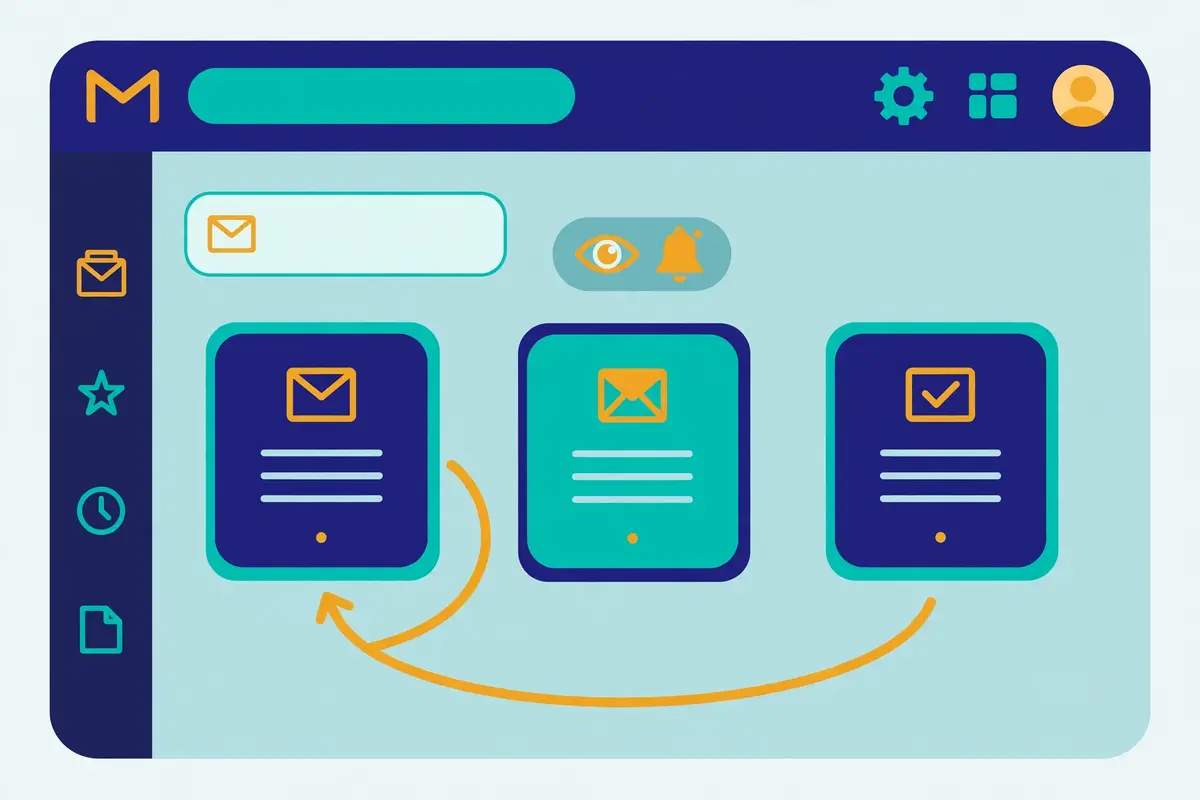
    Best cold email tools gmail: an automated email sequence flowchart inside a Gmail inbox, with three connected message cards, a reply arrow looping back, and tracking and reminder icons
    Sequences inside Gmail in this best cold email tools gmail guide: three connected message cards with a reply arrow looping back. A reply on any step should stop the sequence at once.

    Best cold email tools gmail: the five-step Gmail sequence that works

    Firstly, a five-step sequence over two weeks is the shape most Gmail users in this best cold email tools gmail guide should copy. Therefore, day one: the first email, short, personal, with one clear ask. On day three, a short follow-up in the same thread, adding one useful thing and no new pitch. By day six, a third email with a different angle, perhaps a case study or a single number that proves the point. On day ten, a break-up email that politely closes the loop and invites a reply if the timing improves. Any reply on any step ends the sequence immediately, and every tool in this guide stops automatically on a reply, because a seller who keeps emailing after a reply looks like a robot.

    Secondly, the follow-up is where the replies live, and the plan gating in this guide decides who gets it. For instance, GMass locks automated follow-ups to Premium, Yesware locks unlimited campaigns to Premium. However, Mailshake includes sequences on every plan, yet limits the sends on Starter. A seller who buys the cheapest plan of any tool and then wonders why the replies are thin has bought the wrong plan. The follow-up is not an extra. It is the campaign. Budget for the plan that includes it, and test the sequence on a hundred prospects before sending it to a thousand.

    Best cold email tools gmail: tracking, reminders and Send Later inside Gmail

    Moreover, tracking, reminders and Send Later are the three small features that make Gmail sequences feel effortless. Similarly, they are where the in-inbox tools shine. Mixmax shows opens and clicks beside each message, lets a seller snooze an email until the prospect is likely to reply, and schedules sends for the prospect’s morning with one click. Yesware shows the same tracking, adds reminders that nudge a seller to follow up, and offers Send Later from inside Gmail. GMass tracks opens and clicks, schedules sends, and adds a custom tracking domain on its paid plans. The tracking pixel does not look like a third-party tool. A seller who lives in Gmail will use these three features every day. They are worth more than a feature list suggests.

    Thirdly, the platforms handle the same three features from their dashboards, and the difference is one of feel rather than function. For example, Instantly tracks opens, clicks and replies across every connected Gmail account, Smartlead categorises replies by sentiment, Lemlist shows the whole multichannel thread in one inbox. Consequently, Woodpecker tracks opens and replies with condition-based steps that branch on what the prospect did. The seller does not see these inside Gmail, yet the seller sees them all in one place, which is better when the campaign runs across ten accounts. A solo user should pick the in-inbox feel. A team should pick the dashboard.

    Video: Mixmax Tutorial for Beginners: Email Productivity Tool by Speak About Digital on YouTube. This video is the creator’s property, embedded via YouTube for education. OutreachCompare is not affiliated with Speak About Digital and does not claim ownership of this video.

    Best cold email tools gmail: mail merge, templates and personalisation

    Finally, mail merge, templates and personalisation are the three ways a Gmail sequence stops sounding like a mail merge, and each tool in this guide does one of them best. In addition, GMass merges from Google Sheets. Every email can carry the prospect’s first name, company and a personalised line from a column. Its spintax can vary the wording across the list. Mixmax offers templates with variables, AI Compose to draft the first version, and Smart Send to time each message. Lemlist offers AI icebreakers, personalised images and videos, and spintax, with a database behind them. A seller who personalises one line per prospect will beat a seller who sends a thousand identical emails, whatever the tool.

    Honest pros and cons for Gmail users

    Secondly, every tool in this best cold email tools gmail guide has an honest gap, and this section states them plainly, because a buyer who knows the gap before paying will use the tool well, while a buyer who discovers it after paying will feel misled. As a result, the pros are the reasons to buy. The cons are the reasons to think twice. Read both for the two or three tools on your shortlist, and ignore the rest.

    Best cold email tools gmail: GMass, Mixmax and Yesware, honestly

    Firstly, GMass is the most Gmail-native tool here, with Sheets mail merge, tracking, scheduling, a custom tracking domain and automated follow-ups. Secondly, it has no warm-up, no lead database, no LinkedIn steps, and its sequences and rotation are gated to Premium and Professional. Mixmax is the most productive tool here, with sequences, tracking, scheduling, AI meeting notes and CRM sync inside Gmail. It charges per recipient, caps daily sends at 1,000, and has no warm-up and no lead database. Yesware is the lightest tool here, with tracking, templates and campaigns inside Gmail, yet its cheap plans cap campaigns at 10 or 20 recipients, Salesforce sync is locked to Enterprise. It has no warm-up, no database, no dialler and no AI writer.

    Secondly, the three in-inbox tools share one more honest gap: they all send through a single Gmail account, so they all inherit Google’s daily cap directly. For instance, a seller who buys GMass Premium and sends 600 emails a day from a free Gmail account will hit the cap, however good the tool is, because the cap belongs to Google, not to GMass. Finally, the fix is a Workspace account, which raises the cap to about 2,000 a day, or a second account with rotation, which GMass offers only on Professional. A buyer who plans real volume from one free account should buy a platform instead.

    Best cold email tools gmail: Instantly, Smartlead and Lemlist, honestly

    Moreover, Instantly is the strongest scale tool here, with unlimited mailboxes, automatic rotation, unlimited warm-up and placement tests. In fact, it has no trial shown, it does not live inside Gmail, and its own page disagrees with itself on Hypergrowth volume, at 125,000 on the plan card and 100,000 in the comparison table. Smartlead is the strongest deliverability tool here, with ESP matching, bounce protection and spam rescues, yet its higher tiers cost $94, $174 and $379 a month. It does not live inside Gmail either. Lemlist is the broadest tool here, with a 650 million contact database and multichannel sequences, yet Multichannel costs $109 a user a month. A team pays for every seat, and its Gmail sequences run from a dashboard rather than from the inbox.

    Thirdly, the three platforms share one more honest gap: they are built for volume, so they feel heavy to a solo Gmail user who sends fifty emails a day. For example, a seller who buys Instantly Growth for one mailbox pays $47 a month for unlimited mailboxes they will never use, while a seller who buys Smartlead Base for one account pays $39 a month for ESP matching they may not need. In sum, the platforms earn their price at volume. At low volume, the in-inbox tools earn theirs. A buyer should match the tool to the volume, not to the feature list.

    Best cold email tools gmail: Mailshake, Woodpecker, Saleshandy and Reply.io, honestly

    Furthermore, Mailshake is the simplest tool here, with easy sequences, unlimited warm-up and a Data Finder, yet it has no free trial and collects payment up front, so a buyer pays before testing. For example, Woodpecker is the best-verified tool here, with free Bouncer checks, warm-up and rotation, yet its new slider pricing means the cost rises with every 500 prospects, and its older $39-a-month figure is stale. Saleshandy is the best-value tool here, with 852 million contacts and a 7-day trial with no card, yet its warm-up is not confirmed on its pricing page. It does not live inside Gmail. Reply.io is the most AI-led tool here, with an AI SDR beside Gmail sequences, yet the AI SDR costs from $500 a month. The headline price buys email only.

    Finally, Apollo deserves its honest paragraph too, because it is the tool most Gmail users buy for the wrong reason. As a result, its 240 million contacts and free plan make it the best place to find people, yet its sequences are not Gmail-native, its warm-up is weaker than Instantly or Smartlead. Its LinkedIn steps are manual task queues rather than automated steps. In contrast, a seller who buys Apollo for the data and pairs it with GMass or Instantly for the sending will be happy. A seller who buys Apollo expecting a Gmail-native sequencer will be disappointed. Our Apollo review states the same gap.

    A decision framework: solo, team or scaling

    Secondly, the decision framework is the part of this best cold email tools gmail guide that turns a ranking into a purchase, because the best tool for a solo Gmail user is not the best tool for a Workspace team, and neither is the best tool for a seller who has outgrown Gmail’s limits. Moreover, answer the three questions below in order, and the shortlist will choose itself.

    Best cold email tools gmail: the solo Gmail user

    Firstly, a solo Gmail user with one account and a small list should buy GMass, Mixmax or Yesware, and the choice between them is a choice of feel. Pick GMass if your list lives in Google Sheets and you want mail merge with follow-ups, and pay for Premium at $39.95 a month, because Standard has no sequences. Choose Mixmax if you live in Gmail all day and want sequences, scheduling, reminders and AI meeting notes in one sidebar, and start on the free plan for 50 recipients a month. Take Yesware if you want light tracking and short campaigns and nothing else, and pay for Premium at $45 a month, because Pro allows only 20 recipients. A solo user who sends fewer than a hundred emails a day needs nothing more than one of these three.

    Secondly, the solo user should also buy Google Workspace before buying a second tool, because the Workspace cap of about 2,000 messages a day is worth more than any feature. For instance, a free Gmail account caps at about 500 recipients a day, while a Workspace account caps at about 2,000, and the Workspace account also unlocks Gmail’s own mail merge for 1,500 recipients a day. Therefore, the Workspace subscription is the cheapest deliverability upgrade in this whole guide, and it makes every tool in it work better.

    Best cold email tools gmail: the Workspace team

    Moreover, a Workspace team with five to twenty seats should buy Mixmax, Lemlist or Saleshandy, and the choice between them is a choice of budget and channels. Pick Mixmax if the team lives in Gmail and wants every feature on every paid tier, and budget $29 a user a month billed yearly for 100 recipients, or $89 for 1,500. Go for Lemlist if the team wants Gmail plus LinkedIn in one sequence, and budget $109 a user a month for Multichannel, or $87 annual. Try Saleshandy if the team wants data behind the sequences and the lowest bill, and budget $34 a user a month on annual billing for Starter. A team should price every seat before falling in love with the features, because the per-seat bill is the real bill.

    Thirdly, the Workspace team should also check the CRM gating before choosing, because it decides whether the tool fits the stack. For example, Mixmax syncs Salesforce and HubSpot on every paid tier, Lemlist syncs both on its paid plans, and Yesware locks Salesforce sync to Enterprise at $85 a seat a month. However, a Salesforce team that buys Yesware Pro will discover the sync is missing after paying. A HubSpot team that buys any of the three will be fine. Read the gating, not just the headline.

    Best cold email tools gmail: scaling beyond Gmail’s limits

    Finally, a seller who has outgrown one Gmail account should buy Instantly or Smartlead, connect several Gmail accounts, and let rotation and warm-up do the work. Pick Instantly if the priority is the lowest flat fee for unlimited mailboxes, at $47 a month for Growth, and accept that there is no trial shown. Pick Smartlead if the priority is deliverability, with ESP matching and spam rescues, at $39 a month for Base, and accept that the higher tiers cost far more. Either way, warm every new account for two to three weeks before the first campaign, keep each account well under its own cap, and watch the bounce rate every day. The tool can rotate and warm, yet it cannot rescue an account that was burned by sending too much too fast.

    In sum, the framework is simple: one account and a small list means GMass, Mixmax or Yesware; a Workspace team means Mixmax, Lemlist or Saleshandy; volume beyond one account means Instantly or Smartlead. Similarly, a buyer who follows that shape will buy the right tool the first time. A buyer who buys the tool at the top of the ranking without asking which shape they are will buy the wrong one, however good it is.

    Frequently asked questions

    Best cold email tools gmail: can I send cold email from Gmail at all?

    Yes, you can, and it is normal B2B practice. Consequently, Gmail is the most widely used business inbox in the world, and the tools in this best cold email tools gmail guide send through it every day. Google caps the volume at about 500 recipients a day on a free account and about 2,000 messages a day on Workspace, so the question is not whether Gmail works, but how much you send and how carefully you warm the account. Follow the five safety rules in the limits section, and Gmail is a fine cold email channel.

    Best cold email tools gmail: which tool is best for a free Gmail account?

    GMass is the best tool for a free Gmail account, because it lives inside Gmail, merges from Google Sheets, and runs follow-ups from Premium at $39.95 a month, while Mixmax and Yesware are the best free starts, with free plans for 50 and 10 recipients a month. A free account caps at about 500 recipients a day, so keep the volume low, warm the account slowly, and move to Workspace when the list grows. In addition, no tool can raise Google’s cap.

    Best cold email tools gmail: do I need warm-up for Gmail cold email?

    Yes, for any new account or any serious volume. Warm-up sends a small number of emails at first and raises the volume over two to three weeks, so Google learns the account is a real sender. Instantly, Smartlead, Lemlist, Mailshake and Woodpecker all offer warm-up, while GMass, Mixmax and Yesware do not, so a buyer who picks one of those three should warm the account manually or pair it with a warm-up tool. As a result, our deliverability guide explains warm-up in full.

    Best cold email tools gmail: how many Gmail accounts do I need?

    One account is enough up to about 100 emails a day, and Workspace raises the ceiling to about 2,000 messages a day. Firstly, beyond that, you need more accounts. That is what inbox rotation does: Instantly and Smartlead connect unlimited Gmail mailboxes and rotate between them, so each account stays under its own cap while the campaign sends far more. GMass offers rotation only on Professional. A seller who needs five hundred emails a day should plan on five accounts, not one.

    Best cold email tools gmail: is GMass better than Mixmax for Gmail users?

    GMass is better for mail merge from Google Sheets, because no other tool in this guide merges from Sheets inside Gmail, while Mixmax is better for all-day Gmail productivity, with scheduling, reminders, AI meeting notes and CRM sync in one sidebar. GMass charges a flat fee and gates sequences to Premium, while Mixmax charges per recipient and includes every feature on every paid tier. Secondly, pick GMass for lists in Sheets. Pick Mixmax for a full day inside Gmail.

    Best cold email tools gmail: can I use these tools with a free Gmail address?

    Yes, all ten tools in this best cold email tools gmail guide work with a free Gmail address, and GMass, Mixmax and Yesware were built for exactly that. The free address caps at about 500 recipients a day, so it suits testing and small campaigns, yet a serious sender should move to Google Workspace for the higher cap, the custom domain, and the professional address that prospects trust more. A custom domain also makes SPF, DKIM and DMARC possible, which a free Gmail address cannot offer.

    The verdict

    In sum, the best cold email tools gmail users can buy in 2026 are the ones that respect the inbox they live in. GMass is the best overall Gmail-native tool, because it turns Gmail itself into a mail-merge and follow-up machine from $39.95 a month for Premium. Mixmax is the best Gmail productivity and sequences tool, because it puts sequences, scheduling, reminders and AI in the same sidebar as your inbox, from a free plan. Yesware is the best Gmail tracking and light campaigns tool, because it tells you, for every email, whether it was opened, when, and how many times, from a free plan.

    Moreover, the right tool still depends on the shape of the sender. A solo Gmail user should start with GMass, Mixmax or Yesware, and buy Google Workspace before buying a second tool. A Workspace team should price Mixmax, Lemlist or Saleshandy by the seat, and check the CRM gating before paying. Finally, a seller who has outgrown one Gmail account should buy Instantly or Smartlead, connect several accounts, and let rotation and warm-up do the work. No hands-on testing has been done, so this verdict carries best-for labels and no numeric score, and a number without testing would be a guess.

    Best cold email tools gmail: the reassuring truth about Gmail

    Finally, the reassuring truth is that Gmail is a fine place to start cold email. In fact, it stays a fine place as you grow, provided you respect its limits. Keep the volume under the cap, warm new accounts slowly, authenticate the domain, and let a reply stop the sequence. The tools in this best cold email tools gmail guide make all of that easier. The one that fits your shape will feel like a natural part of Gmail within a week. Pick it, set it up carefully, and send your first small campaign tomorrow.

    Keep reading

    Best cold email tools gmailGMass $39.95/mo · Mixmax free · Yesware free See GMass →
  • Best Cold Email Tools for LinkedIn-First Outreach 2026

    Best Cold Email Tools for LinkedIn-First Outreach 2026

    LinkedIn first, email second — and the replies to prove it

    LinkedIn-first outreach turns the usual cold email order upside down, and for many B2B sellers it works better that way. A prospect who has seen your name, visited your profile and accepted your connection request reads your email very differently from a stranger who has never heard of you. This best cold email tools linkedin guide ranks the tools that run that play properly: LinkedIn visits, connection requests, voice notes and InMail first, with email following up inside the same sequence.

    See Lemlist →Check Waalaxy →Try HeyReach →

    Prices and limits checked 16 November 2026 on the official sites of all nine ranked providers. Features and pricing can change, so please check the provider’s site before you buy.

    Quick Answer

    Lemlist is the best cold email tools linkedin pick overall, with LinkedIn visits, invites, chat and voice notes beside email, calls and WhatsApp in one sequence, from $109 a user a month for Multichannel, or $87 on annual billing. Waalaxy is the best dedicated LinkedIn automation tool, with 300 to 800 invites a month from €19 a user a month. HeyReach is the best LinkedIn tool for scale, with sender rotation and a hard 40-actions-a-day limit from $79 a sender a month.

    La Growth Machine is the best LinkedIn, email and calls tool in one login, from €60 a month per identity. Reply.io is the best conditional multichannel sequencer, from $99 a user a month. For a solo seller, Waalaxy or Lemlist is the right start; for a team, HeyReach or Salesforge; for an agency, HeyReach Unlimited or Amplemarket.

    Best cold email tools linkedin: why the order of the channels matters

    Firstly, the order of the channels matters more than most buyers realise. That order is the whole idea of this best cold email tools linkedin guide. A cold email that lands in an inbox with no prior contact is a stranger knocking on a closed door. A cold email that follows a LinkedIn profile visit, a connection request and a short message is a follow-up from someone the prospect has already seen. The words can be identical, yet the reply rate is not, because the prospect recognises the name. LinkedIn-first outreach earns that recognition before asking for anything.

    Secondly, LinkedIn-first does not mean LinkedIn-only, and the distinction decides which tool to buy. In fact, a LinkedIn-only tool sends invites and messages and then stops. A LinkedIn-first tool starts on LinkedIn and carries the conversation into email, calls and sometimes SMS or WhatsApp when LinkedIn goes quiet. The best tools in this best cold email tools linkedin guide do the second thing: they treat LinkedIn as the opening channel and email as the follow-up, with one inbox for every reply. No conversation is ever lost between two tools.

    How this best cold email tools linkedin guide is organised

    Finally, every price and limit in this best cold email tools linkedin guide was checked on the official sites on 16 November 2026. The safety limits are stated the way the vendors state them, with the honest warning beside them that LinkedIn itself does not publish a safe number. Skim the playbook for the sequence that works, read the safety section before you send anything, check the ranked table for the short version, and lean on the decision framework at the end when two tools look evenly matched.

    What LinkedIn-first outreach really means

    In fact, LinkedIn-first outreach means LinkedIn is the primary channel and email is the follow-up, not the other way round. A seller builds the list on LinkedIn, usually from Sales Navigator or a database, visits each profile, sends a connection request, and only then sends an email to the people who connected, ignored the request, or replied. Email carries the detail, the case study and the calendar link. LinkedIn carries the relationship. Neither channel does the whole job alone. That is exactly why the tools in this best cold email tools linkedin guide exist.

    Moreover, LinkedIn-first suits a particular kind of sale, and naming it saves a buyer from buying the wrong tool. For instance, it suits high-value B2B sales where the buyer is a named person, the deal is worth a conversation. The seller can afford five touches over two weeks. It suits founders selling to other founders, agencies selling to marketing leaders, and sales teams selling to a buying committee. It does not suit bulk outreach to ten thousand addresses, because LinkedIn caps the volume far below email. A seller who needs ten thousand touches a month should buy an email-first tool instead. Our high-volume guide covers that buyer.

    Best cold email tools linkedin: the LinkedIn-first buyer, described plainly

    Firstly, the LinkedIn-first buyer is usually selling something that needs trust before it needs a demo. Similarly, a consultant, a software vendor with a long sales cycle, or an agency pitching a retainer all need the prospect to believe the seller is real before they believe the pitch. A LinkedIn profile with a photo, a job history, recommendations and recent posts proves the seller is real in a way an email signature never can. The connection request is the handshake. The email that follows is the conversation after the handshake.

    Secondly, the LinkedIn-first buyer also accepts a slower pace in exchange for warmer replies. Consequently, a cold email campaign can send a thousand emails in a day. A LinkedIn-first campaign sends twenty to forty actions a day per account, because LinkedIn watches the volume and the tools enforce their own limits. A seller who sends forty invites a day will reach two hundred prospects a week, and perhaps sixty will connect, and perhaps ten will reply. That sounds slow beside email, yet ten warm replies beat a hundred cold opens, because the ten already know who you are.

    Best cold email tools linkedin: what LinkedIn-first is not

    Moreover, LinkedIn-first is not a way to dodge the rules, and any tool that promises otherwise should be avoided. Instead of hiding automation, the honest tools in this best cold email tools linkedin guide work inside visible limits: daily action caps, working hours, human-like pauses between actions, and warm-up ramps for new accounts. They also say plainly that LinkedIn prohibits unauthorised automation in its user agreement, and that an account can be restricted. A buyer who understands that risk before paying will use the tool carefully. A buyer who discovers it after a restriction will wish they had read the safety section first.

    Finally, LinkedIn-first is not a replacement for a good list, and the tools cannot fix a bad one. As a result, a seller who targets the wrong people with a perfect sequence will still get silence. The sequence is only as good as the list it runs on. The best tools in this guide pair LinkedIn steps with a database or enrichment. The seller can find the right people, verify their emails, and then run the LinkedIn-first play. A buyer should weigh the database as heavily as the LinkedIn steps, because a tool with no data sends nothing.

    The LinkedIn playbook: visits, invites, voice notes and InMail

    Secondly, the LinkedIn playbook is a short list of moves, and every tool in this best cold email tools linkedin guide runs some version of the same five: profile visits, connection requests, messages, voice notes and InMail, with content engagement as the warm-up move that makes the rest work. The order matters, the timing matters, and the note matters most of all, because a connection request with a bad note is worse than no request at all.

    Best cold email tools linkedin: two professional profile cards connecting, with a friendly handshake icon and a short message bubble between them
    The connection request in this best cold email tools linkedin guide: two profiles connecting, with a short message between them. A good note names something real about the prospect.

    Best cold email tools linkedin: profile visits and content engagement first

    Firstly, a profile visit is the gentlest touch in the playbook, and it is where a good LinkedIn-first sequence starts. In other words, the prospect sees your name in their profile viewers, and if your profile looks like a real person with a real job, curiosity does the work. Liking or commenting on a recent post is the next step up: it puts your name in front of the prospect twice before you ever ask to connect. Waalaxy, Lemlist, La Growth Machine, HeyReach and Reply.io all automate profile visits and post engagement inside their sequences. The tools that do it best let you cap the visits per day so the pattern stays human.

    Secondly, content engagement works because it is visible and generous, while a cold pitch is invisible and selfish. For example, a thoughtful comment on a prospect’s post about hiring, funding or a product launch shows you read the post, while a generic “Great post!” shows you did not. The tools can automate the visit, yet the comment should stay human, or at least reviewed by a human, because a bad automated comment is worse than silence. A seller who engages with five posts a day for a week will find the connection requests that follow are accepted far more often.

    Best cold email tools linkedin: the connection request and the note

    Moreover, the connection request is the moment the playbook either works or fails, and the note decides it. Instead of pitching in the note, the best practice is to name one real thing: the prospect’s company, a recent post, a shared connection, or a problem their team is hiring to solve. Keep the note short, because LinkedIn caps personalised notes at 200 characters, and free members can add a note to only three connection requests a month, according to LinkedIn’s own help centre. Premium members can personalise them all, which is one reason a serious LinkedIn-first seller usually pays for Premium or Sales Navigator.

    A request without a note also works, and many sellers test both, because a blank request looks less like a pitch and more like a genuine connection. The tools in this guide let you A/B test note against no note. The honest answer is that it depends on the audience: founders accept blank requests from other founders, while busy executives want a reason. Test both on a hundred prospects each, keep the winner, and never pitch in the request itself, because pitching in the request tanks the acceptance rate, which is the metric that protects your account.

    Best cold email tools linkedin: messages, voice notes and InMail after connecting

    Thirdly, the message after connecting should thank the prospect, offer one useful thing, and ask nothing. For instance, a short note that shares a relevant article, a case study, or a single insight about their market earns a reply far more often than a pitch. Lemlist and Reply.io both support LinkedIn voice notes, which stand out because almost nobody sends them: a thirty-second voice note from a real person is hard to ignore. It proves the sender is human in a way text cannot. A seller who records one voice note a day for their best prospects will remember why the channel is worth the effort.

    Finally, InMail is the paid door for people you cannot reach any other way, and it deserves its own paragraph. As a result, Sales Navigator includes 50 free InMails a month, which reach prospects outside your network without a connection request, and the tools that support InMail steps — Reply.io, Lemlist and La Growth Machine among them — let you put an InMail into a sequence for the prospects who never accepted. InMail costs credits, so it should be saved for the highest-value accounts. The message should be even shorter than a connection note. An InMail that reads like an advert gets ignored like one.

    Best cold email tools linkedin: a five-touch LinkedIn-first sequence that works

    In sum, a five-touch sequence over two weeks is the shape most sellers in this best cold email tools linkedin guide should copy. Day one: visit the profile and engage with a recent post. On day two, send the connection request, with a short note or none at all. Once they accept, on day three send a thank-you message with one useful thing and no ask. By day five, send the email follow-up, with the detail and the calendar link. On day ten, send a short LinkedIn follow-up, or an InMail if the prospect never connected. Any reply on any channel ends the sequence immediately. A seller who keeps messaging after a reply looks like a robot, and the unified inbox in the best tools makes that stop automatic.

    LinkedIn safety, limits and account risk, stated honestly

    Secondly, LinkedIn safety is the section a buyer should read twice, because it decides whether the account survives the campaign. LinkedIn’s user agreement prohibits bots and other unauthorised automated methods for adding contacts or sending messages, and its help centre warns that accounts using such tools can be restricted. Automation always carries some risk, and no tool in this best cold email tools linkedin guide can remove it entirely. What the honest tools do is manage the risk: they cap the volume, spread the actions across working hours, mimic human pauses, and warm new accounts up slowly.

    Best cold email tools linkedin: a shield with a checkmark guarding a calendar dial and a speed gauge set low, with a small warning flag beside it
    Safety limits in this best cold email tools linkedin guide: a shield guarding a calendar and a gauge set low. Slow and steady keeps the account alive.

    Best cold email tools linkedin: the daily and weekly limits that matter

    Firstly, LinkedIn does not publish a safe daily number, and any vendor that quotes one as official is guessing. In fact, most users report a weekly invitation cap of around 100, which works out at roughly 10 to 15 a day over working days, with new accounts starting lower. The tools publish their own caps beside that uncertainty, and those caps are the honest numbers to plan around. HeyReach enforces a hard limit of 40 actions a day. Waalaxy caps invites at 300 a month on Pro and 800 a month on Advanced and Business. Enginy, formerly known as Genesy.ai, limits automated LinkedIn requests to 20 a day. A seller who stays inside the tool’s cap, and well inside LinkedIn’s reported weekly cap, is playing the safest game available.

    Secondly, the acceptance rate is the metric that protects the account more than any daily number. Consequently, LinkedIn watches how many of your requests are accepted, ignored or marked as spam, and a low acceptance rate is the leading warning sign. Most guides put the danger line at around 20%: below that, the problem is the targeting or the message, not the volume. The seller should fix the list before sending another request. Keep the acceptance rate above 30% when you can, watch it weekly, and pause the moment it slips. A pause costs a few days while a restriction costs the whole account.

    Best cold email tools linkedin: warm-up, working hours and human-like pace

    Moreover, a new LinkedIn account should be warmed up like a new email domain, over two to three weeks rather than a single day. Instead of starting at the ceiling, start at five to ten actions a day, rise a little each day, and reach the full pace only after the account has a history of accepted requests. Set working hours so the tool only acts during the prospect’s working day, spread the actions with random pauses, and never run the tool overnight. A human does not send connection requests at 3 a.m. The tools in this guide all offer warm-up ramps and working-hours settings. A buyer should turn both on before the first campaign.

    Thirdly, the profile itself is a safety feature, and it is the one most sellers neglect. For example, a profile with no photo, no headline, no job history and no posts looks like a bot, and prospects report it as one. A complete profile with a clear headline, a recent post or two, and a handful of recommendations makes the same connection request look like a person. Fill the profile before buying the tool, post once a week, and let the tool’s visits and engagement build a visible history. A good profile is cheaper than any tool, and it protects the account better than any limit.

    Best cold email tools linkedin: what to do if LinkedIn restricts you

    Finally, if LinkedIn restricts the account, stop everything and do not try to work around it. As a result, a restriction on invitations usually lasts about a week. The honest response is to wait it out, withdraw old pending requests, and review the targeting and the message before resuming at half the previous volume. Never buy a second account to dodge a restriction, never run the same campaign from two tools at once, and never ignore a warning from LinkedIn, because each of those moves turns a temporary restriction into a permanent one. The tools in this guide cannot rescue a restricted account, and any vendor that says otherwise is selling a fantasy.

    In sum, the safety rules are simple, and they are worth more than any feature list. Keep the volume low, keep the acceptance rate high, warm the account up slowly, act only in working hours, and stop the moment LinkedIn tells you to. A seller who follows those five rules can run LinkedIn-first outreach for years. A seller who ignores them can lose the account in a week.

    The best cold email tools linkedin, ranked

    Secondly, the ranking below orders the nine tools by how well they run a LinkedIn-first campaign, not by how cheap they are or how many emails they send. Firstly, a tool with native LinkedIn steps, a safety cap, a unified inbox and email in the same sequence ranks above a tool that only queues LinkedIn as a manual task. A tool that charges per LinkedIn sender ranks below a tool that charges a flat fee for unlimited senders, because the bill decides how many accounts a team can run. The table gives the short version. The paragraphs after it explain why each tool sits where it does.

    Rather than inventing scores, this best cold email tools linkedin guide ranks tools with best-for labels. No hands-on testing has been done and a number without testing would be a guess. A solo seller with one LinkedIn account should read the ranking differently from an agency with twenty-five senders, and the decision framework near the end shows how. The table gives the short version, and the paragraphs after it carry the reasoning behind each rank.

    Best cold email tools linkedin: the ranked table

    RankToolLinkedIn price fromLinkedIn strengthBest for
    1Lemlist$109/user/mo; $87 annualVisits, invites, chat, voice notes, calls, WhatsAppBest overall LinkedIn-first tool
    2Waalaxy€19/user/mo; 300 invites99+ sequences, AI Prospect Finder, Waami assistantBest dedicated LinkedIn automation
    3HeyReach$79/sender/mo; $59 from 10Sender rotation, 40 actions/day, unified inboxBest LinkedIn scale for agencies
    4La Growth Machine€60/mo per identity; €50 annualLinkedIn, email and calls in one sequenceBest LinkedIn, email and calls in one login
    5Reply.io$99/user/mo; $89 annual9 LinkedIn step types, If Connected logicBest conditional multichannel sequencer
    6Salesforge$48/mo; $40 annualLinkedIn + email, unlimited senders on GrowthBest flat-fee LinkedIn + email
    7Emelia$37/mo; LinkedIn +$29/moLinkedIn add-on, 3 accounts on GrowBest budget LinkedIn-ready tool
    8Apollo$49/user/mo; $99 Professional240M+ contacts, manual LinkedIn tasks onlyBest data-led, manual LinkedIn
    9Amplemarket$600/mo annual term; 2 usersDual-channel AI, 27,000 contactsBest enterprise LinkedIn-first

    Last checked: 16 November 2026. Every starting price above was taken from the official pricing page of the provider named beside it. Artisan is not in the ranked table because it publishes no official price; it is covered in the pros and cons and the matrix, with its third-party reported price flagged. Features and pricing can change, so please check the provider’s site before you buy.

    Best cold email tools linkedin: how to read the ranking table

    Moreover, the ranking table hides one important fact: the top three tools solve the LinkedIn-first problem in three different ways, and the right one depends on how the seller works. Lemlist solves it with breadth. A team that needs LinkedIn, email, calls, WhatsApp and SMS in one sequence needs nothing else. Waalaxy solves it with focus, because a seller who lives on LinkedIn and wants 99+ ready-made sequences needs no email tool at all. HeyReach solves it with scale. An agency that runs twenty-five senders needs rotation, a unified inbox and a hard daily cap more than it needs another channel. None of the three is wrong. Each one fits a different seller.

    The middle of the table earns its place too, because each tool down there leads on one thing that matters for LinkedIn-first use. For example, La Growth Machine wins on channels: LinkedIn, email and calls in one sequence, with waterfall enrichment from nine providers behind it. Reply.io wins on logic: nine LinkedIn step types and conditions on connection status, so the sequence branches on whether the prospect actually connected. Salesforge wins on the bill: a flat fee with unlimited LinkedIn senders on Growth. The team can add accounts without the price moving. Emelia wins on budget: LinkedIn for $29 a month extra on a $37 tool. Apollo wins on data: 240 million contacts behind a manual LinkedIn task queue. Amplemarket wins on enterprise depth: dual-channel AI sequences with job-change alerts. Choose the winner that matches your own shape, rather than the name at the top of the table.

    Best cold email tools linkedin: Lemlist, Waalaxy and HeyReach at the top

    Firstly, Lemlist leads because it is the most complete LinkedIn-first tool in this best cold email tools linkedin guide. In other words, LinkedIn visits, invites, chat and voice notes sit beside email, calling, WhatsApp and SMS in one sequence, with a 650 million contact database, waterfall enrichment, AI icebreakers, lemwarm warmup and a unified inbox behind them. The gap is the price: $109 a user a month for Multichannel, or $87 on annual billing, so a team of five pays $545 a month, or $435 annual, before sending a single message. A solo seller with one account will love it. A team of five should price five seats before choosing. Our Lemlist review covers the full feature list in detail.

    Secondly, Waalaxy is the best dedicated LinkedIn automation tool, and its weakness is that it is LinkedIn-first in the narrowest sense. For instance, 99+ ready-made sequences, an AI Prospect Finder, a Waami AI assistant and 200,000+ users, from €19 a user a month for 300 invites, make it the cheapest honest way to automate LinkedIn properly. The gap is email: the Business plan at €69 a user a month adds cold email and 500 Email Finder credits, yet a seller who wants deep email sequences should pair Waalaxy with an email tool instead. A seller who lives on LinkedIn will find it a bargain. Our Waalaxy review covers the sequences and the invite caps in detail.

    Best cold email tools linkedin: HeyReach weighed on scale and safety

    Thirdly, HeyReach is the best LinkedIn tool for scale, and its weakness is that it has no native email at all. For example, sender rotation across many LinkedIn accounts, a unified inbox, LinkedIn steps with “If Connected” logic, and a hard limit of 40 actions a day, from $79 a sender a month, make it the safest way to run LinkedIn outreach at volume. The gap is the missing email channel: multichannel runs through Instantly, Smartlead or EmailBison, so a seller who wants one login for both channels should look at Lemlist or Reply.io instead. A team that runs many senders will find the rotation and the cap worth the money. Our HeyReach review covers the sender model in detail.

    La Growth Machine, Reply.io and Salesforge in the middle of the ranking

    Moreover, La Growth Machine is the channels pick, and its weakness is the per-identity price. Instead of charging for LinkedIn alone, it runs LinkedIn, email and calls in one sequence, with waterfall enrichment from nine providers and an LGM Database of 27 million companies, from €60 a month per identity, or €50 annual. The gap is that X/Twitter, which older material advertised on the Ultimate plan, is not listed on the current official pricing page. It is counted as unconfirmed here rather than promised. A seller who wants calls beside LinkedIn and email should look here first. Our La Growth Machine review covers the enrichment in detail.

    Secondly, Reply.io is the logic pick, and its weakness is the LinkedIn add-on price. Consequently, nine automatic LinkedIn step types — view profile, like recent posts, endorse skills, follow profile, connect, message, InMail, voice message and AI voice message — with conditions on connection status, InMail status, email validity and opens, from $99 a user a month, or $89 annual, make it the most flexible sequencer in this best cold email tools linkedin guide. The gap is that the LinkedIn add-on costs $69 a month on top, and the AI SDR Jason costs from $500 a month on annual billing. The full stack is dearer than the headline. A seller who wants the sequence to branch on what the prospect actually did will love it. Our Reply.io review covers the nine step types in detail.

    Best cold email tools linkedin: Salesforge weighed on the flat fee

    Thirdly, Salesforge is the flat-fee pick. Its weakness is the social-action credit cap. For example, LinkedIn and email in one sequence, free Warmforge warmup, the Primebox inbox and no per-seat fees, from $48 a month, or $40 annual, make it the cheapest honest way for a team to add LinkedIn beside email. Growth at $96 a month, or $80 annual, adds unlimited users and unlimited LinkedIn senders, which is the only plan in this guide where the bill does not move when the team grows. The gap is the credits: Pro includes 300 social-action credits a month and Growth includes 1,000, so a team that burns through LinkedIn actions must buy more. A team that wants the bill to stay flat should look here before looking at any per-seat tool. Our Salesforge review covers the credit model in detail.

    Emelia, Apollo and Amplemarket at the foot of the ranking

    Furthermore, Emelia is the budget LinkedIn-ready pick, and its weakness is the small LinkedIn allowance on the entry plans. For instance, sequences, an email finder, warmup and AI personalisation from $37 a month, with LinkedIn at $29 a month extra, three LinkedIn accounts on Grow and ten on Scale, make it a strong budget choice for a seller who wants one tool for both channels. The gap is that the entry Start plan carries no LinkedIn account at all, so a seller must buy Grow at $97 a month to use the channel properly. A seller on a budget who sells on LinkedIn as well as email should look here before looking at Lemlist. Our Emelia review covers the LinkedIn add-on in detail.

    Finally, Apollo and Amplemarket close the ranking in opposite corners. As a result, Apollo’s 240 million contacts and 30 million accounts, from $49 a user a month, make it the best data-led pick, yet its LinkedIn steps are manual task queues, not automated steps, so a seller who wants LinkedIn to run itself should not buy Apollo for that job. Amplemarket’s dual-channel AI sequences, job-change alerts and 27,000 contacts, from $600 a month on an annual term, make it the best enterprise LinkedIn-first pick, yet the price and the annual term put it out of reach for a solo seller. A seller who needs data should buy Apollo and run LinkedIn by hand. A seller who needs an enterprise LinkedIn-first system should buy Amplemarket and let the AI run it.

    LinkedIn-first pricing head-to-head

    Secondly, LinkedIn-first pricing is charged in four different units, and a buyer who compares the headline numbers without the unit will be misled. In fact, Lemlist, Reply.io, Apollo and Amplemarket charge per user or per seat, Waalaxy and La Growth Machine charge per identity or per LinkedIn account, HeyReach charges per sender, and Salesforge and Emelia charge a flat fee with a LinkedIn add-on. The table below puts every tool on the same footing: what the LinkedIn channel costs, per seat or per account, on monthly and annual billing, with the trial beside it.

    Best cold email tools linkedin: Lemlist, Waalaxy, HeyReach, La Growth Machine and Reply.io priced

    ToolLinkedIn plan fromAnnual priceTrialLinkedIn accounts
    LemlistMultichannel $109/user/mo$87/user/mo14-day trial1 per user seat
    WaalaxyPro €19/user/mo€9.50/user/mo (yearly −50%)14-day trial1 per user seat
    HeyReachGrowth $79/sender/moYearly −20% (monthly figures exact)14 days, no card1 per sender
    La Growth MachineBasic €60/identity/mo€50/identity/mo14 days, no card1 per identity
    Reply.ioMultichannel $99/user/mo$89/user/mo14-day trialLinkedIn add-on $69/mo

    Last checked: 16 November 2026. HeyReach’s pricing page and help centre differ by about $1 on some quarterly and yearly figures, so only the monthly figures are stated as exact here. Prices come from the official sites of Lemlist, Waalaxy, HeyReach, La Growth Machine and Reply.io. Features and pricing can change, so please check the provider’s site before you buy.

    Best cold email tools linkedin: Salesforge, Emelia, Apollo, Amplemarket and Artisan priced

    ToolLinkedIn plan fromAnnual priceTrialLinkedIn accounts
    SalesforgePro $48/mo$40/mo14 days, no card1 sender; unlimited on Growth $96/mo
    EmeliaStart $37/mo + LinkedIn $29/mo$31/mo + LinkedIn $29/mo7 days, no card3 on Grow; 10 on Scale
    ApolloBasic $49/user/moCheck the siteFree plan; check the siteManual tasks only
    AmplemarketStartup $600/mo$600/mo is the annual-term figure14 days (per pricing explainer)2 users on Startup
    ArtisanCheck the siteCheck the site14-day trial reportedCheck the site

    Last checked: 16 November 2026. Artisan publishes no official price, so no figure is stated here; third-party reports put its self-serve plan from $250 a month, which is reported, not official, and should be confirmed on the site. Amplemarket’s pricing page itself does not state the trial length; the 14-day figure comes from Amplemarket’s own pricing explainer. Prices come from the official sites of Salesforge, Emelia, Apollo and Amplemarket. Features and pricing can change, so please check the provider’s site before you buy.

    Best cold email tools linkedin: what the pricing tables really show

    For example, the tables show one pattern clearly: per-seat pricing is the cost that decides the real bill for a team, while flat fees are the cost that decides it for a solo seller. In sum, a solo seller pays €19 a month for Waalaxy Pro, $37 plus $29 for Emelia with LinkedIn, or $48 for Salesforge Pro. Each of those buys a real LinkedIn-first campaign. A team of five pays $545 a month for Lemlist Multichannel, $495 for Reply.io Multichannel, or $96 for Salesforge Growth with unlimited senders, and the difference between those three numbers is the whole decision. A team should price the seats before falling in love with the features.

    Moreover, the tables also show where the honest gaps sit. Finally, Apollo publishes no annual price for its Basic plan on the page we checked, so the table says so rather than guessing. Artisan publishes no price at all, so the table says so rather than repeating a third-party number as fact. Amplemarket’s trial length is not on its pricing page, so the table attributes it to the company’s own explainer. A buyer who needs a number the table does not give should ask the vendor directly. A price that is not published is a price that can change without warning.

    Best cold email tools linkedin: cost per LinkedIn seat, worked out honestly

    Secondly, cost per LinkedIn seat is the fairest way to compare tools that charge in different units. The arithmetic is simple once the unit is named. Waalaxy Pro costs €19 per LinkedIn account a month, and Advanced costs €49 for 800 invites, which is about €0.06 per invite at the cap. HeyReach Growth costs $79 per sender a month, and $59 a sender from ten senders, so ten senders cost $590 a month, not $790. Salesforge Growth costs $96 a month for unlimited senders, so five senders cost $19.20 each by arithmetic, and ten senders cost $9.60 each. Lemlist Multichannel costs $109 per user a month, so five users cost $545, and the per-seat figure never falls, however large the team gets.

    In contrast, the per-seat arithmetic also shows why a flat fee wins for a team and loses for a solo seller. A solo seller on Salesforge Growth pays $96 a month for unlimited senders they will never use, while a solo seller on Waalaxy Pro pays €19 for the one account they need. A team of ten on HeyReach pays $590 a month, while the same team on Salesforge Growth pays $96. The $494 difference buys a lot of Sales Navigator. A buyer should work out the per-seat cost for their own team size, on the table above, before choosing. The headline price is never the team price.

    Feature matrix: LinkedIn steps side by side

    Secondly, the feature matrix is the part of this best cold email tools linkedin guide that a buyer should read with a pen in hand. However, it answers the question the pricing tables cannot: which tool actually runs the LinkedIn play, on each of the steps that matter for LinkedIn-first use. A tick means the provider states the feature on its official site. A dash means the feature is not confirmed or is confirmed absent. Treat a dash as one fact about one feature, not a verdict on the tool, and choose the tool whose strengths line up with the work you need done.

    Best cold email tools linkedin: Lemlist, Waalaxy, HeyReach, La Growth Machine and Reply.io in the matrix

    FeatureLemlistWaalaxyHeyReachLa Growth MachineReply.io
    Automated LinkedIn steps✓ visits, invites, chat, voice notes✓ 99+ sequences✓ steps + If Connected logic✓ LinkedIn, email, calls✓ 9 step types
    Voice notes on LinkedIn✓———✓ incl. AI voice
    InMail steps✓——✓✓
    Daily action cap stated—✓ 300/800 invites per month✓ hard 40 actions/day——
    Unified inbox✓✓✓✓✓
    Email in the same sequence✓✓ Business plan— via Instantly/Smartlead✓✓
    Calls in the sequence✓ Aircall/Ringover——✓✓ add-on $29/mo
    Lead database✓ 650M+ contacts✓ AI Prospect Finder—✓ 27M+ companies✓ Reply Data
    Sender rotation✓ inbox rotation—✓——
    Free trial✓ 14 days✓ 14 days✓ 14 days, no card✓ 14 days, no card✓ 14 days

    Last checked: 16 November 2026. “✓” means the feature is stated on the provider’s official site; “—” means it is not confirmed or is confirmed absent. Features come from the official sites of Lemlist, Waalaxy, HeyReach, La Growth Machine and Reply.io. Features and pricing can change, so please check the provider’s site before you buy.

    Best cold email tools linkedin: Salesforge, Emelia, Apollo, Amplemarket and Artisan in the matrix

    FeatureSalesforgeEmeliaApolloAmplemarketArtisan
    Automated LinkedIn steps✓ LinkedIn + email✓ add-on $29/mo— manual tasks only✓ dual-channel AI✓ where enabled
    Voice notes on LinkedIn—————
    InMail steps—————
    Daily action cap stated✓ 300/1,000 social credits————
    Unified inbox✓ Primebox✓—✓✓
    Email in the same sequence✓✓✓✓✓
    Calls in the sequence——✓ cloud dialer✓—
    Lead database✓ via Forge Stack✓ finder✓ 240M+ contacts✓ 27,000 contacts✓ 300M+ contacts
    Sender rotation—————
    Free trial✓ 14 days, no card✓ 7 days, no card✓ free plan✓ 14 days (explainer)✓ 14 days reported

    Last checked: 16 November 2026. “✓” means the feature is stated on the provider’s official site; “—” means it is not confirmed or is confirmed absent. Artisan’s LinkedIn steps are listed only where enabled, with no price found on its help pages, so the matrix says so plainly. Features come from the official sites of Salesforge, Emelia, Apollo, Amplemarket and Artisan. Features and pricing can change, so please check the provider’s site before you buy.

    Best cold email tools linkedin: reading the feature matrix

    In sum, the matrix shows that no single tool ticks every LinkedIn box, and the gaps are honest ones. That is the truth of this market. In addition, Lemlist comes closest on completeness for a solo seller, with voice notes, InMail, calls and a database in one bill, and only a per-seat price missing. Reply.io comes next on logic, with nine LinkedIn step types and conditions on connection status, and only the add-on price missing. HeyReach comes next on safety, with the only hard daily cap in the guide, and only the missing email channel missing.

    Waalaxy, La Growth Machine and Salesforge cover the middle, where the tool is either LinkedIn-focused, channel-rich or flat-fee. The missing row is the price of that focus. Choose the tool whose ticks match the job, and add a second tool for a missing row only when that row genuinely matters to you. Apollo’s dash on automated LinkedIn steps is the most important dash in the matrix: a buyer who buys Apollo expecting LinkedIn automation will be disappointed, however good its database is.

    Multichannel sequencing: LinkedIn and email in one flow

    Secondly, multichannel sequencing is where LinkedIn-first outreach becomes a system instead of a habit, because the sequence decides what happens next based on what the prospect actually did. A prospect who connects gets a LinkedIn message. Someone who ignores the request gets an email instead. If they open the email but do not reply, a LinkedIn follow-up goes next. And a reply anywhere stops the whole sequence. The best tools in this best cold email tools linkedin guide run that logic without the seller touching it. The unified inbox is where every reply lands.

    Best cold email tools linkedin: one central inbox receiving messages from a LinkedIn profile icon, an email envelope and a phone, connected by flowing lines
    Multichannel sequencing in this best cold email tools linkedin guide: one inbox receiving LinkedIn, email and phone replies, connected by flowing lines.

    Best cold email tools linkedin: If Connected logic and conditional branches

    Firstly, “If Connected” logic is the single most useful feature in a LinkedIn-first sequence, and HeyReach and Reply.io both offer it. In other words, the sequence asks one question after the connection request: did the prospect connect? If yes, the next step is a LinkedIn message. If no, the next step is an email, or an InMail, or a second request a week later. Reply.io goes further, with conditions on InMail status, email validity, opens, clicks and its LinkedIn Activity Score, so each condition splits the sequence into a yes branch and a no branch. A seller who builds one sequence with three branches will outperform a seller who runs three separate campaigns, because the branches follow the prospect instead of forcing the prospect to follow the campaign.

    Secondly, the unified inbox is the feature that makes conditional sequencing usable, because replies arrive on LinkedIn, by email, and sometimes by phone, and a seller who checks three inboxes will miss one. Consequently, Lemlist, HeyReach, Reply.io, Salesforge and La Growth Machine all put every reply in one inbox, with the prospect’s history beside it. The seller can answer in the channel the prospect used. A reply that sits unanswered for a day is a warm lead going cold. The unified inbox is what stops that happening. A buyer should treat the inbox as a core feature, not a nice extra, and test it on the trial before paying.

    Watch: a LinkedIn DM system that turns post engagement into clients

    Video: The LinkedIn DM System That Gets Paying Clients in 2026 (Full Tutorial) by Aimfox – LinkedIn Outreach Automation on YouTube. This video is the creator’s property, embedded via YouTube for education. OutreachCompare is not affiliated with Aimfox – LinkedIn Outreach Automation and does not claim ownership of this video.

    In fact, the video above fits this section. It shows the exact LinkedIn outbound system its creator runs: pulling leads from post engagement, setting safe weekly limits, building a connection request and DM campaign, and managing every reply from one unified inbox. Similarly, it makes the point the playbook above makes: targeting people with real buying intent, the ones liking and commenting on posts in your niche right now, beats sending the same pitch to the same cold lists. A buyer who watches the video and then builds the five-touch sequence above will know within a week whether LinkedIn-first outreach fits their market.

    Best cold email tools linkedin: the sequence that mixes LinkedIn, email and calls

    Moreover, the strongest multichannel sequence in this best cold email tools linkedin guide mixes three channels over two weeks. It is worth writing out in full. Day one: visit the profile and engage with a post. On day two, send the connection request. If they connect, send the LinkedIn thank-you message on day three. When there is no reply by day five, send the email, with the case study and the calendar link. Should the email be opened but not answered, send a LinkedIn follow-up on day eight. With still no reply by day twelve, make the call, or send an InMail for the highest-value accounts. Any reply on any channel ends the sequence, and the unified inbox makes that stop automatic.

    Finally, the tools differ in how much of that sequence they automate, and the difference is the buying decision. As a result, Lemlist, La Growth Machine, Reply.io and Salesforge automate the whole flow, including calls, while HeyReach automates LinkedIn and hands email to Instantly, Smartlead or EmailBison. Waalaxy automates LinkedIn and adds email only on Business. Emelia automates both on its Grow plan. Apollo automates email and queues LinkedIn as a manual task for a rep. A seller who wants the whole flow in one login should buy from the first group. A seller who already owns an email tool should buy HeyReach or Waalaxy and connect them. Our Multichannel and AI Personalisation Guide 2026 covers the wider multichannel picture, including AI personalisation, in full.

    Honest pros and cons for LinkedIn-first use

    Secondly, every tool in this best cold email tools linkedin guide has a real upside and a real downside for LinkedIn-first use. The honest comparison puts both side by side. A seller who reads only the strengths will pick the wrong tool. A seller who reads only the weaknesses will never pick one at all. The notes below weigh each tool fairly, starting with the top three, and they name the drawbacks no vendor puts on its own pricing page.

    Best cold email tools linkedin: Lemlist, Waalaxy and HeyReach weighed

    Firstly, Lemlist’s strength is completeness, and its weakness is the per-seat price. In other words, LinkedIn visits, invites, chat and voice notes beside email, calls, WhatsApp and SMS, with a 650 million contact database and AI icebreakers, from $109 a user a month, make it the most complete LinkedIn-first tool in this guide. The gaps are the price, because a team of five pays $545 a month, and the fact that the Email plan at $69 a month carries no LinkedIn at all, so a buyer must buy Multichannel to get the channel that matters. A solo seller with one account will love it. A team of five should price five seats before choosing.

    Secondly, Waalaxy’s strength is focus, and its weakness is the narrow channel set. Firstly, 99+ sequences, an AI Prospect Finder, a Waami assistant and invite caps of 300 to 800 a month, from €19 a user a month, make it the cheapest honest way to automate LinkedIn. The gaps are the missing email depth, because cold email needs the €69 Business plan, and the missing voice notes and InMail steps, which Lemlist and Reply.io both offer. A seller who lives on LinkedIn will find it a bargain, while a seller who wants deep email sequences should pair it with an email tool.

    HeyReach and La Growth Machine weighed on scale and channels

    Thirdly, HeyReach’s strength is scale with safety, and its weakness is the missing email channel. For instance, sender rotation, a unified inbox, “If Connected” logic and a hard 40-actions-a-day limit, from $79 a sender a month, make it the safest way to run LinkedIn at volume. The gaps are the missing native email, which runs through Instantly, Smartlead or EmailBison, and the per-sender price, which makes a team of twenty-five pay $1,975 a month on Growth, or $999 on the Agency plan. A team that runs many senders will find the rotation worth the money.

    Moreover, La Growth Machine’s strength is channels, and its weakness is the per-identity price. Instead of charging for LinkedIn alone, it runs LinkedIn, email and calls in one sequence, with waterfall enrichment from nine providers, from €60 a month per identity. The gap is that X/Twitter is not listed on the current official pricing page, so a buyer who wants that channel should not count on it, and the Ultimate plan at €180 a month is dear for a solo seller. A seller who wants calls beside LinkedIn and email should look here first.

    Best cold email tools linkedin: Reply.io, Salesforge and Emelia weighed

    Secondly, Reply.io’s strength is logic, and its weakness is the add-on stack. Consequently, nine LinkedIn step types, conditions on connection status and an AI SDR called Jason, from $99 a user a month, make it the most flexible sequencer in this guide. The gaps are the LinkedIn add-on at $69 a month, the Calls and SMS add-on at $29, and Jason at from $500 a month on annual billing. The full stack costs far more than the headline. A seller who wants the sequence to branch on what the prospect did will love it.

    Thirdly, Salesforge’s strength is the flat fee, and its weakness is the credit cap. For example, LinkedIn and email in one sequence, free Warmforge warmup and unlimited senders on Growth, from $48 a month, make it the cheapest honest way for a team to add LinkedIn beside email. The gap is the social-action credits: 300 a month on Pro and 1,000 on Growth, so a team that burns through LinkedIn actions must buy more, and the calculator on the vendor’s own comparison pages puts Growth plus 10,000 extra credits at $426 a month. A team that wants the bill to stay flat should watch the credits.

    Best cold email tools linkedin: Emelia weighed on budget LinkedIn

    Furthermore, Emelia’s strength is budget LinkedIn readiness, and its weakness is the small allowance on the entry plans. For instance, sequences, a finder, warmup and AI personalisation from $37 a month, with LinkedIn at $29 a month extra and three accounts on Grow, make it a strong budget choice. The gaps are that Start carries no LinkedIn account, so Grow at $97 a month is the honest starting price for the channel. The email cap is not stated on the pricing page. A seller on a budget who sells on LinkedIn as well as email will find it worth the money.

    Apollo, Amplemarket and Artisan weighed on data, enterprise and AI

    Finally, Apollo’s strength is data, and its weakness is manual LinkedIn. As a result, 240 million contacts, 30 million accounts and a cloud dialer, from $49 a user a month, make it the best data-led pick, yet its LinkedIn steps are manual task queues, not automated steps, so a seller who wants LinkedIn to run itself should not buy Apollo for that job. Amplemarket’s strength is enterprise depth. Its weakness is the price: dual-channel AI sequences and job-change alerts, from $600 a month on an annual term, put it out of reach for a solo seller.

    Artisan’s strength is autonomy, and its weakness is opacity. Ava, the AI SDR, prospects, writes and sends email and LinkedIn outreach on her own, with a 300 million contact database behind her, yet the company publishes no official price, and third-party reports disagree wildly, from $250 a month self-serve to $1,500 a month and beyond. A seller who wants an AI SDR should book the demo and get the price in writing before committing, because a tool with no published price is a tool whose price can surprise you. Our Artisan review covers Ava and the pricing picture in detail.

    The honest summary on LinkedIn-first pros and cons

    None of the drawbacks above should scare a seller off a tool. They are matching notes instead: a tool that fits badly at $19 a month can fit well at $109. A tool that fits a solo seller can fail a team of twenty-five. The decision framework below makes that matching plain.

    A decision framework: solo, team or agency

    Secondly, the decision framework is the part of this best cold email tools linkedin guide that turns a ranking into a choice, because the right tool depends on who is sending, not on the tool’s feature list. In fact, three senders cover almost every buyer: a solo LinkedIn user with one account, a team with three to ten senders, and an agency with twenty-five or more. Each sender gets its own recommendation below, with the reason beside it.

    Best cold email tools linkedin: the solo LinkedIn user

    Firstly, a solo LinkedIn user with one account should start on Waalaxy Pro at €19 a user a month, or Lemlist Multichannel at $109 a user a month. In other words, Waalaxy Pro covers 300 invites a month with 99+ sequences, which is enough for a solo seller who sends ten to fifteen requests a day. Lemlist Multichannel covers LinkedIn, email, calls and WhatsApp in one sequence, which is enough for a solo seller who wants every channel in one login. A solo seller who only needs LinkedIn should buy Waalaxy and save the money. A solo seller who wants email beside LinkedIn should buy Lemlist and pay for the breadth.

    Secondly, the solo user has one goal: prove the message without burning the account. Consequently, buy Premium or Sales Navigator for the extra InMails and the personalised notes, warm the account up over two to three weeks, and send ten to fifteen requests a day to a tight, well-targeted list. A first-time sender should start with our Cold Email for Beginners guide, which covers the basics this guide assumes you know, and our Best Cold Email Tools for Startups 2026 guide, which covers the solo founder’s wider toolkit.

    Video: How to Get Customers on Linkedin (using Claude) by Sanjay Ravi on YouTube. This video is the creator’s property, embedded via YouTube for education. OutreachCompare is not affiliated with Sanjay Ravi and does not claim ownership of this video.

    Best cold email tools linkedin: the team with three to ten senders

    Moreover, a team with three to ten senders should move to HeyReach Growth at $79 a sender a month, or Salesforge Growth at $96 a month, or La Growth Machine Pro at €120 a month per identity. Nevertheless, the video above fits this team exactly. It shows a two-to-four-week LinkedIn sequence built from Sales Navigator lists, with a personalised video for every new connection and a reported reply rate of close to 20%, and the sequence it teaches is the one a team should copy. On this budget, a team buys sender rotation on HeyReach, a flat fee on Salesforge, or calls beside LinkedIn on La Growth Machine, and should pick the one that matches the gap in their own setup.

    For example, the team budget also buys Reply.io Multichannel at $99 a user a month, with nine LinkedIn step types and conditional branches, or Emelia Grow at $97 a month, with three LinkedIn accounts. Instead of buying the cheapest plan on the page, a team on this budget should buy the plan whose included features replace a second purchase, because a $79 HeyReach sender with rotation included costs less in total than a $48 tool plus a second tool for the missing rotation. A team that already owns an email tool should buy HeyReach and connect them. Anyone who needs calls should buy La Growth Machine. And anyone who needs the bill to stay flat should buy Salesforge.

    Best cold email tools linkedin: the agency with twenty-five senders or more

    Finally, an agency with twenty-five senders or more should buy HeyReach Agency at $999 a month for twenty-five senders, or Unlimited at $2,999 a month, or Amplemarket Elite for ten users with 400,000 contacts. At this budget, HeyReach Agency costs $39.96 a sender a month by arithmetic, which is half the Growth price, and Unlimited covers up to 300 senders on fair use, which is the cheapest honest way to run LinkedIn at real agency scale. Amplemarket Elite suits an agency that wants dual-channel AI sequences and job-change alerts rather than raw sender count. An agency at this budget should also budget for Sales Navigator seats, a placement test once a month, and a weekly check on the acceptance rate, because scale without safety is a fast way to burn twenty-five accounts at once.

    In sum, the framework is simple: start with one account and prove the message, add senders only when the replies prove the tool has earned them, and buy the flat fee the moment the per-seat bill passes it. In addition, a seller who follows that order spends nothing until there is evidence, and spends confidently once there is evidence. A seller who buys the most powerful tool first spends the most and learns the least. The verdict below names the winners for each sender.

    Frequently asked questions

    What are the best cold email tools linkedin sellers should start with?

    Lemlist is the best cold email tools linkedin pick overall, with LinkedIn visits, invites, chat and voice notes beside email from $109 a user a month for Multichannel, or $87 on annual billing. Waalaxy is the best dedicated LinkedIn tool, from €19 a user a month for 300 invites. HeyReach is the best for scale, from $79 a sender a month. The right pick depends on whether you are a solo seller, a team or an agency, so use the decision framework above before choosing.

    Is LinkedIn automation safe for my account?

    LinkedIn automation always carries some risk, because LinkedIn’s user agreement prohibits unauthorised automated methods for adding contacts or sending messages, and accounts using such tools can be restricted. The honest tools manage the risk with daily caps, working hours, human-like pauses and warm-up ramps: HeyReach enforces a hard 40 actions a day, Waalaxy caps invites at 300 to 800 a month, and Enginy caps automated requests at 20 a day. Keep the volume low, keep the acceptance rate above 30%, warm the account up slowly, and stop the moment LinkedIn tells you to.

    How many LinkedIn connection requests can I send a day?

    LinkedIn does not publish a safe daily number, and most users report a weekly cap of around 100 invitations, which works out at roughly 10 to 15 a day over working days, with new accounts starting lower. Free members can add a personalised note to only three connection requests a month, while Premium members can personalise them all. The tools in this guide enforce their own caps beside that uncertainty, and a seller should stay inside both. All limits were checked on 16 November 2026.

    Which tool is best for LinkedIn and email in one sequence?

    Lemlist is the best tool for LinkedIn and email in one sequence, with visits, invites, chat, voice notes, calls, WhatsApp and SMS beside email, from $109 a user a month. Reply.io is the best for conditional sequences, with nine LinkedIn step types and branches on connection status, from $99 a user a month plus a $69 LinkedIn add-on. La Growth Machine is the best for LinkedIn, email and calls, from €60 a month per identity. Salesforge is the best flat-fee option, from $48 a month, with unlimited senders on Growth at $96 a month.

    Does Apollo automate LinkedIn outreach?

    No, and the distinction matters. Apollo runs LinkedIn as manual task queues for a rep, not as automated steps, so a seller who wants LinkedIn to run itself should not buy Apollo for that job. Apollo is still the best data-led pick in this guide, with 240 million contacts and 30 million accounts from $49 a user a month, and it pairs well with a dedicated LinkedIn tool such as Waalaxy or HeyReach. Our Apollo review and our Apollo vs Lemlist comparison cover the difference in detail.

    Is cold email legal when it follows LinkedIn outreach?

    Cold email to businesses is legal in most markets when it follows the local rules, and adding LinkedIn first does not change those rules. Under the United States CAN-SPAM Act a sender must be honest about the sender, include a real postal address and honour every opt-out, while in Europe the GDPR and ePrivacy rules ask for a lawful basis and respected objections, with business-to-business rules that differ by country. Our guide on whether cold email is legal sets out the simple checklist. A sender should read it before the first campaign.

    The verdict

    The verdict

    Lemlist is the best cold email tools linkedin pick overall. Its Multichannel plan costs $109 a user a month, or $87 on annual billing, with LinkedIn visits, invites, chat and voice notes beside email, calls, WhatsApp and SMS in one sequence, which is a fair price for a tool that needs no second purchase. A solo seller with one account should start there today, and a team should price five seats before committing.

    Waalaxy is the best dedicated LinkedIn automation tool, with 300 to 800 invites a month from €19 a user a month. HeyReach is the best LinkedIn tool for scale, with sender rotation and a hard 40-actions-a-day limit from $79 a sender a month. La Growth Machine is the best LinkedIn, email and calls tool in one login, from €60 a month per identity.

    Reply.io is the best conditional multichannel sequencer, with nine LinkedIn step types from $99 a user a month. Salesforge is the best flat-fee LinkedIn and email tool, with unlimited senders on Growth at $96 a month. Emelia is the best budget LinkedIn-ready tool, with LinkedIn at $29 a month extra.

    No numeric score is given here, because no hands-on testing has been done yet, and a score without testing would be a guess. The best-for labels above are the honest verdict, and the decision framework in this best cold email tools linkedin guide shows which label fits your sender size. Start with one account, prove the message, and pay for senders only when the replies prove the tool has earned them.

    Keep reading

    Best cold email tools linkedinLemlist $109/user/mo · Waalaxy €19/mo · HeyReach $79/sender/mo See Lemlist →
  • Cheapest Cold Email Tools 2026

    Cheapest Cold Email Tools 2026

    Real cold email from $29 a month — and a free start if you pick the right tool

    Cheap cold email is not a fantasy, and it is not a trap either. A solo sender can run proper sequences, warmup and verification for about the price of two lunches a month, and several tools in this cheapest cold email tools guide let you start at $0 before paying anything at all. The trick is knowing what the headline price actually buys, because the cheapest plan on the page is not always the cheapest way to send a thousand emails.

    See Mailshake →Check Saleshandy →Try Smartlead →

    Prices checked 16 November 2026 on the official sites of all ten ranked providers. Features and pricing can change, so please check the provider’s site before you buy.

    Quick Answer

    Mailshake is the cheapest cold email tool that does the full job, with sequences, unlimited warmup and unlimited verification from $29 a month, or $25 on annual billing. GMass is the cheapest way to send inside Gmail, with unlimited emails from $29.95 a month, or $20 on annual billing, although sequences need the $59.95 Professional plan.

    ReachInbox is the best free start, with a genuinely free $0 plan and a Starter plan at $30 a month. Saleshandy is the best value all-in-one, with a database, warmup and verification from $34 a month on annual billing. In short, $29 to $39 a month buys a proper cold email tool in 2026 — and the real cost is the domains, mailboxes and warmup on top.

    Cheapest cold email tools: why the lowest price is not always the cheapest tool

    Firstly, a buyer who sorts cold email tools by the lowest number on the pricing page will be misled within minutes. A $19 plan that allows only 20 campaign recipients a month costs more per email than a $39 plan that allows 6,000, and a $0 free plan that caps sending at 50 recipients a month is not a sending tool at all, however honest the $0 looks. The cheapest cold email tools are the ones that cost the least for the job you actually need done, and this cheapest cold email tools guide measures that job in four ways: the monthly price, the cost per 1,000 emails, the cost per seat, and the hidden costs that sit outside the tool itself.

    Secondly, the good news is that the bottom of this market is genuinely good in 2026. In fact, the tools at $29 to $47 a month are not stripped-down demos; they are the same tools agencies use, with sequences, warmup, rotation and verification included. The difference between a $29 tool and a $99 tool is usually one thing: how much volume, data or multichannel depth the plan covers, not whether the basics work. A solo sender with one mailbox and a thousand prospects a month needs the $29 tool. The $99 tool would be wasted money.

    How this cheapest cold email tools guide is organised

    Finally, every price in this cheapest cold email tools guide was checked on the official sites on 16 November 2026, and the cost per 1,000 emails at 5,000, 10,000 and 50,000 emails a month is worked out from those published prices, with the arithmetic shown beside each table. However, where a vendor publishes no email cap for a plan, the guide says so rather than guessing, because a cost per 1,000 emails cannot be worked out honestly without a cap. Skim the first section for what “cheapest” really means, check the cost tables when money is the constraint, and lean on the decision framework at the end when two tools look evenly matched.

    What “cheapest” really means

    In fact, “cheapest” is four different questions wearing one word, and a buyer should answer all four before choosing. The monthly price is the first: what leaves your bank account each month for the tool itself. Next comes the cost per 1,000 emails: what each thousand sends actually costs once the plan’s cap is taken into account. Then the cost per seat: what the tool costs when a second or third person joins. The hidden costs are the fourth: the domains, mailboxes, warmup slots and verification credits that the tool does not include, yet the campaign cannot run without.

    Moreover, each of the four questions has a different winner, and that is the honest truth of this market. For instance, Mailshake wins on monthly price for a full sequencer at $29 a month, while GMass wins on cost per 1,000 emails at high volume because its Standard plan allows unlimited emails for $29.95. Yesware wins on the lowest paid seat at $19 a month, yet its Pro plan allows only 20 campaign recipients a month, so it loses on cost per email by a wide margin. ReachInbox wins on the free start at $0, yet its paid plans are billed yearly, so the monthly figure needs a check before budgeting.

    Cheapest cold email tools: monthly price is only the first question

    Firstly, the monthly price is the number every pricing page shouts, and it is the least useful number on the page. Similarly, a $29 plan that covers 1,500 sends a month costs $19.33 per 1,000 emails, while a $49 plan with unlimited sends costs $9.80 per 1,000 at 5,000 emails a month, and $0.98 per 1,000 at 50,000. The dearer plan is cheaper per email. A team that sends 5,000 emails a month should buy the $49 plan, not the $29 one. Mailshake is the clearest example of this in the guide: its $29 Starter covers 1,500 sends, while its $49 Email Outreach plan covers unlimited sends, so the right plan depends on the volume, not the sticker.

    Secondly, annual billing changes the monthly price by a fifth or more on most tools, and a buyer who only looks at monthly figures will overpay. Consequently, Mailshake drops from $29 to $25 a month on annual billing, Smartlead drops about 17%, Instantly drops about 20%, and Woodpecker’s entry tier drops from $35 to $23.33 a month. QuickMail publishes no annual discount at all, so its $49 a month is the yearly figure too. A sender who has proved the message should take the annual price, yet a sender still testing should stay monthly, because flexibility beats a discount while the message is unproven.

    Cheapest cold email tools: cost per 1,000 emails, cost per seat, and the hidden bill

    Moreover, cost per 1,000 emails is the fairest way to compare tools that charge in different units. Instead of comparing a $29 plan with a 1,500-send cap against a $39 plan with a 6,000-email cap, the guide divides the price by the emails the plan actually covers, and the tables in the third section do exactly that. A tool whose cap is not published cannot be measured this way, and the guide says so plainly for Saleshandy, ReachInbox and Emelia, whose pricing pages state no monthly email cap for the entry plan. Any vendor that will not state its cap is asking the buyer to trust it. A budget buyer should ask the question before paying.

    Finally, cost per seat and hidden costs are where cheap tools turn expensive. As a result, Mailshake charges per user and allows one mail account per paid user, so a team that wants three mailboxes pays for three users. Lemlist charges $69 a user a month, and $109 a user for multichannel, so a team of five pays $345 to $545 a month before sending a single email. Mixmax and Yesware also charge per user, while Instantly, Smartlead and Saleshandy charge flat fees however large the team gets. The hidden bill is the domains at about $14 a year each, the mailboxes bought from Google or Microsoft, the warmup slots at $9 to $12 a month each, and the verification credits that credit-based tools charge for. Add those four lines to every price in this guide before choosing, because they are where the real monthly bill lives.

    The cheapest cold email tools, ranked

    Secondly, the ranking below orders the ten tools by the cheapest plan that can honestly run a real cold email campaign, not by the free tier or the headline number. Firstly, a free plan that allows 10 campaign recipients a month cannot run a campaign, so it does not top the ranking, however good the $0 looks. A $29 plan with sequences, warmup and verification does run a campaign, so it leads. The ranking also weighs what is included: warmup, verification, a database and unlimited mailboxes all save a second purchase. A tool that includes them is cheaper than a tool that charges for them separately.

    Rather than inventing scores, this cheapest cold email tools guide ranks tools with best-for labels, because no hands-on testing has been done and a number without testing would be a guess. A solo sender with one mailbox should read the ranking differently from a small team with five senders, and the decision framework near the end shows how. The table gives the short version, and the paragraphs after it carry the reasoning behind each rank.

    Cheapest cold email tools: the ranked table

    RankToolStarts fromWhat you getBest for
    1Mailshake$29/mo; $25 annualSequences, unlimited warmup and verification, 1,500 sendsBest cheapest full sequencer
    2GMass$29.95/mo; $20 annualUnlimited emails inside Gmail, free verificationBest cheapest Gmail-native sender
    3ReachInboxFree $0; Starter $30/moFree plan, AI personalisation, Onebox repliesBest free start that scales
    4Saleshandy$34/mo annual; $41 monthly852M+ contacts, warmup and verification includedBest value all-in-one
    5Woodpecker$35/mo; $23.33 annual8,000 emails, free Bouncer verification, 2 warm-upsBest cheap with free verification
    6Emelia$37/mo; $31 annualSequences, finder, warmup, 7-day trial, 20 free creditsBest cheap LinkedIn-ready tool
    7Smartlead$39/mo; Pro $94/mo6,000 emails, unlimited AI warmup, ESP matchingBest cheap deliverability
    8Instantly$47/mo; $37.60 annual5,000 emails, unlimited mailboxes, 4.2M+ warmup poolBest flat-fee value at 5,000 emails
    9MixmaxFree $0; $29/user/mo yearly50 recipients free, sequences, Gmail trackingBest free Gmail sequences starter
    10YeswareFree $0; Pro $19/mo10 recipients free, tracking, meeting schedulerBest cheapest Gmail tracking

    Last checked: 16 November 2026. Every starting price above was taken from the official pricing page of the provider named beside it. ReachInbox shows yearly-billed prices on the page we fetched, with no monthly-billed figures visible, so look at the monthly toggle on the site before you budget. Instantly’s own pages disagree on Hypergrowth: the plan card says 125,000 emails a month, while the comparison table says 100,000, so confirm the figure at checkout. Features and pricing can change, so please check the provider’s site before you buy.

    Cheapest cold email tools: how to read the ranking table

    Moreover, the ranking table hides one important fact: the top three tools solve the cheap problem in three different ways, and the right one depends on how the sender works. Moreover, Mailshake solves it with completeness, because a team that needs sequences, warmup and verification in one $29 bill needs nothing else. GMass solves it with Gmail, because a sender who lives in Gmail and sends mail merges needs no separate sending tool at all. ReachInbox solves it with the free start, because a sender who has not proved the message yet should pay nothing while learning. None of the three is wrong. Each one fits a different sender.

    The bottom half of the table earns its place too, because each tool down there leads on one thing that matters on a budget. For example, Saleshandy wins on value: a database of 852 million contacts, warmup and verification from $34 a month is the most features per dollar in this cheapest cold email tools guide.

    Woodpecker wins on verification: its native Bouncer checks every address free in real time, which saves a verification subscription. Emelia wins on LinkedIn readiness: a $29 a month add-on puts LinkedIn beside email without a second tool. Smartlead wins on deliverability: unlimited AI warmup and ESP matching from $39 a month. Instantly wins on flat fees: unlimited mailboxes for $47 a month, however large the team gets. Mixmax and Yesware win on the Gmail free start: real tracking and sequences inside the inbox the sender already uses. A buyer should pick the winner that matches their own shape, not the winner at the top of the table.

    Cheapest cold email tools: Mailshake, GMass and ReachInbox at the top

    Firstly, Mailshake leads because it is the cheapest tool that does the whole job without a second purchase. In other words, sequences, unlimited warmup, unlimited verification and a dialer on the top plan, from $29 a month, with the Email Outreach plan at $49 a month covering unlimited sends. The gaps are the trial, because the official FAQ says the company collects payment up front, so a buyer pays $29 before knowing whether the tool fits, and the per-user pricing, because each paid user connects only one mail account. A solo sender with one mailbox will love it. A team with five mailboxes should price five users before choosing. Our Mailshake review covers the full feature list and the no-trial policy in detail.

    Secondly, GMass is the cheapest way to send cold email from inside Gmail. Its weakness is that the cheapest plan has no sequences. Firstly, unlimited emails, unlimited contacts, unlimited campaigns, free verification and a Spam Solver from $29.95 a month, or $20 a month on annual billing, is a remarkable price for a sender who mail-merges from Gmail. The gap is that sequences, API access, A/B testing and inbox rotation sit on the Professional plan at $59.95 a month, or $49 annual, so a sender who needs follow-ups automatically must double the budget. A sender who writes one-off mail merges will find the Standard plan a bargain, while a sender who needs follow-up sequences should budget for Professional from the start.

    Cheapest cold email tools: ReachInbox weighed on the free start

    Thirdly, ReachInbox is the best free start in this cheapest cold email tools guide. Its weakness is that the monthly prices are not published. For instance, a genuinely free $0 plan, AI personalisation, a unified Onebox for replies and a Starter plan at $30 a month make it the cheapest way to start sending and keep scaling. The gap is that the fetched pricing page shows yearly-billed prices only, so a buyer who wants monthly billing must check the toggle before budgeting, and the email caps behind each plan are not stated on the fetched page. A sender who wants to try before paying should start here, and check the monthly price before committing to a paid plan.

    Saleshandy, Woodpecker and Emelia in the middle of the ranking

    Moreover, Saleshandy is the value pick, and its weakness is that its email cap is not published on the pricing page. Instead of charging for warmup, verification and data separately, Saleshandy includes an 852 million contact database, warmup and verification from $34 a month on annual billing, or $41 monthly, with a 7-day trial that asks for no card. The gap is that a buyer cannot tell from the pricing page how many emails the Starter plan covers, so the cost per 1,000 emails cannot be worked out honestly. The buyer should ask the vendor before committing. A sender who wants the most features per dollar should look here first, and ask the cap question before paying.

    Secondly, Woodpecker is the cheap pick with verification built in, and its weakness is the new prospect-based pricing. Consequently, free real-time verification through its native Bouncer, inbox rotation, a bounce shield and a new entry price of $35 a month, or $23.33 annual, make it the best cheap buy for a sender who verifies as they send. The gap is that the bill now grows with contacted prospects, so a sender who contacts 2,000 new people a month pays $67, while a sender who emails the same prospects repeatedly pays less, and the figures in our Woodpecker review ($39 a month for 5,000 emails) predate this change and are now out of date. A sender who buys lists and verifies them will love it.

    Cheapest cold email tools: Emelia weighed on LinkedIn readiness

    Thirdly, Emelia is the cheap LinkedIn-ready pick. Its weakness is that its email cap is not stated on the pricing page. For example, sequences, an email finder, warmup and AI personalisation from $37 a month, or $31 annual, with a 7-day trial that asks for no card and 20 free credits at sign-up, make it a strong budget choice. LinkedIn costs $29 a month extra, with three LinkedIn accounts on the Grow plan and ten on Scale, so a sender who sells on LinkedIn as well as email can add the channel without a second tool. A sender who wants one tool for email and LinkedIn on a budget should look here before looking at Lemlist, which starts at $69 a month.

    Smartlead, Instantly, Mixmax and Yesware at the foot of the ranking

    Furthermore, Smartlead is the cheap deliverability pick, and its weakness is the email cap on the entry plan. For instance, unlimited mailboxes, unlimited AI warmup with spam rescues, a Master Inbox and dynamic ESP matching from $39 a month make it the safest way to send on a budget. The gap is that Base covers only 6,000 emails a month, so a sender at 10,000 emails must buy Pro at $94, which covers 90,000. A sender who already has a list and wants it to land in the inbox will find the money well spent, and the 14-day trial with no card makes it easy to test first.

    Finally, Instantly, Mixmax and Yesware each win a different corner of the budget market. As a result, Instantly’s Growth plan at $47 a month covers 5,000 emails with unlimited mailboxes and the largest warmup pool in this guide, at more than 4.2 million accounts, which is the best flat-fee value once a sender passes 5,000 emails a month, although the pricing page shows no trial.

    Mixmax’s free plan covers 50 recipients a month with sequences inside Gmail. The paid tier costs $29 a user a month billed yearly for 100 recipients, which suits a sender who follows up with a small list. Yesware’s free plan covers 10 campaign recipients a month with tracking and a meeting scheduler. Its Pro plan costs $19 a month, although Pro allows only 20 campaign recipients a month, so the honest starting price for real outreach is Premium at $45 a month, or $35 annual.

    Cost per 1,000 emails at 5,000, 10,000 and 50,000 a month

    Secondly, cost per 1,000 emails is where this cheapest cold email tools guide earns its keep, because the ten tools charge in ten different ways: flat monthly fees, per-seat fees, per-prospect sliders, per-recipient tiers, and yearly-billed plans with no monthly price shown. In fact, a headline price therefore means nothing until it is turned into the cost of a real job: sending 5,000, 10,000 or 50,000 emails in a month. The tables below do that arithmetic, on monthly billing, using the cheapest plan that can honestly carry each volume, with the limit stated for each row. Where a cap is not published, the guide says so rather than guessing.

    Cheapest cold email tools: a bar chart of stacked envelopes rising in volume, with a coin dropping in and a downward arrow showing cost per email falling as volume rises
    The cost of volume in this cheapest cold email tools guide: stacked envelopes rising in volume, with the cost per email falling as the volume rises.

    Cheapest cold email tools: Mailshake, Smartlead, Instantly, Woodpecker and GMass at volume

    ToolCheapest honest planCost per 1,000 at 5,000/moCost per 1,000 at 10,000/moCost per 1,000 at 50,000/mo
    MailshakeEmail Outreach $49/mo, unlimited sends$9.80$4.90$0.98
    SmartleadBase $39/mo (6,000); Pro $94/mo (90,000)$7.80$9.40$1.88
    InstantlyGrowth $47/mo (5,000); Hypergrowth $107/mo (125,000*)$9.40$10.70$2.14
    Woodpecker$35/mo (8,000 emails); $67 tier next$7.00Check the siteCheck the site
    GMassStandard $29.95/mo, unlimited emails$5.99$3.00$0.60

    Arithmetic from the published monthly prices, checked 16 November 2026: price divided by emails, times 1,000. *Instantly’s Hypergrowth plan card says 125,000 emails a month, while its comparison table says 100,000, so confirm at checkout. Woodpecker’s higher tiers are priced by contacted prospects, and their email allowances are not shown in the fetched pricing data, so check the site. GMass works inside Gmail, so Gmail’s own daily sending limits apply on top of the tool price. Features and pricing can change, so please check the provider’s site before you buy.

    Cheapest cold email tools: Saleshandy, ReachInbox, Emelia, Mixmax and Yesware at volume

    ToolCheapest honest planCost per 1,000 at 5,000/moCost per 1,000 at 10,000/moCost per 1,000 at 50,000/mo
    SaleshandyStarter $41/mo monthly; $34 annualCap not publishedCap not publishedCap not published
    ReachInboxStarter $30/mo, yearly-billedCap not statedCap not statedCap not stated
    EmeliaStart $37/mo; $31 annualCap not statedCap not statedCap not stated
    Mixmax$29/user/mo yearly, 100 recipientsPer-recipient pricingPer-recipient pricingPer-recipient pricing
    YeswarePremium $45/mo; $35 annual$9.00$4.50$0.90

    Last checked: 16 November 2026. “Cap not published” means the pricing page states no monthly email allowance for that plan, so no honest cost per 1,000 emails can be worked out — ask the vendor before budgeting. Mixmax charges per recipient added to a sequence, not per email: $29 a user a month for 100 recipients works out at $0.29 per recipient, and a five-step sequence to 100 recipients is 500 emails for $29, or $58 per 1,000 emails by arithmetic. Yesware works inside Gmail, so Gmail’s own daily sending limits apply, and 50,000 emails a month is not realistic from one Gmail account. Prices come from the official sites of Saleshandy, ReachInbox, Emelia, Mixmax and Yesware. Features and pricing can change, so please check the provider’s site before you buy.

    Cheapest cold email tools: what the cost tables really show

    For example, the tables show one pattern clearly: flat fees win as volume rises, and caps decide everything. In sum, GMass Standard at $29.95 a month with unlimited emails works out at about $5.99 per thousand at 5,000 emails, and $0.60 per thousand at 50,000, which is the lowest cost per email in this cheapest cold email tools guide, although Gmail’s own limits cap what one account can send, and sequences need the $59.95 Professional plan. Mailshake Email Outreach at $49 a month works out at $9.80 per thousand at 5,000 emails and $0.98 at 50,000, which is the cheapest honest cost for a full sequencer with unlimited sends. Smartlead and Instantly look dearer per thousand at 10,000 emails, yet both include the warmup pool, rotation and deliverability tooling that the cheaper tools charge for separately.

    Moreover, the tables also show where the honest gaps sit. Finally, Saleshandy, ReachInbox and Emelia all refuse to state a monthly email cap on their pricing pages, so no cost per 1,000 emails can be worked out for them. A buyer who needs that number should ask the vendor directly. Woodpecker’s prospect-based pricing means the bill grows with the list, not with the emails, so a sender who emails the same prospects many times pays less than a sender who contacts new people every week. Mixmax’s per-recipient pricing means the cost per email looks high, at $58 per 1,000 emails by arithmetic for a five-step sequence, yet the cost per recipient is only $0.29, which is fair for a sender who follows up with a small, valuable list. A buyer should pick the measure that matches how they send, and check the cap before paying.

    Watch: a walkthrough of a multichannel cold outreach platform

    Video: Best Multichannel Cold Outreach Platform Walkthrough by SmartReach.io on YouTube. This video is the creator’s property, embedded via YouTube for education. OutreachCompare is not affiliated with SmartReach.io and does not claim ownership of this video.

    In fact, the video above fits this section, because it walks through a multichannel cold outreach platform, and the written comparison it sits in opens the live pricing page of ten cold email platforms and compares them on monthly entry price, billing unit, warmup, channels and free trial, which is the same method this cheapest cold email tools guide uses. Similarly, it makes the point the tables above make: the trap is the billing unit, not the headline price, because Mailshake bills per seat, Woodpecker per contacted prospect, and Hunter per credit. A buyer who watches the video and then checks the cost tables above will know within an hour which tool is cheapest for their own volume.

    Cheapest cold email tools: entry plans, annual prices and trials

    ToolEntry planAnnual priceTrialFree plan
    MailshakeStarter $29/mo$25/moNo trial; payment up frontNo free plan
    GMassStandard $29.95/mo$20/mo ($249/yr)7 days, 50 emails/dayNo free plan
    ReachInboxStarter $30/mo$30/mo is the yearly-billed figureFree plan; 7-day money-back guaranteeFree $0
    SaleshandyStarter $41/mo monthly$34/mo7 days, no cardNo free plan
    Woodpecker$35/mo$23.33/moCheck the siteNo free plan

    Last checked: 16 November 2026. Prices come from the official pricing pages of Mailshake, GMass, ReachInbox, Saleshandy and Woodpecker. Features and pricing can change, so please check the provider’s site before you buy.

    Cheapest cold email tools: Emelia, Smartlead, Instantly, Mixmax and Yesware entry plans

    ToolEntry planAnnual priceTrialFree plan
    EmeliaStart $37/mo$31/mo7 days, no card; 20 free creditsNo free plan
    SmartleadBase $39/mo$32.50/mo14 days, no cardNo free plan
    InstantlyGrowth $47/mo$37.60/moNo trial shown on the pricing pageNo free plan
    Mixmax100 recipients $29/user/mo$29/mo is the yearly-billed figure14 days, no cardFree $0, 50 recipients/mo
    YeswarePro $19/mo$15/mo14 days, no cardFree $0, 10 recipients/mo

    Last checked: 16 November 2026. Yesware Pro allows only 20 campaign recipients a month, so Premium at $45 a month, or $35 annual, is the honest starting price for real outreach. Prices come from the official sites of Emelia, Smartlead, Instantly, Mixmax and Yesware. Features and pricing can change, so please check the provider’s site before you buy.

    Cheapest cold email tools: annual billing and the trial trap

    Secondly, annual billing is worth a real look, because the saving is large on the tools a budget sender actually buys. In contrast, Mailshake saves about 14% on annual billing, which turns Starter from $29 into $25 a month. GMass saves about a third, which turns Standard from $29.95 into $20 a month. Smartlead saves about 17%, Instantly about 20%, and Woodpecker’s annual price turns the entry tier from $35 into $23.33 a month. ReachInbox and Mixmax show yearly-billed prices on their pages, so the annual figure is the only figure shown. A buyer should check the monthly toggle before budgeting. A sender who has proved the message should take the annual price, yet a sender still testing should stay monthly, because flexibility is worth more than a discount while the message is unproven.

    The trial trap deserves its own paragraph, because “try before you buy” is not universal at the bottom of the market. Therefore, Mailshake collects payment up front and offers no free trial at all, while Instantly shows no trial on its pricing page, so a buyer pays $47 before knowing whether the tool fits. Smartlead, Saleshandy, Emelia, Mixmax and Yesware all offer trials with no card, from 7 to 14 days, which is the honest way to test a tool. GMass offers a 7-day trial capped at 50 emails a day. ReachInbox offers a free $0 plan instead of a trial, with a 7-day money-back guarantee on paid plans. A buyer who wants to test before paying should start with a free plan or a no-card trial, and treat a tool with no trial as a tool that must be bought on trust.

    The free-plan landscape, stated honestly

    Secondly, free plans exist in cold email, yet most of them are evaluation tools, not sending tools. A buyer should know the difference before choosing. In fact, a free plan that allows 10 campaign recipients a month lets a sender test the interface, yet it cannot run a campaign, and a sender who picks it expecting free outreach will be disappointed within a week. The honest free plans are the ones that state their limits plainly. The table below lists them with those limits beside each one.

    Cheapest cold email tools: an open laptop showing an email inbox with a zero-price tag on one envelope, and a small plant beside it
    Starting at $0 in this cheapest cold email tools guide: an inbox with a zero-price tag, and the limits that come with it.

    Cheapest cold email tools: the free plans that actually exist

    ToolFree planWhat the free plan allowsWhat it does not allow
    ReachInboxFree $0Start sending with AI personalisationPaid features and higher limits need Starter $30/mo
    ApolloFree $0Database access and basic sequencesPaid plans from $49/user/mo for real volume
    MixmaxFree $050 recipients a month, tracking, schedulingSequences beyond 50 recipients need $29/user/mo
    YeswareFree $010 campaign recipients a month, tracking, schedulerReal outreach needs Premium $45/mo
    HunterFree $050 credits a month for finding and verifyingCampaigns need Starter $49/mo, or $34 yearly
    Snov.ioFree trial, 50 credits50 credits, never expiresPaid plans from $39/mo, or $29.25 annual

    Last checked: 16 November 2026. Free-plan limits come from the official sites of ReachInbox, Apollo, Mixmax, Yesware, Hunter and Snov.io. Features and pricing can change, so please check the provider’s site before you buy.

    Cheapest cold email tools: free plans versus free trials

    Moreover, a free plan and a free trial are different things, and the difference matters on a budget. Instead of a trial that ends after 7 or 14 days, a free plan lasts forever, yet it caps the work at a small monthly limit, so it suits a sender who emails a handful of people a month. A trial gives full access for a short time, so it suits a sender who wants to test the whole tool before paying. Smartlead’s 14-day trial, Saleshandy’s 7-day trial, Emelia’s 7-day trial and Mixmax’s 14-day trial all ask for no card, which is the fairest way to test, because nothing is charged if the sender walks away.

    For example, the strongest free start in this cheapest cold email tools guide is ReachInbox, because its $0 plan is a sending plan, not a demo. Its Starter plan costs $30 a month when the sender is ready to pay. Mixmax’s free plan is the strongest for a Gmail sender, because 50 recipients a month with sequences is enough to follow up with a small list properly. Yesware’s free plan is the weakest for outreach, because 10 campaign recipients a month is barely a test, although its tracking and meeting scheduler are genuinely useful for free. Hunter’s free plan is not a sending plan at all: 50 credits a month for finding and verifying emails, which suits a sender who needs data, not sequences. A buyer should pick the free plan that matches the job, and move to a paid plan the moment the free limit becomes the constraint.

    Cheapest cold email tools: what “free” never includes

    Finally, no free plan includes the infrastructure that cold email needs, and a buyer should budget for it separately. As a result, the sending domain, the mailbox, the warmup and the verification all sit outside the tool. A free plan covers none of them. A sender on a free plan still needs a domain at about $14 a year, a mailbox from Google or Microsoft, and two to four weeks of warmup before the first campaign. Warmforge gives one warmup slot free, which covers one mailbox, and Mailforge charges $3 a month per mailbox with a minimum of ten slots. A sender who budgets $0 for the tool and $0 for the infrastructure will send from a cold domain and land in spam, which is the most expensive mistake in cold email, because a burned domain costs more to replace than the tool ever did.

    Hidden costs: the real monthly bill

    Secondly, the hidden costs are where cheap cold email turns expensive, and a buyer who ignores them will underprice their own outreach by half. In fact, the tool is usually the smallest line in the bill: the domains, the mailboxes, the warmup slots and the verification credits add up to more than the tool itself within the first month. The table below prices each line from the official sites, so a buyer can add them to any tool price in this cheapest cold email tools guide and see the real monthly total.

    Cheapest cold email tools: the four hidden lines, priced

    Hidden costWhat it costsWhat it coversWho charges for it
    Sending domainsAbout $14 a year eachOne domain carries about 3 mailboxesMailforge $14/yr; registrars vary
    MailboxesA few dollars a month eachOne mailbox sends 25 to 30 cold emails a dayGoogle Workspace or Microsoft 365
    Warmup slots$9 to $12 a month eachOne slot warms one mailbox; 1 free slotWarmforge $12 monthly, $9 annual
    Mailboxes for sending$3 a month each, min 10 slotsReady-made sending mailboxes with shared IPMailforge $3 monthly, $2.40 annual
    Verification creditsVaries by toolChecking each address before sendingSnov.io, Hunter and others charge per credit
    Dedicated servers$39 a server a monthOwn IPs, unlimited inboxes and domainsDo You Mail $39/server/mo

    Last checked: 16 November 2026. Domain and mailbox figures come from the official sites of Mailforge, Warmforge and Do You Mail. Mailbox prices from Google and Microsoft change often and are not stated here — check their current pricing before budgeting. Features and pricing can change, so please check the provider’s site before you buy.

    Cheapest cold email tools: a real first-month budget for one sender

    Moreover, a real first-month budget makes the hidden costs plain. For instance, one sender with one mailbox needs one domain at about $14 a year, one mailbox at a few dollars a month, and warmup, which is included in Mailshake, Smartlead, Instantly, Saleshandy, Woodpecker and Emelia, yet costs $12 a month a slot on Warmforge for a tool with no warmup pool. The tool itself costs $29 to $47 a month, the domain costs about $1.17 a month spread over the year. The mailbox costs a few dollars a month, so the real first month is roughly $35 to $55, not $29. A sender who buys three mailboxes needs three domains’ worth of mailboxes, one domain, and three warmup slots, so the bill roughly triples on the infrastructure lines while the tool price stays flat.

    Secondly, the hidden costs also explain why some tools look dearer yet cost less overall. Consequently, a $39 Smartlead plan with unlimited warmup included costs less in total than a $29 tool with no warmup pool, once three Warmforge slots at $12 a month each are added. A $34 Saleshandy plan with verification included costs less than a $29 tool plus a verification subscription, because Snov.io and Hunter charge per credit for finding and verifying. Equally, a $47 Instantly plan with unlimited mailboxes costs less than a per-seat tool once the team grows, because Mailshake charges per user and Lemlist charges $69 a user a month. A buyer should add the infrastructure lines to every price before choosing, not after, because the cheapest tool on the pricing page is rarely the cheapest tool on the bank statement.

    Cheapest cold email tools: the per-seat trap, spelled out

    Finally, the per-seat trap is the hidden cost that bites hardest, because it grows with every hire. As a result, Mailshake charges per user and allows one mail account per paid user, so a team of five that wants five mailboxes pays for five users, which turns $29 a month into $145. Lemlist charges $69 a user a month, so a team of five pays $345, and $109 a user for multichannel, so a team of five pays $545.

    Mixmax charges $29 a user a month, and Yesware charges $19 to $45 a seat. Instantly, Smartlead, Saleshandy, Woodpecker, Emelia and ReachInbox charge flat fees, so a team of five pays the same as a team of one. A solo sender can ignore the per-seat trap entirely. A team of three or more should treat it as the deciding factor, because it decides the real monthly bill more than any feature does.

    What you give up at the bottom of the market

    Secondly, every cheap tool gives something up, and the honest comparison names what that something is. A $29 tool cannot include everything a $99 tool includes, and a buyer who knows what is missing can buy a second tool for the missing piece, or decide the missing piece does not matter. The four trade-offs below cover almost every budget tool in this cheapest cold email tools guide: no warmup pool, no database, no LinkedIn, and per-seat pricing.

    Cheapest cold email tools: a balanced scale with a small stack of coins on one side and a toolbox with an envelope, a warmup flame and a shield on the other
    The trade-off in this cheapest cold email tools guide: a small stack of coins balanced against the toolbox of warmup, verification and deliverability features.

    Cheapest cold email tools: no warmup pool, no database, no LinkedIn

    Firstly, the warmup pool is the feature budget tools most often lack, and its absence is the most dangerous gap. Similarly, GMass, Mixmax and Yesware include no warmup pool, because they work inside Gmail, where warmup is the sender’s own job, and Do You Mail includes no warmup pool at all, because it sells infrastructure, not sequences. A sender on one of those tools must buy warmup separately, at $12 a month a slot on Warmforge, with one slot free, or warm the mailbox by hand for two to four weeks before sending. Mailshake, Smartlead, Instantly, Saleshandy, Woodpecker, Emelia and ReachInbox all include warmup, which is one reason their $29 to $47 a month is better value than it looks.

    Secondly, the database is the second feature that vanishes at the bottom of the market. Furthermore, GMass, Mixmax, Yesware and Woodpecker’s rivals in the Gmail corner include no lead database, so the sender must bring their own list, built by hand or bought from a finder such as Hunter or Snov.io. Saleshandy includes 852 million contacts, Lemlist includes 650 million, Woodpecker includes 1 billion. Instantly’s SuperSearch database is an add-on, so a sender who needs data should weigh the database into the price. A sender who already has a list needs no database at all, and should not pay for one. A sender who has no list should budget for data separately, because an empty tool sends nothing.

    Cheapest cold email tools: LinkedIn costs extra at the bottom

    Thirdly, LinkedIn is the third feature that costs extra at the bottom of the market. For example, Smartlead, Instantly, GMass, Mixmax and Yesware are email-only at their entry prices, so a sender who sells on LinkedIn as well as email must buy a second tool or a higher plan. Emelia adds LinkedIn for $29 a month, Lemlist includes it on its $109 a user a month Multichannel plan. QuickMail allows unlimited LinkedIn accounts on every plan from $49 a month. A sender who only sends email should ignore LinkedIn entirely and keep the $29 plan. A sender who sells on LinkedIn should price the LinkedIn add-on before choosing, because it can double the monthly bill.

    Cheapest cold email tools: per-seat pricing and annual-only discounts

    Moreover, per-seat pricing and annual-only discounts are the two pricing traps that catch budget buyers. Instead of a flat fee, Mailshake, Lemlist, Mixmax and Yesware charge per user, so the bill grows with every hire, and a team of five pays five times the headline price. Instantly, Smartlead, Saleshandy, Woodpecker, Emelia and ReachInbox charge flat fees, so the team size does not change the bill. ReachInbox and Mixmax show yearly-billed prices on their pages, so a buyer who wants monthly billing must check the toggle, and a buyer who cannot pay yearly must budget the monthly figure, which is higher. A solo sender can ignore both traps. A team should treat them as the first question, not the last.

    Finally, the trade-offs are not a reason to spend more; they are a reason to match the tool to the job. As a result, a sender with a list, one mailbox and a $30 budget should buy Mailshake or Saleshandy and send happily, because the missing database and LinkedIn do not matter to them. A sender with no list should buy Saleshandy for its database, or budget for Hunter credits on top of GMass. A sender who needs warmup should buy a tool that includes it, or budget $12 a month a slot on Warmforge. The cheapest tool is the one whose gaps do not matter to your job. The dearest tool is the one whose gaps force a second purchase.

    Feature matrix: all ten tools side by side

    Secondly, the feature matrix is the part of this cheapest cold email tools guide that a buyer should read with a pen in hand. However, it answers the question the pricing tables cannot: which cheap tool actually does the job, on each of the features that matter on a budget. A tick means the provider states the feature on its official site. A dash means the feature is not confirmed or is confirmed absent. Treat a dash as one fact about one feature, not a verdict on the tool, and pick the tool whose ticks match the job you need done.

    Cheapest cold email tools: Mailshake, GMass, ReachInbox, Saleshandy and Woodpecker in the matrix

    FeatureMailshakeGMassReachInboxSaleshandyWoodpecker
    Free plan——✓ $0——
    Free trial— payment up front✓ 7 days, 50/day✓ free plan instead✓ 7 days, no cardCheck the site
    Sequences and follow-ups✓✓ Pro plan only✓✓✓
    Warmup included✓ unlimited—✓✓✓ 2 on entry
    Verification included✓ unlimited✓ free—✓✓ free Bouncer
    Unlimited mailboxes— 1 per user— Gmail only✓✓ connected accounts✓ rotation
    Lead database✓ Data Finder credits——✓ 852M+ contacts✓ 1B+ contacts
    LinkedIn automation————✓ via Dux-Soup
    Unified inbox✓—✓ Onebox✓✓
    Flat fee, not per seat— per user✓ per account✓✓✓

    Last checked: 16 November 2026. “✓” means the feature is stated on the provider’s official site; “—” means it is not confirmed or is confirmed absent. Features come from the official sites of Mailshake, GMass, ReachInbox, Saleshandy and Woodpecker. Features and pricing can change, so please check the provider’s site before you buy.

    Cheapest cold email tools: Emelia, Smartlead, Instantly, Mixmax and Yesware in the matrix

    FeatureEmeliaSmartleadInstantlyMixmaxYesware
    Free plan———✓ $0✓ $0
    Free trial✓ 7 days, no card✓ 14 days, no card— none shown✓ 14 days, no card✓ 14 days, no card
    Sequences and follow-ups✓✓✓✓✓ Premium only
    Warmup included✓✓ unlimited AI✓ unlimited, 4.2M+ pool——
    Verification included—————
    Unlimited mailboxes✓✓✓— Gmail only— Gmail/Outlook
    Lead database✓ finder✓ add-on✓ SuperSearch add-on——
    LinkedIn automation✓ $29/mo add-on————
    Unified inbox✓✓ Master Inbox✓ Unibox——
    Flat fee, not per seat✓✓✓— per user— per seat

    Last checked: 16 November 2026. “✓” means the feature is stated on the provider’s official site; “—” means it is not confirmed or is confirmed absent. Features come from the official sites of Emelia, Smartlead, Instantly, Mixmax and Yesware. Features and pricing can change, so please check the provider’s site before you buy.

    Cheapest cold email tools: reading the feature matrix

    In sum, the matrix shows that no single cheap tool ticks every box. That is the honest truth of this market. In addition, Mailshake comes closest on completeness for a solo sender, with sequences, unlimited warmup and unlimited verification in one $29 bill, and only the per-user mailbox rule missing. Saleshandy comes next on value, with the database, warmup and verification in one $34 bill, and only the unpublished email cap missing. Smartlead and Instantly come next on deliverability, with unlimited warmup and unlimited mailboxes, and only the database missing from the entry plan.

    GMass, Mixmax and Yesware cover the Gmail corner, where the tool lives inside the inbox the sender already uses, and the missing warmup and database are the price of that simplicity. A buyer should pick the tool whose ticks match the job, and buy a second tool for the missing row only when the missing row matters.

    Deliverability on a shoestring

    Secondly, deliverability on a shoestring is a short list of habits, not a department, and a sender who follows it will land in the inbox far more often than a bigger sender who blasts thousands of emails from cold domains. Meanwhile, the habits are simple: buy one sending domain and never send from the main domain, warm the mailbox for two to four weeks before the first campaign, cap cold sends at 25 to 30 per mailbox per day, verify every address before sending, keep the bounce rate below 2%, and keep spam complaints below 0.1%. A sender who does those six things needs no deliverability consultant, and a sender who skips them needs no tool either, because the tool cannot fix a burned domain.

    Cheapest cold email tools: one sending domain and one free warmup slot

    Firstly, one sending domain is the cheapest deliverability purchase a sender will ever make. Consequently, a domain costs about $14 a year, and it protects the sender’s main domain from every mistake the outreach makes, because a burned sending domain can be replaced in an afternoon while a burned main domain stops the whole company’s email. Set up SPF, DKIM and DMARC on the sending domain before the first campaign, and check them with a free authentication checker, because Gmail and Yahoo reject unauthenticated bulk mail outright. Our guide to setting up a sending domain walks through SPF, DKIM, DMARC and warmup step by step.

    Secondly, the free warmup slot is the cheapest warmup a sender will ever get, and it should be used. Furthermore, Warmforge gives one warmup slot free on sign-up, which covers one mailbox, and Mailshake, Smartlead, Instantly, Saleshandy, Woodpecker, Emelia and ReachInbox all include warmup in their entry plans, so a sender on any of those tools pays nothing extra for warmup at all. A sender on GMass, Mixmax, Yesware or Do You Mail has no warmup included, so the free Warmforge slot is the first purchase. A second slot costs $12 a month on monthly billing, or $9 on annual billing. Start with five to ten warmup emails a day from each new mailbox, rise a little each day, and reach the full 25 to 30 cold emails a day after two to four weeks.

    Cheapest cold email tools: verification before sending, every time

    Moreover, verification before sending is the cheapest insurance in cold email, because one bad list can burn a domain in a single campaign. Instead of paying for a verification subscription, a budget sender should use the verification the tool already includes: Mailshake includes unlimited verification, Woodpecker checks every address free through its native Bouncer, GMass includes free verification. Saleshandy includes verification on its plans. A sender on a tool with no verification should verify the list with Hunter or Snov.io credits before sending, because Hunter’s free plan gives 50 credits a month and Snov.io’s free trial gives 50 credits that never expire. Our Email Deliverability Guide walks through warmup schedules, placement testing and recovery from a burned domain in full.

    Cheapest cold email tools: the weekly routine that costs nothing

    Finally, a weekly routine keeps budget deliverability healthy without heroics. As a result, look at the bounce rate on every campaign, and hold it below 2%, below 1% when you can. Then check the spam complaint rate, and keep it below 0.1%. Pause any campaign whose numbers slip, fix the cause, and rebuild slowly, because a pause costs a few days of sending while a burned domain costs the sender’s whole outreach channel. At 5,000 emails a month, a 2% bounce rate is a hundred bounces hitting the sender’s domain in a single campaign, which is why verification before every send is not optional, however small the budget.

    Honest pros and cons for budget use

    Secondly, every tool in this cheapest cold email tools guide has a real upside and a real downside for budget use. The honest comparison puts both side by side. A sender who reads only the strengths will pick the wrong tool, while a sender who reads only the weaknesses will never pick one at all. The notes below weigh each tool fairly, beginning with the top three, and they include the drawbacks no vendor puts on its own pricing page.

    Cheapest cold email tools: Mailshake, GMass and ReachInbox weighed

    Firstly, Mailshake’s strength is completeness, and its weakness is that there is no free way to try it. In other words, sequences, unlimited warmup, unlimited verification and a dialer on the top plan, from $29 a month, make it the cheapest tool that does the whole job in one bill. The gaps are the trial, because the official FAQ says the company collects payment up front, so a buyer pays $29 before knowing whether the tool fits, and the per-user pricing, because each paid user connects only one mail account. A solo sender with one mailbox will love it. A team with five mailboxes should price five users before choosing.

    Secondly, GMass’s strength is Gmail, and its weakness is that the cheapest plan has no sequences. Firstly, unlimited emails, unlimited contacts, free verification and a Spam Solver from $29.95 a month, or $20 annual, is a remarkable price for a sender who mail-merges from Gmail. The gaps are the missing sequences, API, A/B testing and rotation on Standard, which sit on Professional at $59.95 a month, and the missing warmup pool, which the sender must buy separately or do by hand. A sender who writes one-off mail merges will find Standard a bargain, while a sender who needs follow-ups automatically should budget for Professional from the start.

    ReachInbox and Saleshandy weighed on free starts and value

    Thirdly, ReachInbox’s strength is the free start, and its weakness is that the monthly prices are not published. For instance, a genuinely free $0 plan, AI personalisation and a unified Onebox make it the cheapest way to start sending, with Starter at $30 a month when the sender is ready to pay. The gap is that the fetched pricing page shows yearly-billed prices only, so a buyer who wants monthly billing must check the toggle, and the email caps behind each plan are not stated on the fetched page. A sender who wants to try before paying should start here, and check the monthly price before committing.

    Moreover, Saleshandy’s strength is value, and its weakness is that its email cap is not published. Instead of charging for warmup, verification and data separately, Saleshandy includes an 852 million contact database, warmup and verification from $34 a month on annual billing, with a 7-day trial that asks for no card. The gap is that a buyer cannot tell from the pricing page how many emails the Starter plan covers, so the cost per 1,000 emails cannot be worked out honestly. A sender who wants the most features per dollar should look here first, and ask the cap question before paying.

    Cheapest cold email tools: Woodpecker, Emelia and Smartlead weighed

    Secondly, Woodpecker’s strength is verification, and its weakness is the new prospect-based pricing. Consequently, free real-time verification through its native Bouncer, inbox rotation, a bounce shield and a new entry price of $35 a month make it the best cheap buy for a sender who verifies as they send. The gap is that the bill now grows with contacted prospects, so a sender who contacts 2,000 new people a month pays $67, and the figures in our Woodpecker review predate this change. A sender who buys lists and verifies them will love it. A sender who contacts new people every week should price the prospect tiers carefully.

    Thirdly, Emelia’s strength is LinkedIn readiness, and its weakness is the unstated email cap. For example, sequences, a finder, warmup and AI personalisation from $37 a month, with a 7-day trial and 20 free credits, make it a strong budget choice, and LinkedIn costs $29 a month extra. The gap is that the monthly email allowance is not stated on the pricing page, so the cost per 1,000 emails cannot be worked out. A sender who needs that number should ask the vendor. A sender who sells on LinkedIn as well as email will find it worth the money.

    Cheapest cold email tools: Smartlead weighed on deliverability

    Furthermore, Smartlead’s strength is deliverability, and its weakness is the email cap on the entry plan. For instance, unlimited mailboxes, unlimited AI warmup with spam rescues and dynamic ESP matching from $39 a month make it the safest way to send on a budget. The gaps are the missing database on the entry plan, the missing LinkedIn channel, and the 6,000-email cap on Base, so a sender at 10,000 emails must buy Pro at $94. A sender who already has a list and wants it to land in the inbox will find the money well spent.

    Instantly, Mixmax and Yesware weighed on flat fees and free Gmail starts

    Finally, Instantly’s strength is flat fees, and its weakness is that there is no free way to try it. As a result, unlimited mailboxes, unlimited warmup across a 4.2 million account pool and a Growth plan at $47 a month make it the best flat-fee value once a sender passes 5,000 emails a month. The gaps are the trial, because the pricing page shows none, and the plan card that says 125,000 emails while the comparison table says 100,000, which a sender planning exactly a hundred thousand should confirm.

    Mixmax’s strength is the free Gmail start. Its weakness is per-recipient pricing, because $29 a user a month buys only 100 recipients, which is dear per email yet fair per recipient. Yesware’s strength is free tracking. Its weakness is the tiny free limit, because 10 campaign recipients a month is barely a test, and the honest starting price for real outreach is Premium at $45 a month.

    The honest summary on budget pros and cons

    None of the drawbacks above should scare a sender off a tool. They are matching notes instead: a tool that fits badly at $29 a month can fit well at $47. A tool that fits a solo sender can fail a team of five. The decision framework below makes that matching plain.

    A decision framework: under $30, under $50, or best value

    Secondly, the decision framework is the part of this cheapest cold email tools guide that turns a ranking into a choice, because the right tool depends on the budget the sender has, not on the tool’s feature list. In fact, three budgets cover almost every sender: under $30 a month, under $50 a month, and best value, where a little more money buys a lot more safety. Each budget gets its own recommendation below, with the reason beside it.

    Cheapest cold email tools: sending for under $30 a month

    Firstly, a sender with under $30 a month should start on Mailshake Starter at $29 a month, or GMass Standard at $29.95 monthly, or $20 annual. In other words, Mailshake Starter covers sequences, unlimited warmup and unlimited verification for 1,500 sends a month, which is enough for a sender with a small list who follows up properly. GMass Standard covers unlimited emails inside Gmail for the same money, yet without sequences, so it suits a sender who mail-merges rather than sequences.

    ReachInbox’s free $0 plan is the honest $0 start, and its Starter plan at $30 a month is a dollar over the line, yet worth the stretch for a sender who wants a free trial run first. A sender on this budget should buy one domain, warm one mailbox for two to four weeks, and send 25 to 30 cold emails a day from it, because the domain and the warmup matter more than the tool at this price.

    Secondly, the under-$30 budget has one goal: prove the message without burning the domains. Consequently, buy one domain at about $14 a year, connect one mailbox, warm it for two to four weeks, and send to a small, verified list. A first-time sender should start with our guide to the best cold email tools for beginners, which covers the basics this guide assumes you know.

    Video: Best Cold Email Software in 2026 (Top 5 Tested & Compared) by SmartReach.io on YouTube. This video is the creator’s property, embedded via YouTube for education. OutreachCompare is not affiliated with SmartReach.io and does not claim ownership of this video.

    Cheapest cold email tools: sending for under $50 a month

    Moreover, a sender with under $50 a month should move to Saleshandy Starter at $41 monthly, or $34 annual, or Smartlead Base at $39 a month, or Instantly Growth at $47 a month. Nevertheless, the video above fits this budget exactly, because it tests the top five cold email tools — Instantly, Smartlead, Saleshandy, Lemlist and SmartReach.io — on deliverability, personalisation, channels, lead data and cost at scale, and names Saleshandy the best value and Instantly the best for high-volume email. On this budget, a sender buys a database on Saleshandy, deliverability on Smartlead, or unlimited mailboxes on Instantly, and should pick the one that matches the gap in their own setup.

    For example, the under-$50 budget also buys Woodpecker at $35 a month with free verification, or Emelia at $37 a month with a finder and warmup, or PlusVibe at $37 a month with 25,000 emails. Instead of buying the cheapest plan on the page, a sender on this budget should buy the plan whose included features replace a second purchase, because a $39 plan with warmup included costs less in total than a $29 plan plus $12 a month of Warmforge slots. A sender who already has a list should buy Smartlead for deliverability. Anyone who needs data should buy Saleshandy for its database. And anyone who needs volume should buy Instantly for its flat fee.

    Cheapest cold email tools: best value when a little more buys a lot more

    Finally, a sender who can stretch past $50 a month should buy for the next twelve months, not the next month. At this budget, Instantly Hypergrowth at $107 a month covers 125,000 emails with unlimited mailboxes and warmup, Smartlead Pro at $94 a month covers 90,000 emails with ESP matching, and QuickMail Growth at $99 a month covers 100,000 emails with unlimited senders. Mailshake Email Outreach at $49 a month covers unlimited sends, which is the cheapest honest step past the $29 Starter’s 1,500-send cap. A sender at this budget should also budget for a second sending domain, a placement test once a month, and verification before every send, because scale without deliverability is a fast way to burn the domains the sender just warmed.

    In sum, the framework is simple: start free or at $29, prove the message, pay for volume, and add infrastructure only when the volume demands it. In addition, a sender who follows that order spends nothing until there is evidence, and spends confidently once there is evidence. A sender who buys the most powerful tool first spends the most and learns the least. The verdict below names the winners for each budget.

    Frequently asked questions

    What is the cheapest cold email tool in 2026?

    Mailshake is the cheapest cold email tool that does the full job, with sequences, unlimited warmup and unlimited verification from $29 a month, or $25 on annual billing. GMass Standard costs $29.95 a month, or $20 annual, with unlimited emails inside Gmail, although sequences need the $59.95 Professional plan. ReachInbox has a genuinely free $0 plan, and its Starter plan costs $30 a month. The right pick depends on how you send, so use the decision framework above before choosing.

    Is there a genuinely free cold email tool?

    Yes, and the honest ones state their limits plainly. ReachInbox has a free $0 plan for sending with AI personalisation, Mixmax has a free $0 plan for 50 recipients a month with sequences inside Gmail. Yesware has a free $0 plan for 10 campaign recipients a month with tracking. Apollo has a free $0 plan with database access and basic sequences. Hunter’s free plan gives 50 credits a month for finding and verifying emails. Snov.io’s free trial gives 50 credits that never expire. No free plan includes the sending domain, the mailbox or the warmup, so budget for those separately.

    How much does it cost to send 5,000 cold emails a month?

    The sending tool costs $29 to $49 a month on the cheapest honest plans: Mailshake Email Outreach at $49 with unlimited sends, Smartlead Base at $39 for 6,000 emails, Instantly Growth at $47 for 5,000 emails, Woodpecker at $35 for 8,000 emails, and GMass Standard at $29.95 with unlimited emails inside Gmail. Add one domain at about $14 a year and one mailbox at a few dollars a month, plus warmup if the tool does not include it. The tool is usually the smallest line in the bill, and all prices were checked on 16 November 2026.

    What is the cheapest cold email tool with warmup included?

    Mailshake includes unlimited warmup from $29 a month, which is the cheapest plan in this guide with warmup included. Saleshandy includes warmup from $34 a month on annual billing, Woodpecker includes two warm-ups from $35 a month, Emelia includes warmup from $37 a month. Smartlead includes unlimited AI warmup from $39 a month. GMass, Mixmax, Yesware and Do You Mail include no warmup pool, so a sender on one of those tools should use Warmforge’s one free slot, then budget $12 a month a slot on monthly billing, or $9 on annual billing.

    Do cheap cold email tools hurt deliverability?

    No, and the price of the tool has little to do with whether emails land in the inbox. Deliverability depends on the sending domain, the warmup, the daily cap per mailbox, the verification of the list, and the bounce and complaint rates, not on the logo on the tool. A $29 tool with a warmed domain, verified list and 25 cold emails a day per mailbox will out-deliver a $99 tool sending from a cold domain every time. Buy one sending domain, warm it for two to four weeks, verify every address, and keep the bounce rate below 2%.

    Is cold email legal on a budget?

    Cold email to businesses is legal in most markets when it follows the local rules. A small budget makes compliance more important, not less, because a cheap tool does not protect a sender who breaks the rules. Under the United States CAN-SPAM Act a sender must be honest about who is sending, include a real postal address and honour every opt-out, while in Europe the GDPR and ePrivacy rules ask for a lawful basis and respected objections, with business-to-business rules that differ by country. Our guide to whether cold email is legal gives the simple checklist. A sender should read it before the first campaign.

    The verdict

    The verdict

    Mailshake is the cheapest cold email tool that does the full job. Its Starter plan costs $29 a month, or $25 on annual billing, with sequences, unlimited warmup and unlimited verification in one bill, which is a fair price for a tool that needs no second purchase. A solo sender with one mailbox should start there today, and move to Email Outreach at $49 a month when the 1,500-send cap becomes the constraint.

    GMass is the cheapest way to send inside Gmail, with unlimited emails from $29.95 a month, or $20 annual, and free verification included. ReachInbox is the best free start, with a genuinely free $0 plan and Starter at $30 a month. Saleshandy is the best value all-in-one, with a database, warmup and verification from $34 a month on annual billing.

    Smartlead is the best cheap deliverability buy, with unlimited AI warmup and ESP matching from $39 a month. Woodpecker is the best cheap buy with verification, with free Bouncer checks from $35 a month. Instantly is the best flat-fee value, with unlimited mailboxes from $47 a month.

    No numeric score is given here, because no hands-on testing has been done yet, and a score without testing would be a guess. The best-for labels above are the honest verdict, and the decision framework in this cheapest cold email tools guide shows which label fits your budget. Start free or at $29, prove the message, and pay for volume only when the replies prove the tool has earned it.

    Keep reading

    Cheapest cold email toolsMailshake $29/mo · GMass $29.95/mo · ReachInbox free $0 See Mailshake →
  • Best Cold Email Tools for High Volume Sending 2026

    Best Cold Email Tools for High Volume Sending 2026

    Send 100,000 emails a month and still land in the inbox — with the right stack, it is a system, not a gamble

    High-volume cold email is not the same job as sending a hundred emails a week. Once the volume passes ten thousand emails a month, every part of the setup changes: the number of mailboxes, the number of domains, the warmup pool, the way replies are handled, and the price per thousand emails. This best cold email tools high volume guide ranks the tools that are built for that job, with the real cost of 10,000, 50,000 and 100,000 emails a month worked out from prices checked on 16 November 2026.

    See Instantly →Check Smartlead →Try QuickMail →

    Prices checked 16 November 2026 on the official sites of all eight ranked providers. Features and pricing can change, so please check the provider’s site before you buy.

    Quick Answer

    Instantly is the best cold email tool for high-volume sending overall, because its Hypergrowth plan covers 125,000 emails a month for $107, with unlimited mailboxes, unlimited warmup and inbox rotation in one flat fee. Smartlead is the best choice when deliverability matters most, with unlimited AI warmup, spam rescues and dynamic ESP matching from $39 a month.

    QuickMail is the best pick for teams that want unlimited senders, with its Growth plan covering 100,000 emails a month for $99. Woodpecker is the best volume buy for agencies that verify as they send, with its new prospect-based pricing from $35 a month. In short, volume rewards flat fees, unlimited mailboxes and big warmup pools — and punishes per-seat pricing and single inboxes.

    Best cold email tools high volume: why volume changes the whole job

    Firstly, a team sending a hundred emails a week worries about one thing: what to write. A team sending a hundred thousand emails a month worries about something else entirely: whether the sending infrastructure can carry that volume without landing in spam, burning domains, or collapsing under its own replies. The writing still matters, yet it is no longer the constraint. Secondly, the constraint is the system behind the writing, and that system is what this best cold email tools high volume guide is about.

    Secondly, the good news is that high volume is a solved problem, and the tools that solve it are well known. In fact, the market has settled on a clear pattern: flat monthly fees, unlimited mailboxes, automatic inbox rotation, and warmup pools that run in the background while campaigns send. Finally, a buyer who picks a tool with those four traits can scale from ten thousand to a hundred thousand emails a month by adding mailboxes and domains, not by changing tools. A buyer who picks a per-seat tool with one inbox will hit a ceiling fast, and the move to a new tool will cost more than the saving ever did.

    How this best cold email tools high volume guide is organised

    Finally, every price in this best cold email tools high volume guide was checked on the official sites on 16 November 2026, and the cost at 10,000, 50,000 and 100,000 emails a month is worked out from those published prices, with the assumptions stated beside each table. However, where a vendor publishes no email cap for a plan, or hides its monthly price behind a yearly toggle, the guide says so rather than guessing. Skim the first section for what volume really means, check the pricing tables when money is the constraint, and lean on the decision framework at the end when two tools look evenly matched.

    What high-volume sending actually means

    In fact, “high volume” means different things to different senders, so this best cold email tools high volume guide defines it plainly. Moreover, three bands cover almost every team: ten thousand emails a month is a busy solo sender or a small team finding its feet; fifty thousand a month is a growing agency or a sales team with several senders; a hundred thousand a month and beyond is a dedicated outbound operation, an agency with many clients, or a company that treats cold email as its main pipeline. Each band needs different infrastructure, and the ranking below is written for all three.

    Moreover, the arithmetic of volume is simple, and it decides everything else. For instance, a single mailbox should send only 25 to 30 cold emails a day, with 40 as an absolute maximum, because mailbox providers flag accounts that send far more than a human would. In sum, at 30 cold emails a day, seven days a week, one mailbox sends about 900 cold emails a month. Ten thousand emails a month therefore needs around eleven mailboxes, fifty thousand needs around fifty-six, and a hundred thousand needs around a hundred and eleven. Those mailboxes sit on domains, with about three mailboxes per domain, so a hundred thousand emails a month needs roughly thirty-seven domains. That is the whole game: volume is mailboxes, and mailboxes are domains.

    Best cold email tools high volume: the three volume bands, side by side

    Volume bandEmails a monthCold emails a dayMailboxes needed*Domains needed*
    Growing sender10,000About 333About 11About 4
    Scaling team50,000About 1,667About 56About 19
    Full outbound operation100,000About 3,333About 111About 37
    Very high volume500,000About 16,667About 556About 185

    *Mailbox counts assume 30 cold emails per mailbox per day, seven days a week, and about three mailboxes per domain. At 25 a day the counts rise by about a fifth. Warmup emails sit on top of these cold sends. Last checked: 16 November 2026.

    Best cold email tools high volume: why one inbox can never do this job

    For example, the table shows why a single inbox can never carry high volume, however good the tool around it is. Similarly, a Gmail account caps personal sending at roughly 500 emails a day, and a Google Workspace account at about 2,000, yet those are hard provider limits, not safe sending levels. For example, a cold outreach mailbox that sends 500 emails a day will be flagged within days, and a domain that sends that way will be burned within weeks. The safe level is 25 to 30 cold emails a day per mailbox, and the only way past it is more mailboxes, not a louder one.

    Secondly, the volume bands also change what the tool itself must do. Consequently, at ten thousand emails a month a team needs rotation and warmup, and little else. In contrast, at fifty thousand a month the team needs a unified inbox for the replies, bounce protection that pauses a bad campaign automatically, and placement testing that catches trouble early. At a hundred thousand a month the team needs dedicated IPs or server sharding, ESP matching so Google mailboxes send to Google recipients, and a warmup pool large enough that every new mailbox is warmed by real engagement, not by an empty room. Our guide to the best cold email software ranks the same tools for general use, while this guide ranks them for volume alone.

    Best cold email tools high volume: volume is a system, not a send button

    Finally, the most common mistake at high volume is buying a sending tool and forgetting the rest of the system. As a result, the tool sends the emails, yet the domains, the mailboxes, the warmup pool, the verification and the reply handling all sit beside it, and a weak link in any one of them caps the whole operation. Moreover, a team that buys a hundred domains and warms them properly will out-send a team with a better tool and cold domains, every single time. The next section walks through each part of that system, so a buyer can check whether the tool they are considering covers it, or whether a second purchase is hiding in the budget.

    The infrastructure high volume needs

    Secondly, high-volume infrastructure has seven parts, and a buyer should check all seven before looking at the price. In fact, unlimited mailboxes come first: the tool must let a team connect as many sending accounts as the volume needs, without charging per mailbox. Inbox rotation comes second: the tool must spread each campaign across those mailboxes automatically, so no single mailbox carries the load. Therefore, warmup pools come third, custom tracking domains fourth, bounce protection fifth, ESP matching sixth, and dedicated IPs or server sharding seventh. A tool that covers the first three can carry ten thousand emails a month. A tool that covers all seven can carry a hundred thousand and more.

    Moreover, the order matters, because the parts build on each other. For instance, unlimited mailboxes mean nothing without rotation, since a hundred mailboxes that all send the same campaign in the same order behave like one loud mailbox. Rotation means nothing without warmup, since a hundred cold mailboxes sending cold email will all land in spam together. Warmup means nothing without a large pool, since a warmup pool of a hundred accounts cannot create the engagement signals that a pool of millions can. Instantly’s warmup pool holds more than 4.2 million accounts, which is the largest in this best cold email tools high volume guide, while Smartlead’s pool is tiered by plan, with a Premium pool on its two Unlimited plans.

    Best cold email tools high volume: unlimited mailboxes and automatic rotation

    Firstly, unlimited mailboxes are the feature that separates high-volume tools from ordinary sequencers. Similarly, Instantly, Smartlead, Lemlist, QuickMail, Saleshandy and Reply.io all allow unlimited connected accounts, so adding a mailbox costs nothing in the tool itself, and the team pays only for the mailbox, usually a Google Workspace or Microsoft 365 account. Woodpecker allows rotation too, and caps warmups rather than mailboxes on its entry plan, with two warm-ups included at $35 a month. A tool that charges per mailbox, or caps the count at ten or twenty, is not a high-volume tool, however good its sequences are.

    Secondly, rotation is the quiet feature that does the heavy lifting. Furthermore, a campaign that rotates across a hundred mailboxes sends thirty emails from each, and no mailbox provider sees anything unusual. A campaign that sends three thousand emails from one mailbox is flagged before lunch. However, Instantly and Smartlead both rotate automatically, QuickMail rotates across a team’s accounts, and Lemlist rotates through its senders. A buyer should check that rotation is automatic, not manual, because rotating a hundred mailboxes by hand is a full-time job.

    Best cold email tools high volume: warmup pools, tracking domains and bounce protection

    Moreover, warmup pools are the part of the system that buyers undervalue until they have burned a domain. Instead of a new mailbox sitting idle for a month, a warmup pool sends it small volumes of email to real inboxes that open, reply and rescue messages from spam, building the reputation a mailbox provider trusts. Similarly, Instantly includes unlimited warmup on every plan, Smartlead includes unlimited AI warmup with spam rescues on every plan, and QuickMail includes free warmup through MailFlow. A team that already pays for one of those tools should check before buying a standalone warmup tool such as Warmforge, which charges $12 a month per slot on monthly billing, with one slot free.

    For example, custom tracking domains and bounce protection are the two features that protect a team at scale. For example, a custom tracking domain keeps the tool’s shared tracking domain away from a team’s own sending domains, so a problem with one sender cannot stain the others. Bounce protection watches the bounce rate and pauses a campaign before it damages the domain, and Smartlead’s bounce auto-protection is the clearest version of this in the guide. Instantly adds inbox placement tests that show where emails actually land, and its Light Speed plan adds SISR, server and IP sharding and rotation, for teams sending half a million emails a month.

    Best cold email tools high volume: ESP matching and dedicated IPs

    Finally, ESP matching and dedicated IPs are the features that matter most above fifty thousand emails a month. As a result, ESP matching means Google mailboxes send to Google recipients and Outlook mailboxes send to Outlook recipients, which lifts placement because mailbox providers trust mail from their own kind. Consequently, Smartlead’s dynamic ESP matching does this automatically. Dedicated IPs, or server sharding, isolate a team’s sending from every other sender on the platform, so a stranger’s spam cannot stain the team’s reputation. Instantly’s Light Speed plan offers SISR, Smartlead offers SmartServers from $39 a server a month, and the infrastructure-only tools in this guide, Do You Mail and Inframail, exist precisely to give a team its own servers and IPs. A team below fifty thousand emails a month can skip these features. A team above it cannot.

    The best cold email tools for high volume, ranked

    Secondly, the ranking below applies the infrastructure test from the previous section, and it weighs unlimited mailboxes, rotation, warmup and flat pricing ahead of databases and multichannel extras. Firstly, Instantly leads because it combines the largest warmup pool in this guide with a Hypergrowth plan that covers 125,000 emails a month for $107, and Light Speed above that. In addition, Smartlead follows on deliverability, Lemlist on multichannel depth, and QuickMail on unlimited senders at a flat fee. Saleshandy, Woodpecker, Reply.io and ReachInbox each earn their place for a different volume shape, and the notes beside each rank explain which shape that is.

    Rather than inventing scores, this best cold email tools high volume guide ranks tools with best-for labels, because no hands-on testing has been done and a number without testing would be a guess. As a result, a team sending ten thousand emails a month should read the ranking differently from a team sending a hundred thousand, and the decision framework near the end shows how. The table is the short version, and the writing after it carries the reasoning behind each rank.

    Best cold email tools high volume: the ranked table

    RankToolStarts fromVolume strengthBest for
    1Instantly$47/mo; Hypergrowth $107/mo125,000 emails/mo, unlimited mailboxes, 4.2M+ warmup poolBest for high-volume sending
    2Smartlead$39/mo; Unlimited Smart $174/mo150,000 emails/mo, ESP matching, spam rescuesBest deliverability at scale
    3Lemlist$69/mo; Multichannel $109/user/mo650M+ database, lemwarm, inbox rotationBest multichannel at volume
    4QuickMail$49/mo; Growth $99/mo100,000 emails/mo on Growth, unlimited sendersBest unlimited senders at volume
    5Saleshandy$34/mo annual; $41 monthly852M+ contacts, warmup and verification includedBest value at volume
    6Woodpecker$35/mo; $23.33 annual8,000 emails on entry, free Bouncer verificationBest volume buy with verification
    7Reply.ioEmail Volume from $59/moAI SDR Jason, multichannel, volume plansBest volume plus AI SDR
    8ReachInboxFree $0; Starter $30/moFree plan, AI personalisation, Onebox repliesBest free start that scales

    Last checked: 16 November 2026. Starting prices come from the official pricing pages of all eight providers. Instantly’s Hypergrowth plan card says 125,000 emails a month, while its own comparison table says 100,000, so check the page at checkout. ReachInbox shows yearly-billed prices on the page we fetched, with no monthly-billed figures visible, so check the monthly toggle on the site before budgeting. Features and pricing can change, so please check the provider’s site before you buy.

    Best cold email tools high volume: how to read the ranking table

    Moreover, the ranking table hides one important fact: the top three tools solve the volume problem in three different ways, and the right one depends on the team’s shape. Moreover, Instantly solves it with scale, because a team that needs a hundred thousand emails a month needs a plan that covers them in one flat fee. Smartlead solves it with deliverability, because a team that lands in spam at that volume learns nothing and burns domains fast. Lemlist solves it with channels, because a team that sells on LinkedIn as well as email needs both in one sequence. None of the three is wrong. Each one fits a different team.

    The bottom half of the table earns its place too, because each tool down there leads on one thing that matters at volume. For example, QuickMail wins on unlimited senders: every plan, including the $49 Starter, allows unlimited senders, LinkedIn accounts and users, so a growing team never pays per seat. Firstly, Saleshandy wins on value: a database, warmup and verification from $34 a month. Woodpecker wins on verification: its native Bouncer checks every address free in real time, which matters more at fifty thousand emails a month than at five hundred. Reply.io wins on AI: its Jason AI SDR can work the replies that volume creates. ReachInbox wins on the free start: a $0 plan that lets a team send before paying. A team should pick the winner that matches its own shape, not the winner at the top of the table.

    High-volume pricing head-to-head: cost at 10,000, 50,000 and 100,000 emails a month

    Secondly, high-volume pricing is where this best cold email tools high volume guide earns its keep, because the eight tools charge in eight different ways: flat monthly fees, per-seat fees, per-prospect sliders, per-server fees, and yearly-billed plans with no monthly price shown. In fact, a headline price therefore means nothing until it is turned into the cost of a real job: sending 10,000, 50,000 or 100,000 emails in a month. Finally, the tables below do that arithmetic, on monthly billing, using the cheapest plan that can honestly carry each volume, with the limit stated for each row.

    Best cold email tools for high volume: a balance scale weighing a small stack of coins against a tall pile of envelopes, with a falling cost-per-email arrow
    The cost of volume in this best cold email tools high volume guide: a small stack of coins against a tall pile of envelopes, with the cost per email falling as volume rises.

    Best cold email tools high volume: Instantly, Smartlead, Lemlist, QuickMail and Saleshandy at volume

    ToolCost at 10,000/moCost at 50,000/moCost at 100,000/moWhat limits it
    Instantly$107 Hypergrowth$107 Hypergrowth$107 HypergrowthGrowth covers only 5,000 emails; Hypergrowth covers 125,000*
    Smartlead$94 Pro$94 Pro$174 Unlimited SmartPro covers 90,000 emails; Unlimited Smart covers 150,000
    Lemlist$69 Email$69 Email$69 EmailFlat fee; monthly email cap not published, check the site
    QuickMail$99 Growth$99 Growth$99 GrowthGrowth covers 100,000 emails; Starter covers only 5,000
    Saleshandy$34 annual; $41 monthly$34 annual; $41 monthly$34 annual; $41 monthlyFlat fee; monthly email cap not published, check the site

    *Instantly’s Hypergrowth plan card says 125,000 emails a month, while its comparison table says 100,000, so a team planning exactly 100,000 should confirm the figure at checkout. Last checked: 16 November 2026. Figures come from the official pricing pages of Instantly, Smartlead, Lemlist, QuickMail and Saleshandy. Features and pricing can change, so please check the provider’s site before you buy.

    Best cold email tools high volume: Woodpecker, Reply.io, ReachInbox and the infrastructure tools at volume

    ToolCost at 10,000/moCost at 50,000/moCost at 100,000/moWhat limits it
    Woodpecker$67 (2,000 prospects)$159 (8,000 prospects)$188 (10,000 prospects)Priced by contacted prospects, not emails; entry $35 covers 500 prospects / 8,000 emails
    Reply.ioFrom $59 Email VolumeFrom $59 Email VolumeFrom $59 Email VolumeVolume-based pricing; exact email allowance not published, check the site
    ReachInbox$30 Starter$75 Growth$225 ProYearly-billed prices; monthly prices not shown, check the site
    Inframail$147 Unlimited$147 Unlimited$147 UnlimitedUp to 400 mailboxes; warmup only on the $797/mo DFY plan
    Do You Mail$39 per server$39 per server$39 per serverInfrastructure only; mailboxes and warmup are separate

    Last checked: 16 November 2026. Woodpecker’s prospect tiers assume the team’s emails per prospect fit the tier; email allowances above the entry tier are not shown in the fetched pricing data, so check the site. ReachInbox’s figures are yearly-billed. Do You Mail’s homepage also shows $40 a month in one scaling example, against $39 on its main pricing statement, so confirm at checkout. Figures come from the official sites of Woodpecker, Reply.io, ReachInbox, Inframail and Do You Mail. Features and pricing can change, so please check the provider’s site before you buy.

    Best cold email tools high volume: what the cost tables really show

    For example, the tables show one pattern clearly: flat fees win as volume rises. In sum, QuickMail Growth at $99 a month covers 100,000 emails, which works out at about $0.99 per thousand emails, while Instantly Hypergrowth at $107 covers the same volume at about $1.07 per thousand, and Smartlead Unlimited Smart at $174 works out at about $1.74 per thousand. In fact, at ten thousand emails a month the same plans look expensive per email, yet the team is paying for the infrastructure, the warmup pool and the rotation, not for the emails themselves. The cheapest price per thousand is not the whole story, yet it is the right first question, because it decides what a team can afford to send.

    Moreover, the tables also show where the hidden costs sit. Finally, Woodpecker’s prospect-based pricing means the bill grows with the list, not with the emails, so a team that emails the same prospects many times pays less than a team that contacts new people every week. Inframail’s $147 a month looks dear until a team counts its mailboxes: up to 400 mailboxes for one flat fee, with no warmup included, so the team must add warmup separately. Do You Mail’s $39 a server looks cheap until a team counts the mailboxes, the domains and the warmup slots on top. A team should add the mailboxes, the domains and the warmup to every price in these tables before choosing, because those three lines are where the real monthly bill lives.

    Best cold email tools high volume: entry plans, annual prices and trials

    ToolEntry planAnnual priceTrialVolume note
    InstantlyGrowth $47/mo$37.60/moNo trial shown on the pricing page5,000 emails/mo; Hypergrowth $107/mo
    SmartleadBase $39/mo$32.50/mo14 days, no card6,000 emails/mo; Pro $94/mo for 90,000
    LemlistEmail $69/mo$55/mo14 days, no cardMultichannel $109/user/mo
    QuickMailStarter $49/moNo annual discount published14 days5,000 emails/mo; Growth $99/mo for 100,000
    SaleshandyStarter $34/mo annual$34/mo; $41 monthly7 days, no card852M+ contacts included

    Last checked: 16 November 2026. Prices come from the official pricing pages of Instantly, Smartlead, Lemlist, QuickMail and Saleshandy. Features and pricing can change, so please check the provider’s site before you buy.

    Best cold email tools high volume: Woodpecker, Reply.io, ReachInbox and the infrastructure plans

    ToolEntry planAnnual priceTrialVolume note
    Woodpecker$35/mo$23.33/moCheck the site500 prospects / 8,000 emails / 2 warm-ups
    Reply.ioEmail Volume from $59/moFrom $49/mo14 daysMultichannel from $99/user/mo; Jason AI SDR from $500/mo
    ReachInboxFree $0; Starter $30/mo$30/mo is the yearly-billed figureFree plan; 7-day money-back guaranteeGrowth $75/mo; Pro $225/mo
    InframailUnlimited $147/moCheck the siteCheck the siteAgency Pack $387/mo; DFY $797/mo, min 3 months
    Do You Mail$39/server/moCheck the siteNo free trial advertisedDedicated IPs; no warmup pool; replacement IP $100 one-time

    Last checked: 16 November 2026. Woodpecker’s new pricing is charged by contacted prospects on a slider, verified from the page’s own embedded pricing data on 16 November 2026; the figures in our Woodpecker review ($39 a month for 5,000 emails) predate this change and are now out of date. Reply.io’s AI SDR monthly figure of $800 rests on our 15 November check and is flagged here. Prices come from the official sites of Woodpecker, Reply.io, ReachInbox, Inframail and Do You Mail. Features and pricing can change, so please check the provider’s site before you buy.

    Best cold email tools high volume: annual billing and the infrastructure extras

    Secondly, annual billing is worth a real look, because the saving is large on the tools a high-volume team actually buys. In contrast, Instantly saves about 20% on annual billing, which turns Hypergrowth from $107 into $85.58 a month. In sum, Smartlead saves about 17%, which turns Unlimited Smart from $174 into $144.50 a month. Lemlist saves 20%, which turns the Email plan from $69 into $55 a month. Woodpecker’s annual price turns the entry tier from $35 into $23.33 a month. QuickMail publishes no annual discount, so a team should budget the monthly figure all year. A team that has proved its message should take the annual price, yet a team still testing should stay monthly, because flexibility is worth more than a discount while the message is unproven.

    The infrastructure extras deserve their own paragraph, because they quietly change what the month actually costs. Therefore, Smartlead sells placement testing from $49 a month and dedicated sending servers from $39 a month, and its Unlimited Prime plan includes three SmartServers. For example, Instantly charges separately for its lead database credits, with the Growth credits tier starting at $47 a month, and for done-for-you mailboxes. Warmforge charges $12 a month per warmup slot on monthly billing, or $9 on annual billing, with one slot free, while Mailforge charges $3 a month per mailbox on monthly billing, or $2.40 on annual billing, with a minimum of ten slots. A team that prices only the headline plan will underprice its own outreach. Add the mailboxes, the domains, the warmup and the placement testing to the budget before choosing, not after.

    Feature matrix: all eight tools side by side

    Secondly, the feature matrix is the part of this best cold email tools high volume guide that a buyer should read with a pen in hand. However, it answers the question the pricing tables cannot: which tool actually does the high-volume job, on each of the seven infrastructure needs from the second section. In contrast, a tick means the provider states the feature on its official site. A dash means the feature is not confirmed or is confirmed absent. Treat a dash as one fact about one feature, not a verdict on the tool, and pick the tool whose ticks match the volume your team sends.

    Best cold email tools high volume: Instantly, Smartlead, Lemlist and QuickMail in the matrix

    FeatureInstantlySmartleadLemlistQuickMail
    Unlimited mailboxes✓✓✓ unlimited senders✓ unlimited senders
    Automatic inbox rotation✓✓✓✓
    Warmup included✓ unlimited, 4.2M+ pool✓ unlimited AI, spam rescues✓ lemwarm✓ free AutoWarmer
    Custom tracking domains✓✓✓✓
    Inbox placement tests✓✓ SmartDelivery add-on——
    Bounce auto-protection✓✓ auto-protection——
    Dynamic ESP matching—✓——
    Dedicated IPs / server sharding✓ SISR on Light Speed✓ SmartServers add-on——
    Unified inbox for replies✓ Unibox✓ Master Inbox✓✓
    Lead database✓ 450M+ SuperSearch✓ verified emails, add-on✓ 650M+ contacts—
    Sequences and follow-ups✓✓✓✓
    LinkedIn automation——✓ Multichannel plan✓ unlimited LinkedIn

    Last checked: 16 November 2026. “✓” means the feature is stated on the provider’s official site; “—” means it is not confirmed or is confirmed absent. Features come from the official sites of Instantly, Smartlead, Lemlist and QuickMail. Features and pricing can change, so please check the provider’s site before you buy.

    Best cold email tools high volume: Saleshandy, Woodpecker, Reply.io and ReachInbox in the matrix

    FeatureSaleshandyWoodpeckerReply.ioReachInbox
    Unlimited mailboxes✓ connected accounts✓ rotation✓✓
    Automatic inbox rotation✓ sender rotation✓✓✓
    Warmup included✓✓ 2 on entry plan✓✓
    Custom tracking domains✓✓✓✓
    Inbox placement tests————
    Bounce auto-protection—✓ bounce shield——
    Dynamic ESP matching————
    Dedicated IPs / server sharding————
    Unified inbox for replies✓✓✓✓ Onebox
    Lead database✓ 852M+ contacts✓ 1B+ contacts✓ data add-on—
    Sequences and follow-ups✓✓✓✓
    LinkedIn automation—✓ via Dux-Soup✓ Multichannel plan—

    Last checked: 16 November 2026. “✓” means the feature is stated on the provider’s official site; “—” means it is not confirmed or is confirmed absent. Features come from the official sites of Saleshandy, Woodpecker, Reply.io and ReachInbox. Woodpecker’s database figure comes from the verified tool profile supplied for this site. Features and pricing can change, so please check the provider’s site before you buy.

    Best cold email tools high volume: reading the feature matrix

    In sum, the matrix shows that no single tool ticks every high-volume box, and that is the honest truth of this market. In addition, Instantly comes closest on sending infrastructure, with unlimited mailboxes, rotation, the largest warmup pool and placement tests in one flat fee, and only ESP matching missing. Moreover, Smartlead comes next, and it is the only tool in the matrix with dynamic ESP matching, which is the feature that matters most above fifty thousand emails a month. Lemlist and QuickMail cover the multichannel side, Saleshandy and Woodpecker cover the value and verification side, and Reply.io and ReachInbox cover the AI and free-start sides. A buyer should pick the tool whose ticks match the volume the team sends, and buy a second tool for the missing row only when the missing row matters.

    Deliverability under load: caps, warmup and guardrails

    Secondly, deliverability under load is a short list of habits, not a department, and a team that follows it will land in the inbox far more often than a bigger team that blasts a hundred thousand emails from cold domains. Meanwhile, the habits are simple: warm every mailbox for two to four weeks before its first campaign, cap cold sends at 25 to 30 per mailbox per day, verify every address before sending, keep the bounce rate below 2%, keep spam complaints below 0.1%, and test placement once a month. A team that does those six things needs no deliverability consultant, and a team that skips them needs no tool either, because the tool cannot fix a burned domain.

    Best cold email tools for high volume: a warmup pool of many inboxes exchanging warmup emails, with one new inbox warming at the edge
    A warmup pool in this best cold email tools high volume guide: many inboxes exchanging warmup emails, with one new inbox warming at the edge before it sends its first campaign.

    Best cold email tools high volume: the daily cap per mailbox

    Firstly, the daily cap is the number that decides whether a team lands in the inbox or in spam. Consequently, 25 to 30 cold emails per mailbox per day is the safe level, with 40 as an absolute maximum, and warmup emails sit on top of those cold sends. Therefore, a mailbox that sends 30 cold emails and 10 warmup emails a day looks human to a mailbox provider. A mailbox that sends 100 cold emails a day looks like a machine, and it is treated like one. The cap is per mailbox, not per campaign, so a team that wants to send 3,333 cold emails a day needs about 111 mailboxes, not a bigger plan.

    Secondly, the cap also explains why per-seat pricing fails at volume. Furthermore, a tool that charges $69 per user a month and allows one mailbox per user would cost a fortune for 111 mailboxes, while a tool that charges a flat $107 a month for unlimited mailboxes costs the same whether the team connects eleven mailboxes or a hundred and eleven. However, Instantly, Smartlead, Lemlist, QuickMail, Saleshandy and Reply.io all charge flat fees with unlimited mailboxes, which is why they fill the top of this ranking. A buyer should check the mailbox rule before the price, because the mailbox rule decides the real cost of volume.

    Watch: how to avoid cold emails going to spam

    Video: How to avoid cold emails going to spam FAST by Instantly on YouTube. This video is the creator’s property, embedded via YouTube for education. OutreachCompare is not affiliated with Instantly and does not claim ownership of this video.

    In fact, the video above fits this section exactly, because it walks through the fastest ways to stop cold emails going to spam: authentication, warmup, caps and placement checks, all of which this best cold email tools high volume guide treats as the six deliverability habits. Similarly, a team that watches the video and then checks its own setup against the guardrail table below will know within an hour whether its sending is safe or whether a domain is about to burn.

    Best cold email tools high volume: warmup schedules at scale

    Moreover, warmup at scale is a timetable, not a switch. Instead of warming one mailbox, a high-volume team warms a hundred, on a staggered schedule, so fresh mailboxes keep joining the rotation while older ones carry the campaigns. Similarly, start with five to ten warmup emails a day from each new mailbox, rise a little each day, and reach the full 25 to 30 cold emails a day after two to four weeks. Keep every mailbox in the warmup pool while campaigns run, so it keeps earning opens and replies between sends. Never send a first campaign from a domain bought yesterday, and never send from the team’s main domain, because a burned main domain stops the whole company’s email, not just the outreach.

    For example, the warmup pool matters more at scale than at small volume. For example, a pool of a hundred accounts can only create a hundred warmup conversations, while a pool of 4.2 million accounts, like Instantly’s, creates engagement that looks like the real internet. Smartlead’s pool is tiered by plan, with a Premium pool on its two Unlimited plans, which is one reason a team sending a hundred thousand emails a month should look at Unlimited Smart rather than Base. A team on a tool with no warmup pool, such as Do You Mail or Inframail’s Unlimited plan, should budget for Warmforge slots at $12 a month each, with one slot free, or for Mailforge mailboxes at $3 a month each. Our Email Deliverability Guide covers warmup schedules, placement testing and recovery in full.

    Best cold email tools high volume: the guardrails that keep volume safe

    GuardrailSafe targetHard limitWhat to do when it slips
    Bounce rateBelow 1%Below 2%Pause, verify the list again, drop bad addresses
    Spam complaint rateAim below 0.1%Never 0.3%Pause, check the list source and the message
    Cold emails per mailbox a day25 to 3040 maximumAdd mailboxes, never raise the cap
    Warmup before first campaign2 to 4 weeks2 weeks minimumKeep warming, delay the campaign
    Inbox placementAbove 90% in primaryBelow 80% is a warningTest placement, check authentication, rest the domain

    Last checked: 16 November 2026. The 0.3% spam and 2% bounce limits come from the Gmail and Yahoo bulk sender rules for senders above 5,000 messages a day, and from mailbox provider guidance. Features and pricing can change, so please check the provider’s site before you buy.

    Best cold email tools high volume: the weekly deliverability routine at scale

    Finally, a weekly routine keeps high-volume deliverability healthy without heroics. As a result, check the bounce rate on every campaign, and keep it below 2%, below 1% if possible. Then check the spam complaint rate, and keep it below 0.1%. Run a placement test every month, and run one sooner whenever a template changes or a new domain joins the rotation. Pause any campaign whose numbers slip, fix the cause, and rebuild slowly, because a pause costs a few days of sending while a burned domain costs the team’s whole outreach channel. At a hundred thousand emails a month, a 2% bounce rate is two thousand bounces hitting the team’s domains in a single campaign, which is why verification before every send is not optional at this volume.

    Honest pros and cons for high-volume use

    Secondly, every tool in this best cold email tools high volume guide has a real upside and a real downside for high-volume use, and the honest comparison puts both side by side. A team that reads only the strengths will pick the wrong tool, while a team that reads only the weaknesses will never pick one at all. Consequently, the notes below weigh each tool fairly, beginning with the top three, and they include the drawbacks no vendor puts on its own pricing page.

    Best cold email tools high volume: Instantly, Smartlead and Lemlist weighed

    Firstly, Instantly’s strength is scale, and its weakness is that there is no free way to try it. In other words, unlimited mailboxes, unlimited warmup across the largest pool in this guide, inbox placement tests, custom tracking domains, and a Hypergrowth plan that covers 125,000 emails a month for $107 make it the cheapest way to send at real volume. The gaps are the trial, because the pricing page shows none, so a team pays $47 before knowing whether the tool fits, and the plan card that says 125,000 emails while the comparison table says 100,000, which a team planning exactly a hundred thousand should confirm before paying. In addition, a team that has proved its message and needs volume will love it. A team still testing its message should start cheaper.

    Secondly, Smartlead’s strength is deliverability, and its weakness is that it is email-only and paid from day one. Firstly, unlimited mailboxes, unlimited AI warmup with spam rescues, a Master Inbox, AI reply sorting and dynamic ESP matching make it the safest way to send at volume, from $39 a month. The gaps are the missing database on the entry plan, the missing LinkedIn channel, and the email caps: Base covers only 6,000 emails a month, so a team sending fifty thousand must buy Pro at $94, and a team sending a hundred thousand must buy Unlimited Smart at $174. As a result, a team that already has a list and wants it to land in the inbox will find the money well spent.

    Lemlist weighed on multichannel depth at volume

    Thirdly, Lemlist’s strength is multichannel depth, and its weakness is per-user pricing. For instance, a 650 million contact database, LinkedIn beside email, lemwarm and inbox rotation make it the only tool in the top three that runs a full multichannel sequence at volume. The gap is the $69 a month entry price, and $109 a user a month for the multichannel plan, which grows with every hire, while Instantly and Smartlead charge flat fees however large the team gets. A funded team that sells on LinkedIn as well as email will find it worth the money, while a team that only sends email should look at the flat-fee tools first.

    Best cold email tools high volume: QuickMail, Saleshandy and Woodpecker weighed

    Moreover, QuickMail’s strength is unlimited senders, and its weakness is that the cheapest plan is too small for volume. Instead of charging per seat, every QuickMail plan allows unlimited senders, LinkedIn accounts and users, so a team of ten pays the same as a team of one, and the Growth plan covers 100,000 emails a month for $99. The gap is the Starter plan, which covers only 5,000 emails a month, so a team must buy Growth before it can send at volume, and there is no annual discount published, so the monthly figure is the yearly figure too. Firstly, a team that wants a flat fee and unlimited senders will find the $99 well spent.

    Secondly, Saleshandy’s strength is value, and its weakness is that its email cap is not published on the pricing page. Consequently, an 852 million contact database, warmup, verification and unlimited connected accounts from $34 a month is the best value in this best cold email tools high volume guide. The gap is that a team cannot tell from the pricing page how many emails the Starter plan covers, so the cost at a hundred thousand emails a month is a flat fee with an unknown cap, and the team should check with the vendor before committing. A team that wants the most features per dollar should look here first, and ask the cap question before paying.

    Woodpecker weighed on verification and the new pricing

    Thirdly, Woodpecker’s strength is verification, and its weakness is the new prospect-based pricing. For example, free real-time verification through its native Bouncer, inbox rotation, a bounce shield and a new entry price of $35 a month make it the best volume buy for a team that verifies as it sends. The gap is that the bill now grows with contacted prospects, so a team that contacts ten thousand new people a month pays $188, while a team that emails the same prospects repeatedly pays less, and the figures in our Woodpecker review predate this change. Secondly, a team that buys lists and verifies them will love it. A team that contacts new people every week should price the prospect tiers carefully.

    Best cold email tools high volume: Reply.io, ReachInbox and the infrastructure tools weighed

    Furthermore, Reply.io’s strength is AI, and its weakness is that volume pricing is not transparent. For instance, Email Volume from $59 a month, multichannel from $99 a user a month, and Jason, an AI SDR that can work the replies that volume creates, make it the best volume tool for a team that wants automation past the send. The gap is that the exact email allowance behind “from $59” is not published on the pricing page, so a team cannot work out its cost per thousand emails without talking to the vendor. Finally, a team that wants an AI SDR will find it worth the call. A team that wants a published price should look at Instantly or QuickMail first.

    Finally, ReachInbox’s strength is the free start, and its weakness is that the monthly prices are not published. As a result, a genuinely free $0 plan, AI personalisation, a unified Onebox and a Starter plan at $30 a month make it the cheapest way to start sending at volume. The gap is that the fetched pricing page shows yearly-billed prices only, so a team that wants monthly billing must check the toggle before budgeting, and the email caps behind each plan are not stated on the fetched page. Do You Mail and Inframail are different animals entirely: they sell infrastructure, not sequences, so a team that buys them must pair them with a sequencer, and Inframail’s warmup sits only on its $797 a month done-for-you plan.

    The honest summary on high-volume pros and cons

    None of the drawbacks above should scare a team off a tool. They are matching notes instead: a tool that fits badly at ten thousand emails a month can fit well at a hundred thousand, and a tool that fits at ten thousand can be outgrown by fifty thousand. In fact, the decision framework below makes that matching plain.

    A decision framework: 10,000, 50,000 or 100,000+ a month

    Secondly, the decision framework is the part of this best cold email tools high volume guide that turns a ranking into a choice, because the right tool depends on the volume the team sends, not on the tool’s feature list. In fact, three bands cover almost every team: ten thousand emails a month, fifty thousand a month, and a hundred thousand a month and beyond. In sum, each band gets its own recommendation below, with the reason beside it.

    Best cold email tools for high volume: rising email volume bars with rows of small mailboxes multiplying beneath each bar, and envelopes flying upward
    Scaling in this best cold email tools high volume guide: rising volume bars with mailboxes multiplying beneath each bar, as the team grows from ten thousand to a hundred thousand emails a month.

    Best cold email tools high volume: sending 10,000 emails a month

    Firstly, a team sending ten thousand emails a month should start on Smartlead Pro at $94 a month or QuickMail Growth at $99 a month. In other words, Smartlead Base covers only 6,000 emails, so a team at ten thousand needs Pro at $94, which covers 90,000 and leaves room to grow, while QuickMail Growth covers 100,000 emails for $99, so the same plan carries the team from ten thousand to a hundred thousand without a move. Instantly Growth at $47 covers only 5,000 emails, so a team at ten thousand must buy Hypergrowth at $107, which is fair value yet more than the team needs at this band. For example, Woodpecker at $67 for 2,000 prospects is the cheapest honest route for a team that contacts new people every week and verifies as it sends.

    Secondly, the ten-thousand band has one goal: prove the message without burning the domains. Consequently, buy four domains, connect about eleven mailboxes, warm them for two to four weeks, and send 25 to 30 cold emails a day from each. A team that follows that plan will learn whether anyone answers, and the domains will still be healthy when the team is ready to scale. In contrast, a first-time sender should start with our guide to the best cold email tools for beginners, which covers the basics this guide assumes you know.

    Video: How I Send 750,000 Personalized Cold Emails Every Month (Fully Automated) by Alex Zartarian on YouTube. This video is the creator’s property, embedded via YouTube for education. OutreachCompare is not affiliated with Alex Zartarian and does not claim ownership of this video.

    Best cold email tools high volume: sending 50,000 emails a month

    Moreover, a team sending fifty thousand emails a month should move to a flat-fee tool with a big warmup pool. Nevertheless, per-user pricing starts to bite at this band: Lemlist Multichannel at $109 a user a month costs $545 a month for five users, while Instantly Hypergrowth costs $107 a month for the whole team, with unlimited mailboxes, and Smartlead Pro costs $94 a month for 90,000 emails. The team should pick Instantly when volume is the constraint and Smartlead when deliverability is the constraint, and keep Lemlist for the LinkedIn steps if the team sells there too.

    For example, the video above fits this band exactly, because it shows an agency sending 750,000 personalised cold emails a month without manual work: a campaign strategy, data gathered and enriched, a messaging sequence, and every email personalised before it is uploaded to Smartlead. Instead of blasting one template to a hundred thousand people, the video argues for personalisation at scale, and the tools in this best cold email tools high volume guide should serve that discipline, not replace it. Moreover, a team that follows the video’s method needs a tool that sends reliably, rotates automatically and reports honestly, and little else.

    Best cold email tools high volume: sending 100,000 emails a month and beyond

    Finally, a team sending a hundred thousand emails a month and beyond should buy for the next twelve months, not the next month. At this band, Instantly Hypergrowth at $107 a month and Smartlead Unlimited Smart at $174 a month both cover a team of any size, with unlimited mailboxes and warmup included, so per-user tools should be dropped before their seat fees grow painful. Therefore, QuickMail Growth at $99 a month covers the same volume for less, with unlimited senders, and Inframail Unlimited at $147 a month covers up to 400 mailboxes for a team that wants its own infrastructure. A team at this band should also budget for a second sending domain per sender, a placement test once a month, and a dedicated IP or server sharding, because scale without deliverability is a fast way to burn the domains the team just warmed.

    In sum, the framework is simple: start at ten thousand, prove the message, pay for volume, and add infrastructure only when the volume demands it. In addition, a team that follows that order spends nothing until it has evidence, and spends confidently once it has it. However, a team that buys the most powerful tool first spends the most and learns the least. The verdict below names the winners for each band.

    Frequently asked questions

    What is the best cold email tool for high-volume sending in 2026?

    Instantly is the best cold email tool for high-volume sending overall, because its Hypergrowth plan covers 125,000 emails a month for $107, with unlimited mailboxes, unlimited warmup across a 4.2 million account pool, and inbox rotation in one flat fee. Smartlead is the best choice when deliverability matters most, with unlimited AI warmup, spam rescues and dynamic ESP matching from $39 a month. Similarly, QuickMail is the best pick for teams that want unlimited senders, with its Growth plan covering 100,000 emails a month for $99. The right pick depends on the volume band, so use the decision framework above before choosing.

    How many mailboxes do I need to send 100,000 cold emails a month?

    About 111 mailboxes, if each mailbox sends 30 cold emails a day, seven days a week, which works out at about 3,333 cold emails a day. Consequently, at 25 cold emails a day the count rises to about 133 mailboxes. With about three mailboxes per domain, a hundred thousand emails a month needs roughly 37 domains. Warmup emails sit on top of these cold sends, and every mailbox should be warmed for two to four weeks before its first campaign.

    How much does it cost to send 100,000 cold emails a month?

    The sending tool costs $99 to $174 a month on the cheapest honest plans: QuickMail Growth at $99, Instantly Hypergrowth at $107, and Smartlead Unlimited Smart at $174, all checked on 16 November 2026. Add the mailboxes, the domains at about $14 a year each, and warmup if the tool does not include it. Inframail Unlimited at $147 a month covers up to 400 mailboxes, while Do You Mail charges $39 a server a month before mailboxes and warmup. In addition, the tool is usually the smallest line in the bill.

    What is the safe daily limit per mailbox for cold email?

    Send 25 to 30 cold emails per mailbox per day, with 40 as an absolute maximum, and keep warmup emails running on top. As a result, a mailbox that sends 100 cold emails a day looks like a machine to a mailbox provider, and it is treated like one. Add mailboxes to send more, never raise the cap on one mailbox. Gmail and Yahoo’s bulk sender rules also require SPF, DKIM and DMARC authentication, a bounce rate below 2%, and a spam complaint rate below 0.3% for senders above 5,000 messages a day.

    Do I need dedicated IPs to send cold email at high volume?

    A team below fifty thousand emails a month can skip dedicated IPs, because shared infrastructure with good warmup and rotation is enough. Above fifty thousand a month, dedicated IPs or server sharding become worth the money, because they isolate the team’s sending from every other sender on the platform. Firstly, Instantly offers SISR on its Light Speed plan, Smartlead offers SmartServers from $39 a server a month, and Do You Mail and Inframail sell dedicated IP infrastructure outright.

    Is cold email legal at high volume?

    Cold email to businesses is legal in most markets when it follows the local rules, and a team sending at high volume should learn those rules before scaling. Under the United States CAN-SPAM Act a sender must be truthful about who is sending, include a real postal address and honour opt-outs, while in Europe the GDPR and ePrivacy rules demand a lawful basis and respected objections, with business-to-business rules differing by country. High volume makes compliance more important, not less, because a hundred thousand emails a month amplifies every mistake. Our guide to whether cold email is legal gives the simple checklist, and a team should read it before its first campaign.

    The verdict

    The verdict

    Instantly is the best cold email tool for high-volume sending overall. Its Hypergrowth plan covers 125,000 emails a month for $107, with unlimited mailboxes, unlimited warmup across a 4.2 million account pool, inbox rotation, custom tracking domains and placement tests in one flat fee, which is a fair price for a tool that does the whole volume job. A team that has proved its message should start there today.

    Smartlead is the best deliverability buy at scale, with unlimited AI warmup, spam rescues and dynamic ESP matching from $39 a month, and Unlimited Smart at $174 a month for 150,000 emails. QuickMail is the best unlimited-sender pick, with its Growth plan covering 100,000 emails a month for $99 and unlimited senders on every plan.

    Woodpecker is the best volume buy with verification, with free Bouncer checks and new prospect-based pricing from $35 a month. Lemlist is the best multichannel pick at volume, with LinkedIn beside email from $69 a month. Saleshandy is the best value pick, with a database, warmup and verification from $34 a month.

    No numeric score is given here, because no hands-on testing has been done yet, and a score without testing would be a guess. The best-for labels above are the honest verdict, and the decision framework in this best cold email tools high volume guide shows which label fits your volume. Start at ten thousand, prove the message, and pay for volume only when the replies prove the tool has earned it.

    Keep reading

    Best cold email tools high volumeInstantly Hypergrowth $107/mo · Smartlead from $39/mo · QuickMail Growth $99/mo See Instantly →
  • Best Cold Email Tools for Startups 2026

    Best Cold Email Tools for Startups 2026

    Start sending this week, for little or nothing — and grow into a tool that still fits at a thousand emails a month

    A startup does not need the most powerful cold email tool on the market. It needs the cheapest honest way to reach its first hundred prospects, learn what they answer to, and keep going without a second mortgage on the company card. This best cold email tools for startups guide ranks the ten tools that do that job best, with the real cost of your first 1,000 emails worked out from prices checked on 16 November 2026.

    See Apollo →Visit Instantly →Try ReachInbox free →

    Prices checked 16 November 2026 on the official sites of all ten providers. Features and pricing can change, so please check the provider’s site before you buy.

    Quick Answer

    Apollo is the best cold email tool for startups overall, because its free plan covers finding contacts and sending your first sequences in one place, and the paid plan starts at $49 a user a month. ReachInbox is the best free starting point, with a genuinely free $0 plan for a founder who wants to send before paying anything. Instantly is the best choice once volume grows, with unlimited mailboxes and warmup from $47 a month.

    Emelia is the simplest low-cost sequencer, with a 7-day trial that asks for no card and a Start plan at $37 a month. Mixmax is the best Gmail-native pick, with a free plan for 50 recipients a month and paid plans from $29 a user a month. In short, a startup should start free, prove the message, and only then pay for volume.

    Best cold email tools for startups: why a startup buys differently

    Firstly, a startup buys a cold email tool under constraints that a bigger company never feels. In contrast, an established business has a marketing budget, a sales team and a list of past customers to email. Secondly, a startup has a founder, a laptop and a runway measured in months, and every dollar spent on software is a dollar not spent on the product. The tool therefore has to earn its place twice: once by being cheap enough to start, and again by being good enough to keep when the first customers arrive.

    Secondly, the good news is that the market has never been kinder to a small buyer. Consequently, several strong tools offer a real free plan, and most of the rest offer a trial that asks for no card, so a founder can send a first campaign, read the replies and decide with evidence instead of a sales call. This best cold email tools for startups guide compares exactly those tools: the ones a founder can start on this week, with the money the startup actually has.

    Finally, every price in this best cold email tools for startups guide was checked on the official sites on 16 November 2026, and the cost of the first 1,000 emails is worked out from those published prices, with the assumptions stated beside each table. However, where a vendor publishes no price for a plan, or hides its monthly price behind a yearly toggle, the guide says so rather than guessing. Skim the first section for what to look for, check the pricing tables when money is the constraint, and lean on the decision framework at the end when two tools look evenly matched.

    What startups actually need from a cold email tool

    In fact, a startup needs six things from a cold email tool, and a buyer should check all six before looking at the price. In addition, a low cost to start comes first: a free plan or a trial with no card, so the first campaign costs nothing but time. Finally, fast setup comes second: a founder should be sending within an hour, not after a week of onboarding calls. Founder-friendly design comes third, because there is no sales operations team to configure anything. A tool that finds contacts as well as sending comes fourth, since a startup has no list to begin with. A clear scaling path comes fifth, and honest deliverability comes sixth.

    Moreover, the order matters, because the cheapest tool that cannot find contacts is no bargain at all. For instance, a sequencer without a database means the founder must buy a second tool just to build a list, and two subscriptions quickly cost more than one good one. Meanwhile, a tool with a database but no free plan means paying before knowing whether the message works. A tool that is cheap at fifty emails a month but punishing at five hundred means a painful move just as the startup finds its footing. The six needs form a single test: can this tool take a startup from zero to its first ten customers without a second purchase or a painful switch?

    Best cold email tools for startups: low cost to start, without a trap

    Firstly, the cost to start is the number that decides whether a founder tries at all. Similarly, a free plan that covers real sending lets a founder learn from real replies, while a trial that demands a card first teaches nothing except how to cancel. In fact, Apollo, ReachInbox, Mixmax and Yesware all offer a free $0 plan, and Snov.io and Hunter offer free credits that never expire. Emelia, Lemlist, Smartlead and PlusVibe offer trials with no card. Mailshake is the honest exception in this best cold email tools for startups guide: it collects payment up front and offers no free trial, which is fair enough for a business that knows what it wants, yet a poor first step for a founder who is still testing.

    Secondly, the trap to watch for is the free plan that cannot do the job. Consequently, a free tier capped at ten recipients a month, like Yesware’s, is a demo rather than a working tool, and a trial capped at fifty emails a day, like GMass’s, teaches the workflow but not the deliverability. The section on free plans and trials below states each limit plainly, so a founder can tell the difference between a plan that sends a real first campaign and a plan that only shows the buttons.

    Best cold email tools for startups: fast setup for a founder, not a team

    For example, fast setup means connecting a mailbox, importing or finding a short list, writing three short emails and pressing send, all in one sitting. Furthermore, the tools that do this best keep their settings simple: one sending domain, one warmup switch, one sequence builder. GMass and Mixmax win here for Gmail users, because they live inside the inbox the founder already uses, with nothing new to learn. Apollo wins for founders who need a list first, because the database, the finder and the sequencer sit in the same account. A tool that needs a deliverability consultant before the first send is the wrong tool for a startup.

    In contrast, a tool built for a sales floor can still serve a startup, yet the founder pays for it in time. Nevertheless, enterprise features such as team roles, approval chains and custom reporting are dead weight when one person does everything. Smartlead and Instantly are powerful tools, and both appear high in this best cold email tools for startups guide, yet a founder should start on their cheapest plan and ignore the agency features until the team grows. In sum, simplicity is a feature, and for a startup it is the most valuable one.

    Best cold email tools for startups: one tool that finds and sends

    Moreover, one tool that does both data and sending saves a startup two things: money and moving parts. Instead of paying for a finder, a verifier and a sequencer, the founder pays once and the contacts flow straight into the campaign. For example, Apollo is the clearest example, with a 240 million contact database, a finder and a sequencer in one account. Saleshandy pairs an 852 million contact database with its sequencer. Lemlist pairs a 650 million contact database with multichannel sequences. Snov.io and Hunter are finder-first tools that grew a sequencer beside the finder, which suits a founder whose first problem is “who do I email?” rather than “how do I send?”

    Secondly, the scaling path is the question founders forget to ask. As a result, a tool that charges per user suits a team of two, yet punishes a team of ten, while a tool that charges a flat fee stays cheap as the team grows. Instantly and Smartlead charge flat fees with unlimited mailboxes, so adding a co-founder costs nothing. Apollo, Lemlist, Mixmax and Yesware charge per user, so the bill grows with every hire. Neither model is wrong, yet a founder should know which one they are choosing, because the bill in twelve months is the one that matters. Our guide to the best cold email tools for beginners covers the same ground for a first-time sender.

    Best cold email tools for startups: deliverability a founder can actually manage

    Finally, deliverability for a startup is a short list of habits, not a department. For instance, one sending domain, warmed for two to four weeks before the first campaign, verified addresses, thirty to fifty cold emails a day per mailbox, and a reply rate watched every week. In contrast, a tool should make those habits easy: warmup included, verification built in, rotation automatic. Instantly includes unlimited warmup, Smartlead includes unlimited AI warmup with spam rescues, and Saleshandy and Snov.io include warmup and verification on their plans. A startup that follows the short list will land in the inbox far more often than a bigger company that blasts ten thousand emails from a cold domain.

    Taken together, those six needs are the whole test, and a founder should mark each tool against them before paying for anything. In other words, cheap to start first, fast to set up second, founder-friendly third, data plus sending fourth, a scaling path fifth, and deliverability sixth. Moreover, a tool that passes the first four at a fair price is a good startup tool. A tool that fails the first two at any price is a tool for a bigger company. The ranking that follows applies exactly that checklist.

    The ten best cold email tools for startups, ranked

    Secondly, the ranking below applies the startup checklist from the first section, and it weighs the cost to start and the ease of setup ahead of raw sending power. Firstly, Apollo leads because it solves the startup’s hardest problem, finding people to email, and its free plan lets a founder send before paying. Instantly follows because its flat fee and unlimited mailboxes make growth cheap. Therefore, Smartlead takes third place on deliverability, Lemlist fourth on multichannel depth, and Saleshandy fifth on value. Snov.io, Emelia, ReachInbox, GMass and Mixmax each earn their place for a different startup shape, and the notes beside each rank explain which shape that is.

    The ranking uses best-for labels rather than numbers, because this guide is built on published facts rather than hands-on testing, and a number without testing would be invented. Secondly, a solo founder with no list should read the ranking differently from a funded team of three, and the decision framework near the end of this best cold email tools for startups guide shows how. However, the table is the short version, and the writing after it carries the reasoning behind each rank.

    Best cold email tools for startups: the ranked table

    RankToolStarts fromStartup strengthBest for
    1ApolloFree $0; Basic $49/user/mo240M+ database, finder and sequencer in one accountBest for startups overall
    2Instantly$47/mo; Hypergrowth $107/moUnlimited mailboxes and warmup, flat feeBest for high-volume growth
    3Smartlead$39/mo; Unlimited Smart $174/moUnlimited AI warmup, spam rescues, Master InboxBest deliverability infrastructure
    4Lemlist$69/mo; Multichannel $109/user/mo650M+ database, LinkedIn and email in one sequenceBest for multichannel founder outreach
    5Saleshandy$34/mo annual; $41 monthly852M+ contacts, warmup and verification includedBest budget all-rounder
    6Snov.ioFree trial 50 credits; Starter $39/moFinder, verifier, warmup and sequences in oneBest free starting point for finding emails
    7Emelia$37/mo; $31 annual7-day trial, no card; simple sequences and finderBest simple low-cost sequencer
    8ReachInboxFree $0; Starter $30/moGenuine free plan, AI personalisation, OneboxBest free plan to start sending
    9GMass$29.95/mo; $249/yrLives inside Gmail, mail merge and trackingBest Gmail-native mail merge
    10MixmaxFree $0; from $29/user/moFree plan, sequences and tracking inside GmailBest Gmail-native for small teams

    Last checked: 16 November 2026. Starting prices come from the official pricing pages of all ten providers. Apollo’s database figure is 240 million contacts from its own homepage. ReachInbox’s Starter, Growth and Pro prices are yearly-billed figures; monthly-billed prices are not shown on the fetched page, so check the monthly toggle on the site. GMass’s annual figure is $249 a year, about $20.75 a month. Features and pricing can change, so please check the provider’s site before you buy.

    Best cold email tools for startups: how to read the ranking table

    Moreover, the ranking table hides one important fact: the top three tools solve the startup problem in three different ways, and the right one depends on the startup’s shape. Moreover, Apollo solves it with data, because a startup’s first problem is finding people to email. Instantly solves it with volume, because a startup that has found its message needs to send it widely and cheaply. Smartlead solves it with deliverability, because a startup that lands in spam learns nothing from its first campaign. None of the three is wrong. Each one fits a different startup.

    The bottom half of the table earns its place too, because each tool down there leads on one thing that matters to a particular startup. For example, Saleshandy wins on value: a database, warmup and verification from $34 a month. Similarly, Snov.io wins on the free start: fifty credits that never expire, enough to find and test a first list. Emelia wins on simplicity: a clean sequencer with a trial that asks for no card. ReachInbox wins on the free plan: a $0 tier that actually sends. GMass and Mixmax win on familiarity: they live inside Gmail, so a founder learns nothing new. A startup should pick the winner that matches its own shape, not the winner at the top of the table.

    Startup pricing head-to-head: the cheapest way to send your first 1,000 emails

    Secondly, startup pricing is where this best cold email tools for startups guide earns its keep, because the ten tools charge in ten different ways: per user, flat monthly fees, per credit, per recipient and per mailbox. In fact, a headline price therefore means nothing until it is turned into the cost of a real job: sending your first 1,000 emails. Consequently, the table below does that arithmetic, on monthly billing, using the cheapest plan that can honestly do the job, with the limit stated for each row.

    Best cold email tools for startups: a founder pressing send on a first small email campaign, with an envelope flying towards three recipient avatars and a ticked checklist on the desk
    A first campaign in this best cold email tools for startups guide: one founder, one short list, one envelope at a time, with a checklist ticked off before pressing send.

    Best cold email tools for startups: the first 1,000 emails, priced

    ToolCheapest honest routeCost for 1,000 emailsWhat limits it
    ApolloFree plan$0Free-plan sending limits apply; check the plan page
    ReachInboxFree plan$0Free-plan sending limits apply; check the plan page
    MixmaxFree plan$0, spread over months50 recipients a month, so 1,000 takes far too long
    Emelia7-day trial, no card$0 in week oneTrial ends after 7 days; then $37/mo
    Snov.ioFree trial, 50 credits$0 for the first 50 contactsCredits cover finding, not a full 1,000-send campaign
    MailshakeStarter $29/mo$291,500 sends included; no free trial, payment up front
    GMassStandard $29.95/mo$29.95Google’s daily sending limit still applies
    SaleshandyStarter $34/mo annual$34$41 on monthly billing
    EmeliaStart $37/mo$37$31 a month on annual billing
    SmartleadBase $39/mo$39Flat fee; unlimited mailboxes from the start
    InstantlyGrowth $47/mo$47Flat fee; unlimited mailboxes and warmup
    LemlistEmail $69/mo$69$55 a month on annual billing

    Last checked: 16 November 2026. Figures come from the official pricing pages of Apollo, ReachInbox, Mixmax, Emelia, Snov.io, Mailshake, GMass, Saleshandy, Smartlead, Instantly and Lemlist. Free-plan sending caps are set by each vendor and change often, so check the plan page before counting on $0. Features and pricing can change, so please check the provider’s site before you buy.

    Best cold email tools for startups: what the first 1,000 emails really cost

    For example, the table shows one pattern clearly: the first 1,000 emails can cost nothing, yet the $0 routes are not all equal. In sum, Apollo and ReachInbox offer free plans that cover real sending, so a founder can run a first campaign without a card. Mixmax’s free plan is honest but tiny, at fifty recipients a month, so a thousand emails would take twenty months, which is no campaign at all. Emelia’s trial is generous for one week and then ends, which suits a founder who can write, send and learn inside seven days. A founder should therefore treat $0 as a starting point, not a plan, and budget $29 to $47 a month for the second month, when the learning turns into a routine.

    Moreover, the paid rows show where the real value sits. Finally, Mailshake at $29 and GMass at $29.95 are the cheapest paid routes to a thousand sends, yet Mailshake asks for payment before any trial, and GMass still answers to Google’s daily sending limit. In addition, Saleshandy at $34 a month on annual billing adds a database and verification to the same job. Smartlead at $39 and Instantly at $47 cost more, yet both include unlimited mailboxes and warmup, so the price buys deliverability rather than just sending. Lemlist at $69 is the dearest route to a thousand emails, yet it is the only one in the table that adds LinkedIn beside email. The cheapest price is not the whole story, yet it is the right first question, because it decides what a startup can afford to learn.

    Best cold email tools for startups: entry plans, annual prices and trials

    ToolEntry planAnnual priceTrialStartup note
    ApolloFree $0; Basic $49/user/mo$39/user/mo BasicFree plan, no trial neededDatabase and sequencer in one
    InstantlyGrowth $47/mo$37.60/moNo trial shown on the pricing pageUnlimited mailboxes from $47
    SmartleadBase $39/moAbout $32/mo14 days, no cardUnlimited AI warmup included
    LemlistEmail $69/mo$55/mo14 days, no cardMultichannel $109/user/mo
    SaleshandyStarter $34/mo annual$34/mo; $41 monthly7 days852M+ contacts included
    Snov.ioStarter $39/mo$29.25/mo50 free credits, never expireFinder-first, sequences included
    EmeliaStart $37/mo$31/mo7 days, no card; 20 free creditsGrow $97/mo; Scale $297/mo
    ReachInboxFree $0; Starter $30/mo$30/mo is the yearly-billed figureFree plan; 7-day money-back guaranteeGrowth $75/mo; Pro $225/mo
    GMassStandard $29.95/mo$249/yr, about $20.75/mo7 days, 50 emails a dayNo free plan; Premium $39.95/mo
    MixmaxFree $0; from $29/user/mo$29/user/mo is the yearly-billed figure14 days, no cardSuite $89/user/mo billed yearly

    Last checked: 16 November 2026. Prices come from the official pricing pages of Apollo, Instantly, Smartlead, Lemlist, Saleshandy, Snov.io, Emelia, ReachInbox, GMass and Mixmax. ReachInbox and Mixmax publish yearly-billed prices on the fetched pages, so their monthly-billed figures are not claimed here. Features and pricing can change, so please check the provider’s site before you buy.

    Best cold email tools for startups: annual billing and the hidden extras

    Secondly, annual billing is worth a real look, because the saving is large on the tools a startup actually buys. In contrast, Apollo saves about 20% on annual billing, which turns Basic from $49 into $39 a user a month. As a result, Lemlist saves 20% too, which turns the Email plan from $69 into $55 a month. Emelia gives two months free on annual billing, which turns Start from $37 into $31 a month. Snov.io saves 25%, which turns Starter from $39 into $29.25 a month. GMass saves about 31%, which turns Standard from $29.95 into about $20.75 a month. Instantly saves about 20%, which turns Growth from $47 into $37.60 a month. A startup that has proved its message should take the annual price, yet a startup still testing should stay monthly, because flexibility is worth more than a discount while the message is unproven.

    The add-ons deserve their own paragraph, because they quietly change what the month actually costs. Therefore, Lemlist sells enrichment credits from $20 a month and intent signals from $29 a month as add-ons. Firstly, Instantly charges separately for its lead database credits, with the Growth credits tier starting at $47 a month. Smartlead sells placement testing from $49 a month and dedicated sending servers from $39 a month. Apollo charges per user, so a second founder doubles the seat cost. None of these extras is a surprise, yet a startup that prices only the headline plan will underprice its own outreach. Add the extras to the budget before choosing, not after.

    Free plans and free trials compared honestly

    Secondly, the free-plan and trial landscape is the part of this best cold email tools for startups guide that saves a founder the most money, because the difference between a free plan, a free trial and a money-back guarantee is the difference between trying for free and paying to try. In fact, a free plan never expires and never asks for a card. Finally, a free trial expires, usually after seven or fourteen days, and may or may not ask for a card. A money-back guarantee is not free at all: the founder pays first and asks for the money back later. The table below states which is which for every tool in this guide.

    Best cold email tools for startups: a laptop showing a pricing comparison with a highlighted free plan card, a piggy bank and a small plant on the desk
    A free plan in this best cold email tools for startups guide: the highlighted card costs nothing, and the piggy bank stays full while the founder tests the tool.

    Best cold email tools for startups: the free plan and trial table

    ToolFree planFree trialCard needed?Honest verdict
    Apollo$0, yesNot neededNoStart here if you need contacts too
    ReachInbox$0, yesNot neededNoStart here if you want to send today
    Mixmax$0, 50 recipients/mo14 days, full SuiteNoFree plan is small; trial shows the real tool
    Yesware$0, 10 recipients/mo14 daysCheck the siteFree plan is a demo, not a campaign tool
    Hunter$0, 50 creditsNot neededNoFree credits find emails; sending is separate
    Snov.io50 credits, never expireSame 50 creditsNoEnough to find and test a first list

    Last checked: 16 November 2026. Free-plan details come from the official pricing pages of the six providers above. Features and pricing can change, so please check the provider’s site before you buy.

    Best cold email tools for startups: the trial-only tools

    ToolFree planFree trialCard needed?Honest verdict
    EmeliaNo free plan7 daysNoBest no-card trial for a simple sequencer
    LemlistNo free plan14 daysNoTwo weeks to test multichannel properly
    SmartleadNo free plan14 daysNoTwo weeks to test warmup and sending
    PlusVibeNo free plan14 daysCheck the site1,000 emails and 100 credits in the trial
    SaleshandyNo free plan7 daysCheck the siteOne week to test the full stack
    GMassNo free plan7 days, 50 emails a dayNoTrial teaches the workflow, not deliverability
    InstantlyNo free planNo trial shown on the pricing pageNot applicablePay from day one; start on Growth at $47
    MailshakeNo free planNo free trial; payment up frontYes, payment up frontOnly buy when you already know it fits

    Last checked: 16 November 2026. Trial and free-plan details come from the official pricing and FAQ pages of Apollo, ReachInbox, Mixmax, Yesware, Hunter, Snov.io, Emelia, Lemlist, Smartlead, PlusVibe, Saleshandy, GMass, Instantly and Mailshake. Where a vendor does not state the card rule on the fetched page, this guide says “check the site” rather than guessing. Features and pricing can change, so please check the provider’s site before you buy.

    Best cold email tools for startups: which free route fits which founder

    Moreover, the honest verdict column is the point of the table, because a free plan is only useful when it can do the job. Moreover, Apollo’s free plan suits a founder who needs contacts and sending in one place, while ReachInbox’s free plan suits a founder who already has a list and wants to send today. Mixmax’s free plan suits a founder who lives in Gmail and sends a handful of sequences a month, while Yesware’s free plan, at ten recipients a month, suits nobody as a campaign tool, and should be read as a demo. In fact, Hunter’s and Snov.io’s free credits suit a founder whose first job is finding verified addresses, not sending.

    For example, the trial rows carry a second lesson: a trial is only useful when it lasts long enough to learn from. For example, fourteen days is enough to warm a domain a little, send two sequences and read the replies, while seven days is enough to learn the buttons and little else. Emelia’s seven-day trial is the exception that works, because the tool is simple enough to learn in a day. Mailshake’s payment up front is not a trick, it is a business model, yet a founder who has never sent cold email should test the message on a free plan first and buy Mailshake second, when the message is already working.

    Best cold email tools for startups: the smartest free-to-paid sequence

    In sum, the smartest startup sequence is to start free, prove the message, and pay only for what the free plan cannot do. In addition, a founder who starts on Apollo’s free plan learns whether anyone answers, then moves to a paid plan when the list grows past the free limits. Similarly, a founder who starts on ReachInbox’s free plan learns the same lesson without spending anything. Either way, the money stays in the business until the outreach has proved itself, which is exactly how a startup should spend.

    Feature matrix: all ten tools side by side

    Secondly, the feature matrix is the part of this best cold email tools for startups guide that a buyer should read with a pen in hand. However, it answers the question the pricing tables cannot: which tool actually does the startup job, on each of the six needs from the first section. For example, a tick means the provider states the feature on its official site. A dash means the feature is not confirmed or is confirmed absent. Treat a dash as one fact about one feature, not a verdict on the tool, and pick the tool whose ticks match the features your startup needs most.

    Best cold email tools for startups: Apollo, Instantly, Smartlead, Lemlist and Saleshandy in the matrix

    FeatureApolloInstantlySmartleadLemlistSaleshandy
    Free plan✓————
    Free trial, no card— free plan instead— no trial shown✓ 14 days✓ 14 days✓ 7 days
    Lead database✓ 240M+ contacts✓ 450M+ contacts✓ verified emails, add-on✓ 650M+ contacts✓ 852M+ contacts
    Email finder and verifier✓✓ credits✓ add-on credits✓ verifier✓ verifier
    Sequences and follow-ups✓✓✓✓✓
    Warmup included✓ automated✓ unlimited, 4.2M+ pool✓ unlimited AI, spam rescues✓ lemwarm✓
    Inbox rotation✓✓✓✓✓ sender rotation
    Unlimited mailboxes—✓✓✓ unlimited senders✓ connected accounts
    Unified inbox✓✓ Unibox✓ Master Inbox✓✓
    LinkedIn automation✓ task queues——✓ Multichannel plan—
    AI writing and personalisation✓✓ sequence generator✓✓ icebreakers, images✓
    Works inside Gmail✓ extension————

    Last checked: 16 November 2026. “✓” means the feature is stated on the provider’s official site; “—” means it is not confirmed or is confirmed absent. Features come from the official sites of Apollo, Instantly, Smartlead, Lemlist and Saleshandy. Features and pricing can change, so please check the provider’s site before you buy.

    Best cold email tools for startups: Snov.io, Emelia, ReachInbox, GMass and Mixmax in the matrix

    FeatureSnov.ioEmeliaReachInboxGMassMixmax
    Free plan✓ 50 credits—✓—✓ 50 recipients/mo
    Free trial, no card✓ credits, no expiry✓ 7 days— free plan instead✓ 7 days, 50 a day✓ 14 days
    Lead database—————
    Email finder and verifier✓ finder and verifier✓ finder✓ verifier✓ verification—
    Sequences and follow-ups✓ drip campaigns✓✓✓✓
    Warmup included✓✓✓——
    Inbox rotation✓✓✓— Professional plan—
    Unlimited mailboxes———— one Gmail inbox— one Gmail inbox
    Unified inbox✓✓✓ Onebox——
    LinkedIn automation✓ add-on✓ add-on———
    AI writing and personalisation✓✓ AI personalisation✓ AI personalisation✓ AI templates✓ AI writing
    Works inside Gmail———✓ Chrome extension✓ Gmail-first

    Last checked: 16 November 2026. “✓” means the feature is stated on the provider’s official site; “—” means it is not confirmed or is confirmed absent. Features come from the official sites of Snov.io, Emelia, ReachInbox, GMass and Mixmax. GMass’s inbox rotation sits on its Professional plan. Features and pricing can change, so please check the provider’s site before you buy.

    Best cold email tools for startups: reading the feature matrix

    In sum, the matrix shows that no single tool ticks every startup box, and that is the honest truth of this market. Moreover, Apollo comes closest for a founder starting from zero, with a database, a finder, verification, warmup and sequences in one free account, and only unlimited mailboxes missing. In contrast, Saleshandy comes next on value, with a database and warmup from $34 a month. Instantly and Smartlead are the volume and deliverability kings, yet neither offers a free plan, so a founder pays from day one. GMass and Mixmax are the Gmail specialists, yet neither offers a database, so a founder must bring a list. A buyer should pick the tool whose ticks match the startup’s own shape, and buy a second tool for the missing row only when the missing row matters.

    Deliverability on a startup budget: warmup, one domain and verification

    Secondly, deliverability on a startup budget is a short list of habits, not a department, and a founder who follows it will land in the inbox far more often than a bigger company that blasts ten thousand emails from a cold domain. Meanwhile, the habits are simple: one sending domain, warmed for two to four weeks before the first campaign, verified addresses, thirty to fifty cold emails a day per mailbox, and a reply rate watched every week. A startup that does those five things needs no deliverability consultant, and a startup that skips them needs no tool either, because the tool cannot fix a burned domain.

    Video: How to Get Your First 10 Customers by Y Combinator on YouTube. This video is the creator’s property, embedded via YouTube for education. OutreachCompare is not affiliated with Y Combinator and does not claim ownership of this video.

    In fact, the video above fits this section exactly, because its lesson is that the first ten customers rarely come from a tool at all. Similarly, the founders in the survey got their first customers from warm introductions, from showing up in person, and from doing things that do not scale, and only then turned to tools such as Apollo for outbound. Moreover, a startup should read that order carefully: the tool sends the emails, yet the founder wins the customers. Warmup and verification protect the sending, and the founder’s own conversations do the selling.

    Best cold email tools for startups: warmup without paying extra

    Firstly, warmup is the first line of defence, and a startup should never pay extra for it while a tool includes it. Consequently, Instantly includes unlimited warmup across a 4.2 million account pool, Smartlead includes unlimited AI warmup with spam rescues, and Saleshandy, Snov.io, Emelia and ReachInbox all include warmup on their plans. A founder who already pays for one of those tools should check before buying a standalone warmup tool. A founder on GMass or Mixmax, which include no warmup, should warm the domain with a dedicated warmup tool or a second mailbox before the first campaign, because a cold domain sending cold email is the fastest way to the spam folder.

    Secondly, the warmup schedule is the same for every startup. Furthermore, start with five to ten emails a day from the new domain, rise a little each day, and reach thirty to fifty a day after two to four weeks. Keep the mailbox in the warmup pool while campaigns run, so it keeps earning opens and replies between sends. Never send a first campaign from a domain bought yesterday, and never send from the startup’s main domain, because a burned main domain stops the whole company’s email, not just the outreach. Our guide to setting up a sending domain walks through SPF, DKIM and DMARC for the new domain.

    Best cold email tools for startups: one sending domain, verified lists

    Moreover, one sending domain is the rule that protects a startup’s reputation. Nevertheless, each new sending domain costs about $14 a year, so a fresh start is trivial, while clinging to a burned domain is expensive. Therefore, buy one domain for outreach, set up SPF, DKIM and DMARC on it, warm it, and send only from it. The startup’s main domain stays clean for customers, investors and support, and the outreach domain can be retired without ceremony when it runs into trouble. A founder who mixes the two learns the difference the hard way.

    For example, verification is the second habit, and it is the cheapest insurance a startup can buy. For example, every list should be verified before the first send, and any list older than three months should be verified again. However, Apollo, Saleshandy, Snov.io, Hunter and Emelia all include verification, and a bounce rate above 2% is the warning sign that the list needs cleaning. A list of a hundred verified addresses beats a list of a thousand unverified ones every time, because bounces damage the domain and wasted sends damage the budget. Warmup schedules, placement testing and recovery are covered in full in our Email Deliverability Guide.

    Best cold email tools for startups: the weekly deliverability routine

    Finally, a weekly routine keeps startup deliverability healthy without heroics. As a result, check the bounce rate, and keep it below 2%, below 1% if possible. Then check the spam complaint rate, and keep it below 0.1%. In addition, test placement once a month, and more often when a template changes or a domain is added. Pause any campaign whose numbers slip, fix the cause, and rebuild slowly, because a pause costs a few days of sending while a burned domain costs the startup’s whole outreach channel.

    Honest pros and cons for startup use

    Secondly, every tool in this best cold email tools for startups guide has a real upside and a real downside for startup use, and the honest comparison puts both side by side. A founder who reads only the strengths will pick the wrong tool, while a founder who reads only the weaknesses will never pick one at all. Similarly, the notes below weigh each tool fairly, beginning with the top three, and they include the drawbacks no vendor puts on its own pricing page.

    Best cold email tools for startups: Apollo, Instantly and Smartlead weighed

    Firstly, Apollo’s strength is that it solves the startup’s hardest problem, finding people to email, and its weakness is that the free plan has limits a growing startup will feel. In other words, a 240 million contact database, a finder, verification, warmup and sequences in one account, with a free plan to start, make it the most complete startup tool in this best cold email tools for startups guide. The paid plan starts at $49 a user a month, which is fair for one founder, yet the per-user price means a team of five pays $245 a month before any add-on, and the free plan’s sending limits mean a startup must check the plan page before counting on $0.

    Secondly, Instantly’s strength is volume, and its weakness is that there is no free way to try it. Firstly, unlimited mailboxes, unlimited warmup across the largest pool in this guide, inbox placement tests, and a $47 Growth plan make it the cheapest way to send at scale. The gap is the trial: the pricing page shows none, so a founder pays $47 before knowing whether the tool fits, and there is no white-label portal or lead database on the entry plan, so a founder must bring a list. Consequently, a startup that has proved its message and needs volume will love it. A startup still testing its message should start free elsewhere.

    Best cold email tools for startups: Smartlead weighed on deliverability

    Thirdly, Smartlead’s strength is deliverability, and its weakness is that it is email-only and paid from day one. In fact, unlimited mailboxes, unlimited AI warmup with spam rescues, a Master Inbox and AI reply sorting make it the safest way for a startup to send, from $39 a month. The gap is the missing database on the entry plan and the missing LinkedIn channel, so a founder must find contacts elsewhere and buy a second tool for LinkedIn. In addition, a startup that already has a list and wants it to land in the inbox will find the $39 well spent.

    Best cold email tools for startups: Lemlist, Saleshandy and Snov.io weighed

    Moreover, Lemlist’s strength is multichannel depth, and its weakness is price. Instead of email alone, a founder gets LinkedIn, calls and WhatsApp beside email, a 650 million contact database, and AI icebreakers that make each message feel written by hand. As a result, the gap is the $69 a month entry price, and $109 a user a month for the multichannel plan, which is a lot for a startup that has not yet proved its message. A funded startup that sells on LinkedIn as well as email will find it worth the money, while a bootstrapped founder should start cheaper.

    Secondly, Saleshandy’s strength is value, and its weakness is that it is less well known than the tools above it. Consequently, an 852 million contact database, warmup, verification and unlimited connected accounts from $34 a month is the best value in this best cold email tools for startups guide. Firstly, the gap is the seven-day trial, which is short, and a smaller community of startup users to learn from. A founder who wants the most features per dollar should look here first.

    Thirdly, Snov.io’s strength is the free start, and its weakness is that the free credits run out. For example, fifty credits that never expire, a finder, a verifier, warmup and drip campaigns in one account make it the best way to test whether cold email works for a startup. The gap is that fifty credits find fifty people, and a real campaign needs hundreds, so the Starter plan at $39 a month follows quickly. A founder who wants to prove the channel before paying should start here, and move on when the credits run out.

    Best cold email tools for startups: Emelia, ReachInbox, GMass and Mixmax weighed

    Furthermore, Emelia’s strength is simplicity, and its weakness is scale. For instance, a clean sequencer, a finder, warmup and a seven-day trial with no card, from $37 a month, make it the easiest paid tool in this best cold email tools for startups guide to learn. Secondly, the gap is that larger teams will outgrow it, and the Grow plan at $97 a month is a steep step up. ReachInbox’s strength is the free plan, and its weakness is that the monthly-billed prices are not published, so a founder must check the toggle before budgeting. GMass’s strength is Gmail, and its weakness is Google’s daily limit, which no plan can lift. Mixmax’s strength is Gmail too, and its weakness is the fifty-recipient free plan, which is a demo rather than a campaign.

    Best cold email tools for startups: the tools outside the top ten

    Firstly, the tools outside the top ten deserve an honest line each. In sum, Hunter is the best finder when a startup already has a sequencer, with a free plan of fifty credits and a Starter plan at $49 a month. Yesware is the best tracking starter inside Gmail, yet its free plan covers only ten campaign recipients a month, so the honest starting price for real outreach is Premium at $45 a month. Finally, PlusVibe is the best AI personalisation tool on a budget, with a fourteen-day trial and a Personal plan at $37 a month.

    Secondly, Reply.io is the best tool for a funded startup scaling multichannel, with Email Volume from $59 a month, yet it is more tool than a solo founder needs. Mailshake is the simplest sequencer of all, yet it collects payment up front and offers no trial, so only a founder who already knows the tool should buy it first.

    In short, the cons above are not reasons to avoid these tools. Moreover, they are reasons to match the tool to the startup’s stage, because a tool that is wrong at month one can be right at month twelve, and a tool that is right at month one can be outgrown by month twelve. In fact, the decision framework below makes that matching plain.

    A decision framework: solo founder, small team or funded startup

    Secondly, the decision framework is the part of this best cold email tools for startups guide that turns a ranking into a choice, because the right tool depends on the startup’s shape, not on the tool’s feature list. In fact, three shapes cover almost every startup: a solo founder with no list, a team of two or three with a working message, and a funded startup ready to scale. In sum, each shape gets its own recommendation below, with the reason beside it.

    Best cold email tools for startups: three founders around a desk watching a rising bar chart and a row of mailboxes grow, with a plant growing beside them
    Scaling in this best cold email tools for startups guide: three founders, a rising chart and a row of mailboxes, with a plant growing beside them as the outreach grows.

    Best cold email tools for startups: the solo founder with no list

    Firstly, a solo founder with no list should start on Apollo’s free plan. In other words, the database finds the first hundred prospects, the finder verifies their addresses, and the sequencer sends the first campaign, all without a card. When the free limits bite, the founder moves to Basic at $49 a user a month, or switches to Emelia at $37 a month for a simpler sequencer, or to ReachInbox’s free plan for a second free route. The founder should not pay for Instantly or Smartlead yet, because volume and deliverability infrastructure are answers to problems the startup does not have yet.

    Secondly, the solo founder’s first month has one goal: learn whether anyone answers. Consequently, send fifty to a hundred emails a week, read every reply, and change one thing at a time: the subject line, the first sentence, the call to action. For example, a tool that makes that loop fast is the right tool, and a tool that makes it complicated is the wrong one. GMass or Mixmax suit a founder who lives in Gmail and sends a handful of personal emails a day, while Apollo suits a founder who needs a list first.

    Video: How to Get Your First 100 SaaS Customers (Without Ads) by The First Users on YouTube. This video is the creator’s property, embedded via YouTube for education. OutreachCompare is not affiliated with The First Users and does not claim ownership of this video.

    Best cold email tools for startups: a team of two or three with a working message

    Moreover, a team of two or three with a working message should move to a flat-fee tool. Nevertheless, per-user pricing starts to bite at three seats: Apollo costs $147 a month for three users on Basic, while Instantly Growth costs $47 a month for the whole team, with unlimited mailboxes. In contrast, Smartlead Base at $39 a month is the same shape of bargain, with unlimited warmup included. The team should pick Instantly when volume is the constraint and Smartlead when deliverability is the constraint, and keep Apollo for finding contacts if the list still needs building.

    For example, the video above fits this stage exactly, because it walks through the first hundred customers without ads: one kind of customer, a list of three hundred built by hand, a message people answer, a demo that ends with a date, and a trial the founder sets up personally. Instead of automation first, the video argues for hand-built lists and personal messages, and the tools in this best cold email tools for startups guide should serve that discipline, not replace it. Moreover, a team that follows the video’s method needs a tool that sends reliably and reports honestly, and little else.

    Best cold email tools for startups: a funded startup ready to scale

    Finally, a funded startup ready to scale should buy for the next twelve months, not the next month. As a result, Instantly Hypergrowth at $107 a month or Smartlead Unlimited Smart at $174 a month both cover a team of any size, with unlimited mailboxes and warmup, and the per-user tools should be dropped before they become expensive. Lemlist Multichannel at $109 a user a month earns its place when LinkedIn matters as much as email, and Reply.io earns its place when the startup wants one dashboard for email, LinkedIn and calls. A funded startup should also budget for a second sending domain per salesperson and a placement test once a month, because scale without deliverability is a fast way to burn the domains the startup just warmed.

    In sum, the framework is simple: start free, prove the message, pay for volume, and add channels only when email works. In addition, a startup that follows that order spends nothing until it has evidence, and spends confidently once it has it. Therefore, a startup that buys the most powerful tool first spends the most and learns the least. The verdict below names the winners for each shape.

    Frequently asked questions

    What is the best cold email tool for startups in 2026?

    Apollo is the best cold email tool for startups overall, because its free plan covers finding contacts and sending your first sequences in one place, and the paid plan starts at $49 a user a month. However, ReachInbox is the best free starting point, with a genuinely free $0 plan, and Instantly is the best choice once volume grows, with unlimited mailboxes and warmup from $47 a month. The right pick depends on the startup’s shape, so use the decision framework above before choosing.

    Can a startup do cold email for free?

    Yes, a startup can start cold email for free, and should. Similarly, Apollo and ReachInbox both offer free $0 plans that cover real sending, Mixmax offers a free plan for fifty recipients a month, and Snov.io and Hunter offer free credits that never expire. A founder still needs a sending domain, which costs about $14 a year, and two to four weeks of warmup before the first campaign. The free plans have limits, so budget $29 to $47 a month for the second month, when the learning turns into a routine.

    How much does cold email cost a startup each month?

    A startup can send its first 1,000 emails for $0 on a free plan, or for $29 to $47 a month on the cheapest paid plans: Mailshake Starter at $29, GMass Standard at $29.95, Saleshandy Starter at $34 a month on annual billing, Emelia Start at $37, Smartlead Base at $39, and Instantly Growth at $47. Add about $14 a year per sending domain, and check the add-ons before budgeting, because database credits, enrichment and placement testing cost extra on several tools.

    Which cold email tool has the best free trial for a startup?

    Emelia has the best no-card trial for a simple sequencer, with seven days and twenty free credits, while Lemlist and Smartlead both offer fourteen days with no card. Mixmax offers fourteen days of its full Suite with no card, then drops to a free plan. Instantly shows no trial on its pricing page, and Mailshake offers no free trial at all, collecting payment up front, so neither suits a founder who wants to try before paying.

    Do startups need a lead database, or just a sending tool?

    A startup with no list needs a database, or a finder, more than it needs a sending tool, because a sequencer with nobody to email is an empty machine. Apollo, Saleshandy and Lemlist all bundle a database with their sequencer, while Snov.io and Hunter are finder-first tools that grew a sequencer beside the finder. A startup that already has a list from its network, its website or an event can skip the database and pick a pure sequencer such as Emelia, Instantly or Smartlead.

    When should a startup switch from a free plan to a paid tool?

    A startup should switch when the free plan’s limits start costing more than the paid plan saves, usually when the list passes a few hundred contacts, when the team grows past one sender, or when deliverability matters enough to need warmup and rotation. The honest signal is replies: when strangers start answering and the founder cannot keep up by hand, the tool has earned its subscription. Until then, the money stays in the business.

    Is cold email legal for a startup?

    Cold email to businesses is legal in most markets when it follows the local rules, and a startup should learn those rules before sending. In the United States the CAN-SPAM Act requires a truthful sender, a real postal address and a working opt-out, while in Europe the GDPR and the ePrivacy rules require a lawful basis and honoured objections, with business-to-business rules varying by country. Our guide to whether cold email is legal gives the simple checklist, and a startup should read it before its first campaign.

    The verdict

    The verdict

    Apollo is the best cold email tool for startups overall. Its free plan covers finding contacts and sending your first sequences in one place, and the paid plan starts at $49 a user a month, which is a fair price for a tool that does two jobs. A founder with no list should start there today, with no card and no commitment.

    ReachInbox is the best free plan to start sending. A founder who already has a list can send before paying anything, and the Starter plan at $30 a month is the cheapest honest step up. Instantly is the best choice once volume grows, with unlimited mailboxes and warmup from $47 a month, and Smartlead is the best deliverability buy, with unlimited AI warmup from $39 a month.

    Emelia is the simplest low-cost sequencer, with a seven-day trial that asks for no card and a Start plan at $37 a month. Mixmax is the best Gmail-native pick, with a free plan for fifty recipients a month and paid plans from $29 a user a month. Lemlist is the best multichannel pick for a funded startup, with LinkedIn beside email from $69 a month.

    No numeric score is given here, because no hands-on testing has been done yet, and a score without testing would be a guess. The best-for labels above are the honest verdict, and the decision framework in this best cold email tools for startups guide shows which label fits your startup. Start free, prove the message, and pay for volume only when the replies prove the tool has earned it.

    Keep reading

    Best cold email tools for startupsApollo free $0 · ReachInbox free $0 · Instantly from $47/mo See Apollo →
  • Best Cold Email Tools for Agencies 2026

    Best Cold Email Tools for Agencies 2026

    Run ten clients from one login — without mixing up their inboxes, domains or results

    An agency does not buy a cold email tool the way a single business does. One login has to serve many clients, each with its own sending domains, its own mailboxes, its own campaigns and its own reports. This best cold email tools for agencies guide ranks the eight tools that handle that job best, with the per-client cost at 5, 10 and 20 clients worked out from the prices checked on 16 November 2026.

    See Smartlead →Visit Instantly →Explore Reply.io →

    Prices checked 16 November 2026 on the official sites of all eight providers. Features and pricing can change, so please check the provider’s site before you buy.

    Quick Answer

    Smartlead is the best cold email tool for agencies overall, because it was built for agency work: unlimited mailboxes, white-label client portals, a Master Inbox and AI reply sorting, from $39 a month, with the Unlimited Smart plan at $174 a month covering an agency of any size. Instantly is the best choice for high-volume agencies, with unlimited mailboxes and warmup across a 4.2 million account pool from $47 a month. Reply.io is the best agency dashboard, with client workspaces and unlimited clients from $166 a month.

    QuickMail is the best pick for a boutique agency, with workspaces per client from $299 a month. For example, HeyReach is the best LinkedIn-first agency tool, with an Agency plan at $999 a month for 25 senders. In sum, an agency should pay for separation first and volume second: one bad client must never be able to damage another client’s sending.

    Best cold email tools for agencies: why agency outreach is a different job

    Firstly, agency outreach is a different job from in-house outreach, and the difference is separation. In contrast, a single business sends from its own domain, answers its own replies, and reports to its own team. An agency sends from ten different domains, answers ten different inboxes, and reports to ten different clients, all from one subscription. A tool that is brilliant for one sender can be a headache for ten, because every feature that assumes one brand, one inbox and one report breaks the moment a second client arrives.

    Secondly, the good news is that several tools were built with agencies in mind, and this best cold email tools for agencies guide compares exactly those tools. Therefore, Smartlead was designed for agencies from the start, with white-label client portals and a Master Inbox. Instantly and Reply.io added agency bundles and dashboards as they grew. QuickMail, Woodpecker and HeyReach each solve one agency problem very well, and Lemlist and Saleshandy are strong sequencers that agencies use in a different way. The ranking below weighs agency features first, and sending power second.

    Finally, every price in this best cold email tools for agencies guide was checked on the official sites on 16 November 2026, and the per-client figures are simple arithmetic from those published prices, with the assumptions stated beside each table. However, where a vendor publishes no price for an agency feature, the guide says so rather than guessing. Read the first section for what to look for, jump to the pricing tables when the budget is the constraint, and use the decision framework at the end when the choice is between two close rivals.

    What agencies actually need from a cold email tool

    In fact, an agency needs six things from a cold email tool, and a buyer should check all six before looking at the price. In addition, multi-client separation comes first: each client needs its own workspace, campaigns, mailboxes and reports, with no way for one client’s data to leak into another’s. White-label client portals come second: clients should see results under the agency’s brand, not the tool vendor’s. Per-client inboxes and sending domains come third, because one client’s deliverability problem must never touch another client. Team seats come fourth, client reporting fifth, and agency pricing sixth.

    Moreover, the order matters, because the cheapest tool that fails on separation is the most expensive tool an agency can buy. For instance, a single shared workspace means a team member can send a client’s campaign from the wrong domain, or show one client another client’s results, and both mistakes cost clients. Meanwhile, a tool with no white-label portal means the agency’s clients learn the vendor’s name and can cut the agency out. A tool that shares mailboxes across clients means one client’s spam complaints damage every client’s inbox placement. Separation is not a luxury feature. It is the product, for an agency.

    Best cold email tools for agencies: multi-client workspaces and dashboards

    Firstly, a multi-client workspace is a walled garden: one client’s campaigns, contacts, mailboxes, templates and reports live inside it, and nothing crosses the wall. Similarly, Smartlead’s client portals, Reply.io’s client workspaces and agency dashboard, QuickMail’s workspaces, and Woodpecker’s agency panel all do this job, each in its own way. An agency with five clients needs five walled gardens, and an agency with fifty needs fifty, so the question is not whether the tool has workspaces, but whether the fiftieth workspace costs as much as the first.

    Secondly, the dashboard above the workspaces matters just as much. Consequently, an account manager should see every client’s health at a glance: which client is booking meetings, which client’s reply rate fell, which client needs more volume. Smartlead’s Master Inbox and Instantly’s Unibox give that view for replies, while Reply.io’s agency dashboard gives it for campaigns and reporting. A tool with workspaces but no overview forces the team to open each client one at a time, which is slow at five clients and unworkable at twenty.

    Best cold email tools for agencies: white-label client portals

    For example, a white-label client portal is a reporting page that carries the agency’s logo, colours and domain, with no sign of the tool vendor. Furthermore, the client logs in, sees meetings booked, replies received and campaigns running, and never learns which software sits underneath. Smartlead includes white-label portals, HeyReach includes white-labelling on its Agency plan, and Woodpecker offers a white-label option on top of its Agency Panel. Reply.io offers white-labelling for teams of twenty or more. The portal is what turns a software subscription into an agency service, because the client buys the agency’s reporting, not the vendor’s.

    In contrast, a tool without white-labelling still works for an agency, yet the agency must build its own reporting. Nevertheless, that means screenshots, spreadsheets, or a separate dashboard tool, and every one of those costs time each week. A boutique agency with three clients can manage that by hand. An agency with twenty clients cannot, and the hours spent copying numbers into slides are hours not spent booking meetings. White-labelling is therefore a cost question as much as a branding question: it buys back the reporting time.

    Best cold email tools for agencies: a laptop showing a white-label client reporting portal with meetings booked and reply rate, beside a person at a desk
    A white-label client portal in this best cold email tools for agencies guide: the client sees meetings booked and reply rate under the agency’s brand, and never learns which tool sits underneath.

    Best cold email tools for agencies: per-client inboxes and sending domains

    Moreover, per-client inboxes and sending domains are the deliverability rule that agencies break at their peril. Instead, each client needs its own sending domains, its own mailboxes, and its own warmup, so that a spam complaint against one client’s campaign cannot touch another client’s reputation. Smartlead and Instantly make this easy, because both offer unlimited mailboxes: the agency adds mailboxes per client without a per-inbox fee. QuickMail offers unlimited senders on every plan, and Saleshandy includes unlimited connected email accounts on every plan, which gives the same freedom at a lower price.

    Secondly, the domain habit is just as important as the mailbox habit. As a result, each client should have two or three sending domains of its own, warmed for two to four weeks before the first campaign, and retired without ceremony when one runs into trouble. A domain costs about $14 a year, so the price of a fresh start is trivial. The expensive mistake is sharing one domain across clients, because a single burned domain then stops every client’s outreach at once. Our guide to setting up a sending domain walks through SPF, DKIM and DMARC for each new client domain.

    Best cold email tools for agencies: team seats, roles and client reporting

    Finally, team seats and reporting decide whether the tool survives the agency’s growth. For instance, a growing agency hires account managers, copywriters and deliverability specialists, and each of them needs the right access: an account manager should see their own clients, not every client, and a junior hire should not be able to change another client’s sending limits. Lemlist’s Email plan includes unlimited users, QuickMail includes unlimited users on every plan, and Reply.io includes unlimited users on its Email Volume plan, so adding a hire costs nothing extra on those tools. Reporting then closes the loop: weekly numbers per client, per campaign and per mailbox, ready to share without an afternoon of screenshots.

    In sum, the six needs form a checklist, and a buyer should score each tool against it before signing. In other words, separation first, white-labelling second, per-client inboxes third, seats fourth, reporting fifth, and price sixth. A tool that passes the first five at a fair price is a good agency tool. A tool that fails the first three at any price is a single-user tool being used the wrong way. The ranking that follows applies exactly that checklist.

    The eight best cold email tools for agencies, ranked

    Secondly, the ranking below applies the agency checklist from the first section, and it weighs separation and agency features ahead of raw sending power. Firstly, Smartlead leads because it was built for agencies, with white-label portals and unlimited mailboxes at a flat price. Instantly follows because its unlimited model scales further than any rival at the price. Reply.io takes third place on the strength of its agency dashboard and unlimited clients. QuickMail, Woodpecker, HeyReach, Lemlist and Saleshandy each earn their place for a different agency shape, and the notes beside each rank explain which shape that is.

    In fact, the ranking is a set of best-for labels, not a numeric score, because no hands-on testing has been done yet, and a score without testing would be a guess. Secondly, a boutique agency with three clients should read the ranking differently from a high-volume agency with thirty, and the decision framework near the end of this best cold email tools for agencies guide shows how. The table gives the short version; the sections after it give the evidence.

    Best cold email tools for agencies: the ranked table

    RankToolStarts fromAgency strengthBest for
    1Smartlead$39/mo; Unlimited Smart $174/moWhite-label portals, Master Inbox, unlimited mailboxesBest for agencies overall
    2Instantly$47/mo; Hypergrowth $107/moUnlimited mailboxes and warmup, Unibox, Agency bundle $555/moBest for high-volume agencies
    3Reply.ioFrom $59/mo; Agency from $166/moAgency Dashboard, client workspaces, unlimited clientsBest agency dashboard
    4QuickMail$49/mo; Agency $299/moWorkspaces per client, unlimited senders, free AutoWarmerBest for boutique agencies
    5WoodpeckerFrom $35/mo; Agency Panel extraMulti-client dashboard, free verification, agency panel add-onBest for client separation on a budget
    6HeyReach$79/mo per sender; Agency $999/moLinkedIn-native, white-label on Agency, unified inboxBest for LinkedIn-first agencies
    7Lemlist$69/mo; Multichannel $109/user/moMultichannel sequences, 650M+ database, unlimited usersBest for multichannel agencies
    8Saleshandy$34/mo; Scale $149/moUnlimited connected accounts, warmup, 852M+ contactsBest budget option for small agencies

    Last checked: 16 November 2026. Starting prices come from the official pricing pages of all eight providers, except Reply.io’s Agency figure, which rests on the 15 November check in our Reply.io review: the live page today leads with an Agency card and no price in the fetched text, so confirm the current figure on the site. Woodpecker’s prices now come from a volume slider on the live page; its entry figure is $35 a month for 500 contacted prospects. Features and pricing can change, so please check the provider’s site before you buy.

    Best cold email tools for agencies: how to read the ranking table

    Moreover, the ranking table hides one important fact: the top three tools solve the agency problem in three different ways, and the right one depends on the agency’s shape. Moreover, Smartlead solves it with portals and unlimited mailboxes at a flat price, which suits an agency that wants one subscription for every client. Instantly solves it with unlimited volume, which suits an agency that sends hundreds of thousands of emails a month. Reply.io solves it with workspaces and a dashboard, which suits an agency that wants each client neatly boxed and reported. None of the three is wrong. Each one fits a different agency.

    For example, the lower half of the table is just as useful, because each tool there wins on one thing. For example, QuickMail wins on simplicity: two workspaces included, more at $49 each, with unlimited senders everywhere. Woodpecker wins on verification and separation, with free Bouncer verification and an agency panel charged per active client. HeyReach wins on LinkedIn, where none of the email-first tools can follow. Lemlist wins on multichannel depth, with LinkedIn, calls and WhatsApp beside email. Saleshandy wins on price, with unlimited connected accounts from $34 a month. An agency should pick the winner that matches its own shape, not the winner at the top of the table.

    Agency pricing head-to-head: the cost per client at 5, 10 and 20 clients

    Secondly, agency pricing is where this best cold email tools for agencies guide earns its keep, because the eight tools charge in eight different ways: flat monthly fees, per-user fees, per-workspace fees, per-prospect fees, and per-sender fees. In fact, a headline price therefore means nothing until it is divided by the number of clients it serves. The table below does that division, on monthly billing, using the plan an agency would actually buy for each tool, with the assumption stated for each row.

    Best cold email tools for agencies: a bar chart showing cost per client falling as the number of clients grows from 5 to 10 to 20, with coins and a calculator
    Pricing at agency scale in this best cold email tools for agencies guide: the cost per client falls as the client count grows, because flat-fee tools spread one subscription across more clients.

    Best cold email tools for agencies: the per-client cost table

    ToolPlan usedMonthly cost5 clients10 clients20 clients
    SmartleadUnlimited Smart
    Flat fee, unlimited mailboxes
    $174/mo$34.80$17.40$8.70
    InstantlyHypergrowth
    Flat fee, unlimited accounts
    $107/mo$21.40$10.70$5.35
    LemlistEmail
    One workspace per client
    $69/mo per client$69.00$69.00$69.00
    WoodpeckerEmail, by prospects
    500 prospects per client/mo
    $99 / $159 / $188$19.80$15.90$9.40
    QuickMailAgency
    2 workspaces + $49/extra
    $446 / $691 / $1,181$89.20$69.10$59.05
    HeyReachGrowth, then Agency
    1 sender per client
    $395 / $590 / $999$79.00$59.00$49.95
    Reply.ioAgency
    Flat fee, unlimited clients
    $166/mo$33.20$16.60$8.30
    SaleshandyScale
    One account per client
    $149/mo per client$149.00$149.00$149.00

    Last checked: 16 November 2026. Figures are arithmetic from the published monthly prices on the official pricing pages of Smartlead, Instantly, Lemlist, Woodpecker, QuickMail, HeyReach, Reply.io and Saleshandy. Assumptions: Woodpecker at 500 contacted prospects per client a month (2,500 prospects at 5 clients sit on the $99 tier; 5,000 at 10 clients on the $159 tier; 10,000 at 20 clients on the $188 tier); QuickMail at one workspace per client; HeyReach at one LinkedIn sender per client (Growth $79 a sender for 1–9 senders, $59 from 10 senders, Agency $999 for 25 senders at 20 clients); Reply.io Agency from $166 a month rests on the 15 November check, so confirm it on the site. Features and pricing can change, so please check the provider’s site before you buy.

    Best cold email tools for agencies: what the per-client table really shows

    For example, the per-client table shows one pattern clearly: flat-fee tools get cheaper per client as the agency grows, while per-client tools stay flat. In sum, Instantly Hypergrowth costs $21.40 per client at five clients and $5.35 at twenty, because one $107 subscription serves them all. Smartlead Unlimited Smart falls from $34.80 to $8.70 on the same path. Reply.io’s Agency plan falls from $33.20 to $8.30. Lemlist and Saleshandy stay flat, at $69 and $149 per client, because each new client needs a new workspace or a new account. An agency planning to grow from five clients to twenty should therefore favour the flat-fee tools, since the saving compounds with every client won.

    Moreover, the table also shows where the flat-fee logic breaks down. Finally, QuickMail’s Agency plan looks cheap at $299 a month, yet each extra workspace costs $49, so the per-client figure falls slowly, from $89.20 to $59.05, and stays the dearest of the flat-fee tools at twenty clients. Woodpecker’s per-prospect pricing falls gently too, from $19.80 to $9.40, because the volume tiers reward bigger prospect counts. HeyReach’s sender pricing drops sharply at ten senders, from $79 to $59 a sender, and then the Agency bundle takes over at twenty clients. The cheapest per-client figure is not the whole story, yet it is the right first question, because it decides the agency’s margin on every client.

    Best cold email tools for agencies: entry plans, annual prices and trials

    ToolAgency planAnnual priceTrialAgency feature to note
    SmartleadUnlimited Smart $174/mo
    Base $39; Pro $94; Prime $379
    Annual saves 17%
    About $144/mo for Unlimited Smart
    Free trial, no cardWhite-label portals included
    InstantlyHypergrowth $107/mo
    Growth $47; Light Speed $358
    $85.58/mo
    Growth $37.60; Light Speed $286.30
    No trial shown on the pricing pageAgency bundle $555/mo
    LemlistEmail $69/mo
    Multichannel $109/user/mo
    $55/mo; $87 Multichannel
    Quarterly saves 10%
    14 days, no cardPer-workspace pricing
    WoodpeckerFrom $35/mo
    500 prospects; 2 warm-ups
    $23.33/mo at entry
    Save 33% on annual billing
    14 days, no cardAgency Panel extra, per client
    QuickMailAgency $299/mo
    Starter $49; Growth $99
    No annual discount published14 days2 workspaces + $49/extra
    HeyReachAgency $999/mo
    25 senders; 50 for $1,399
    Yearly saves 20%
    Quarterly saves 10%
    14 days, no cardWhite-label included on Agency
    Reply.ioAgency from $166/mo
    Email Volume from $59
    Check the site
    Annual figure not published
    14 daysAgency Dashboard, unlimited clients
    SaleshandyScale $149/mo
    Starter $34; Pro $76
    $149/mo annual; $189 monthly7 daysNo agency plan published

    Last checked: 16 November 2026. Prices come from the official pricing pages of Smartlead, Instantly, Lemlist, Woodpecker, QuickMail, HeyReach, Reply.io and Saleshandy. Reply.io’s Agency figure rests on the 15 November check in our Reply.io review, and its annual figure is not published. Woodpecker’s dollar figures render in a volume slider on the live page; the entry figure is $35 a month for 500 contacted prospects, or $23.33 on annual billing. Features and pricing can change, so please check the provider’s site before you buy.

    Best cold email tools for agencies: annual billing and the hidden extras

    Secondly, annual billing is worth a real look, because the saving is large on the tools agencies actually buy. In contrast, Smartlead saves 17% across all plans, which turns Unlimited Smart from $174 into about $144 a month, and the ten-client figure from $17.40 into about $14.44. Instantly saves about 20%, which turns Hypergrowth from $107 into $85.58 a month, and the ten-client figure from $10.70 into about $8.56. Lemlist saves 20% on annual billing, which turns the Email plan from $69 into $55 a workspace. HeyReach saves 20% on yearly billing, which turns the Agency plan from $999 into about $799 a month. QuickMail publishes no annual discount, so an agency pays the same $299 a month either way.

    Finally, the hidden extras deserve a line of their own, because they change the real monthly bill. Therefore, Woodpecker’s Agency Panel and white-label option cost extra, charged per active client, with no price published, so an agency must ask before it commits. Lemlist sells enrichment credits from $20 a month and intent signals from $29 a month as add-ons. Instantly sells its lead database credits separately, from $47 a month for the Growth credits tier. Smartlead sells SmartDelivery placement testing from $49 a month and dedicated SmartServers from $39 a month. None of these extras is a surprise, yet an agency that prices only the headline plan will underprice its own service.

    Feature matrix: all eight tools side by side

    Secondly, the feature matrix is the part of this best cold email tools for agencies guide that a buyer should read with a pen in hand. However, it answers the question the pricing tables cannot: which tool actually does the agency job, on each of the six needs from the first section. A tick means the provider states the feature on its official site. A dash means the feature is not confirmed or is confirmed absent. Treat a dash as one fact about one feature, not a verdict on the tool, and pick the tool whose ticks match the features your agency needs most.

    Best cold email tools for agencies: the four email sequencers in the matrix

    FeatureSmartleadInstantlyLemlistWoodpecker
    Multi-client dashboard✓ client portals✓ Agency bundle $555/mo— one workspace per client✓ agency panel, extra cost
    White-label client portal✓——✓ option on Agency Panel
    Unlimited mailboxes✓✓✓ unlimited senders—
    Unified inbox✓ Master Inbox✓ Unibox✓✓ centralised inbox
    Warmup included✓ unlimited AI, spam rescues✓ unlimited, 4.2M+ pool✓ lemwarm✓ 2 at entry
    Inbox rotation✓✓✓✓
    AI reply sorting✓ sentiment categories✓ AI Reply Agent——
    LinkedIn automation——✓ Multichannel plan✓ add-on
    Unlimited team users——✓ Email plan—
    Built-in verification✓ add-on credits✓ credits✓ verifier✓ free, unlimited
    Lead database✓ verified emails, $59/mo✓ 450M+ contacts✓ 650M+ contacts✓ 1B+ contacts

    Last checked: 16 November 2026. “✓” means the feature is stated on the provider’s official site; “—” means it is not confirmed or is confirmed absent. Features come from the official sites of Smartlead, Instantly, Lemlist and Woodpecker. Woodpecker’s Agency Panel and white-label option cost extra, charged per active client. Features and pricing can change, so please check the provider’s site before you buy.

    Best cold email tools for agencies: QuickMail, HeyReach, Reply.io and Saleshandy in the matrix

    FeatureQuickMailHeyReachReply.ioSaleshandy
    Multi-client dashboard✓ workspaces✓ agency view, senders✓ Agency Dashboard—
    White-label client portal—✓ Agency plan✓ teams of 20+—
    Unlimited mailboxes✓ unlimited senders— per sender✓ fair use✓ connected accounts
    Unified inbox✓✓✓ centralised inbox✓
    Warmup included✓ free AutoWarmer— LinkedIn only✓ Mailtoaster seats✓
    Inbox rotation✓✓ sender rotation✓✓ sender rotation
    AI reply sorting——✓ AI reply categorisation—
    LinkedIn automation✓ unlimited accounts✓ the product✓ $69 add-on—
    Unlimited team users✓— per sender✓ Email Volume plan—
    Built-in verification—✓ enrichment credits✓ from $20/mo✓ verifier
    Lead database——✓ B2B database✓ 852M+ contacts

    Last checked: 16 November 2026. “✓” means the feature is stated on the provider’s official site; “—” means it is not confirmed or is confirmed absent. Features come from the official sites of QuickMail, HeyReach, Reply.io and Saleshandy. Reply.io’s white-labelling is offered for teams of twenty or more. Features and pricing can change, so please check the provider’s site before you buy.

    Best cold email tools for agencies: reading the feature matrix

    In sum, the matrix shows that no single tool ticks every agency box, and that is the honest truth of this market. In addition, Smartlead comes closest, with portals, unlimited mailboxes, warmup and AI reply sorting in one login, and only LinkedIn missing. Reply.io comes next, with the dashboard, unlimited clients and white-labelling for larger teams, and only a native database lead to add. Instantly is the volume king, yet it has no white-label portal, so an agency must build its own reporting. HeyReach is the LinkedIn specialist, yet it has no email warmup, so an agency needs an email tool beside it. A buyer should pick the tool whose ticks match the agency’s own shape, and buy a second tool for the missing row only when the missing row matters.

    Deliverability at agency scale: warmup, rotation and client-domain isolation

    Secondly, deliverability at agency scale is a different discipline from deliverability for one sender, because the blast radius is bigger. Meanwhile, a single business that burns a domain loses its own outreach. An agency that shares infrastructure across clients can burn ten clients’ outreach with one mistake. The rule is therefore simple and absolute: never share a sending domain, a mailbox, or a warmup pool across clients. Each client gets its own domains, its own mailboxes, and its own warmup, and the agency’s job is to enforce that separation every week.

    Best cold email tools for agencies: a master inbox with three separate client mailbox columns, each tagged with a different colour, and one positive reply highlighted
    A master inbox in this best cold email tools for agencies guide: three clients’ replies sit in separate columns, each tagged with its own colour, so no reply is ever answered from the wrong client.

    In fact, warmup is the first line of defence, and at agency scale it runs all the time, not once. Similarly, every new client domain needs two to four weeks of warmup before the first campaign, with volume rising a little each day. Every mailbox stays in the warmup pool while campaigns run, so it keeps earning opens and replies between sends. Instantly includes unlimited warmup across a 4.2 million account pool, Smartlead includes unlimited AI warmup with spam rescues, QuickMail includes free AutoWarmer through MailFlow, and Reply.io includes a free warmup seat per mailbox through Mailtoaster. An agency that already pays for one of those tools should check before buying a standalone warmup tool.

    Best cold email tools for agencies: inbox rotation across many clients

    Firstly, inbox rotation is the mechanism that spreads sending across all connected mailboxes, and at agency scale it is what keeps any single mailbox under the safe daily limit of thirty to fifty cold emails. Consequently, a client that needs five hundred emails a day should run ten or more warmed mailboxes, not one mailbox at ten times the limit. Smartlead, Instantly, Lemlist, Woodpecker, QuickMail, Reply.io and Saleshandy all include rotation, and Smartlead adds dynamic ESP matching, which pairs Google mailboxes with Google recipients and Microsoft mailboxes with Microsoft recipients. Rotation is table stakes in 2026, and any tool without it should not be on an agency’s shortlist.

    Secondly, rotation also protects the agency when a client’s campaign misbehaves. Furthermore, a campaign with a bad list or a spammy template will draw bounces and complaints, and rotation spreads that damage thinly across many mailboxes instead of concentrating it on one. The damage is still real, and the campaign should still be paused, yet the agency’s other clients keep sending while the fix happens. That is the difference between a bad week for one client and a bad week for the whole agency. Our Email Deliverability Guide covers warmup schedules, placement testing and recovery in full.

    Video: After 250M+ cold emails, here’s what actually works in 2026 by Leon Matschke on YouTube. This video is the creator’s property, embedded via YouTube for education. OutreachCompare is not affiliated with Leon Matschke and does not claim ownership of this video.

    Best cold email tools for agencies: keeping one client from burning the others

    Moreover, client-domain isolation is the habit that separates professional agencies from risky ones. Nevertheless, each client gets two or three sending domains, each with its own SPF, DKIM and DMARC records, its own custom tracking domain, and its own mailboxes. The agency checks Google Postmaster Tools for each domain weekly, and retires any domain whose spam rate passes 0.1% or whose placement falls below 80%. A domain costs about $14 a year, so retiring one is cheap, while clinging to a burned domain is expensive, because it drags down every campaign that shares it.

    For example, the video above comes from an agency founder who has sent more than 250 million cold emails, and its lesson fits this section exactly: the agencies that last are the ones that protect the inbox first and scale second. Instead, his agency books meetings for B2B companies, and the systems he describes, clean lists, verified addresses, patient warmup, and honest targeting, are the same systems in this best cold email tools for agencies guide. Volume without those systems is a fast way to burn domains. Volume with them is a business.

    Best cold email tools for agencies: the weekly deliverability routine

    Finally, a weekly routine keeps agency deliverability healthy without heroics. As a result, check each client’s bounce rate, and keep it below 2%, below 1% if possible. Then check each client’s spam complaint rate, and keep it below 0.1%. In addition, test placement once a month per client, and more often when a template changes or a domain is added. Verify every new list before the first send, and re-verify any list older than three months. Pause any client whose numbers slip, fix the cause, and rebuild slowly, because a pause costs a few days of sending while a burned domain costs a client.

    Honest pros and cons for agency use

    Secondly, every tool in this best cold email tools for agencies guide has a real upside and a real downside for agency use, and the honest comparison puts both side by side. For instance, a buyer who only reads the pros will buy the wrong tool. A buyer who dwells only on the downsides will never choose anything. The sections below weigh each tool honestly, starting with the top three, and the paragraphs after them list the cons no vendor prints.

    Best cold email tools for agencies: Smartlead and Instantly weighed

    Firstly, Smartlead’s strength is that it was built for agencies, and its weakness is that it is email-only. In other words, white-label portals, a Master Inbox, unlimited mailboxes, AI reply sentiment categorisation, and unlimited warmup with spam rescues make it the most complete agency platform in this best cold email tools for agencies guide. The flat $174 Unlimited Smart plan covers an agency of any size, and the $39 Base plan lets a small agency start cheaply. The gap is LinkedIn: an agency that wants LinkedIn beside email must buy a second tool, and HeyReach’s native Smartlead integration exists for exactly that reason.

    Secondly, Instantly’s strength is volume, and its weakness is reporting. Firstly, unlimited mailboxes, unlimited warmup across the largest pool in this guide, inbox placement tests, and a $107 Hypergrowth plan that serves twenty clients for $5.35 each make it the cheapest way to send at scale. The gap is the white-label portal: Instantly has none, so an agency must build its own client reporting, and the Agency bundle at $555 a month is a bundle of credits and volume rather than a client-management layer. An agency that sends huge volume and reports in its own dashboard will love it. An agency that wants the client to log in and see results will miss the portal.

    Best cold email tools for agencies: Reply.io weighed

    Moreover, Reply.io’s strength is the dashboard, and its weakness is price transparency. Secondly, client workspaces, an agency dashboard, unlimited clients, unlimited users on Email Volume, and white-labelling for teams of twenty or more make it the tidiest agency workspace in this best cold email tools for agencies guide. The gap is the Agency plan’s price: the live pricing page today leads with an Agency card and no figure in the fetched text, and the $166 a month used in this guide rests on the 15 November check, so a buyer should confirm it before budgeting. Reply.io also charges $69 per LinkedIn account and $29 per user for calls and SMS as add-ons, which adds up across a team.

    Best cold email tools for agencies: QuickMail and Woodpecker weighed

    For example, QuickMail’s strength is simplicity, and its weakness is the workspace bill. Moreover, unlimited senders, unlimited LinkedIn accounts and unlimited users on every plan, free AutoWarmer, and a $299 Agency plan make it the easiest agency tool to understand. The gap is the $49 per extra workspace: at twenty clients the bill reaches $1,181 a month, or $59.05 per client, which is the dearest per-client figure among the flat-fee tools in this best cold email tools for agencies guide. A boutique agency with three or four clients will never feel that. An agency with twenty will, and should compare it with Smartlead’s flat $174.

    Secondly, Woodpecker’s strength is separation with verification built in, and its weakness is the add-on bill. For example, a multi-client agency dashboard, free and unlimited verification through Bouncer, condition-based sequences, and a new per-prospect price from $35 a month make it a strong choice for agencies that verify everything. The gap is that the Agency Panel and the white-label option both cost extra, charged per active client, with no price published, so the real monthly bill is higher than the headline plan. Woodpecker also has no native dialler or CRM, so calls and pipeline live elsewhere.

    Best cold email tools for agencies: HeyReach weighed

    In contrast, HeyReach’s strength is LinkedIn depth, and its weakness is that it is only LinkedIn. In fact, sender rotation, a unified inbox, white-labelling on the Agency plan, and native integrations with Instantly and Smartlead make it the natural second tool for an email agency that adds LinkedIn. The gap is the per-sender price: $79 a sender for one to nine senders, $59 from ten, and $999 a month for the Agency bundle of 25 senders, so a client that needs five LinkedIn senders costs $395 a month on Growth. An agency should price LinkedIn per client, not per agency, because the senders belong to the client.

    Best cold email tools for agencies: Lemlist and Saleshandy weighed

    Finally, Lemlist’s strength is multichannel depth, and its weakness is per-workspace pricing. In sum, LinkedIn, calls, WhatsApp and SMS beside email, a 650M+ lead database, lemwarm, and unlimited users on the Email plan make it the richest sequencer in this best cold email tools for agencies guide. The gap is that the Email plan is priced per workspace, so an agency typically runs one workspace per client at $69 a month, or $55 on annual billing, and the per-client figure never falls as the agency grows. Multichannel is worse, at $109 per user a month. An agency that sells multichannel retainers can pass that cost on. An agency that sells email-only retainers cannot.

    In addition, Saleshandy’s strength is price, and its weakness is the missing agency layer. Finally, unlimited connected email accounts on every plan, warmup, sender rotation, inbox placement testing, and an 852M+ contact database from $34 a month make it the cheapest capable sequencer here. The gap is that no agency plan is published, so an agency runs one account per client at $149 a month on Scale, or $149 per client at any size, and builds its own client separation and reporting. A small agency that is comfortable with spreadsheets and screenshots will save a fortune. A larger agency will outgrow it, and should plan the move before the client count forces it.

    A decision framework: boutique, scaling and high-volume agencies

    Firstly, the decision framework in this best cold email tools for agencies guide has three agency types, and each one needs a different tool. In contrast, a boutique agency has three to five clients and one or two people, and needs simplicity and low cost. A scaling agency has five to twenty clients and a small team, and needs separation, portals and reporting. A high-volume agency has twenty or more clients and sends hundreds of thousands of emails a month, and needs unlimited volume and dedicated infrastructure. Answer which agency you are, and the choice narrows from eight tools to two or three.

    Best cold email tools for agencies: the boutique agency, three to five clients

    Secondly, a boutique agency should start with QuickMail Agency at $299 a month, or with Smartlead Base at $39 a month, and nothing else. Therefore, QuickMail gives two workspaces, unlimited senders and free warmup, which is the simplest client separation in this best cold email tools for agencies guide. Smartlead Base gives unlimited mailboxes and unlimited warmup for $39, which is the cheapest agency-grade start, and the agency can move to Unlimited Smart at $174 when the client count grows. Either way, the boutique agency should buy two or three sending domains per client, warm them for two to four weeks, and report to clients with screenshots until the client count justifies a white-label portal.

    Moreover, a boutique agency should not buy LinkedIn automation, a lead database, or an agency bundle on day one. However, those are scaling tools, and a boutique agency has no volume to scale. The money is better spent on a verified list and a second sending domain per client. A boutique agency that follows this path will keep its per-client cost under $90 a month on QuickMail, or under $35 a month on Smartlead, and will know exactly which tool to add when the fifth client signs.

    Video: How To Build a Cold Email Agency in 2026 | Interview with Matt Lucero by Michael Gardiner – B2B Strategies on YouTube. This video is the creator’s property, embedded via YouTube for education. OutreachCompare is not affiliated with Michael Gardiner – B2B Strategies and does not claim ownership of this video.

    Best cold email tools for agencies: the scaling agency, five to twenty clients

    For example, a scaling agency, one with five to twenty clients and a small team, needs Smartlead Unlimited Smart at $174 a month, or Reply.io Agency from $166 a month, and the choice between them is about reporting. In addition, Smartlead wins when the agency wants clients to log into a white-label portal and see their own results, because the portal is included and the $174 flat fee covers every client. Reply.io wins when the agency wants the tidiest internal dashboard, with client workspaces, unlimited clients and unlimited users, and is comfortable reporting to clients in its own format. Both cost about the same per client at ten clients: $17.40 on Smartlead and $16.60 on Reply.io.

    Secondly, the scaling agency should add HeyReach when a client asks for LinkedIn, because HeyReach’s native Smartlead integration runs multichannel campaigns from one place, and its Growth price drops to $59 a sender from ten senders. Meanwhile, the scaling agency should also move to annual billing at this size, because Smartlead’s 17% saving and Instantly’s 20% saving are real money at $174 and $107 a month. The video above follows an agency founder who scaled from $40,000 a month to a $2 million a year run rate, and his lesson fits this section: scale by segmenting narrowly and hiring senior people, not by buying more software.

    Best cold email tools for agencies: the high-volume agency, twenty clients and more

    Finally, a high-volume agency, one with twenty or more clients and hundreds of thousands of emails a month, needs Instantly Hypergrowth at $107 a month, or Light Speed at $358 a month, beside Smartlead. Similarly, Instantly’s unlimited mailboxes, unlimited warmup across a 4.2 million account pool, and $5.35 per client at twenty clients make it the cheapest way to send at scale, and Light Speed adds dedicated servers and IP blocks through its SISR system. The Agency bundle at $555 a month adds half a million emails, a hundred thousand contacts and ten thousand credits for the agency that wants one bundle for everything. Smartlead stays beside it for the clients who need white-label portals, because Instantly has none.

    In sum, the decision is a ladder, not a leap. Consequently, start with one tool and a few clients, add workspaces and portals as the client count grows, and add volume and dedicated infrastructure only when the sending demands it. Each rung of that ladder pays for itself before the next one is needed, because the clients won on one step fund the tooling of the next. An agency that climbs in order will spend less, keep its clients’ domains safe, and grow without ever rebuilding its whole stack.

    Frequently asked questions

    Best cold email tools for agencies: which tool is best for an agency?

    Firstly, Smartlead is the best cold email tool for agencies overall, because it was built for agency work: unlimited mailboxes, white-label client portals, a Master Inbox and AI reply sorting, from $39 a month, with the Unlimited Smart plan at $174 a month covering an agency of any size. Furthermore, Instantly is the best choice for high-volume agencies, and Reply.io is the best choice when the agency dashboard matters most.

    Best cold email tools for agencies: how much does the tool cost per client?

    Secondly, on monthly billing, Instantly Hypergrowth costs $21.40 per client at five clients and $5.35 at twenty, Smartlead Unlimited Smart costs $34.80 at five and $8.70 at twenty, and Reply.io Agency costs $33.20 at five and $8.30 at twenty. Nevertheless, Lemlist costs $69 per client at any size, because each client needs its own workspace, and Saleshandy costs $149 per client, because each client needs its own account. The full table, with its assumptions, is in the pricing section above.

    Best cold email tools for agencies: do agencies need white-label portals?

    Moreover, a white-label portal is not essential for a boutique agency with three clients, which can report with screenshots, yet it becomes essential as the client count grows, because manual reporting does not scale. Instead, Smartlead includes white-label portals, HeyReach includes white-labelling on its Agency plan, Woodpecker offers it as an option on its Agency Panel, and Reply.io offers it for teams of twenty or more. Instantly, QuickMail, Lemlist and Saleshandy do not offer it, so an agency on those tools builds its own reporting.

    Best cold email tools for agencies: can one subscription serve many clients?

    For example, yes, on the flat-fee tools, and no, on the per-workspace tools. As a result, Smartlead Unlimited Smart at $174 a month, Instantly Hypergrowth at $107 a month, and Reply.io Agency from $166 a month each serve an agency of any size from one subscription, with separation inside it. Lemlist charges per workspace, QuickMail charges $49 per extra workspace, and Saleshandy needs one account per client, so the bill grows with every client on those tools.

    Best cold email tools for agencies: how do agencies protect client deliverability?

    In fact, each client gets its own sending domains, its own mailboxes, and its own warmup, so that one client’s spam complaints can never touch another client’s reputation. For instance, warm new domains for two to four weeks, keep each mailbox under thirty to fifty cold emails a day, rotate sending across mailboxes, and check bounce and complaint rates weekly. A domain costs about $14 a year, so retire a troubled domain rather than repairing it for a quarter.

    Best cold email tools for agencies: which tool is best for LinkedIn-first agencies?

    In sum, HeyReach is the best LinkedIn-first agency tool, with sender rotation, a unified inbox, white-labelling on its Agency plan, and native integrations with Instantly and Smartlead for multichannel campaigns. In other words, growth costs $79 a sender a month for one to nine senders, or $59 from ten senders, and the Agency plan costs $999 a month for 25 senders. An agency that wants email and LinkedIn together should pair HeyReach with Smartlead or Instantly.

    The verdict

    Secondly, the verdict in this best cold email tools for agencies guide is a set of best-for labels, not a numeric score, because no hands-on testing has been done yet, and a score without testing would be a guess. Firstly, the labels below come from the features and prices checked on the official sites on 16 November 2026, and from the way each tool fits a boutique agency, a scaling agency, and a high-volume agency.

    For example, Smartlead is the best cold email tool for agencies overall, with white-label client portals, a Master Inbox, unlimited mailboxes and unlimited AI warmup, from $39 a month, or $174 a month on Unlimited Smart. Secondly, Instantly is the best choice for high-volume agencies, with unlimited mailboxes and warmup across a 4.2 million account pool, from $47 a month, or $107 a month on Hypergrowth. Therefore, Reply.io is the best agency dashboard, with client workspaces, unlimited clients and an Agency plan from $166 a month. QuickMail is the best pick for a boutique agency, with workspaces per client from $299 a month on its Agency plan.

    Best cold email tools for agencies: the rest of the verdict

    Moreover, Woodpecker is the best choice for client separation on a budget, with a multi-client dashboard, free verification and a new per-prospect price from $35 a month, remembering that its Agency Panel and white-label option cost extra. Moreover, HeyReach is the best LinkedIn-first agency tool, with an Agency plan at $999 a month for 25 senders and white-labelling included. Meanwhile, Lemlist is the best multichannel agency tool, with LinkedIn, calls and WhatsApp beside email from $69 a month, and Saleshandy is the best budget option for small agencies, with unlimited connected accounts from $34 a month.

    Finally, the advice that matters most is not a tool pick. For example, separate every client, with its own domains, mailboxes and reports, and never let one client’s deliverability problem touch another’s. Buy the flat-fee tool when the agency plans to grow, because the per-client cost falls with every client won. Warm up patiently, verify every list, and report honestly, because an agency keeps clients with results it can show, not with software it can name.

    Our verdict on the best cold email tools for agencies

    For most agencies, choose Smartlead, from $39 a month, or $174 a month on Unlimited Smart, with white-label portals included. Instantly is the best choice for high-volume agencies, from $47 a month, or $107 a month on Hypergrowth. Reply.io has the best agency dashboard, with an Agency plan from $166 a month. QuickMail is the best boutique pick, from $299 a month on its Agency plan. No numeric score is given, because no hands-on testing has been done yet.

    Start here: pick one flat-fee tool, give every client its own domains and mailboxes, warm up for two to four weeks, and report each client’s results separately.

    Keep reading

    Best cold email tools for agenciesSmartlead from $39/mo · Instantly from $47/mo · Reply.io from $59/mo See Smartlead →
  • Deliverability Guide 2026

    Deliverability Guide 2026

    Your emails only work when they reach the inbox — this guide shows how to make sure they do

    Email deliverability is the difference between a campaign that books meetings and a campaign that talks to a spam folder. This email deliverability guide explains the whole system in plain language: SPF, DKIM and DMARC, sending domains, warmup, inbox placement, spam triggers and recovery, with the eight tools that handle them best compared side by side.

    Visit Instantly →Explore Smartlead →See Warmforge →

    Prices checked 16 November 2026 on the official sites of all eight providers. Features and pricing can change, so please check the provider’s site before you buy.

    Quick Answer

    Email deliverability is the share of your sent emails that land in the primary inbox, rather than in spam or promotions, and it decides whether cold email works at all. Good deliverability rests on four things: correct SPF, DKIM and DMARC records, a separate sending domain, a patient warmup, and a clean, verified list. For example, Instantly is the best all-round deliverability platform, with unlimited warmup across a 4.2 million account pool from $47 a month.

    Smartlead is the best choice when a damaged reputation needs rescuing, with unlimited AI warmup and spam rescues from $39 a month. In contrast, Warmforge is the best standalone warmup, from $9 a slot a month on annual billing. In sum, set up authentication first, warm up for two to four weeks, then scale slowly.

    Contents

    Why this email deliverability guide starts with the inbox, not the send button

    Firstly, most cold email advice starts with writing, and that order is backwards. A brilliant subject line means nothing when the email sits in a spam folder, because nobody reads a spam folder. Deliverability is the gate every email must pass before a prospect can even see it. This email deliverability guide therefore starts at the gate, and only then moves on to the tools that help a sender pass through it.

    Secondly, the good news is that deliverability is a system, not a mystery. Three DNS records, one separate domain, a few weeks of warmup, and a clean list cover most of it. The rest is measurement: watching placement, bounces and complaints, and fixing problems early. Every step in this email deliverability guide is something a beginner can do in an afternoon, and every tool in it exists to make one of those steps easier.

    Finally, every price and feature in this email deliverability guide was checked on the official sites on 16 November 2026. Where a vendor publishes no price, or where a figure comes from an earlier check because the live page renders it in a script, the guide says so in plain language. Jump to the pricing section when the budget is the constraint, and start at the top when the goal is understanding the whole system.

    What email deliverability is, and why it decides whether cold email works

    In fact, email deliverability is the share of sent emails that arrive in the recipient’s primary inbox. It is not the same as delivery, which only means the receiving server accepted the message. A message can be delivered and still land in spam, in promotions, or in a quarantine folder the recipient never opens. Deliverability measures the inbox, not the server, and the inbox is where replies come from.

    Moreover, the reason deliverability decides whether cold email works is simple: a campaign with great copy and poor deliverability reaches nobody, while a campaign with plain copy and great deliverability reaches everyone on the list. Reply rates, meetings and pipeline all sit downstream of the inbox. A sender who fixes deliverability first gets more value from every later improvement, because every later improvement now reaches a real person.

    Email deliverability guide: delivery, inbox placement and reputation, untangled

    Firstly, three words get mixed up, and the mix-up causes real confusion. Delivery means the receiving server accepted the email. Inbox placement means the email arrived in the primary inbox rather than spam or promotions. Reputation means the receiving server’s opinion of the sender, built from past behaviour. Delivery is a yes or no. Placement is a share. Reputation is the score that decides placement, and it is earned slowly and lost fast.

    Secondly, the mailbox providers do the judging, and Gmail and Outlook do most of it. Between them they host most business inboxes, and both run spam filters that weigh authentication, sender reputation, engagement and content together. Gmail has required bulk senders to use SPF, DKIM and DMARC since February 2024, and Outlook began enforcing the same for high-volume senders in May 2025. Those rules are not suggestions. A sender who ignores them will see more and more mail filtered away.

    Email deliverability guide: the four pillars in one paragraph

    For example, deliverability rests on four pillars, and this email deliverability guide covers each one in turn. Authentication proves the mail is really from the sender. Domain setup keeps cold mail away from the main business domain. Warmup builds reputation slowly before volume rises. List hygiene keeps bounces and complaints low. A sender who owns all four pillars will land in the inbox most of the time. A sender who owns only one or two will keep wondering why replies stopped.

    In sum, deliverability is not a trick, and it is not a single setting. It is a habit: set up the records, warm up the mailboxes, verify the list, watch the numbers, and fix problems the week they appear. The rest of this email deliverability guide shows how each habit works, what can go wrong, and which of the eight tools does each job best.

    SPF: the guest list that authorises your senders

    Email deliverability guide: three stacked DNS record cards labelled SPF, DKIM and DMARC, each with a green checkmark, connected by a line to a globe
    Authentication in this email deliverability guide: three DNS records, SPF, DKIM and DMARC, each checked and green, working together to prove that an email really came from its sender.

    Secondly, SPF, or Sender Policy Framework, is a DNS record that lists which servers may send email for a domain. When a receiving server gets a message, it looks up the sender domain’s SPF record and checks whether the sending server is on the list. A server on the list passes. A server off the list fails, and the message is far more likely to be filtered as spam or rejected outright.

    In fact, the simplest way to think of SPF is as a guest list at a door. The domain owner writes the list, and the receiving server checks it. A guest on the list walks in. A guest who is not on the list is turned away. Nobody checks the guest’s story, only the list. That simplicity is SPF’s strength, and it is also its limit, because SPF says nothing about whether the message was changed on the way.

    Email deliverability guide: how to set up SPF without breaking it

    Firstly, setting up SPF means publishing one TXT record on the sending domain, usually starting with v=spf1 and listing the services that send on the domain’s behalf. A typical record names the mail provider, the sending tool, and the infrastructure provider, then ends with a qualifier such as ~all, which means a soft fail, or -all, which means a hard fail. Most cold email setups use ~all while testing, then move to -all once every sender is confirmed on the list.

    Secondly, the most common SPF mistake is the lookup limit. SPF allows at most ten DNS lookups per check, and every include in the record counts, including the lookups hidden inside the included records. A record that chains several providers together can quietly pass ten lookups, and then the receiving server returns a permanent error. Audits of manually written SPF records in 2026 found about one in eight had lookup-count problems. The fix is to flatten the record: replace includes with the actual IP addresses where possible, and drop services that no longer send.

    Email deliverability guide: the SPF mistakes that cost senders the inbox

    Moreover, three other SPF mistakes show up again and again. The first is having two SPF records on one domain, which breaks the check entirely: a domain may publish only one SPF record, so every sender must live in that single record. The second is forgetting a sender, often a CRM, a support tool or an invoicing app, which then fails SPF on every message it sends. The third is copying a record from a guide without checking it against the actual sending tools, which leaves the real sender off the list.

    For example, a quick test catches all three mistakes before they cost a campaign. Send a test email to a seed address, or run the domain through a checker such as MXToolbox, and read the authentication results. A pass means the record works. A fail names the problem. A sender who tests before the first campaign saves weeks of wondering why replies never arrived. Our guide to setting up a sending domain walks through the same checks step by step.

    Video: Part 3 – SPF, DKIM, DMARC – Deliverability Masterclass by Instantly on YouTube. This video is the creator’s property, embedded via YouTube for education. OutreachCompare is not affiliated with Instantly and does not claim ownership of this video.

    Email deliverability guide: what SPF cannot do on its own

    Finally, SPF alone is not enough, and that is the point of the video above. SPF checks the envelope sender, the return-path address used during delivery, not the visible From address the reader sees. A message can pass SPF while showing a different From domain, and a message can fail SPF after forwarding, because the forwarder’s server is not on the original list. DKIM fills the first gap, and DMARC fills the second. The next two sections explain how.

    DKIM: the signature that proves your mail was not changed

    Secondly, DKIM, or DomainKeys Identified Mail, adds a cryptographic signature to every outgoing email. The sending server signs the message with a private key, and publishes the matching public key as a DNS record. When the receiving server gets the message, it fetches the public key, checks the signature, and knows whether the message was changed in transit. A valid signature means the message arrived as sent. A broken signature means something altered it.

    In fact, the simplest way to think of DKIM is as a wax seal on a letter. The seal proves the letter came from the sender, and it proves nobody opened it on the way. A broken seal does not prove the letter is fake, yet it removes the proof that it is real. Receiving servers treat a valid DKIM signature as strong evidence, and they treat a missing or broken one as a reason to be suspicious.

    Email deliverability guide: how to set up DKIM in three steps

    Firstly, DKIM setup has three steps, and the sending tool usually handles the first two. The tool generates a key pair, a private key it keeps and a public key it shows. The domain owner then publishes the public key as a TXT record at a selector address, which looks like selector._domainkey.yourdomain.com. The tool then switches signing on, and every message it sends carries the signature. Most tools generate 2048-bit keys, and 2048-bit keys are the right choice when the provider supports them.

    Secondly, the selector matters more than most senders realise. A selector is a label that lets a domain run several DKIM keys at once, one per service. A sending tool, a CRM and a support desk can each have their own selector and their own key. When a key needs rotating, the owner publishes a new selector and retires the old one, with no downtime. A domain that uses one selector for everything must rotate with care, because a mistake breaks signing for every service at once.

    Email deliverability guide: the DKIM failures worth knowing

    Moreover, DKIM fails in a handful of predictable ways. A key published with a typo fails every check until the typo is fixed. A message that passes through a mailing list or a forwarder that rewrites the body, the subject or the headers can break the signature, because the signed content no longer matches. A key that is too short, 1024-bit or less, still works, yet it offers less protection and some receivers weigh it less. A signature that covers only some headers leaves the rest open to change.

    For example, the fix for most DKIM problems is the same as for SPF: test before sending at volume. A seed test or a checker shows whether the signature validates, and it names the selector that failed. A sender who rotates keys once a year, keeps selectors separate per service, and tests after every DNS change will rarely see a DKIM failure in the wild.

    Email deliverability guide: why DKIM survives forwarding when SPF does not

    Finally, DKIM’s great advantage over SPF is that it survives forwarding. SPF checks the sending server, and forwarding changes the sending server, so SPF breaks. DKIM checks the message content, and forwarding usually leaves the content alone, so the signature still validates. That is why the two records work as a pair: SPF catches the unauthorised server, DKIM catches the altered message, and together they cover the cases neither covers alone.

    DMARC: the policy that ties SPF and DKIM together

    Secondly, DMARC, or Domain-based Message Authentication, Reporting and Conformance, is the record that tells receiving servers what to do when SPF or DKIM fail. It also adds the check neither of the other two performs: alignment. DMARC requires that the domain in the visible From address matches the domain that passed SPF or DKIM. A message can pass SPF and DKIM yet still fail DMARC when the domains do not line up.

    In fact, the simplest way to think of DMARC is as the house rule that sits above the guest list and the wax seal. SPF says who may send. DKIM says whether the message was changed. DMARC says what happens when either check fails, and it insists that the name on the door matches the name on the letter. Without DMARC, a failing message is left to the receiver’s judgement. With DMARC, the domain owner decides.

    Email deliverability guide: the three DMARC policies, in order

    Firstly, DMARC has three policies, and they should be adopted in order. The first is p=none, which only asks receivers to report failures and take no action. A sender should run p=none for at least two weeks, read the reports, and map every legitimate sender. The second is p=quarantine, which sends failing messages to spam. The third is p=reject, which blocks failing messages outright. Jumping straight to reject is the fastest way to block the sender’s own legitimate mail, because an unmapped sender will fail.

    Secondly, the reports are the reason to start with p=none. DMARC reports arrive daily from the big receivers, and they list every server that sent mail for the domain, whether it passed, and which policy applied. A sender who reads two weeks of reports will find the forgotten CRM, the old invoicing tool, and the support desk that nobody remembered. Those senders belong in the SPF record before the policy tightens. A sender who skips the reports tightens blind.

    Email deliverability guide: alignment, the idea that trips most senders

    Moreover, alignment is the idea that trips most senders, and it deserves a plain explanation. SPF alignment means the domain in the envelope sender matches the visible From domain. DKIM alignment means the domain in the signature matches the visible From domain. Either one passing with alignment is enough for DMARC to pass. A third-party tool that sends from its own domain, even with valid SPF and DKIM of its own, fails alignment unless it is configured to send from the sender’s domain. That is why a tool must be set up with the sending domain, not merely connected to it.

    For example, the classic alignment failure looks like this: SPF passes, DKIM passes, and DMARC fails, on a real invoice from a real supplier. The supplier’s tool signed with its own domain, so neither check aligned with the From domain. The fix is to configure the tool to sign with the sender’s domain, which most sending tools support. The video below follows exactly this case through all three checks, and it is the clearest explanation of alignment available.

    Video: Why Legit Emails Land in Spam (SPF, DKIM and DMARC Failure Explained) by M365 Simplified on YouTube. This video is the creator’s property, embedded via YouTube for education. OutreachCompare is not affiliated with M365 Simplified and does not claim ownership of this video.

    Email deliverability guide: protecting domains that never send mail

    Finally, DMARC protects domains that never send mail at all, and that protection matters. A domain with no DMARC record can be spoofed freely, because receivers have no policy to apply. A domain with p=reject tells every receiver to block any mail that claims to be from it, which stops spoofing cold. Every domain a business owns, including parked domains and old brand names, should carry at least a p=none record, and the sending domains should move to quarantine and then reject.

    Sending domain setup: a separate domain, tracking and Postmaster Tools

    Secondly, the single most important setup decision in this email deliverability guide is also the simplest: never send cold email from the main business domain. Buy a separate sending domain, or several, that look like the main domain without being it. A domain such as getyourcompany.com or tryyourcompany.com keeps cold outreach away from the domain that carries the website, the staff inboxes and the customer mail. When a sending domain runs into trouble, the main domain stays clean.

    In fact, the reason is reputation isolation. Every domain builds its own reputation with the mailbox providers, and a cold campaign is the riskiest mail a business sends. A new domain starts neutral, and a cold campaign can push it down fast when volume rises too quickly or complaints spike. A main domain that carries years of trusted mail should never share that risk. Three or four sending domains, each with two or three mailboxes, spread the risk further and let the sender retire one domain without stopping the whole operation.

    Email deliverability guide: buying and preparing a sending domain

    Firstly, a good sending domain is short, believable and close to the brand. It should look like a real company domain, not a random string, because prospects judge the sender address before they read the email. A domain bought today needs its SPF, DKIM and DMARC records published before any mail goes out, and the records need a day or two to propagate. A custom tracking domain should be set up at the same time, so open and click tracking runs on a domain the sender controls rather than on the sending tool’s shared domain.

    Secondly, the mailbox setup follows the domain setup. Each sending domain should carry two or three mailboxes, with real names and profile photos, so the mailboxes look like people rather than machines. Google Workspace and Microsoft 365 mailboxes cost a few dollars a month each, while infrastructure tools such as Mailforge, Do You Mail and Inframail sell mailboxes far cheaper in bulk. The mailboxes then need warming, which the next section covers in full.

    Email deliverability guide: the custom tracking domain, explained

    Moreover, a custom tracking domain is a small setup step with an outsized effect. When a sending tool tracks opens and clicks, it rewrites the links in the email to pass through a tracking domain. If that tracking domain belongs to the tool and is shared, every customer of that tool shares the same reputation, and one bad customer can hurt them all. A tracking domain the sender owns keeps the reputation with the sender alone. Instantly, Smartlead and Lemlist all support custom tracking domains, and the setup takes minutes.

    For example, the same logic applies to the sending infrastructure itself. A shared IP address carries the reputation of every sender on it, while a dedicated IP carries only the sender’s own reputation. Do You Mail gives each server a dedicated USA or EU IP, and Inframail gives its plans one or three dedicated US IPs. Smartlead sells dedicated SmartServers from $39 a month for teams that want the same control. A beginner can start on shared infrastructure, yet a team sending at volume should plan the move to dedicated IPs.

    Email deliverability guide: Google Postmaster Tools, the free dashboard

    Finally, Google Postmaster Tools is the free dashboard every Gmail sender should use, and it costs nothing but a few minutes to set up. It shows the domain’s spam rate, its reputation, its authentication pass rates, and whether Gmail is seeing delivery errors. A spam rate under 0.1% is the target, and Gmail treats anything above 0.3% as a problem. A sender who checks Postmaster Tools weekly will spot a reputation slide a month before it shows up in reply rates. Microsoft offers a similar service, the Smart Network Data Services portal, for Outlook senders. Our Best Email Deliverability Tools guide compares the monitoring tools that build on these free dashboards.

    Warmup schedules: two to four weeks of patient ramp-up

    Email deliverability guide: a small mailbox with a rising thermometer beside it, and a gentle ramp of envelopes climbing over three weeks
    Warmup in this email deliverability guide: a mailbox warms slowly over two to four weeks, with volume rising a little each day, so the mailbox providers learn to trust it.

    Secondly, warmup is the process of teaching mailbox providers to trust a new mailbox, and it is the step most beginners skip. A brand-new mailbox that suddenly sends hundreds of cold emails a day looks exactly like a spammer’s mailbox, because that is what spammers do. A mailbox that starts with a handful of emails a day, rises slowly over two to four weeks, and earns opens, replies and rescues from spam along the way looks like a real person’s mailbox, because that is what real people do.

    In fact, a warmup network makes this happen automatically. The tool connects the mailbox to a pool of other real mailboxes, sends small volumes of genuine-looking email between them, opens the messages, replies to some, and pulls any that land in spam back into the inbox. That engagement tells the mailbox providers the mailbox is wanted. Instantly runs the largest pool in this email deliverability guide, with more than 4.2 million accounts, while Smartlead runs unlimited AI warmup with spam rescues, and Warmforge sells warmup by the slot for any mailbox.

    Email deliverability guide: a four-week warmup schedule that works

    Firstly, a sensible warmup schedule runs for two to four weeks, and the ramp is the whole point. Week one sends about five to ten emails a day, all through the warmup network, with no cold volume at all. During the second week, volume rises to around twenty a day, and the sender may add a small number of real cold emails, perhaps ten a day. The third week reaches around forty a day, with cold volume growing to match. By the fourth week, the mailbox reaches its steady daily limit, usually thirty to fifty cold emails per mailbox per day, and the sender adds more mailboxes rather than pushing one mailbox harder.

    Secondly, the daily limit per mailbox matters more than the total volume. A single mailbox should rarely send more than thirty to fifty cold emails a day, even when fully warmed, because the mailbox providers watch per-mailbox volume closely. A team that needs five hundred emails a day should run ten or more warmed mailboxes, not one mailbox at ten times the limit. Inbox rotation, which spreads sending across all connected mailboxes, is how the tools enforce this, and every sequencer in this email deliverability guide includes it.

    Email deliverability guide: free warmup slots and standalone warmup tools

    Moreover, warmup does not have to cost much. Warmforge gives every account one free warmup slot, then charges $12 a slot a month on monthly billing, $10 billed quarterly, or $9 on annual billing. Salesforge customers get unlimited Warmforge slots free with their plan. Instantly includes unlimited warmup on every plan, from $47 a month, and Smartlead includes unlimited AI warmup from $39 a month. Lemlist includes lemwarm on every plan, and Woodpecker includes three warmups on its plans. A sender who already pays for a sequencer usually has warmup included, and should check before buying a standalone tool.

    For example, standalone warmup still earns its place for one common case: mailboxes that live outside the sequencer. A team that buys infrastructure from Mailforge or Do You Mail, or that runs mailboxes on Google Workspace directly, has no built-in warmup pool, and Warmforge is the natural add-on. Warmforge also adds health checks on DNS and MX records, blacklist scans, and placement tests, which turn a warmup subscription into a small monitoring station. Our Best Warmup Tools guide and our Best Warmup Tools Compared article cover the warmup market in full.

    Email deliverability guide: the warmup mistakes that waste a month

    Finally, three warmup mistakes waste more time than any others. The first is warming for three days and then sending at full volume, which burns the reputation the warmup built. The second is warming a mailbox and then leaving it idle for a month, which lets the reputation cool back down. The third is warming with the tracking domain misconfigured, so the warmup emails carry the same tracking links that will later hurt deliverability. Warmup is a habit, not a one-off task: keep the pool running while campaigns run, and keep every mailbox warm even between campaigns.

    Inbox placement testing: know where your mail lands before you scale

    Secondly, inbox placement testing answers the one question that matters before a campaign scales: where does this email actually land. A placement test sends a real campaign email to a panel of seed addresses, spread across Gmail, Outlook, Yahoo and other providers, and reports how many landed in the primary inbox, how many in promotions or spam, and how many never arrived. A sender who tests first knows the truth. A sender who skips the test guesses, and the guess is usually optimistic.

    In fact, the test works because the seed addresses are real mailboxes with real histories. The panel includes inboxes that behave like ordinary users, with different providers, different devices and different engagement patterns. When a test email lands in spam at Gmail but in the inbox at Outlook, the problem is Gmail-specific, perhaps a content trigger or a reputation issue with Google. When it lands in spam everywhere, the problem is structural, perhaps authentication or a blocklisted IP. The split tells the sender where to look.

    Email deliverability guide: what a good placement score looks like

    Firstly, a good placement score is simple to read. Ninety percent or more in the primary inbox is excellent, and it means the setup is healthy. Eighty to ninety percent is good, with room to improve, usually through content or engagement. Seventy to eighty percent is a warning, and the sender should fix the weakest link before scaling. Below seventy percent is a stop sign: pause the campaign, check authentication, check the blocklists, and test again after the fix. A single test costs little, while a campaign sent at sixty percent placement wastes forty percent of its volume.

    Secondly, the tools offer placement testing in different ways. Warmforge sells it as a subscription: Placement Pro gives 100 tests a month for $32.50 a month on annual billing, or $39 monthly, and Growth gives unlimited tests for $140.80 a month annual, or $169 monthly. Smartlead sells SmartDelivery as an add-on, with Growth at $49 a month for 120 campaign sequence tests, Pro at $174 a month for unlimited tests, and Expert at $599 a month. Instantly includes inbox placement tests on its plans, and Mailforge and Do You Mail rely on third-party testers such as Mail-Tester and GlockApps.

    Email deliverability guide: testing the copy, not just the setup

    Moreover, placement testing is not only for the setup. The same test can compare two versions of an email, and the version that lands in the inbox more often wins, whatever the copywriter thought. Subject lines, link counts, image sizes, and tracking domains all change placement, and a test measures the change in minutes. A team that tests its highest-volume templates monthly will catch the slow drift that turns a good template into a spam-folder regular.

    For example, a placement test should run on a schedule, not only when something breaks. One test per mailbox per month is the minimum Warmforge recommends, and a team that changes templates, adds a domain, or raises volume should test again at once. The test is also the fastest way to check a new domain before it carries real volume: a domain that places well in a test is ready, and a domain that places badly needs work before it touches a prospect list.

    Email deliverability guide: the free checks that come before a paid test

    Finally, two free checks come before any paid placement test, and both are worth doing. Mail-Tester gives any single email a score out of ten, with a line-by-line breakdown of authentication, content and blocklist issues. Google Postmaster Tools shows the domain’s real spam rate and reputation for free. A sender who scores nine or ten on Mail-Tester and sees a low spam rate in Postmaster Tools has a healthy setup, and a paid placement test then confirms it across providers. A sender who skips the free checks pays to learn what the free checks would have shown.

    Spam triggers and bounce management: the numbers that matter

    Secondly, spam filters weigh hundreds of signals, yet a handful of them decide most outcomes. Authentication and reputation carry the most weight, then engagement, then content, then list quality. A sender with clean authentication, a good reputation, and a verified list can write a plain email and land in the inbox. A sender with broken authentication, a damaged reputation, and a stale list can write the perfect email and land in spam. Content is the last ten percent, not the first ninety.

    In fact, the content triggers are still worth knowing, because they are the easiest to fix. ALL-CAPS subject lines, too many exclamation marks, and words such as free, guaranteed, and act now raise the spam score. Large images with little text look like the image-based spam of the past. Too many links, especially shortened links, look like tracking abuse. Attachments, especially executables and scripts, are a red flag. A short, plain-text-style email with one link and no attachment is the safest shape for cold outreach.

    Email deliverability guide: the three numbers to watch every week

    Firstly, three numbers tell the truth about a campaign, and a sender should watch all three weekly. The bounce rate should stay below 2%, and below 1% is better. The spam complaint rate should stay below 0.1%, and Gmail treats anything above 0.3% as a problem. The open rate should stay steady or rise; a sudden fall usually means placement fell first. A campaign that watches these three numbers will catch a problem in its first week. A campaign that watches only replies will catch it a month later, when the domain is already damaged.

    MetricTargetWhat it meansFix when it slips
    Bounce rateBelow 2%, aim below 1%Share of sent mail rejected
    Hard bounces are dead addresses
    Verify every address before sending
    Spam complaint rateBelow 0.1%, never above 0.3%Share of recipients marking spam
    Gmail’s hard line is 0.3%
    Slow down, tighten targeting, rewrite
    Inbox placement90% or more in primary inboxShare landing in the primary inbox
    Measured by placement tests
    Check auth, blocklists, then content
    Open rateSteady or rising week on weekEngagement signal for providers
    Falling opens often mean falling placement
    Test placement, refresh the list
    Unsubscribe rateBelow 0.5% per campaignShare opting out
    High unsubscribes mean poor targeting
    Tighten the list, honour opt-outs fast

    Last checked: 16 November 2026. Targets come from Google Postmaster Tools guidance and the bulk sender requirements published by Google and Microsoft. Thresholds can change, so please check the provider’s guidance before you rely on a figure.

    Email deliverability guide: reading the numbers table

    Secondly, the numbers table makes the order of work plain. Bounces are fixed by verification, not by writing. Complaints are fixed by targeting and volume, not by subject lines. Placement is fixed by authentication and reputation first, and by content second. A sender who fixes the wrong number first wastes a week: rewriting copy will not fix a bounce rate caused by a stale list, and buying a new domain will not fix a complaint rate caused by irrelevant mail.

    Email deliverability guide: hard bounces, soft bounces and list verification

    Moreover, bounces come in two kinds, and they need different responses. A hard bounce means the address does not exist, and it should be removed at once, because repeated hard bounces damage the sender’s reputation directly. A soft bounce means a temporary problem, such as a full inbox or a greylisted server, and the message may succeed on a retry. A verification tool checks every address before sending, catching the dead ones, the catch-alls and the role addresses, and it is the cheapest insurance in cold email. Our Best Email Verification Tools guide and our Best Email Verification Tools Compared article cover the verifiers in full.

    For example, the verification habit is simple: verify at list build time, verify again before the first send, and re-verify any list older than three months. Never buy a list and send to it unverified, because a bought list is where most hard bounces live. Never send to role addresses such as info@ or support@, because they complain more and reply less. A list of five hundred verified, well-targeted prospects will outperform a list of five thousand unverified names every time.

    Email deliverability guide: spam traps, and why they are so dangerous

    Finally, spam traps are the most dangerous addresses in any list, and verification is the only defence. A spam trap is an address that never belonged to a real person, planted by blocklist operators to catch senders who scrape or buy lists. Hitting one trap is a warning. Hitting several can land a domain or an IP on a blocklist within days. Traps look like ordinary addresses, so only a verifier that checks trap databases can catch them. A sender who buys lists, scrapes the web, or mails addresses collected years ago will hit traps. A sender who builds lists carefully and verifies them will not.

    Monitoring and recovery: what to do when deliverability drops

    Email deliverability guide: a dashboard gauge needle moving from a red zone up into a green zone, with a rising line chart and a shield
    Recovery in this email deliverability guide: the gauge climbs back from red to green when a sender pauses, fixes the cause, and rebuilds reputation slowly.

    Secondly, deliverability drops are normal, and the sender who notices early recovers fast. The warning signs are a falling open rate, a rising bounce rate, a spam complaint above 0.1%, a placement test below 80%, or a Google Postmaster Tools reputation that slips from high to medium. Any one of these is a reason to pause and look. Two of them together are a reason to stop sending from that domain until the cause is found.

    In fact, the first step in any recovery is the same: pause the volume. A damaged domain that keeps sending at full volume keeps damaging itself, because every new complaint and bounce adds to the reputation problem. Pause the campaigns on the affected domain, keep the warmup running, and move the volume to a healthy domain if the pipeline cannot wait. A pause costs a few days of sending. Continuing costs a domain.

    Email deliverability guide: finding the cause in an afternoon

    Firstly, the cause is usually one of five things, and the checks run in this order. Authentication comes first: run the domain through MXToolbox and confirm SPF, DKIM and DMARC all pass. Blocklists come second: check the domain and the IP against the major blocklists, and request delisting where needed. The list comes third: check the bounce rate and the age of the list, and verify any segment with a bounce rate above 2%. Content comes fourth: run the template through Mail-Tester and look for the triggers it flags. Volume comes fifth: check whether the daily per-mailbox volume crept above fifty, or whether a new mailbox was pushed too fast.

    Secondly, the fix follows the cause, and each fix has a different timeline. An authentication fix works within a day, once DNS propagates. A blocklist delisting takes a few days, and some lists delist automatically when the sending stops. A list fix works at once, because the bad addresses are simply removed. A content fix works on the next send. A reputation fix takes two to four weeks of patient, low-volume sending with good engagement, because reputation is earned back slowly. A sender who expects an overnight recovery will be disappointed, and a sender who plans for a month will recover.

    Email deliverability guide: reputation repair, step by step

    Moreover, reputation repair has a clear shape. Cut the volume to a tenth of normal, and send only to the most engaged segment, the people who opened or replied before. Keep the warmup network running, so the mailbox earns opens and replies every day. Test placement weekly, and raise the volume only when placement is back above 85%. Add a second and third mailbox slowly, and spread the volume across them. Retire any template that drew complaints, and rewrite it from scratch rather than tweaking the subject line. Four weeks of this discipline will restore most domains.

    For example, Smartlead’s spam rescue feature exists for exactly this situation: its warmup network pulls messages out of spam and back into the inbox, which repairs the engagement signals that reputation depends on. Warmforge’s health checks and placement tests serve the same purpose from the monitoring side, showing the sender whether the repair is working. Inframail adds automatic delisting requests from blacklists, with a reported 68.3% success rate. None of these tools replaces the pause and the volume cut, yet each of them makes the repair faster.

    Email deliverability guide: when to retire a domain

    Finally, some domains should be retired rather than repaired. A domain that has been blocklisted three times, that carries a spam complaint rate above 0.3% for a month, or that places below 60% after four weeks of repair is costing more than it earns. Retiring it is simple: stop sending, remove it from the rotation, and stand up a fresh domain with correct records and a full warmup. A sending domain costs about $14 a year, so the price of a fresh start is trivial. The expensive mistake is clinging to a burned domain for another quarter.

    Eight tools at a glance

    In fact, the eight tools in this email deliverability guide split into three groups, and the split makes the choice much easier. Instantly, Smartlead, Lemlist and Woodpecker are sequencers with deliverability built in: they send the campaigns and protect the sending at the same time. Warmforge is the standalone warmup specialist. Mailforge, Do You Mail and Inframail are infrastructure: they sell the domains, mailboxes and IPs that the sequencers run on. Most senders need one tool from the first group and, at volume, one from the third.

    Email deliverability guide: sequencers, warmup and infrastructure

    ToolStarts fromDeliverability strengthBest for
    Instantly$47/mo; $37.60 annualUnlimited warmup, 4.2M+ pool, placement tests, SISR dedicated IPsBest all-round deliverability platform
    Smartlead$39/mo; annual saves 17%Unlimited AI warmup, spam rescues, SmartDelivery placement add-onBest warmup with spam rescues
    Lemlist$69/mo; $55 annuallemwarm, inbox rotation, custom tracking domainsBest multichannel with warmup built in
    WoodpeckerFrom $39/mo; $26 annual3 warmups included, deliverability monitor, domain audit, bounce shieldBest deliverability monitor for small teams
    Warmforge$12/slot/mo; $9 annualWarmup, health checks, placement tests, 1 free slotBest standalone warmup
    Mailforge$3/slot/mo; $2.40 annualAutomatic SPF/DKIM/DMARC, shared IPs, domains $14/yrBest cheap infrastructure for starters
    Do You Mail$39/server/moDedicated USA/EU IPs, automated DNS, unlimited inboxes, no warmup poolBest dedicated-IP infrastructure
    Inframail$147/mo UnlimitedAutomatic DNS, dedicated IPs, live monitoring, warmup on DFY planBest infrastructure for agencies at volume

    Last checked: 16 November 2026. Starting prices come from the official pricing pages of all eight providers, except Woodpecker, whose prices render in a volume slider on the live page: its figures rest on the 15 November check in our Woodpecker review, so check the site for your volume. Features and pricing can change, so please check the provider’s site before you buy.

    Email deliverability guide: how to read the at-a-glance table

    Moreover, the at-a-glance table hides one important fact: the sequencers and the infrastructure tools solve different problems, so their prices are not directly comparable. A sequencer price buys campaigns plus deliverability, while an infrastructure price buys mailboxes plus authentication, and a sender at volume needs both. Instantly at $47 a month plus Mailforge at $3 a slot is a complete stack for under $80 a month. Smartlead at $39 a month plus Do You Mail at $39 a server is the dedicated-IP version of the same stack. The pricing tables below show the full picture.

    Pricing head-to-head: eight tools, two honest tables

    Secondly, pricing is where this email deliverability guide earns its keep, because the eight tools price themselves in eight different ways. Some charge per user, some per slot, some per server, and one charges per mailbox slot with a ten-slot minimum. The tables below put the entry price, the annual price, the trial, and the warmup position side by side, so a reader can compare like with like. Where a vendor publishes no price, the table says so, and where a figure rests on an earlier check, the table says that too.

    Email deliverability guide: the four sequencers, priced

    ToolEntry planAnnual priceTrialWarmup included
    InstantlyGrowth $47/mo
    Hypergrowth $107/mo; Light Speed $358/mo
    $37.60 / $85.58 / $286.30
    Starter $94/mo, $85 annual
    No trial shown on the pricing pageUnlimited, 4.2M+ pool
    SmartleadBase $39/mo
    Pro $94; Unlimited Smart $174; Prime $379
    Annual saves 17%
    Across all plans
    Free trial, no card requiredUnlimited AI warmup, spam rescues
    LemlistEmail $69/mo
    Multichannel $109/user/mo
    $55 / $87
    Enrichment $20/mo; intent $29/mo
    14 days, no cardlemwarm on every plan
    WoodpeckerFrom $39/mo monthly
    Multichannel from $68/mo
    $26 annual at 5,000 emails
    15 Nov check; live page is a slider
    14 days, no card3 warmups included

    Last checked: 16 November 2026. Prices come from the official pricing pages of Instantly, Smartlead, Lemlist and Woodpecker. Woodpecker’s dollar figures render in a JavaScript volume slider, so they rest on the 15 November check in our Woodpecker review. Features and pricing can change, so please check the provider’s site before you buy.

    Email deliverability guide: warmup and infrastructure, priced

    ToolEntry priceAnnual priceTrialWarmup included
    Warmforge$12/slot/mo monthly
    $10 billed quarterly; 1 free slot
    $9/slot/mo
    2 months free; Placement Pro $32.50/mo
    No free trial
    Explore the app free
    Warmup is the product
    Mailforge$3/slot/mo monthly
    Min 10 slots; domains $14/yr
    $2.40/slot/mo
    2 months free; SSL masking $2/domain/mo
    No free trial
    Explore the app free
    No warmup pool; use Warmforge
    Do You Mail$39/server/mo
    Unlimited inboxes and domains
    Check the site
    No annual price published
    No free trial advertisedNo warmup pool; infrastructure only
    InframailUnlimited $147/mo
    Agency Pack $387/mo; DFY $797/mo
    Check the site
    No annual price published
    Check the siteOnly on the DFY plan

    Last checked: 16 November 2026. Prices come from the official pricing pages of Warmforge, Mailforge, Do You Mail and Inframail. Do You Mail’s homepage also shows $40 a month in one scaling example, against $39 in its calculator; the article uses $39. Inframail’s older pages still show $129 and $327 a month, and are out of date. Features and pricing can change, so please check the provider’s site before you buy.

    Email deliverability guide: reading the pricing tables

    For example, the pricing tables show a spread from $3 a slot to $797 a month, and that spread is the whole market in one view. A solo founder can start on Smartlead at $39 a month, with unlimited warmup included, and add Mailforge at $30 a month for ten mailbox slots. As a result, the whole stack costs under $70 a month. An agency can run Instantly Hypergrowth at $107 a month with Inframail Agency Pack at $387 a month, and send three hundred thousand emails a month from a thousand mailboxes. The cheapest stack is not always the best stack, yet the tables show that good deliverability is affordable at any size.

    Moreover, the annual discount is worth a real look, because it varies from nothing to two free months. Warmforge and Mailforge both give two months free on annual billing, which turns $12 into $9 a slot and $3 into $2.40 a slot. Similarly, Instantly saves about 20% on annual billing, and Smartlead saves 17% across all plans. Do You Mail and Inframail publish no annual price, so a buyer should ask before committing. Anyone planning to keep a tool for a full year should compare the annual figure first, since paying month to month is the dearest way to buy it.

    Feature matrix: all eight tools side by side

    Secondly, the feature matrix is the part of this email deliverability guide that a buyer should read with a pen in hand. It answers the question the pricing tables cannot: which tool actually does the job, on which part of the deliverability system. A tick in the matrix means the provider states the feature on its official site. A dash means the feature is unconfirmed or confirmed absent. A dash is not a judgement on the tool itself. It is a single fact, and a reader who needs that feature should pick a tool that ticks it.

    Email deliverability guide: the four sequencers in the matrix

    FeatureInstantlySmartleadLemlistWoodpecker
    Unlimited warmup✓ 4.2M+ pool✓ AI warmup, spam rescues✓ lemwarm✓ 3 included
    Inbox placement tests✓✓ SmartDelivery add-on——
    Custom tracking domain✓✓✓✓
    Inbox rotation✓✓✓✓
    Bounce protection✓ reputation protection✓ auto-protection✓ pre-send checks✓ bounce shield
    Deliverability monitor✓✓✓✓
    Domain audit (SPF/DKIM)✓✓✓✓ domain audit
    Spam words checker✓—✓✓
    Dedicated IPs✓ SISR on Light Speed✓ SmartServers $39/mo—✓ Infraforge add-on
    Built-in verification✓ credits✓ add-on credits✓ verifier✓ free, unlimited
    Unified inbox✓ Unibox✓ Master Inbox✓✓ centralised inbox

    Last checked: 16 November 2026. “✓” means the feature is stated on the provider’s official site; “—” means it is not confirmed or is confirmed absent. Features come from the official sites of Instantly, Smartlead, Lemlist and Woodpecker. Features and pricing can change, so please check the provider’s site before you buy.

    Email deliverability guide: warmup and infrastructure in the matrix

    FeatureWarmforgeMailforgeDo You MailInframail
    Warmup pool✓ the product——✓ DFY plan only
    Inbox placement tests✓ Pro $32.50/mo annual———
    Automatic SPF/DKIM/DMARC— checks only✓✓✓
    Domains for sale in-app—✓ $14/yr .com—✓
    Unlimited inboxes— per slot✓ per slot✓✓
    Dedicated IPs—— shared IPs✓ USA/EU✓ 1–3 US IPs
    Health checks / blacklist scan✓—✓ blacklist-free at delivery✓ auto-delisting requests
    Deliverability monitor✓——✓ real-time dashboard
    Custom tracking domain———✓
    SMTP / IMAP export—✓✓✓ Instantly, Smartlead
    Sends campaigns itself————

    Last checked: 16 November 2026. “✓” means the feature is stated on the provider’s official site; “—” means it is not confirmed or is confirmed absent. Features come from the official sites of Warmforge, Mailforge, Do You Mail and Inframail. Features and pricing can change, so please check the provider’s site before you buy.

    Email deliverability guide: reading the feature matrix

    In sum, the matrix shows that no single tool covers the whole system, and that is the honest truth of this market. Instantly and Smartlead come closest among the sequencers, with warmup, placement, rotation and monitoring in one login. Therefore, Warmforge is the only tool here that sells placement tests as a standalone subscription, which makes it the natural add-on for any stack. Mailforge, Do You Mail and Inframail cover the infrastructure layer, with automatic DNS and mailbox hosting, yet none of them sends campaigns, so each needs a sequencer beside it. A buyer should pick one sequencer and one infrastructure tool, and let each do the job it was built for.

    Pros and cons: the honest case for each approach

    Secondly, every approach in this email deliverability guide has a real upside and a real downside, and the honest comparison puts both side by side. A buyer who only reads the pros will buy the wrong tool. On the other hand, a buyer who dwells only on the downsides will never choose anything. The sections below weigh the three approaches honestly, and the paragraphs after them list the cons no vendor prints.

    Email deliverability guide: the all-in-one sequencer approach

    Firstly, the all-in-one sequencer approach, led by Instantly and Smartlead, is the best choice for most teams. Simplicity is its strength: campaigns, warmup, placement, rotation and monitoring in one login, with one bill and one support team. Nevertheless, control is its weakness: the warmup pool, the IPs and the tracking domain all belong to the vendor, so the sender cannot tune them directly. The cost is moderate, from $39 to $47 a month to start, and the risk is low, because the tools are established and the limits are built in.

    Secondly, Lemlist and Woodpecker sit in the same group with a different emphasis. Lemlist is the best choice when the team also wants multichannel outreach, with LinkedIn and calls beside email, and lemwarm included. Woodpecker is the best choice when the team wants the clearest monitoring, with its deliverability monitor, domain audit and spam words checker laid out plainly. Both cost more than the cheapest stack, yet both save the team from buying a second tool for warmup.

    Email deliverability guide: the specialist stack approach

    Moreover, the specialist stack approach, Warmforge plus Mailforge, Do You Mail or Inframail, is the best choice for teams that want control. Ownership is its strength: the sender owns the domains, the mailboxes, the IPs and the warmup slots, and can swap any piece without changing the rest. Secondly, complexity is its weakness: four subscriptions, four logins, and four places where a setting can go wrong. The cost can be lower, from $3 a slot on Mailforge, yet the total rises as the stack grows, and the team needs someone who understands DNS.

    Email deliverability guide: the honest cons no vendor prints

    For example, the cons no vendor prints are worth listing in one place. Warmup pools cannot fix a bad list, and a warmed mailbox that mails unverified addresses will still bounce its way into trouble. Placement tests measure a panel of seed addresses, not the prospect’s real inbox, so a good test score is a signal, not a guarantee. Dedicated IPs help at volume, yet a dedicated IP with a bad reputation is worse than a shared IP with a good one. Finally, no tool can rescue a domain that keeps sending irrelevant mail to people who never asked for it.

    In addition, the biggest con of all is the temptation to buy deliverability instead of earning it. A sender who buys a new tool every time placement dips will spend a fortune and learn nothing. A sender who pauses, reads the numbers, fixes the cause, and warms up patiently will spend almost nothing and keep the inbox for years. The tools in this email deliverability guide are good, yet they are amplifiers of good habits, not replacements for them.

    A decision framework: new sender, scaling sender, recovering sender

    Firstly, the decision framework in this email deliverability guide has three sender types, and each one needs a different stack. A new sender needs a simple setup and a patient warmup. A scaling sender needs volume, rotation and monitoring. A recovering sender needs a pause, a fix and a slow rebuild. Answer which sender you are, and the choice narrows from eight tools to two or three. Skip the question, and the choice stays eight wide, which is no choice at all.

    Email deliverability guide: the new sender, starting from zero

    Secondly, a new sender should start with one sequencer and one infrastructure tool, and nothing else. Smartlead Base at $39 a month gives unlimited mailboxes, unlimited AI warmup, and a free trial with no card, which is the gentlest start in this email deliverability guide. Instantly Growth at $47 a month gives the same shape with a bigger warmup pool and placement tests. Add Mailforge at $3 a slot a month for the mailboxes, with a ten-slot minimum, and the whole stack costs about $70 a month. Warm up for two to four weeks, send thirty to fifty emails a day per mailbox, and verify every address first.

    Moreover, a new sender should not buy placement tests, dedicated IPs, or an agency plan on day one. Those are scaling tools, and a new sender has no volume to scale. The money is better spent on a verified list and a second sending domain. A new sender who follows this path will reach the inbox from the first campaign, and will know exactly which tool to add when the volume grows.

    Email deliverability guide: the scaling sender, growing carefully

    For example, a scaling sender, one who already books meetings and wants more volume, needs rotation, monitoring and dedicated infrastructure. Instantly Hypergrowth at $107 a month, or $85.58 on annual billing, adds premium support and a built-in CRM beside its unlimited warmup. In contrast, Inframail Unlimited at $147 a month adds a dedicated US IP and unlimited inboxes for up to 400 mailboxes, while Agency Pack at $387 a month covers up to 1,000 mailboxes and three dedicated IPs. Warmforge Placement Pro at $32.50 a month on annual billing adds the monthly placement tests that keep the scaling honest.

    Secondly, the scaling rule is simple: add mailboxes, not volume per mailbox. Keep each mailbox at thirty to fifty cold emails a day, and grow by adding domains and mailboxes. Test placement monthly, watch the bounce and complaint rates weekly, and retire any domain that slips below 80% placement. A scaling sender who follows this rule can grow from five hundred to five thousand emails a day without ever burning a domain.

    Email deliverability guide: the recovering sender, rebuilding trust

    Finally, a recovering sender, one whose placement has dropped or whose domain is blocklisted, needs a different stack entirely. Pause the damaged domain, and move the volume to a fresh domain with correct records and a full warmup. Smartlead is the best choice here, because its spam rescues actively pull messages out of spam, and its unlimited warmup rebuilds engagement. Warmforge is the best add-on, because its health checks and placement tests show whether the repair is working. Do You Mail is the best infrastructure choice, because a fresh dedicated IP starts clean, with no shared reputation to inherit.

    In sum, the decision is a ladder, not a leap. Start simple, warm up patiently, scale by adding mailboxes, and repair by pausing and rebuilding. As a result, each step costs a little more than the last, and each step earns its place by proving itself on the step below. A sender who climbs the ladder in order will spend less, land in the inbox more, and recover faster than a sender who jumps to the top on day one.

    Frequently asked questions

    Email deliverability guide: what is email deliverability, in one sentence?

    Email deliverability is the share of sent emails that land in the primary inbox, rather than in spam or promotions, and it decides whether cold email works at all. Delivery only means the server accepted the message, while placement measures the inbox, and reputation is the score that decides placement.

    Email deliverability guide: how long does warmup take?

    Warmup takes two to four weeks for a new mailbox, with volume rising a little each day. A mailbox that sends five to ten emails a day in week one can reach thirty to fifty a day by week four. Warming for three days and then sending at full volume burns the reputation the warmup built, so patience is the whole point.

    Email deliverability guide: do I need SPF, DKIM and DMARC for cold email?

    Yes. Gmail has required bulk senders to use all three since February 2024, and Outlook began enforcing the same for high-volume senders in May 2025. SPF lists the authorised senders, DKIM signs the message, and DMARC ties them together with a policy. A sender without all three will see more and more mail filtered away.

    Email deliverability guide: what bounce rate is safe?

    A bounce rate below 2% is safe, and below 1% is better. The fix is verification, not writing: verify every address before sending, remove hard bounces at once, and re-verify any list older than three months. A bounce rate above 2% means the list, not the copy, needs work.

    Email deliverability guide: what spam complaint rate is safe?

    A spam complaint rate below 0.1% is the target, and Gmail treats anything above 0.3% as a problem. The fix is targeting and volume, not subject lines: send relevant mail to people who fit the profile, keep the daily volume per mailbox low, and honour opt-outs at once.

    Email deliverability guide: which tool is best for a beginner?

    Smartlead Base at $39 a month is the best starting point, because it includes unlimited mailboxes, unlimited AI warmup with spam rescues, and a free trial with no card. Instantly Growth at $47 a month is the best alternative, with the largest warmup pool in this guide and inbox placement tests included.

    The verdict

    Secondly, the verdict in this email deliverability guide is a set of best-for labels, not a numeric score, because no hands-on testing has been done yet, and a score without testing would be a guess. The labels below come from the features and prices checked on the official sites on 16 November 2026, and from the way each tool fits a new sender, a scaling sender, and a recovering sender.

    For example, Instantly is the best all-round deliverability platform, with unlimited warmup across a 4.2 million account pool, inbox placement tests, and dedicated IPs on Light Speed, from $47 a month. Smartlead is the best choice when a damaged reputation needs rescuing, with unlimited AI warmup and spam rescues from $39 a month. Therefore, Warmforge is the best standalone warmup, from $9 a slot a month on annual billing, with one free slot. Mailforge is the best cheap infrastructure, from $3 a slot a month, with automatic DNS and domains at $14 a year.

    Email deliverability guide: the infrastructure verdict

    Moreover, Do You Mail is the best dedicated-IP infrastructure, with unlimited inboxes on dedicated USA and EU IPs for $39 a server a month, and no warmup pool to pay for. Inframail is the best infrastructure for agencies at volume, with unlimited inboxes, dedicated IPs and live monitoring from $147 a month, and warmup included on its $797-a-month done-for-you plan. Meanwhile, Lemlist is the best multichannel choice with warmup built in, from $69 a month, and Woodpecker is the best deliverability monitor for small teams, with three warmups included.

    Finally, the advice that matters most is not a tool pick. Set up SPF, DKIM and DMARC before the first send, use a separate sending domain, warm up for two to four weeks, verify every address, and watch the bounce and complaint rates weekly. Instead, pause the moment the numbers slip, fix the cause, and rebuild slowly. Email deliverability is a habit, not a purchase, and the senders who treat it as a habit are the ones who keep landing in the inbox year after year.

    Our verdict on this email deliverability guide

    For the best all-round platform, choose Instantly, from $47 a month, or $37.60 on annual billing. Smartlead is the best choice for reputation recovery, from $39 a month with a free trial. Warmforge is the best standalone warmup, from $9 a slot a month on annual billing. Mailforge wins on cheap infrastructure, from $3 a slot a month. Do You Mail is the best dedicated-IP option, at $39 a server a month. No numeric score is given, because no hands-on testing has been done yet.

    Start here: pick one sequencer, buy a separate sending domain, set up SPF, DKIM and DMARC, warm up for two to four weeks, and verify every address before the first send.

    Keep reading

    Email deliverability guideInstantly from $47/mo · Smartlead from $39/mo · Warmforge from $9/slot Visit Instantly →
  • Multichannel and AI Personalisation Guide 2026

    Multichannel and AI Personalisation Guide 2026

    Reaching buyers on every channel they actually use, with messages that sound written for them

    Multichannel ai personalisation is the combination of two ideas that work far better together than apart: reaching each prospect on several channels in one coordinated sequence, and writing every touch so it fits that one person. This multichannel ai personalisation guide explains both halves in plain language, compares the eleven tools that do them best, and shows how to start safely without risking a LinkedIn account or a sending domain.

    Visit Lemlist →Explore Reply.io →See Waalaxy →

    Prices checked 16 November 2026 on the official sites of all eleven providers. Features and pricing can change, so please check the provider’s site before you buy.

    Quick Answer

    Multichannel ai personalisation means contacting each prospect across email, LinkedIn, calls and sometimes WhatsApp or SMS in one sequence, with every message personalised by AI from real data about that person. A prospect who ignores an email may accept a LinkedIn invite, and a prospect who ignores both may pick up the phone. For example, Lemlist is the best all-round multichannel platform, with email, LinkedIn, calls, SMS and WhatsApp in one sequence from $109 per user a month.

    Reply.io is the best choice when an AI SDR should run the sequence, with Jason from $500 a month on annual billing. In contrast, Waalaxy is the best LinkedIn-first starting point, from €19 a user a month with a hard 40-actions-a-day safety limit. In sum, start with email plus LinkedIn, warm up first, and add AI personalisation one layer at a time.

    Why this multichannel ai personalisation guide covers two ideas at once

    Firstly, most guides treat multichannel outreach and AI personalisation as separate topics, and that split hides the point. In fact, the two ideas solve opposite halves of the same problem. Multichannel outreach solves the problem of being seen: a buyer who misses an email may notice a LinkedIn message, and a buyer who ignores both may answer a call. AI personalisation solves the problem of being relevant: a message that mentions a real detail about the buyer reads like a message from a person, while a generic message reads like spam. Reach without relevance gets ignored. Relevance without reach never arrives.

    Secondly, this multichannel ai personalisation guide puts the two halves together in the order a reader should build them. It starts with what multichannel outreach is and why it lifts reply rates, then walks through each channel one by one, then shows how to build a sequence that branches on what the prospect does. Firstly, after that it explains the AI layers, from simple icebreakers to full AI SDRs, and only then does it price the eleven leading tools side by side. By the end, a reader will know which channels to use, which AI layer to add first, and which tool fits their team, their budget and their appetite for risk.

    Finally, every price and feature in this multichannel ai personalisation guide was checked on the official sites on 16 November 2026. Where a vendor publishes no price, or where a figure comes from a reported contract or a help centre rather than a list price, the guide says so in plain language. Secondly, jump to the pricing section when the budget is the constraint, and start at the top when the goal is understanding the whole system.

    What multichannel outreach is — and why it lifts reply rates

    In fact, multichannel outreach is a sales sequence that contacts the same prospect on more than one channel, in a planned order, over days or weeks. A typical sequence opens with an email, follows with a LinkedIn profile visit and a connection invite, sends a LinkedIn message when the invite is accepted, adds a call, and closes with a final email. Finally, each step is a touch. Each touch has a job: the first touch introduces, the second reminds, the third adds a reason, and the fourth asks for the meeting. No single channel carries the whole sequence.

    Moreover, the reason multichannel outreach lifts reply rates is simple arithmetic about attention. A buyer receives dozens of cold emails a day, and most of them are never opened. Moreover, that same buyer receives far fewer LinkedIn messages, and fewer still phone calls, so a message on a quieter channel stands out. A buyer who deletes an email without reading it may still accept a LinkedIn invite from a name they half recognise, because the email put the name in front of them first. Each channel makes the next one warmer, and the sequence earns the reply that no single channel would have earned alone.

    Multichannel ai personalisation: one prospect, several touches, one story

    Firstly, a good multichannel sequence tells one story across its touches, not five different stories. The email introduces the problem. The LinkedIn message refers back to the email. The call mentions the LinkedIn message. The follow-up email summarises the call. A prospect who sees the same problem described three ways, in three places, starts to believe the sender understands their world. In contrast, a sequence that fires a different pitch on every channel feels like five strangers, and five strangers get ignored together.

    Secondly, the number of touches matters less than their spacing and their logic. A sequence of eight touches over three weeks, with two or three days between each, gives a busy buyer time to notice, to think, and to reply. Furthermore, a sequence of eight touches in four days feels like pressure, and pressure gets a prospect to block the sender. Our Cold Email for Beginners guide explains the sending side in full, and our Lead Generation and List Building Guide explains how to build the list these sequences run on.

    Multichannel ai personalisation: what the research and the tools actually show

    For example, the tools in this multichannel ai personalisation guide all make the same broad claim: adding a second and third channel raises reply rates over email alone. La Growth Machine puts it at 3.5 times more leads from multichannel outreach, and Reply.io reports reply rates three times higher on its platform. In addition, those are vendor figures, not independent studies, and no neutral audit of multichannel reply rates exists, so treat them as direction, not as a promise. The safer reading is that more channels mean more chances to be seen, and more chances to be seen mean more replies, provided the messages stay relevant and the volume stays human.

    In sum, multichannel outreach is not a trick for sending more messages. It is a system for reaching a buyer where that buyer actually pays attention, with a message that fits them, at a pace that respects their time. In fact, the rest of this multichannel ai personalisation guide shows how each channel works, how AI makes each message fit, and which tools run the whole system without breaking the rules of any channel.

    The email step: still the backbone of every sequence

    Secondly, email is the backbone of every multichannel sequence, because it is the only channel that scales, carries detail, and leaves a record. A cold email can explain a problem, link to proof, and be re-read later. For example, a LinkedIn message cannot carry the same detail, and a call leaves nothing behind. That is why every sequence in this multichannel ai personalisation guide opens with email, and why every tool in it treats email as the first channel, not as one channel among equals.

    In fact, the email step has two jobs, and both matter. The first job is the message itself: a short, relevant email that names the buyer’s problem and asks for a small next step. In contrast, the second job is the infrastructure behind it: warmed mailboxes, inbox rotation, SPF, DKIM and DMARC records, custom tracking domains, and bounce protection. A brilliant email sent from a cold, unwarmed mailbox lands in spam, and a spam email is a touch that never happened. Our guide to setting up a sending domain walks through the infrastructure step by step.

    Multichannel ai personalisation: how email fits inside a sequence

    Firstly, email usually plays three roles in a sequence. It opens the conversation, because an email address is the easiest contact detail to find and verify. In sum, next, it follows up after a LinkedIn touch, because an email can carry the detail that a short LinkedIn message cannot. Lastly, it closes the sequence, because a final email can summarise everything that came before and offer a clean way to say no. A sequence that uses email for all three roles, and other channels for the moments between them, is the shape most teams settle on.

    Moreover, the tools differ in how much email they include. Lemlist gives unlimited users and senders on its Email plan, with unlimited emails and messages, and adds LinkedIn and calls on Multichannel. As a result, Apollo sequences email alongside its database and dialer, with automated warmup and inbox rotation built in. Reply.io offers unlimited mailboxes and unlimited monthly emails on its plans, subject to a fair usage policy, plus unlimited warmup. Salesforge connects unlimited mailboxes with smart rotation and unlimited premium warmup powered by Warmforge. The email engine is the part of the platform a buyer should test hardest, because it carries most of the volume.

    Multichannel ai personalisation: email volume, and the limits that protect it

    For example, volume is where email differs most from the other channels. A team can send hundreds of emails a day from rotated mailboxes, while LinkedIn caps invites at a few dozen a day and calls are limited by the hours in a rep’s day. That gap is exactly why email opens the sequence: it reaches the whole list fast, and the other channels then work the smaller group that engaged. In contrast, a team that starts with LinkedIn and adds email later will move slowly, because LinkedIn sets the pace for the whole campaign.

    Finally, email is also the channel where AI personalisation pays off fastest. An AI icebreaker that mentions a real detail from the prospect’s website or LinkedIn profile turns a cold email into a message that looks written for one person. Similarly, Lemlist writes AI icebreakers from its 650 million lead database, Salesforge spends personalisation credits on fully unique emails, and Reply.io generates AI icebreakers and AI variables across its sequences. The email section of the AI layers chapter explains how those layers work, and what they cost.

    LinkedIn: visits, invites, chat and voice notes

    Multichannel ai personalisation guide: a five-step sequence timeline showing an email, a LinkedIn profile visit, a connection request, a phone call and a calendar meeting, joined by a dotted path with clocks between the steps
    A multichannel sequence in this multichannel ai personalisation guide: email, a LinkedIn visit, a connection invite, a call and a meeting, spaced out with time between each step so the sequence feels patient, not pushy.

    Secondly, LinkedIn is the second channel in almost every multichannel sequence, because it is where B2B buyers actually live. A buyer who ignores a cold email may still open LinkedIn daily, and a connection invite from a real person with a real profile is hard to ignore. However, LinkedIn also gives the sender something email cannot: a face, a job history, and a shared connection or two, all of which make the next message warmer. That warmth is the reason LinkedIn earns its place in the sequence.

    In fact, LinkedIn outreach has four steps, and they run in a fixed order. A profile visit comes first, because it puts the sender’s name in the prospect’s notifications without asking for anything. Therefore, a connection invite comes next, with a short note that mentions a real detail. A chat message follows once the invite is accepted, and it can be longer and more direct than the invite note. A voice note is the newest step, and the most personal, because the prospect hears a human voice instead of reading another block of text. Lemlist, Reply.io, HeyReach and La Growth Machine all support visits, invites, chat and voice notes inside their sequences.

    Multichannel ai personalisation: LinkedIn safety limits, and why they exist

    Firstly, LinkedIn automation carries the one real account risk in this multichannel ai personalisation guide, and the safety limits are the whole story. LinkedIn caps how many connection requests an account can send each week. It watches for behaviour that looks automated: too many actions too fast, identical messages, and invites sent to people with no shared context. Meanwhile, an account that breaks those limits can be restricted, and a restricted account stops the whole sequence. Every serious LinkedIn tool therefore builds limits into the product, and a buyer should check those limits before buying.

    Secondly, the two LinkedIn-first tools in this guide are the clearest about their limits. HeyReach enforces a hard 40-actions-a-day limit per sender, with sender rotation across accounts and a dedicated residential proxy per sender on its Growth plan. Instead, Waalaxy caps invites by plan, at 300 a month on Pro and 800 a month on Advanced and Business, and describes its approach as human-mimicking limits. La Growth Machine gives each identity its own dedicated mobile proxy, with inbox rotation and human-mimicking limits as its safety model. Enginy, the tool formerly called Genesy.ai, caps automated LinkedIn requests at 20 a day. Those numbers are the safety story, and they belong in any honest comparison.

    Multichannel ai personalisation: the LinkedIn-first tools, and the platforms that add LinkedIn

    Moreover, the tools split into two groups on LinkedIn. Waalaxy and HeyReach are LinkedIn-first: LinkedIn is the whole product, and email arrives through a higher plan or an integration with another tool. Indeed, Lemlist, Reply.io, La Growth Machine, Salesforge and Enginy are platforms: LinkedIn is one step inside a sequence that also sends email, makes calls, and sometimes sends SMS or WhatsApp. A buyer who lives on LinkedIn should start with a LinkedIn-first tool. A buyer who wants one login for every channel should start with a platform. Our Waalaxy review and our HeyReach review explain the LinkedIn-first side in full.

    For example, LinkedIn InMail deserves a short note, because it is often confused with a connection invite. InMail is a paid message that reaches a prospect without a connection, and it needs a LinkedIn Premium or Sales Navigator account to send. Above all, Lemlist supports InMail when a Premium or Sales Navigator account is connected, and HeyReach supports InMail as one of its LinkedIn actions. InMail is useful for senior buyers who rarely accept invites from strangers, yet it costs more per message than an invite, so most teams use it sparingly, for the accounts that matter most.

    Video: How to Write a LinkedIn Connection Request That Gets Accepted Every Time by Cleverly on YouTube. This video is the creator’s property, embedded via YouTube for education. OutreachCompare is not affiliated with Cleverly and does not claim ownership of this video.

    Multichannel ai personalisation: writing invites that get accepted

    Finally, the invite note is the smallest message in the sequence, and the easiest to get wrong. A good invite note is one or two sentences, mentions a real detail about the prospect, and asks for nothing. On the other hand, a bad invite note pitches the product, lists features, or copies a template the prospect has already seen ten times. Cleverly’s video above shows the difference in practice, and the rule it teaches applies to every channel in this multichannel ai personalisation guide: the first touch should earn attention, not ask for a meeting.

    Calls: the step most teams skip, and the one buyers remember

    Secondly, calls are the step most teams skip, because a call takes a human minute and an email takes a human second. That cost is also the reason calls work. In other words, a buyer who has ignored two emails and a LinkedIn message will often pick up the phone, because a call is harder to ignore than a message. A voice is harder to dismiss than text. A call also answers the question no message can answer: is this buyer interested, and if not, why not. The answer, even when it is no, makes the next sequence smarter.

    In fact, calls play a different role depending on where they sit in the sequence. Early in the sequence, a call after the first email tests whether the buyer is reachable and warms the next email. Consequently, midway through, a call after a LinkedIn acceptance turns a digital conversation into a human one. Near the end, a call after several touches is the last chance to reach a buyer who engaged but never replied. Apollo, Lemlist, Reply.io, La Growth Machine, Salesforge and Enginy all put calling inside their sequences, and most of them treat it as a task for a rep rather than a fully automated step.

    Multichannel ai personalisation: dialers, parallel calling and AI call briefs

    Firstly, the calling features differ more than the email features do, so they deserve a close look. Apollo ships a cloud dialer with call recording on its higher plans. Nevertheless, Lemlist connects to Aircall and Ringover for calling, and ships a built-in dialer with VoIP integrations on its Multichannel plan. Reply.io ships a built-in dialer with calls and SMS from $29 a month per account, plus call resolution and transcripts, and AI-generated personalised voice messages. La Growth Machine includes calls as a channel on every plan, with its sequences mixing calls into LinkedIn and email steps.

    Secondly, the AI SDRs handle calls in opposite ways, and the difference matters. Artisan’s Ava does not place calls at all: its AI dialler queues calls for human reps. Every call comes with a brief before it and a distilled follow-up after it. 11x takes the same approach in the other direction: it does the preparation, and the rep makes the call. Firstly, Carly AI, on its Organization plan, adds business SMS and calling plus an AI receptionist that answers inbound calls. A buyer who wants an AI to dial should know that none of the four AI SDRs in this multichannel ai personalisation guide places outbound calls by itself.

    Multichannel ai personalisation: when a call beats another email

    Moreover, a call beats another email in three situations. A prospect who opened the email three times but never replied is interested and busy, and a call catches them in the moment. A prospect who accepted a LinkedIn invite but never answered the message has already said yes once. A call turns that yes into a conversation. A deal that has gone quiet after a good first meeting needs a voice, not a fourth follow-up email. In contrast, a call to a prospect who never opened anything is a cold call, and a cold call to a list that never engaged wastes the rep’s best hours.

    For example, the honest cost of calling is the rep’s time, and that cost decides how many calls a sequence should hold. One call per prospect per sequence is enough for most teams, because a second call to the same unresponsive prospect rarely changes the answer. Secondly, two calls belong in a sequence only for the highest-value accounts, where one conversation is worth an hour of a rep’s day. A sequence with a call on every step is not a multichannel sequence. It is a call centre, and it will burn the team out before it books a meeting.

    WhatsApp and SMS: powerful, and tightly gated

    Secondly, WhatsApp and SMS are the most direct channels in this multichannel ai personalisation guide, and the most tightly gated. A message that lands on a phone gets read within minutes, because phones are always in hand, and that speed is the whole appeal. Finally, the same speed is the whole risk: a message on a personal phone feels far more intrusive than an email, and a buyer who feels intruded on will block the sender, report the message, and remember the company for the wrong reason. WhatsApp and SMS belong late in a sequence, for warm prospects, and never as the first touch.

    In fact, the gating is real, and it comes from the platforms, not from the tools. WhatsApp Business requires an approved template for outbound messages, and it limits how many conversations a business can start. Moreover, SMS is governed by consent rules that vary by country, and by carrier filtering that blocks messages that look like spam. A tool can automate the sending, yet it cannot remove the consent requirement. A buyer should treat any tool that promises otherwise with suspicion. Our Is Cold Email Legal? guide explains the consent rules that sit behind every channel.

    Multichannel ai personalisation: which tools offer WhatsApp and SMS

    Firstly, the tools that offer WhatsApp and SMS do so in different ways. Lemlist lists SMS automation on its Multichannel plan and WhatsApp automation as an add-on, with calls through its built-in dialer. Furthermore, Reply.io includes WhatsApp tasks in its sequences and sells calls and SMS as a $29-a-month add-on per account. Carly AI adds business SMS and calling on its Organization plan, alongside its AI receptionist. Salesforge’s sequences include social actions and calls, and its platform sits alongside the Forge infrastructure products. Apollo, La Growth Machine, Waalaxy, HeyReach and Enginy do not list WhatsApp or SMS as native channels in their current plans.

    Secondly, the right use for these channels is narrow and specific. SMS works as a short nudge after a meeting is booked, or as a reminder before a call, because the prospect already expects it. WhatsApp works for a prospect who already replied on another channel and prefers to continue there, because the conversation moved, not because the sender forced it. In contrast, a cold WhatsApp message to a prospect who never heard of the sender is the fastest way to get a number blocked. A blocked number is a channel lost for good.

    Multichannel ai personalisation: a simple rule for phone channels

    Finally, the rule is simple enough to print on a wall: never open on a phone channel, never send a pitch on a phone channel, and never message a phone number that the prospect did not share or that was not found through a verified business source. A phone channel is a privilege the prospect grants, not a right the sender holds. In addition, teams that respect that rule find WhatsApp and SMS genuinely useful. Teams that break it find their numbers blocked, and their brand damaged, within a week.

    Building a sequence that branches on behaviour

    Secondly, a sequence is a list of steps with timing. A good sequence is a list of steps that changes when the prospect acts. A prospect who opens an email three times should get a different next step from a prospect who never opened it. In fact, a prospect who accepts a LinkedIn invite should get a LinkedIn message, while a prospect who ignores the invite should stay on email. That branching is what separates a multichannel sequence from a set of parallel campaigns. It is the feature a buyer should test first in any tool.

    In fact, the branching tools in this multichannel ai personalisation guide all work the same way at the core. Each step has a condition: when the prospect replies, stop the sequence. For example, an open earns a wait and a follow-up. Once the invite is accepted, send a LinkedIn message. When the invite is ignored, stay on email. Lemlist, Reply.io, La Growth Machine and Salesforge all build conditions into their sequence builders, and HeyReach adds If Connected logic to its LinkedIn steps. A sequence without conditions is a broadcast, and a broadcast is not multichannel outreach.

    Multichannel ai personalisation: a starter sequence that works

    Firstly, a starter sequence needs seven steps over about three weeks, and it needs no more than that. Day one sends the first email, short and personal, about the buyer’s problem. In contrast, on day three, the sequence visits the LinkedIn profile, which puts the sender’s name in front of the prospect without asking anything. The next day, it sends the connection invite, with a one-sentence note that mentions a real detail. On day seven, a LinkedIn message goes out, but only when the invite was accepted. Three days later, the sequence makes the call, because a voice is the step most sequences skip. On day fourteen, a second email goes out, with a new reason to reply. The final email lands on day twenty-one, which offers a clean way to say no and closes the sequence politely.

    Secondly, the timing between steps matters as much as the steps themselves. Two or three days between touches gives a busy buyer time to notice, and a week between the later touches gives them time to think. In sum, a sequence that fires every day feels like pressure, and pressure gets a prospect to unsubscribe or block the sender. A sequence that waits a month between touches feels forgotten, and a forgotten sequence never books a meeting. Three weeks, seven touches, two or three days apart, is the shape most teams should start with, and then adjust from the reply data.

    Multichannel ai personalisation: the sequence, side by side

    ChannelWhat it does in a sequenceBest forWeakness
    EmailOpens, follows up and closes
    Carries detail and links
    Scale, detail, a written recordCrowded inbox, spam filters
    LinkedIn visitPuts your name in notifications
    Asks for nothing
    Warming a prospect before the inviteEasy to ignore on its own
    LinkedIn inviteAsks for a connection
    Short note with a real detail
    Buyers who live on LinkedInWeekly caps, account risk
    LinkedIn chatContinues after acceptance
    Short, informal, direct
    Turning an acceptance into a replyOnly works after acceptance
    Voice noteA human voice, not text
    Personal and hard to ignore
    High-value accounts, warm prospectsSlow to record at volume
    CallTests interest in real time
    Answers the why behind a no
    Engaged prospects, quiet dealsCosts a rep’s hour
    WhatsApp / SMSShort nudge on a phone
    Read within minutes
    Reminders, warm prospects onlyConsent rules, block risk

    Last checked: 16 November 2026. Channel features come from the official sites of Lemlist, Reply.io, La Growth Machine, Waalaxy, HeyReach and Salesforge. Features and pricing can change, so please check the provider’s site before you buy.

    Multichannel ai personalisation: reading the channels table

    In sum, the channels table makes the trade-off plain. Email scales and carries detail, yet it fights a crowded inbox. As a result, LinkedIn warms and personalises, yet it caps volume and carries account risk. Calls convert and teach, yet they cost a rep’s time. WhatsApp and SMS get read fast, yet they demand consent and restraint. A sequence that uses each channel for the job it does best, and none of them for the job it does worst, is the sequence that books meetings without burning the list, the domain, or the LinkedIn account.

    AI personalisation layers: from icebreakers to intent signals

    Multichannel ai personalisation guide: a robot assistant with a magnifying glass over a prospect profile card, while data chips for company, job title, funding and hiring flow into a personalised email draft with a glowing first line
    AI personalisation in this multichannel ai personalisation guide: the assistant reads the prospect card, pulls in company, title, funding and hiring signals, and turns them into a first line that was written for one person.

    Firstly, AI personalisation is not one feature. It is a stack of layers, and each layer adds relevance at a different point in the sequence. The bottom layer writes the first line. Similarly, above it, a writer drafts the whole email. Higher still, enrichment finds the data the email is written from. Near the top, intent signals watch for the moment the buyer is ready. The top layer runs the whole sequence by itself. A buyer who understands the layers can buy the cheapest layer that solves their problem, instead of paying for an AI SDR when an icebreaker would have done.

    Secondly, the layers also differ in what they cost and what they risk. An icebreaker costs a fraction of a cent and risks almost nothing, because a human still reads the email before it sends. However, a full AI writer costs more and risks more, because a bad draft can go out unedited. An AI SDR costs hundreds or thousands a month and risks the most, because it contacts buyers on its own. The right order is to climb the stack slowly: icebreakers first, then writers, then enrichment and intent, and only then an AI SDR, once the team knows what good looks like.

    Multichannel ai personalisation: AI icebreakers and spintax

    Moreover, the AI icebreaker is the smallest and safest layer. It writes one or two opening sentences from real data about the prospect: a recent post, a funding round, a hiring spike, a new product, or a line from the company website. Therefore, Lemlist writes AI icebreakers from its database, Reply.io generates AI icebreakers across its sequences, and Salesforge spends personalisation credits on fully unique emails. The icebreaker works because it proves the sender looked. A first line that mentions a real detail earns the second line a read, and a second line that earns a read earns a reply.

    For example, spintax and variables are the older, simpler layer that AI now sits on top of. Spintax rotates synonyms through a sentence, so a hundred prospects get a hundred slightly different emails, and variables pull in the prospect’s name, company, title and industry. Meanwhile, Lemlist, Apollo, Reply.io, Salesforge and La Growth Machine all support variables and spintax. Reply.io adds AI variables that write a personalised phrase per prospect. Spintax alone is not personalisation, because a rotated synonym is still a template. Spintax plus a real data point is personalisation, because the sentence now fits one person.

    Multichannel ai personalisation: AI writers and AI agents

    Firstly, the AI writer is the next layer up, and it writes the whole email or the whole sequence from a short brief. Lemlist’s lemAgent builds a multichannel campaign from a description of the offer and the audience, with steps, timing and branching. Instead, Reply.io’s AI sequence builder does the same inside its platform, and Salesforge’s AI email generator writes unique emails per lead. La Growth Machine includes AI messages on every plan, and its Reply Agent drafts answers to incoming replies. Amplemarket, covered in our Amplemarket review, adds a Duo Copywriter that drafts from its signals. The writer saves hours, yet every draft still deserves a human read before it sends, because an AI that writes fast can also write wrong fast.

    Secondly, AI agents are the layer that acts, not just writes. Lemlist’s lemAgent, its Signal Agents and its Agentic Enrichment run tasks on their own: watching for signals, enriching records, and drafting messages. Indeed, La Growth Machine’s MCP server lets Claude and ChatGPT run its campaigns, and its Reply Agent answers replies. HeyReach ships an MCP server, an API and webhooks on all plans, so an AI agent can drive its LinkedIn steps. Salesforge’s Growth plan adds its own MCP and CLI. An agent is worth the price when it does a job a human would otherwise do badly or slowly. It is a waste when it only writes what a template already wrote.

    Multichannel ai personalisation: enrichment, waterfall and intent signals

    Moreover, enrichment is the layer that makes every other layer possible, because an AI cannot personalise from data it does not have. Enrichment fills in the gaps in a record: the company, the title, the industry, the technologies, the phone number, and one recent signal. Above all, a waterfall chains several data sources together, trying each in turn until one returns the missing field. Lemlist runs a waterfall across more than 14 providers, La Growth Machine runs one across 9 providers. Enginy runs one across more than 30 providers, with FullEnrich as its main provider. Apollo runs its own waterfall across its database and its partners.

    For example, intent signals are the layer that watches for timing. A funding round, a hiring spike, a job change, a technology change, a website visit. A G2 comparison is another signal that a company is ready to hear from a seller. On the other hand, Lemlist sells buying intent signals as a $29-a-month add-on, with Signal Agents watching for them. Enginy tracks job changes, hiring, funding and tech stack as intent signals. Artisan’s Watchtower names the companies that visited the website, and 11x watches funding, hiring spikes, job changes, tech shifts, site visits and G2 activity. Signal-built lists run smaller than firmographic lists, yet their replies come far more often. Our Best B2B Data Providers guide explains the data side in full.

    Multichannel ai personalisation: the AI layers, side by side

    AI layerWhat it doesWho offers itWatch out for
    AI icebreakerWrites a personal first line
    From a real detail about the prospect
    Lemlist, Reply.io, SalesforgeStale data writes a wrong first line
    Spintax / variablesRotates wording, fills in fields
    Name, company, title, industry
    Lemlist, Apollo, Reply.io, Salesforge, La Growth MachineRotation alone is not personal
    AI writerDrafts the whole email or sequence
    From a short brief
    Lemlist lemAgent, Reply.io, Salesforge, La Growth MachineDrafts need a human read first
    AI enrichmentFills gaps in the record
    Waterfall across several providers
    Lemlist 14+ providers, La Growth Machine 9, Enginy 30+Each provider tried costs credits
    Intent signalsFlags buyers who are ready now
    Funding, hiring, visits, job changes
    Lemlist, Enginy, Artisan Watchtower, 11xSignals are small lists, not scale
    AI SDRRuns the whole sequence alone
    Finds, writes, sends, handles replies
    Artisan Ava, 11x Alice, Reply.io Jason, Salesforge FrankHighest price, highest risk

    Last checked: 16 November 2026. AI features come from the official sites of Lemlist, Reply.io, Salesforge, La Growth Machine and Enginy. Features and pricing can change, so please check the provider’s site before you buy.

    Multichannel ai personalisation: reading the AI layers table

    In sum, the AI layers table makes the climbing order plain. Start with icebreakers and variables, because they cost almost nothing and change the reply rate at once. In other words, bring in a writer when drafting takes too long, and enrichment when the records are too thin to write from. Intent signals belong next, once the list is big enough that timing matters more than volume. An AI SDR comes last, only when the team knows what a good sequence looks like, because an AI SDR that runs a bad sequence will run it at a scale no human ever could.

    AI SDRs: Ava, Alice, Jason and Agent Frank

    Secondly, an AI SDR is a software agent that does the work of a sales development rep: it finds prospects, researches them, writes personalised messages, sends them across channels, handles the replies, and books the meeting. The four AI SDRs in this multichannel ai personalisation guide are Artisan’s Ava, 11x’s Alice, Reply.io’s Jason, and Salesforge’s Agent Frank. Consequently, they share the same promise, and they differ sharply in price, in channels, and in how much a human stays in charge.

    In fact, the promise is the same because the pain is the same. Hiring an SDR costs $8,000 to $12,000 a month in salary, benefits, tooling and management, by 11x’s own comparison on its pricing page. A good SDR is hard to hire and slow to ramp. Nevertheless, an AI SDR costs a fraction of that, starts in days or weeks, and never sleeps. The honest question is not whether an AI SDR is cheaper than a human. It is whether an AI SDR books meetings that turn into pipeline, and whether it does so without damaging the brand that a human would have protected.

    Multichannel ai personalisation: Artisan Ava, the AI BDR

    Firstly, Artisan’s Ava is the AI BDR that books meetings for human reps, and it is the most enterprise-shaped of the four. Ava runs more than 20 campaign types, watches website visitors through Watchtower, reacts to intent triggers, and handles replies and meeting booking on its own. Firstly, its default pricing tab is quote-only, with Team at around 2,500 leads contacted a month and Scale at around 6,000, and every plan includes the full platform, 250 million verified contacts, Salesforce and HubSpot sync, and a customer success manager. Ava does not place calls: its AI dialler queues calls for reps, with a brief before each call and a distilled follow-up after it. Our Artisan review covers Ava in full.

    Secondly, the Startups tab on Artisan’s pricing page shows a different picture, and it needs an honest label. The figures there, from $250 a month on annual billing for the Intern plan, with 10,000 credits for about 500 leads, could not be read in a plain page fetch, because the tab does not render statically. Secondly, they are cross-checked against three independent reviews of the same page from October 2026, all agreeing, and the article that covers them flags the sourcing. A buyer who wants the startup price should check the tab directly before budgeting, because the default tab shows no price at all.

    Multichannel ai personalisation: 11x Alice, the priciest AI SDR here

    Moreover, 11x’s Alice is the AI SDR that does outbound end to end, and it is the priciest product in this multichannel ai personalisation guide by a wide margin. Its Outbound Growth plan starts at $36,000 a year, billed annually, for up to 5 users and 2,000 new prospects a month, with managed Gmail mailboxes, domain setup, warmup, inbox rotation and monitoring included. Finally, pro is custom, for 5,000 prospects and 10 users across 105-plus languages, and Enterprise is custom, for 10,000-plus prospects and unlimited users. 11x charges per lead, not per send, so the price stays the same whether Alice runs three touchpoints or thirty. Our 11x review explains the model in full.

    For example, the 11x price moved during the autumn, and the move is worth noting. Trackers from September and October 2026 recorded the Outbound Growth card at $3,750 a month, or $45,000 a year. Moreover, on 16 November 2026 the live page reads $36,000 a year, which agrees with its own FAQ, and this guide uses $36,000. A buyer who saw the older figure should know the price fell, and should check the page again before signing, because a price that moved once can move again. 11x also sells an Inbound product, formerly called Julian, with voice from $5,333 a month and chat from $2,417 a month, billed annually.

    Multichannel ai personalisation: Reply.io Jason and Salesforge Agent Frank

    Firstly, Reply.io’s Jason is the AI SDR that sits on top of Reply’s multichannel engine, and it is the cheapest of the four to start with. Jason starts from $500 a month on annual billing, with the monthly figure at $800 resting on the 15 November check, behind the pricing slider, so treat the monthly number with care. Furthermore, Jason learns the business, finds leads, enriches them, launches multichannel outreach across email, LinkedIn and calls, personalises every message, and handles replies from custom playbooks, in more than 50 languages. Our Reply.io review covers Jason in full.

    Video: Jason AI SDR 2.5: Smarter, Human-Like Outreach That Converts by Reply on YouTube. This video is the creator’s property, embedded via YouTube for education. OutreachCompare is not affiliated with Reply and does not claim ownership of this video.

    Secondly, Salesforge’s Agent Frank is the AI SDR that sells itself as a hire, not a tool, and it is priced close to Jason. Frank starts from $499 a month, billed quarterly, with a separate subscription and a demo required before access. In addition, Frank runs 24/7 automated prospecting, works in autopilot or co-pilot modes, searches a 500-million-plus contact engine, and works in more than 20 languages, with a dedicated account manager and a shared Slack channel. The Growth base plan underneath it costs $96 a month on monthly billing, or $80 on annual billing, so the full Frank stack starts at roughly $595 a month before credits. Our Salesforge review covers Frank in full.

    Multichannel ai personalisation: the four AI SDRs, side by side

    AI SDRStarting priceChannelsWhat a human still does
    Artisan AvaQuote-led; startups from $250/mo annual (reported)
    Team ~2,500 leads/mo
    Email, LinkedIn, signals
    No outbound calls by Ava
    Reps make the calls Ava queues
    11x AliceFrom $36,000/yr, billed annually
    2,000 prospects/mo, 5 users
    Email, social, rep-led calls
    Managed Gmail mailboxes
    Reps make the calls Alice prepares
    Reply.io JasonFrom $500/mo annual ($800 monthly, 15 Nov check)Email, LinkedIn, calls
    50+ languages
    Team writes the playbooks Jason follows
    Salesforge FrankFrom $499/mo, billed quarterly
    Plus Growth plan $96/mo monthly
    Email, LinkedIn, social actions
    20+ languages
    Team runs the demo, then Frank runs

    Last checked: 16 November 2026. AI SDR prices come from the official sites of Artisan, 11x, Reply.io and Salesforge. Artisan’s startup figures are reported, not read off the live page directly, and Reply.io’s $800 monthly figure rests on the 15 November check. Features and pricing can change, so please check the provider’s site before you buy.

    Multichannel ai personalisation: reading the AI SDR table

    In sum, the AI SDR table makes the choice plain. Jason and Frank cost about $500 a month and sit on top of a platform the team already runs, so they are the cheapest way to try an AI SDR. In fact, Ava is quote-led and enterprise-shaped, with a startup route that is reported rather than published. Alice is the premium option at $36,000 a year, with managed mailboxes and per-lead pricing that suits a team with a serious pipeline target. None of the four places outbound calls by itself, so a team that wants calls still needs a rep, and a team that buys an AI SDR to replace its reps will be disappointed.

    Eleven tools at a glance

    In fact, the eleven tools split into three groups, and the split makes the choice much easier. Lemlist, Apollo, Reply.io, La Growth Machine, Salesforge and Enginy are platforms: email, LinkedIn and calls in one login, with AI personalisation built in. For example, Waalaxy and HeyReach are LinkedIn-first: LinkedIn is the whole product, and email arrives through a higher plan or an integration. Artisan, 11x, Carly AI and Reply.io’s Jason are the AI SDR group, although Reply.io and Salesforge sit in both groups at once, because their AI SDRs run on top of their own platforms.

    Multichannel ai personalisation: the platforms, the LinkedIn-first tools and the AI SDRs

    ToolStarts fromChannelsBest for
    Lemlist$69/mo; Multichannel $109/user/moEmail, LinkedIn, calls, SMS, WhatsApp add-onBest all-round multichannel platform
    ApolloFree $0; Basic $49/user/mo annualEmail, LinkedIn tasks, cloud dialerBest database-first multichannel
    Reply.ioFrom $59/mo; Jason from $500/mo annualEmail, LinkedIn, calls, SMS, WhatsApp tasksBest multichannel plus AI SDR
    La Growth Machine€60/mo per identity; €50 annualLinkedIn, email, callsBest identity-based multichannel
    Waalaxy€19/user/moLinkedIn; email on BusinessBest LinkedIn-first starting point
    HeyReach$79/sender/moLinkedIn; email via integrationsBest LinkedIn scale for agencies
    Artisan AvaQuote-led; startups from $250/mo annual (reported)Email, LinkedIn, signalsBest enterprise AI BDR
    11x AliceFrom $36,000/yrEmail, social, rep-led callsBest premium AI SDR with managed mailboxes
    Carly AIFree $0; Personal $35/moEmail, SMS, calling on OrganizationBest AI assistant that also does outreach
    Genesy.ai / EnginyBasic €599/mo (help centre)Email, LinkedIn, cold callingBest AI finder plus multichannel
    SalesforgePro $48/mo; Frank from $499/mo quarterlyEmail, LinkedIn, social actionsBest AI personalisation value

    Last checked: 16 November 2026. Starting prices come from the official pricing pages of all eleven providers, except where noted: Apollo’s prices are JS-rendered and cross-checked from same-day checks, Artisan’s startup figure is reported, and Enginy’s plan prices come from its official help centre. Features and pricing can change, so please check the provider’s site before you buy.

    Multichannel ai personalisation: how to read the at-a-glance table

    Moreover, the at-a-glance table hides one important fact: the cheapest starting price is rarely the cheapest total price. A platform that starts at $69 a month may charge extra for enrichment, intent signals, LinkedIn seats, and calling minutes, while a platform that starts at $109 a month may include them. In contrast, Lemlist charges $20 a month for enrichment and $29 a month for intent signals on top of its plans. Reply.io charges $69 for LinkedIn and $29 for calls and SMS. La Growth Machine charges per identity, so a team of three senders pays three times the headline price. The pricing tables below show the full picture, with the add-ons that change the bill.

    Pricing head-to-head: eleven tools, two honest tables

    Secondly, pricing is where this multichannel ai personalisation guide earns its keep, because the eleven tools price themselves in eleven different ways. Some charge per user, some per sender, some per identity, some per lead, and one charges $36,000 a year. In sum, the tables below put the headline price, the annual price, the trial, and the biggest add-on side by side, so a reader can compare like with like. Where a vendor publishes no price, the table says so, and where a figure is reported rather than published, the table says that too.

    Multichannel ai personalisation: the six platforms, priced

    ToolEntry planAnnual priceTrialBiggest add-on
    LemlistEmail $69/mo
    Multichannel $109/user/mo
    $55 / $87
    14-day trial, 200 credits
    14 days, no cardEnrichment $20/mo; intent $29/mo
    ApolloFree $0
    Basic $49/user/mo
    $49 annual; $65 monthly
    Professional $79 / $99
    Free plan, no time limitExtra credits, top-ups
    Reply.ioEmail Volume from $59/mo
    Multichannel from $99/user/mo
    $49 / $89
    Jason from $500/mo
    14 daysLinkedIn $69; calls & SMS $29
    La Growth MachineBasic €60/mo per identity
    Pro €120; Ultimate €180
    €50 / €100 / €150
    Per identity
    14 days, no card, 1 identityCredits €0.01 top-up
    SalesforgePro $48/mo
    Growth $96/mo
    $40 / $80
    Frank from $499/mo quarterly
    14 daysFrank $499/mo; extra credits
    Genesy.ai / EnginyBasic €599/mo
    Smart €799; Business €1,199
    Check the site
    Help centre, 6 Nov 2026
    No trial stated; demo is the route inFully Managed from €5,000/mo

    Last checked: 16 November 2026. Prices come from the official pricing pages of Lemlist, Apollo, Reply.io, La Growth Machine, Salesforge and Enginy. Apollo’s plan prices are JS-rendered on the live page and are cross-checked from our same-day checks. Enginy’s pricing page is a custom-quote form with no prices; its plan figures come from Enginy’s official help centre. Features and pricing can change, so please check the provider’s site before you buy.

    Multichannel ai personalisation: LinkedIn-first tools and AI SDRs, priced

    ToolEntry planAnnual priceTrialBiggest add-on
    WaalaxyPro €19/user/mo
    Advanced €49; Business €69
    Quarterly −20%; yearly −50%14 days, all plansLinkedIn Inbox €20/mo
    HeyReachGrowth $79/sender/mo
    $59 from 10 senders
    Quarterly −10%; yearly −20%14 days, no card, 3 accountsAgency $999/mo; Unlimited $2,999/mo
    Artisan AvaQuote-led
    Team ~2,500 leads/mo
    Check the site
    Startups from $250/mo (reported)
    Check the siteAI dialler, per seat
    11x AliceGrowth from $36,000/yr
    2,000 prospects/mo, 5 users
    Billed annually
    Pro and Enterprise custom
    No free trial or free planInbound voice $5,333/mo; chat $2,417/mo
    Carly AIFree $0
    Personal $35/mo
    Check the site
    Organization $35/seat/mo
    Free plan is the try-it routeEnterprise custom

    Last checked: 16 November 2026. Prices come from the official pricing pages of Waalaxy, HeyReach, Artisan, 11x and Carly AI. Artisan’s startup figures are reported, cross-checked against three independent October 2026 reviews. 11x’s Growth card read $3,750 a month in September and October 2026 trackers and reads $36,000 a year today. Features and pricing can change, so please check the provider’s site before you buy.

    Multichannel ai personalisation: reading the pricing tables

    For example, the pricing tables show a spread from free to $36,000 a year, and that spread is the whole market in one view. A solo founder can start on Waalaxy at €19 a month, or on Carly AI for free, or on Apollo’s free plan, and learn the craft for almost nothing. As a result, a small team can run Lemlist Multichannel at $87 a user a month on annual billing, or Reply.io Multichannel at $89, and cover every channel in one login. A team that wants an AI SDR pays $500 a month for Jason or Frank, or $36,000 a year for Alice, and the difference between those two prices is the difference between a tool that helps a team and a digital worker that replaces one.

    Moreover, the annual discount is worth a real look, because it varies from nothing to half the price. Waalaxy cuts its yearly price by 50%, which turns €19 a month into roughly €9.50 a month when paid yearly. Similarly, HeyReach cuts yearly billing by 20%, and quarterly by 10%. Lemlist cuts its Multichannel plan from $109 to $87 a month on annual billing, a saving of about 20%. Apollo cuts Basic from $65 to $49 a month. A buyer who knows they will use a tool for a year should always check the annual figure, because the monthly figure is the most expensive way to buy.

    Feature matrix: all eleven tools side by side

    Secondly, the feature matrix is the part of this multichannel ai personalisation guide that a buyer should read with a pen in hand. It answers the question the pricing tables cannot: which tool actually does the job, on which channel, with which AI layer. However, a tick means the feature is stated on the provider’s official site. A dash means it is not confirmed, or it is confirmed absent. A dash is not a verdict on the tool. It is a fact about the feature, and a buyer who needs that feature should choose a tool that ticks it.

    Multichannel ai personalisation: channels and AI layers in the matrix

    FeatureLemlistApolloReply.ioLa Growth MachineWaalaxyHeyReach
    Email sequences✓✓✓✓✓ Business— via integration
    LinkedIn automation✓✓ task queues✓✓✓✓
    LinkedIn voice notes✓—✓——✓
    Calls / dialer✓✓✓✓——
    WhatsApp / SMS✓—✓———
    AI icebreakers✓✓ AI writer✓✓ AI messages✓ Waami AI—
    AI enrichment✓ 14+ providers✓ waterfall✓✓ 9 providers✓ Email Finder✓ credits
    Intent signals✓ $29/mo add-on✓✓✓——
    AI SDR— lemAgent only—✓ Jason— Reply Agent only——
    Unified inbox✓✓✓✓✓ add-on €20✓
    Warmup / rotation✓ lemwarm✓✓ Mailtoaster✓ rotation, proxies—✓ rotation, proxies

    Last checked: 16 November 2026. “✓” means the feature is stated on the provider’s official site; “—” means it is not confirmed or is confirmed absent. Features come from the official sites of Lemlist, Apollo, Reply.io, La Growth Machine, Waalaxy and HeyReach. Features and pricing can change, so please check the provider’s site before you buy.

    Multichannel ai personalisation: AI SDRs, Carly AI, Enginy and Salesforge in the matrix

    FeatureArtisan Ava11x AliceCarly AIGenesy.ai / EnginySalesforge
    Email sequences✓✓✓✓✓
    LinkedIn automation✓✓ social—✓✓
    LinkedIn voice notes—————
    Calls / dialer✓ queues for reps✓ rep-led✓ Organization✓—
    WhatsApp / SMS——✓ SMS, Organization——
    AI icebreakers✓✓✓✓ AI Variables✓
    AI enrichment✓ 250M+ contacts✓ 400M contacts— no database✓ 30+ providers✓ 500M+ for Frank
    Intent signals✓ Watchtower✓—✓—
    AI SDR✓ Ava✓ Alice✓ agents✓ AI Sales Agents✓ Frank
    Unified inbox✓✓✓ shared inbox✓ smart inbox✓ Primebox
    Warmup / rotation✓ managed✓ managed mailboxes— no warmup— no warmup✓ Warmforge

    Last checked: 16 November 2026. “✓” means the feature is stated on the provider’s official site; “—” means it is not confirmed or is confirmed absent. Features come from the official sites of Artisan, 11x, Carly AI, Enginy and Salesforge. Features and pricing can change, so please check the provider’s site before you buy.

    Multichannel ai personalisation: reading the feature matrix

    In sum, the matrix shows that no tool ticks every box, and that is the honest truth of this market. Lemlist and Reply.io come closest, with every channel and most AI layers in one login. Therefore, Apollo is the database-first choice, with email and a dialer but no WhatsApp or SMS. Waalaxy and HeyReach are LinkedIn specialists, and their dashes on email and calls are the price of that focus. Artisan and 11x are AI SDR specialists, and their strength is autonomy, not channel breadth. Carly AI is an assistant first and an outreach tool second, with no database and no warmup. Enginy is the AI finder with multichannel sequences attached, and Salesforge is the value play that pairs cheap AI personalisation with a paid AI SDR.

    Deliverability and safety: LinkedIn limits, warmup and account risk

    Secondly, deliverability and safety are the unglamorous half of multichannel ai personalisation, and they decide whether the sequence ever reaches a buyer. A sequence that lands in spam, or a LinkedIn account that gets restricted, produces nothing, no matter how clever its AI icebreakers are. Meanwhile, the rules are simple, the tools are good, and the teams that follow the rules keep their domains and their accounts healthy for years. The teams that ignore them spend months recovering.

    In fact, email deliverability starts with warmup, and warmup starts weeks before the first cold email. A new mailbox should send a few emails a day, rising slowly over two or three weeks, while a warmup network exchanges emails with it and pulls them out of spam. Lemlist includes lemwarm on every plan. Apollo runs automated warmup with inbox rotation. Reply.io offers unlimited warmup through Mailtoaster. Instead, Salesforge includes unlimited premium warmup powered by Warmforge. La Growth Machine relies instead on dedicated mobile proxies per identity, inbox rotation and human-mimicking limits, with no dedicated warmup pool listed. Enginy and Carly AI list no built-in warmup at all, so a buyer of either should warm up elsewhere before sending.

    Multichannel ai personalisation: the LinkedIn safety rules in one place

    Firstly, the LinkedIn safety rules are the most important paragraph in this multichannel ai personalisation guide. Keep daily actions low: HeyReach enforces a hard 40 actions a day per sender, and Enginy caps automated requests at 20 a day. Indeed, keep invites inside the plan caps: Waalaxy allows 300 a month on Pro and 800 a month on Advanced and Business. Use a dedicated proxy per identity or sender, as La Growth Machine and HeyReach do, so LinkedIn sees one person on one connection. Rotate senders when the volume grows, as HeyReach does, so no single account carries the whole campaign. Vary the messages, because identical messages sent fast are the clearest signal of automation. And never automate from a personal LinkedIn account that the business cannot afford to lose.

    Secondly, the risk is real, and it is worth stating plainly. LinkedIn automation breaks LinkedIn’s terms of service, even when the tool is careful, and LinkedIn can restrict an account at any time. Above all, the tools in this guide reduce that risk with limits, proxies, rotation and human-mimicking timing, yet none of them removes it. A buyer should weigh that risk against the reward, use a dedicated sending account rather than a founder’s personal profile where possible, and keep the daily volume low enough that the account looks human. Our La Growth Machine review explains the proxy and limit model in detail.

    Multichannel ai personalisation: the email safety rules in one place

    Moreover, the email safety rules are the mirror image of the LinkedIn rules. Warm up every mailbox for two or three weeks before cold volume. On the other hand, rotate mailboxes so no single mailbox sends the whole campaign. Keep bounces below 2% by verifying every address before sending, and keep complaints low by writing relevant emails to people who fit the profile. Set up SPF, DKIM and DMARC on every sending domain, and use a custom tracking domain so the sending domain never carries tracking links. Send at human volume, at human hours, and stop a sequence the moment a prospect replies. A team that follows those rules will keep its domain healthy, and a team that breaks them will spend months rebuilding a reputation that took a week to lose.

    Finally, the reply handling matters as much as the sending, because a reply is the moment the sequence either books a meeting or loses a buyer. Every tool in this guide ships a unified inbox: Lemlist, Apollo, Reply.io, La Growth Machine, Salesforge’s Primebox, Enginy’s smart inbox, Carly AI’s shared inbox, and HeyReach’s unified inbox, with Waalaxy’s LinkedIn Inbox as a €20-a-month add-on. In other words, the inbox should be checked daily, replies should be answered within a day, and the AI reply handling, where it exists, should be reviewed until the team trusts it. A reply that waits a week is a meeting that never happens.

    Pros and cons: the honest case for each approach

    Secondly, every approach in this multichannel ai personalisation guide has a real upside and a real downside, and the honest comparison puts both side by side. A buyer who only reads the pros will buy the wrong tool. Consequently, a buyer who only reads the cons will buy nothing. The table below is the short version, and the paragraphs after it explain the trade-offs that matter most.

    Multichannel ai personalisation: the three approaches, weighed honestly

    Firstly, the platform approach, led by Lemlist, Apollo, Reply.io and Salesforge, is the best choice for most teams. Breadth is its strength: every channel, most AI layers, a database, warmup and a unified inbox in one login, with one bill and one support team. Nevertheless, depth is its weakness: no platform is the best at every channel, and a team that needs the deepest LinkedIn automation or the deepest AI SDR will outgrow it. The cost is moderate, from $48 to $109 a month per user, and the risk is low, because the tools are established and the limits are built in.

    Secondly, the LinkedIn-first approach, led by Waalaxy and HeyReach, is the best choice for teams that live on LinkedIn. Focus is its strength: the deepest LinkedIn automation, the clearest safety limits, and the lowest starting price, from €19 a month. Firstly, breadth is its weakness: email arrives through a higher plan or an integration, and calls and SMS do not arrive at all. The cost is low, and the risk is the highest in this guide, because LinkedIn automation is the one channel that can restrict an account. A team that chooses this approach should budget for a second tool for email, and should treat its LinkedIn accounts as carefully as its sending domains.

    Multichannel ai personalisation: the AI SDR approach, weighed honestly

    Moreover, the AI SDR approach, led by Artisan, 11x, Jason and Frank, is the best choice for teams with budget and a clear pipeline target. Leverage is its strength: one AI SDR does the work of several reps, around the clock, in several languages, without hiring. Secondly, control is its weakness: an AI that contacts buyers on its own can send a bad message at a scale no human ever could, and the team only finds out after the replies arrive. The cost is the highest in this guide, from $500 a month to $36,000 a year, and the risk is the hardest to measure, because the damage is reputational rather than technical. A team that chooses this approach should start with the cheapest AI SDR, run it on a small list, and read every message it sends for the first month.

    Multichannel ai personalisation: the honest cons no vendor prints

    For example, the cons no vendor prints are worth listing in one place. AI icebreakers write wrong first lines when the data is stale, and stale data is common. Finally, AI writers draft confident emails that say nothing, and a team that sends them unedited sounds like every other team.

    Intent signals are small lists, not scale, and a team that builds its whole pipeline on signals will run out of names. Moreover, AI SDRs book meetings, yet the meetings they book are only as good as the list they ran on, and a bad list booked at scale is a bad quarter. Multichannel sequences lift reply rates, yet they also multiply the work: every channel needs its own message, its own timing, and its own reply handling. Furthermore, none of those cons is a reason to avoid the approach. Each one is a reason to start small, read the replies, and scale what works.

    A decision framework: team size, channels, budget and risk

    Multichannel ai personalisation guide: a three-way signpost at a crossroads, one arrow pointing to a solo founder desk, one to a growing team around a table, one to a large enterprise building, with a balance scale and a shield beside the signpost
    A decision framework in this multichannel ai personalisation guide: the signpost points to a solo desk, a growing team and an enterprise building, with a scale for budget and a shield for safety beside it.

    Firstly, the decision framework in this multichannel ai personalisation guide has four questions, and the answers point at different tools. How big is the team. Which channels matter. How much is the budget. How much risk will the team accept. In addition, answer those four, and the choice narrows from eleven tools to two or three. Skip them, and the choice stays eleven wide, which is no choice at all.

    Multichannel ai personalisation: the solo founder and the small team

    Secondly, a solo founder should start with email plus LinkedIn, on one platform, for under $100 a month. Lemlist Multichannel at $87 a user a month on annual billing covers every channel, with AI icebreakers and lemwarm included. In fact, Waalaxy Pro at €19 a month covers LinkedIn, and Apollo’s free plan covers the database and the first emails. Salesforge Pro at $40 a month on annual billing is the cheapest platform with AI personalisation credits and unlimited warmup. A solo founder should not buy an AI SDR, because the cheapest AI SDR costs five times the whole platform, and a founder who cannot yet write a good sequence should not hand the writing to a machine.

    Moreover, a small team of two to five senders should buy one platform and one LinkedIn-first tool, and run them together. Lemlist Multichannel or Reply.io Multichannel carries the sequences, and HeyReach Growth at $79 a sender a month carries the LinkedIn volume with its hard safety limit and sender rotation. For example, La Growth Machine at €50 a month per identity on annual billing is the alternative when the team wants LinkedIn, email and calls priced per identity rather than per user. The team should add enrichment and intent signals only when the records are too thin to personalise from, and should add an AI SDR only when the sequences already work by hand.

    Multichannel ai personalisation: agencies and enterprise teams

    For example, an agency should buy for rotation, whitelabelling and volume. HeyReach Agency at $999 a month for 25 senders, or Unlimited at $2,999 a month, is built for agencies, with whitelabelling, sender rotation and a unified inbox across clients. In contrast, Reply.io Agency from $166 a month adds a client dashboard on top of its multichannel engine. Waalaxy Enterprise, for teams of five seats or more, adds team workspaces, analytics and onboarding. An agency should never run all its clients through one LinkedIn account or one sending domain, because one restricted account would stop every client at once.

    Finally, an enterprise team should buy an AI SDR, and should buy it with a human in the loop. Artisan’s Ava is the enterprise-shaped choice, with quote-led pricing, a dedicated customer success manager, and SOC 2 Type II certification. 11x’s Alice is the premium choice, at $36,000 a year, with managed mailboxes and per-lead pricing that suits a team with a serious pipeline target. In sum, Jason and Frank are the cheaper enterprise route, at about $500 a month, for a team that wants to try an AI SDR before committing to a five-figure contract. Whichever AI SDR the enterprise chooses, it should run it on a small list first, read every message for a month, and scale only when the replies prove the quality.

    Multichannel ai personalisation: the decision in one paragraph

    In sum, the decision is a ladder, not a leap. Start with email plus LinkedIn on a platform, add AI icebreakers, then add enrichment and intent when the records need them, then add calls and WhatsApp when the sequence needs them, and only then add an AI SDR, once the team knows what good looks like. As a result, each rung of the ladder costs more than the last, and each rung earns its place by proving itself on the rung below. A team that climbs the ladder in order will spend less, reply more, and risk less than a team that jumps to the top on day one.

    Frequently asked questions

    Multichannel ai personalisation: what is multichannel outreach, in one sentence?

    Multichannel outreach is a sales sequence that contacts the same prospect on more than one channel, such as email, LinkedIn and calls, in a planned order over days or weeks. Each channel makes the next one warmer, and the sequence earns replies that no single channel would have earned alone.

    Multichannel ai personalisation: does multichannel outreach really lift reply rates?

    Yes, in the sense that more channels mean more chances to be seen, and more chances to be seen mean more replies, provided the messages stay relevant and the volume stays human. Firstly, vendor figures, such as La Growth Machine’s claim of 3.5 times more leads, are vendor figures, not independent studies, and no neutral audit exists. Treat them as direction, not as a promise.

    Multichannel ai personalisation: is LinkedIn automation safe?

    LinkedIn automation carries the one real account risk in this guide. Secondly, LinkedIn caps connection requests, watches for automated behaviour, and can restrict an account at any time, even when the tool is careful. The tools reduce that risk with hard daily limits, such as HeyReach’s 40 actions a day and Enginy’s 20 requests a day, with dedicated proxies and sender rotation, yet none of them removes it. Similarly, use a dedicated sending account, keep the volume low, and vary the messages.

    Multichannel ai personalisation: what is an AI SDR, and should a small team buy one?

    An AI SDR is a software agent that finds prospects, writes personalised messages, sends them across channels, handles replies, and books meetings, such as Artisan’s Ava, 11x’s Alice, Reply.io’s Jason, and Salesforge’s Agent Frank. Finally, a small team should not buy one first. Start with a platform and AI icebreakers, learn what a good sequence looks like, and add an AI SDR only when the sequences already work by hand.

    Multichannel ai personalisation: how much does multichannel outreach cost?

    A solo founder can start for €19 a month on Waalaxy, or $40 a month on Salesforge Pro, or free on Apollo’s free plan. Moreover, a small team pays $87 to $109 a user a month for a full platform such as Lemlist Multichannel. An AI SDR costs about $500 a month for Jason or Frank, and $36,000 a year for 11x Alice. However, the full pricing tables in this guide show every plan, every annual price, and every major add-on.

    Multichannel ai personalisation: which tool is best for a beginner?

    Lemlist Multichannel is the best all-round starting point, because it covers email, LinkedIn, calls, SMS and WhatsApp in one sequence, with AI icebreakers and warmup included, from $109 a user a month, or $87 on annual billing. Waalaxy Pro at €19 a month is the best starting point for a beginner who lives on LinkedIn, and Apollo’s free plan is the best starting point for a beginner who needs a database first.

    The verdict

    Secondly, the verdict in this multichannel ai personalisation guide is a set of best-for labels, not a numeric score, because no hands-on testing has been done yet, and a score without testing would be a guess. The labels below come from the features and prices checked on the official sites on 16 November 2026, and from the way each tool fits a team, a channel mix, and a budget.

    For example, Lemlist is the best all-round multichannel platform, with every channel, the strongest AI personalisation stack, and a price that a small team can afford. Reply.io is the best choice when an AI SDR should run the sequence, because Jason sits on top of a full multichannel engine for about $500 a month. Therefore, Waalaxy is the best LinkedIn-first starting point, at €19 a month with clear invite caps. HeyReach is the best LinkedIn scale tool for agencies, with a hard 40-actions-a-day limit and sender rotation. Apollo is the best database-first choice, with 240 million contacts and a free plan. La Growth Machine is the best identity-based choice, priced per sender rather than per user.

    Multichannel ai personalisation: the AI SDR verdict

    Moreover, Artisan’s Ava is the best enterprise AI BDR, with quote-led pricing and a customer success manager on every plan. 11x’s Alice is the best premium AI SDR, at $36,000 a year, with managed mailboxes and per-lead pricing. Meanwhile, Salesforge is the best AI personalisation value, with personalisation credits and unlimited warmup from $40 a month on annual billing, and Agent Frank from $499 a month. Enginy, formerly Genesy.ai, is the best AI finder with multichannel sequences attached, with a waterfall across more than 30 providers. Carly AI is the best AI assistant that also does outreach, with a free plan and a $35-a-month Personal plan.

    Finally, the advice that matters most is not a tool pick. Start with email plus LinkedIn, warm up first, write icebreakers from real data, branch the sequence on what the prospect does, and add one AI layer at a time. Instead, read every reply for the first month, scale what works, and stop what does not. Multichannel ai personalisation is a system, not a purchase, and the teams that treat it as a system are the ones that book meetings without burning their list, their domain, or their LinkedIn account.

    Our verdict on multichannel ai personalisation

    For the best all-round platform, choose Lemlist, from $109 per user a month, or $87 on annual billing. Reply.io with Jason is the best AI SDR pairing, from $500 a month on annual billing. Waalaxy is the best LinkedIn-first start, from €19 a user a month. Salesforge wins on value for AI personalisation, from $48 a month, or $40 on annual billing. 11x Alice is the best premium AI SDR, from $36,000 a year. No numeric score is given, because no hands-on testing has been done yet.

    Start here: pick one platform, warm up for two or three weeks, build a seven-step sequence over three weeks, and add AI icebreakers first. Add enrichment, intent and an AI SDR only when the rung below has proved itself.

    Keep reading

    Multichannel ai personalisationLemlist Multichannel from $87/user/mo annual · Reply.io from $59/mo · Waalaxy from €19/mo Visit Lemlist →
  • Lead Generation and List Building Guide 2026

    Lead Generation and List Building Guide 2026

    Building a verified B2B lead list, explained in plain language

    Lead generation list building is the work of turning a clear picture of your ideal buyer into a verified list of named people, each with a working email, a company, and a reason to hear from you. This lead generation list building guide covers the whole system: the ideal customer profile, the six places leads come from, enrichment, verification, segmentation, hygiene, and the nine tools that do the job.

    Visit Apollo →Explore Snov.io →See Hunter →

    Prices checked 16 November 2026 on the official sites of all nine providers. Features and pricing can change, so please check the provider’s site before you buy.

    Quick Answer

    Lead generation list building works best as a pipeline, not a purchase. Define the ideal customer first, then source names from a database or LinkedIn, verify every email before it enters the sending list, enrich each record with the details that make a personal email possible, and segment before sending. For example, Apollo is the best starting point for database-first list building, with 240 million contacts and a free plan covering 75 credits a month.

    Snov.io is the best all-round list builder for a small team, with finding, verification, LinkedIn prospecting and drip campaigns from $39 a month. In contrast, Hunter is the best tool for finding a whole team at one company, with domain search and verification from $49 a month. In sum, never send to a list that was never verified, because a list that bounces above 2% damages the domain that sends to it.

    Contents

    Why this lead generation list building guide starts with the buyer, not the tool

    Firstly, most guides to list building start with a tool ranking, and that order misleads the reader. In fact, the most important fact about a lead list is not which tool built it. It is whether the people on it match the buyer the business actually serves. A list of ten thousand names that fit nobody is worth less than a list of fifty names that fit perfectly. A guide that skips the buyer will help a reader buy the wrong tool with confidence.

    Secondly, this lead generation list building guide does the honest job instead. In fact, it explains the full system in order: the ideal customer profile, the six places leads come from, the sourcing methods, enrichment, verification, segmentation, hygiene, and the law. Then it prices the nine leading tools at the same volumes, so the choice is made on facts. By the end, a reader will know how to build a verified list of fifty to two hundred leads, and which tool to build it with.

    Finally, every price and feature in this lead generation list building guide was checked on the official sites on 16 November 2026. Where a vendor publishes no price, or where a figure comes from a reported contract rather than a list price, the guide says so. Start with the buyer when the goal is understanding, and jump to the pricing section when the budget is the constraint.

    What lead generation list building is — and what it is not

    In fact, lead generation list building is the process of creating a list of named people who fit a business, with a working way to reach each one. Each record holds a name, a company, a job title, a verified business email, and enough context to write a relevant message. The list is built for a purpose: a cold email campaign, a LinkedIn sequence, or a sales call. Without that purpose, a list is just a spreadsheet.

    Moreover, list building is different from lead generation in one useful way. Lead generation is the whole funnel: attracting strangers, converting them, and handing them to sales. List building is the outbound half of that funnel: choosing the people to contact first, rather than waiting for them to arrive. In contrast, inbound leads arrive with their hand raised. Outbound leads are chosen, and the choosing is the skill this lead generation list building guide teaches.

    Lead generation list building: a list is a pipeline, not a file

    Firstly, a list is not a file that is bought once and used forever. It is a pipeline with six steps, and skipping any step makes the later steps worse. Define the ideal customer, source the names, verify the emails, enrich the records, segment the list, and then send. A team that works through the steps in order ends up with a smaller list, more replies, and a healthier domain than a team that blasts ten thousand addresses on day one.

    Secondly, the pipeline also explains why bought lists fail. A bought list skips the first five steps and arrives at the sixth already stale. Nobody knows how accurate it is, nobody knows whether consent exists, and the tools that send to it will punish the sender for the bounces and complaints it brings. In contrast, a built list is fresh, targeted, and verified. That difference is worth paying for, and it is the whole point of this lead generation list building guide.

    Lead generation list building: what a good list looks like

    For example, a good list of two hundred leads has five qualities. Every person fits the ideal customer profile, so no slot is wasted on a company that could never buy. The email on each record is verified close to the send date, so bounces stay below 2%. A record also carries the details that make a personal email possible, such as the company, the title, and one recent signal. Segments get their own message, so a founder and a sales director never receive the same email. A source is attached to every record, so the team knows where each lead came from and can find more like it.

    In sum, a list that has those five qualities will outperform a list ten times its size that has none of them. The rest of this lead generation list building guide shows how to build it, step by step, with the tools that do each step best.

    Start with the ICP: the profile that decides everything

    Secondly, the ideal customer profile, or ICP, is a written description of the company that buys best. It names the industry, the company size, the location, the revenue band, the technology the company uses, and the buying signals that mark a company as ready. It also names the people inside that company: the job titles, the seniority, and the role each one plays in the purchase. Everything in this lead generation list building guide flows from that description.

    In fact, a team without a written ICP builds a list by feel, and a list built by feel always drifts. One week it holds software companies, the next week it holds agencies, and by the third week nobody can say who the list is for. A written ICP stops that drift. It turns list building from a daily argument into a repeatable search, because every filter in every tool maps back to a line in the profile.

    Lead generation list building: firmographics, the company facts

    Firstly, firmographics are the facts about a company: its industry, its size, its location, its revenue, and its growth stage. A team selling to software companies with 50 to 200 staff in the United Kingdom has a firmographic profile. Those facts are the easiest filters in any database, and they cut a database of hundreds of millions down to thousands in seconds. For example, Apollo filters by industry, employee count, and location, while Lemlist filters by firmographics and intent, and Amplemarket offers more than 30 base filters for narrowing an ideal customer profile.

    Secondly, firmographics alone are not enough, because they describe companies, not buyers. A company of 100 staff has a founder, a sales director, and an operations manager, and each one needs a different email. Firmographics choose the companies. Job titles choose the people. Both halves belong in the profile, and both halves belong in the search.

    Lead generation list building: technographics and buying signals

    Moreover, technographics describe the technology a company already uses, and they are the sharpest filter in this lead generation list building guide. A team selling a tool that integrates with HubSpot should target companies that already run HubSpot. A team selling a Shopify app should target companies that already run Shopify. Technographic filters turn a broad industry into a narrow list of companies that already have the problem the product solves.

    For example, buying signals are the events that mark a company as ready to hear from a seller. A funding round, a hiring spike, a new office, a job change, a website visit, and a technology change are all signals. Amplemarket calls them Duo Signals, and its platform watches for them in real time. Cognism adds Bombora intent data, which shows which companies are researching a topic right now. La Growth Machine tracks hiring posts and funding as triggers for its campaigns. A list built from signals is smaller than a list built from firmographics, and it replies far more often.

    Lead generation list building: job titles and personas

    Finally, job titles turn a company list into a people list. A persona groups several titles that share the same problem, such as sales leaders, revenue leaders, or operations managers. Apollo lets a searcher group titles into personas, so one search covers a founder, a head of sales, and a sales director at once. A list built from one title only will miss the second decision maker, and a list built from every title will waste credits on people who never decide. Two or three personas, written down before the search starts, is the right shape for a first list.

    Where leads come from: six sources, one list

    In fact, leads come from six sources, and the strongest lists mix at least three of them. A database gives scale. A finder gives precision. LinkedIn gives identity. Intent signals give timing. Website visitors give warm names. Events and inbound give people who already know the company. Each source has a strength, and each source has a cost, and the honest comparison puts all six side by side.

    Lead generation list building guide: a database grid, a professional profile card, a magnifying glass over a company website and a signal beacon, all flowing through a funnel into a tidy stack of contact cards
    Where leads come from in this lead generation list building guide: a database, a profile, a company website and a signal beacon all flow through one funnel into a tidy list of contact cards.

    Lead generation list building: databases and finders

    Firstly, a contact database is the fastest source of scale. Filter hundreds of millions of contacts by title, industry, size, and location, and the tool returns the matching people with their emails. Apollo holds 240 million contacts, Lemlist holds 650 million leads, ZoomInfo holds more than 500 million profiles, and Amplemarket holds more than 200 million contacts. A database is the best source when the goal is a list of hundreds of similar people, rather than one named individual.

    Secondly, an email finder is the best source for a named person. Type in a name and a company domain, and the finder returns the email behind that person, usually verified. Hunter finds a whole team at one company through domain search, Skrapp.io finds the email behind a LinkedIn profile with one click, and Snov.io finds by name, domain, or social profile. Our Email Finders Guide explains the finder methods in full, and our Best B2B Data Providers guide explains the database side.

    Lead generation list building: LinkedIn, intent and website visitors

    Moreover, LinkedIn is the richest source of professional identities in the world, and the LinkedIn extension is the method that starts there. Open a profile, click the extension, and the tool returns the email behind the profile, usually by matching the name and company against the database. Skrapp, Snov.io, Apollo, Lemlist, and La Growth Machine all ship a Chrome extension for exactly this job. LinkedIn-first finding is the best method when the goal is a specific person, found on LinkedIn, rather than a whole company at once.

    For example, intent signals and website visitors are the warmest sources in this lead generation list building guide. Intent data shows which companies are researching a topic, so the list holds buyers who are already looking. Website visitor identification, such as the tool Artisan calls Watchtower, names the companies that visited the site, so the list holds buyers who already found the company. Both sources are smaller than a database search, and both reply at far higher rates.

    Lead generation list building: events and inbound

    Finally, events and inbound are the slowest sources, and the most trusted. A conference badge, a webinar registration, and a lead magnet download all produce names with a reason attached, because the person chose to engage. A list built from events and inbound is small, and it converts best, because every name on it already knows the company. The mistake is treating those names as a finished list. They still need verification, enrichment, and segmentation, like every other source in this lead generation list building guide.

    Sourcing methods compared, from manual to automated

    Secondly, a list can be built five ways, and the honest comparison puts all five side by side. A reader who only compares tools will miss the free methods that work for a handful of leads, and the automated methods that work for thousands. In sum, the right choice depends on the volume, the budget, and the patience of the person doing the building.

    In fact, the five ways split into two groups. The manual ways cost nothing but time: guessing the pattern and verifying it, searching company websites, and using Google search operators. The tool ways cost money but save time: a finder, a database subscription, and a LinkedIn extension. A solo founder building a list of fifty leads should start with the manual ways. A team building a list of a thousand leads a month should not.

    Lead generation list building: manual methods that cost nothing but time

    Firstly, the manual methods work well for a handful of leads, and they teach the reader how list building actually works. Guess the pattern from the company format, then check the guess with a free verifier. Check the company website, because Hunter’s analysis of roughly 905,000 company websites found that 18.7% of them mention at least one email address. Use Google search operators, such as the name plus the domain in quotes, to find addresses buried in PDFs, whitepapers, and speaker bios.

    Secondly, the manual methods break down at volume. Ten leads take an hour, a hundred take a day, and a thousand take a week. The error rate rises too, because a tired person skips the checking step, and an unchecked guess bounces. In sum, manual finding is the best way to learn the craft, and the worst way to scale it. Our How to Get Your First Email Addresses guide walks through these methods one by one, from safest to riskiest.

    Lead generation list building: finder tools, databases and LinkedIn extensions

    Moreover, a finder tool is the fastest method by far. Enter a name and a domain, and the tool returns a checked address in seconds. A database subscription is the best method for building a list of hundreds, because it filters by title and industry instead of by name. A LinkedIn extension is the best method for a named person, because it starts from a profile the reader already opened. Each of the three costs money, and each saves hours.

    In contrast, buying a list is the one method this lead generation list building guide does not recommend. A bought list arrives stale, its accuracy is unknown, its consent status is doubtful, and the tools that send to it will punish the sender for the bounces and complaints it brings. A finder returns fresh results for people you named. A bought list returns old results for strangers you never chose. That difference is worth paying for.

    Video: How To Use Apollo.io in 2026 – Full Guide by Growthflare on YouTube. This video is the creator’s property, embedded via YouTube for education. OutreachCompare is not affiliated with Growthflare and does not claim ownership of this video.

    Lead generation list building: the sourcing methods, side by side

    MethodHow it worksBest forWeakness
    Database searchFilters hundreds of millions of contacts
    Title, industry, size, location
    Lists of hundreds of similar peopleData ages; verify before sending
    Email finderReturns the email for a named person
    Domain search, pattern, or LinkedIn match
    Named people, daily findingOne person at a time
    LinkedIn extensionFinds the email behind a profile
    One click on LinkedIn
    LinkedIn-first prospectingNeeds a LinkedIn search first
    Intent signalsFlags companies researching a topic
    Funding, hiring, job changes, visits
    Small lists that reply oftenSmall volumes, enterprise pricing
    Manual methodsPattern guessing, websites, Google search
    Free, time only
    A handful of lookups a weekSlow, error-prone at volume
    Buying a listA static file of addresses
    Instant, thousands at once
    Not recommendedStale, bounces, complaints

    Last checked: 16 November 2026. The 18.7% website figure comes from Hunter’s study of roughly 905,000 company websites. Database sizes come from the official sites of Apollo, Lemlist, ZoomInfo and Amplemarket. Features and pricing can change, so please check the provider’s site before you buy.

    Lead generation list building: reading the methods table

    In sum, the methods table makes the trade-off plain. Free methods cost time, and paid methods cost money, and the crossover sits at roughly fifty leads a week. Below that volume, manual methods and free tiers are enough. Above it, a finder or a database pays for itself in saved hours. Buying a list looks cheap on both axes, and it is the most expensive route of all once bounces, complaints, and a damaged domain are counted.

    Enrichment: turning a name into a record worth emailing

    Firstly, enrichment is the step that fills in the gaps in a record. A name and an email are enough to send a message, yet they are not enough to make it relevant. Enrichment adds the company, the title, the industry, the technologies the company uses, the phone number, and one recent signal, such as a funding round or a hiring post. For example, a record that says “Sarah Chen, Acme Ltd” is a guess. A record that says “Sarah Chen, Head of Sales at Acme Ltd, 120 staff, runs HubSpot, hired three reps last month” is a conversation.

    Secondly, enrichment matters because relevance decides replies. A generic email to a bare record reads like spam, because it is spam. A specific email to an enriched record reads like a message from someone who did the work, because it is. The list builder who enriches first writes better emails, sends fewer of them, and gets more replies. That is the whole return on enrichment, and it is why this lead generation list building guide treats it as a core step, not an extra.

    Lead generation list building: waterfall enrichment, explained

    Moreover, waterfall enrichment chains several data sources together. The tool tries the first source, and when that source has no result, it tries the next, and then the next, until one returns the missing field. Lemlist runs a waterfall across more than 14 providers, La Growth Machine runs one across 9 providers, and Apollo runs one across its own database and its partners. A waterfall costs more per result than a single source, because it pays each provider it tries, yet it fills more gaps than any single source can.

    In fact, the waterfall is the right tool for hard-to-find contacts at scale. A single database may hold an email for 60% of a list, and a waterfall may lift that to 85%, because each provider covers different companies. The extra 25% is often the most valuable part of the list, because the easy contacts are the ones every competitor already emails. Our Best B2B Data Providers guide explains the database side of enrichment in full.

    Lead generation list building: phone numbers and firmographics

    For example, phone numbers are the most expensive field to enrich, because a verified mobile costs far more than an email. Apollo charges 8 credits for a mobile number, against 1 credit for an email. Cognism phone-verifies its Diamond Data mobiles through a research team, and that verification is the core of its price. Amplemarket holds more than 200 million real-time verified mobile numbers, and its Startup plan includes 600 phone credits per user per year. A team that calls as well as emails should price the phone field before choosing a tool.

    Finally, firmographic enrichment fills in the company side of the record: the industry, the size, the location, the revenue, and the technology stack. Apollo, Lemlist, Cognism, and Amplemarket all enrich firmographics from their databases, and a waterfall finds the gaps that one source misses. Firmographics decide the segment a record lands in, so they decide the message it receives. Enrichment is what turns a list into a conversation, and a conversation into a reply.

    Verification: why finding without verifying wastes money

    Lead generation list building guide: an envelope passing through a verification checkpoint with a large shield and a green checkmark, a red bounced envelope being turned away, and a small gauge showing a low bounce rate
    Verification in this lead generation list building guide: the envelope passes the checkpoint behind a checkmark shield, while the bounced envelope is turned away, because a list that bounces above 2% damages the sending domain.

    Firstly, verification is the step that turns a found email into an email worth sending, and it is the step most beginners skip. A finder returns an address. A verifier checks whether that address exists, whether its mailbox accepts mail, whether its domain is a catch-all that accepts everything, and whether the address is a trap. In fact, the difference between a found list and a checked list is the difference between a campaign that lands and a campaign that bounces.

    Secondly, the bounce target is simple: keep bounces under 2% of sends. Above 2%, mailbox providers start to distrust the sending domain, inbox placement falls, and the domain’s reputation needs weeks to recover. For example, a list of 5,000 found emails with a 10% bounce rate sends 500 bounces, which is enough to hurt a new domain seriously. A list of 5,000 checked emails with a 1% bounce rate sends 50 bounces, which is normal. The verifier is cheaper than the recovery.

    Lead generation list building: what a verifier actually checks

    Moreover, a good verifier runs several checks, not one. The syntax check catches typos and malformed addresses. The domain check confirms the domain exists and takes mail. The SMTP check opens a connection to the mail server and asks whether the mailbox exists, without sending anything. The catch-all check detects domains that accept every address, so a positive result there proves nothing. The spam-trap check flags addresses that exist only to catch senders who scrape lists or buy them. Snov.io runs seven checks in its verifier, and Hunter checks every result it returns automatically.

    In contrast, a bad checking habit is worse than no checking at all, because it creates false confidence. Checking once and then sending six months later wastes the check, because people move jobs and domains close. Relying on a free tool that only checks syntax catches almost nothing. Adding new addresses to the list without checking them leaves the new arrivals as the riskiest part of the list. In sum, check every address, check it close to the send date, and check it again when the list gets old. Our Best Email Verification Tools guide compares the dedicated verifiers in detail.

    Lead generation list building: vendor claims versus independent benchmarks

    Firstly, accuracy is the section most guides get wrong, because they print the vendor claim and stop. In fact, every data vendor claims high accuracy, and no two claims mean the same thing. One vendor counts a verified result as accurate. Another counts a delivered email as accurate. A third counts a phone-verified mobile as accurate, and the reader assumes the email is equally good. This lead generation list building guide prints the vendor claims as vendor claims, the benchmarks as benchmarks, and the gap between them in plain language.

    Secondly, the gap is wide. Skrapp.io claims 97% email verification accuracy. Snov.io claims 98% or higher. ZoomInfo claims 96% email deliverability and puts a 95% accuracy guarantee into its licence terms. Cognism claims 98% accuracy, yet that figure covers its Diamond-verified mobile numbers, not its whole database. Amplemarket claims a bounce rate below 3% and 96.5% phone accuracy on its vendor blog. Hunter and Apollo publish no headline accuracy percentage at all.

    ToolVendor claimWhat the claim coversIndependent check
    HunterNo headline percentage
    Confidence score per result
    Auto-verified results
    Sources shown for each address
    37.6% verified
    Across 5,000 searches
    Snov.io98% or higher
    Verification accuracy
    Seven-step verification
    SMTP check plus catch-all detection
    20.1% verified
    Across 5,000 searches
    Skrapp.io97% verification accuracy
    Vendor claim
    Valid or Catch-All results only
    Invalid results are free
    42.8% verified
    Across 5,000 searches
    ApolloNo headline percentage
    Not published
    Built-in verification
    Waterfall enrichment
    Not measured in these benchmarks
    LemlistNo headline percentage
    Not published
    Email finder and verifier
    14-provider waterfall
    Not measured in these benchmarks

    Lead generation list building: ZoomInfo, Cognism, Amplemarket and La Growth Machine accuracy

    ToolVendor claimWhat the claim coversIndependent check
    ZoomInfo96% email deliverability
    95% accuracy in licence terms
    Licensed contacts
    30 days to fix, or terminate
    Not measured in these benchmarks
    Cognism98% accuracy
    Diamond mobiles only
    Phone-verified mobile numbers
    Not the whole database
    Not measured in these benchmarks
    AmplemarketBelow 3% bounce
    96.5% phone accuracy
    Vendor blog figures
    200M+ AI-verified contacts
    Not measured in these benchmarks
    La Growth MachineNo headline percentage
    Not published
    Waterfall enrichment
    Credits only used when data is found
    Not measured in these benchmarks

    Last checked: 16 November 2026. Vendor claims come from the official sites of Skrapp.io, Snov.io, ZoomInfo, Cognism and Amplemarket. The independent figures come from two vendor-run benchmarks: Anymail Finder in September 2025, and Tomba in February 2026, each measuring the share of found emails that verified across 5,000 searches. A Dropcontact benchmark updated in February 2026 sent real emails to 20,000 contacts across 15 tools, and found enrichment rates from under 32% to nearly 55%. No neutral independent audit of finder accuracy exists. Features and pricing can change, so please check the provider’s site before you buy.

    Lead generation list building: why the benchmarks measure much lower rates

    Moreover, the benchmarks measure something different from the vendor claims, and that difference explains most of the gap. For example, a vendor claim usually counts verification accuracy: of the addresses the tool returned and checked, how many were deliverable. A benchmark usually counts find-and-verify success: of the people searched for, how many produced a checked address at all. A tool can verify 98% of what it returns, yet return nothing for half the people searched, because those people were never in its database. Both numbers can be true at once.

    Moreover, the benchmarks were run by vendors too, not by a neutral auditor. Anymail Finder and Tomba both sell finding tools, so their benchmarks play to their own strengths and their rivals’ weaknesses. That does not make the numbers worthless. It makes them directional. The fair reading is that real verified rates sit far below the headline claims, that Skrapp.io measured highest of the three tools tested, and that no buyer should trust any accuracy percentage without testing it on a list of their own.

    Finally, the only accuracy test that matters is the one a buyer runs themselves. Take a hundred named people, run them through the free tier of two tools, verify every result, and count the verified addresses. That test costs nothing, it takes an afternoon, and it answers the question for the buyer’s own market, not for a benchmark’s sample. Our Hunter vs Snov.io vs Skrapp comparison covers the same gap in detail, with the same figures.

    Lead generation list building: the cost of skipping verification

    For example, take a team that finds 5,000 emails on Snov.io Pro S for $99 and sends to all of them without verifying. If 10% bounce, the team sends 500 bounces, damages its domain, and wastes the $99 as well as the sending cost. If the same team checks every address before sending, the bill stays at $99, because Snov.io charges a single credit whether it finds an address or checks one, and the campaign reaches the 4,500 addresses that pass instead of bouncing off 500. The verified send costs the same, reaches more real people, and keeps the domain safe. Hunter makes verification cheaper still, because a check costs half a credit there.

    Segmentation: one list, several messages

    Moreover, segmentation is the step that splits one list into groups that each get their own message. Split by industry, by company size, by title, by technology stack, and by the problem each group cares about. A founder and a sales director at the same company need different emails, even when they buy the same product. Two hundred unsegmented contacts will always underperform fifty segmented ones, because a relevant message beats a bigger list in every cold email test ever run.

    Secondly, segmentation starts with the fields the list already holds. Industry and company size come from firmographics. Title and seniority come from the persona. Technology stack comes from technographics. Intent comes from buying signals. A list that was enriched properly segments itself, because the fields are already there. A list that was never enriched cannot be segmented at all, which is another reason enrichment comes before sending in this lead generation list building guide.

    Lead generation list building: five segments every first list needs

    Firstly, split by industry, because the same product solves a different problem in each industry. A tool that saves time means one thing to a software company and another to a logistics company, and the email should say so. Secondly, split by company size, because a founder at a ten-person company and a director at a five-hundred-person company buy in different ways. Thirdly, split by persona, because the person who feels the pain is rarely the person who signs the budget.

    For example, split by technology stack when the product integrates with other tools. A company that already runs HubSpot should hear about the HubSpot integration first. A company that runs Salesforce should hear about that one instead. Finally, split by intent, because a company that just raised funding, hired a sales leader, or visited the pricing page is ready now, while a company with no signal needs a slower, educational message. Five segments, five messages, one list.

    Lead generation list building: how many segments is too many

    In fact, five segments is enough for a first list. Ten segments is too many, because each segment needs its own email, its own subject line, and its own follow-up, and a small team cannot write ten good sequences at once. One segment is too few, because one message cannot fit every buyer. Start with three segments, learn which one replies, and split the winner further. Segmentation is a habit, not a project, and it improves with every campaign.

    List hygiene and refresh: lists decay, so plan for it

    Secondly, lists decay. People change jobs, companies close, domains shut down, and inboxes go quiet. A list that was verified in January will bounce in July, because the people on it have moved on. The honest rule is simple: a list is a living record, not a file, and it needs regular cleaning. A team that cleans its list protects its domain, its reply rate, and its reputation.

    Moreover, job changes are the biggest cause of decay. Amplemarket tracks job changes with alerts on 500, 1,000, or 2,000 contacts, depending on the plan, so a seller can follow a buyer to a new company. Cognism lets a revealed contact be reused for free until that person changes jobs, which is the same idea from the other side. A list without a job-change process quietly fills with people who no longer work where the list says they work.

    Lead generation list building: a simple hygiene routine

    Firstly, verify the list again before every campaign, and verify it close to the send date. A check from six months ago is a stale check. Secondly, delete every contact who bounces, every contact who opts out, and every contact who has not engaged after several campaigns. Thirdly, refresh the list each quarter: re-run the search, add the new companies that now fit the profile, and remove the companies that no longer fit. A quarterly refresh takes an afternoon, and it keeps the list honest.

    For example, a team that sends to 5,000 contacts a month and never cleans its list will watch its bounce rate climb a little each month. At first it is 1%, then 2%, then 4%, and by then the domain is already hurt. A team that cleans quarterly will hold its bounce rate below 2% all year, because the stale records never get a chance to bounce. Hygiene is boring work, and it is the work that keeps the domain alive.

    Lead generation list building: suppression lists and unsubscribes

    Finally, keep a suppression list, and honour it immediately. Every opt-out, every bounce, and every complaint goes on it, and no campaign ever sends to it again. A suppression list is not a nice extra. It is the record that proves the team respects its recipients, and it is the first thing a regulator or a mailbox provider will ask about. Delete the data when it is no longer needed, and do not keep a list forever, because a list kept forever is a list that decays forever.

    Legality and GDPR: building lists without crossing a line

    Secondly, legality is the section that worries new readers most, and the reassuring news is that building a list of business contacts is normal, widely used B2B practice. Sales teams have built lists and contacted business addresses for decades, and the tools in this lead generation list building guide exist to do that job properly. The rules are real, and they are manageable, and a reader who follows three simple habits stays on the right side of them. This section is general guidance, not legal advice, and a team with a specific legal question should ask a lawyer first.

    In fact, the key rule in Europe is legitimate interest. Under GDPR, a business may process a business contact’s data when it has a legitimate interest in doing so, when the contact would reasonably expect it, and when the contact’s privacy is not harmed. A relevant, professional email to a business address, about a product that fits the recipient’s role and with a clear way to opt out, is the classic example of legitimate interest. A bulk email to a personal address, about an unrelated product and with no opt-out, is not.

    Lead generation list building: three habits that keep list building legal

    Firstly, only collect business emails, and only for a relevant reason. For example, a work address at a company the reader wants to sell to counts as a business contact. A personal Gmail address scraped from a social profile is not, and collecting it crosses a line that no tool in this lead generation list building guide should cross. Secondly, give every recipient a clear way to opt out, and honour each opt-out immediately. A one-click unsubscribe and a suppression list that updates fast are not optional extras. Thirdly, keep the data clean: delete contacts who opt out, delete contacts who bounce, and never keep a list forever.

    Moreover, the enterprise tools in this lead generation list building guide build compliance into the product. Cognism screens its phone database against do-not-call lists in 15 to 16 countries, stores its data inside the European Economic Area by default, and is registered as a data broker in California. ZoomInfo offers do-not-contact controls and a suppression list. Amplemarket lists GDPR, CCPA, and SOC 2 compliance on its pricing page. Those features are part of what the enterprise price buys, and they matter most to teams working across Europe.

    Finally, the sending rules matter just as much as the building rules. A verified list sent through a warmed mailbox, at human volume and with a clear opt-out, is the safest way to run cold email. A bought list sent through a bulk ESP, at high volume and with no opt-out, is the riskiest route of all. Our Is Cold Email Legal? guide explains the full checklist, and our Cold Email for Beginners guide covers the sending side too.

    Nine list-building tools at a glance

    In fact, the nine tools split into three groups, and the split makes the choice much easier. For example, Hunter, Snov.io, and Skrapp.io are finder-first tools: finding and verifying is the whole product, with outreach added on. Moreover, Apollo, Lemlist, Amplemarket, and La Growth Machine are platforms: the list, the finder, and the sequencer sit in one login, so the email is found, verified, and sent from one place. In contrast, ZoomInfo and Cognism are enterprise databases: the deepest files in this lead generation list building guide, sold by quote only, for teams with a serious budget.

    Lead generation list building: Apollo, Lemlist, Hunter, Snov.io and Skrapp.io at a glance

    ToolWhat it isBest forPriceVisit
    ApolloBest database-first list buildingDatabase plus engagement platform
    240M+ contacts, sequences, dialer, waterfall enrichment
    Building lists of hundreds at onceFrom $49 a seat a month
    Basic, 2,500 credits
    Visit Apollo →
    LemlistBest multichannel list buildingOutreach platform with a 650M+ database
    Email and phone finder, waterfall, LinkedIn, calls
    Multichannel teams that find and sendFrom $69 a month
    Email plan, 50,000 emails
    Visit Lemlist →
    HunterBest domain search and verificationFinder-first, domain search specialist
    Domain Search, Email Finder, Verifier, Discover
    Finding a whole team at one companyFrom $49 a month
    Starter, 2,000 credits
    Visit Hunter →
    Snov.ioBest all-round list builder for small teamsFinder plus outreach in one login
    Email Finder, Verifier, LinkedIn Finder, drip campaigns
    Small teams that find and sendFrom $39 a month
    Starter, 1,000 credits
    Visit Snov.io →
    Skrapp.ioBest value per find, credits roll overLinkedIn-first finder, email only
    Chrome extension, domain search, bulk finder
    LinkedIn-first finding on a budgetFrom $39 a month
    Professional, 2,000 credits
    Visit Skrapp →

    Lead generation list building: ZoomInfo, Cognism, Amplemarket and La Growth Machine at a glance

    ToolWhat it isBest forPriceVisit
    ZoomInfoBest for the largest B2B fileEnterprise go-to-market database
    500M+ profiles, intent, org charts, Copilot AI
    Enterprise teams that need the deepest fileQuote only
    Lite free, 10 credits a month
    Get ZoomInfo Pricing →
    CognismBest for European data and verified mobilesEMEA sales intelligence platform
    Diamond Data mobiles, Bombora intent, DNC screening
    European teams that call as well as emailQuote only
    Standard and Pro, 5 seats included
    Get Cognism Pricing →
    AmplemarketBest AI-led list building for growing teamsAI sales platform, 200M+ contacts
    Duo Copilot, signals, multichannel sequences, dialer
    Growing teams that want AI to build the listFrom $600 a month
    Startup, annual term, 2 users
    Visit Amplemarket →
    La Growth MachineBest multichannel list building from LinkedInMultichannel platform, 27M+ companies
    LinkedIn, email and calls, 9-provider waterfall
    LinkedIn-first teams that send multichannelFrom €60 a month
    Basic, per identity, 1,250 credits
    Visit La Growth Machine →

    Last checked: 16 November 2026 on Apollo pricing, Lemlist pricing, Hunter pricing, Snov.io pricing, Skrapp pricing, ZoomInfo pricing, Cognism pricing, Amplemarket pricing and La Growth Machine pricing, plus our published reviews of Apollo, Lemlist, Hunter, Snov.io, Skrapp.io, Amplemarket and La Growth Machine. Features and pricing can change, so please check the provider’s site before you buy.

    Lead generation list building: reading the at-a-glance table

    Secondly, one pattern stands out from that table immediately. In fact, the three finder-first tools all start at $39 or $49 a month, and all three sell credits. Apollo starts at the same $49, yet it sells seats rather than just credits, because the database and the sequencer come with the finder. Moreover, ZoomInfo and Cognism publish no price at all, which is itself a signal: those two tools are sold to teams with a procurement process, not to a founder paying by card. Amplemarket starts at $600 a month on an annual term, which puts it between the platforms and the enterprise tools. La Growth Machine starts at €60 per identity a month, which puts it beside the platforms.

    For example, a solo founder building a first list of two hundred leads should compare Hunter, Snov.io, and Skrapp.io, and should ask which credit rules fit best. For example, Hunter charges 1 credit per find and 0.5 per check. Snov.io charges 1 credit for either. Skrapp.io only charges for valid results, and its credits carry over. In contrast, a team building a list of a thousand similar buyers should compare Apollo, Lemlist, and Amplemarket, because the database, not the credit, decides that purchase.

    Pricing head-to-head: nine tools, one honest table

    However, pricing is where this lead generation list building guide earns its keep, because the nine tools charge in four different ways. For example, Hunter, Snov.io, and Skrapp.io charge by credits, with a monthly allowance that resets or rolls over. Moreover, Apollo and Lemlist charge by seat, with a credit pool attached to every seat. La Growth Machine charges per identity, with a credit pool attached to each identity. In contrast, ZoomInfo, Cognism, and Amplemarket charge by quote or by annual term, with a platform fee plus seats plus credits. The honest comparison shows the starting price, the free tier, and the credit rules together.

    Firstly, each figure below comes from the official pricing pages as read on 16 November 2026, or from our published reviews of the same tools, checked the same day. All prices are in US dollars per month, unless the note says otherwise. Where a figure comes from a reported contract rather than a list price, the note says so plainly.

    Lead generation list building: Apollo, Lemlist, Hunter, Snov.io and Skrapp.io pricing

    ToolFree tierEntry paid planCredits and rulesVisit
    Apollo$0 forever
    75 credits a month
    $49 a seat a month
    Basic, $65 billed monthly, 2,500 credits
    1 credit per email, 8 per mobile
    Credits expire, no rollover
    Visit Apollo →
    Lemlist14-day trial
    200 free credits, no card
    $69 a month
    Email plan, $55 billed yearly, 50,000 emails
    Data costs credits
    Enrichment add-on $20 a month for 2,000 credits
    Visit Lemlist →
    Hunter$0 forever
    50 credits a month
    $49 a month
    Starter, $34 billed yearly, 2,000 credits
    1 credit per find, 0.5 per verification
    Credits reset monthly, no rollover
    Visit Hunter →
    Snov.io$0 forever
    Trial, 50 credits a month
    $39 a month
    Starter, $29.25 billed yearly, 1,000 credits
    1 credit per find or verification
    Shared pool across Finder, Verifier and API
    Visit Snov.io →
    Skrapp.io$0 forever
    50 credits, one-time allotment
    $39 a month
    Professional, $29 billed yearly, 2,000 credits
    Only Valid or Catch-All results cost a credit
    Credits roll over, kept after cancellation
    Visit Skrapp →

    Lead generation list building: ZoomInfo, Cognism, Amplemarket and La Growth Machine pricing

    ToolFree tierEntry paid planCredits and rulesVisit
    ZoomInfo$0 forever
    Lite, 10 credits a month, 25 on Community Edition
    Quote only
    No published prices, annual contracts
    1 credit per export
    Reported entry about $14,995 a year for 3 seats
    Get ZoomInfo Pricing →
    CognismNo free plan
    Demo only, talk to sales
    Quote only
    Standard and Pro, 5 seats included
    1 credit per revealed contact
    Revealed contacts free to reuse until a job change
    Get Cognism Pricing →
    AmplemarketNo free plan
    Free trial on all plans
    $600 a month
    Startup, annual term, 2 users, 27,000 contacts
    13,500 email credits per user per year
    600 phone credits per user per year
    Visit Amplemarket →
    La Growth Machine14-day trial
    No card, 1 identity
    €60 a month
    Basic, €50 billed yearly, per identity
    1,250 credits per identity a month
    Profile 1, email 5, phone 20, top-up €0.01
    Visit La Growth Machine →

    Last checked: 16 November 2026. Hunter, Snov.io, Skrapp.io, Apollo and Lemlist figures match our published reviews and were corroborated by multiple independent October and November 2026 checks of the official pricing pages. Amplemarket figures were read on the official pricing page today: Startup $600 a month on an annual term, Growth and Elite custom, 140,000 and 400,000 contacts, all plans include a free trial. La Growth Machine plan prices match our published review of 15 November 2026, and the credit rules and 14-day trial were re-confirmed in the live pricing-page FAQ today. ZoomInfo and Cognism publish no prices; the reported figures are labelled as reported, from Vendr procurement data and independent checks from November 2026. Snov.io also sells a LinkedIn automation add-on for $69 per slot. Features and pricing can change, so please check the provider’s site before you buy.

    Lead generation list building: reading the pricing tables

    Moreover, the two pricing tables show how differently a list can be billed for the same two hundred leads. Hunter’s Starter plan costs $49 and holds 2,000 credits, so two hundred finds and checks use a small share of the allowance. Snov.io charges $39 for 1,000 credits, so two hundred finds and verifications cost $39 and leave most of the allowance spare. Skrapp.io charges $39 for 2,000 credits that roll over, so two hundred finds cost $39 and the rest waits for next month. Apollo charges $49 a seat for 2,500 credits, so two hundred finds cost $49 and the seat also buys a sequencer and a dialer.

    In sum, the cheapest tool is not always the cheapest bill. A team that builds a list of two hundred leads and verifies them all pays $49 on Hunter, because verification costs half a credit, and $78 on Snov.io, because finding and verifying the same two hundred leads costs 400 credits on a $39 plan with 1,000 credits, which still fits. A team that builds a list of five thousand leads pays $99 on Snov.io and Skrapp.io, $149 on Hunter, about $129 on Lemlist with data credits, and about $279 on Apollo with top-up credits. Amplemarket starts at $600 a month, which buys a platform, not just a list, and La Growth Machine starts at €60 per identity, which buys multichannel sending with the list. The credit rules decide the real price, which is why the next section prices the starter list at one volume.

    Lead generation list building: what a 200-lead starter list costs

    ToolPlan usedMonthly costCost per lead
    HunterStarter, 2,000 credits$49$0.25
    Snov.ioStarter, 1,000 credits$39$0.20
    Skrapp.ioProfessional, 2,000 credits$39$0.20
    ApolloBasic, 1 seat, 2,500 credits$49$0.25
    LemlistEmail $69 plus $20 data add-on$89$0.45
    La Growth MachineBasic, 1 identity, 1,250 credits€60€0.30
    AmplemarketStartup, annual term, 2 users$600$3.00
    ZoomInfoQuote onlyCheck the siteCheck the site
    CognismQuote onlyCheck the siteCheck the site

    Last checked: 16 November 2026. Monthly billing is used throughout, so the figures are the highest a buyer pays; yearly billing cuts Hunter, Snov.io, Skrapp.io, Apollo, Lemlist and La Growth Machine by roughly 20 to 30%. Cost per lead divides the plan price by 200 leads, so it overstates the real cost on plans with large credit allowances; it is shown to compare starter bills, not true per-lead costs. Amplemarket’s $600 is an annual-term platform price, not a list-building price, so its per-lead figure is not comparable with the credit tools. Features and pricing can change, so please check the provider’s site before you buy.

    Lead generation list building: reading the starter-list table

    Secondly, the starter-list table makes the volume story plain. At two hundred leads, Snov.io and Skrapp.io tie at $39, Hunter and Apollo tie at $49, Lemlist costs $89 because its data credits are an add-on, and La Growth Machine costs €60 for one identity. Amplemarket costs $600, because it sells a platform with AI agents, signals, and a dialer, not just a list. In contrast, the cheapest credit overall sits on the largest plans: Skrapp.io Enterprise at $349 for 50,000 credits works out at $0.007 per find, and Snov.io Ultra at $738 for 100,000 works out at $0.0074.

    For example, a team building a first list of two hundred leads should not buy the platform yet. The $39 finder plan buys the list, and the $600 platform can wait until the list replies. That saving is real, yet it buys no database, no sequencer, and no dialer. In fact, a team that also needs to send the emails will spend that saving on a second tool within weeks. In sum, price the whole stack, not just the list.

    The 50 to 200 lead starter list, step by step

    In fact, a list is not a spreadsheet of found emails. It is a pipeline with six steps, and skipping any step makes the later steps worse. Define the ideal customer, source the names, verify the emails, enrich the records, segment the list, and then send. Working through the steps in order produces a smaller list, a higher reply rate, and a healthier domain than blasting ten thousand addresses on day one.

    Video: How to Generate Unlimited Leads with Apollo.io + GoHighLevel (Full Automation Setup) by Nzouat on YouTube. This video is the creator’s property, embedded via YouTube for education. OutreachCompare is not affiliated with Nzouat and does not claim ownership of this video.

    Lead generation list building: step one, write the ICP in one page

    Firstly, write the ideal customer profile on one page before opening any tool. Name the industry, the company size, the location, and the revenue band. List two or three personas, with the job titles in each. Pick one buying signal that marks a company as ready, such as a funding round or a hiring post. A one-page profile takes an hour, and it saves days of arguing about who the list is for. The finder follows the targeting, never the other way round.

    Lead generation list building: step two, source fifty to two hundred names

    Secondly, choose the source that fits the profile. A named list of fifty target accounts suits Hunter’s domain search. A hundred similar buyers found through LinkedIn search suit Skrapp.io or Snov.io. A list of two hundred similar companies suits Apollo or Lemlist, because the database filters do the work. A LinkedIn-first team suits La Growth Machine, because its campaigns start from LinkedIn and add email. Stop at two hundred names, because a first list should be small enough to check by hand.

    Lead generation list building: step three, verify every address

    Thirdly, verify every address before it enters the sending list, and verify it close to the send date. An email that was never checked is a gamble, and an email checked six months ago is a gamble that has gone stale. Use the finder’s built-in verifier where it exists, and use a dedicated verifier where it does not. Remove every address that fails, and remove every catch-all that cannot be confirmed, because a catch-all can still bounce.

    Lead generation list building: step four, enrich and segment

    Moreover, enrich each record with the details that make a personal email possible. Add the company, the title, the industry, the technologies the company uses, and one recent signal. Then segment the list before writing a single email, because one message cannot fit every segment. Split by industry, by company size, and by persona, into two or three groups. A list of two hundred unsegmented contacts will always underperform a list of fifty segmented ones, because relevance beats volume in every cold email test ever run.

    Lead generation list building: step five, send small and learn fast

    Finally, send to a small batch first, learn from the replies, and then scale. Send to fifty contacts, read every reply, improve the subject line and the opening line, and then send to the next fifty. A team that blasts two hundred contacts on day one learns nothing from the silence, because it cannot tell whether the list, the message, or the sending setup was at fault. A team that sends to fifty at a time learns fast, and its domain stays healthy while it does.

    Lead generation list building: the starter workflow, at a glance

    StepWhat to doTimeTool that fits
    1. ICPWrite the one-page profile
    Industry, size, location, personas, one signal
    1 hourA document, not a tool
    2. SourceFind 50 to 200 named people
    Database, finder, or LinkedIn extension
    2 to 3 hoursApollo, Hunter, Snov.io, Skrapp.io
    3. VerifyCheck every email, close to the send date
    Drop failures and unconfirmed catch-alls
    30 minutesHunter, Snov.io, Skrapp.io, Bouncer
    4. EnrichAdd company, title, tech, one signal
    Waterfall where one source misses
    1 hourApollo, Lemlist, La Growth Machine
    5. SegmentSplit into 2 or 3 groups
    Industry, size, persona, intent
    30 minutesA spreadsheet, then the sequencer
    6. SendSend to 50 first, learn, then scale
    Read every reply before the next batch
    1 dayAny sequencer, warmed mailbox

    Last checked: 16 November 2026. The tools named in each step come from the official product pages of the providers listed, plus our published reviews. Bouncer is a dedicated email verification tool, compared in our Best Email Verification Tools guide. Features and pricing can change, so please check the provider’s site before you buy.

    Lead generation list building: reading the workflow table

    In sum, the whole starter list takes one working day, not one working week. One hour on the profile, two or three hours on sourcing, half an hour on verification, one hour on enrichment, half an hour on segmentation, and a day of sending in small batches. A team that spends a week on the list is usually avoiding the send, and a team that sends in an hour is usually skipping the verification. One day, six steps, fifty to two hundred verified leads.

    Feature matrix: all nine tools side by side

    Secondly, the feature matrix puts every tool on the same grid, so the trade-offs are visible at a glance. A tick means the feature is stated on the provider’s official site, usually with a plan gate or a limit attached. A dash means the feature was not confirmed on the official site; it does not prove the feature is impossible through an integration. Read the matrix with the pricing tables beside it, because the plan gate often matters more than the tick itself.

    Lead generation list building: Apollo, Lemlist, Hunter, Snov.io and Skrapp.io in the matrix

    FeatureApolloLemlistHunterSnov.ioSkrapp.io
    Contact database✓
    240M+ contacts, 30M+ accounts
    ✓
    650M+ leads
    —
    No headline database published
    ✓
    500M+ prospects, 50M+ companies
    ✓
    200M+ profiles, 40M companies
    Domain search✓
    Search by company domain
    ✓
    Search by company domain
    ✓
    Core feature, sources shown
    ✓
    Domain Search and Bulk Domain Search
    ✓
    Domain search and bulk finder
    Email Finder by name✓
    By name, title and company
    ✓
    By name and company
    ✓
    By name and domain, confidence score
    ✓
    By name, domain or social URL
    ✓
    By name and domain
    LinkedIn extension✓
    Chrome extension
    ✓
    Chrome extension for LinkedIn
    ✓
    Chrome extension, one click
    ✓
    LI Prospect Finder 4.0
    ✓
    Chrome extension, core feature
    Built-in verification✓
    Built-in verification
    ✓
    Email finder and verifier
    ✓
    Auto-verified, 0.5 credit
    ✓
    Seven-step verifier, 1 credit
    ✓
    Only Valid or Catch-All charged
    Waterfall enrichment✓
    Waterfall enrichment
    ✓
    14+ provider waterfall
    —
    Not confirmed
    —
    Not confirmed
    —
    Not confirmed
    Phone finder✓
    Mobile numbers, 8 credits each
    ✓
    Phone finder, credits apply
    —
    Email only
    ✓
    Phone numbers, $0.02 per token
    —
    Email only
    Buying signals✓
    Intent filters, buying signals
    ✓
    Intent Signal Agents
    —
    Not confirmed
    —
    Not confirmed
    —
    Not confirmed
    Sequences in one login✓
    Sequences, dialer, LinkedIn tasks
    ✓
    Email, LinkedIn, calls, SMS, WhatsApp
    ✓
    Sequences on paid plans
    ✓
    Drip campaigns, warmup, CRM
    —
    Email finding only

    Lead generation list building: ZoomInfo, Cognism, Amplemarket and La Growth Machine in the matrix

    FeatureZoomInfoCognismAmplemarketLa Growth Machine
    Contact database✓
    500M+ profiles, 100M+ companies
    ✓
    Hundreds of millions of profiles
    ✓
    200M+ AI-verified contacts
    ✓
    27M+ companies in LGM Database
    Domain search✓
    Search by company
    ✓
    Search by company
    ✓
    Contact and Company Search
    ✓
    Search by company
    Email Finder by name✓
    By name and company
    ✓
    By name and company
    ✓
    By name and company
    ✓
    By name and company
    LinkedIn extension✓
    Chrome extension, 1 credit per export
    ✓
    Chrome extension, Kaspr lineage
    ✓
    Chrome extension, Duo Copilot
    ✓
    Chrome extension, core feature
    Built-in verification✓
    Verified business emails
    ✓
    Verified emails and mobiles
    ✓
    Real-time email validation
    ✓
    Credits only used when data is found
    Waterfall enrichment—
    Not confirmed
    —
    Not confirmed
    —
    Not confirmed
    ✓
    9-provider waterfall
    Phone finder✓
    135M+ direct dials
    ✓
    Diamond Data mobiles, Pro only
    ✓
    200M+ verified mobiles, 600 credits
    ✓
    Phone numbers, 20 credits each
    Buying signals✓
    Intent data, org charts, Copilot AI
    ✓
    Bombora intent, DNC screening
    ✓
    Duo Signals, job change alerts
    ✓
    Hiring, funding and visit triggers
    Sequences in one login✓
    Engage sequences, dialer, Copilot
    —
    Data only, no sending
    ✓
    Multichannel sequences, dialer
    ✓
    LinkedIn, email and calls

    Last checked: 16 November 2026 on the official sites of all nine providers, plus our published Apollo review, Lemlist review, Hunter review, Snov.io review, Skrapp.io review, ZoomInfo Engage review, Amplemarket review and La Growth Machine review. A dash means the feature was not confirmed on the official site, which does not prove it impossible through an integration. Features and pricing can change, so please check the provider’s site before you buy.

    Lead generation list building: reading the feature matrix

    In sum, the matrix shows that no tool wins everywhere. In fact, Apollo wins on database scale with a sequencer attached. Lemlist wins on waterfall enrichment and multichannel outreach. Hunter wins on domain search and cheap verification. Snov.io wins on breadth, because it finds, verifies, and sends in one login. Skrapp.io wins on fair credit rules, because only valid results use a credit. In contrast, ZoomInfo wins on file size and intent. Cognism wins on European data and verified mobiles. Amplemarket wins on AI-led signals and automation. La Growth Machine wins on LinkedIn-first multichannel campaigns. The right choice is the tool whose strengths match the team’s daily work, not the one with the longest feature list.

    Pros and cons: the honest case for each approach

    Secondly, every approach in this lead generation list building guide has a real weakness, and a buyer who only reads the strengths will be disappointed. The honest case for each one names both sides, so the choice is made with eyes open.

    Lead generation list building: database-first pros and cons

    Database-first list building, with Apollo or Lemlist, is fast at scale. A thousand similar buyers appear in minutes, with emails, titles, and firmographics attached, and the same login sends the sequence. Its weakness is data age: a database is a snapshot, and the people in it change jobs. Its second weakness is per-seat pricing, because a team of five pays five seats. Our Apollo review and our Lemlist review examine both platforms in detail.

    Lead generation list building: finder-first pros and cons

    Finder-first list building, with Hunter, Snov.io, or Skrapp.io, is precise and cheap. Each result is fresh, verified, and bought one credit at a time, from $39 a month. Its weakness is scale: one person at a time is slow for a thousand leads, and the finder has no database to filter. Its second weakness is the shared credit pool on Snov.io, because one credit pays for a find or a verification, so finding and verifying the same list costs double. Our Hunter review, our Snov.io review, and our Skrapp.io review examine all three in detail.

    Lead generation list building: enterprise database pros and cons

    Enterprise databases, with ZoomInfo or Cognism, hold the deepest files and the strongest compliance. More than 500 million profiles on ZoomInfo, phone-verified Diamond Data mobiles on Cognism, and do-not-call screening across 15 to 16 countries are features no credit tool can match. Their weakness is price, because no list price exists and the reported entry sits near $14,995 a year for ZoomInfo and near $22,500 a year for a five-seat Cognism Standard plan. Their second weakness is complexity, because the platform needs onboarding and a procurement process. Our ZoomInfo Engage review and our Apollo vs ZoomInfo vs Cognism comparison price both options side by side.

    Lead generation list building: AI platform pros and cons

    AI-led platforms, with Amplemarket or La Growth Machine, turn signals into lists without manual searching. Amplemarket’s Duo Copilot finds buyers, researches them, and personalises outreach, while La Growth Machine’s triggers build campaigns from hiring posts and funding rounds. Their weakness is price structure: Amplemarket starts at $600 a month on an annual term, and La Growth Machine charges per identity, so a team of five pays five identities. Their second weakness is control, because an AI-built list needs a human check before it is sent. Our Amplemarket review and our La Growth Machine review examine both platforms in detail.

    Lead generation list building: manual and bought-list pros and cons

    Manual list building costs nothing but time, and it teaches the reader how finding actually works. Its weakness is volume: ten leads take an hour, and a thousand take a week. A bought list costs little and arrives instantly, and its weakness is everything else: it is stale on arrival, its accuracy is unknown, its consent status is doubtful, and the tools that send to it will punish the sender for the bounces and complaints it causes. Manual methods are the best way to learn. A bought list is the worst way to start.

    A decision framework: budget, volume, channel and team size

    In fact, a decision framework beats a feature list, because it forces the buyer to answer four questions in order. Budget decides the tier. Volume decides the credit plan. Channel decides the tool type. Team size decides the seat count. Answer them in that order, and the right tool in this lead generation list building guide usually picks itself.

    Lead generation list building guide: a branching road signpost with four route signs pointing in different directions, and a person holding a checklist standing at the fork
    The decision framework in this lead generation list building guide: a signpost with four routes, because budget, volume, channel and team size decide the tool in that order.

    Lead generation list building: step one, set the real budget

    Firstly, set the real budget, not the starting price. Add the verification cost, the data add-ons, the extra seats, and the second tool to the starting price, and ask for the year-two price in writing. A $39 Snov.io plan becomes $78 once every find is also checked. A $49 Apollo seat becomes $245 for a team of five. A $69 Lemlist plan becomes $89 with the data add-on. A €60 La Growth Machine identity becomes €300 for a team of five. The tool that looks cheapest on the starting price is rarely the cheapest all-in.

    Lead generation list building: step two, count the volume

    Secondly, count the leads the team builds each month. Under 100, the free tiers decide the choice: Hunter covers 50, Snov.io covers 50, Apollo covers 75, and Skrapp.io covers 50 to start. Between 100 and 1,000, compare the entry plans: Snov.io and Skrapp.io cost $39, Hunter and Apollo cost $49, and La Growth Machine costs €60 per identity. Between 1,000 and 5,000, Snov.io and Skrapp.io cost $99, Hunter costs $149, and Apollo needs extra credits. Above 5,000, compare the large plans, because Skrapp.io Enterprise at $0.007 per find and Snov.io Ultra at $0.0074 are the cheapest credits in this lead generation list building guide.

    Lead generation list building: step three, name the channel

    Thirdly, name the channel, because it splits the shortlist in half. Database-first building, where the goal is a list of hundreds of similar buyers, suits Apollo, Lemlist, or Amplemarket best. LinkedIn-first building, where the goal is a named person on a profile, suits Skrapp.io, Snov.io, or La Growth Machine best. Domain-first building, where the goal is a whole team at one company, suits Hunter best. European calling, where the goal is a phone-verified mobile, suits Cognism better than any other tool here. A team that names the channel first will not buy the wrong tool.

    Lead generation list building: step four, count the team

    Finally, count the team, because seats change the maths completely. Hunter, Snov.io, and Skrapp.io sell credits, not seats, so a team of five shares one allowance and one bill. Apollo, Lemlist, and La Growth Machine sell seats or identities, so a team of five pays five times the sticker price. Amplemarket sells a platform with users included, so a team of two pays $600 a month and a team of four needs Growth. ZoomInfo and Cognism sell a platform fee plus seats, so a team of one pays nearly as much as a team of five. For example, a solo founder should shortlist the credit-based tools. In contrast, a team of five should price the seat tools carefully. A team of twenty should talk to ZoomInfo or Cognism, because the enterprise file is built for teams that size.

    Frequently asked questions

    What is the best way to build a B2B lead list?

    Define the ideal customer first, then source names from a database or LinkedIn, verify every email before it enters the sending list, enrich each record with the details that make a personal email possible, and segment before sending. Apollo is the best starting point for database-first list building, Snov.io is the best all-round list builder for a small team, and Hunter is the best tool for finding a whole team at one company. A first list of fifty to two hundred verified leads takes one working day.

    How many leads should a first list hold?

    Fifty to two hundred leads is the right size for a first list in this lead generation list building guide. Fifty is enough to learn from the replies, and two hundred is small enough to check by hand. A list of ten thousand names teaches nothing, because the team cannot tell whether the list, the message, or the sending setup failed. Send to fifty first, read every reply, fix the subject line and the first sentence, and then send to the next fifty.

    How accurate are lead lists, really?

    Vendor claims sit at 97% for Skrapp.io and 98% or higher for Snov.io, yet independent benchmarks measured much lower verified rates: Skrapp.io at 42.8%, Hunter at 37.6%, and Snov.io at 20.1% across 5,000 searches. The two numbers measure different things, because a vendor counts checked results and a benchmark counts people found at all, and both benchmarks were run by vendors, not by a neutral auditor. Test any tool on a hundred of your own contacts before trusting its accuracy claim.

    Is it legal to build a list of business emails?

    Building a list of business contacts for a relevant, professional reason is normal B2B practice, and GDPR allows it under legitimate interest when the contact would reasonably expect it and can opt out easily. Only collect business addresses, only for a relevant reason, give every recipient a clear way to opt out, and honour it immediately. This is general guidance, not legal advice. Our Is Cold Email Legal? guide explains the full checklist.

    Should I buy a lead list instead of building one?

    No. A bought list is stale on arrival, its accuracy is unknown, its consent status is doubtful, and the tools that send to it will punish the sender for the bounces and complaints it causes. A built list is fresh, targeted, and verified, because the team chose each person against a written ideal customer profile. Building a first list of fifty to two hundred leads takes one working day, and it costs $39 on a finder plan.

    How often should a lead list be refreshed?

    Verify the list again before every campaign, and refresh it each quarter: re-run the search, add the new companies that now fit the profile, and remove the companies that no longer fit. Delete every contact who bounces, every contact who opts out, and every contact who has not engaged after several campaigns. Job changes are the biggest cause of decay, so follow buyers to their new companies with job-change alerts, or re-check the list when a campaign starts.

    The verdict

    Our verdict

    Apollo is the best tool for database-first lead generation list building, with 240 million contacts, a sequencer and a dialer from $49 a seat a month. Snov.io is the best all-round list builder for a small team, with finding, verification, LinkedIn prospecting and drip campaigns from $39 a month. Hunter is the best tool for finding a whole team at one company, with domain search and verification from $49 a month.

    Lemlist is the best list builder for multichannel teams, with a 650 million lead database and a 14-provider waterfall from $69 a month. Skrapp.io is the cheapest list builder per find, from $39 a month for 2,000 credits that roll over and are only spent on valid results.

    Amplemarket and La Growth Machine are the AI-led choice, from $600 a month and €60 per identity, for teams that want signals to build the list. ZoomInfo and Cognism are the enterprise choice, quote only, for teams that need the deepest file and verified mobiles. quote only, for teams that need the deepest file and phone-verified mobiles. No numeric score is given here, because OutreachCompare has not tested these tools hands-on yet, and a score without testing would be guesswork. And the rule stands: check every address before you send, because a list that bounces above 2% damages the domain that sends to it.

    Lead generation list building: one last word on building well

    In sum, the lead list market in 2026 is really three markets. One market sells finding: Hunter, Snov.io, and Skrapp.io, for teams that need verified addresses at a fair price per find. Another market sells platforms: Apollo, Lemlist, Amplemarket, and La Growth Machine, for teams that want the list, the database, and the sequencer in one login. The third market sells enterprise data: ZoomInfo and Cognism, for teams with a procurement process and a serious budget behind them. In sum, all three markets are honest, and each one serves real teams. The mistake is buying from the wrong market for the job, or sending to a list that was never checked, and this lead generation list building guide exists so that mistake is easy to avoid.

    Keep reading

    Lead generation list buildingApollo from $49/mo · Snov.io from $39/mo · Hunter from $49/mo Visit Apollo →
  • Email Finders Guide 2026

    Email Finders Guide 2026

    Finding verified B2B email addresses, explained in plain language

    An email finder turns a name and a company into a verified business email address in seconds. This email finders guide compares Hunter, Snov.io, Skrapp.io, Apollo, Lemlist, ZoomInfo and Cognism on price, accuracy, cost per find and the methods behind them, and it shows how to build a verified list without buying one.

    Visit Hunter →Explore Snov.io →See Skrapp →

    Prices checked 16 November 2026 on the official sites of all seven providers. Features and pricing can change, so please check the provider’s site before you buy.

    Quick Answer

    Hunter is the best email finder for most beginners, because its domain search is simple, every result is auto-verified, and the free plan covers 50 credits a month. For example, Snov.io is the best all-round finder for a small team, with finding, verification, LinkedIn prospecting and drip campaigns from $39 a month. Skrapp.io is the cheapest finder per find, from $39 a month for 2,000 credits that roll over and are only spent on valid results.

    Apollo is the best finder when the database is the product, with 240 million contacts and a free plan covering 75 credits a month. In contrast, ZoomInfo and Cognism are enterprise databases, priced by quote only, for teams that need the deepest file and phone-verified mobiles. In sum, never send to a found email without verifying it first, because a list that bounces above 2% damages the domain that sends to it.

    Why this email finders guide starts with the method, not the ranking

    Firstly, most guides to email finders start with a price table and a winner, and that order misleads the reader. In fact, the most important fact about an email finder is not its price. It is the method behind the result. A finder that guesses an address from a pattern, a finder that reads it from a database, and a finder that scrapes it from LinkedIn will return different addresses, with different accuracy, for the same person. A guide that skips that distinction will help a reader buy the wrong tool with confidence.

    Secondly, this email finders guide does the honest job instead. In fact, it explains what a finder does, compares the five methods for finding a business email, and prices the seven leading tools at the same two volumes. Then it tackles accuracy head on, because vendor claims and independent benchmarks disagree by a wide margin, and that disagreement matters more than any feature list. By the end, a reader will know which finder to buy, and how to build a verified list without buying one.

    Finally, every price and feature in this email finders guide was checked on the official sites on 16 November 2026. Where a vendor publishes no price, or where a figure comes from a reported contract rather than a list price, the guide says so plainly. Start with the method when the goal is understanding, and jump to the pricing section when the budget is the constraint.

    What an email finder is — and what it is not

    In fact, an email finder is a tool that returns a business email address for a person you name, usually from their name and their company domain. Type in a name such as Sarah Chen at Acme Ltd, and the finder returns sarah.chen@acme.com, with a confidence score and a verification status. For example, type in a domain such as acme.com, and a domain search returns every public email address linked to that company. The whole job takes seconds, and it replaces hours of manual searching.

    Moreover, an email finder is different from a bought list in one decisive way. A bought list is a static file of addresses, gathered by someone else, of unknown age and unknown accuracy, and it usually breaks the rules of the tools that send to it. In contrast, a finder returns fresh results for the exact people you name, one search at a time, and the best finders verify each result before they return it. That freshness is the whole point of a finder, and it is also why a finder costs more per address than a list.

    Email finders guide: domain search, the oldest method

    Firstly, domain search is the original email finding method, and Hunter built its name on it. Enter a company domain, and the tool returns every email address it has seen published for that domain, on the company website, in press releases, in conference programmes and in public filings. Each result carries the sources it came from, so the reader can judge it. In fact, domain search is the best method when the goal is a whole team at one company, or every public contact at a target account.

    Secondly, domain search has a clear limit. It only finds addresses that were published somewhere public. For example, a company that keeps its staff directory private will return few results, and a small company may return none at all. In contrast, a database lookup can return an address that was never published, because the database holds it from another source. That is why the strongest finders combine domain search with a database, rather than relying on one method alone.

    Email finders guide: pattern guessing, the fastest method

    Moreover, pattern guessing is the fastest way to find an email, and the least reliable on its own. Most companies use one of a handful of address formats, such as first@domain.com, firstname.lastname@domain.com or firstinitiallastname@domain.com. Hunter analysed more than 12 million email addresses and found that 49.9% of companies use the simplest format, first@domain.com. A finder that knows the pattern can guess an address in a fraction of a second, and then it must verify the guess before the reader trusts it.

    For example, a guessed address that is never verified is a gamble, not a lead. The guess may be right, and it may bounce. A bounce rate above 2% damages the sending domain, so a guessed address that was never checked is the most expensive kind of lead in this email finders guide. Every finder in this guide verifies its results in some form, and the verification section explains why that step matters more than the finding step.

    Email finders guide: LinkedIn, databases and waterfall enrichment

    In fact, LinkedIn is the richest source of professional identities in the world, and the LinkedIn extension is the finder method that starts there. Open a profile, click the extension, and the tool returns the email behind the profile, usually by matching the name and company against its database. Skrapp, Snov.io, Apollo and Lemlist all ship a Chrome extension for exactly this job. In fact, LinkedIn-first finding is the best method when the goal is a specific person, found on LinkedIn, rather than a whole company at once.

    Secondly, a database lookup works the other way round. Instead of starting from a web page, it starts from a search: filter a database of hundreds of millions of contacts by title, industry, company size and location, and the tool returns the matching people with their emails. Apollo holds 240 million contacts, Lemlist holds 650 million leads, and ZoomInfo holds more than 500 million profiles. Secondly, database lookup is the best method when the goal is a list of hundreds of similar people, rather than one named individual.

    Finally, waterfall enrichment chains several sources together. The tool tries the first source, and when that source has no result, it tries the next, and then the next, until one returns an address. Lemlist runs a waterfall across more than 14 providers, and Apollo runs one across its own database and its partners. A waterfall costs more per result than a single source, because it pays each provider it tries, yet it finds more addresses than any single source can. Our Best B2B Data Providers guide explains the database side of this in full.

    Email finders guide: the five methods, side by side

    MethodHow it worksBest forWeakness
    Domain searchReturns public emails for a domain
    Sources shown for each result
    Whole teams at one companyMisses private directories
    Pattern guessingGuesses from the company format
    49.9% use first@domain.com
    One-off lookups, fast and freeMust be verified or it bounces
    LinkedIn extensionFinds the email behind a profile
    One click on LinkedIn
    Named people found on LinkedInOne person at a time
    Database lookupFilters hundreds of millions of contacts
    Title, industry, size, location
    Lists of hundreds of similar peopleData ages; verify before sending
    Waterfall enrichmentChains providers until one returns a result
    14+ sources on Lemlist
    Hard-to-find contacts at scaleMost expensive per result

    Last checked: 16 November 2026. The methods named here come from the official product pages of Hunter, Snov.io, Skrapp.io, Apollo and Lemlist. The 49.9% pattern figure comes from Hunter’s analysis of more than 12 million addresses. Features and pricing can change, so please check the provider’s site before you buy.

    Five ways to find a business email, compared

    Secondly, a finder tool is only one of five ways to get a business email, and the honest comparison puts all five side by side. A reader who only compares finder tools will miss the free methods that work for a handful of lookups, and the database methods that work for thousands. In sum, the right choice depends on the volume, the budget and the patience of the person doing the finding.

    In fact, the five ways split into two groups. The manual ways cost nothing but time: guessing the pattern and verifying it, searching the company website, and using Google search operators. The tool ways cost money but save time: a finder tool, a database subscription, and a LinkedIn extension. A solo founder finding ten emails a week should start with the manual ways. A team finding a thousand emails a month should not.

    Email finders guide: manual methods that cost nothing but time

    Firstly, the manual methods work well for a handful of lookups, and they teach the reader how email finding actually works. Guess the pattern from the company format, then verify the guess with a free verifier. Check the company website, because Hunter’s analysis of roughly 905,000 company websites found that 18.7% mention at least one email address. Use Google search operators, such as the name plus the domain in quotes, or site:domain.com with an email keyword, to find addresses buried in PDFs, whitepapers and speaker bios.

    Secondly, the manual methods break down at volume. Ten lookups take an hour, a hundred take a day, and a thousand take a week. The error rate rises too, because a tired person skips the verification step, and an unverified guess bounces. In sum, manual finding is the best way to learn, and the worst way to scale. Our How to Get Your First Email Addresses guide walks through these methods in order, from safest to riskiest.

    Email finders guide: finder tools, databases and LinkedIn extensions

    Moreover, a finder tool is the fastest method by far. Enter a name and a domain, and the tool returns a verified address in seconds. A database subscription is the best method for building a list of hundreds, because it filters by title and industry rather than by name. A LinkedIn extension is the best method for a named person, because it starts from the profile the reader already found. Each of the three costs money, and each saves hours.

    In contrast, buying a list is the one method this email finders guide does not recommend. In contrast, a bought list is stale on arrival, its accuracy is unknown, its consent status is doubtful, and the tools that send to it will punish the sender for the bounces and complaints it causes. A finder returns fresh results for named people. A list returns old results for strangers. That difference is worth paying for.

    Video: How to find email addresses from a website using the Hunter.io Browser Extension by Hunter on YouTube. This video is the creator’s property, embedded via YouTube for education. OutreachCompare is not affiliated with Hunter and does not claim ownership of this video.

    Email finders guide: the five routes, side by side

    RouteCostSpeedBest forRisk
    Finder toolFrom $39 a month
    Credits per find
    Seconds per emailNamed people, daily findingLow, if verified
    Database subscriptionFrom $49 a seat a month
    Credits per reveal
    Lists of hundreds at onceBuilding a target listMedium, data ages
    LinkedIn extensionIncluded in finder plans
    Credits per find
    One click per profileLinkedIn-first prospectingLow, if verified
    Manual methodsFree
    Time only
    Minutes per emailA handful of lookupsHigh, if unverified
    Buying a listVaries, often cheap
    Per thousand records
    Instant, thousands at onceNot recommendedHigh: stale, bounces, complaints

    Last checked: 16 November 2026. The 18.7% website figure comes from Hunter’s analysis of roughly 905,000 company websites. Starting prices are the entry paid plans of Hunter, Snov.io, Skrapp.io and Apollo, checked on their official pricing pages today. Features and pricing can change, so please check the provider’s site before you buy.

    Email finders guide: reading the routes table

    In sum, the routes table makes the trade-off plain. Free methods cost time, and paid methods cost money, and the crossover sits at roughly fifty emails a week. Below that volume, manual methods and free tiers are enough. Above it, a finder tool pays for itself in saved hours. Buying a list looks cheap on both axes, and it is the most expensive route of all once bounces, complaints and a damaged domain are counted.

    Seven email finders at a glance in this email finders guide

    In fact, the seven finders split into three groups, and the split makes the choice much easier. For example, Hunter, Snov.io and Skrapp.io are finder-first tools: finding and verifying is the whole product, with outreach added on. Moreover, Apollo and Lemlist are platforms: the finder sits inside a database and a sequencer, so the email is found, verified and sent from one login. In contrast, ZoomInfo and Cognism are enterprise databases: the deepest files in this email finders guide, sold by quote only, for teams with a serious budget.

    Email finders guide: Hunter, Snov.io, Skrapp.io and Apollo at a glance

    FinderWhat it isBest forPriceVisit
    HunterBest domain search and verificationFinder-first, domain search specialist
    Domain Search, Email Finder, Verifier, Discover
    Finding a whole team at one companyFrom $49 a month
    Starter, 2,000 credits
    Visit Hunter →
    Snov.ioBest all-round finder for small teamsFinder plus outreach in one login
    Email Finder, Verifier, LinkedIn Finder, drip campaigns
    Small teams that find and sendFrom $39 a month
    Starter, 1,000 credits
    Visit Snov.io →
    Skrapp.ioBest value per find, credits roll overLinkedIn-first finder, email only
    Chrome extension, domain search, bulk finder
    LinkedIn-first finding on a budgetFrom $39 a month
    Professional, 2,000 credits
    Visit Skrapp →
    ApolloBest finder when the database is the productDatabase plus engagement platform
    240M+ contacts, sequences, dialer, waterfall enrichment
    Building lists of hundreds at onceFrom $49 a seat a month
    Basic, 2,500 credits
    Visit Apollo →

    Email finders guide: Lemlist, ZoomInfo and Cognism at a glance

    FinderWhat it isBest forPriceVisit
    LemlistBest multichannel finder and sequencerOutreach platform with a 650M+ database
    Email and phone finder, waterfall, LinkedIn, calls
    Multichannel teams that find and sendFrom $69 a month
    Email plan, 50,000 emails
    Visit Lemlist →
    ZoomInfoBest for the largest B2B fileEnterprise go-to-market database
    500M+ profiles, intent, org charts, Copilot AI
    Enterprise teams that need the deepest fileQuote only
    Lite free, 10 credits a month
    Get ZoomInfo Pricing →
    CognismBest for European data and verified mobilesEMEA sales intelligence platform
    Diamond Data mobiles, Bombora intent, DNC screening
    European teams that call as well as emailQuote only
    Standard and Pro, 5 seats included
    Get Cognism Pricing →

    Last checked: 16 November 2026 on Hunter pricing, Snov.io pricing, Skrapp pricing, Apollo pricing, Lemlist pricing, ZoomInfo pricing and Cognism pricing, plus our published reviews of Hunter, Snov.io, Skrapp.io, Apollo, Lemlist and ZoomInfo. Features and pricing can change, so please check the provider’s site before you buy.

    Email finders guide: reading the at-a-glance table

    Secondly, one pattern stands out from that table immediately. In fact, the three finder-first tools all start at $39 or $49 a month, and they all sell credits. Apollo starts at the same $49, yet it sells seats, not just credits, because the database and the sequencer come with the finder. Moreover, ZoomInfo and Cognism publish no price at all, which is itself a signal: those two tools are sold to teams with a procurement process, not to a founder with a card. That split is the first filter in this email finders guide.

    For example, a solo founder finding a hundred emails a month should compare Hunter, Snov.io and Skrapp.io, and should ask which credit rules fit best. For example, Hunter charges 1 credit per find and 0.5 per verification. Snov.io charges 1 credit for either. Skrapp.io only charges for valid results, and its credits roll over. In contrast, a team building a list of a thousand similar buyers should compare Apollo and Lemlist, because the database, not the credit, decides that purchase.

    Pricing head-to-head: seven finders, one honest table

    However, pricing is where this email finders guide earns its keep, because the seven finders charge in three different ways. For example, Hunter, Snov.io and Skrapp.io charge by credits, with a monthly allowance that resets or rolls over. Moreover, Apollo and Lemlist charge by seat, with a credit pool attached to each seat. In contrast, ZoomInfo and Cognism charge by quote, with a platform fee plus seats plus credits. The honest comparison shows the starting price, the free tier and the credit rules together.

    Firstly, each figure below comes from the official pricing pages as read on 16 November 2026, or from our published reviews of the same tools, which were checked the same day. All prices are in US dollars, per month, unless the note says otherwise. Where a figure comes from a reported contract rather than a list price, the note says so.

    Email finders guide: Hunter, Snov.io, Skrapp.io and Apollo pricing

    FinderFree tierEntry paid planCredits and rulesVisit
    Hunter$0 forever
    50 credits a month
    $49 a month
    Starter, $34 billed yearly, 2,000 credits
    1 credit per find, 0.5 per verification
    Credits reset monthly, no rollover
    Visit Hunter →
    Snov.io$0 forever
    Trial, 50 credits a month
    $39 a month
    Starter, $29.25 billed yearly, 1,000 credits
    1 credit per find or verification
    Shared pool across Finder, Verifier and API
    Visit Snov.io →
    Skrapp.io$0 forever
    50 credits, one-time allotment
    $39 a month
    Professional, $29 billed yearly, 2,000 credits
    Only Valid or Catch-All results cost a credit
    Credits roll over, kept after cancellation
    Visit Skrapp →
    Apollo$0 forever
    75 credits a month
    $49 a seat a month
    Basic, $65 billed monthly, 2,500 credits
    1 credit per email, 8 per mobile
    Credits expire, no rollover
    Visit Apollo →

    Email finders guide: Lemlist, ZoomInfo and Cognism pricing

    FinderFree tierEntry paid planCredits and rulesVisit
    Lemlist14-day trial
    200 free credits, no card
    $69 a month
    Email plan, $55 billed yearly, 50,000 emails
    Data costs credits
    Enrichment add-on $20 a month for 2,000 credits
    Visit Lemlist →
    ZoomInfo$0 forever
    Lite, 10 credits a month, 25 on Community Edition
    Quote only
    No published prices, annual contracts
    1 credit per export
    Reported entry about $14,995 a year for 3 seats
    Get ZoomInfo Pricing →
    CognismNo free plan
    Demo only, talk to sales
    Quote only
    Standard and Pro, 5 seats included
    1 credit per revealed contact
    Revealed contacts are free to reuse until a job change
    Get Cognism Pricing →

    Last checked: 16 November 2026. Hunter, Snov.io, Skrapp.io and Apollo figures match our published reviews and were corroborated by multiple independent October and November 2026 checks of the official pricing pages. Lemlist figures match our published review, with the 650M+ database re-confirmed on the official site. ZoomInfo and Cognism publish no prices; the reported figures are labelled as reported, from Vendr procurement data and independent November 2026 checks. Snov.io also sells a LinkedIn automation add-on at $69 per slot. Features and pricing can change, so please check the provider’s site before you buy.

    Email finders guide: reading the pricing tables

    Moreover, the two pricing tables show how differently a finder can bill for the same thousand emails. Hunter charges $49 for 2,000 credits, so a thousand finds cost $49 and leave a thousand credits spare. Snov.io charges $39 for exactly 1,000 credits, so a thousand finds cost $39 and leave nothing spare. Skrapp.io charges $39 for 2,000 credits that roll over, so a thousand finds cost $39 and the rest waits for next month. Apollo charges $49 a seat for 2,500 credits, so a thousand finds cost $49 and the seat also buys a sequencer and a dialer.

    In sum, the cheapest finder is not always the cheapest bill. A team that finds a thousand emails and verifies them all pays $49 on Hunter, because verification costs half a credit, and $78 on Snov.io, because finding and verifying the same thousand emails costs 2,000 credits. A team that finds a thousand emails and skips verification pays $39 on Snov.io and $39 on Skrapp.io, and then pays for the bounces instead. In sum, the credit rules decide the real price, which is why the next section prices every finder at the same two volumes.

    Cost per find: what 1,000 and 5,000 finds actually cost

    Email finders guide: three simple bar charts of different heights with a coin and a magnifying glass resting on the shortest bar, and small envelope icons above each bar
    Cost per find in this email finders guide: three bars of different heights, because the cheapest finder at 1,000 finds is rarely the cheapest at 5,000.

    Email finders guide: the cost of 1,000 finds a month

    FinderPlan usedMonthly costCost per find
    HunterStarter, 2,000 credits$49$0.049
    Snov.ioStarter, 1,000 credits$39$0.039
    Skrapp.ioProfessional, 2,000 credits$39$0.039
    ApolloBasic, 1 seat, 2,500 credits$49$0.049
    LemlistEmail $69 plus $20 data add-on$89$0.089
    ZoomInfoQuote onlyCheck the siteCheck the site
    CognismQuote onlyCheck the siteCheck the site

    Email finders guide: the cost of 5,000 finds a month

    FinderPlan usedMonthly costCost per find
    HunterGrowth, 10,000 credits$149$0.030
    Snov.ioPro S, 5,000 credits$99$0.020
    Skrapp.ioProfessional 5K, 5,000 credits$99$0.020
    ApolloProfessional $79 plus 1,000 top-up credits at $0.20$279$0.056
    LemlistEmail $69 plus data credits, our arithmeticAbout $129About $0.026
    ZoomInfoQuote onlyCheck the siteCheck the site
    CognismQuote onlyCheck the siteCheck the site

    Last checked: 16 November 2026. Monthly billing is used throughout, so the figures are the highest a buyer pays; yearly billing cuts Hunter, Snov.io, Skrapp.io, Apollo and Lemlist by roughly 20 to 30%. Apollo’s 5,000-find figure is our arithmetic: Professional covers 4,000 credits, and the extra 1,000 credits use the reported $0.20 overage rate. Lemlist’s figures are our arithmetic from the $20 add-on for 2,000 data credits, so check the site for the exact data-credit tiers. Skrapp.io’s Professional slider runs from 2,000 credits at $39 to 25,000 at $199 a month. Features and pricing can change, so please check the provider’s site before you buy.

    Email finders guide: reading the cost-per-find tables

    Secondly, the cost tables make the volume story plain. At 1,000 finds a month, Snov.io and Skrapp.io tie at $39, Hunter and Apollo tie at $49, and Lemlist costs $89 because its data credits are an add-on. Moreover, at 5,000 finds a month, Snov.io and Skrapp.io tie again at $99, Hunter costs $149, Lemlist costs about $129, and Apollo costs $279, because its per-seat credit pool is smaller than a finder-first plan at the same volume. In contrast, the cheapest credit overall sits on the largest plans: Skrapp.io Enterprise at $349 for 50,000 credits costs $0.007 per find, and Snov.io Ultra at $738 for 100,000 costs $0.0074.

    For example, a team finding 5,000 emails a month saves $50 a month by choosing Snov.io over Hunter, and $180 by choosing Snov.io over Apollo, before any other feature is counted. That saving is real, yet it buys no database, no sequencer and no dialer. In fact, a team that also needs to send the emails will spend the saving on a second tool within weeks. In sum, price the whole stack, not just the find.

    Accuracy: vendor claims versus independent benchmarks

    Firstly, accuracy is the section most guides get wrong, because they print the vendor claim and stop. In fact, every finder claims high accuracy, and no two claims mean the same thing. One vendor counts a verified result as accurate. Another counts a delivered email as accurate. A third counts a phone-verified mobile as accurate, and the reader assumes the email is just as good. This email finders guide prints the vendor claims as vendor claims, the benchmarks as benchmarks, and the gap between them in plain language.

    Secondly, the gap is wide. Skrapp.io claims 97% email verification accuracy. Snov.io claims 98% or higher. ZoomInfo claims 96% email deliverability and writes a 95% accuracy guarantee into its licence terms. Cognism claims 98% accuracy, yet that figure applies to its Diamond-verified mobile numbers, not to its whole database. Hunter does not publish a headline accuracy percentage; it returns a confidence score with every result and auto-verifies each one. Apollo publishes no headline accuracy figure either.

    Email finders guide: the accuracy claims, side by side

    FinderVendor claimWhat the claim coversIndependent check
    HunterNo headline percentage
    Confidence score per result
    Auto-verified results
    Sources shown for each address
    37.6% verified
    Across 5,000 searches
    Snov.io98% or higher
    Verification accuracy
    Seven-step verification
    SMTP check plus catch-all detection
    20.1% verified
    Across 5,000 searches
    Skrapp.io97% verification accuracy
    Vendor claim
    Valid or Catch-All results only
    Invalid results are free
    42.8% verified
    Across 5,000 searches
    ApolloNo headline percentage
    Not published
    Built-in verification
    Waterfall enrichment
    Not measured in these benchmarks
    LemlistNo headline percentage
    Not published
    Email finder and verifier
    14-provider waterfall
    Not measured in these benchmarks
    ZoomInfo96% email deliverability
    95% accuracy in licence terms
    Licensed contacts
    30 days to fix, or terminate
    Not measured in these benchmarks
    Cognism98% accuracy
    Diamond mobiles only
    Phone-verified mobile numbers
    Not the whole database
    Not measured in these benchmarks

    Last checked: 16 November 2026. Vendor claims come from the official sites of Skrapp.io, Snov.io, ZoomInfo and Cognism. The independent figures come from two vendor-run benchmarks: Anymail Finder, September 2025, and Tomba, February 2026, each measuring the share of found emails that verified across 5,000 searches. A Dropcontact benchmark updated in February 2026, which sent real emails to 20,000 contacts across 15 tools, found enrichment rates from under 32% to nearly 55%. No neutral independent audit of email finder accuracy exists. Features and pricing can change, so please check the provider’s site before you buy.

    Email finders guide: why the benchmarks measure much lower rates

    Moreover, the benchmarks measure something different from the vendor claims, and that difference explains most of the gap. For example, a vendor claim usually measures verification accuracy: of the addresses the tool returned and verified, how many were deliverable. A benchmark usually measures find-and-verify success: of the people searched for, how many produced a verified address at all. A tool can verify 98% of what it returns, and still return nothing for half the people searched, because the person was never in its database. Both numbers can be true at once.

    In fact, the benchmarks were also run by vendors, not by a neutral auditor. Anymail Finder and Tomba both sell email finding tools, so their benchmarks favour their own strengths and their rivals’ weaknesses. That does not make the numbers useless. It makes them directional. The honest reading is that real-world verified rates sit far below the headline claims, that Skrapp.io measured highest of the three finders tested, and that no buyer should trust any accuracy percentage without testing it on their own list.

    Finally, the only accuracy test that matters is the buyer’s own. Finally, take a hundred named people, run them through the free tier of two finders, verify every result, and count the verified addresses. That test costs nothing, it takes an afternoon, and it answers the question for the buyer’s market, not for a benchmark’s sample. Our Hunter vs Snov.io vs Skrapp comparison explains the same gap in detail, with the same figures.

    Verification: why finding without verifying wastes money

    Email finders guide: an envelope passing through a verification checkpoint with a large shield and a green checkmark, a red bounced envelope being turned away, and a small gauge showing a low bounce rate
    Verification in this email finders guide: the envelope passes the checkpoint behind a checkmark shield, while the bounced envelope is turned away, because a list that bounces above 2% damages the sending domain.

    Firstly, verification is the step that turns a found email into a sendable email, and it is the step most beginners skip. A finder returns an address. A verifier checks whether that address exists, whether its mailbox accepts mail, whether its domain is a catch-all that accepts everything, and whether the address is a spam trap. In fact, the difference between a found list and a verified list is the difference between a campaign that lands and a campaign that bounces.

    Secondly, the bounce target is simple: keep bounces below 2% of sends. Above 2%, mailbox providers start to distrust the sending domain, inbox placement falls, and the domain’s reputation takes weeks to recover. For example, a list of 5,000 found emails with a 10% bounce rate sends 500 bounces, which is enough to hurt a new domain badly. A list of 5,000 verified emails with a 1% bounce rate sends 50, which is normal. The verifier is cheaper than the recovery.

    Email finders guide: what a verifier actually checks

    Moreover, a good verifier runs several checks, not one. The syntax check catches typos and malformed addresses. The domain check confirms the domain exists and accepts mail. The SMTP check opens a connection to the mail server and asks whether the mailbox exists, without sending an email. The catch-all check detects domains that accept every address, so a positive result there means nothing. The spam-trap check flags addresses that exist only to catch senders who scrape or buy lists. Snov.io runs seven checks in its verifier, and Hunter auto-verifies every result it returns.

    In contrast, a bad verification habit is worse than no verification at all, because it creates false confidence. Checking once and then sending six months later wastes the check, because people change jobs and domains close. Relying on a free tool that only checks syntax catches nothing. Adding new addresses to the list without checking them leaves the new addresses as the riskiest part of the list. In sum, verify close to the send date, verify every address, and verify again when the list ages. Our Best Email Verification Tools guide compares the dedicated verifiers, and our Best Verification Tools Compared guide prices them at every volume.

    Email finders guide: the cost of skipping verification

    For example, take a team that finds 5,000 emails on Snov.io Pro S for $99 and sends to all of them without verifying. If 10% bounce, the team sends 500 bounces, damages its domain, and wastes the $99 plus the sending cost. If the same team spends the same credits on verification first, it finds 5,000 emails and verifies them for $99, because Snov.io charges 1 credit for either step, and it sends to the 4,500 that pass. The verified send costs the same, reaches more real people, and protects the domain. Hunter makes the same trade even cheaper, because verification costs half a credit.

    Finally, verification is also a finding tool in disguise. A finder that only charges for valid results, such as Skrapp.io, is really a finder and a verifier in one, because the invalid results are free. With Snov.io, the same credit pays for a find or a verification, so the buyer chooses between finding more people and verifying the ones already found. Hunter verifies for half a credit, which makes verification the obvious default. Read the credit rules before choosing, because they decide whether verification happens at all.

    Legality and GDPR: finding business emails without crossing a line

    Secondly, legality is the section that worries new readers most, and the reassuring news is that finding a business email is normal, widely used B2B practice. Sales teams have found and contacted business addresses for decades, and the tools in this email finders guide exist to do that job properly. The rules are real, and they are manageable, and a reader who follows three simple habits will stay on the right side of them. This section is general guidance, not legal advice, and a team with a specific legal question should ask a lawyer.

    In fact, the key rule in Europe is legitimate interest. Under GDPR, a business may process a business contact’s data when it has a legitimate interest in doing so, when the contact would reasonably expect it, and when the contact’s privacy is not overridden. A relevant, professional email to a business address, about a product that fits the recipient’s role, with a clear way to opt out, is the classic example of legitimate interest. A bulk email to a personal address, about an unrelated product, with no opt-out, is not.

    Email finders guide: three habits that keep finding legal

    Firstly, only find business emails, and only for a relevant reason. For example, a work address at a company the reader wants to sell to is a business contact. A personal Gmail address scraped from a social profile is not, and finding it crosses a line that no finder in this email finders guide should cross. Secondly, give every recipient a clear way to opt out, and honour it immediately. A one-click unsubscribe and a fast suppression list are not optional extras. Thirdly, keep the data clean: delete contacts who opt out, delete contacts who bounce, and do not keep a list forever.

    Moreover, the enterprise tools in this email finders guide build compliance into the product. Cognism screens its phone database against do-not-call lists in 15 to 16 countries, keeps its data inside the European Economic Area by default, and is registered as a data broker in California. ZoomInfo offers do-not-contact controls and a suppression system. Those features are part of what the enterprise price buys, and they matter most to teams that operate across Europe.

    Finally, the sending rules matter just as much as the finding rules. A verified list sent through a warmed mailbox, at human volume, with a clear opt-out, is the safest way to run cold email. A bought list sent through a bulk ESP, at high volume, with no opt-out, is the riskiest. Our Is Cold Email Legal? guide explains the full checklist, and our Cold Email for Beginners guide covers the sending side in detail.

    The list-building workflow: find, verify, enrich, segment, send

    In fact, a list is not a spreadsheet of found emails. It is a pipeline with five steps, and skipping any step makes the later steps worse. Find the people, verify the addresses, enrich the records, segment the list, and then send. A team that follows the pipeline in order gets a smaller list, a higher reply rate, and a healthier domain than a team that finds ten thousand addresses and sends to all of them on day one.

    Video: How to Get UNLIMITED Leads From Any Website Without Coding by Snovio on YouTube. This video is the creator’s property, embedded via YouTube for education. OutreachCompare is not affiliated with Snovio and does not claim ownership of this video.

    Email finders guide: step one, find the right people

    Firstly, start with the person, not the tool. Write down the title, the industry, the company size and the location of the ideal buyer, and then choose the method that fits. A named list of fifty target accounts suits domain search on Hunter. A LinkedIn search of a hundred similar buyers suits Skrapp.io or Snov.io. A list of a thousand similar companies suits Apollo or Lemlist, because the database filters do the work. The finder follows the targeting, never the other way round.

    Email finders guide: step two, verify every address

    Secondly, verify every address before it enters the sending list, and verify it close to the send date. A found email that was never verified is a gamble, and a verified email from six months ago is a stale gamble. Use the finder’s built-in verifier where it exists, and use a dedicated verifier such as Bouncer or ZeroBounce where it does not. Drop every address that fails, and drop every catch-all that cannot be confirmed, because a catch-all that bounces is still a bounce.

    Email finders guide: step three, enrich the record

    Thirdly, enrich each record with the details that make a personal email possible. A name and an email are enough to send, yet they are not enough to be relevant. Add the company, the title, the industry, the technologies the company uses, and one recent signal, such as a funding round or a hiring post. For example, Apollo, Lemlist and Cognism all enrich from their databases, and a waterfall enrichment finds the gaps that one source misses. Enrichment is what turns a list into a conversation.

    Email finders guide: step four, segment before sending

    Moreover, segment the list before writing a single email, because one message cannot fit every segment. Firstly, split by industry, by company size, by title, and by the problem each segment cares about. A founder and a sales director at the same company need different emails, even when the product is the same. A list of 5,000 unsegmented contacts will always underperform a list of 500 segmented ones, because relevance beats volume in every cold email test ever run.

    Email finders guide: step five, send small and learn fast

    Finally, send to a small batch first, learn from the replies, and then scale. Send to fifty contacts, read every reply, fix the subject line and the first sentence, and then send to the next fifty. A team that sends to 5,000 contacts on day one learns nothing from the silence, because it cannot tell whether the list, the message or the sending setup failed. A team that sends to fifty at a time learns fast, and its domain stays healthy while it learns.

    Feature matrix: all seven finders side by side

    Secondly, the feature matrix puts every finder on the same grid, so the trade-offs are visible at a glance. A tick means the feature is stated on the provider’s official site, usually with a plan gate or a limit noted. A dash means the feature was not confirmed on the official site, which is not the same as proving it impossible through an integration. Read the matrix with the pricing tables beside it, because the plan gate often matters more than the tick.

    Email finders guide: Hunter, Snov.io, Skrapp.io and Apollo in the matrix

    FeatureHunterSnov.ioSkrapp.ioApollo
    Domain search✓
    Core feature, sources shown
    ✓
    Domain Search and Bulk Domain Search
    ✓
    Domain search and bulk finder
    ✓
    Search by company domain
    Email Finder by name✓
    By name and domain, confidence score
    ✓
    By name, domain or social URL
    ✓
    By name and domain
    ✓
    By name, title and company
    LinkedIn extension✓
    Chrome extension, one click
    ✓
    LI Prospect Finder 4.0
    ✓
    Chrome extension, core feature
    ✓
    Chrome extension
    Built-in verification✓
    Auto-verified, 0.5 credit
    ✓
    Seven-step verifier, 1 credit
    ✓
    Only Valid or Catch-All charged
    ✓
    Built-in verification
    Bulk finding✓
    Bulk Domain Search and Bulk Email Finder
    ✓
    Bulk Finder and bulk verification
    ✓
    Bulk email finder
    ✓
    Bulk enrichment, CSV and API
    Database size—
    No headline database published
    ✓
    500M+ prospects, 50M+ companies
    ✓
    200M+ profiles, 40M companies
    ✓
    240M+ contacts, 30M+ accounts
    Waterfall enrichment—
    Not confirmed
    —
    Not confirmed
    —
    Not confirmed
    ✓
    Waterfall enrichment
    Phone finder—
    Email only
    ✓
    Phone numbers, $0.02 per token
    —
    Email only
    ✓
    Mobile numbers, 8 credits each

    Email finders guide: Lemlist, ZoomInfo and Cognism in the matrix

    FeatureLemlistZoomInfoCognism
    Domain search✓
    Search by company domain
    ✓
    Search by company
    ✓
    Search by company
    Email Finder by name✓
    By name and company
    ✓
    By name and company
    ✓
    By name and company
    LinkedIn extension✓
    Chrome extension for LinkedIn
    ✓
    Chrome extension, 1 credit per export
    ✓
    Chrome extension, Kaspr lineage
    Built-in verification✓
    Email finder and verifier
    ✓
    Verified business emails
    ✓
    Verified emails and mobiles
    Bulk finding✓
    Bulk enrichment, API and CSV
    ✓
    Bulk export, API and CRM sync
    ✓
    Bulk enrichment, CSV and API
    Database size✓
    650M+ leads
    ✓
    500M+ profiles, 100M+ companies
    ✓
    Hundreds of millions of profiles
    Waterfall enrichment✓
    14+ provider waterfall
    —
    Not confirmed
    —
    Not confirmed
    Phone finder✓
    Phone finder, credits apply
    ✓
    135M+ direct dials, 8 credits on Apollo only
    ✓
    Diamond Data mobiles, Pro only

    Last checked: 16 November 2026 on the official sites of all seven providers, plus our published Hunter review, Snov.io review, Skrapp.io review, Apollo review, Lemlist review and ZoomInfo Engage review. A dash means the feature was not confirmed on the official site, not that it is impossible through an integration. Features and pricing can change, so please check the provider’s site before you buy.

    Email finders guide: reading the feature matrix

    In sum, the matrix shows that no finder wins everywhere. In fact, Hunter wins on domain search and cheap verification. Snov.io wins on breadth, because it finds, verifies and sends in one login. Skrapp.io wins on fair credit rules, because only valid results cost a credit. Apollo wins on database scale with a sequencer attached. Lemlist wins on waterfall enrichment and multichannel sending. In contrast, ZoomInfo wins on file size and intent. Cognism wins on European data and verified mobiles. The right choice is the finder whose strengths match the team’s daily work, not the one with the longest feature list.

    Pros and cons: the honest case for each finder

    Secondly, every finder in this email finders guide has a real weakness, and a buyer who only reads the strengths will be disappointed. The honest case for each one names both sides, so the decision is made with eyes open.

    Email finders guide: Hunter pros and cons

    Hunter’s strengths are its simplicity, its domain search and its cheap verification. The interface is the cleanest here, the sources behind every result are shown, and verification costs half a credit, so verifying is the obvious default. Its weaknesses are its missing database, its missing LinkedIn depth, and its credit rules: credits reset monthly and never roll over, so a quiet month wastes the allowance. Our Hunter review examines the whole tool in detail.

    Email finders guide: Snov.io pros and cons

    Snov.io’s strengths are its breadth, its price and its LinkedIn tools. One login covers finding, verification, LinkedIn prospecting, drip campaigns, warmup and a CRM, and Starter costs $39 a month. Its weaknesses are its shared credit pool, because one credit pays for a find or a verification, so finding and verifying the same list costs double, and its accuracy, which measured lowest of the three finders in the benchmarks. Our Snov.io review examines the whole platform in detail.

    Email finders guide: Skrapp.io pros and cons

    Skrapp.io’s strengths are its fair credit rules, its LinkedIn extension and its price. Only valid or catch-all results cost a credit, unused credits roll over and stay after cancellation, and Professional starts at $39 a month for 2,000 credits. Its weaknesses are its missing outreach, because Skrapp.io finds emails and does nothing else, and its missing phone data, because it is email only. Our Skrapp.io review examines the whole tool in detail.

    Email finders guide: Apollo pros and cons

    Apollo’s strengths are its database, its credits and its sequencer. A Basic seat costs $49 a month for 2,500 credits, and the same login sends sequences, dials numbers and syncs with HubSpot and Salesforce. Its weaknesses are its per-seat pricing, because a team of five pays five seats, and its credit pool, because 2,500 credits a seat covers fewer finds than a finder-first plan at the same price. Our Apollo review examines the whole platform in detail.

    Email finders guide: Lemlist pros and cons

    Lemlist’s strengths are its database, its waterfall and its multichannel sending. The 650 million lead database is the largest here, the 14-provider waterfall finds hard contacts, and the Multichannel plan sends email, LinkedIn, calls and SMS from one sequence. Its weaknesses are its price structure, because data credits are an add-on on top of the seat price, and its per-user Multichannel cost, because a team of five pays $545 a month on monthly billing. Our Lemlist review examines the whole platform in detail.

    Email finders guide: ZoomInfo pros and cons

    ZoomInfo’s strengths are its file, its intent data and its accuracy guarantee. More than 500 million profiles, 300 million verified business emails and 135 million direct dials make it the deepest file in this email finders guide, and its licence terms promise 95% accuracy with a right to terminate. Its weaknesses are its price, because no list price exists and the reported entry sits near $14,995 a year, and its complexity, because the platform needs onboarding and a procurement process. Our ZoomInfo Engage review examines the whole platform in detail.

    Email finders guide: Cognism pros and cons

    Cognism’s strengths are its European depth, its verified mobiles and its compliance. Diamond Data mobiles are phone-verified by a research team, Bombora intent data prioritises buyers, and do-not-call screening covers 15 to 16 countries. Its weaknesses are its price, because no list price exists and the reported five-seat Standard plan sits near $22,500 a year, and its focus, because it finds data and does not send outreach. Our Apollo vs ZoomInfo vs Cognism comparison prices all three enterprise options side by side.

    A decision framework: volume, method, budget and team size

    In fact, a decision framework beats a feature list, because it forces the buyer to answer four questions in order. Volume decides the credit plan. Method decides the tool type. Budget decides the tier. Team size decides the seat count. Answer them in that order, and the right finder in this email finders guide usually picks itself.

    Email finders guide: a branching road signpost with four route signs pointing in different directions, and a person holding a checklist standing at the fork
    The decision framework in this email finders guide: a signpost with four routes, because volume, method, budget and team size decide the finder in that order.

    Email finders guide: step one, count the volume

    Firstly, count the emails the team finds each month. Under 100, the free tiers decide the choice: Hunter covers 50, Snov.io covers 50, Apollo covers 75, and Skrapp.io covers 50 once. Between 100 and 1,000, compare the entry plans: Snov.io and Skrapp.io cost $39, Hunter and Apollo cost $49. Between 1,000 and 5,000, Snov.io and Skrapp.io cost $99, Hunter costs $149, and Apollo needs a top-up. Above 5,000, compare the large plans, because Skrapp.io Enterprise at $0.007 per find and Snov.io Ultra at $0.0074 are the cheapest credits in this email finders guide.

    Email finders guide: step two, name the method

    Secondly, name the method, because it splits the shortlist in half. Domain-first finding, where the goal is a whole team at one company, suits Hunter best. LinkedIn-first finding, where the goal is a named person on a profile, suits Skrapp.io or Snov.io best. Database-first finding, where the goal is a list of hundreds of similar buyers, suits Apollo or Lemlist best. European calling, where the goal is a phone-verified mobile, suits Cognism best. A team that names the method first will not buy the wrong tool.

    Email finders guide: step three, set the real budget

    Thirdly, set the real budget, not the starting price. Add the verification cost, the data add-ons, the extra seats and the second tool to the starting price, and ask for the year-two price in writing. A $39 Snov.io plan becomes $78 when every find is also verified. A $49 Apollo seat becomes $245 for a team of five. A $69 Lemlist plan becomes $89 with the data add-on. The finder that looks cheapest on the starting price is rarely the cheapest all-in.

    Email finders guide: step four, count the team

    Finally, count the team, because seats change the maths completely. Hunter, Snov.io and Skrapp.io sell credits, not seats, so a team of five shares one allowance and one bill. Apollo and Lemlist sell seats, so a team of five pays five times the sticker price. ZoomInfo and Cognism sell a platform fee plus seats, so a team of one pays almost as much as a team of five. For example, a solo founder should shortlist the credit tools. Secondly, a team of five should price the seat tools carefully. A team of twenty should talk to ZoomInfo or Cognism, because the enterprise file is built for them.

    Frequently asked questions in this email finders guide

    What is the best email finder for a beginner?

    Hunter is the best email finder for a beginner in this email finders guide, because its domain search is simple, every result is auto-verified, and the free plan covers 50 credits a month with no card. A beginner should start on the free plan, find fifty emails, verify them, and send to a small batch before spending anything. Snov.io is the best second choice, because its free trial covers the same ground with LinkedIn prospecting added.

    How accurate are email finders, really?

    Vendor claims sit at 97% for Skrapp.io and 98% or higher for Snov.io, yet independent benchmarks measured much lower verified rates: Skrapp.io at 42.8%, Hunter at 37.6% and Snov.io at 20.1% across 5,000 searches. The two numbers measure different things, because a vendor counts verified results and a benchmark counts people found at all, and both benchmarks were run by vendors, not by a neutral auditor. Test any finder on a hundred of your own contacts before trusting its accuracy claim.

    Can I find business email addresses for free?

    Yes, for a small volume. Hunter gives 50 free credits a month, Snov.io gives 50, Apollo gives 75, and Skrapp.io gives 50 credits to start. Manual methods are free too: guess the pattern and verify it, check the company website, and use Google search operators. Free methods work well for a handful of lookups a week, and they break down above roughly fifty a week, when a paid finder saves more time than it costs.

    Is it legal to find someone’s business email address?

    Finding a business email for a relevant, professional reason is normal B2B practice, and GDPR allows it under legitimate interest when the contact would reasonably expect it and can opt out easily. Only find business addresses, only for a relevant reason, give every recipient a clear way to opt out, and honour it immediately. This is general guidance, not legal advice. Our Is Cold Email Legal? guide explains the full checklist.

    Should I verify emails after finding them?

    Yes, always, and close to the send date. A found email that was never verified may bounce, and a bounce rate above 2% damages the sending domain. Hunter verifies for half a credit, Snov.io charges one credit for a find or a verification, and Skrapp.io only charges for valid results. A dedicated verifier such as Bouncer or ZeroBounce is the right tool when the finder has no built-in verification.

    What is the cheapest way to find 5,000 emails a month?

    Snov.io Pro S and Skrapp.io Professional 5K both cost $99 a month for 5,000 credits on monthly billing, which makes them the cheapest finders at that volume in this email finders guide. Hunter Growth costs $149 for 10,000 credits, Lemlist costs about $129 with data credits, and Apollo costs about $279 with top-up credits. Yearly billing cuts Snov.io to $74.25 and Skrapp.io to $74 a month. ZoomInfo and Cognism publish no prices, so request a quote.

    The verdict in this email finders guide

    Our verdict

    Hunter is the best email finder for most beginners, because its domain search is simple, every result is auto-verified, and the free plan covers 50 credits a month. Snov.io is the best all-round finder for a small team, with finding, verification, LinkedIn prospecting and drip campaigns from $39 a month. Skrapp.io is the cheapest finder per find, from $39 a month for 2,000 credits that roll over and are only spent on valid results.

    Apollo is the best finder when the database is the product, with 240 million contacts, a sequencer and a dialer from $49 a seat a month. Lemlist is the best finder for multichannel teams, with a 650 million lead database and a 14-provider waterfall from $69 a month. ZoomInfo and Cognism are the enterprise choice, quote only, for teams that need the deepest file and phone-verified mobiles. No numeric score is given here, because OutreachCompare has not tested these finders hands-on yet, and a score without testing would be guesswork. And the rule stands: verify every address before you send, because a list that bounces above 2% damages the domain that sends to it.

    Email finders guide: one last word on finding well

    In sum, the email finder market in 2026 is really three markets. One market sells finding: Hunter, Snov.io and Skrapp.io, for teams that need verified addresses at a fair price per find. Another market sells platforms: Apollo and Lemlist, for teams that want the finder, the database and the sequencer in one login. The third market sells enterprise data: ZoomInfo and Cognism, for teams with a procurement process and a serious budget. In sum, all three markets are honest, and all three serve real teams. The mistake is buying from the wrong market for the job, or sending to a found list that was never verified, and this email finders guide exists so that mistake is easy to avoid.

    Keep reading

    Email finders guideHunter from $49/mo · Snov.io from $39/mo · Skrapp from $39/mo Visit Hunter →

OutreachCompare

Compare B2B email outreach tools — cold email, deliverability, data and verification, tested and ranked for startups, agencies and enterprises.

Compare B2B email outreach tools — cold email, deliverability, data and verification, tested and ranked for startups, agencies and enterprises.

© 2026 OutreachCompare. All rights reserved.

Designed with WordPress